Maxim Ksuta

russian artist, contemporary art, sculpture, installation, photography

Month: February, 2025

The Photographic Poetics of Fragmentation
Essay by Clive Scott:

“The Photographic Poetics of Fragmentation”

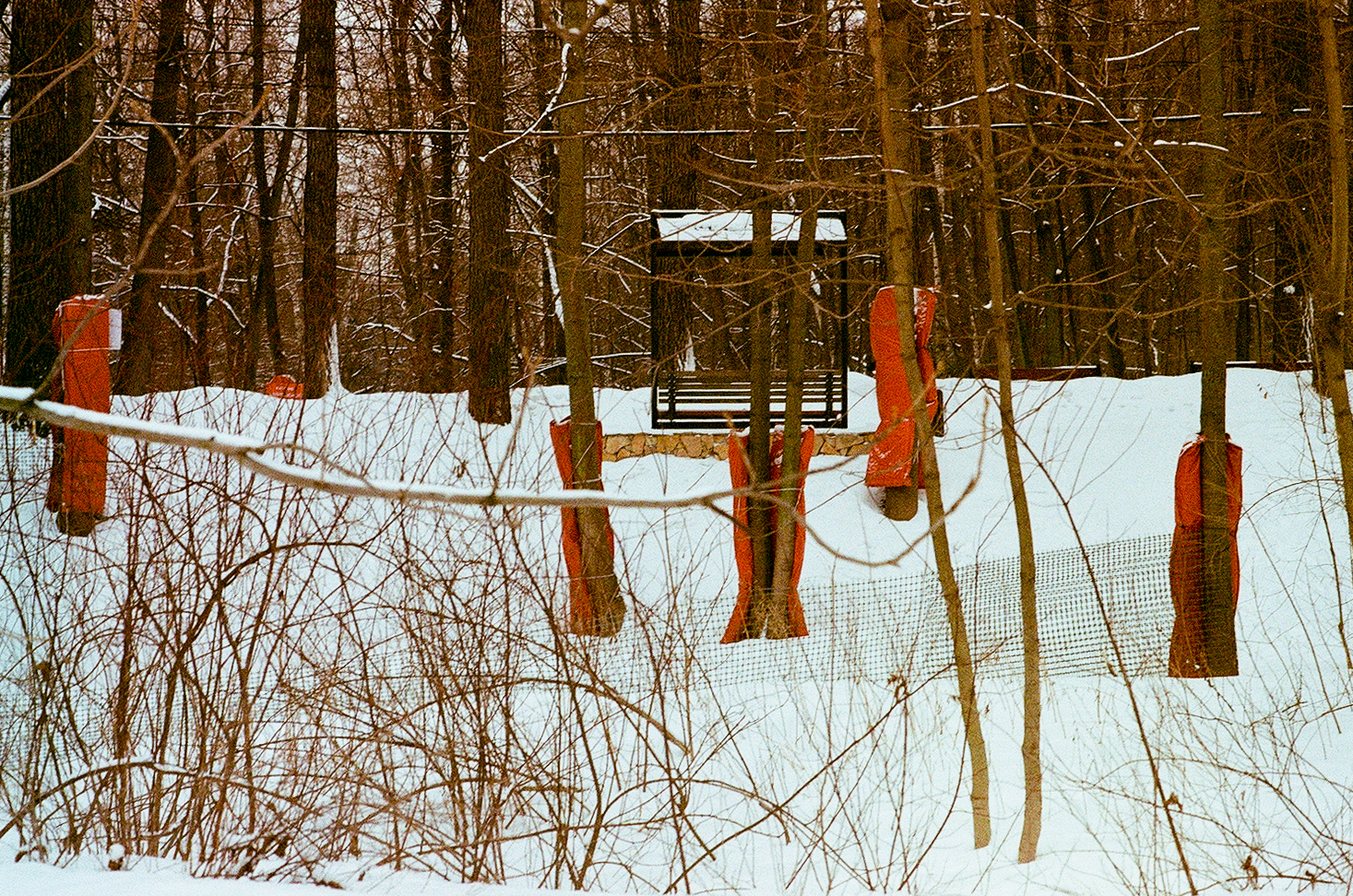
This photograph operates not only through its imagery but through perception itself, compelling us to see through its language—a language of disjointedness, fragmentation, and texture. A distinct approach to framing is at work here: rather than offering the viewer a complete picture, it invites us to see the world as a collection of visual elements, each carrying an underlying tension.

In the foreground, a tangle of branches forms a natural chaos, partially obscuring the scene and leaving it on the verge of revelation. Beyond this layer, a differently structured space emerges: the strict verticals of trees stand like columns, supporting the rhythm of the composition. Their trunks are wrapped in red protective coverings—a striking visual accent that disrupts the monochromatic harmony of the winter forest. The red here is a gesture, a statement—perhaps one of protection, yet it may also be read as a sign of intrusion, alteration, or violence.

The photograph explores the boundary between the visible and the hidden. What lies beyond these trees? What role does this scene play in the space of the real world? The presence of a grid on the snow and a wooden pavilion suggests a place of human intervention—but in what context? We do not know, and the image offers no answers, only deepening our engagement in the act of interpretation.

Here, photography reveals its essence as a fragmentary art form: it extracts a piece of reality but does not enclose it within itself. Instead, it offers it as the starting point for an infinite narrative. This work exists not only in its visual plane but also in the viewer’s consciousness, where, following the pathways of its composition, one fills in the gaps with personal assumptions and sensations.

This is not just an image—it is an act of visual thinking. It speaks in the language of signs, suggestions, and omissions, and therein lies its poetic power.

#NikonFM2
#PosthumousGaze
Photography as a Witness to Time and Space (in the Spirit of John Szarkowski)

Photography as a Witness to Time and Space (in the Spirit of John Szarkowski)

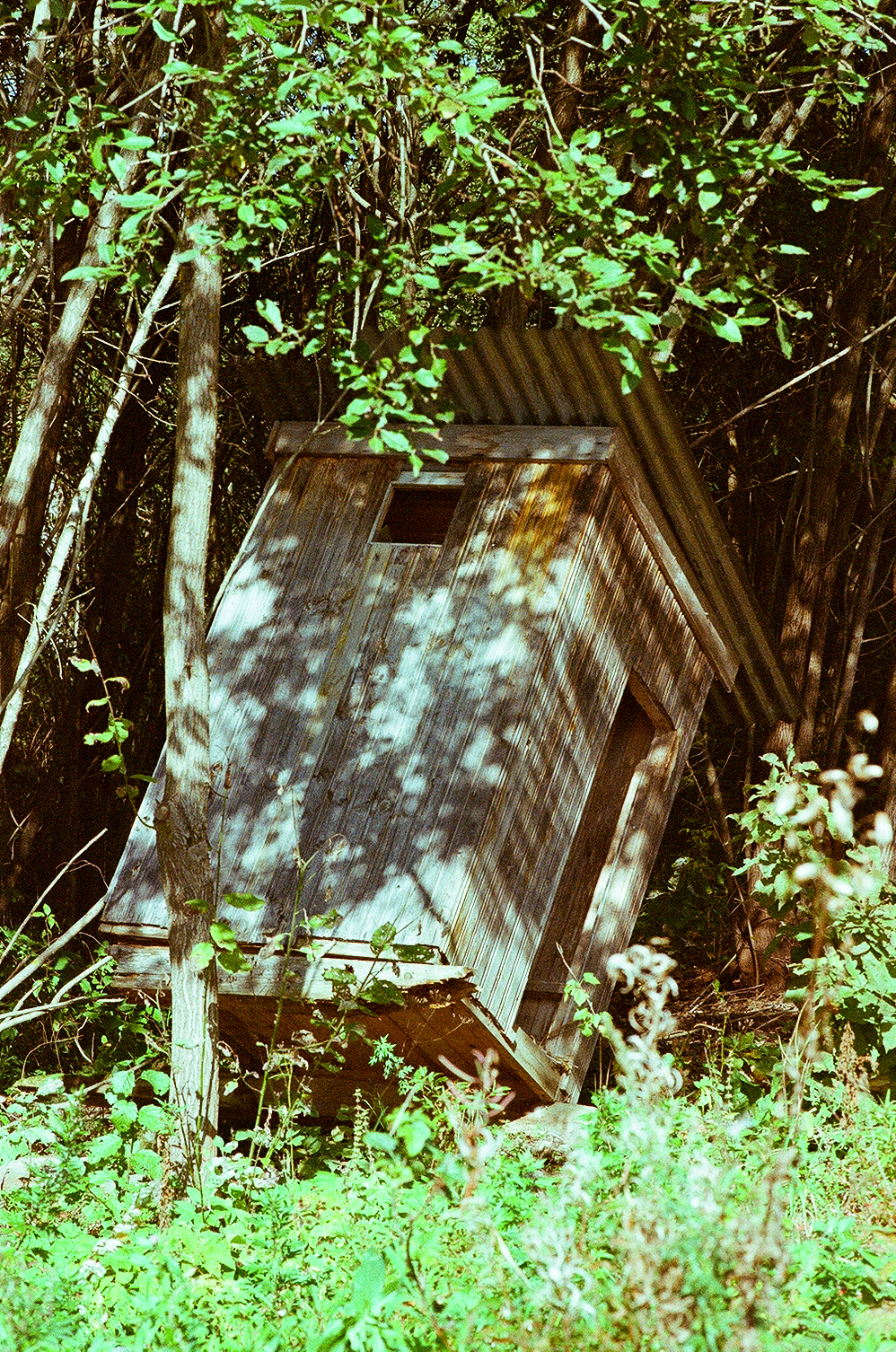
Photography has always been not just a means of capturing reality but also a way of revealing the invisible structures within the ordinary. This image is proof of that. At first glance, we see nothing more than an abandoned rural outhouse, leaning and engulfed by the green chaos of vegetation. Yet the photographer’s gaze transforms it into something more: a symbol, a story, a testament to time.

I have always believed that one of photography’s most essential functions is not merely to document but to interpret. Here, composition plays with the tension between the man-made object and the nature reclaiming it. The vertical lines of the trees engage in a dialogue with the slanted geometry of the wooden structure, creating a sense of movement—as if nature is gradually reclaiming what was once part of human daily life.

This object, once serving a utilitarian purpose, has now been discarded beyond the boundaries of the homestead, standing at the threshold between civilization and wilderness. There is a strange poetry in this: an object that was once an essential part of everyday life has become obsolete, stripped of its function, awaiting its final dissolution into the surrounding landscape.

Photography captures the moment of this transformation, simultaneously reminding us of the impermanence of all things and their inevitable return to primordial chaos. This image brings to mind the works of William Eggleston and his ability to uncover beauty and meaning in the most unexpected, even banal, subjects. In the end, a great photograph does not merely show—it allows us to see.

#NikonFM2
#PosthumousGaze

Essay by Architectural Critic Sylvia Lavin

Essay by Architectural Critic Sylvia Lavin:

“The Architecture of Ruin and Tamed Entropy”

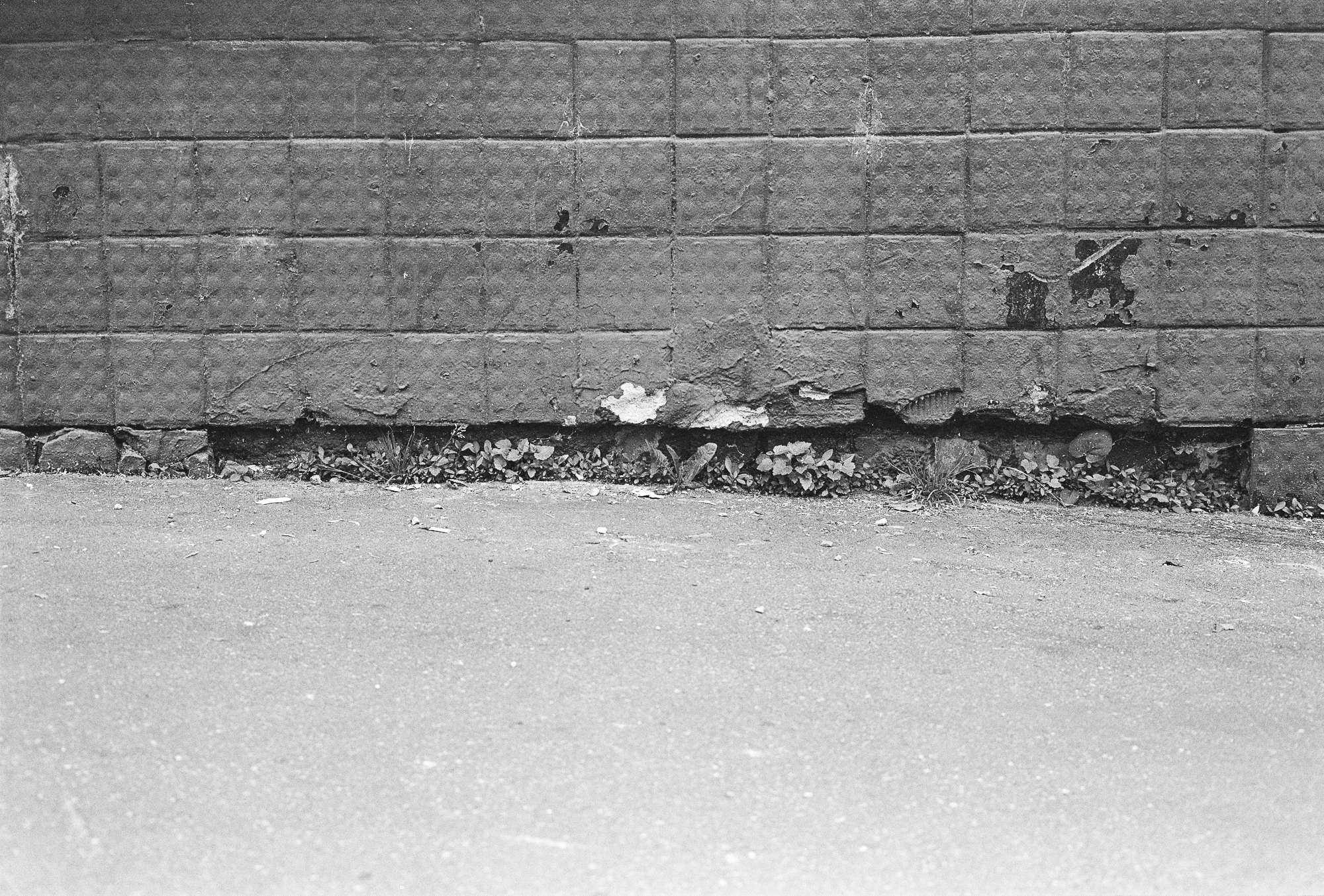
This photograph is a rare testament to architectural entropy, frozen in a moment where decay and renewal exist in fragile equilibrium. Here, an urban wall—once designed as a strictly rational surface, clad in geometrically ordered panels—enters into dialogue with nature, which is reclaiming the space.

This scene is not one of dramatic catastrophe but rather an illustration of slow disintegration, where the boundaries between the architectural and the organic dissolve. The damaged cladding exposes the inner layers of the structure, revealing the hidden vulnerability of the urban fabric. In the cracks left by the crumbling plaster, grass begins to grow—a modest yet resolute act of resistance.

The photograph rejects the conventional hierarchy of objects: there is no intact building, no expansive view of the street or its surroundings. Instead, the frame captures a fragment—details that typically remain outside the scope of architectural photography yet bear crucial evidence of the processes unfolding within space. In this sense, the image recalls the practice of architectural critics who examine not only completed forms but also their unstable states, the transformations that occur beyond the architect’s control.

This image can be seen as part of a broader discussion on post-Anthropocene architecture—one that does not fight against nature but coexists with it, allowing it to modify and reinterpret the urban environment. There is no nostalgia here for the lost wholeness of a building, only a careful observation of its new life—a life in ruins, a life among weeds, a life that continues even when architecture ceases to serve its original function.

#Fujica6x9
#PosthumousGaze

An Essay from the Perspective of Alain Badiou

Essay by Alain Badiou: “Form, Event, Truth”

This photograph does not ask us what we see but rather how seeing itself is structured. Here, at the center of an open landscape, stands an empty frame—devoid of its own content, yet transformed into a site for truth. It is not merely a frame but an event, one that organizes space and compels us to question its naturalness.

In the tradition of Platonic philosophy, truth is never given to us directly—it requires construction, mediation. This frame is a structure that marks an absence, yet through this very absence, it reveals the process of distinction itself: what is inside, and what is outside? Does the field within the frame differ from what surrounds it? No, and yet we begin to see it differently.

This is how an event is born—a sudden rupture in the order of the visible. We find ourselves in a situation where the artificial creates the conditions for a new perception of the real. The field, which has always been a field, is now transformed into a sign. The boundary between landscape and its representation becomes unstable, and we find ourselves inside this duality, unable to determine where exactly the line between art and the world is drawn.

What matters here is not only what is depicted but also the very act of framing. This is not a gesture of authority, not an ordering of chaos, but rather a challenge—an invitation for the viewer to recognize that all vision is a choice, that truth is never given to us directly but always emerges through rupture, through an event that reorganizes our structures of perception.

In this sense, photography does not merely document reality; it plays with it, revealing what would otherwise remain unnoticed in everyday life. It becomes an act of thought and, therefore, a space for truth.

#NikonFM2
#PosthumousGaze

New Exhibition at Wynwood Hotel

Lost in Transition: A New Exhibition at Wynwood Hotel

The *Lost in Transition* exhibition at Wynwood Hotel plays with the concept of a hotel as a place that bears witness to the inner transformation and emotional renewal of a traveler in a new city. Impressions are directly tied to heightened senses: the “other” awakens a gaze that keenly captures unusual details, sharpens hearing attuned to forgotten melodies. All these scattered images, accumulated chaotically throughout the day, intersect in the imagination and seep into dreams, blending with reality in the first moments after waking. The instant before memory reconstructs the events of the past day and threads them to the present is nearly imperceptible—yet it lingers, close to the sensation of being lost, to that fleeting moment of disorientation.

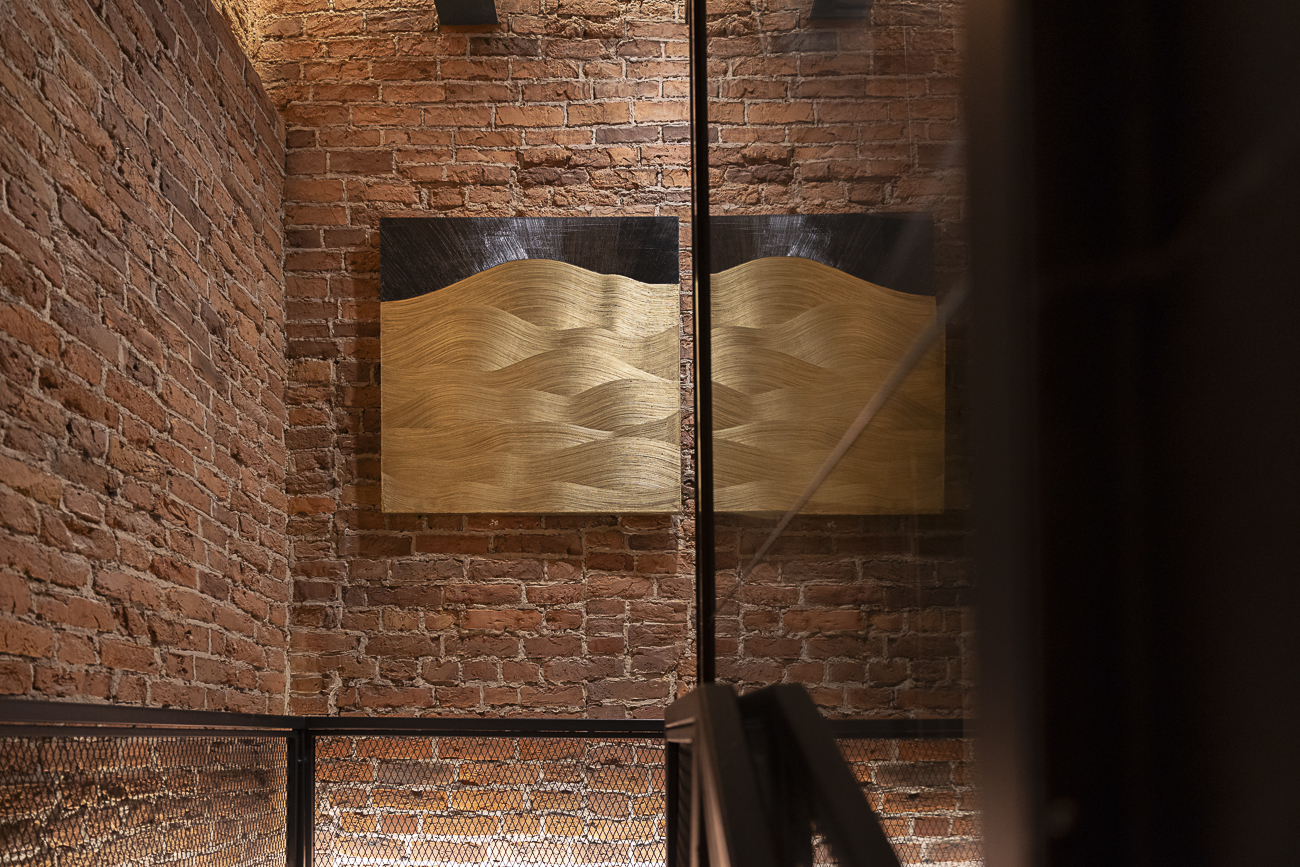
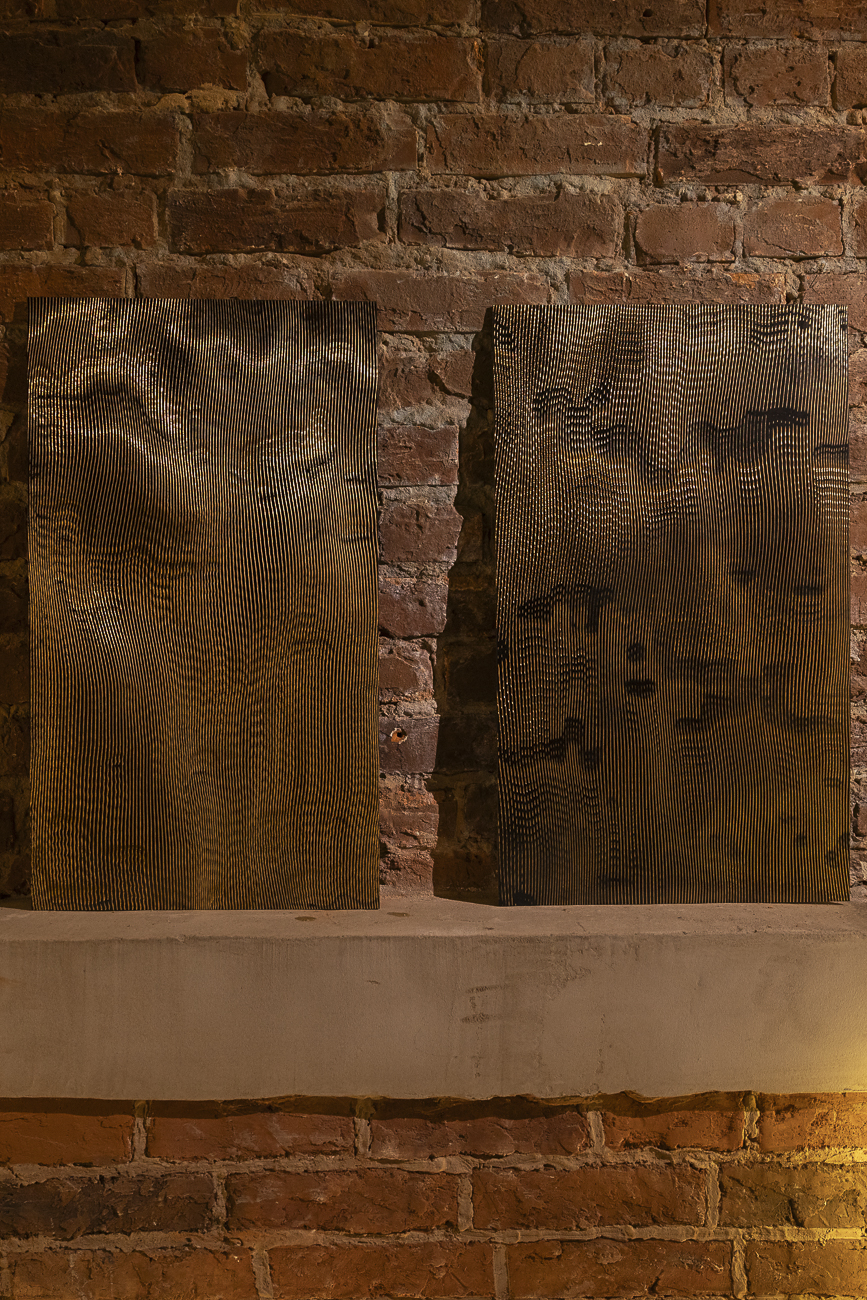
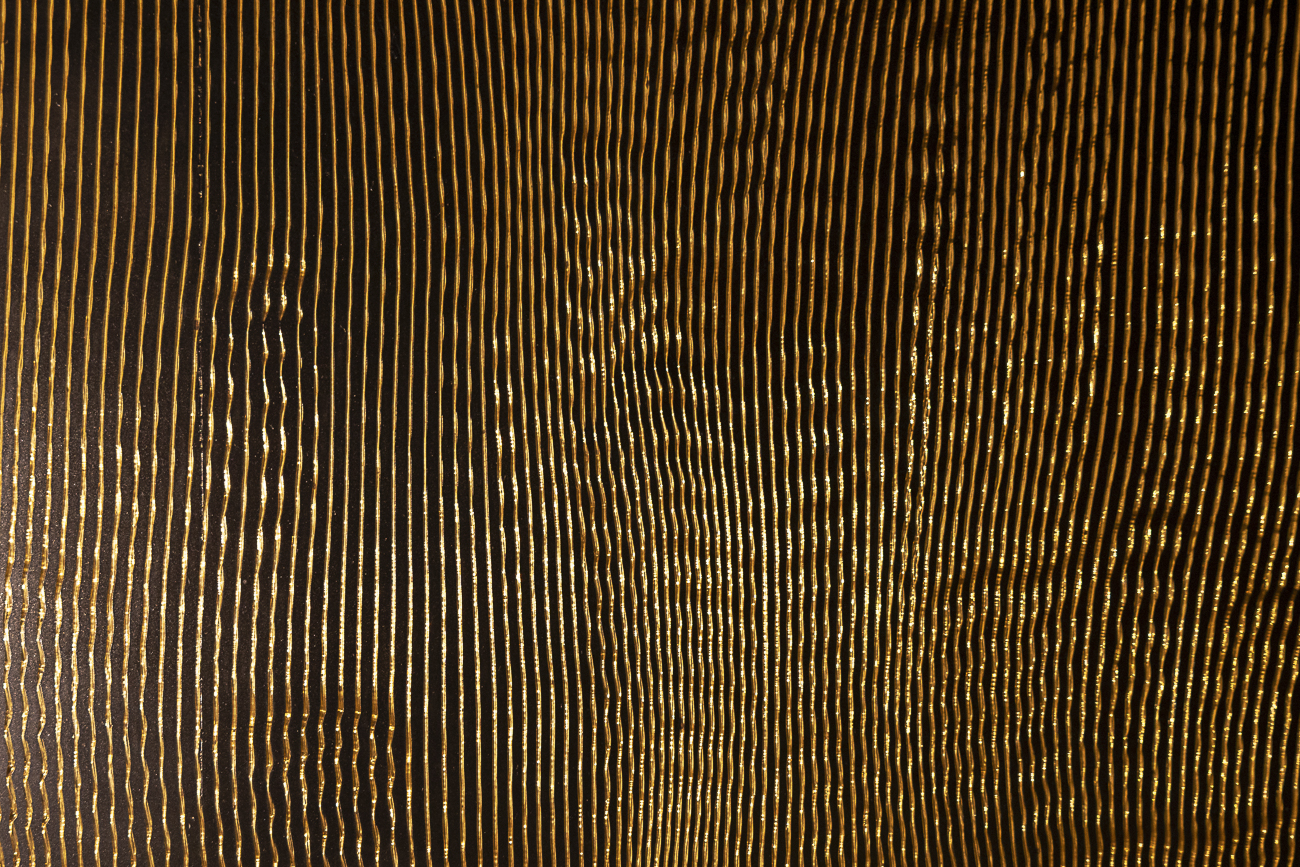
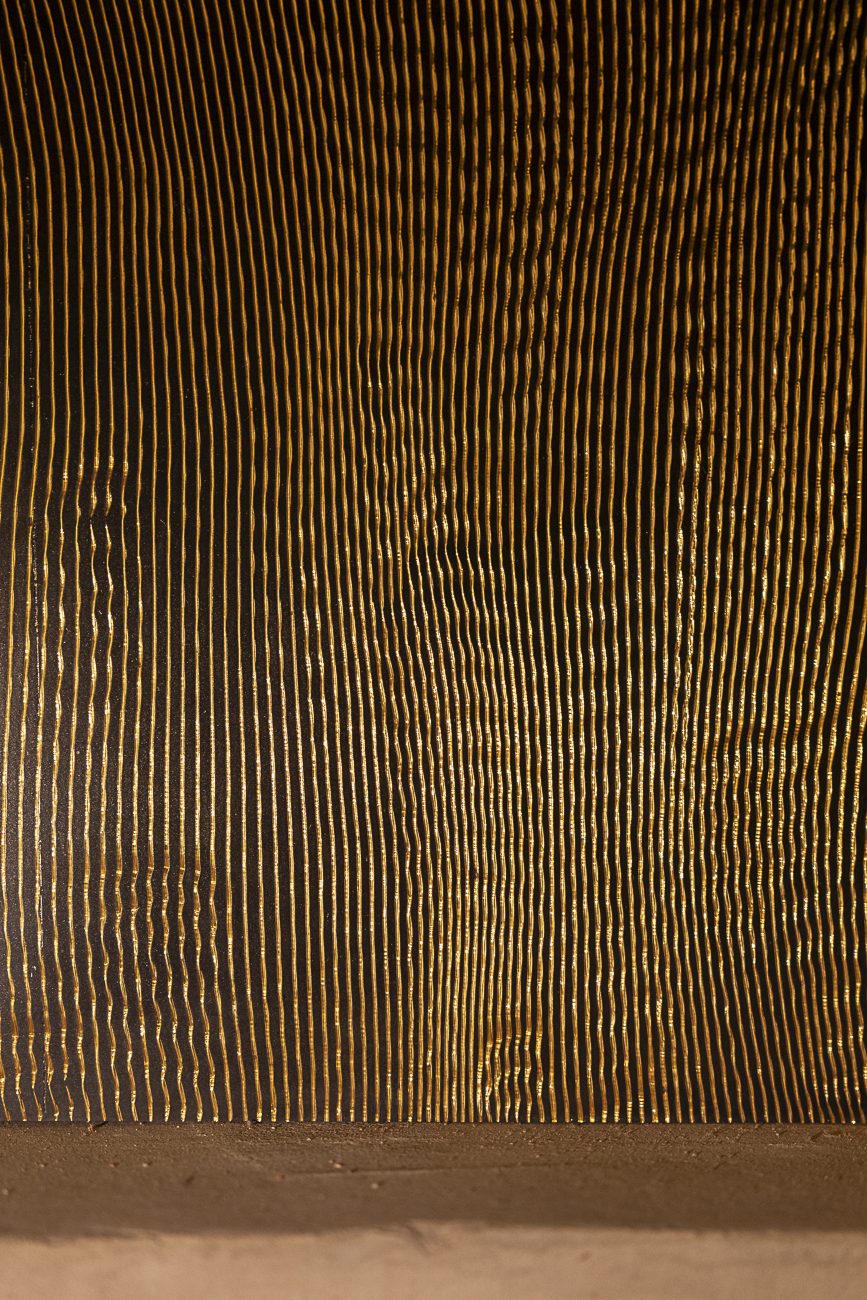
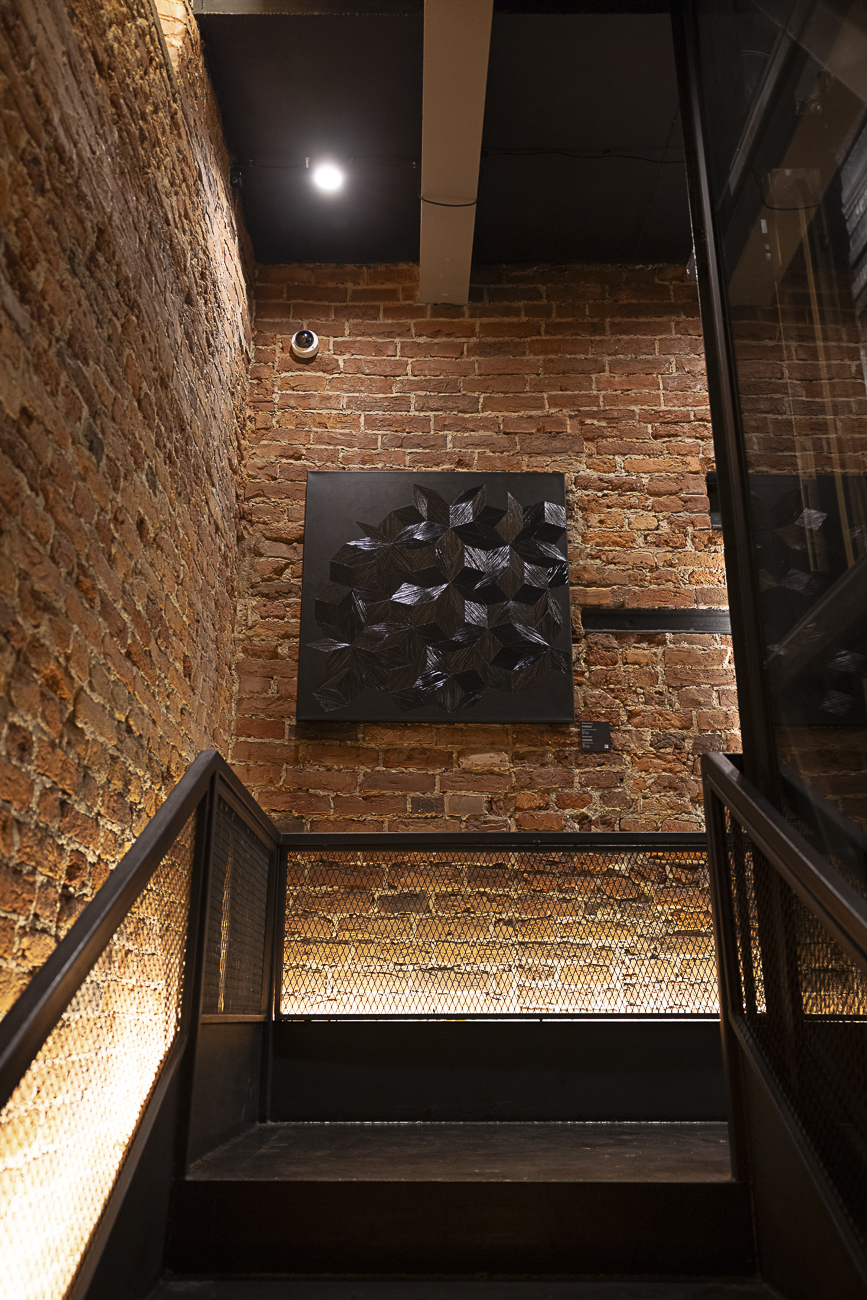
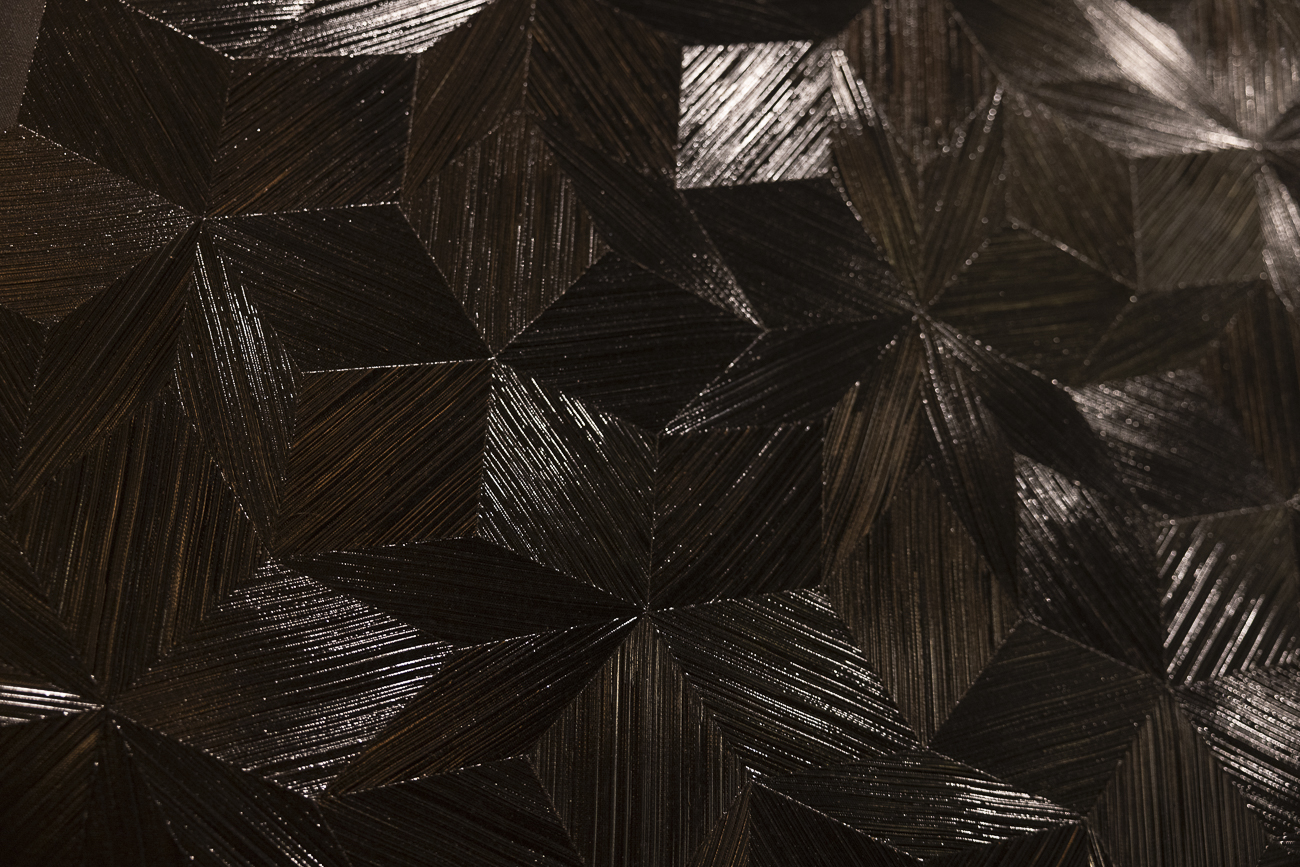
The works displayed throughout the hotel reflect artists’ experiences at specific moments of contemplative self-perception within their surroundings. Anatoly Akue’s *Harvest* series stems from his study of two esoteric systems—Western astrology and ancient Chinese BaZi—and their influence on human life. Over the course of a year, the artist analyzed life events, interpreted them through these mystical traditions, and translated the resulting insights and subjective understanding into semi-abstract compositions. Maxim Ksuta’s monochromatic landscapes from the *Tectonic Painting* series seem to emerge from a universal mystical rhythm, inviting the viewer to engage with it through the observation of light reflections. A similar effect is present in Andrey Berger’s work, where he paints with acrylic on a reflective road sign marked *100 m*, visible only at a specific angle of light. This piece, titled *Lost in Transition*, became the foundation for the exhibition’s concept, metaphorically referring to the hidden path of life, unseen by the casual glance.

Eva Helki’s objects and Misha Nikatin’s paintings operate like ironic riddles, assembled from everyday items. By revealing the poetry of the mundane, their imagery projects onto the viewer’s memories, rearranging itself like a deck of cards, unfolding anew in different minds.

Anka Akhalaya, in creating her abstract compositions, turns to the surrealist technique of automatic writing, capturing fleeting emotional states in her works. A different impression—one that leans toward permanence and the idea of eternal return—emerges in Olga Aksyonova’s pieces, where barely visible figures shimmer in golden light, bound by a mysterious shared encounter. At the intersection of reality and fiction, in the quiet blur of watercolor strokes, Arthur Samofalov seeks a point of stability in his *Inhabited Ruins* series. His indistinct forms become allegories of uncertain knowledge—chaos obscures the clear contours of objects, evoking unease.

The challenge for each of us is to overcome the desire for rigid clarity and instead embrace contemplation—an approach that fosters inner transformation and reveals a new vision of the world. Even the smallest journey shifts the rhythm of life, lifting the veil from our eyes and allowing for transition, for inner metamorphosis, and for the formation of a renewed dialogue with both the self and the world around us.

Alisa Prokhorova

An Essay from the Perspective of Thomas Veski

Essay by Thomas Veski:

“Suspended Moment”

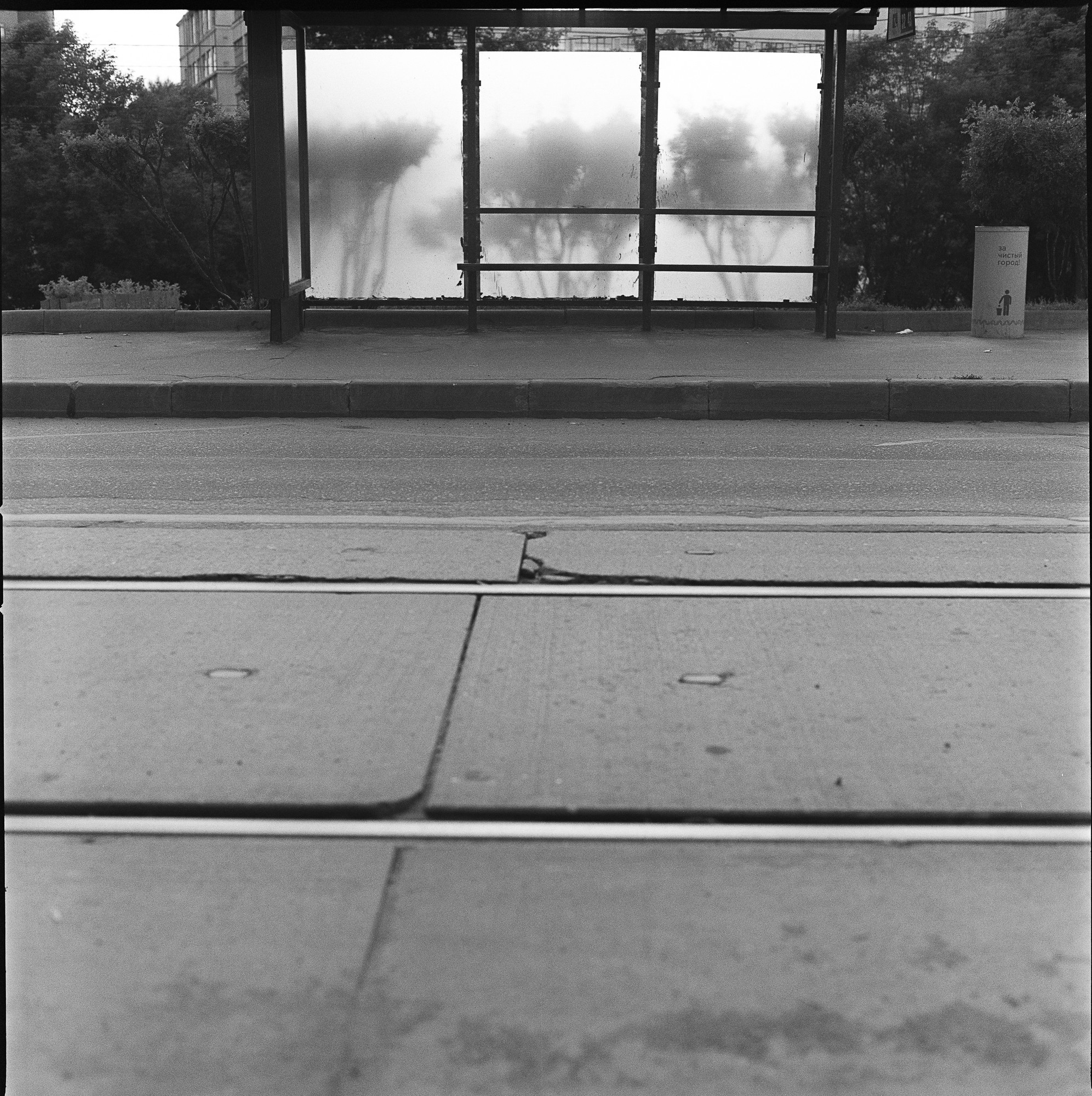
This photograph possesses a rare ability to hold the viewer in an in-between state. There is no obvious movement, no human presence, yet this very absence fills the image with potentiality. We stand before tram tracks, before concrete slabs that, covered in fine cracks and stains, resemble traces of time. This frame captures something beyond a mere street or a tram stop—it becomes a metaphor for waiting, for transition from one state to another.

The division of space plays a crucial role here. The foreground is sharply defined, with detailed textures of asphalt and metal, while the background dissolves into a diffuse haze. The glass of the tram stop acts as a boundary between a world of clarity and a world of blurred contours. The trees behind this glass no longer belong to reality in the usual sense. They become shadows, memories, hints of something alive yet unreachable.

This technique echoes aesthetic principles found in documentary photography, where a simple scene reveals itself as something greater than the sum of its parts. We do not see people, yet their absence only amplifies the feeling of their possible arrival. We wait for them, just as we wait for the approaching tram that remains beyond the frame.

The use of perspective is also significant. The tracks lead our gaze deeper into the image, yet they provide no clear destination. They stop at the edge of the frame, leaving us suspended. Like the photograph itself, we remain on the threshold of something elusive.

#Fujica6x9
#PosthumousGaze