Ундина 2.0
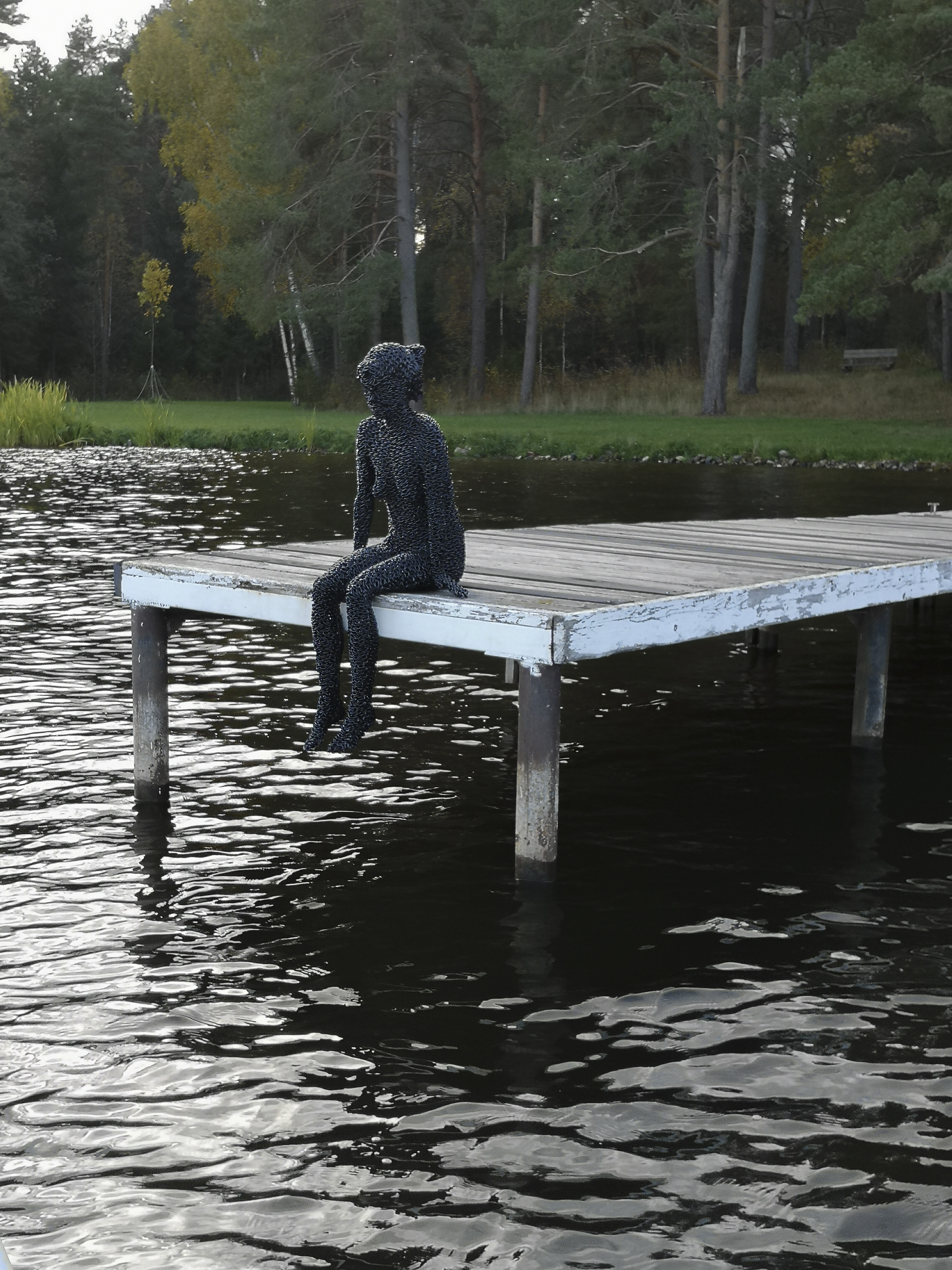
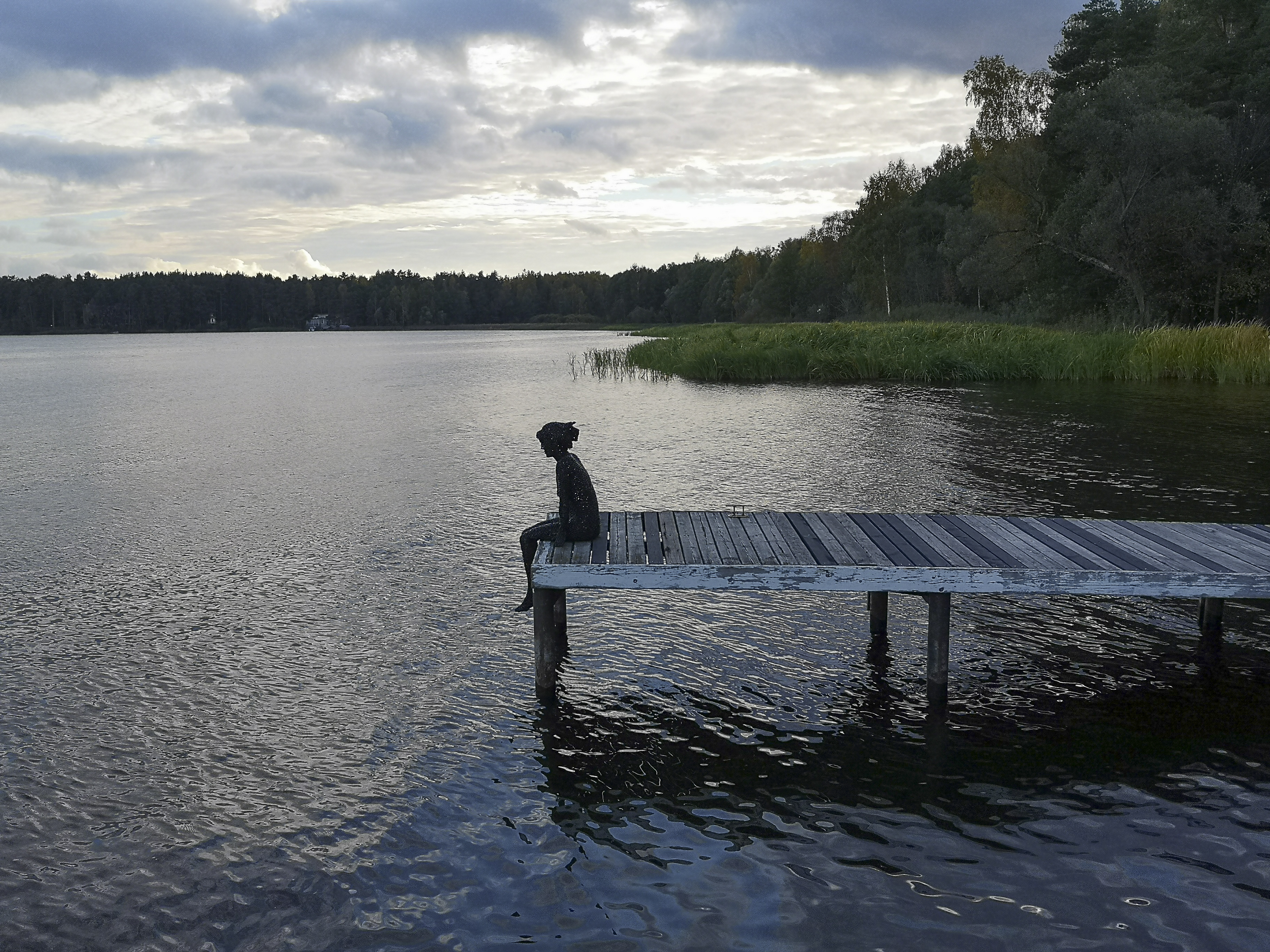
Ундина 2.0, металлическая цепь
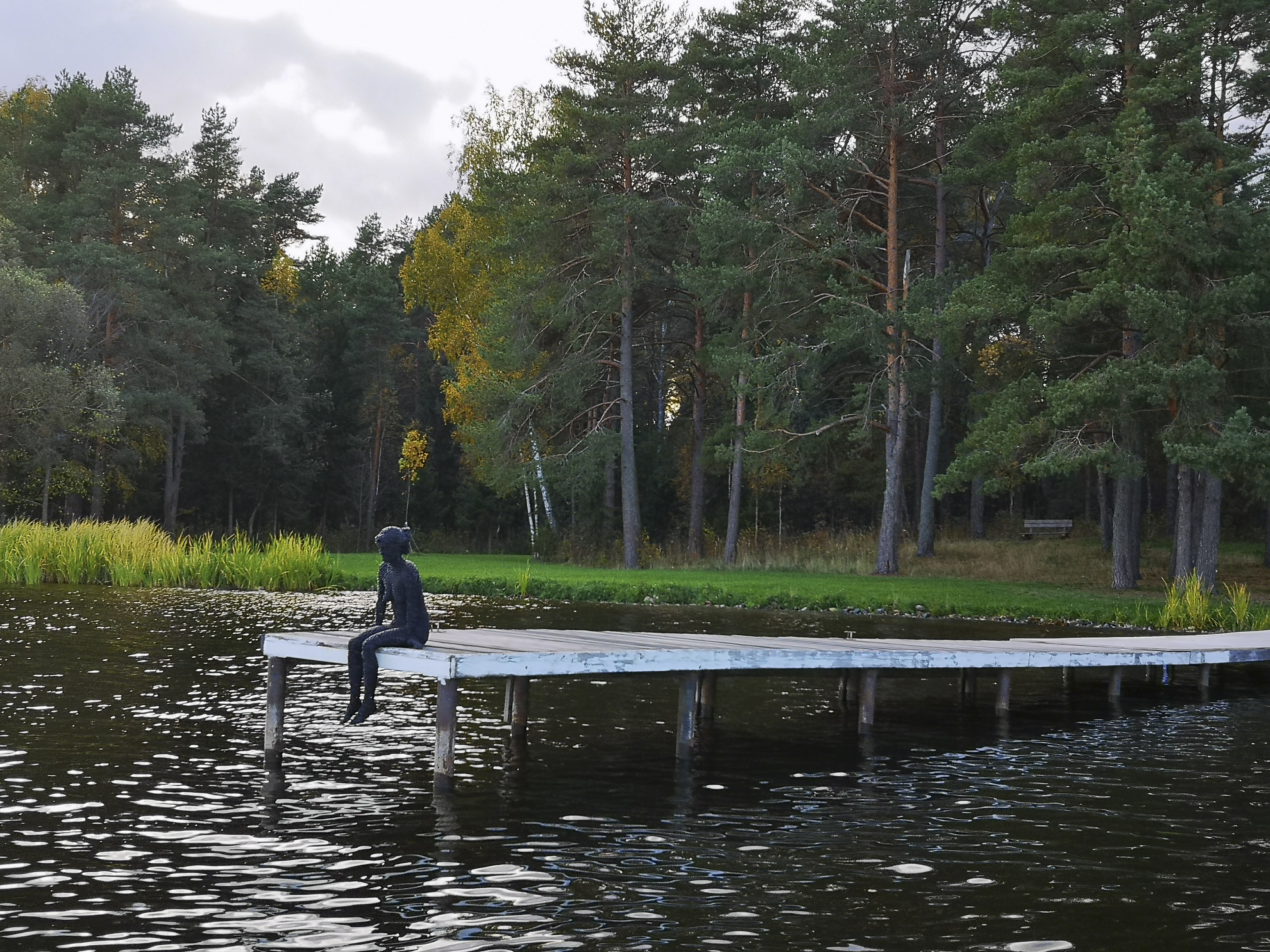
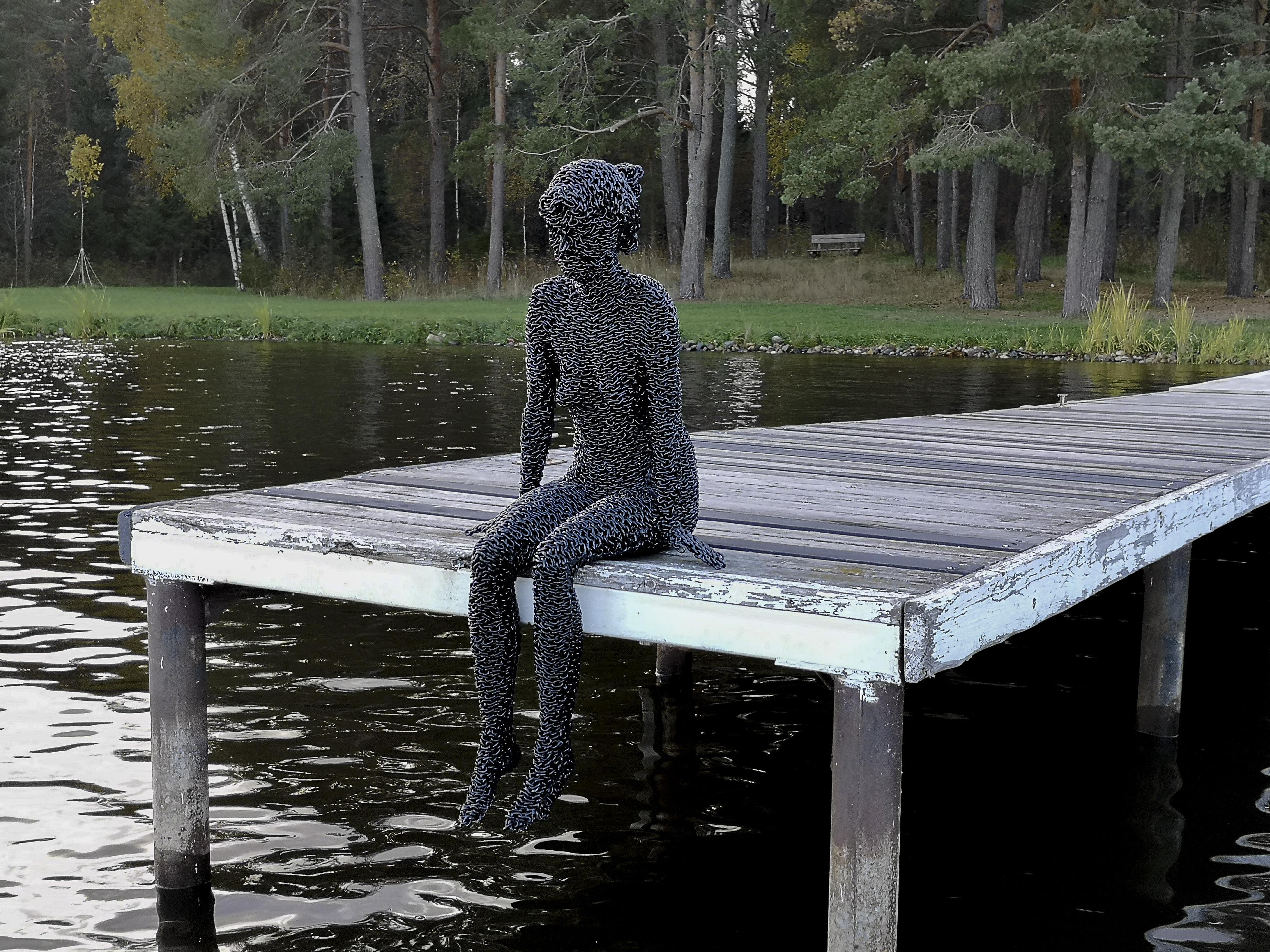
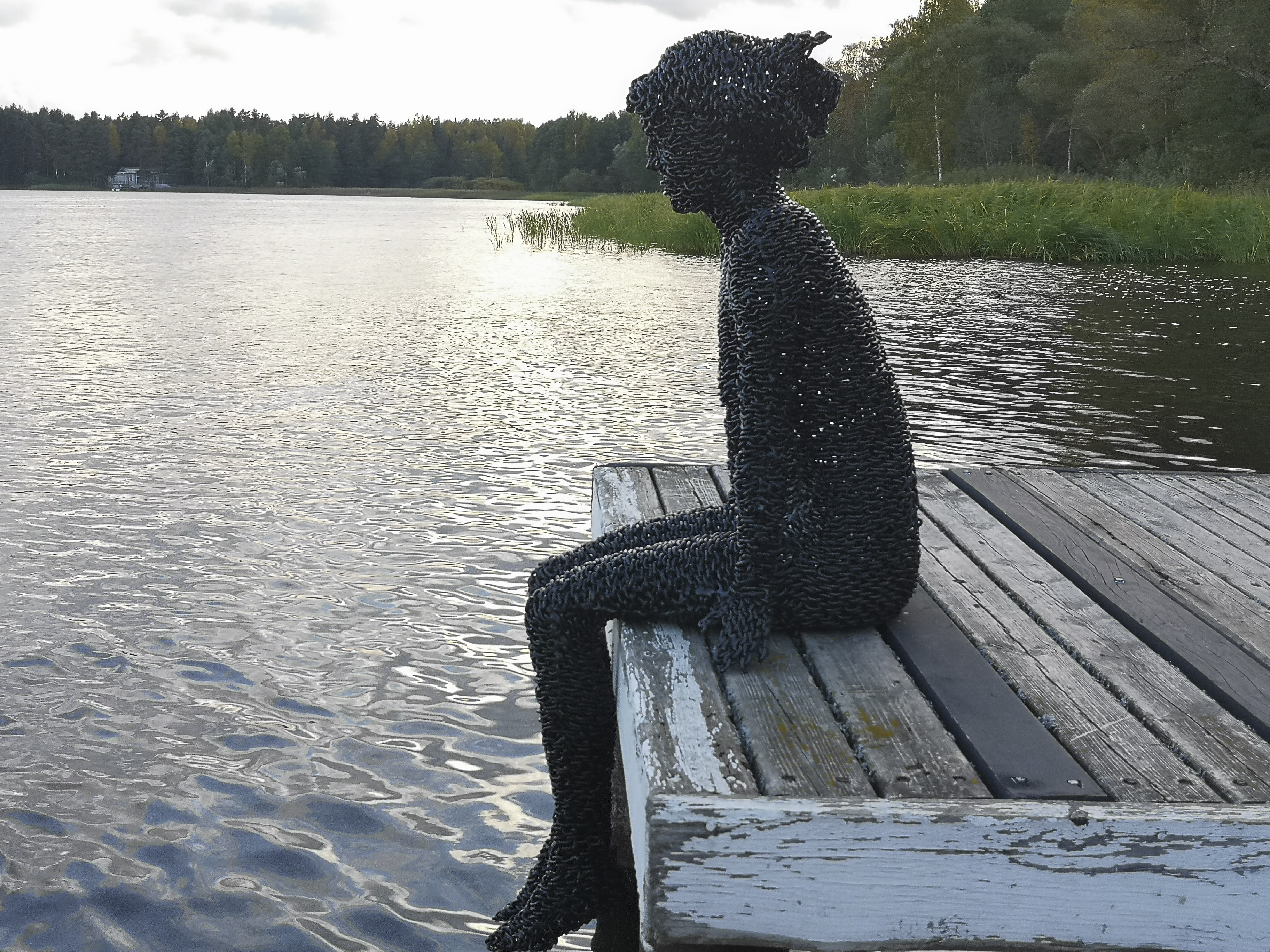
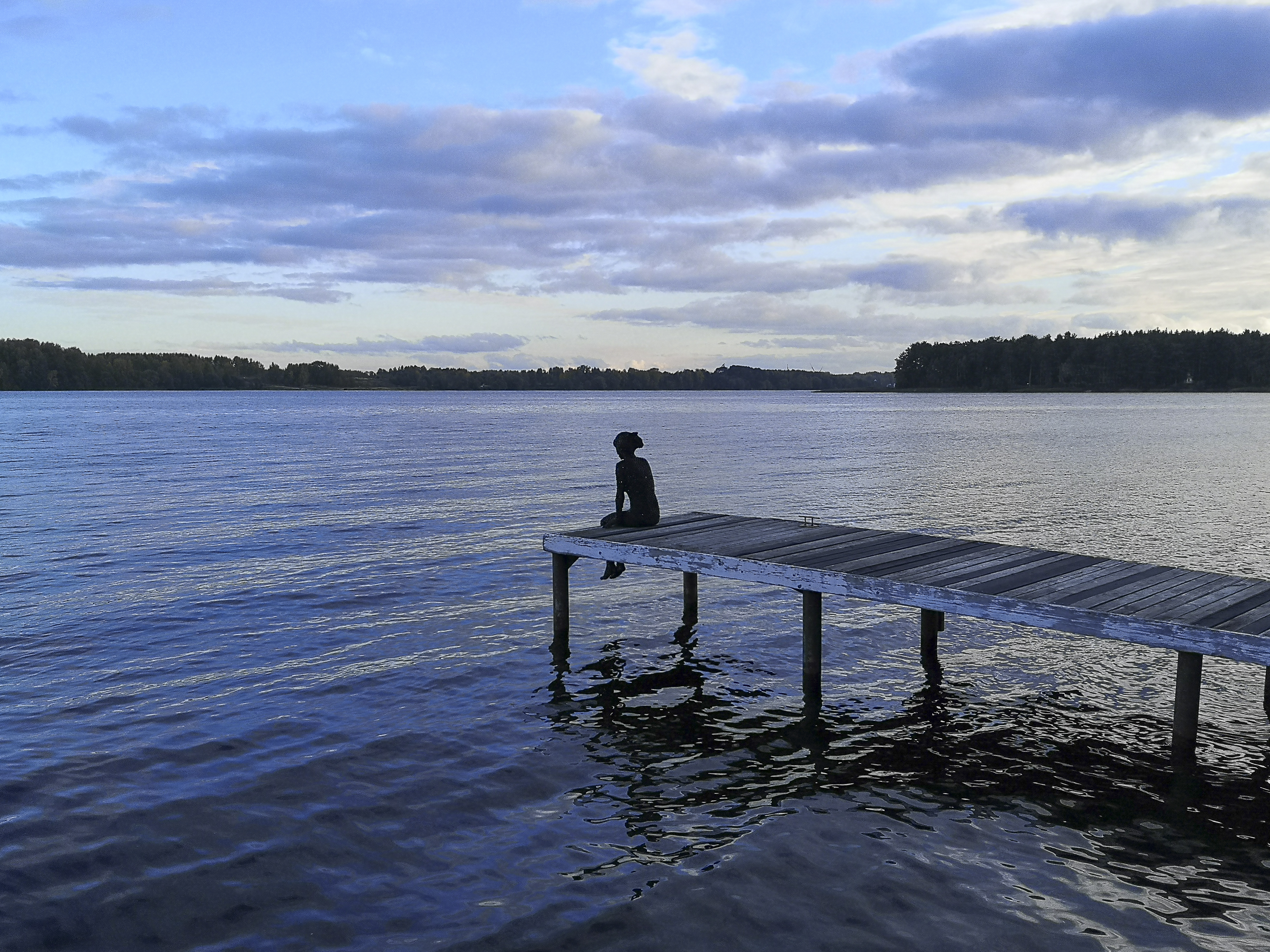
Ундина 2.0 сидит на краю причала на Волге, свесив ноги над водой и опустив голову. Тело её собрано из чёрной цепи, звено к звену, и вблизи видно, как металл ложится кожей, складками колена, прядями волос, которые над головой торчат короткими живыми концами. Сквозь плотную вязь местами просвечивает воздух, и фигура кажется сплетённой из самого промежутка между вещами. Обе руки лежат на досках по бокам, и ладони чувствуют шероховатость старого дерева. Этот жест напоминает бхумиспарша-мудру, прикосновение к земле, которым Будда призвал её в свидетели. Материал даёт чтению не меньше опор. В диалоге о колеснице монах Нагасена говорит царю Милинде, что колесница существует как имя для сочетания оси, колёс, рамы и дышла, и ни в одной части отдельной колесницы не найти. Ундина из цепи показывает это наглядно: ни одно звено Ундиной не является, а целое стоит перед глазами и обладает осанкой, наклоном головы и характером. Так выглядит пустота в понимании Нагарджуны, где форма возникает во взаимной зависимости частей и собственного ядра не имеет. Каждое звено держится на соседних, и сеть Индры, в которой каждая жемчужина отражает все остальные, кажется здесь почти буквальной. Цепь при этом имеет и другое значение. Это оковы, и классическая формула двенадцати звеньев взаимозависимого возникновения описывает кольцо, где невежество рождает волевые импульсы, те рождают сознание, и так до старости и смерти, откуда звено снова тянется к невежеству. Ундина собрана из того самого материала, который сансара использует для привязи, и сидит она над водой. Вода в этой сцене читается как сознание с его непрерывным течением мыслей. В “Ланкаватара-сутре” ум уподоблен океану, который ветер объектов покрывает волнами, и пока волны идут, глубина остаётся скрытой. На тёмной поверхности под причалом рябь складывается и рассыпается, блики вспыхивают и гаснут, и взгляд скользит по ним, ничего не находя. Ундина смотрит вниз, в эту толщу, и фигура её хранит неподвижность, которую вода пока не разделяет. Дхаммапада сравнивает мудрого с глубоким озером, прозрачным и спокойным: когда возмущение стихает, муть оседает, и дно становится видно. На дне покоится то, что традиция называет истинной природой ума, и там же, по Нагарджуне, обнаруживается пустота самих форм, в том числе формы, которая сидит на причале. Увидеть дно означает увидеть, что звенья держались друг за друга привычкой, и привычка эта оседает вместе с мутью. Здесь и происходит трансформация: оковы формы спадают, и чёрная цепь рассыпается в звенья, каждое из которых снова просто металл на дне. Фуке дал своей водяной деве душу через любовь, а скульптура даёт ей освобождение через покой. Догэн сказал бы про луну в воде, что луна отражается и воду не мочит, вода принимает луну и не ломается, и тот же покой читается в ногах Ундины, повисших над поверхностью. Облупившаяся краска причала, осенние берёзы, жёлтые пятна в хвое добавляют кадру анитью, непостоянство в его будничном виде: доски темнеют, лето ушло, и чёрный металл сидит среди этого так, словно давно с этим согласился. Наклон головы и опущенный взгляд напоминают дзадзэн, где сидят у края и смотрят на то, что приходит и уходит, пока вода не затихнет. Зритель, подходя к причалу, оказывается следующим звеном: он смотрит на фигуру, фигура смотрит на воду, и взгляд тянется дальше, к дну, до которого рябь пока не даёт добраться.
Undine 2.0 sits on the edge of a pier on the Volga with her legs hanging over the water and her head lowered. Her body is assembled from black chain, link to link, and up close one can see how the metal lies as skin, as the folds of a knee, as strands of hair that stick out above the head in short living ends. Air shows through the dense weave in places, and the figure seems woven from the very interval between things. Both hands rest on the boards at her sides, and the palms feel the roughness of old wood. The gesture recalls the bhumisparsha mudra, the touching of the earth by which the Buddha called it to witness. The material offers the reading no fewer supports. In the dialogue of the chariot, the monk Nagasena tells King Milinda that a chariot exists as a name for the combination of axle, wheels, frame and pole, and that no single part is the chariot. The chain Undine shows this plainly: not one link is Undine, and the whole stands before the eyes with a posture, a tilt of the head and a character. This is emptiness as Nagarjuna understands it, where form arises in the mutual dependence of its parts and has no core of its own. Each link is held by its neighbors, and Indra’s net, in which every jewel reflects all the others, appears here almost literally. The chain also carries another meaning. It means fetters, and the classical formula of the twelve links of dependent origination describes a ring in which ignorance gives rise to volitional impulses, these give rise to consciousness, and so on to old age and death, from which a link stretches back again to ignorance. Undine is made of the very material that samsara uses for binding, and she sits above water. The water in this scene reads as consciousness with its unceasing flow of thoughts. In the Lankavatara Sutra the mind is likened to an ocean that the wind of objects covers with waves, and while the waves keep coming, the depth stays hidden. On the dark surface beneath the pier the ripples form and scatter, the glints flare and go out, and the gaze slides over them finding nothing. Undine looks down into this depth, and her figure keeps a stillness that the water does not yet share. The Dhammapada compares the wise to a deep lake, clear and calm: when the disturbance subsides, the silt settles and the bottom becomes visible. On the bottom rests what the tradition calls the true nature of mind, and there too, according to Nagarjuna, the emptiness of forms is discovered, including the form that sits on the pier. To see the bottom is to see that the links held to one another out of habit, and that this habit settles together with the silt. Here the transformation takes place: the fetters of form fall away, and the black chain comes apart into links, each of which is once again simply metal on the bottom. Fouqué gave his water maiden a soul through love, and the sculpture gives her liberation through stillness. Dogen would say of the moon in the water that the moon is reflected and the water is not wet, that the water receives the moon and is not broken, and the same calm can be read in Undine’s legs hanging above the surface. The peeling paint of the pier, the autumn birches and the yellow patches in the pine needles bring anicca to the frame, impermanence in its everyday form: the boards darken, summer is gone, and the black metal sits among all this as though it had long ago agreed to it. The tilt of the head and the lowered gaze recall zazen, where one sits at the edge and watches what comes and goes until the water grows still. The viewer, approaching the pier, becomes the next link: he looks at the figure, the figure looks at the water, and the gaze extends further, toward the bottom that the ripples do not yet let one reach.