Maxim Ksuta

russian artist, contemporary art, sculpture, installation, photography

Month: August, 2025

“Yellow Sea”

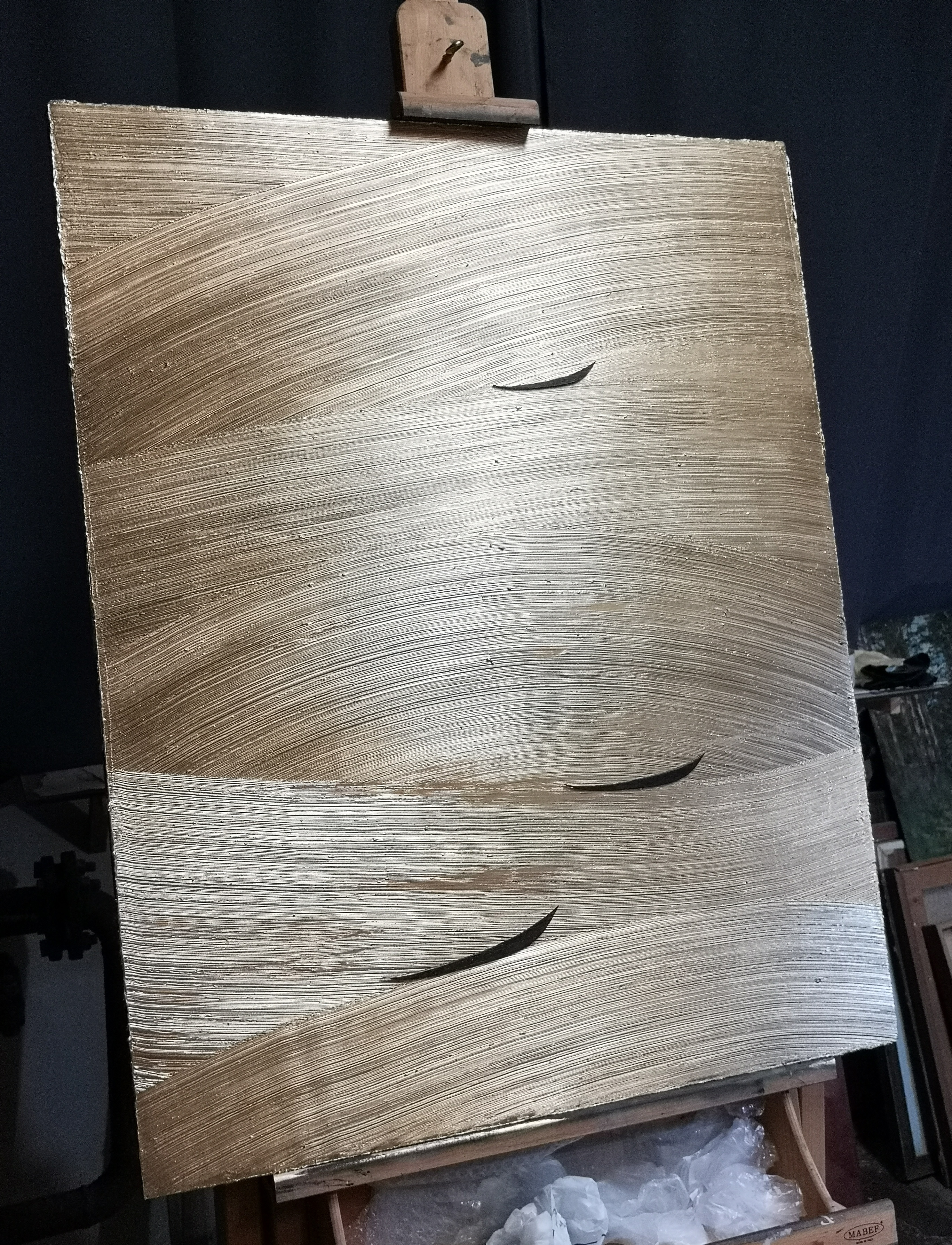
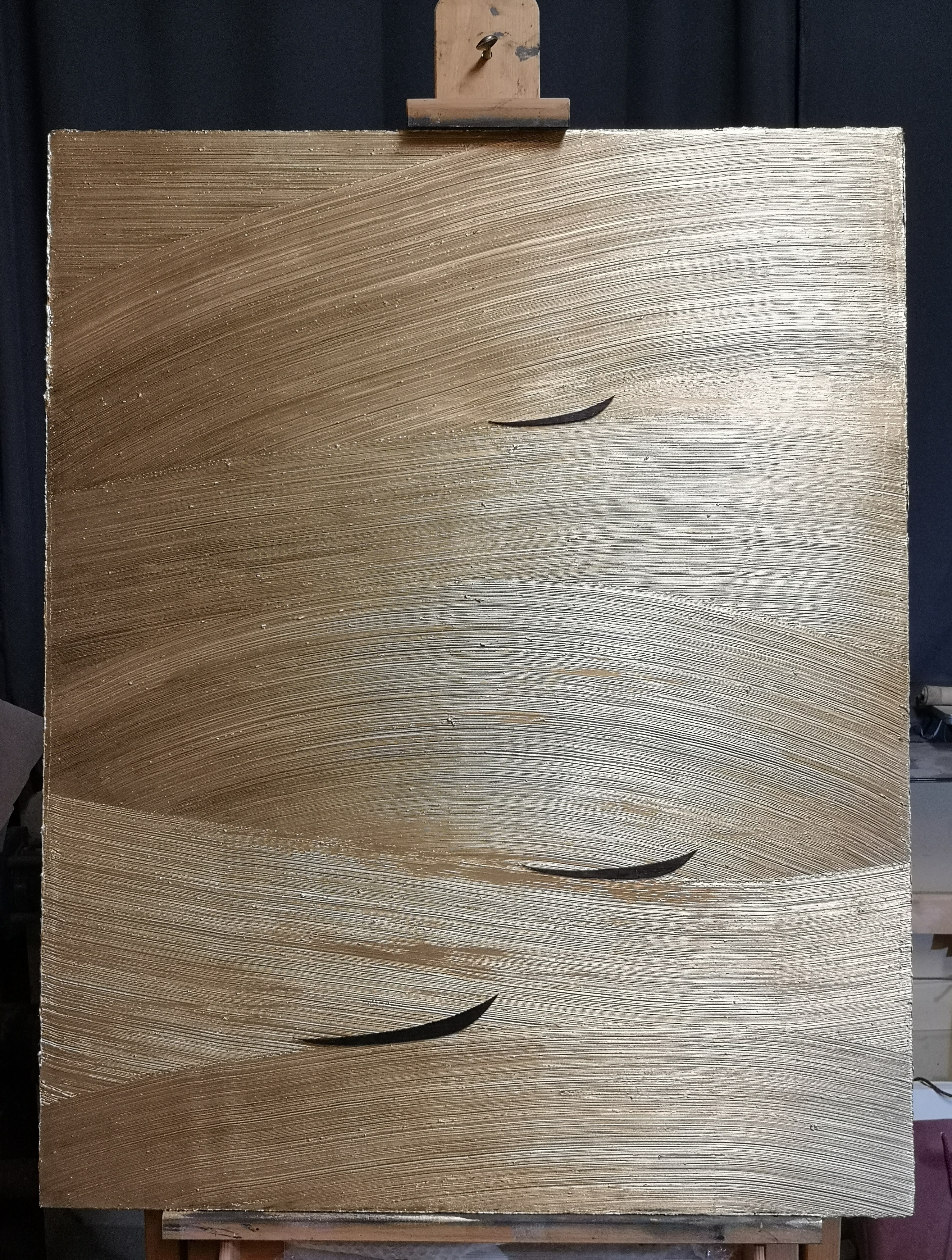
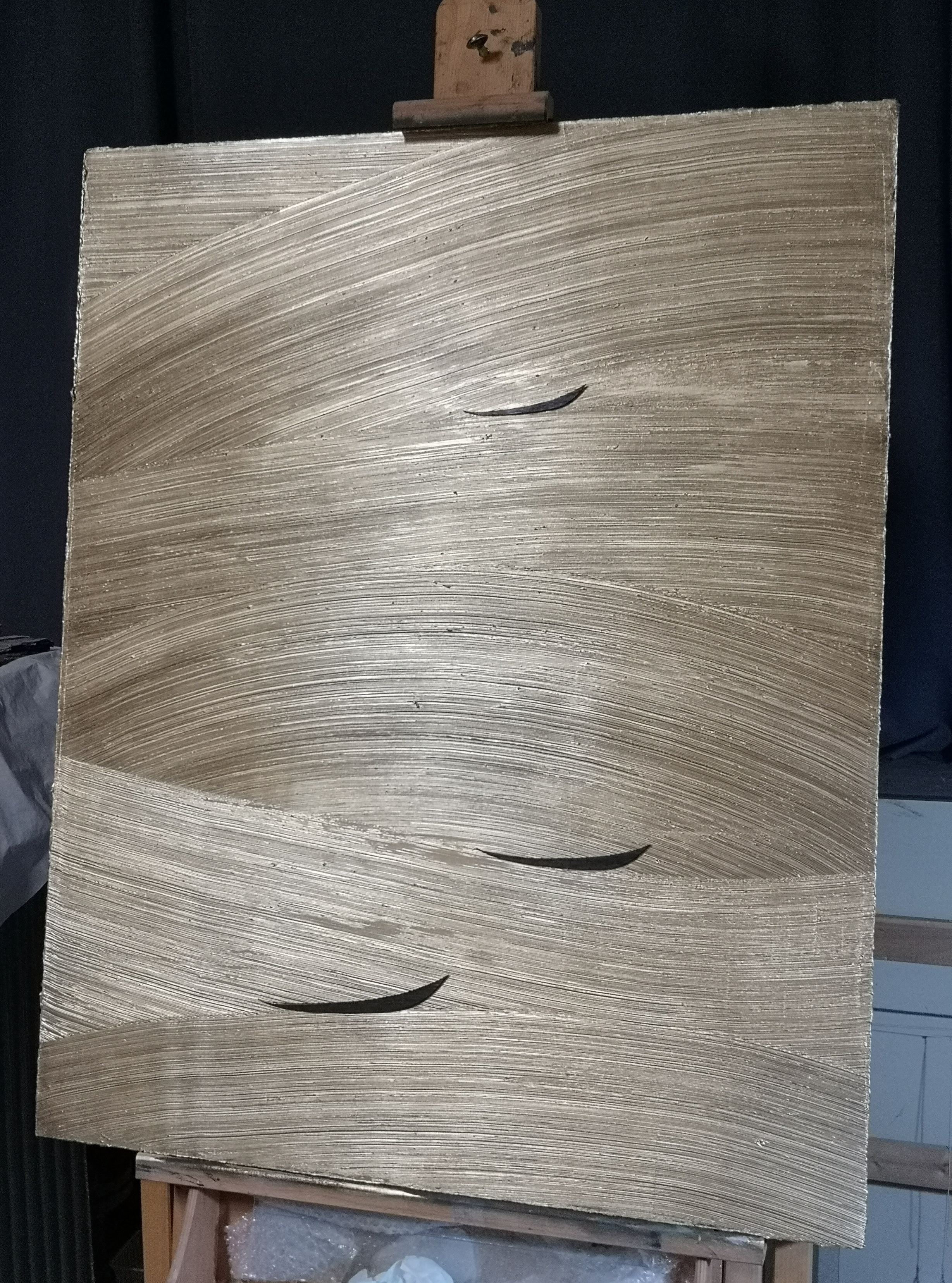
“Yellow Sea”, Oil on canvas, 100 × 80 cm

The canvas unfolds as a space where light itself turns into living matter. Sweeping, wave-like strokes create a shimmering surface that evokes the sea filled with sunlight. Here, yellow and gold are not decorative, but the very substance of light stretched into infinity.

Against this luminous field, three black lines — boats — become strikingly clear. They appear both fragile and resolute, like shadows drifting into the distance. These boats transform the abstract expanse into a seascape: the sea gains dimension, and the light acquires a human scale.

The painting balances between abstraction and figuration. There is no conventional horizon, yet there is the feeling of a journey. The boats seem suspended in the golden swell — in boundlessness, where movement and stillness are one.

Yellow Sea resonates as a meditation on human presence within the elements: not confrontation, not fusion, but a subtle equilibrium. The sea and the light are no backdrop, but a space where the boat becomes a sign of the path unfolding through radiance.

“Wave in Black”

Oil on canvas, 70 x 90 cm, summa 140 x x180 cm

Wave in Black

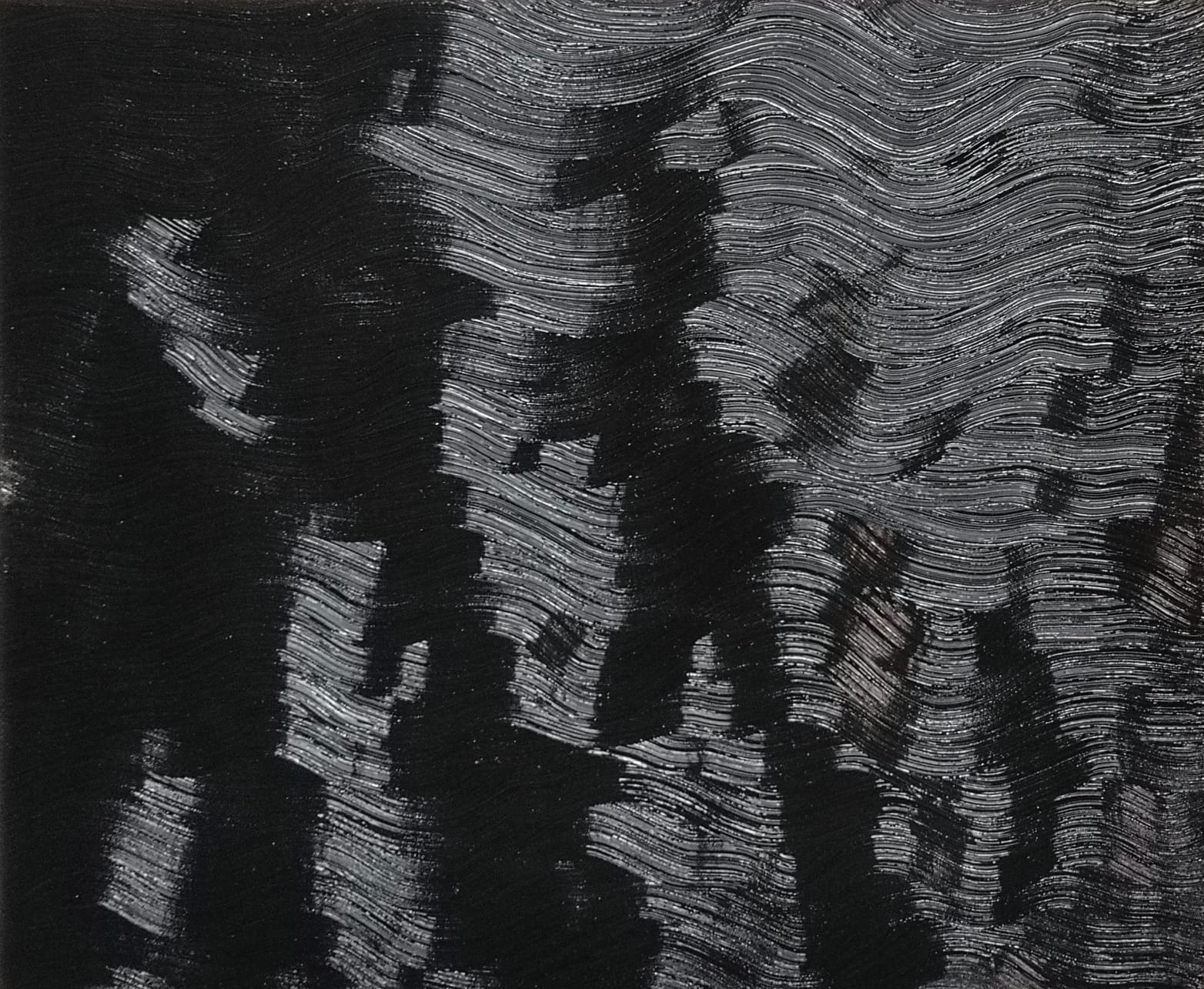
Before us lies a work that appears at once monochrome and infinitely multicolored. Black paint — gas soot — has been laid flat on the canvas, without the slightest hint of relief. And yet, it is precisely within this flatness that optical depth emerges: lines and gestures of the brush, layered upon one another, form a fabric where light plays as if on water or silk.

The scale of the piece — 140 × 180 cm — makes it almost a wall, a membrane through which the viewer encounters the phenomenon of light itself. As the angle of vision shifts, the surface comes alive: the threads reflect light differently, transforming black into a space of continuous oscillations.

This is painting without color in the usual sense, yet full of a whole spectrum of states. There is no subject, no image to “hold on to”; instead, the viewer is confronted with the pure energy of perception. The work breathes like a wave — at times contracting into darkness, at times opening into a brilliance reminiscent of metal, glass, or the shimmer of a nocturnal sea.

This black optics is both an experiment and a meditation. It takes painting beyond the conventional role of carrying color and form, turning it into a field where vision travels, splits, lingers — and it is precisely this tension between the stillness of the surface and its shifting radiance that generates the true experience.

Ultimately, the work feels like a meditation on the nature of light and darkness: how black becomes luminous if one looks long enough; how simplicity proves more complex than illusion; how a surface devoid of depth suddenly reveals an abyss.