Maxim Ksuta

russian artist, contemporary art, sculpture, installation, photography

Category: Art projects

An Essay from the Perspective of Thomas Veski
Essay by Thomas Veski:

“Suspended Moment”

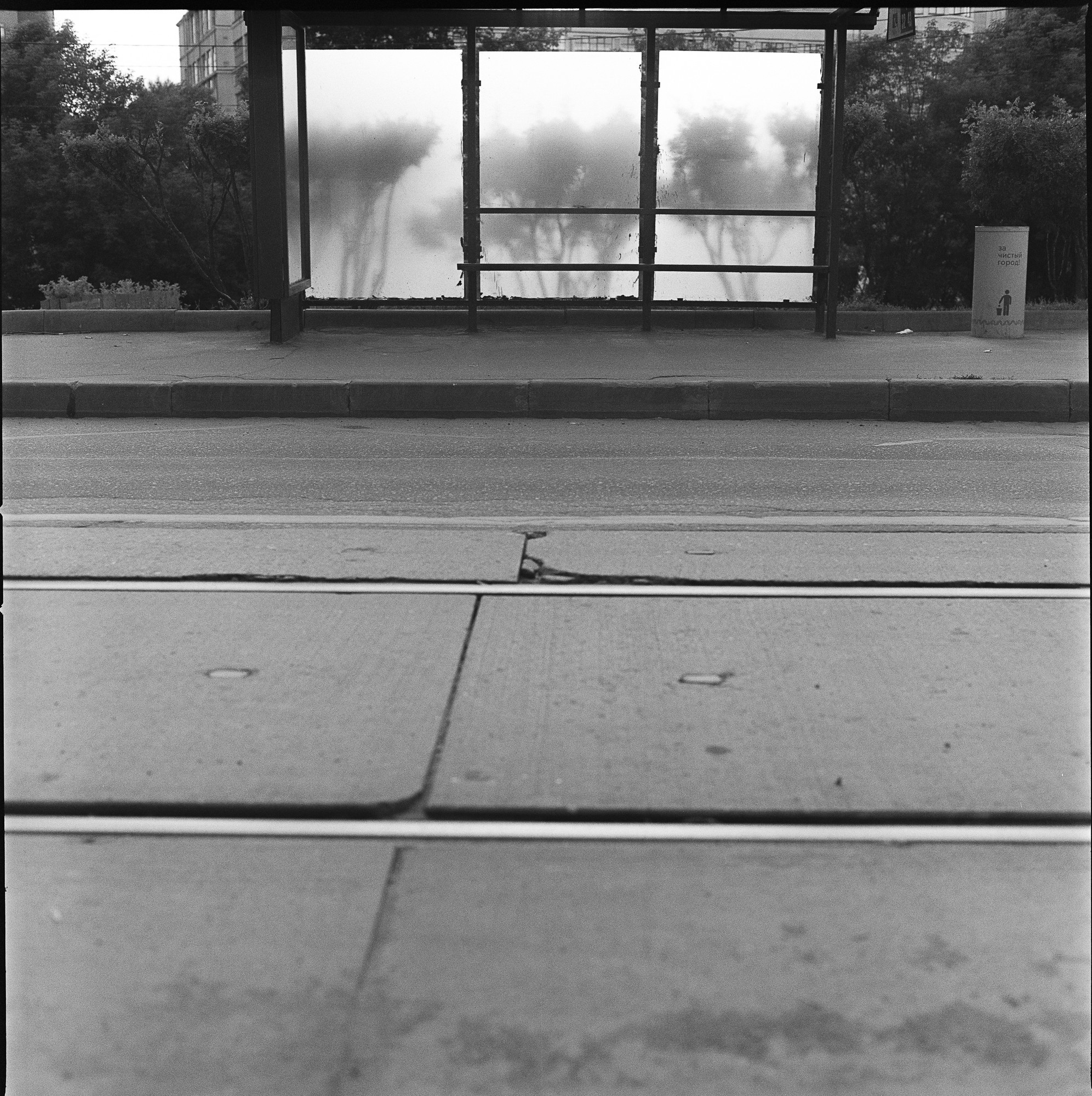
This photograph possesses a rare ability to hold the viewer in an in-between state. There is no obvious movement, no human presence, yet this very absence fills the image with potentiality. We stand before tram tracks, before concrete slabs that, covered in fine cracks and stains, resemble traces of time. This frame captures something beyond a mere street or a tram stop—it becomes a metaphor for waiting, for transition from one state to another.

The division of space plays a crucial role here. The foreground is sharply defined, with detailed textures of asphalt and metal, while the background dissolves into a diffuse haze. The glass of the tram stop acts as a boundary between a world of clarity and a world of blurred contours. The trees behind this glass no longer belong to reality in the usual sense. They become shadows, memories, hints of something alive yet unreachable.

This technique echoes aesthetic principles found in documentary photography, where a simple scene reveals itself as something greater than the sum of its parts. We do not see people, yet their absence only amplifies the feeling of their possible arrival. We wait for them, just as we wait for the approaching tram that remains beyond the frame.

The use of perspective is also significant. The tracks lead our gaze deeper into the image, yet they provide no clear destination. They stop at the edge of the frame, leaving us suspended. Like the photograph itself, we remain on the threshold of something elusive.

#Fujica6x9
#PosthumousGaze
Essay from the Perspective of Georges Bataille

Essay from the Perspective of Georges Bataille: “Foam as the Language of Chance”

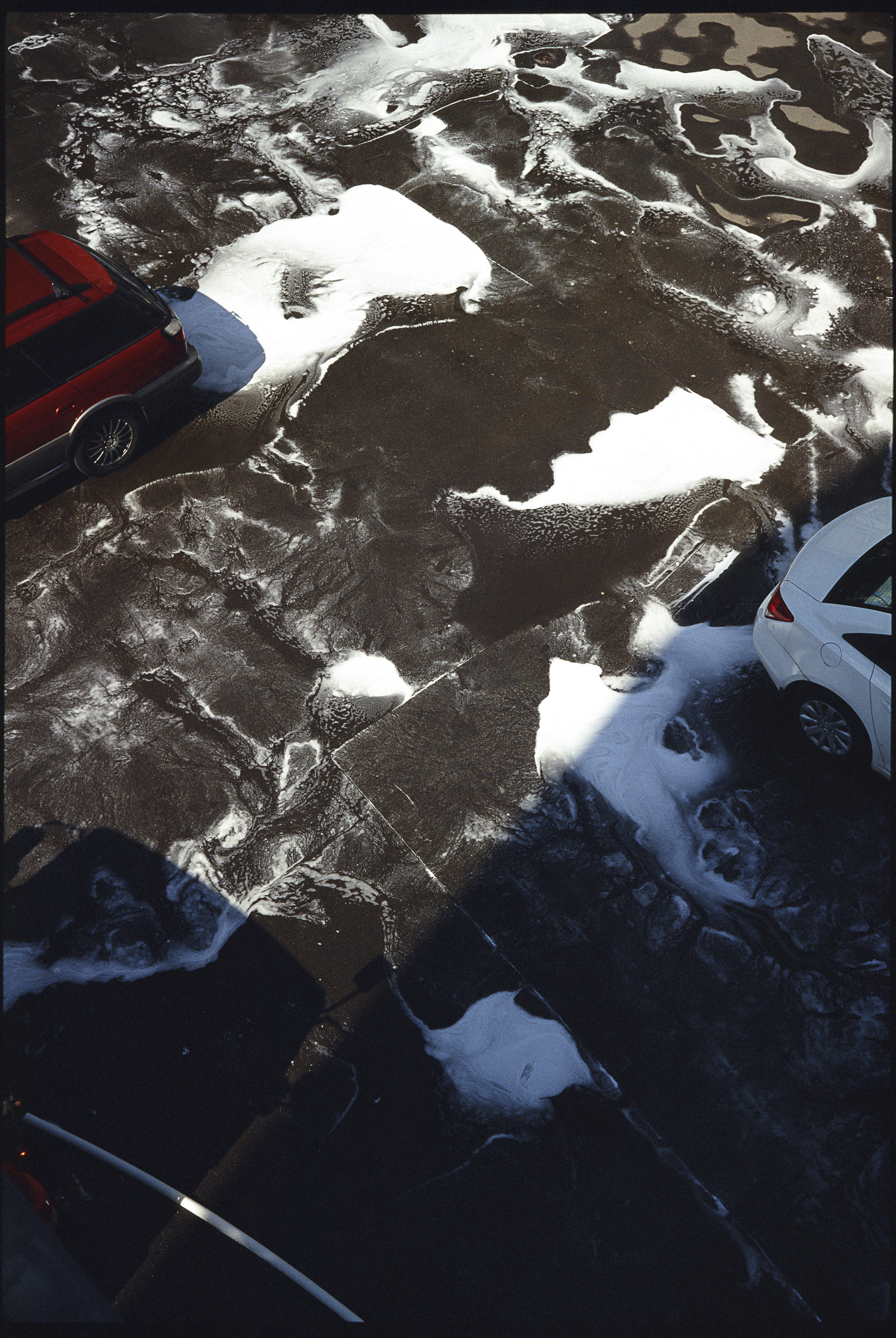
In this image, foam takes center stage—a language of chaos spread across the dark surface of asphalt. Its presence raises questions: where did it come from? What caused its flow? Foam is something fleeting, ephemeral, yet here it finds a way to make itself known, leaving traces that speak of the interplay between nature and human action.

It resembles clouds that have descended to the earth to spill across the material foundation of our world. Each line and stain it creates is the result of a random flow, beyond our control. In this, it reveals the truth of chance—the same truth that governs our thoughts, desires, and fears. Foam lives a brief but intense life cycle, seeping into every crack, every crevice, as though filling the voids we prefer to ignore.

The parked cars stand as symbols of our pursuit of control, order, a fixed system. They are like boundaries that the foam seeks to disrupt, penetrating their shadows, merging the material with the ephemeral. The wet, porous asphalt becomes a canvas for this force, where foam is not merely a substance but a gesture, an action that blurs rigid borders.

The shadows of cars and the corners of buildings also play their roles. They absorb the foam, interact with its shapes, creating an illusion of depth and layers. This reminds us how often our perception of reality is shaped by the intersection of the material and the immaterial. In this interplay of light and form, there is something almost sacred, as in every process of decay or creation.

Foam symbolizes the uncontrollable, the unstructured. It seeks to expose the absurdity of our efforts to impose order on chaos. This image speaks to the transience and the perpetual struggle between structure and anarchy. Foam is the trace of an action that leaves behind no meaning, yet in this absence, it reminds us of our own vulnerability to the forces of time and oblivion.

#Fujica6x9
#PosthumousGaze

An Essay from the Perspective of Vilém Flusser

An Essay from the Perspective of Vilém Flusser

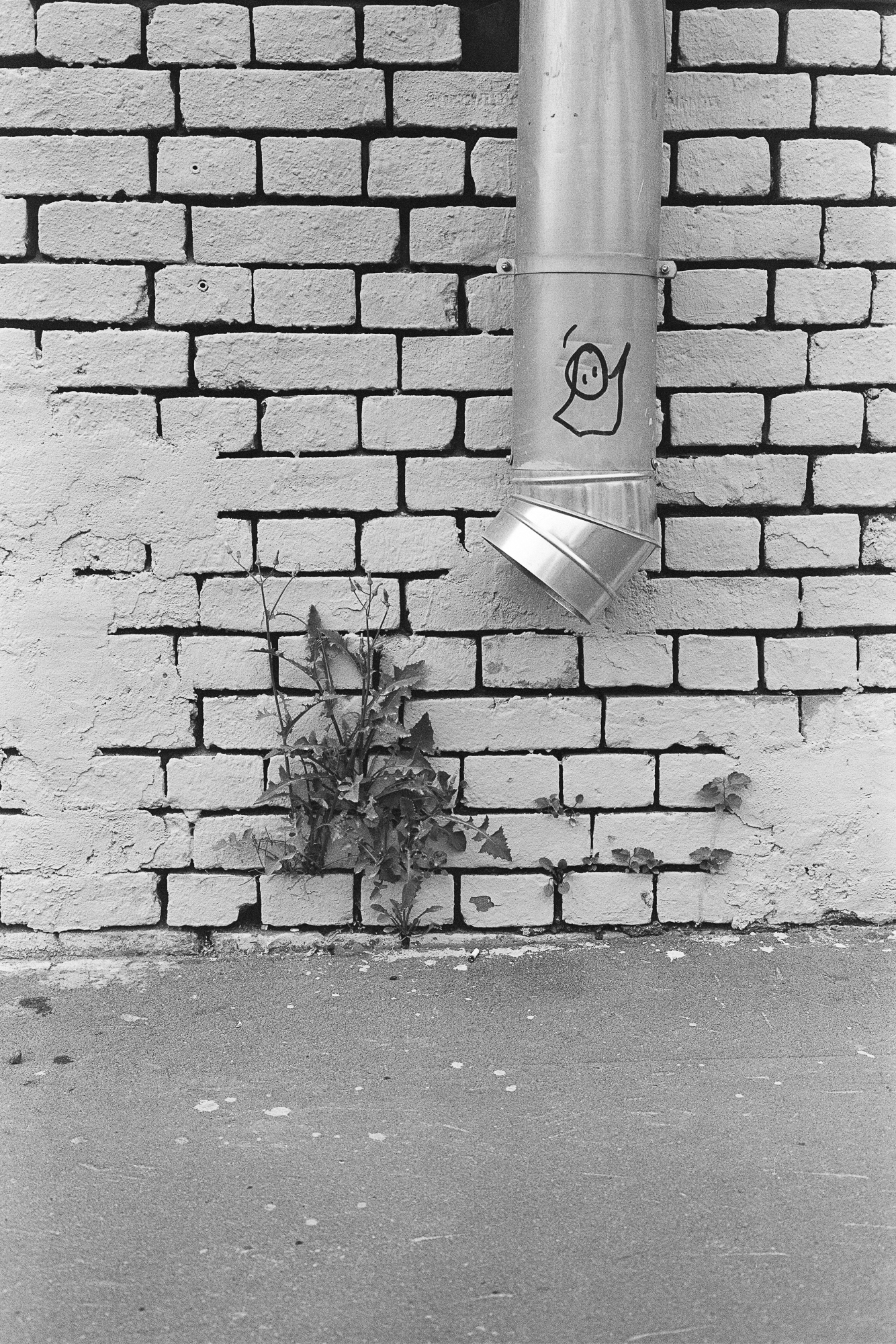
The photograph presented to me is a challenge to the dialogical nature of the image and the objecthood of the surrounding world. This shot is not merely the result of the photographer’s gesture but also a testament to the relationship between human and apparatus, between creator and tool.

Here, in this image, the pipe, wall, and plant cease to be “real” things. They become elements of a conceptual universe, visual symbols that “point” to meaning rather than contain it. The camera is not simply a device that records reality but an interface capable of transforming objects into concepts.

The image of the pipe, slightly tilted and marked with a graphic symbol, is a metaphor for functionality turned into cultural text. The act of someone drawing on the pipe is an example of the “play” humans engage in with objects of the industrial world. The graffiti transforms the pipe into a bearer of meaning, a medium of communication. Meanwhile, the plant growing against the backdrop of the brick wall challenges this very industry, presenting a contrast between the organic and the artificial, the living and the static.

The brick wall, even and orderly, symbolizes human-created structure, yet its cracks reveal the chaotic force of nature, whose power cannot be entirely subdued. This tension between the authentic, the natural, and the industrial introduces us to a new world, where the familiar desire for control is dismantled by its own logic.

What is significant here, however, is the act of photographing itself. The photographer is a “programmer” working with the “memory” of the apparatus. The choice of angle, framing, and the relationships between objects is a process that extracts the image from the flow of randomness and imbues it with meaning. The apparatus, despite its cold functionality, becomes a tool for cultural expression, and the photographer, interacting with it, does not merely record but creates.

This work reveals the essence of photography as communication. It speaks not only about the objects within the frame but also about the gaze that perceived them, the person behind the camera, and us, the viewers of this photograph. We become part of this visual dialogue, transforming from passive spectators into interpreters.

This photograph is not simply an object; it is a text we read. And therein lies its true value.

#Fujica6x9
#PosthumousGaze
An essay written as if by Roland Barthes

“The Death of the Author, the Birth of the Sign”

An essay written as if by Roland Barthes

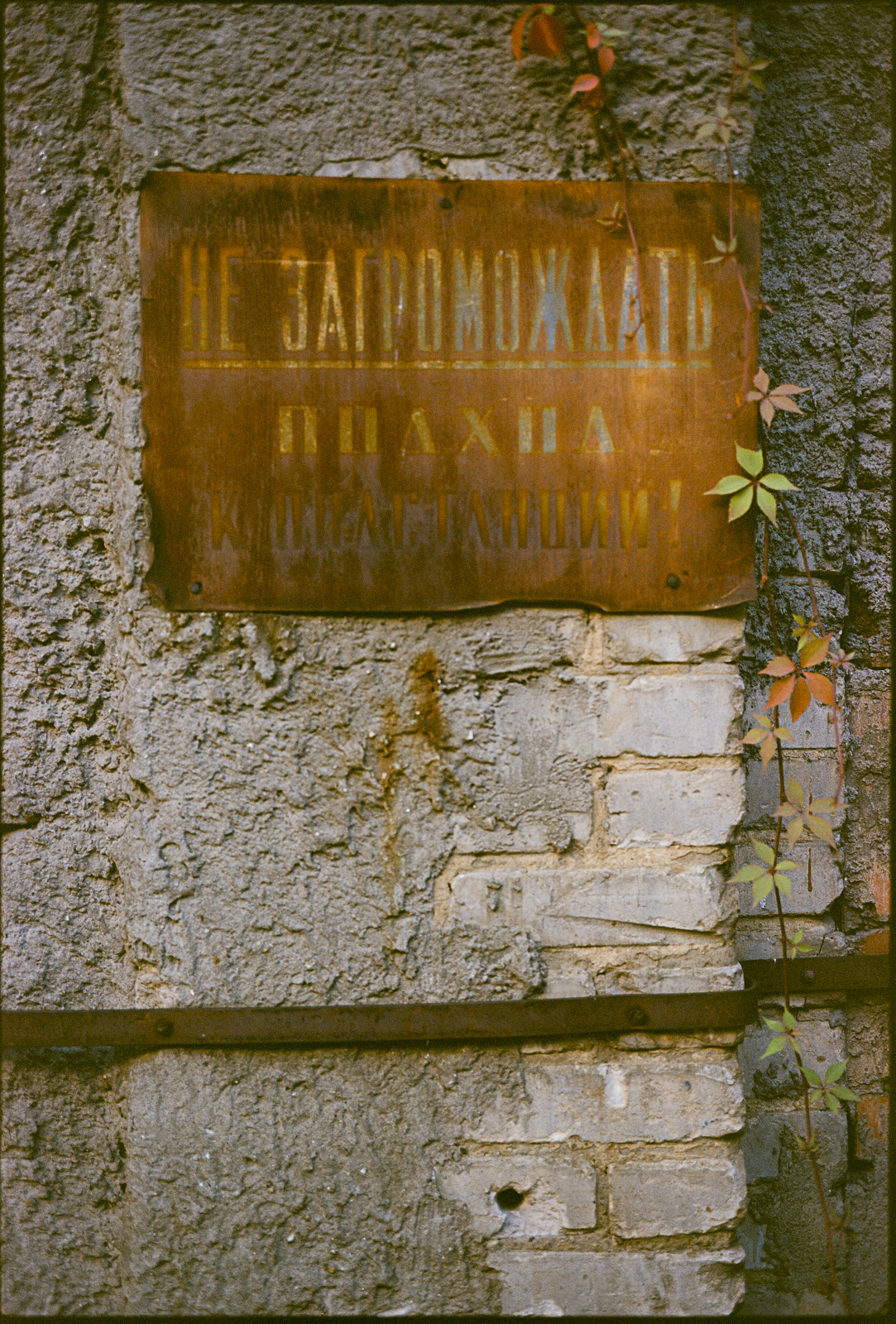
This photograph is not merely an image but a text I read in my imagination. It unfolds before me as a field of signs, endlessly layered, each calling me to interpret, deconstruct, and immerse myself in its ambiguity. The image becomes a space of meanings, where the author vanishes, leaving us alone with the object—a sign that demands to be read.

At the center of the composition, we see a sign with the inscription: “Do not block the passage to the boiler room.” At first glance, it is a simple utilitarian directive, a warning, a relic of the industrial age. But its placement, its wear, and its interaction with nature create a unique semiotic tension. This object is no longer functional in its literal sense. It has become a symbol of the past, which, through oblivion, transforms into poetry.

The rust on the sign speaks of time—of its destructive and, paradoxically, creative power. This is not merely loss but a new level of presence. The metal, corroded by decay, tells a story that, as a viewer, I can only imagine. The aesthetics of desolation turn into an invitation to reflect: what was this passage, to whom or to what did it lead?

The cracked wall is texture, a palimpsest, hiding countless past layers beneath it. It does not remain silent; on the contrary, it whispers of time, the passing of eras, of human labor and its traces. The wild grape leaves creeping along the wall challenge time itself. Nature asserts its dominion, softening the ruins with its organic persistence.

And yet, despite this wealth of meaning, the photograph resists a definitive interpretation. It remains open, like a sign that perpetually eludes a final reading. This is where its power lies. The photographer retreats into the shadows, allowing the objects to speak. I see only what already exists: the sign, the wall, the leaves. But these elements transform within the space of the photograph, becoming independent of their original purpose.

The photograph becomes a space where culture and nature, time and its decay, memory and its loss converge. It evokes in me, the viewer, a desire to immerse myself in its signs, returning again and again to read them differently. The “death of the author” here becomes the birth of new meaning.

#Fujica6x9
#PosthumousGaze
An essay written as if by Susan Sontag

“Contrast and Harmony: The Metaphysics of Visual Language”

An essay written as if by Susan Sontag

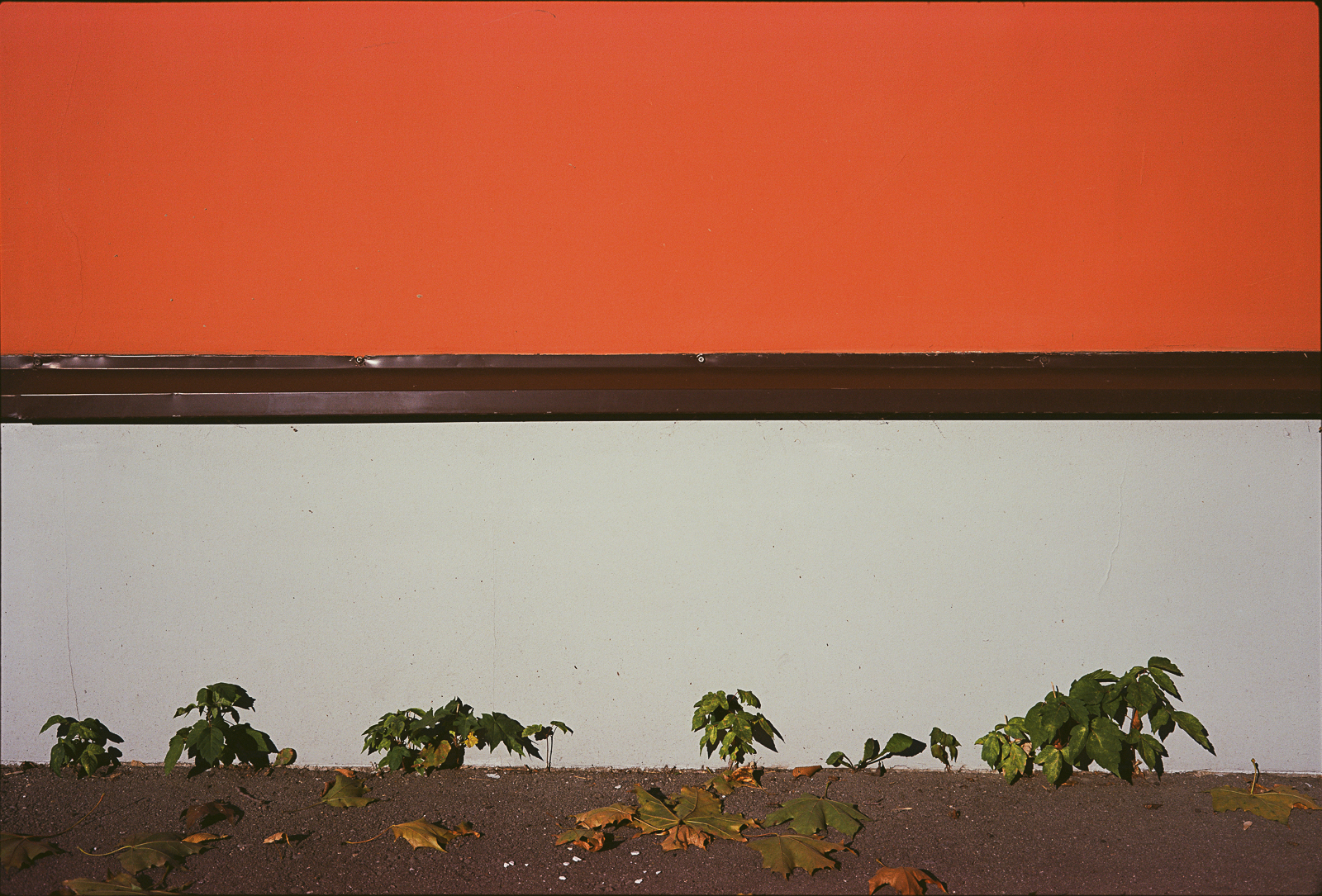
Looking at this photograph, I am involuntarily drawn into a dialogue between art and reality. This is not merely an image of a wall, colors, and fallen leaves. It is an expression of the metaphysics of visual language, through which photography speaks to us, even if we are not prepared to listen.

Every element of this composition is a statement, a gesture. The red field, piercing and vibrant, asserts its strength, its dominance. Yet its intensity and insistence are balanced by the greenish calm of the lower segment, as if a fragment of nature has infiltrated the sterile space of urban geometry. The horizontal line—a dark barrier between the two colors—becomes not just a boundary but a point of contact, a space where the human and the natural meet to form a new, strange alliance.

Photography is always a choice: focusing on details, stripping away context, replacing the vast with the small, the complex with the simple. These are the tools through which the photographer crafts their statement. In this case, the choice is minimalist: just color, just structure, just nature breaking the rhythm of human strictness. The leaves, with their organic chaos, and the sprouting plants stand against the system, reminding the viewer that nature is not merely a backdrop. It actively intervenes; it resists.

I cannot help but recall writing once: “Photography is not just the reproduction of reality. It is interpretation, and, therefore, it is a moral statement.” Here, the moral statement speaks to boundaries—of power and submission, geometry and the organic, humanity and nature. Yet the photographer skillfully avoids sentimentality. There is no call to return to nature or reject progress. On the contrary, this work is about coexistence, about confrontation that does not destroy but creates something new.

This photograph speaks to us in the way that the canvases of Mark Rothko or Donald Judd might. Their abstract fields of color are meditations on the state of being. Here, we see the same meditation, but transposed into an urban landscape. Yet, unlike their works, a narrative emerges. The leaves, the young shoots of plants, weave themselves into the story, creating the texture of time.

Photography has always been and remains an art form that balances between reality and symbolism. It invites us into a world that is simultaneously real and wholly artificial. This is its magic. We see a wall, earth, and leaves, but in truth, it is something more. These are symbols. Red is energy, ambition. Green is calm, nature. Their collision is life itself.

And so, in this simple scene, the photographer compels us to reflect. Perhaps what we perceive as order is merely a thin veil under which nature slowly and inexorably reclaims its place. Perhaps this work is not about contrasts but about harmony—harmony that we must learn to see in these seeming oppositions.

Photography never provides answers. It asks questions. It leaves us alone with ourselves, urging us to seek meaning where none seems to exist. And this is its greatest power.

Fujica 6×9
#PosthumousGaze
An essay composed as if by Walter Benjamin

“Fragments of Memory and the Ruins of Time”

An essay composed as if by Walter Benjamin

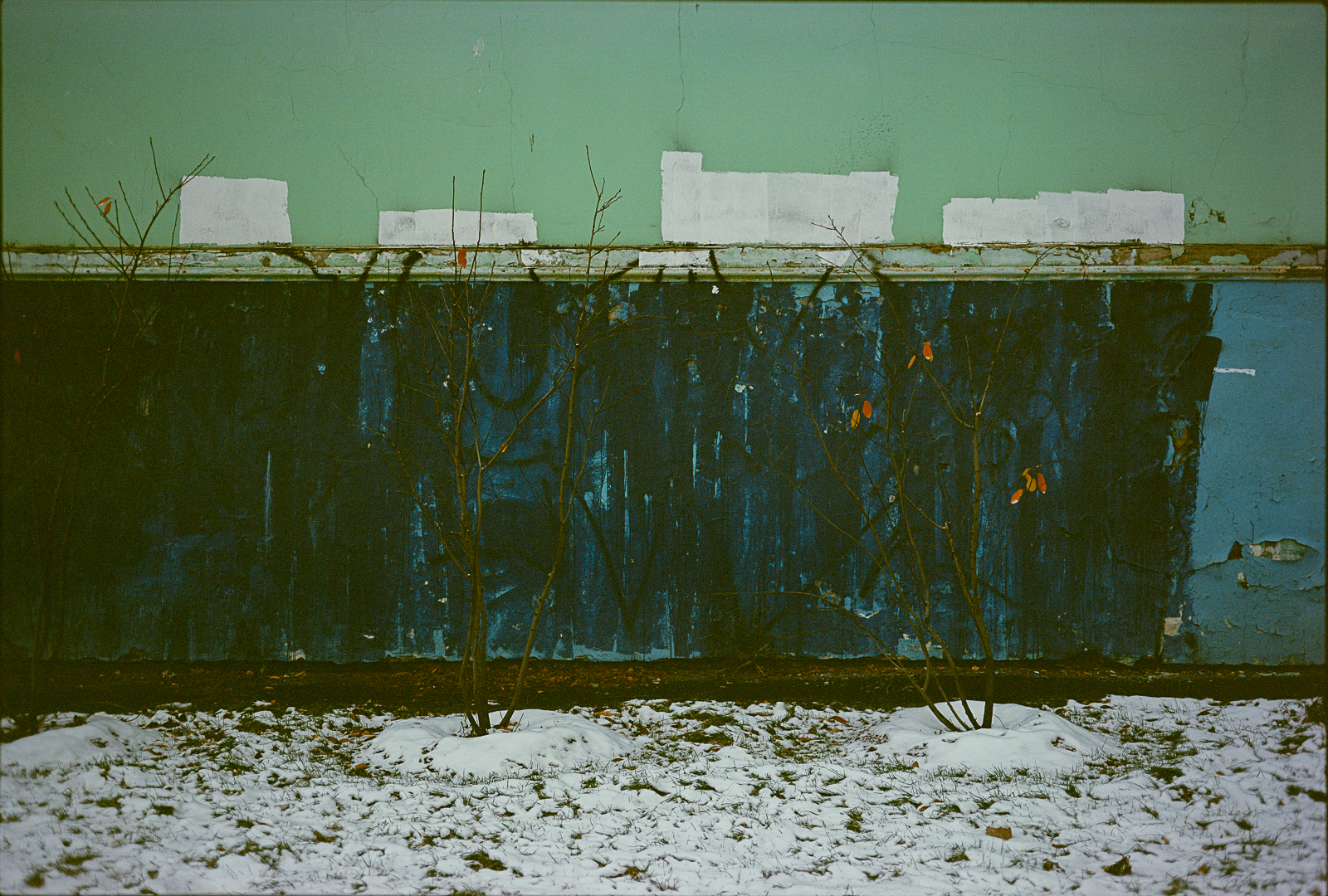
This photograph, in its deceptive simplicity, speaks of something greater than just an image of a wall, trees, and snow. It is a testimony to time—time that simultaneously disintegrates and restores itself. Here, we see an imprint of being, frozen in a moment yet unable to conceal the traces of its own history.

The wall is a text that we read. Its colors, cracked surface, and white patches—all are fragments of what once was whole. Now, it exists as a ruin, as evidence of loss that nevertheless remains imbued with meaning. It is the lost aura of a place that the photograph seeks to capture, transforming it into something new, into an artifact.

The trees—bare, fragile, yet persistently reaching upward—become symbols of resistance. They stand in opposition to the lifeless cold of the snow and the artificiality of the wall. They are nature, refusing to retreat despite all constraints. These branches, with their few remaining orange leaves, serve as a reminder that even amid decay and disconnection, life endures.

The snow below is a temporary veil. It conceals the ground, but not entirely. It is a reminder of the cyclical nature of time—that everything changes but always returns. The snow will turn to water, the water will seep into the earth, and everything will begin anew.

But what does the photograph do with this image? It halts motion, transforming fragments into textures, into symbols. Hidden within this act of freezing time is a unique tension. As viewers, we sense that what we face is more than mere documentary evidence. It is an image that carries within it a dialectic: between past and present, between nature and artificiality, between the passage of time and the persistence of memory.

Photography is a form of “mediated experience,” as I have discussed before. It detaches us from the direct perception of a place, replacing it with a “copy.” Yet in this detachment lies the potential for reflection. Before us is not merely a wall, nor simply trees or snow. What lies before us is their meaning. We see this as testimony to a historical process that is interrupted but not complete.

Finally, this work poses a question: What is aura in an age when everything can be reproduced? Perhaps its aura lies in the uniqueness of this very moment, this particular combination of forms and textures. We view it not as a part of a larger context but as a completed whole. And in this way, photography—despite its reproductive nature—becomes art.

This photograph is an archive, but not in the traditional sense. It is not a repository of facts. It is a repository of emotions, history, and struggle. It reminds us of time we have lost, yet which continues to exist in remnants and fragments. Perhaps its greatest power lies in compelling us to reflect on our own position in time—on how we relate to this world of fragments and ruins.

Fujica 6×9
#PosthumousGaze
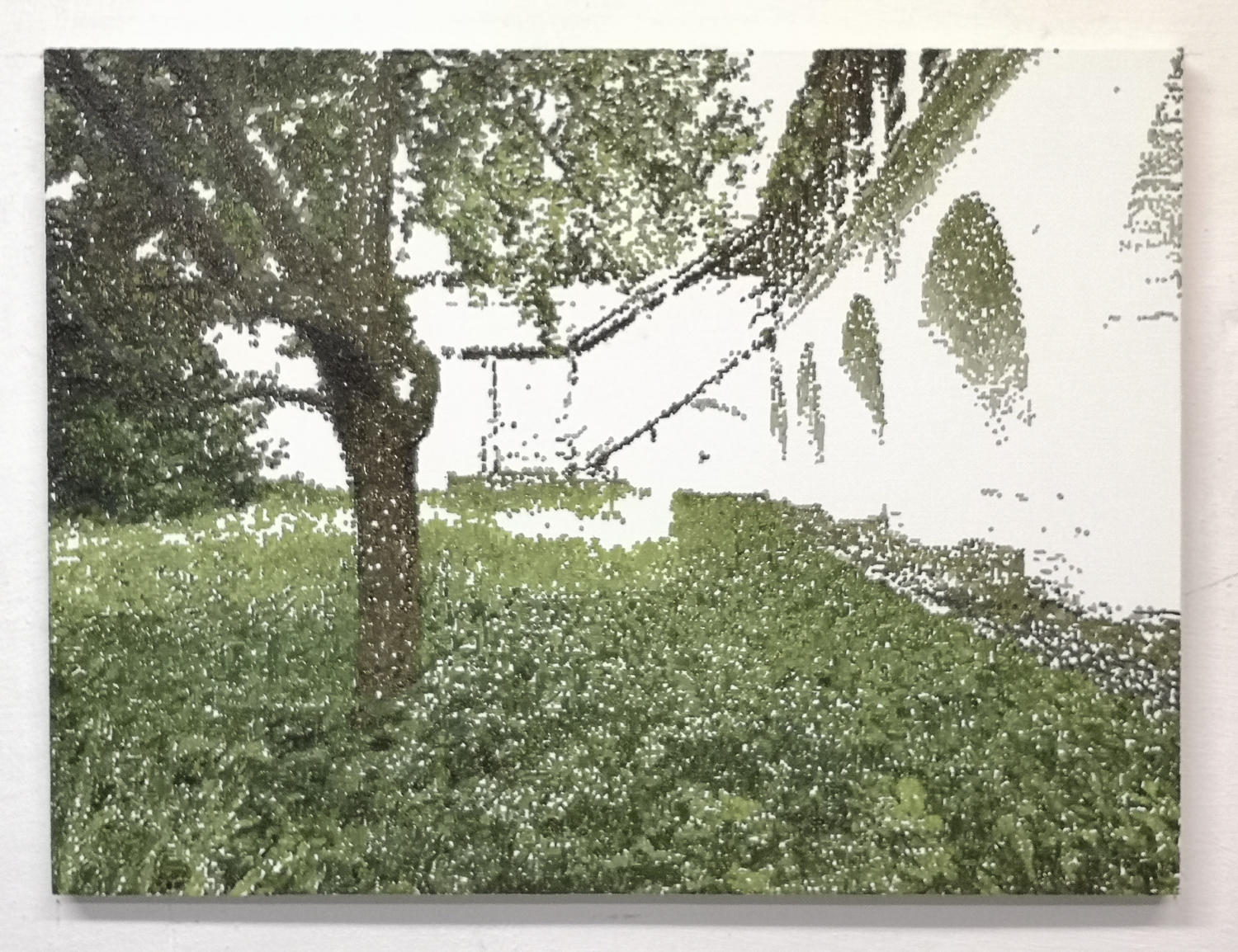
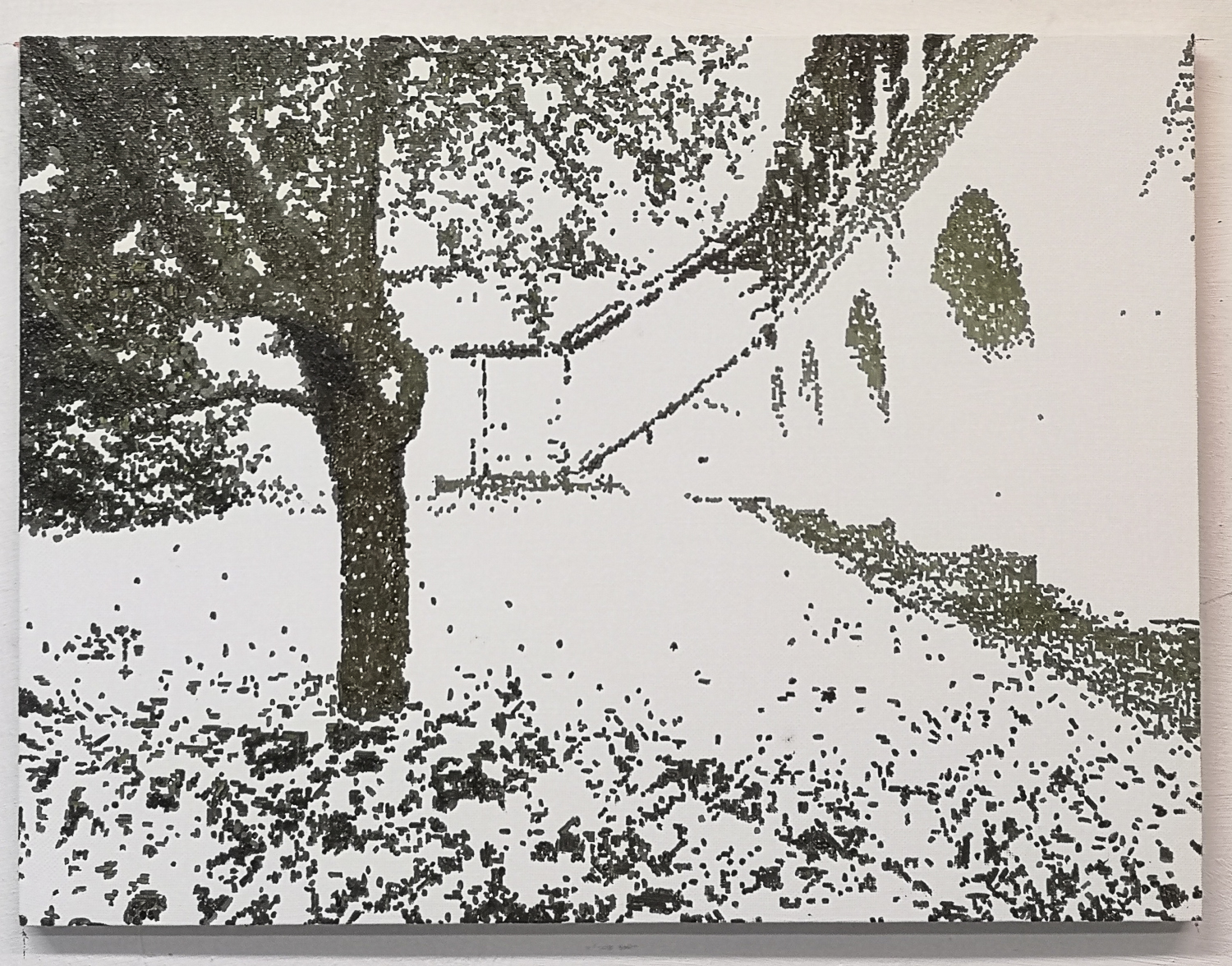
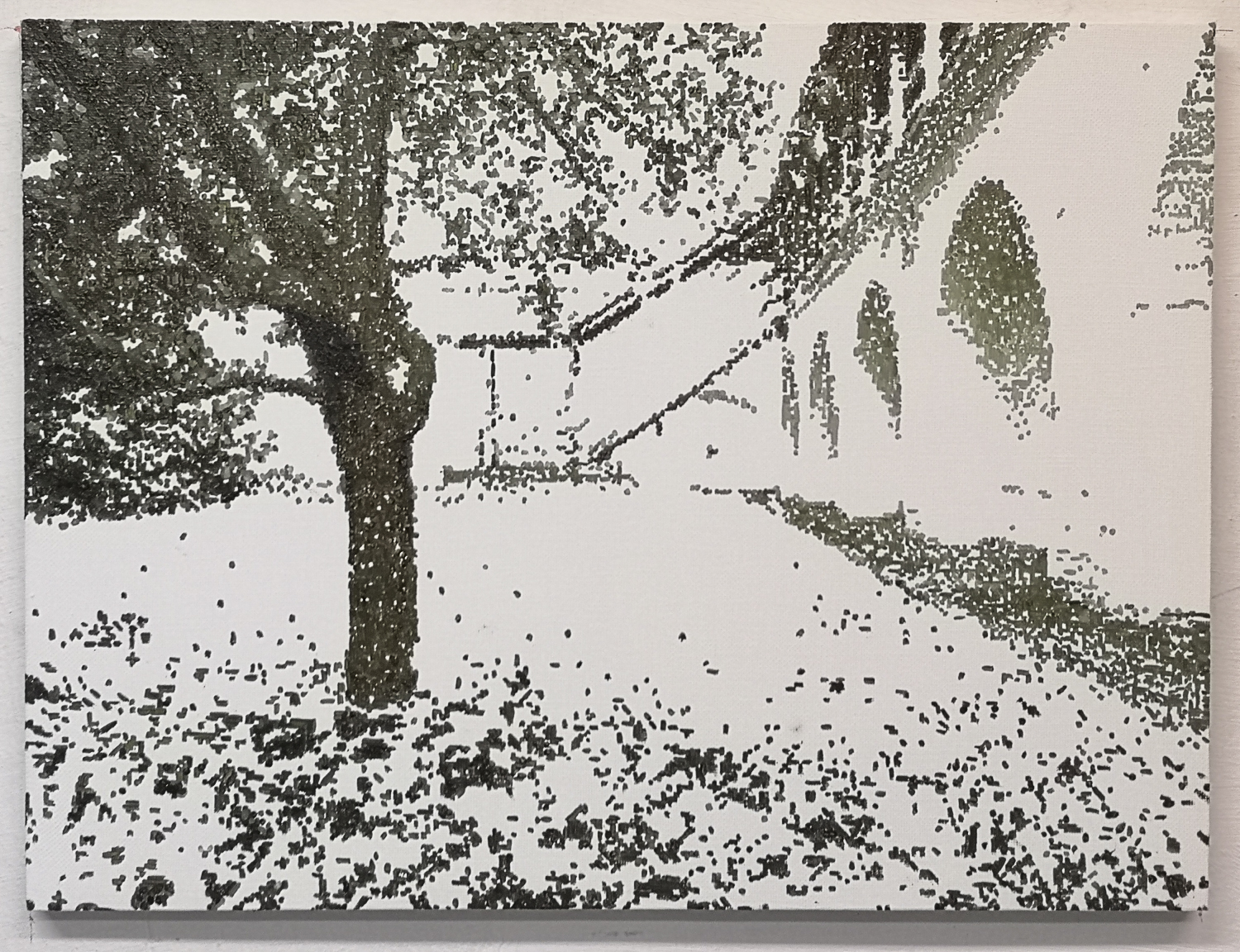
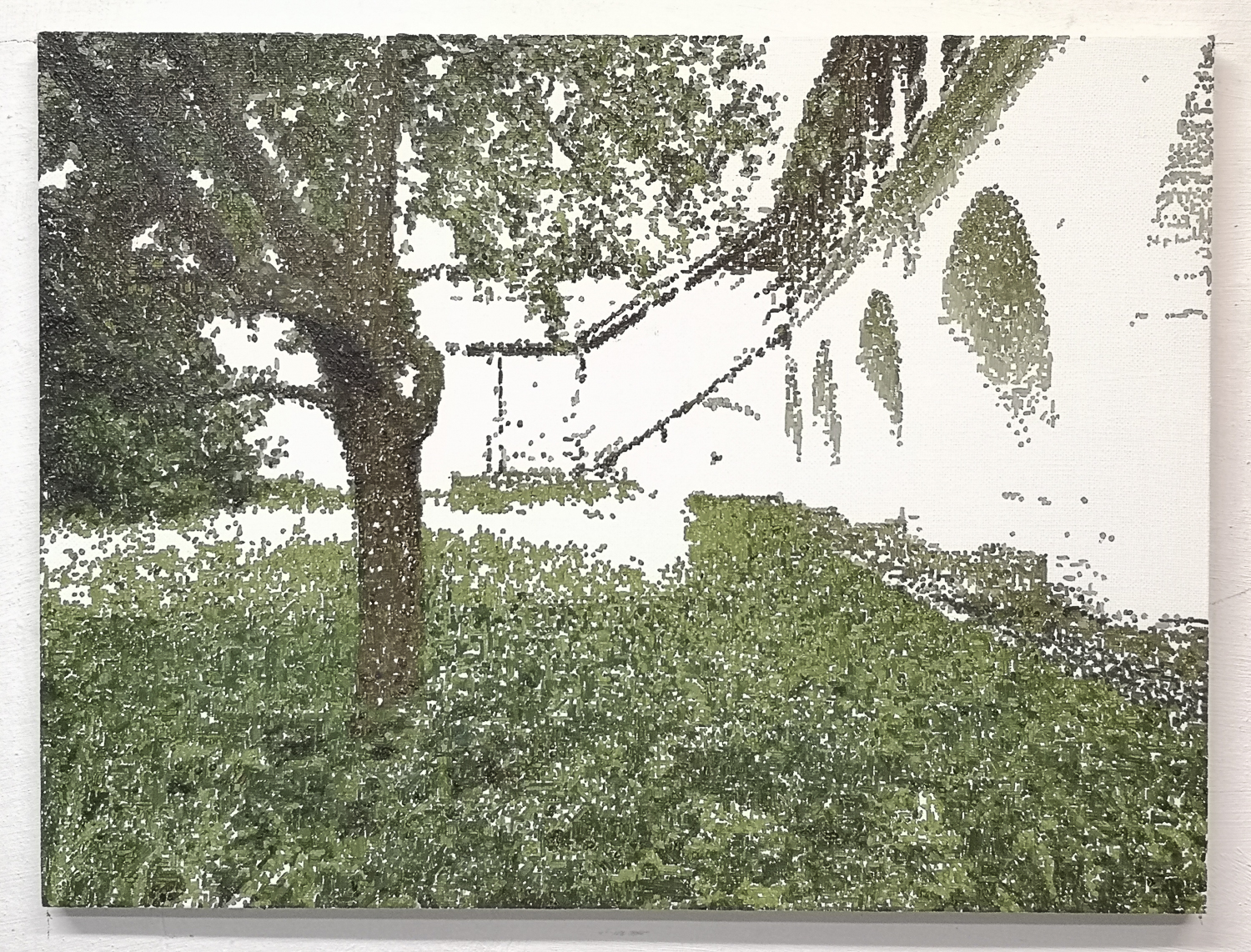
Quantum Project

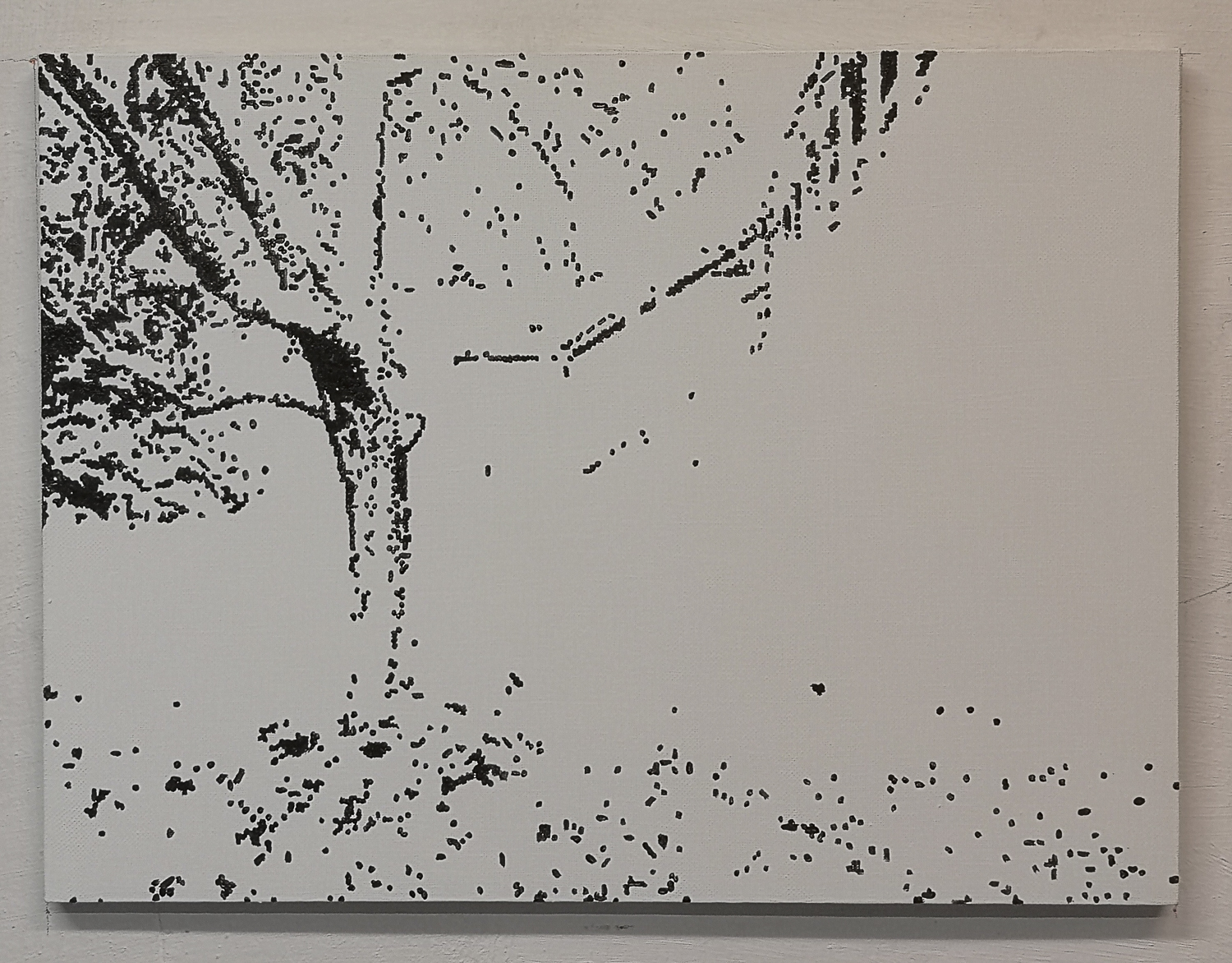
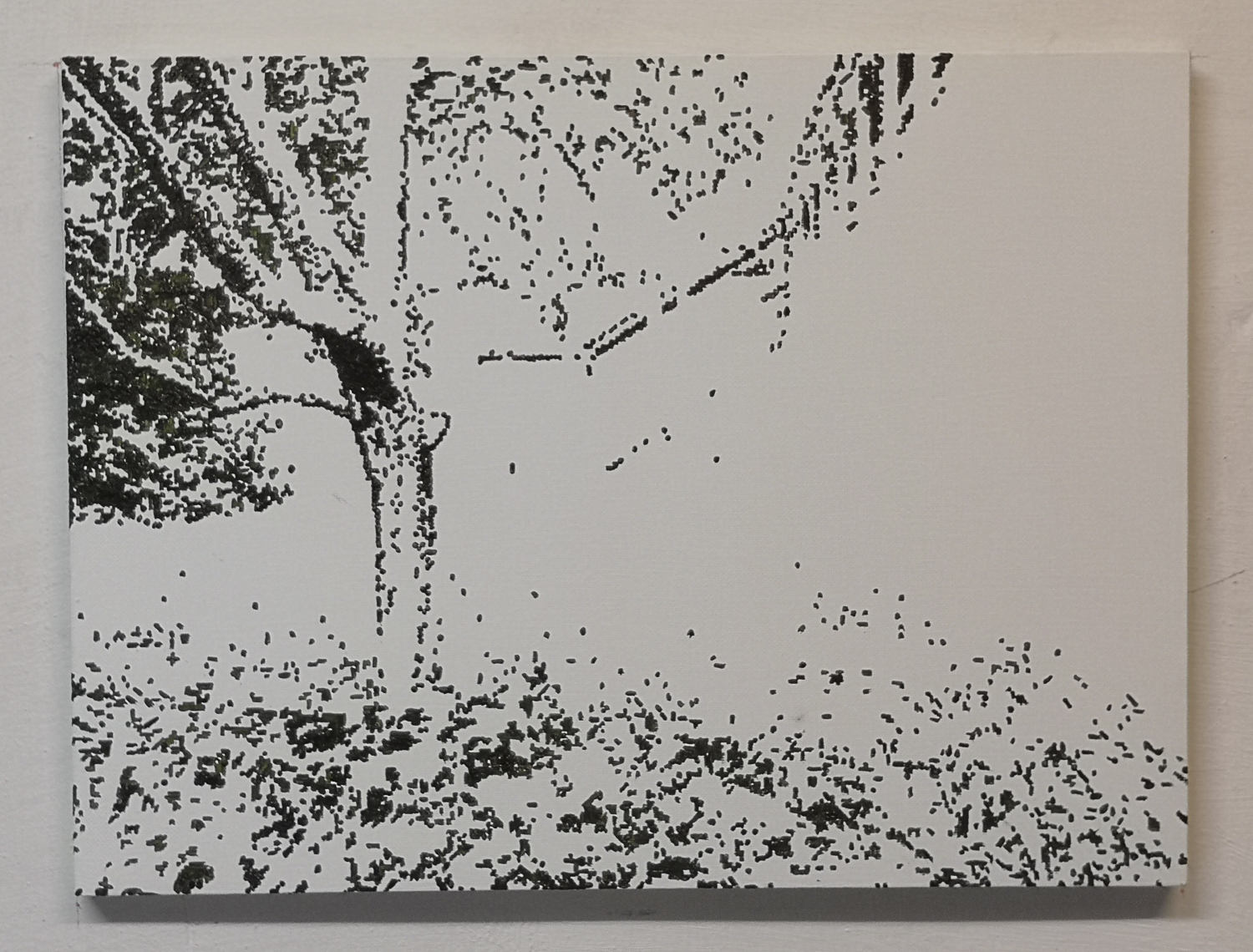
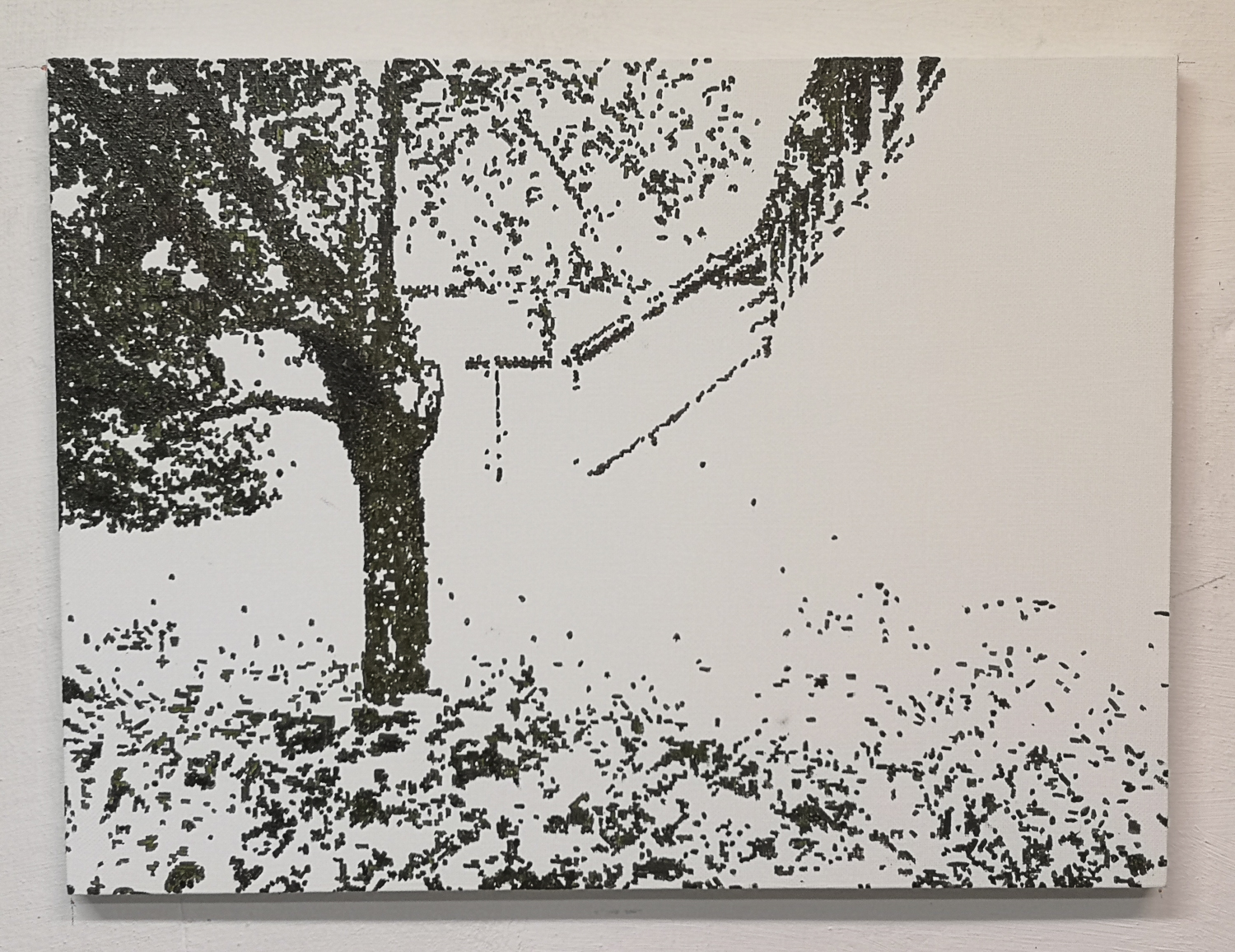
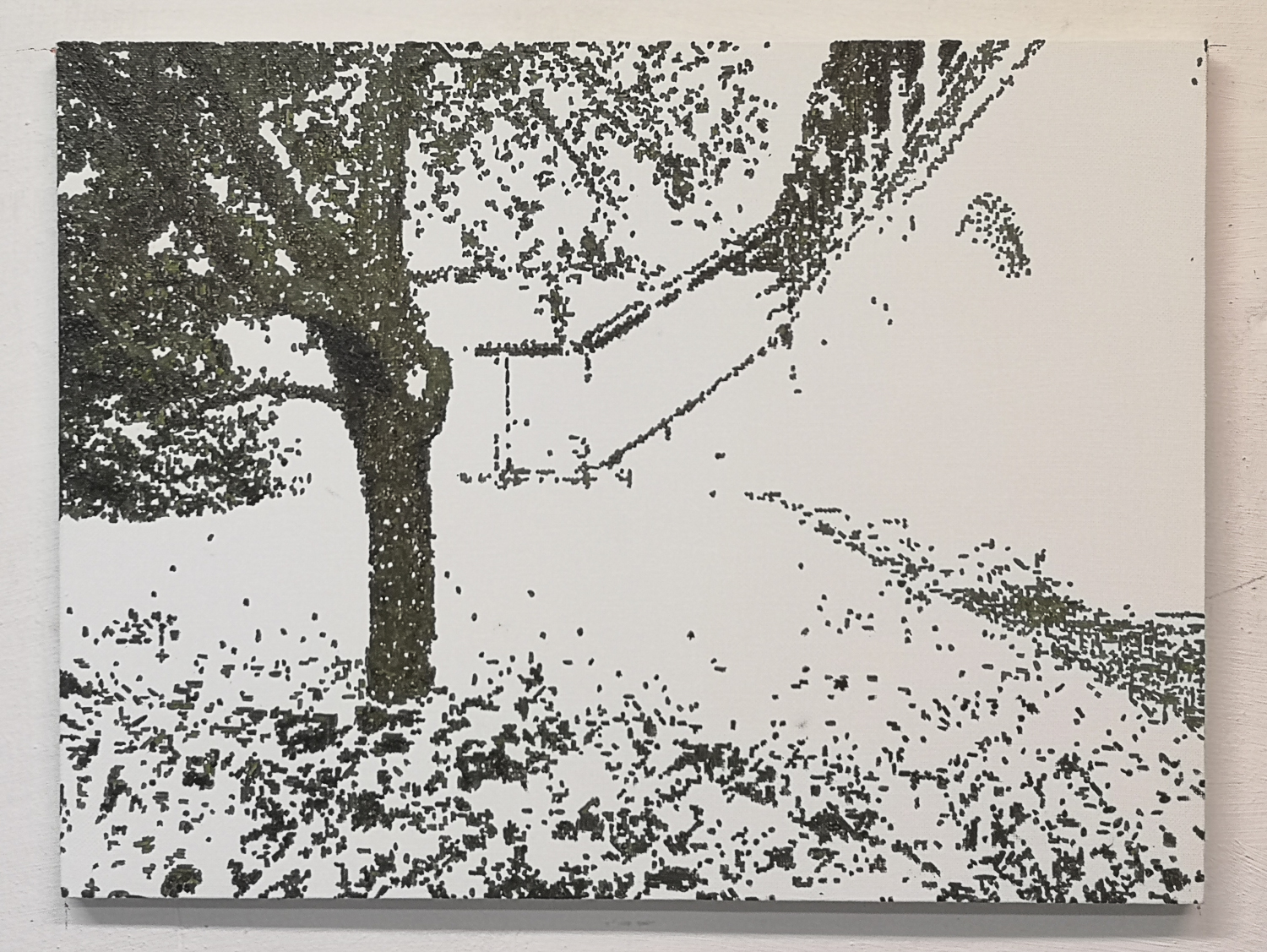
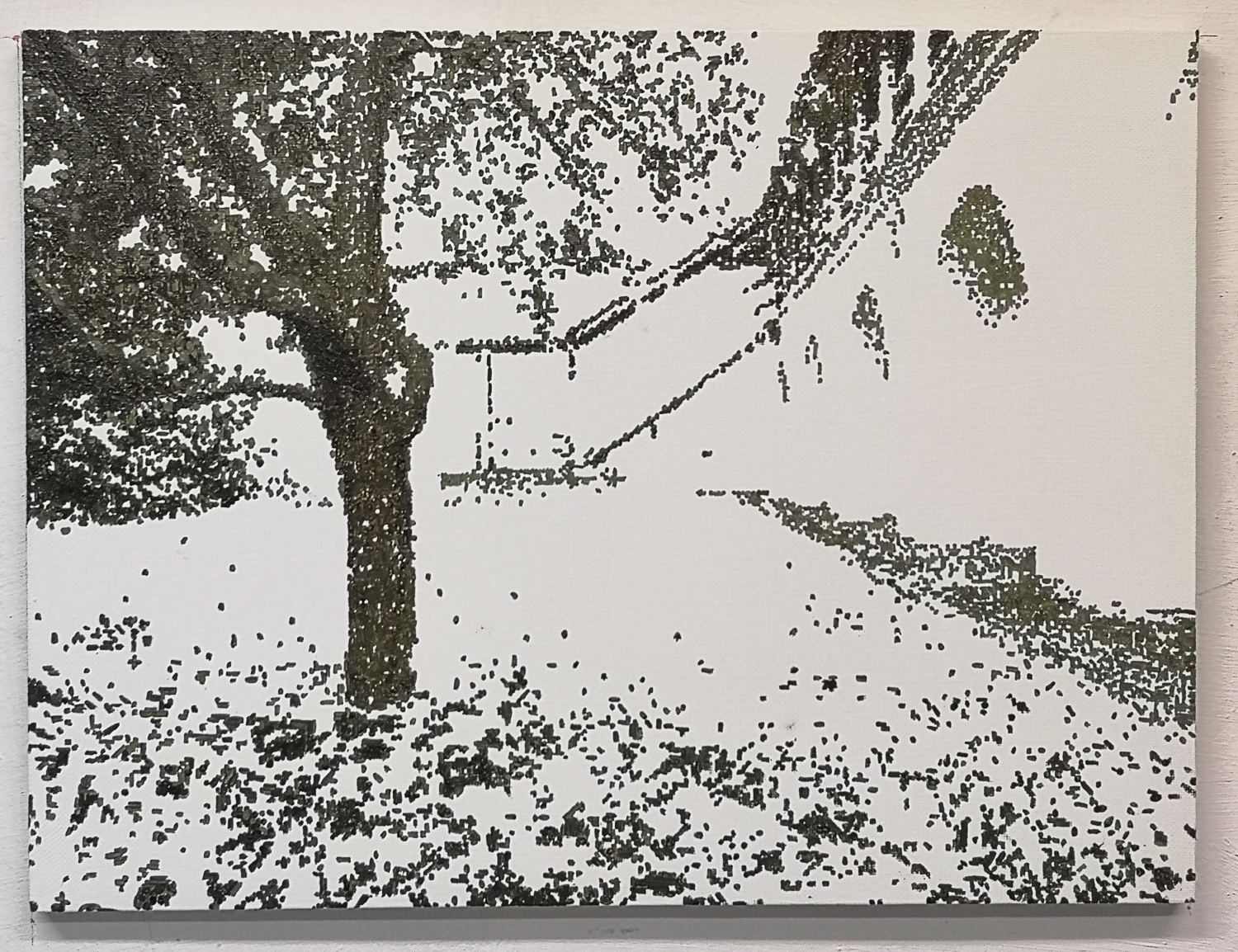
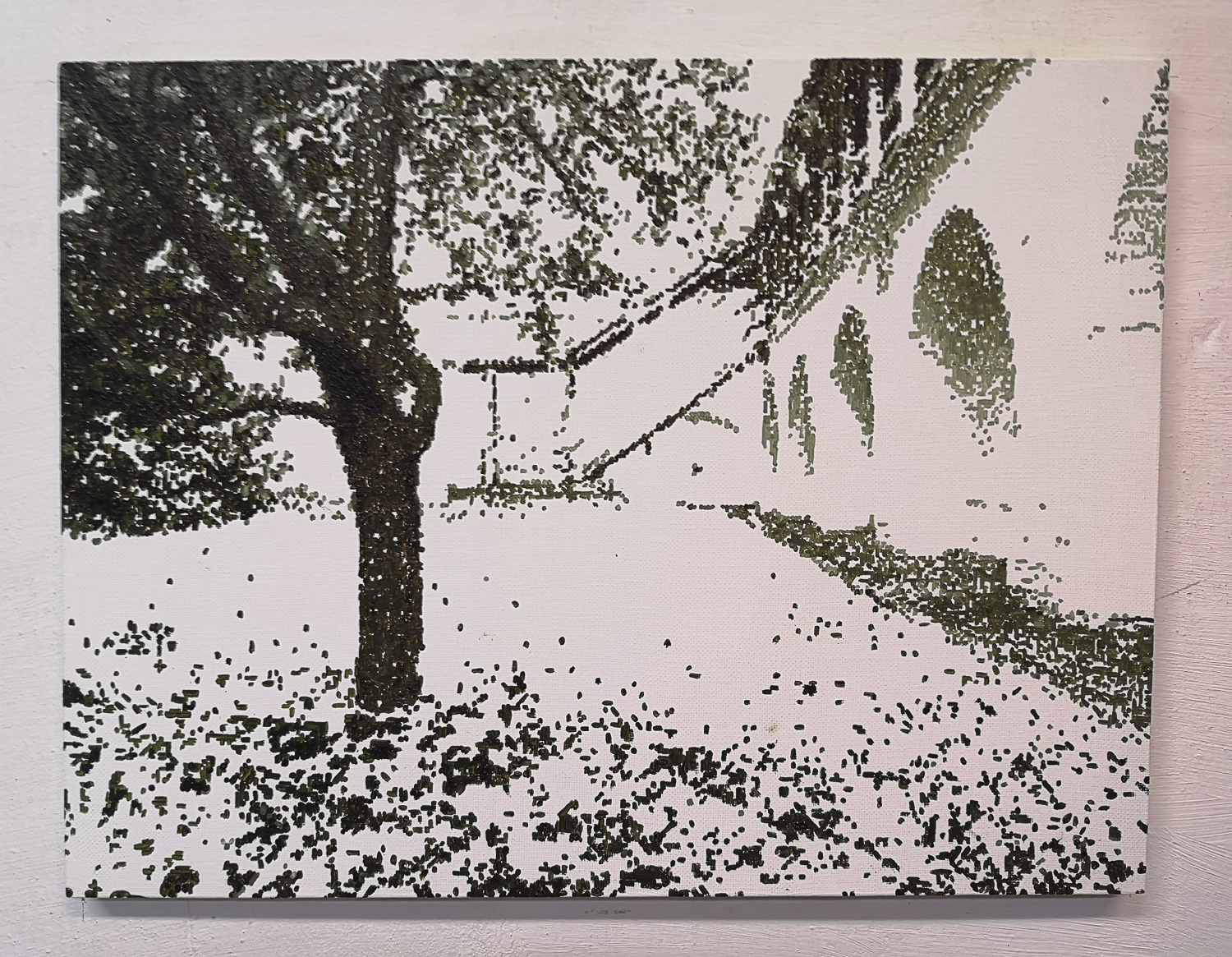
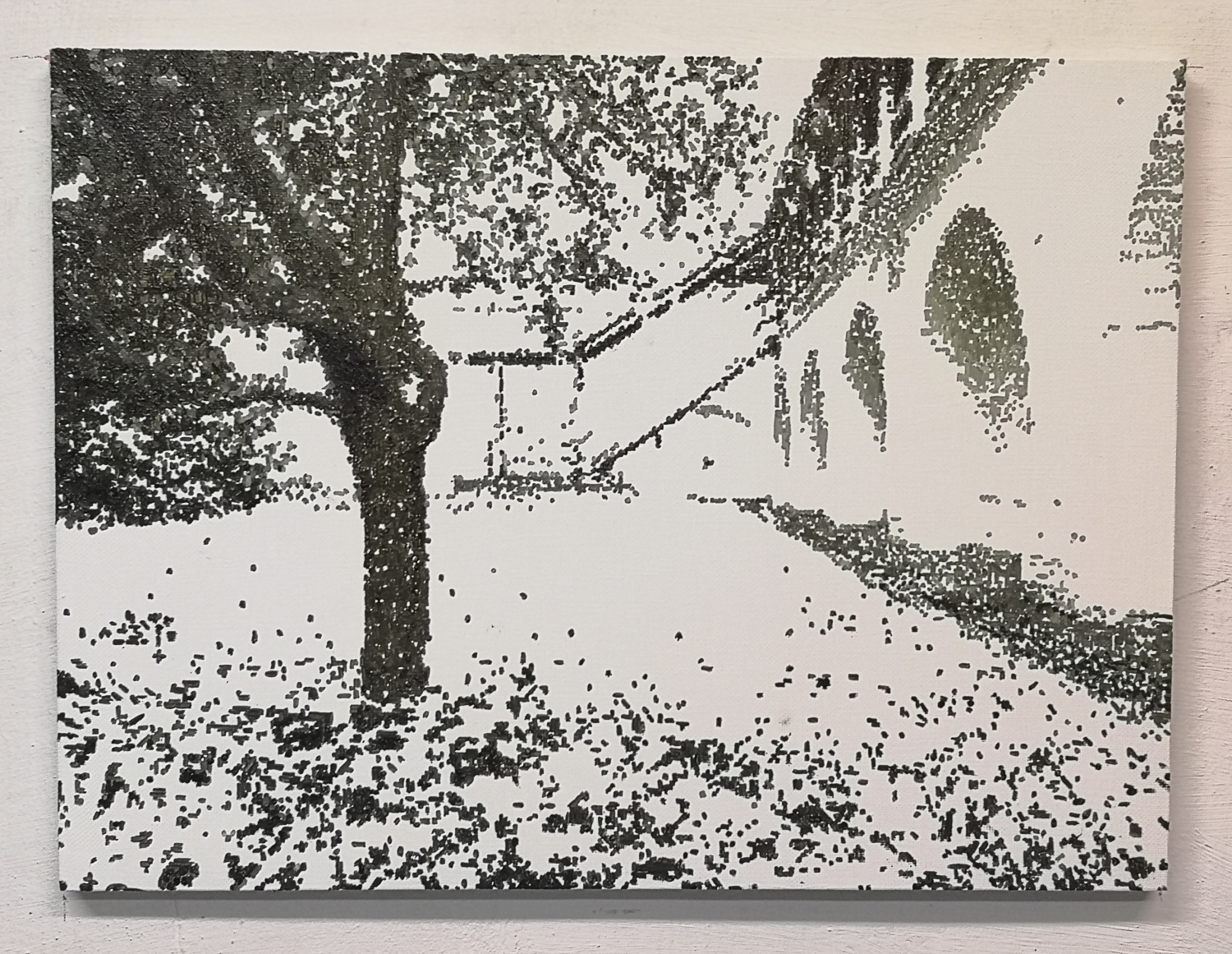
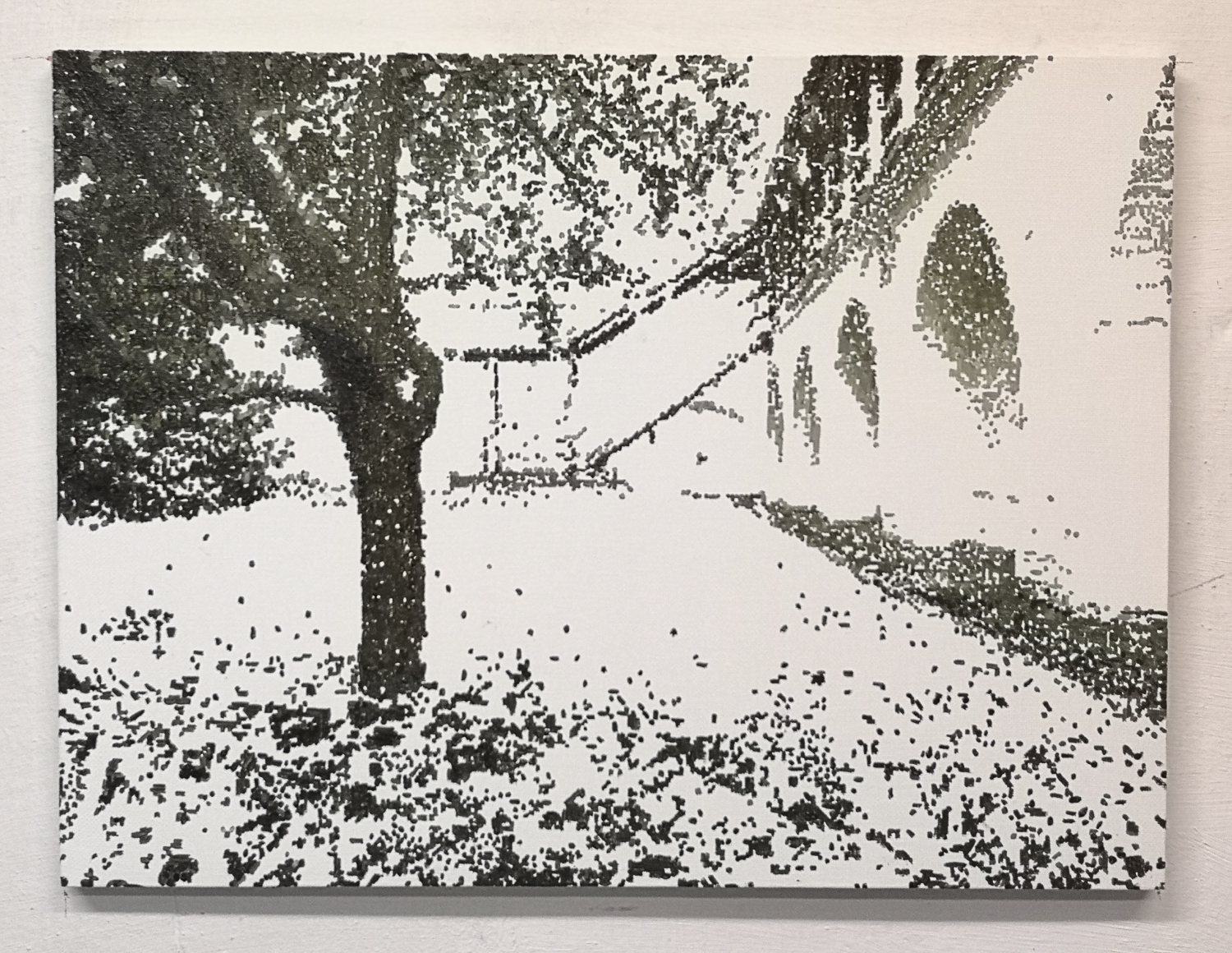
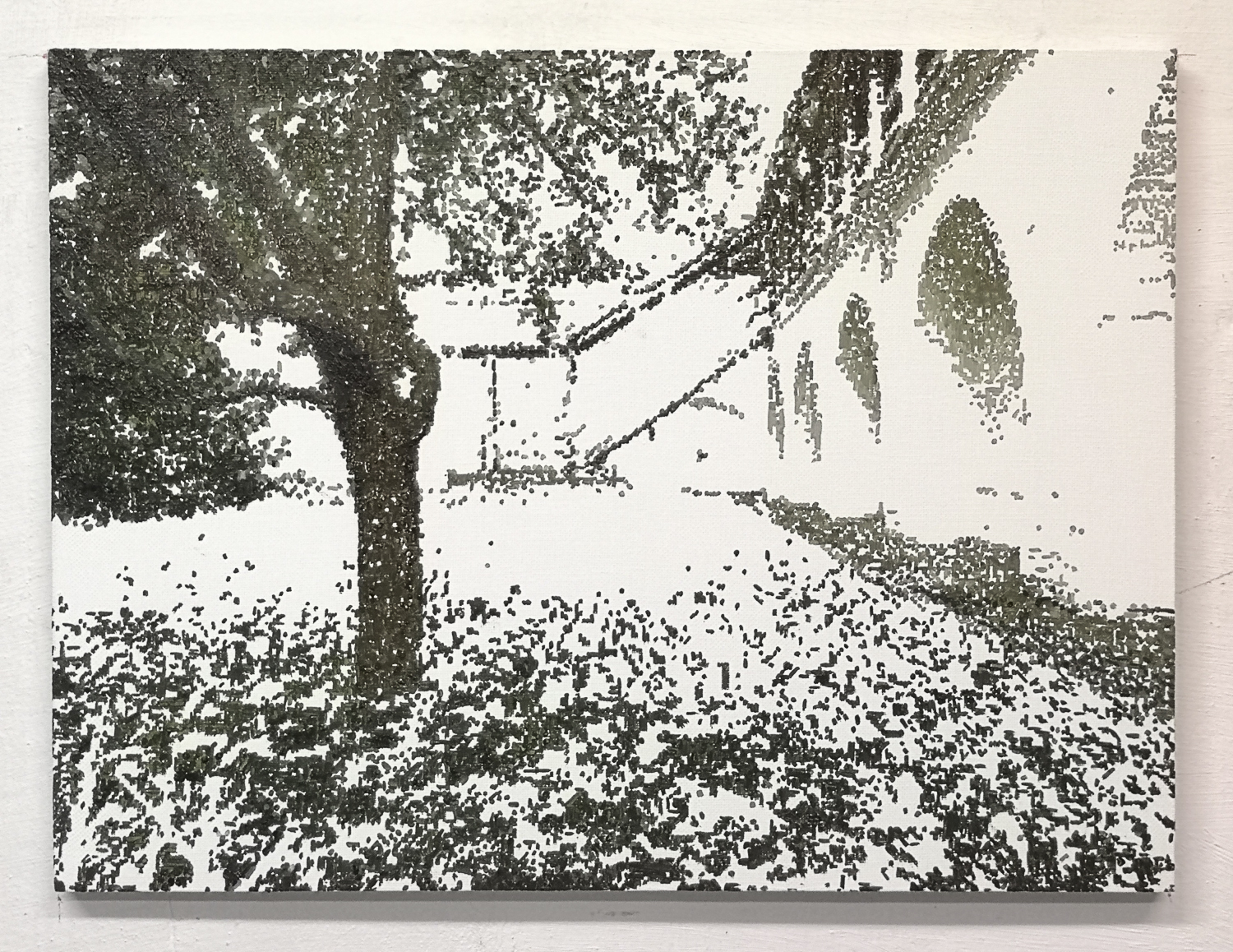
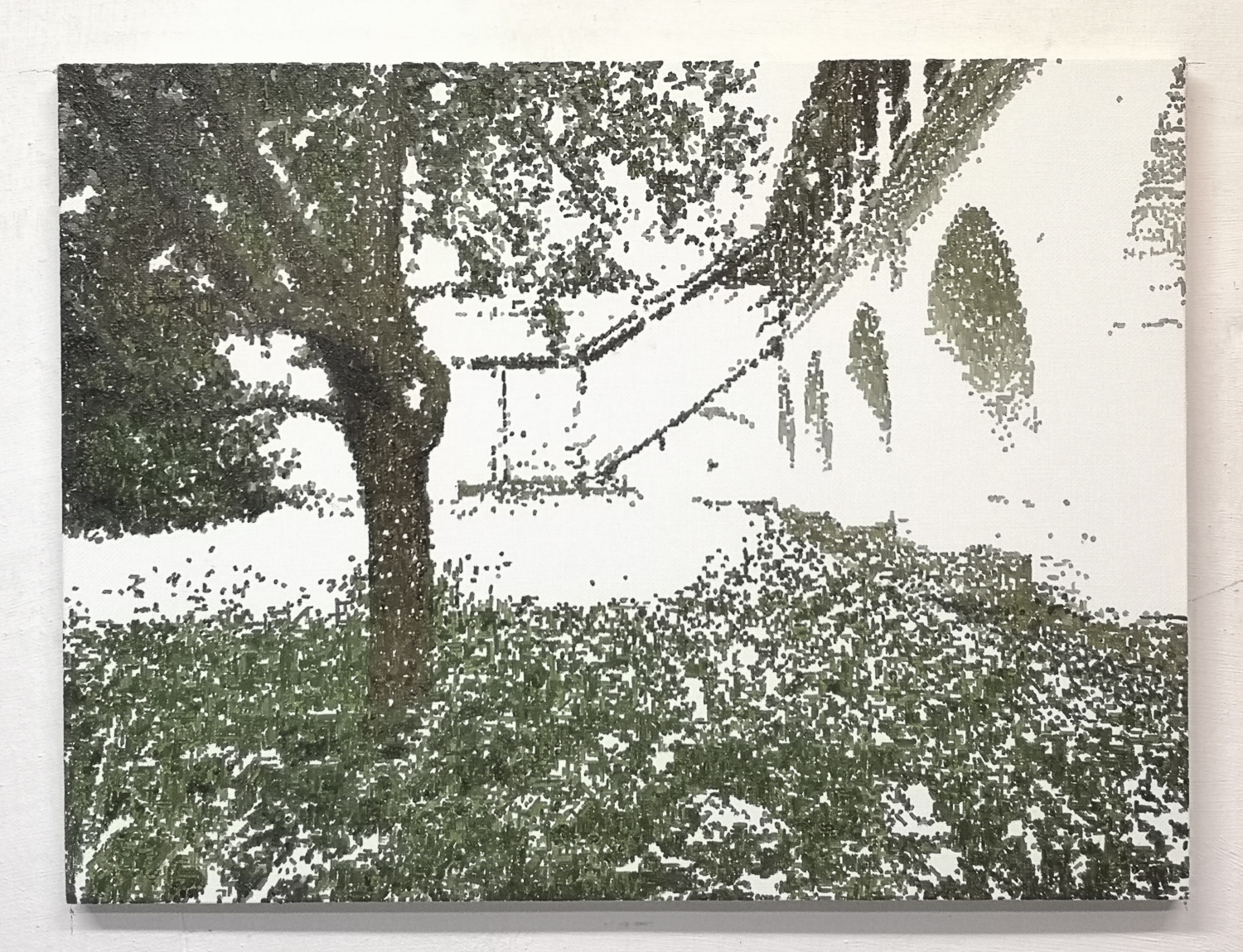
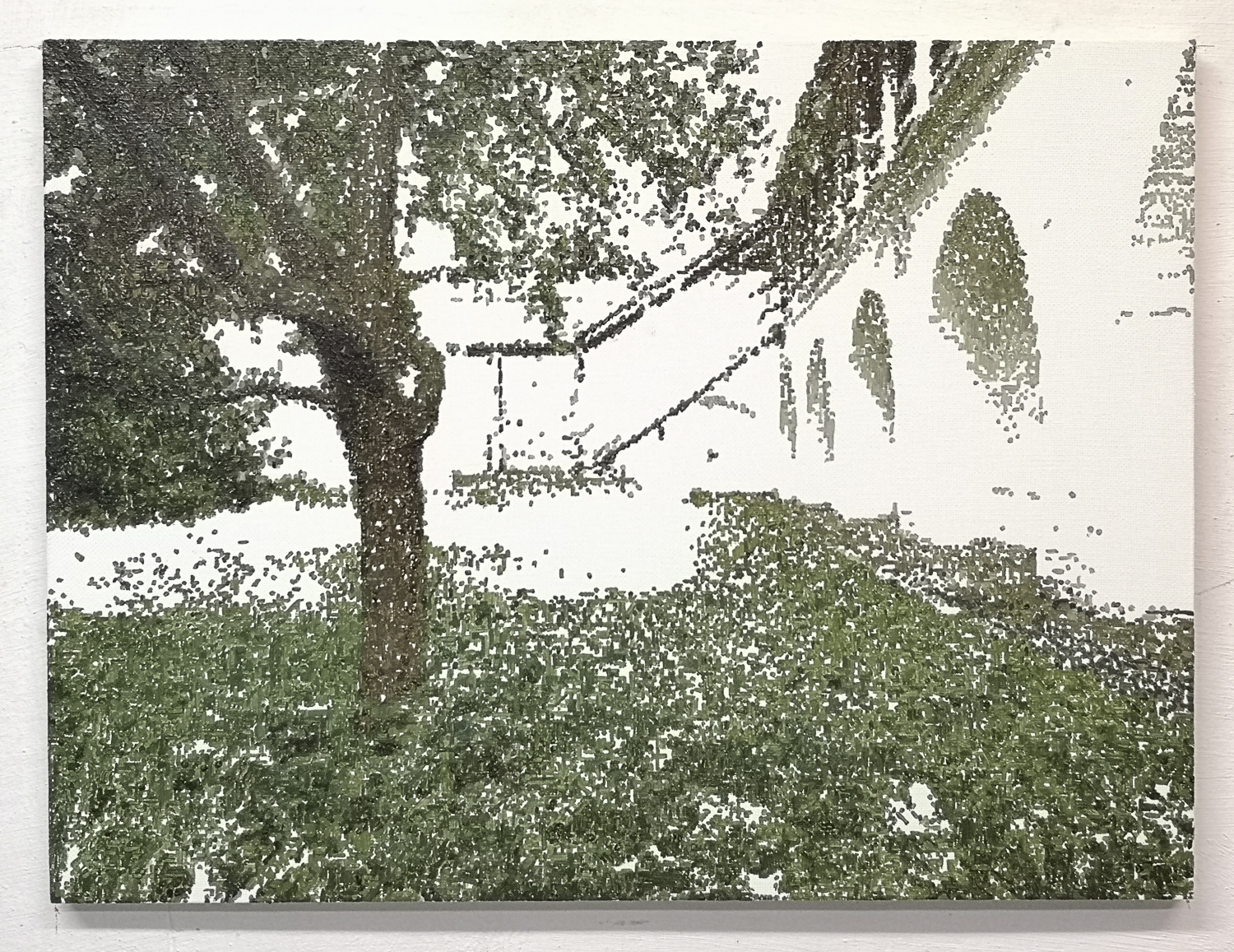
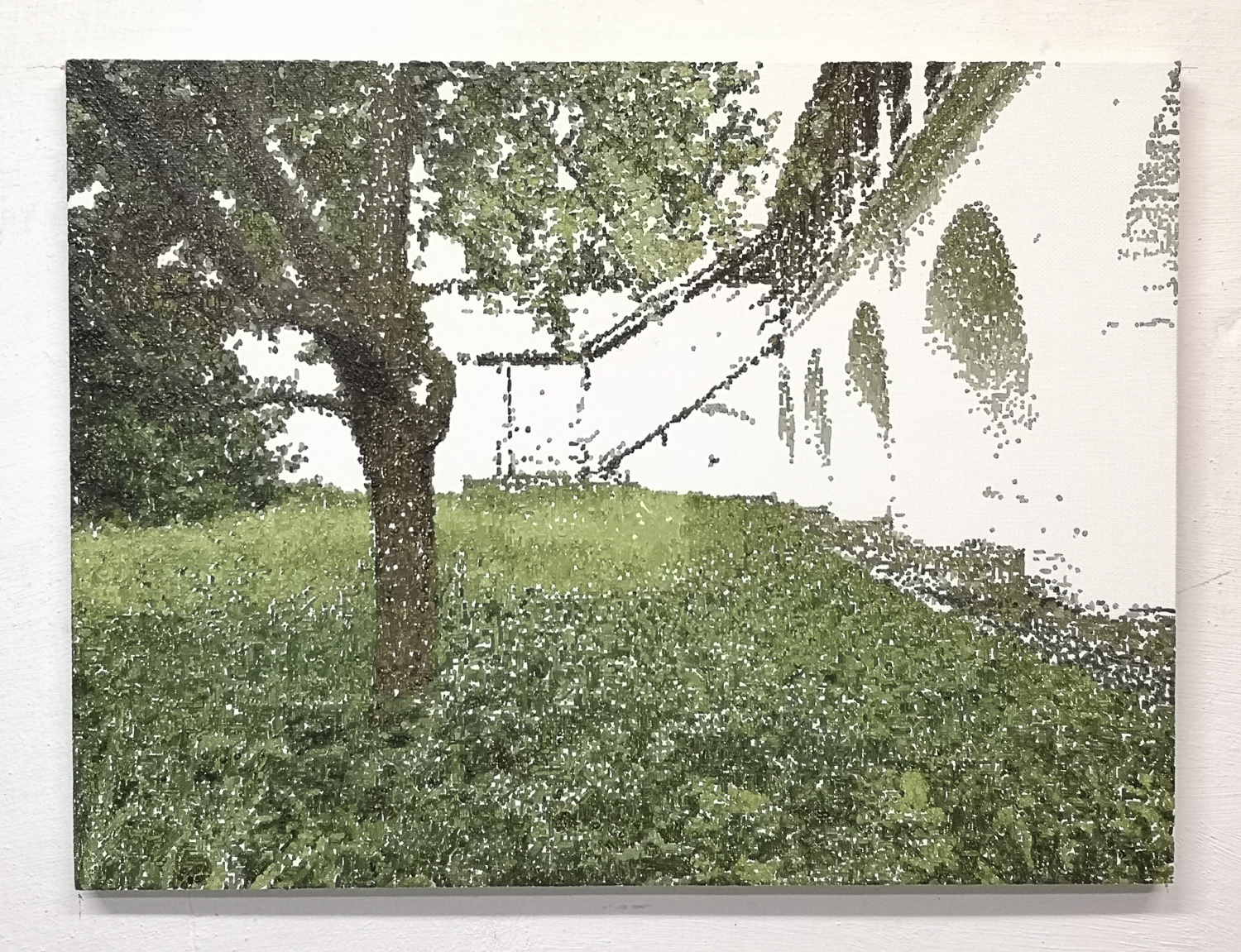
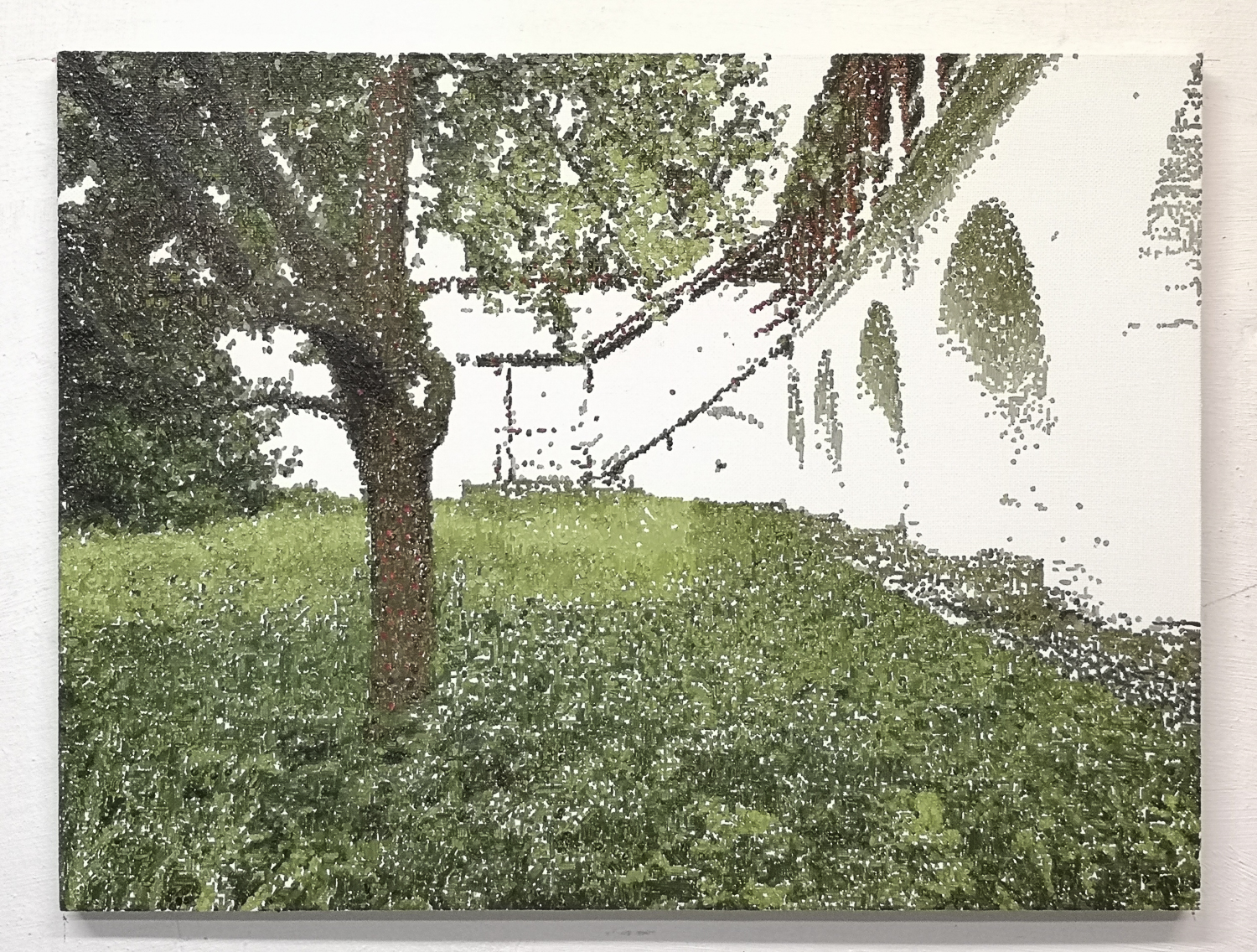
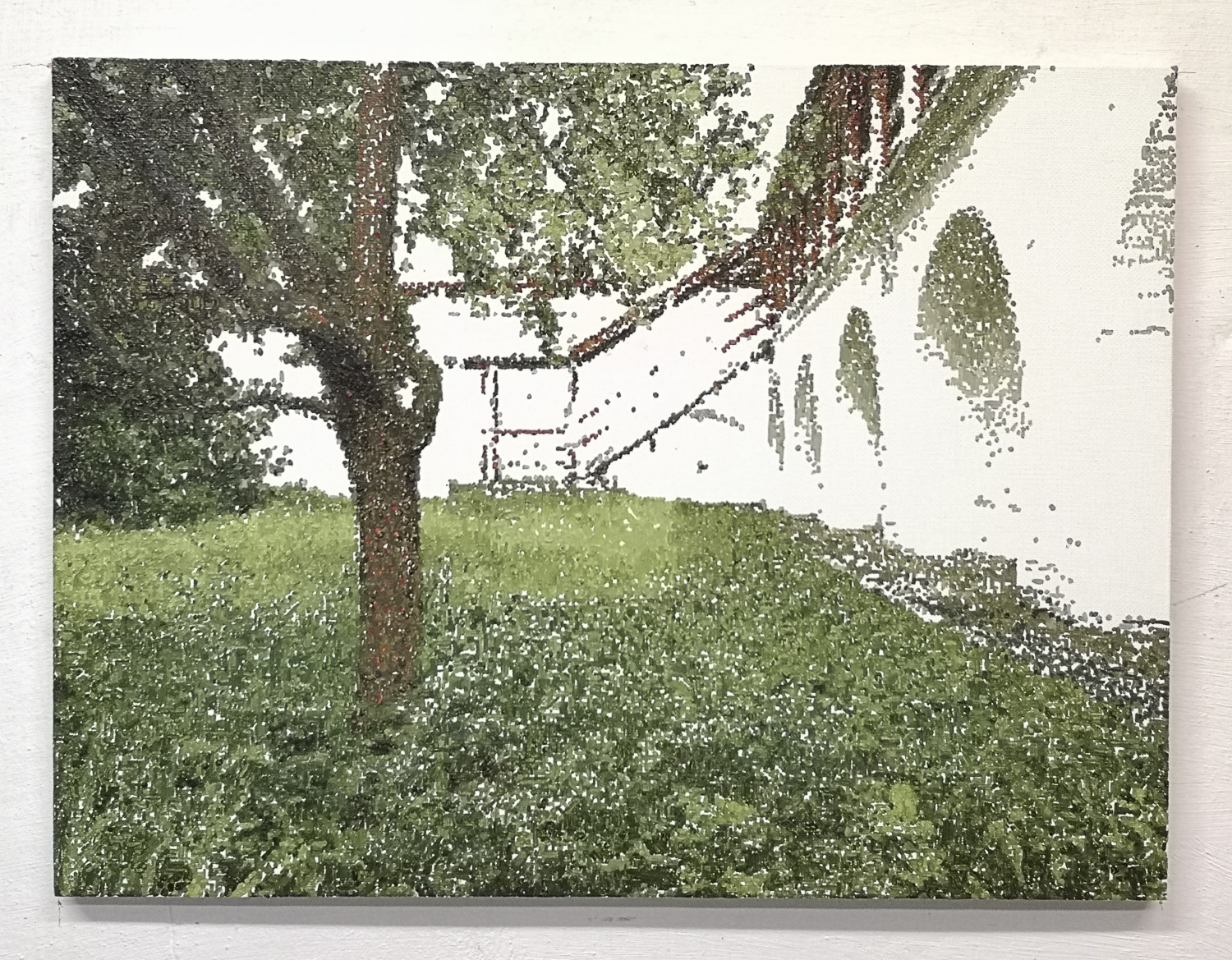
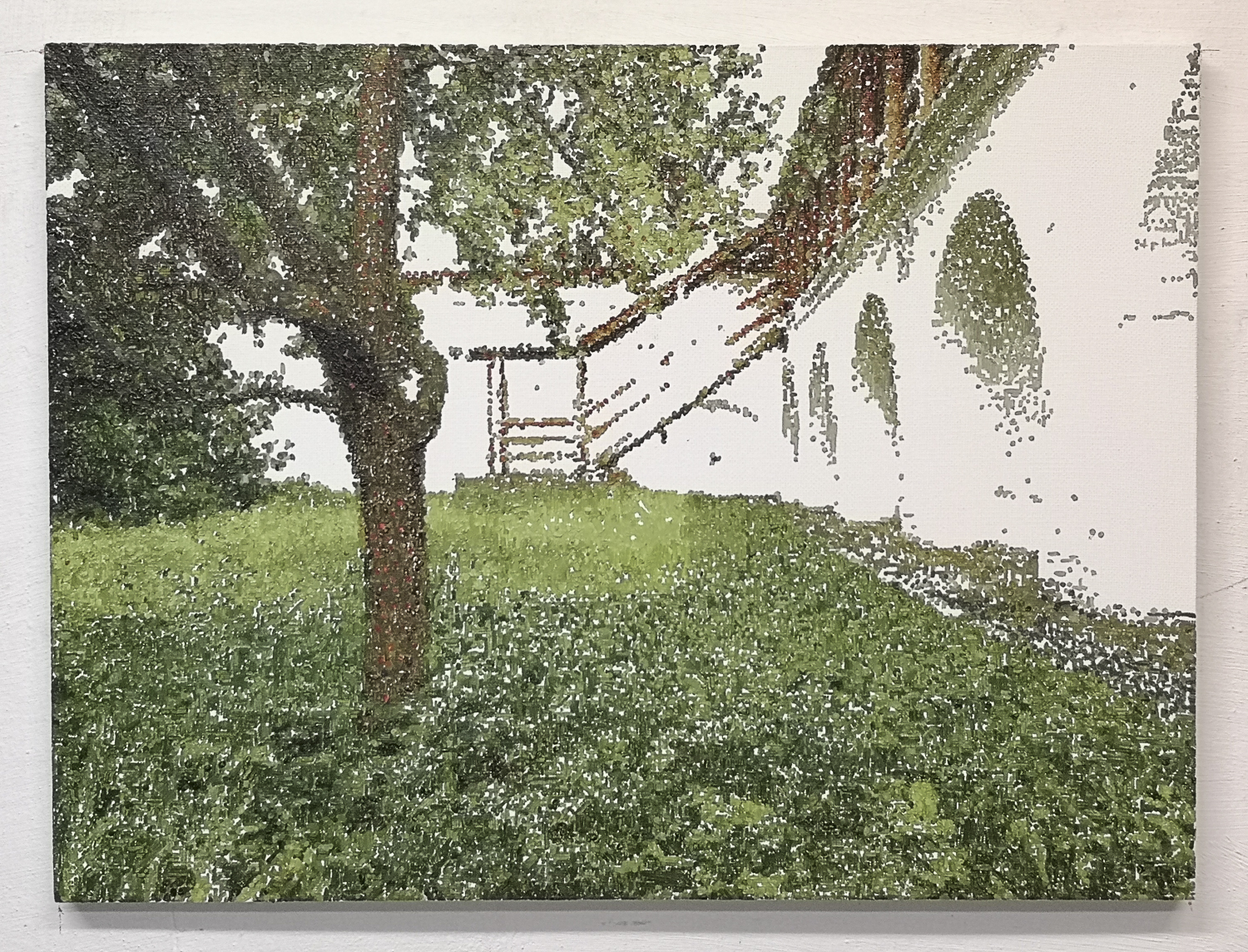
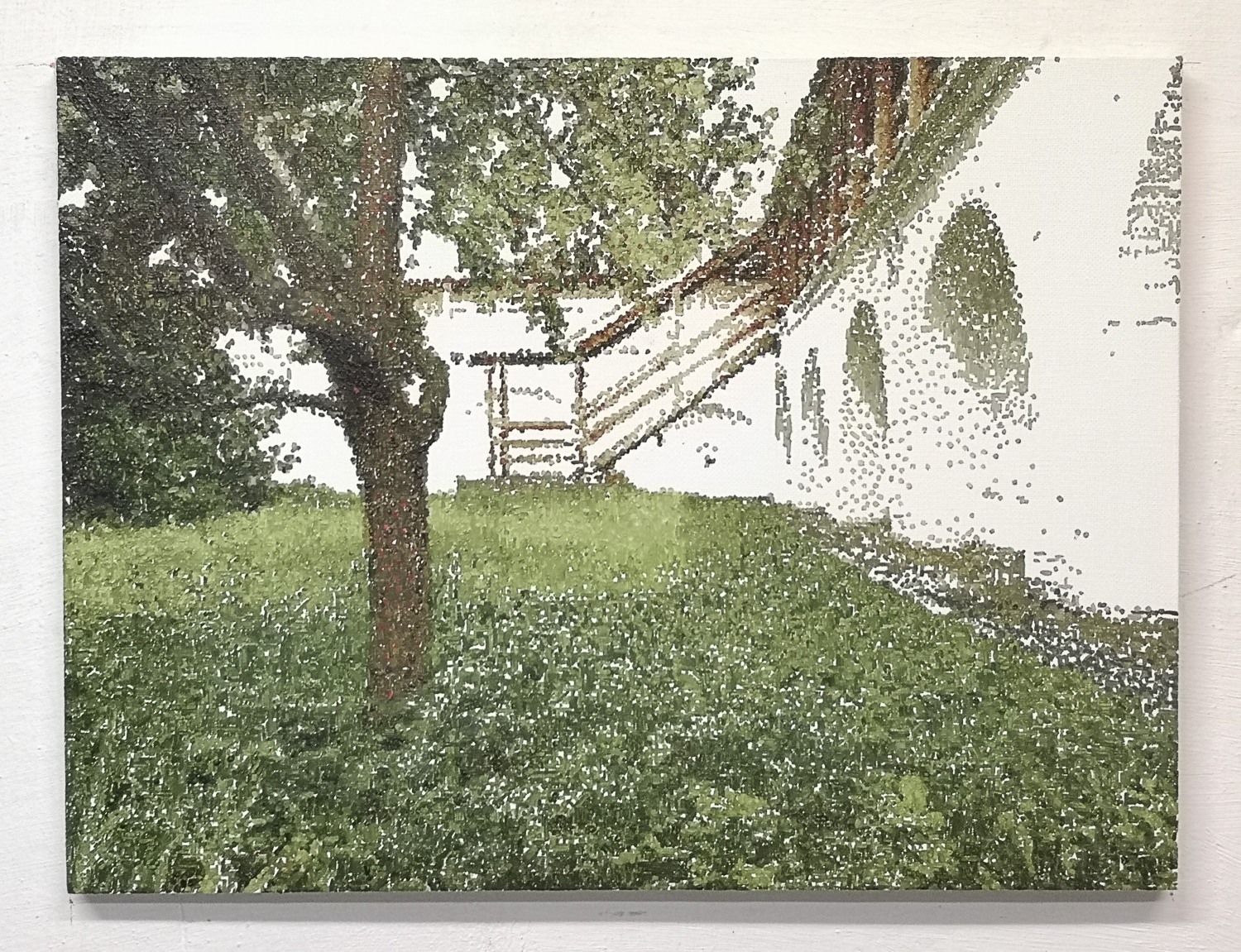
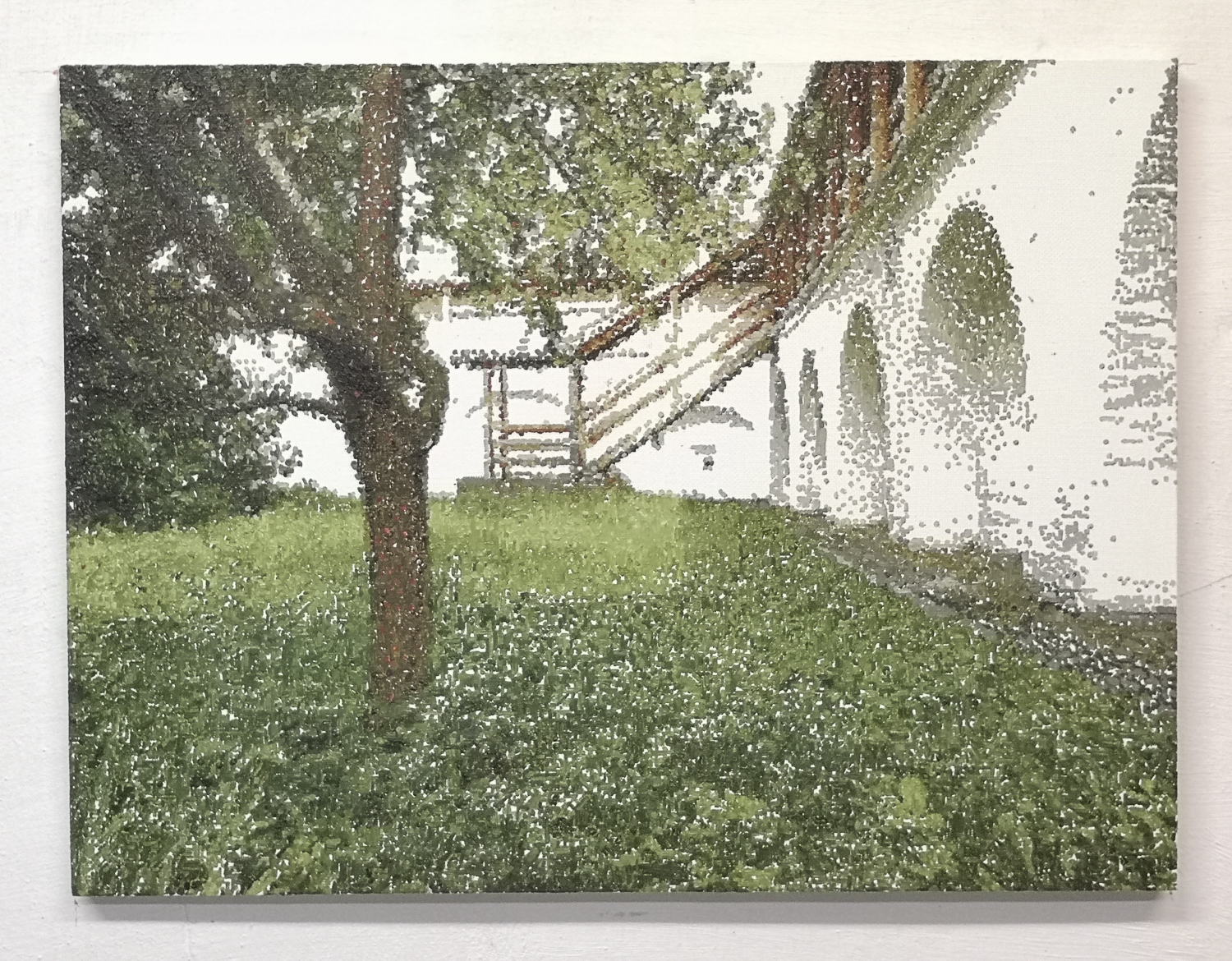
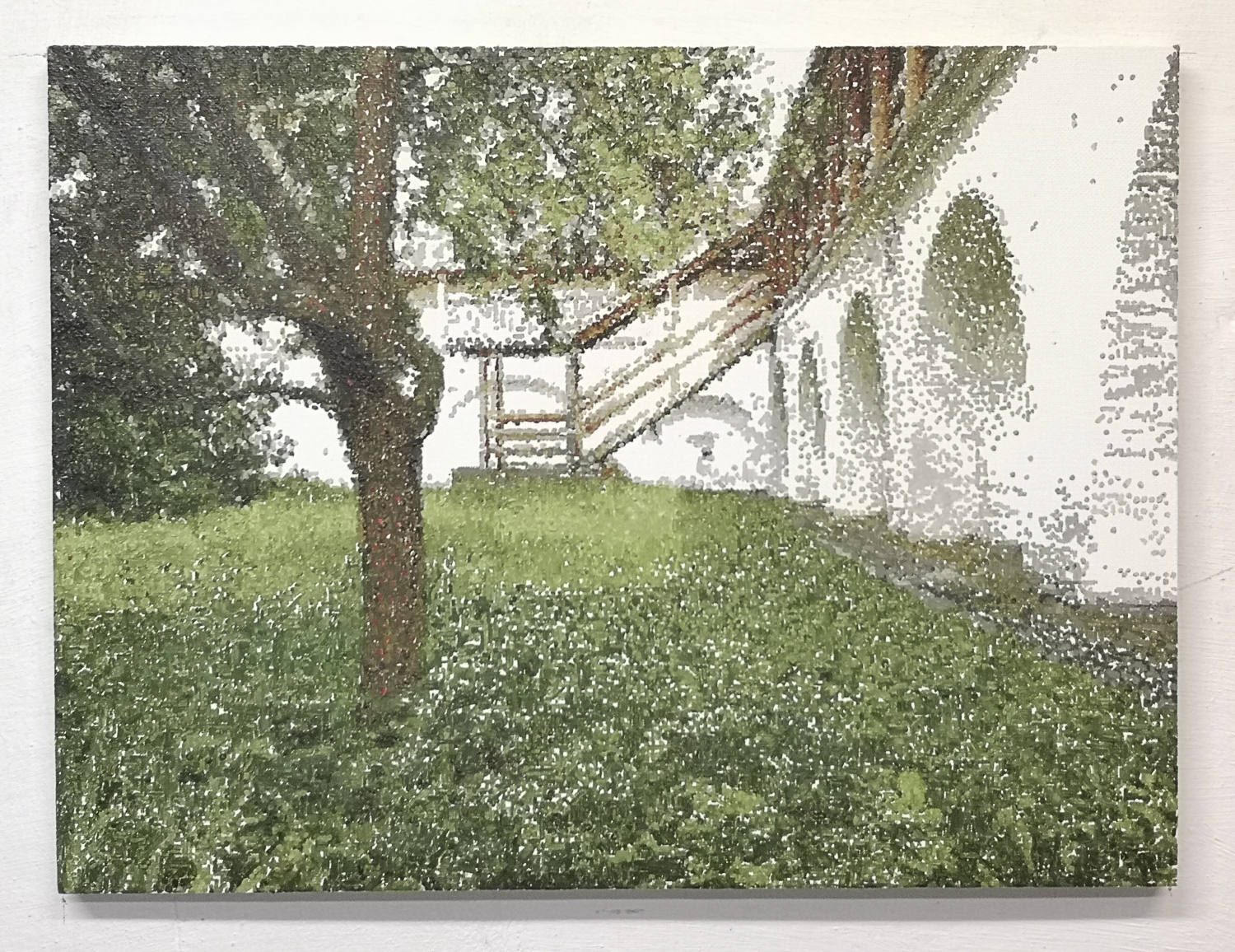
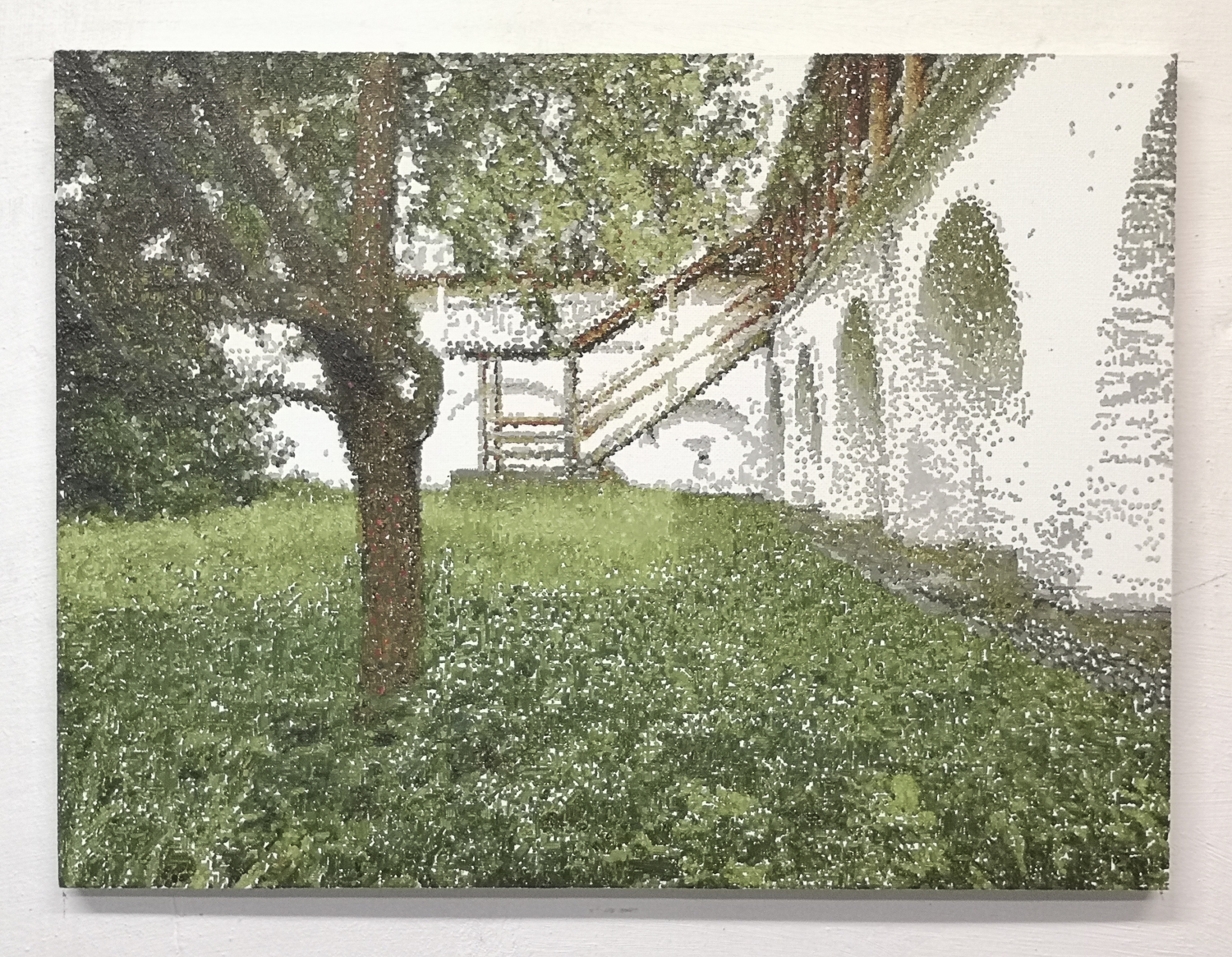
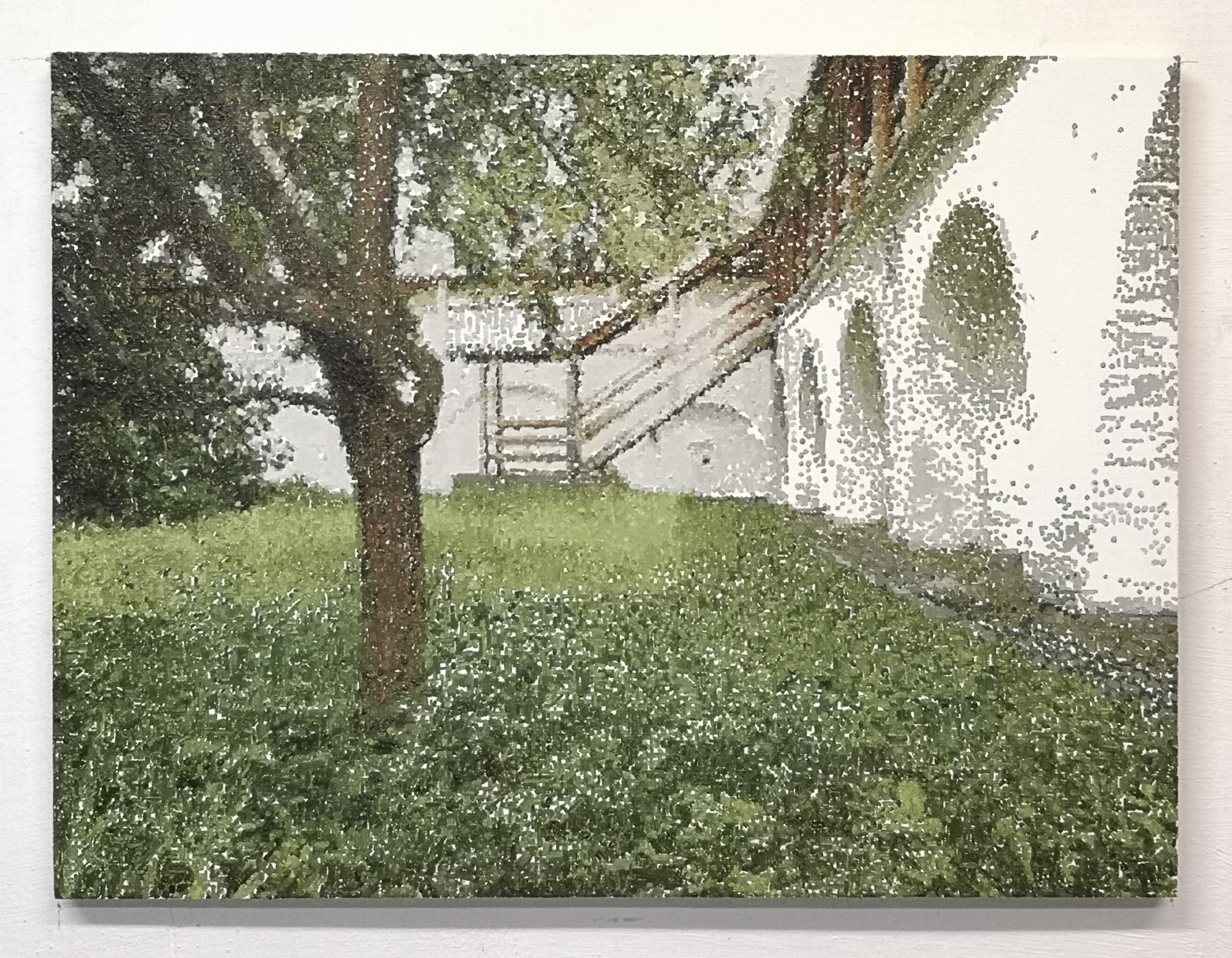
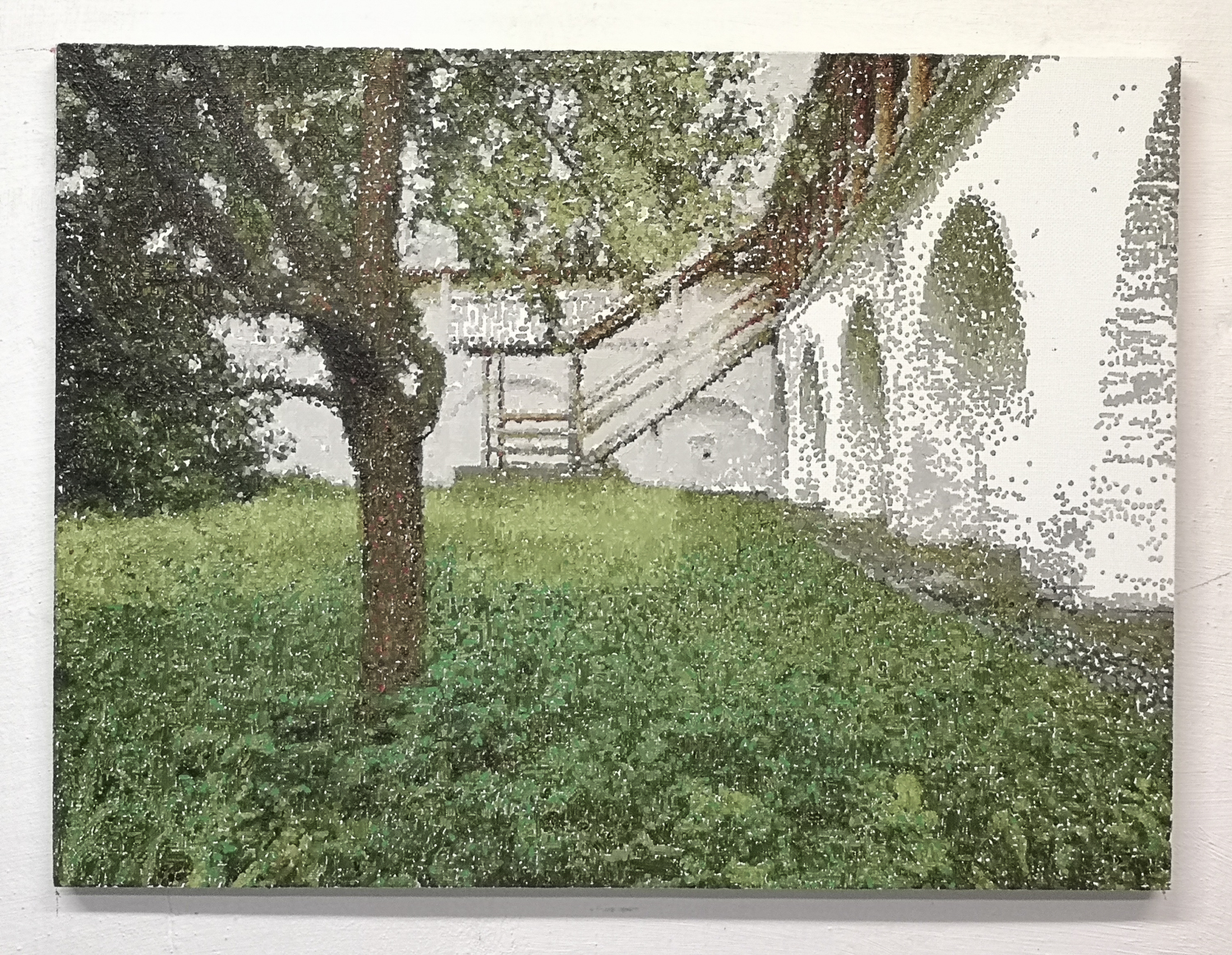
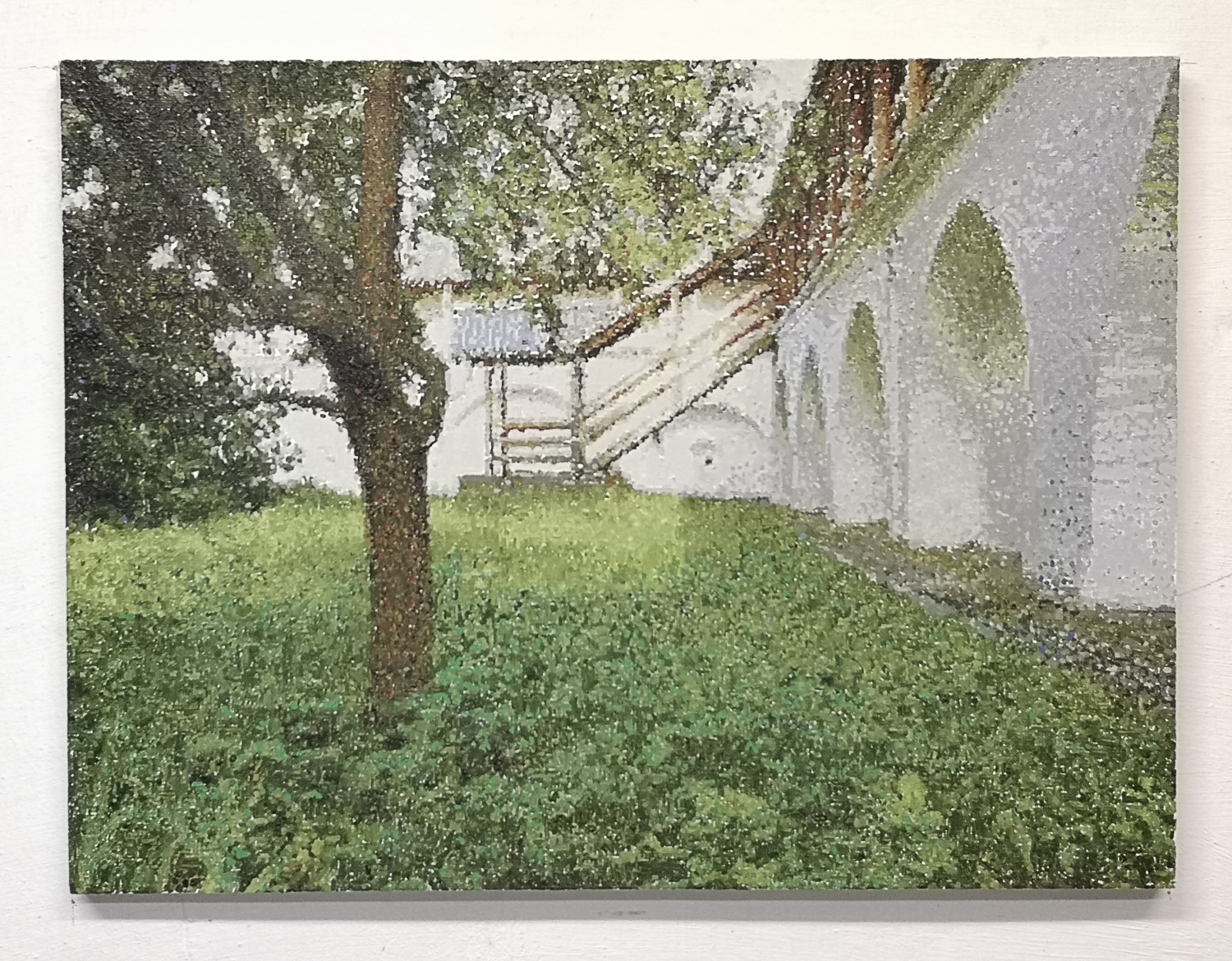
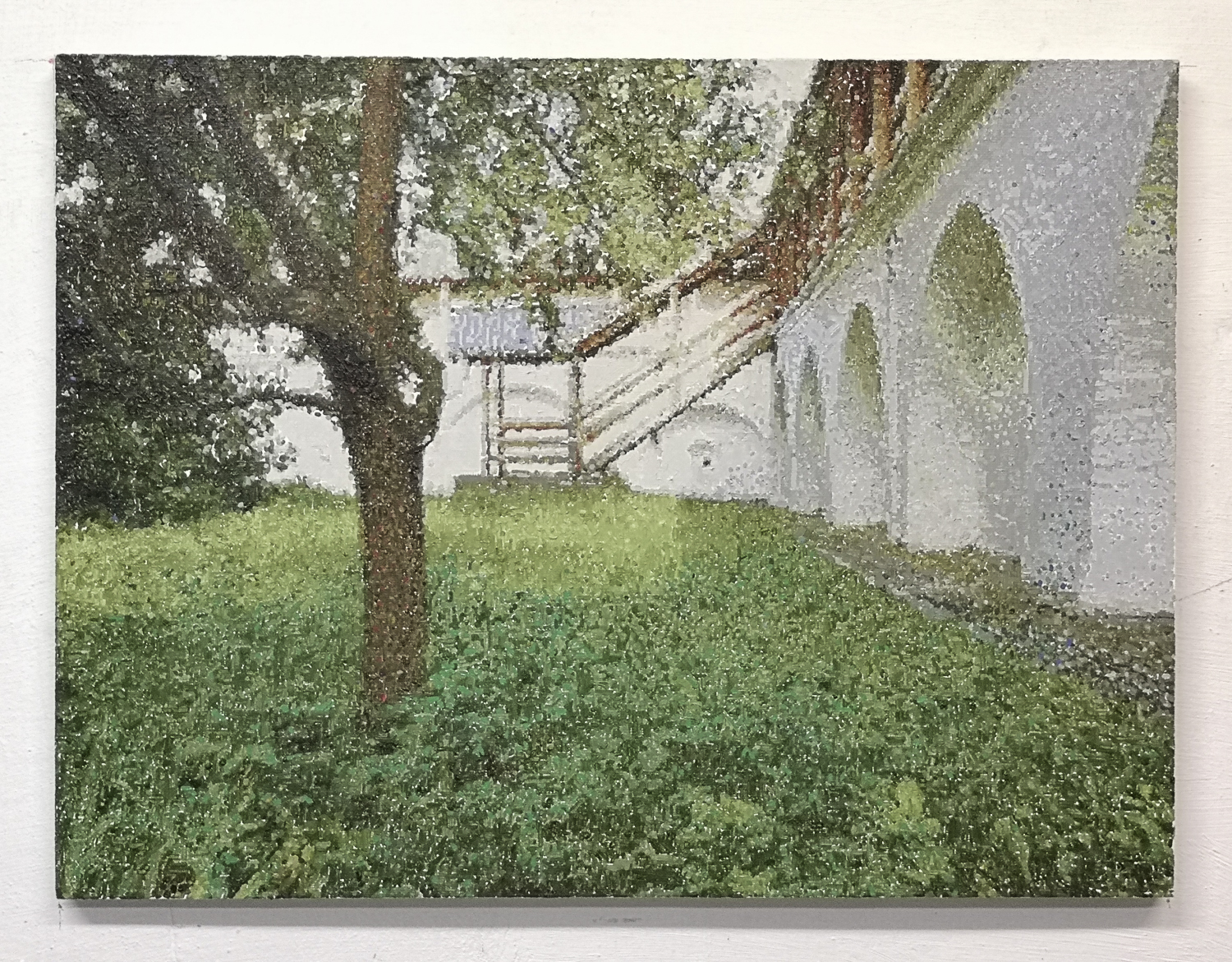
The presented artwork is part of the series “Quantum Project,” which combines the artist’s meticulous technique and conceptual depth. The painting, created entirely with a No. 2 brush, draws inspiration from the intricate beauty of Roman micro-mosaics. Each brushstroke becomes a fragment of a greater whole, forming a cohesive image with a tactile, mosaic-like texture.

The artist has meticulously developed a custom palette, based on the principles of index color. This approach allows the artwork to achieve a harmonious balance of hues and a systematic structure, reminiscent of digital pixelation yet maintaining the organic essence of traditional painting. The deliberate selection and application of color transform each element into a symbol of precision, suggesting the interconnectivity of the micro and macro.

“Quantum Painting,” as a technique, bridges the worlds of science and art. The title “Quantum Project” encapsulates the conceptual underpinning of this series. Each painting reflects the complexity of quantum processes, where order and chaos coexist, and the smallest particles form the fabric of the universe. This innovative approach encourages viewers to delve into the relationship between structure, randomness, and perception.

The series invites contemplation of time and space, offering a meditative experience akin to observing the infinite detail in nature or the cosmos. It is a celebration of the intricate and the monumental, achieved through the smallest gestures of the brush, echoing the timeless traditions of ancient mosaic craftsmanship while pushing the boundaries of contemporary art.

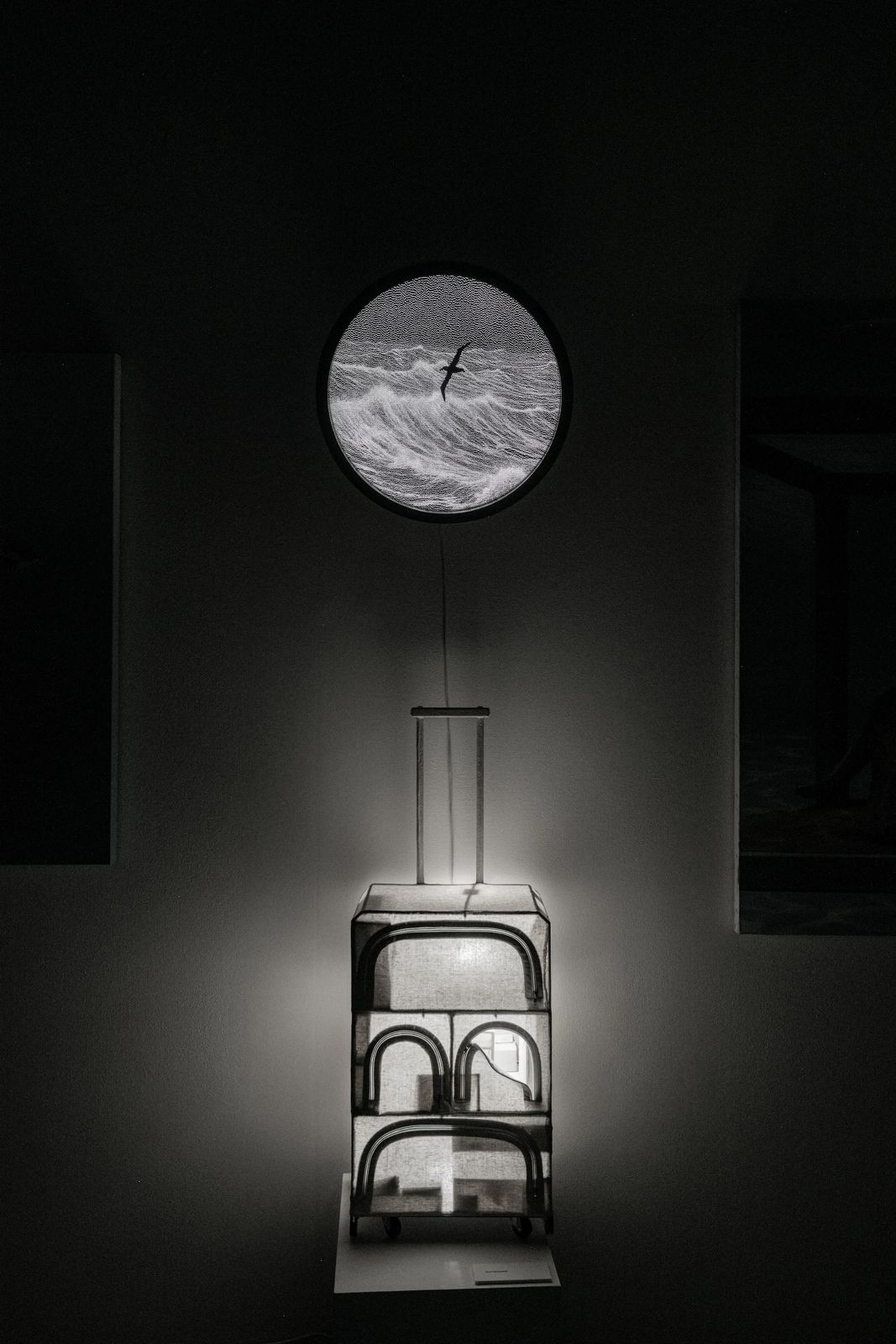
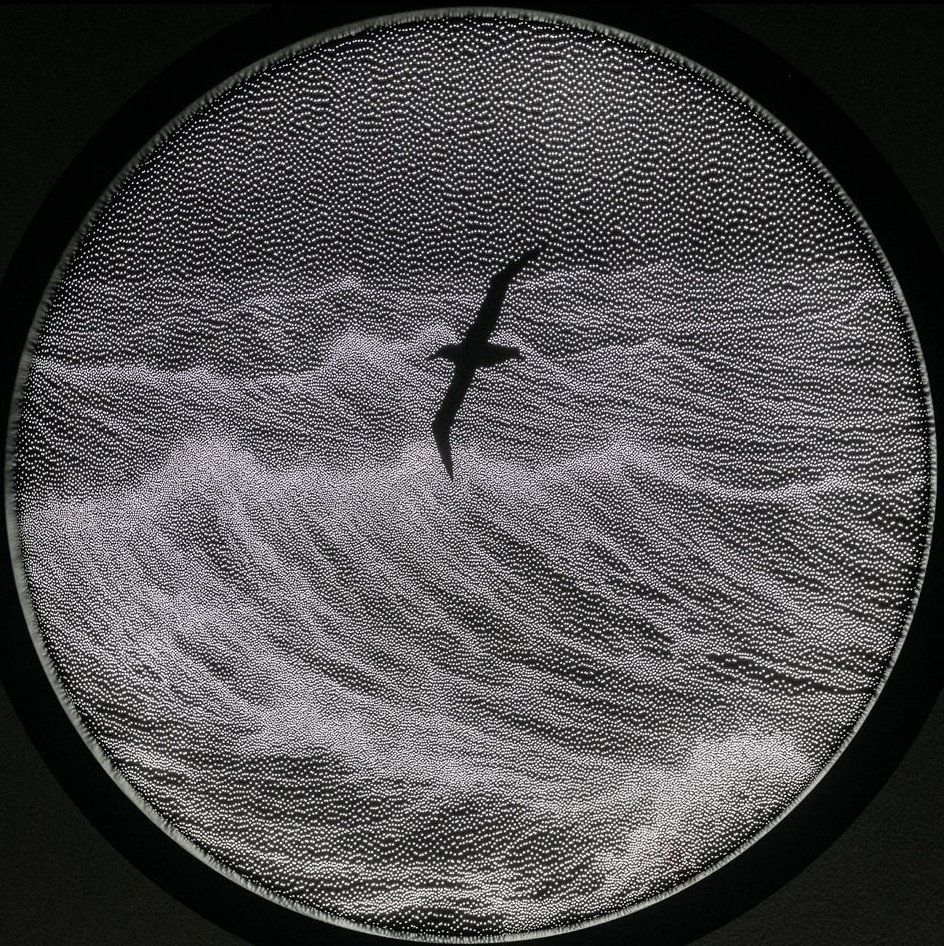
New “Luminography”object

“Luminography”-The work is created by puncturing black thick paper with a needle.

Photo – Elena Rubinina

Blockchain

Photo by Mariya Solonetskaya & Alisia Prokhorova … My sculpture, “Blockchain,” has recently moved to the town of Chekhov.

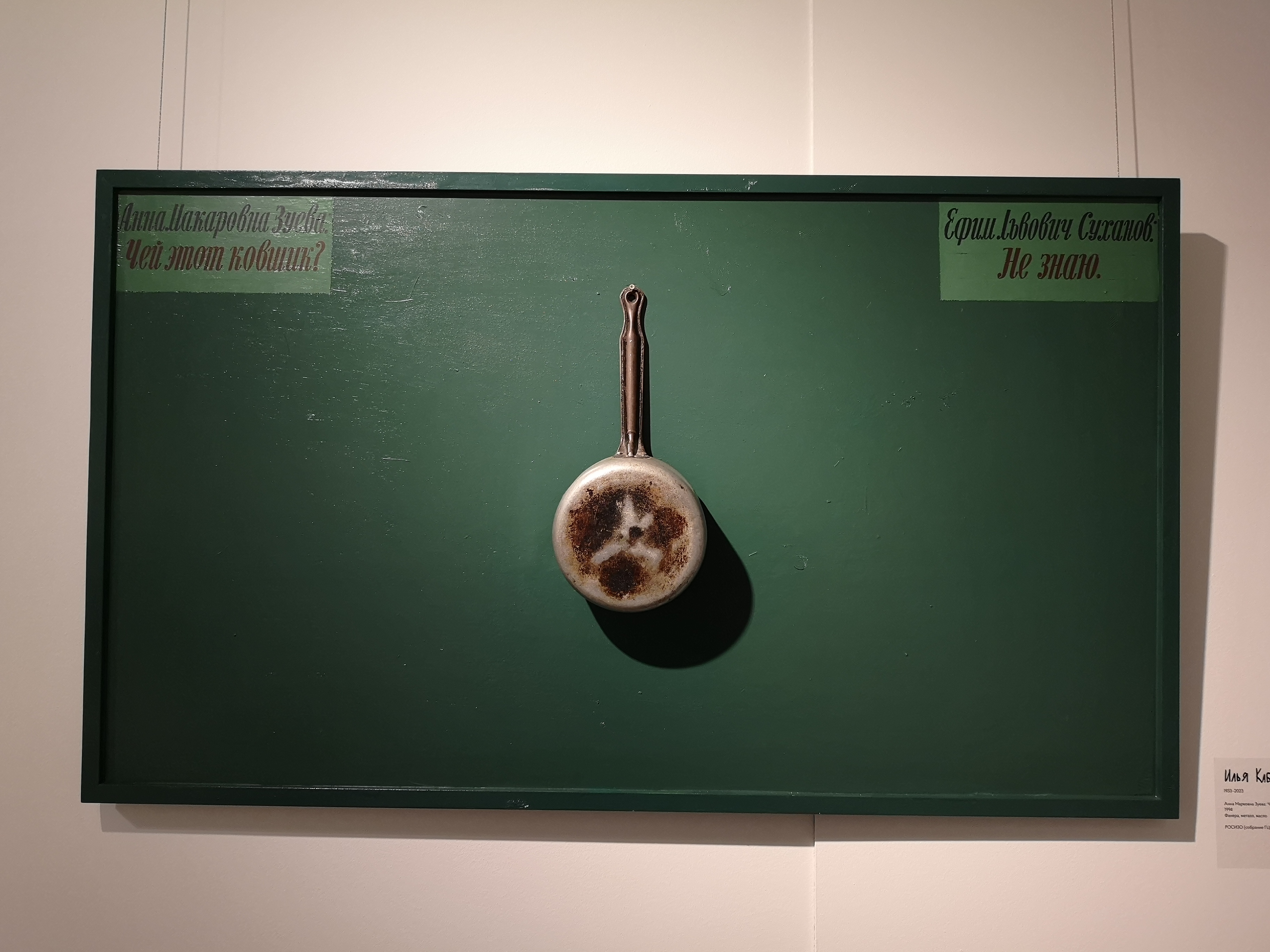
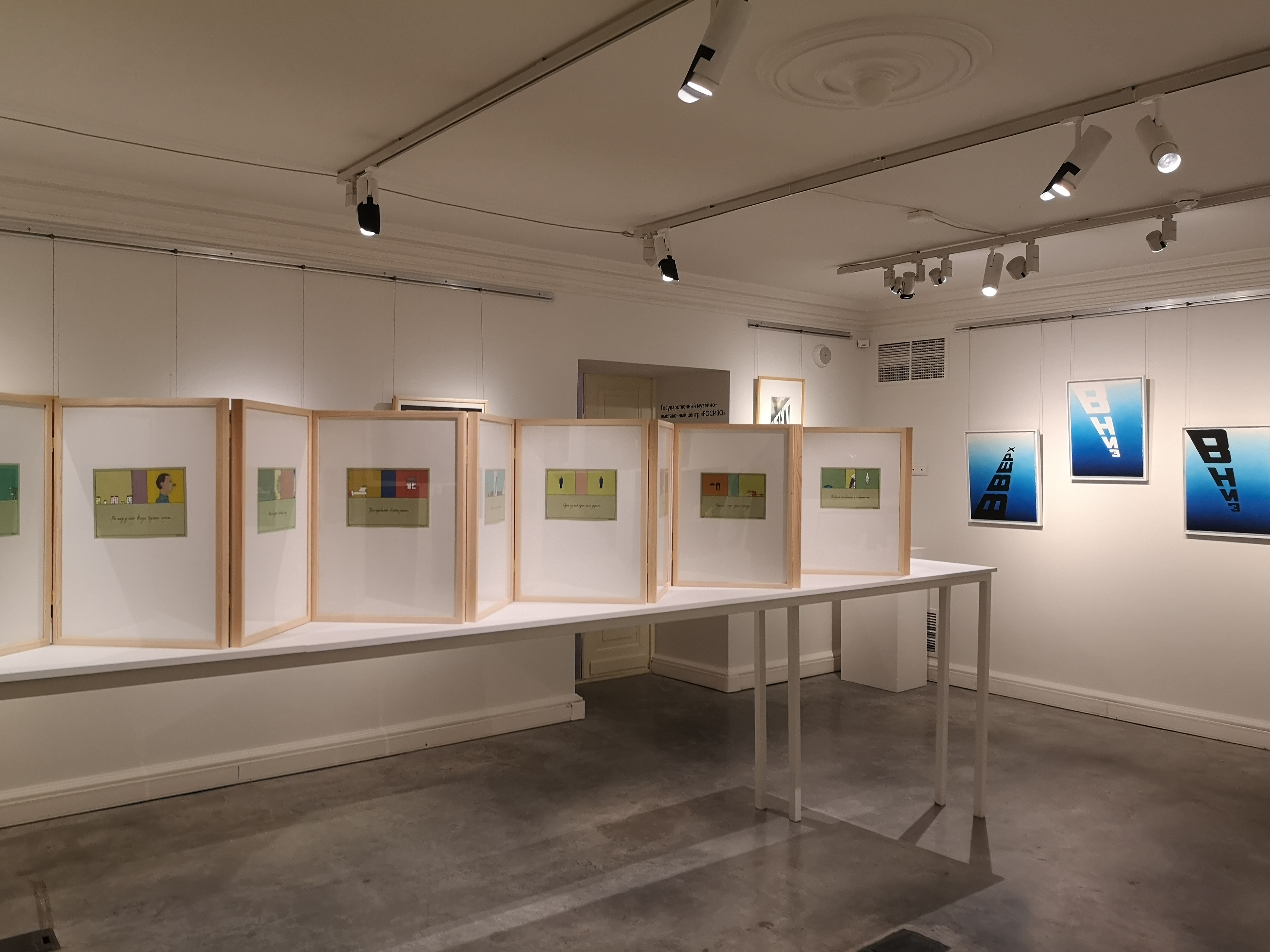
New group exhibition – Artist and text

New group exhibition – “Artist and text”, Exhibition halls Rosizo