Souvenirs
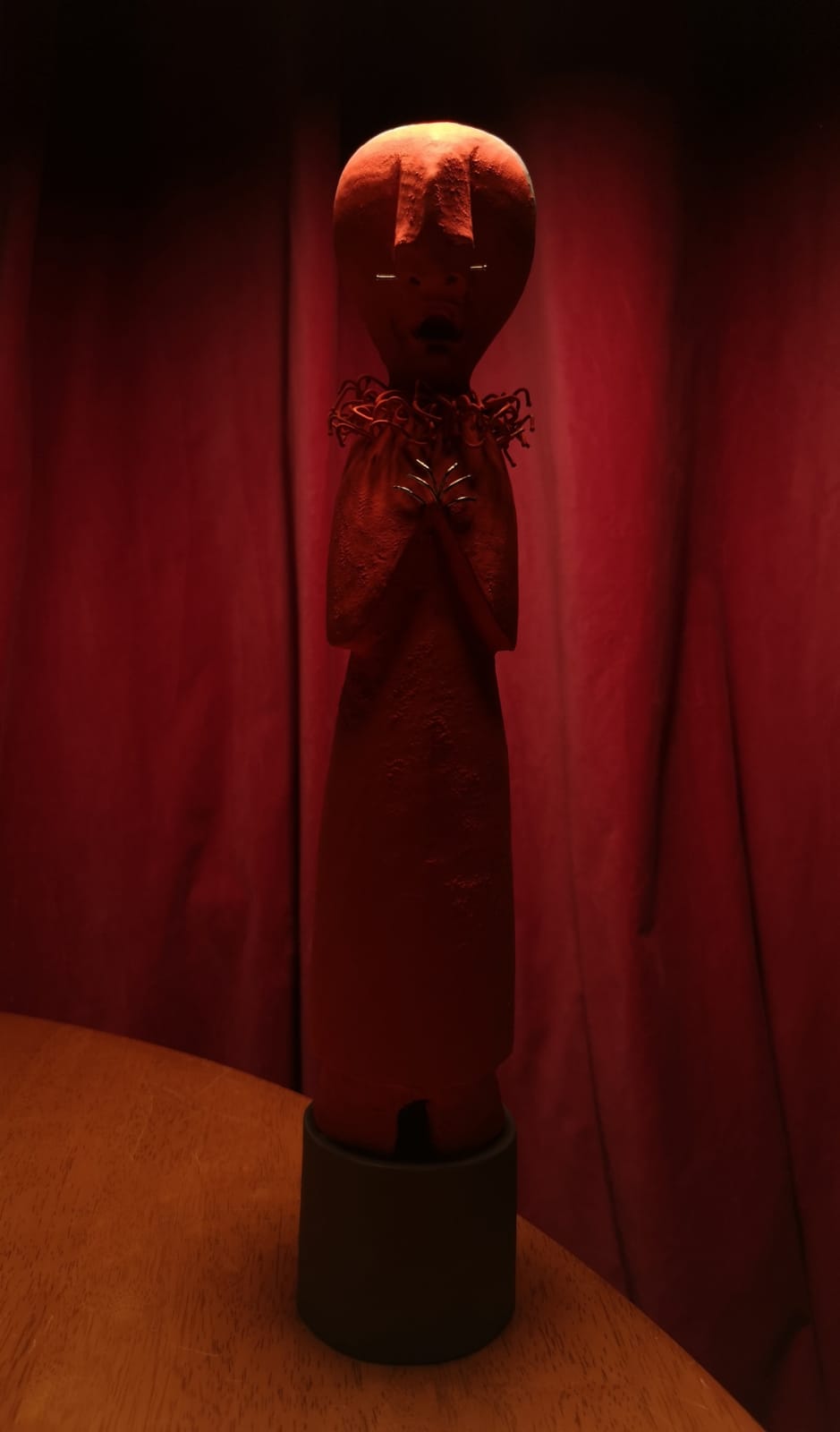
This wooden sculpture captivates with its expressiveness and mystical atmosphere. It is created in abstract and symbolic style with elements of minimalism and traditional craftsmanship. Key features of the piece:
Description of the sculpture:
- Material and Texture:
- The base is wood, with its natural lines and texture adding depth and tactility to the piece.
- The surface is painted with red paint, creating a predominantly matte effect that enhances a sense of warmth and strength.
- The base is painted in grey, creating contrast and balancing the overall color scheme.
- Form and Composition:
- The figure takes on a stretched silhouette, reminiscent of a human form or ritualistic statuette.
- The face features minimal details yet is expressive—dark slits for eyes and mouth convey an emotion of surprise, silent presence, or even mourning.
- On the chest, the folded hands are crafted with intricate precision, symbolizing calm, concentration, and silent prayer.
- The neck area is adorned with a collar made of bronze nails, adding a sense of fragility and strength, as well as an industrial touch to the traditional craftsmanship.
- Color Palette:
- Red: Symbolizes energy, life, passion, and a connection to ancient traditions. In the context of this sculpture, red also conveys mystery and sacred significance.
- Grey: Balances the composition and adds a sense of sobriety and stability to the piece.
- Bronze nails add a textured contrast and enhance the handmade, decorative quality of the piece.
Impression and Interpretation:
The sculpture feels like a spiritual or ritualistic artifact, blending contemporary and ancient influences. It evokes deep emotions and encourages reflection on time, silence, and the human essence. The proportions, details, and color scheme amplify a sense of symbolism and make it a central element in any space.
This piece could be named “Red Pilgrim”—a title reflecting its symbolism of a journey, introspection, and inner exploration.
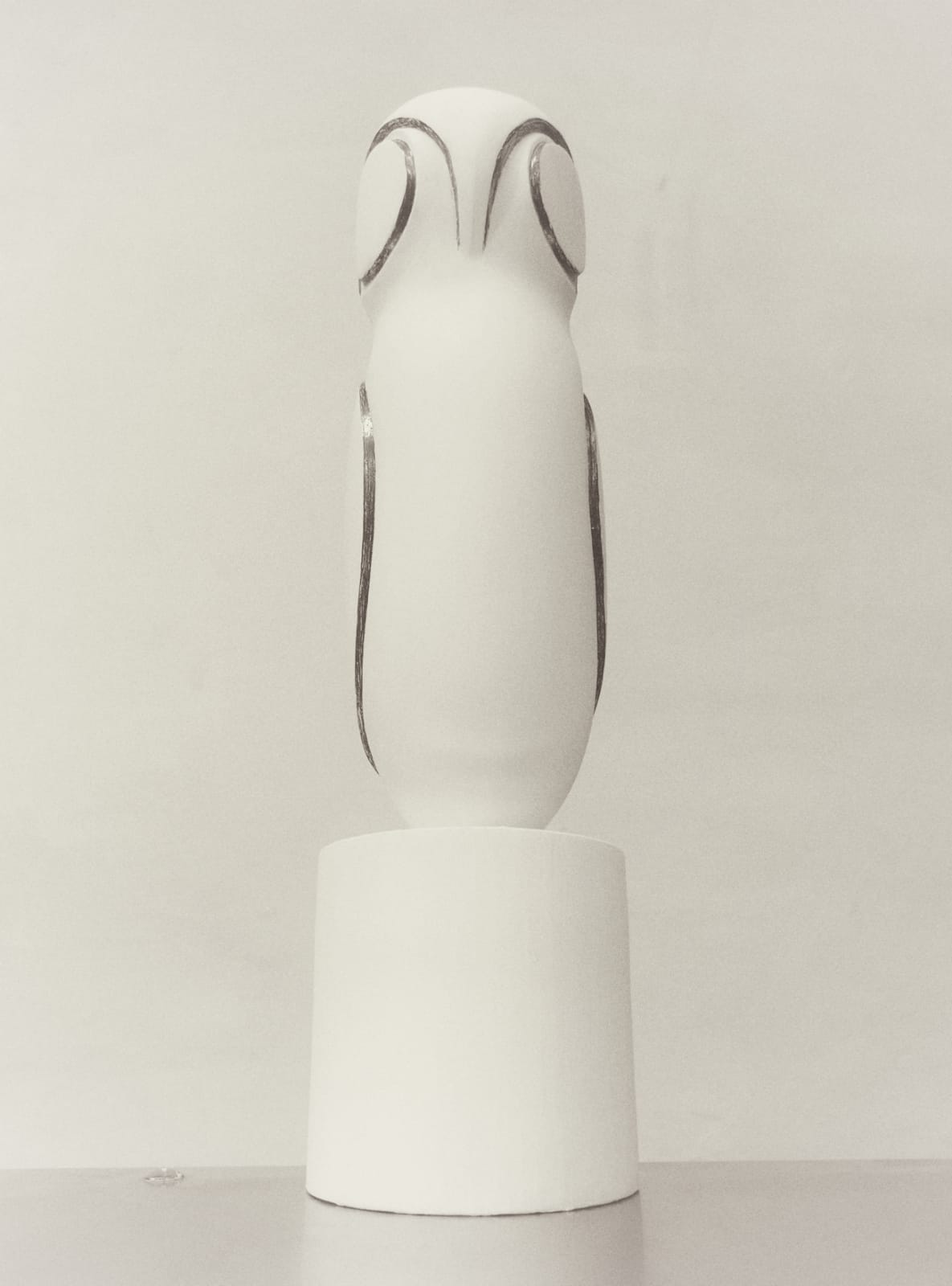

“The Guardian of Silence”.
This name reflects the minimalist and tranquil essence of the work, evoking associations with wisdom and observation, much like an owl, which the lines and shape resemble. “Guardian” emphasizes the presence and strength of the object, while “silence” highlights its harmony and peacefulness. This object is a wooden sculpture, crafted in a minimalist and modern style. The surface is coated with gesso (levkas), which gives it a smooth, uniform white color and a soft matte texture. The dark graphite lines, applied by hand, add contrast and precision, creating a sense of depth and stylized detailing.
Material:
- Wood, skillfully carved to achieve a perfectly smooth shape.
- The gesso coating highlights the purity and lightness of the form.
Shape:
- An elongated oval form with abstract contours.
- Subtle lines on the surface resemble stylized eyes and wings, giving the object symbolic meaning.
Technique:
- Gesso (Levkas): A coating technique traditionally used in icon painting and decorative art to create a smooth, white surface.
- Graphite lines: Hand-applied dark strokes contrast with the white background, adding expressiveness and minimalist decoration.
Artistic Style:
The stylized shape may evoke natural forms (such as an owl) or ancient artifacts.
Minimalism and abstraction: The absence of excessive details makes the work visually light and refined.
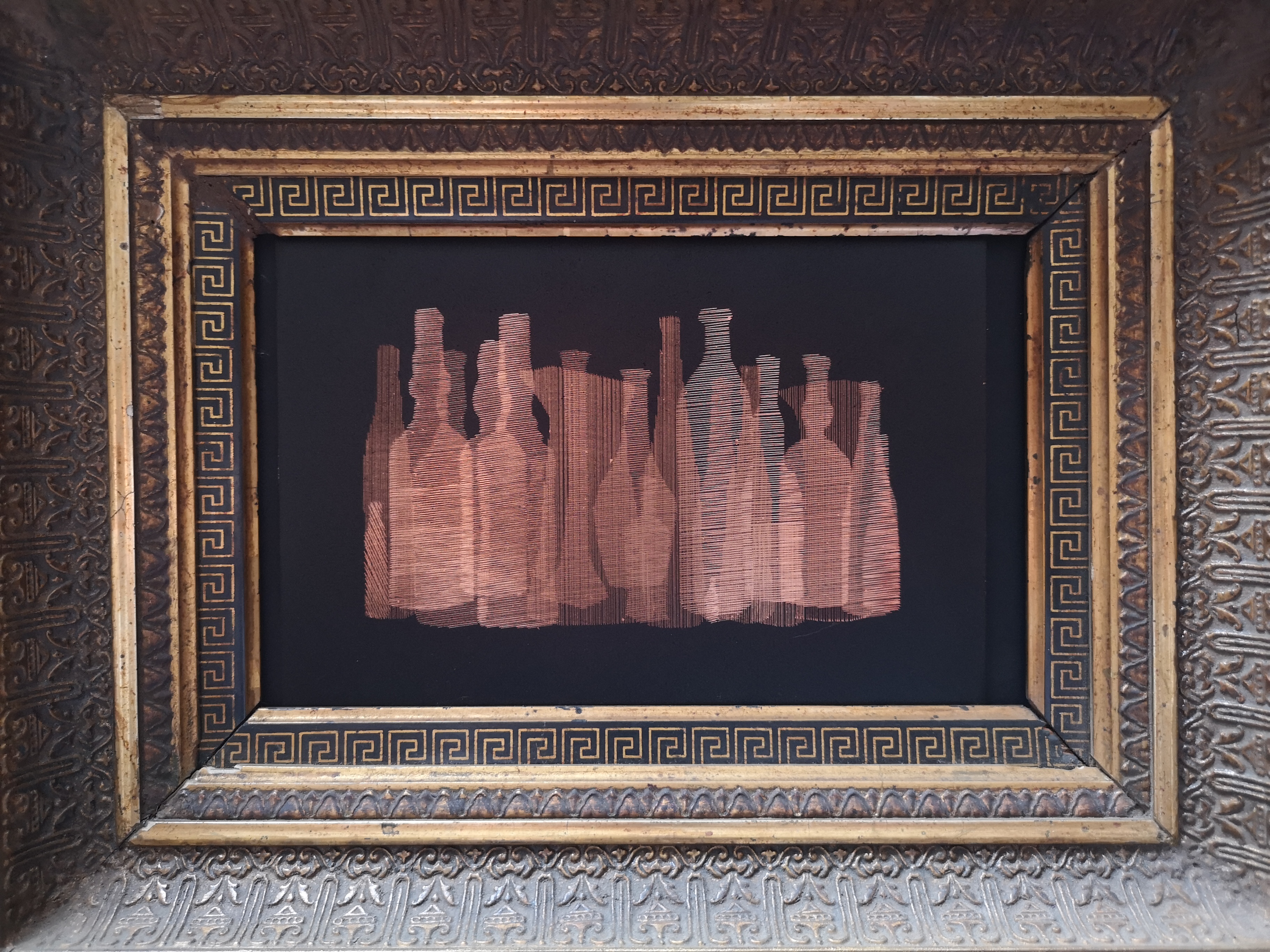
“Phantoms of Morandi”, copperplate, 2019
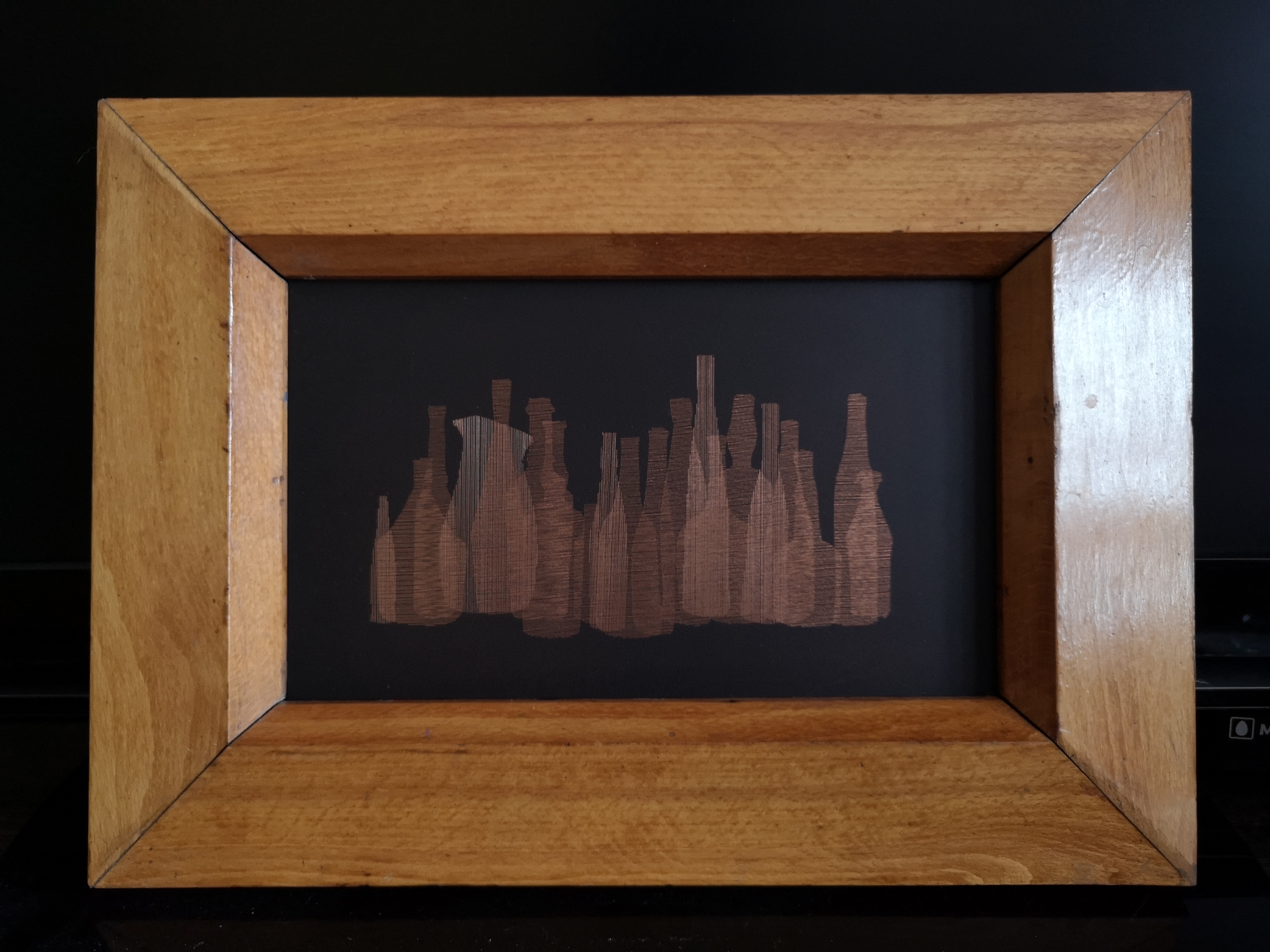
“Phantoms of Morandi”, copperplate, 2019


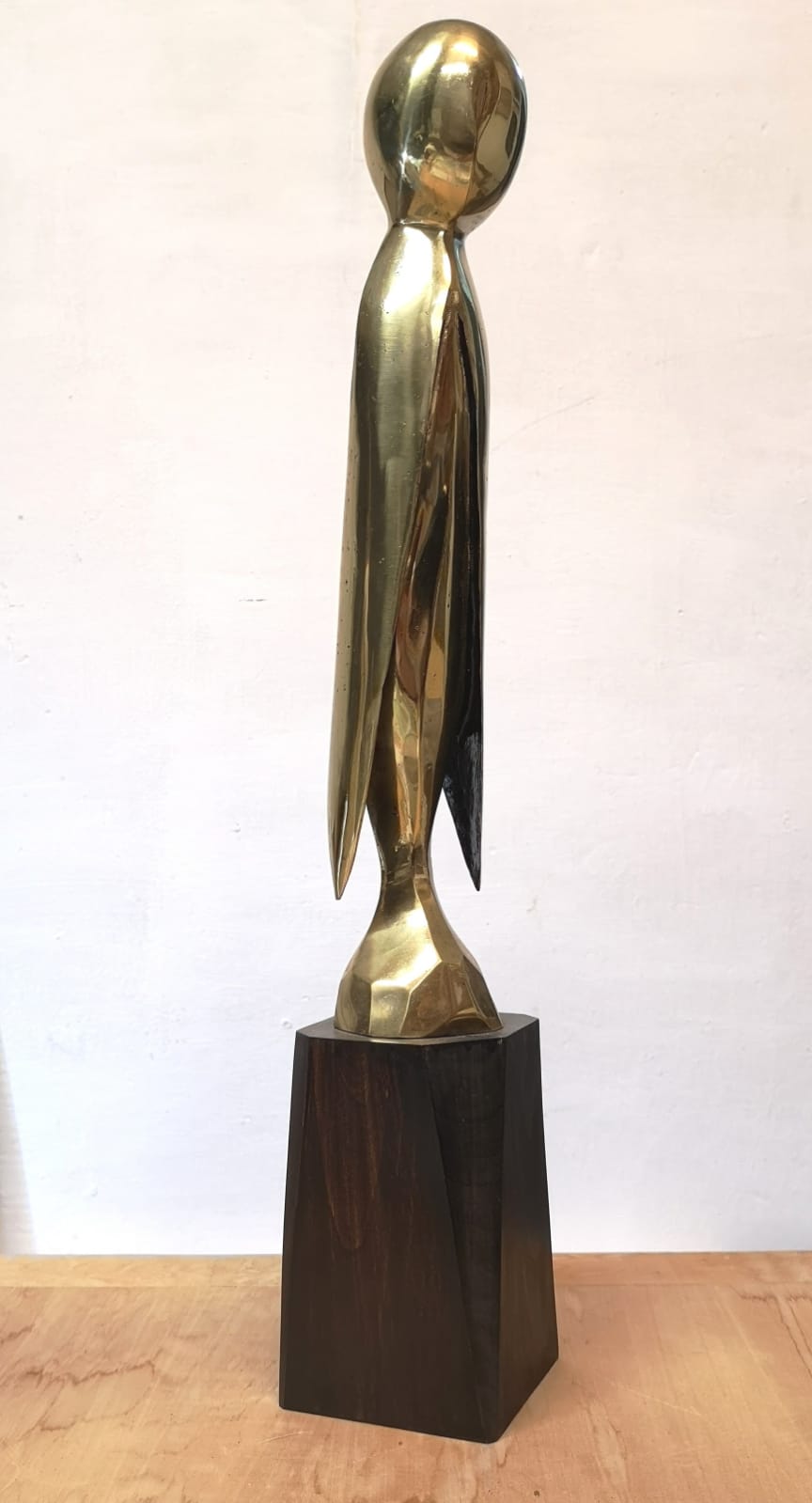
“Nornir”, bronze, 2016
Polished bronze, wood. Height approx. 40–50 cm.
Description
The figure of “Nornir” emerges as a golden silhouette — elongated, minimalist, almost symbolic. The curve of the form is soft and fluid, like a frozen drop, polished by time. The smooth transitions between head and body strip it of anatomy, but lend it a sense of universality — an archetype.
It stands on a dark wooden pedestal — geometric and massive, like the base of an ancient idol. This contrast — between the warm, glowing metal and the dark foundation — evokes reverence. It feels less like a person and more like a messenger.
Visually
From the side, the profile suggests a stylized human figure, possibly feminine, yet deliberately devoid of individual traits — like ancient depictions of goddesses of fate. All attention is drawn to the verticality, to the extended, frozen gesture. This is stillness, but not lifelessness — it is a silence in which time ripens.
Symbolic meaning
The title “Nornir” refers to the Norns — the three Norse goddesses of fate, who weave the threads of life. In this interpretation, the figure becomes a contemporary totem of predestination. It is faceless, but not formless; mute, but not powerless.
Conceptually, one could say:
“Nornir” is an image of fate stripped of specifics but imbued with weight.
It is not an allegory — it is a relic.
An artifact of the future that we somehow already recognize.
Not a human, not a god — a memory of form.
The Norns (Old Norse: norn, plural: nornir) in Norse mythology[1] are female beings who rule the destiny of gods and men. They roughly correspond to other controllers of humans’ destiny, the Fates, elsewhere in European mythology.
According to Snorri Sturluson‘s interpretation of the Völuspá, the three most important norns, Urðr (Wyrd), Verðandi and Skuld, come out from a hall standing at the Well of Urðr (well of fate). They draw water from the well and take sand that lies around it, which they pour over Yggdrasill so that its branches will not rot.[2] These three norns are described as powerful maiden giantesses (Jotuns) whose arrival from Jötunheimr ended the golden age of the gods.[2] They may be the same as the maidens of Mögþrasir who are described in Vafþrúðnismál (see below).[2]
Wiki … … … …
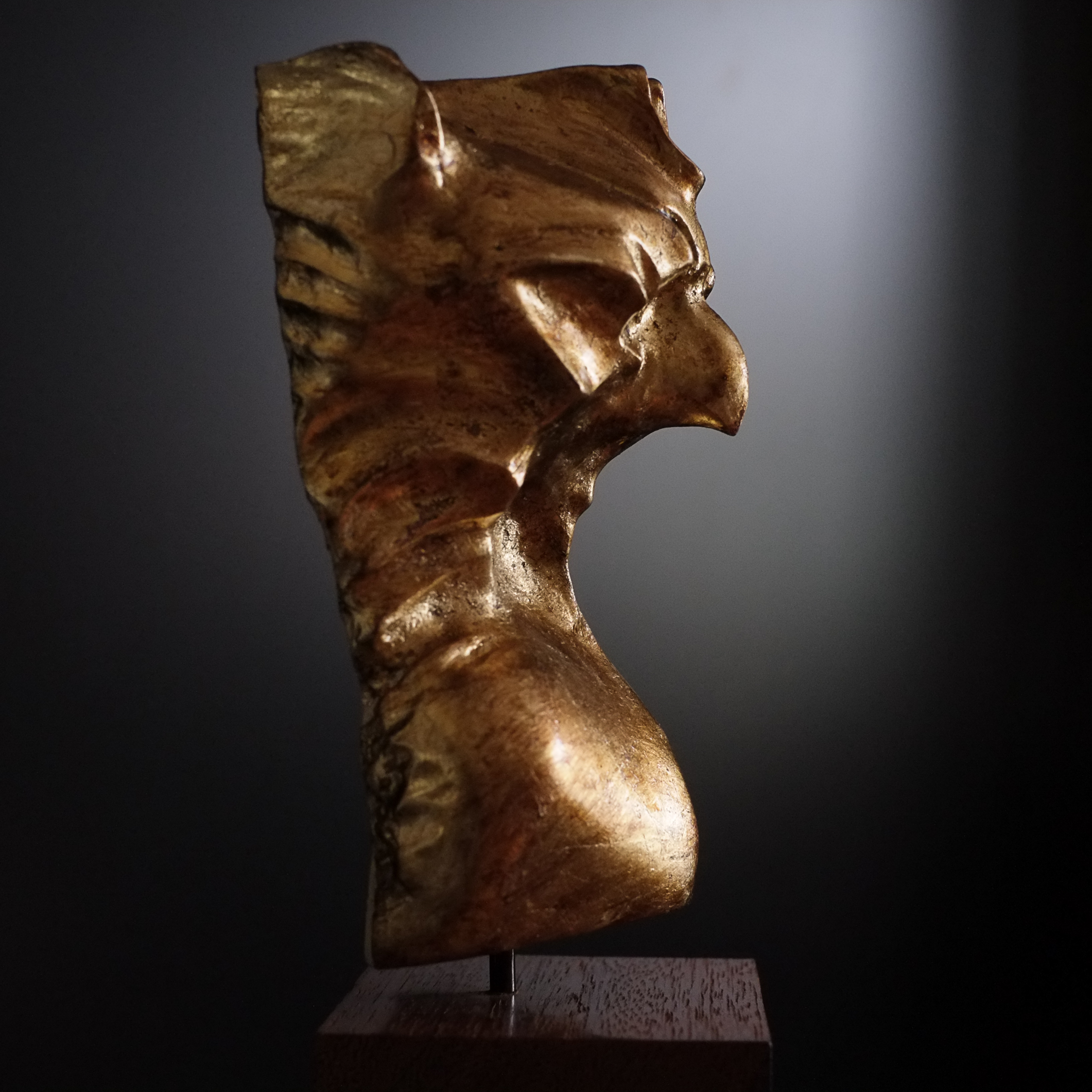 “UNTITLED” Wood, Primer, gilding 2016
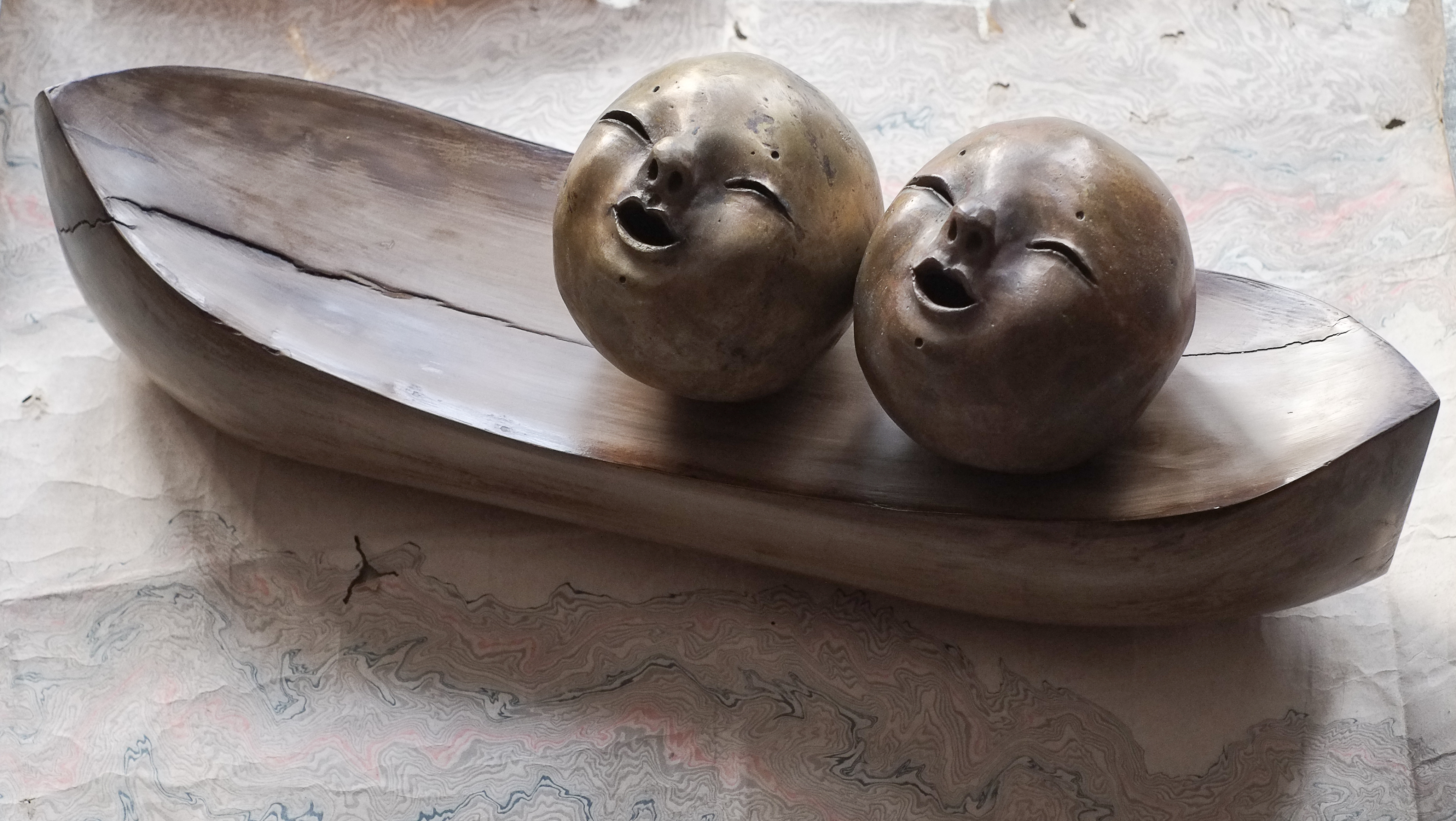
Bodhicitta bronze, wood, 2014
In Buddhism, bodhicitta (Sanskrit: बोधिचित्त; Chinese: 菩提心, putixin; Japanese: bodaishin; Standard Tibetan: Wylie transliteration: byang chub kyi sems; Mongolian: бодь сэтгэл; Vietnamese: Bồ-đề tâm), “enlightenment-mind”, is the mind that strives toward awakening and compassion for the benefit of all sentient beings
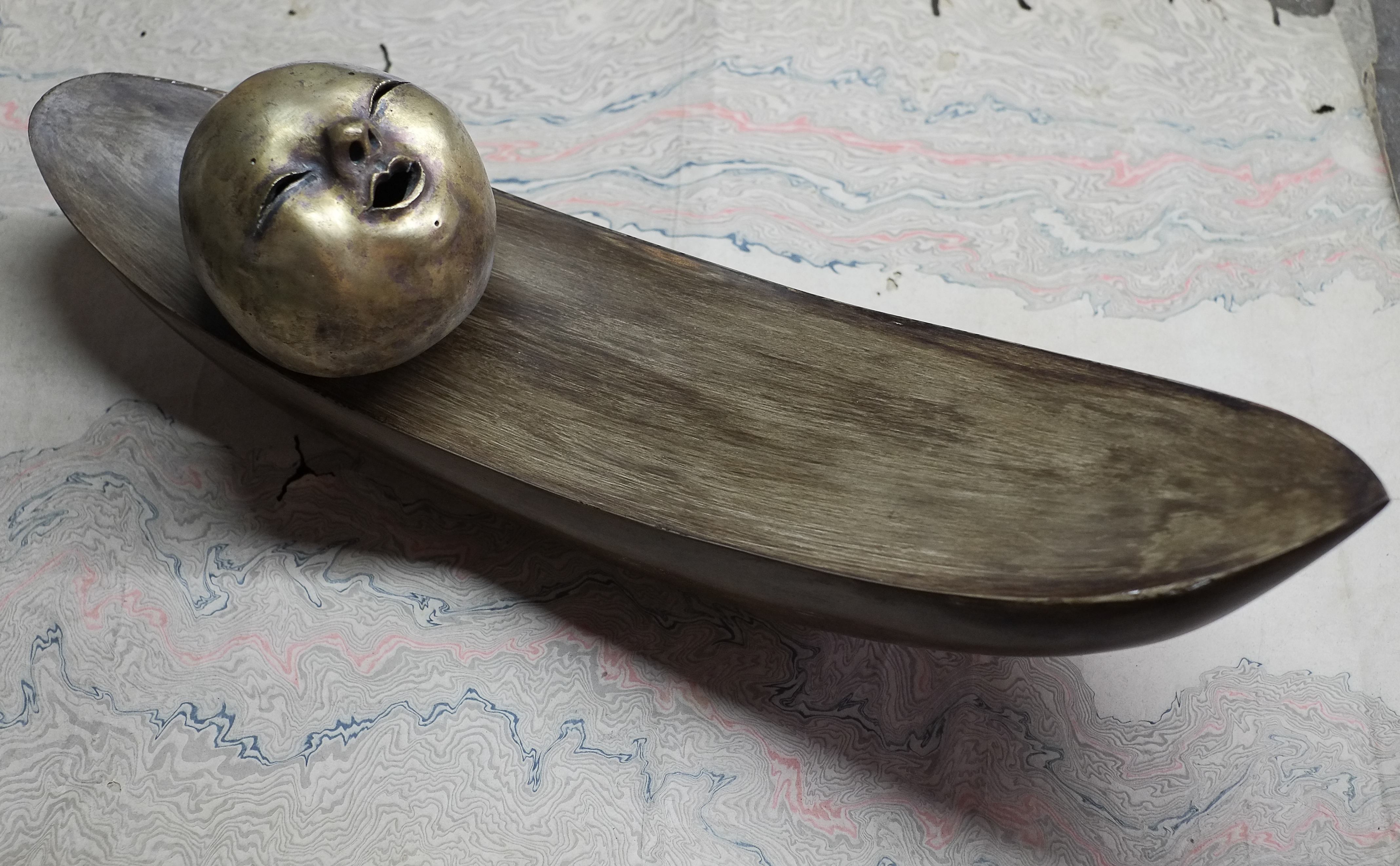
Bodhicitta bronze, wood, 2014
In Buddhism, bodhicitta(Sanskrit: बोधिचित्त; Chinese: 菩提心, putixin; Japanese: bodaishin; Standard Tibetan: Wylie transliteration: byang chub kyi sems; Mongolian: бодь сэтгэл; Vietnamese: Bồ-đề tâm), “enlightenment-mind”, is the mind that strives toward awakening and compassion for the benefit of all sentient beings.
“Africa Malevich” – new pop sculpture series
Before – originan object from Africa

After
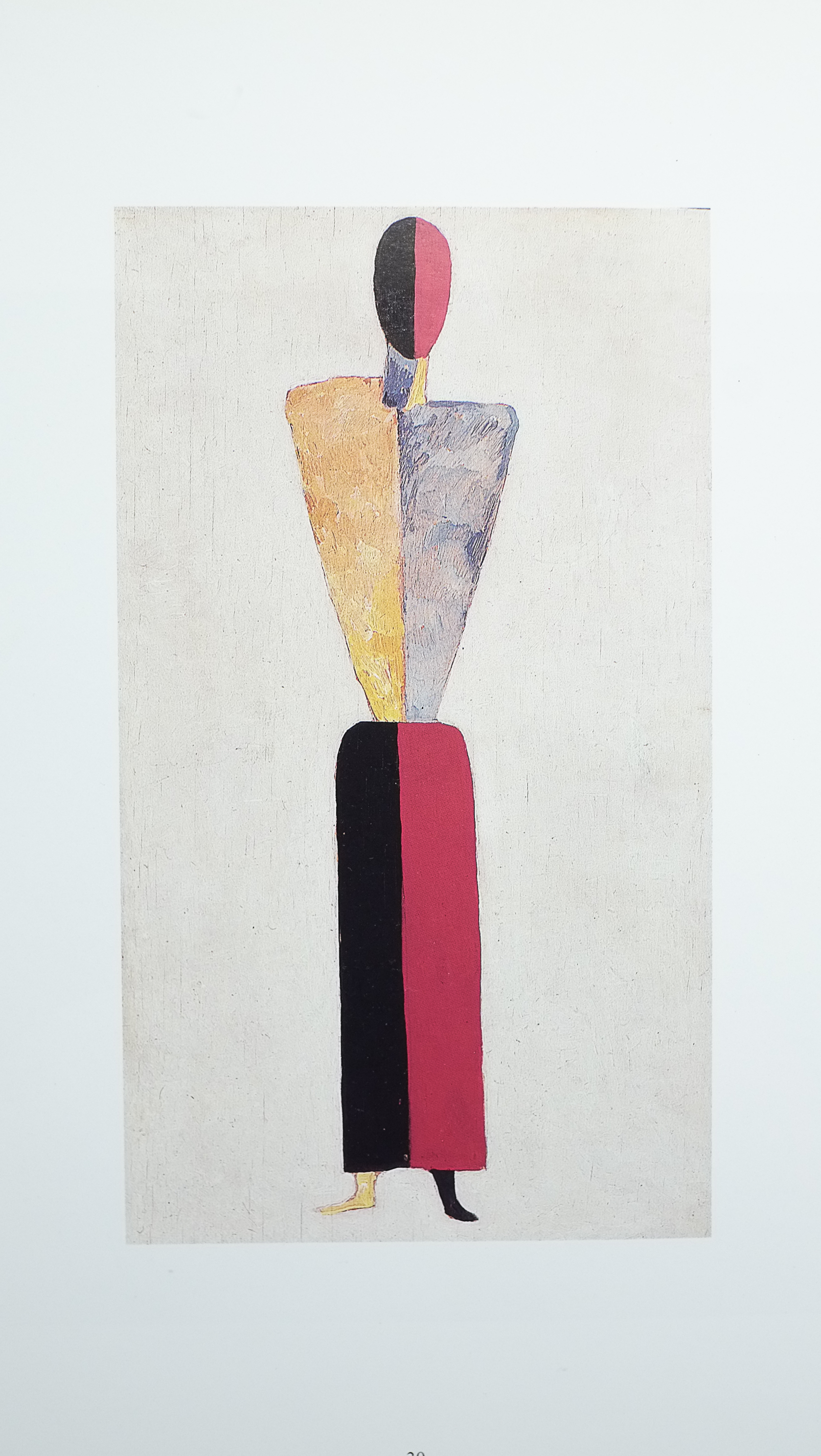

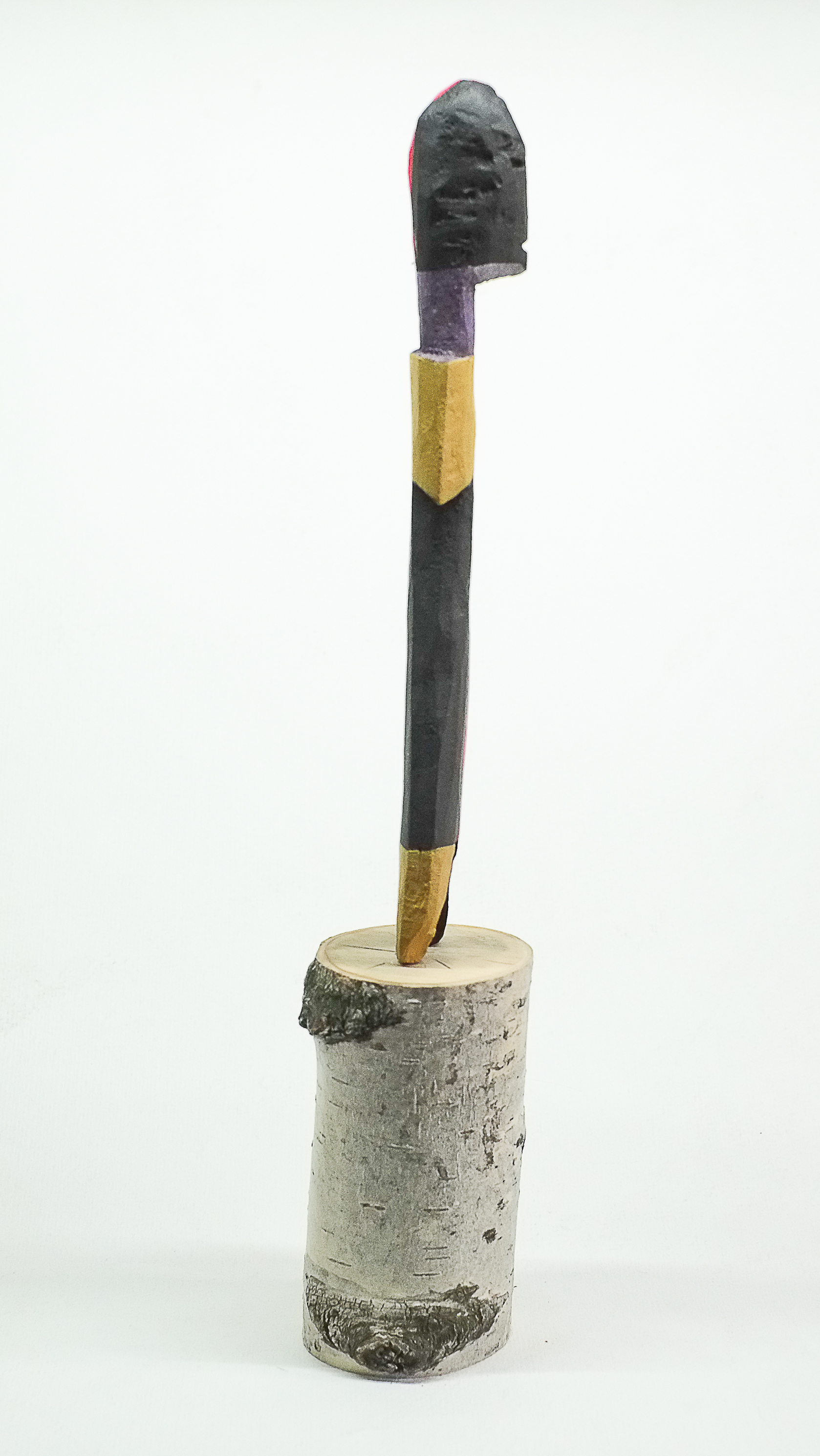
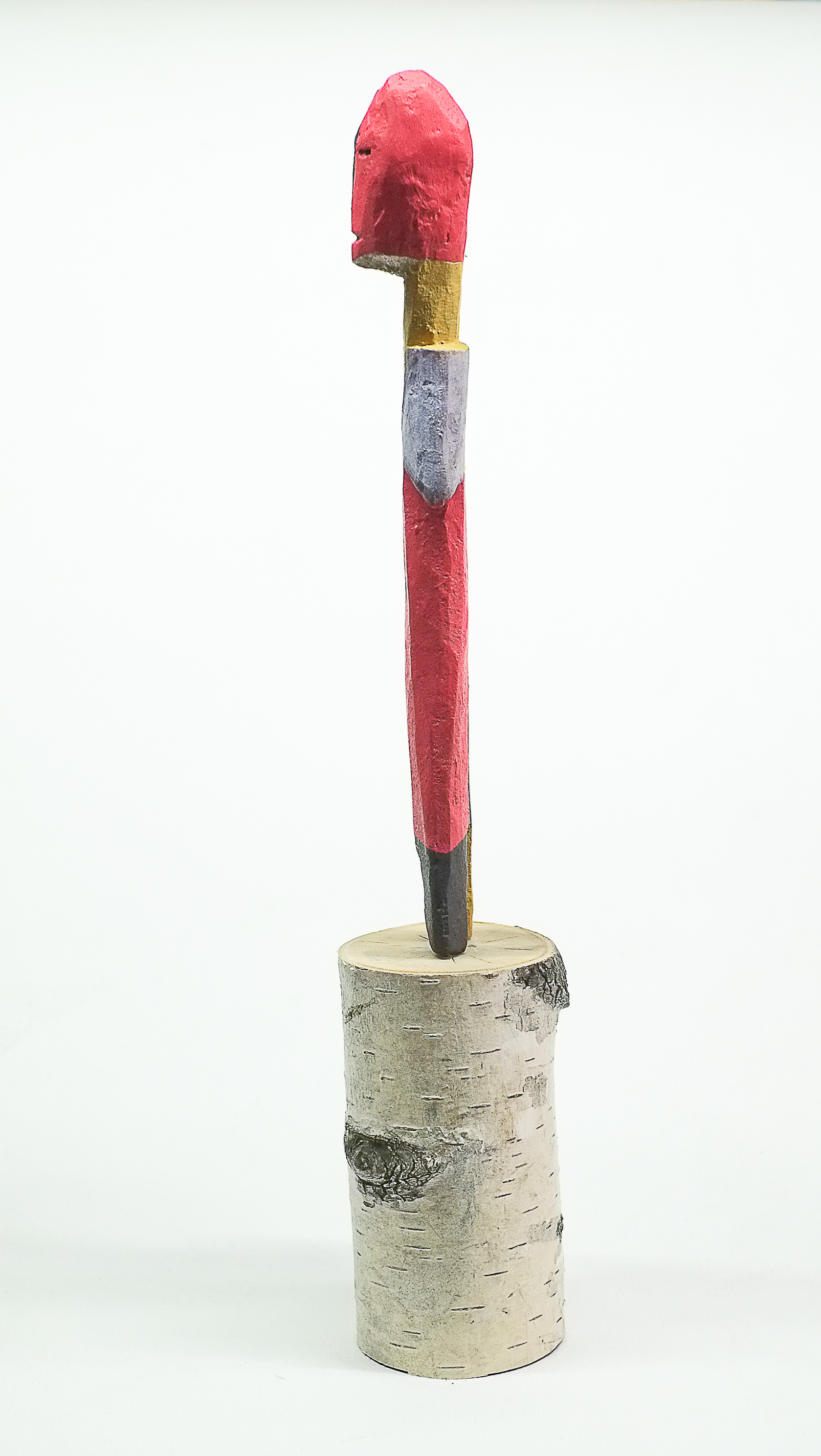
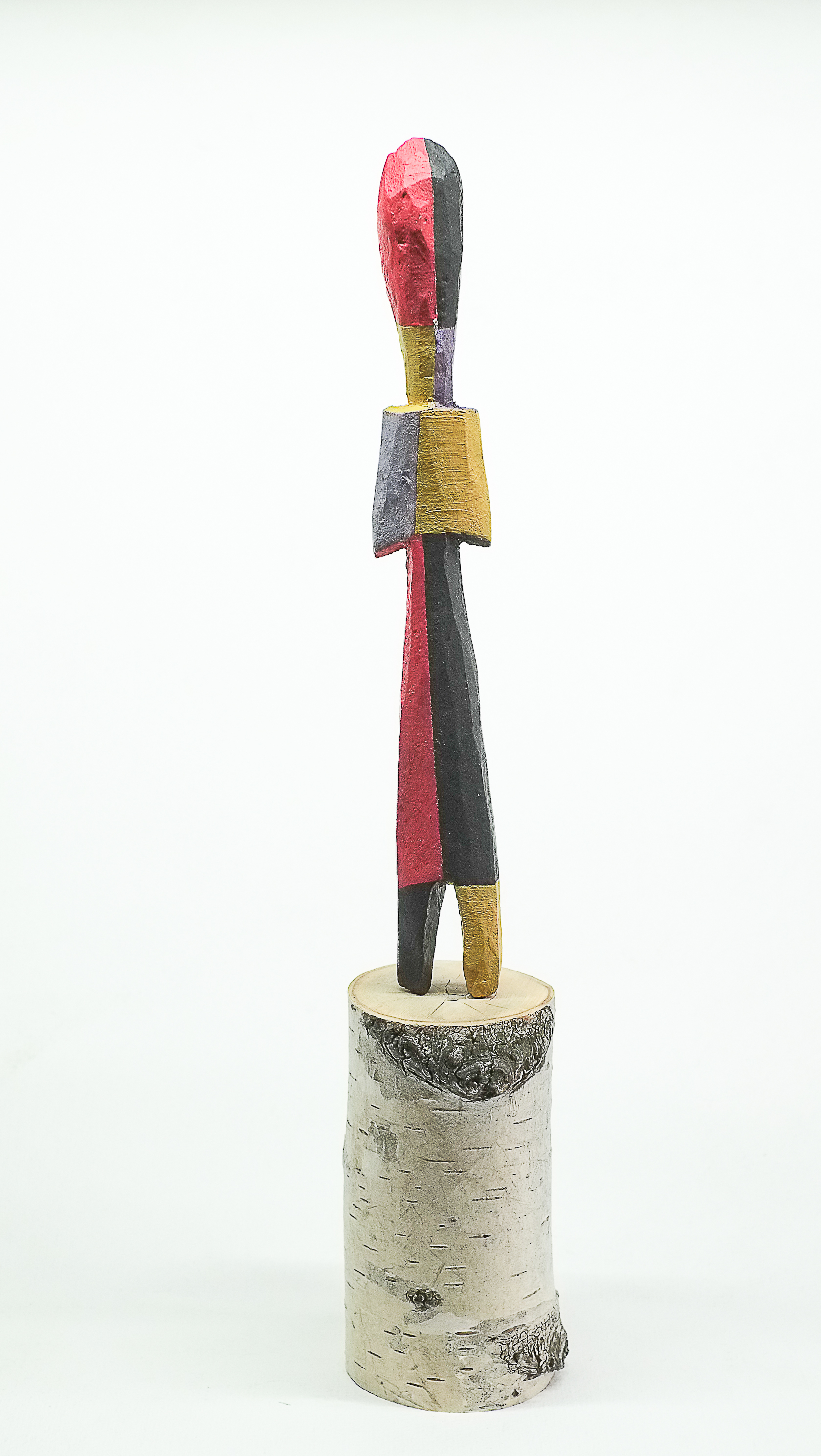
“The series Africa of Malevich stands as a testament to how art can exist beyond time and borders. These works are not merely paintings, but a bridge between two cultures, two epochs, and two artistic traditions.”
The series “Malevich’s Africa” is a unique dialogue of cultures, where the Russian avant-garde of Suprematism encounters the ancient plastic traditions of African sculpture.
At the core of the project lies the principle of artistic recoding: an authentic African wooden figure becomes the “carrier” of Malevich’s visual language. Using acrylic paint and guided by the chromatic logic of the Suprematist Portrait, the ethnographic object is transformed into a work of contemporary art, merging two dimensions — the ritual-magical and the avant-garde.
This practice not only questions notions of originality and authorship but also reveals the universality of artistic sign-making. Malevich’s lines and color fields settle seamlessly onto the rhythms of African sculpture, as if confirming the idea of a global abstract form that transcends both time and geography.
Thus, the series “Malevich’s Africa” becomes at once an act of cultural bridge-building and an inquiry into the boundaries of aesthetic identity. Here, tradition gains a new voice, while the avant-garde acquires a new body.
Wood, acrylic 34.5 x 6.5 x 6 cm
 Maxim Ksuta