Maxim Ksuta

russian artist, contemporary art, sculpture, installation, photography

Tag: Fujica6x9

The Modesty of Form as a Challenge to Dominant Taste

The Modesty of Form as a Challenge to Dominant Taste
By Pierre Bourdieu

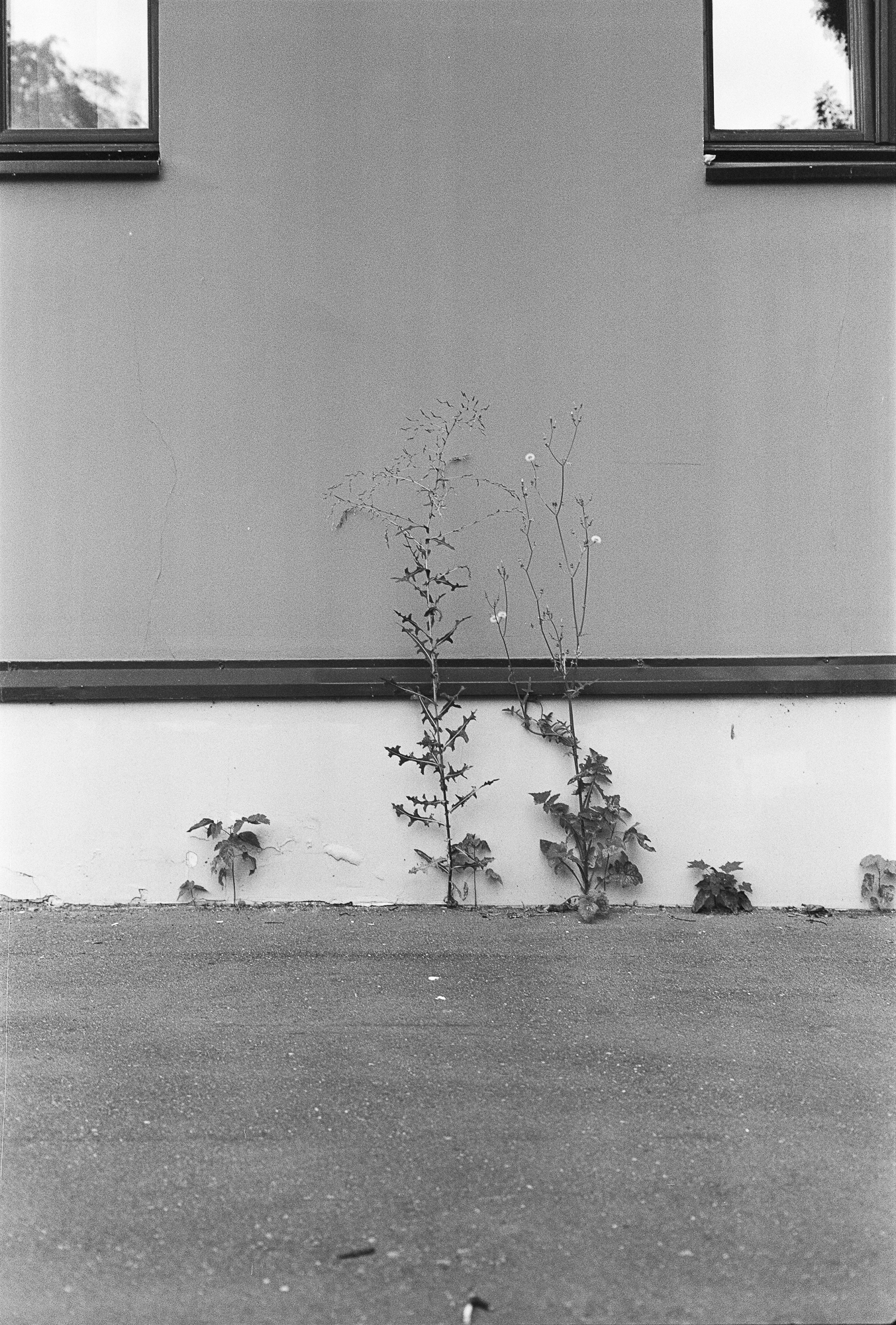
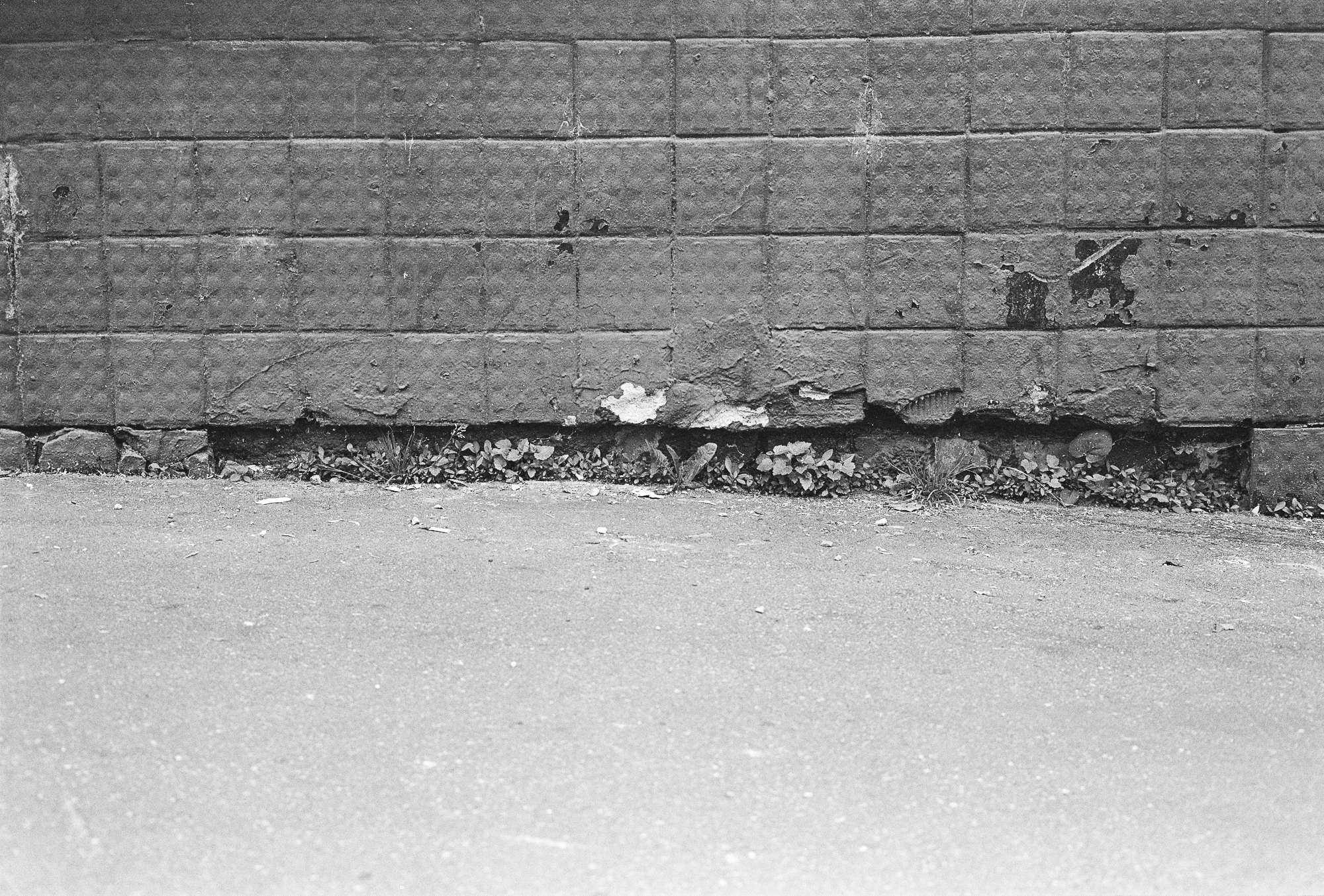
At first glance, this photograph may seem banal: a plant pushing through the asphalt by a building wall, two windows cut off by the frame, the smooth texture of the plaster. But, as is often the case within the fields of cultural production, banality itself becomes a form of resistance.

We must ask the central question: why does such an image deserve aesthetic recognition? Who has the authority to assign meaning to something so “insignificant”? This is not merely a photograph of a plant — it is a manifesto of taste, rejecting the preferences of the dominant classes, for whom “beauty” consists of Tuscan landscapes, nude bodies, or architecture worthy of Architectural Digest.

This image refuses to participate in the spectacle. It presents what has been neutralized by everyday life, what lacks recognized status. And in doing so, it performs a gesture — a gesture of reflexive aesthetics, an aesthetics that is distanced, almost ascetic. It positions itself within the space of “high culture,” but does so by inverting its codes — by showing the insignificant, by focusing on details the elite are trained to ignore.

Look at the two window frames, mirrored in their distance from the center but offset toward the top. Their symmetry is asymmetrical. This is the very structure of social space: it appears logical, but in reality, it is a field of struggle. Just like here — aesthetic symmetry is disrupted, as the balance between cultural capital and access to it is always unequal.

But there is a more subtle point. The plant pushing through the crack is a metaphor for habitus, the embodied carrier of structure. It does not grow just anywhere, but where conditions permit. It does not choose freedom — it acts within the realm of the possible. And yet it exists. Its form is the form of forced adaptation.

Perhaps the photographer did not intend this kind of social deconstruction, but in the field of art, intention is not always key. What matters is the work’s position within the structure of the field. And here, in this photograph, I see a work that rejects ornamentation, refuses to display technique, and instead elevates the ordinary to the level of the worthy.

It is precisely this kind of photograph that challenges not only academic taste but the entire system of its production and legitimation.
#Fujica6x9
#PosthumousGaze

Essay by Architectural Critic Sylvia Lavin

Essay by Architectural Critic Sylvia Lavin:

“The Architecture of Ruin and Tamed Entropy”

This photograph is a rare testament to architectural entropy, frozen in a moment where decay and renewal exist in fragile equilibrium. Here, an urban wall—once designed as a strictly rational surface, clad in geometrically ordered panels—enters into dialogue with nature, which is reclaiming the space.

This scene is not one of dramatic catastrophe but rather an illustration of slow disintegration, where the boundaries between the architectural and the organic dissolve. The damaged cladding exposes the inner layers of the structure, revealing the hidden vulnerability of the urban fabric. In the cracks left by the crumbling plaster, grass begins to grow—a modest yet resolute act of resistance.

The photograph rejects the conventional hierarchy of objects: there is no intact building, no expansive view of the street or its surroundings. Instead, the frame captures a fragment—details that typically remain outside the scope of architectural photography yet bear crucial evidence of the processes unfolding within space. In this sense, the image recalls the practice of architectural critics who examine not only completed forms but also their unstable states, the transformations that occur beyond the architect’s control.

This image can be seen as part of a broader discussion on post-Anthropocene architecture—one that does not fight against nature but coexists with it, allowing it to modify and reinterpret the urban environment. There is no nostalgia here for the lost wholeness of a building, only a careful observation of its new life—a life in ruins, a life among weeds, a life that continues even when architecture ceases to serve its original function.

#Fujica6x9
#PosthumousGaze

An Essay from the Perspective of Thomas Veski

Essay by Thomas Veski:

“Suspended Moment”

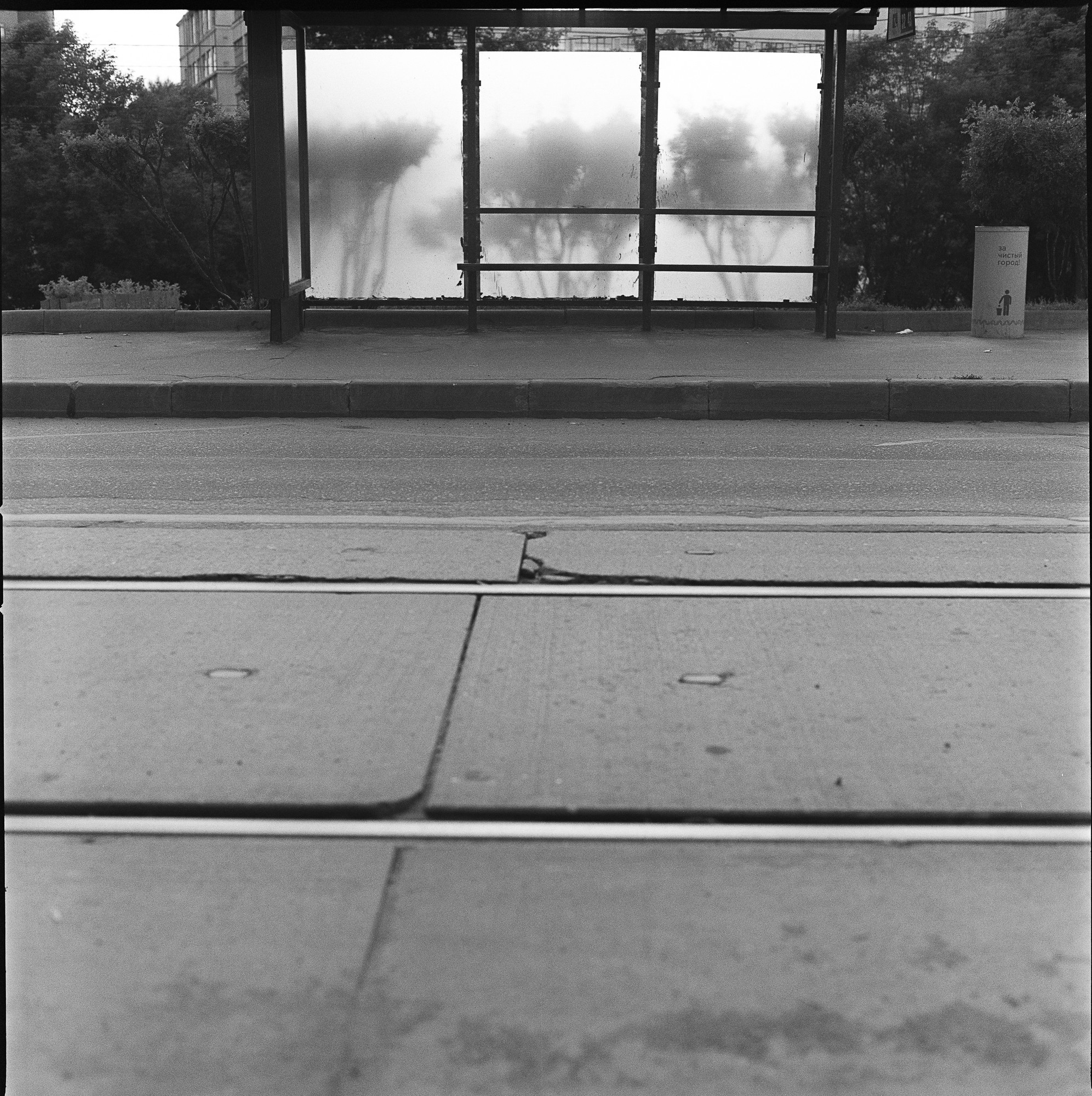
This photograph possesses a rare ability to hold the viewer in an in-between state. There is no obvious movement, no human presence, yet this very absence fills the image with potentiality. We stand before tram tracks, before concrete slabs that, covered in fine cracks and stains, resemble traces of time. This frame captures something beyond a mere street or a tram stop—it becomes a metaphor for waiting, for transition from one state to another.

The division of space plays a crucial role here. The foreground is sharply defined, with detailed textures of asphalt and metal, while the background dissolves into a diffuse haze. The glass of the tram stop acts as a boundary between a world of clarity and a world of blurred contours. The trees behind this glass no longer belong to reality in the usual sense. They become shadows, memories, hints of something alive yet unreachable.

This technique echoes aesthetic principles found in documentary photography, where a simple scene reveals itself as something greater than the sum of its parts. We do not see people, yet their absence only amplifies the feeling of their possible arrival. We wait for them, just as we wait for the approaching tram that remains beyond the frame.

The use of perspective is also significant. The tracks lead our gaze deeper into the image, yet they provide no clear destination. They stop at the edge of the frame, leaving us suspended. Like the photograph itself, we remain on the threshold of something elusive.

#Fujica6x9
#PosthumousGaze

Essay from the Perspective of Georges Bataille

Essay from the Perspective of Georges Bataille: “Foam as the Language of Chance”

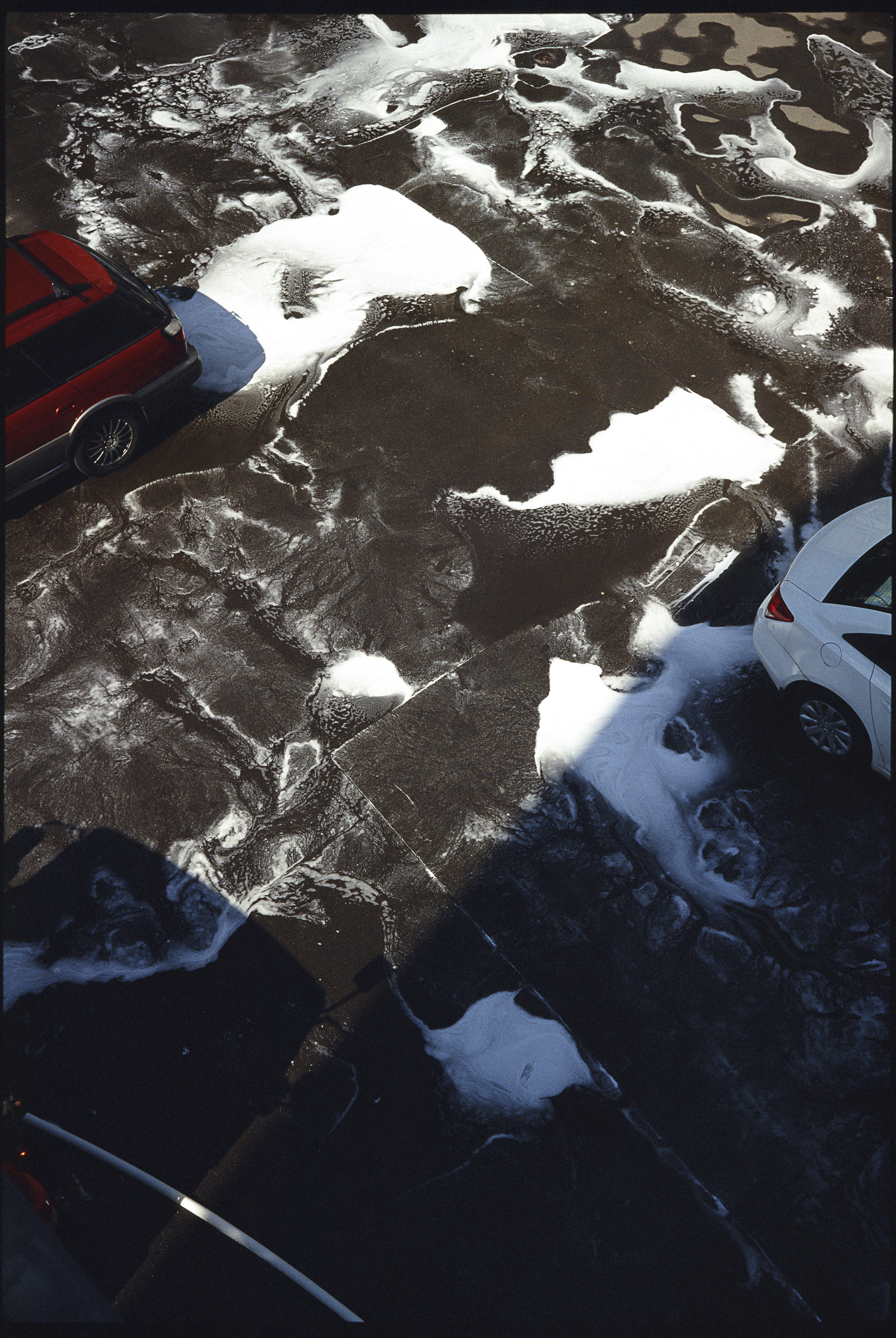
In this image, foam takes center stage—a language of chaos spread across the dark surface of asphalt. Its presence raises questions: where did it come from? What caused its flow? Foam is something fleeting, ephemeral, yet here it finds a way to make itself known, leaving traces that speak of the interplay between nature and human action.

It resembles clouds that have descended to the earth to spill across the material foundation of our world. Each line and stain it creates is the result of a random flow, beyond our control. In this, it reveals the truth of chance—the same truth that governs our thoughts, desires, and fears. Foam lives a brief but intense life cycle, seeping into every crack, every crevice, as though filling the voids we prefer to ignore.

The parked cars stand as symbols of our pursuit of control, order, a fixed system. They are like boundaries that the foam seeks to disrupt, penetrating their shadows, merging the material with the ephemeral. The wet, porous asphalt becomes a canvas for this force, where foam is not merely a substance but a gesture, an action that blurs rigid borders.

The shadows of cars and the corners of buildings also play their roles. They absorb the foam, interact with its shapes, creating an illusion of depth and layers. This reminds us how often our perception of reality is shaped by the intersection of the material and the immaterial. In this interplay of light and form, there is something almost sacred, as in every process of decay or creation.

Foam symbolizes the uncontrollable, the unstructured. It seeks to expose the absurdity of our efforts to impose order on chaos. This image speaks to the transience and the perpetual struggle between structure and anarchy. Foam is the trace of an action that leaves behind no meaning, yet in this absence, it reminds us of our own vulnerability to the forces of time and oblivion.

#Fujica6x9
#PosthumousGaze

An Essay from the Perspective of Vilém Flusser

An Essay from the Perspective of Vilém Flusser

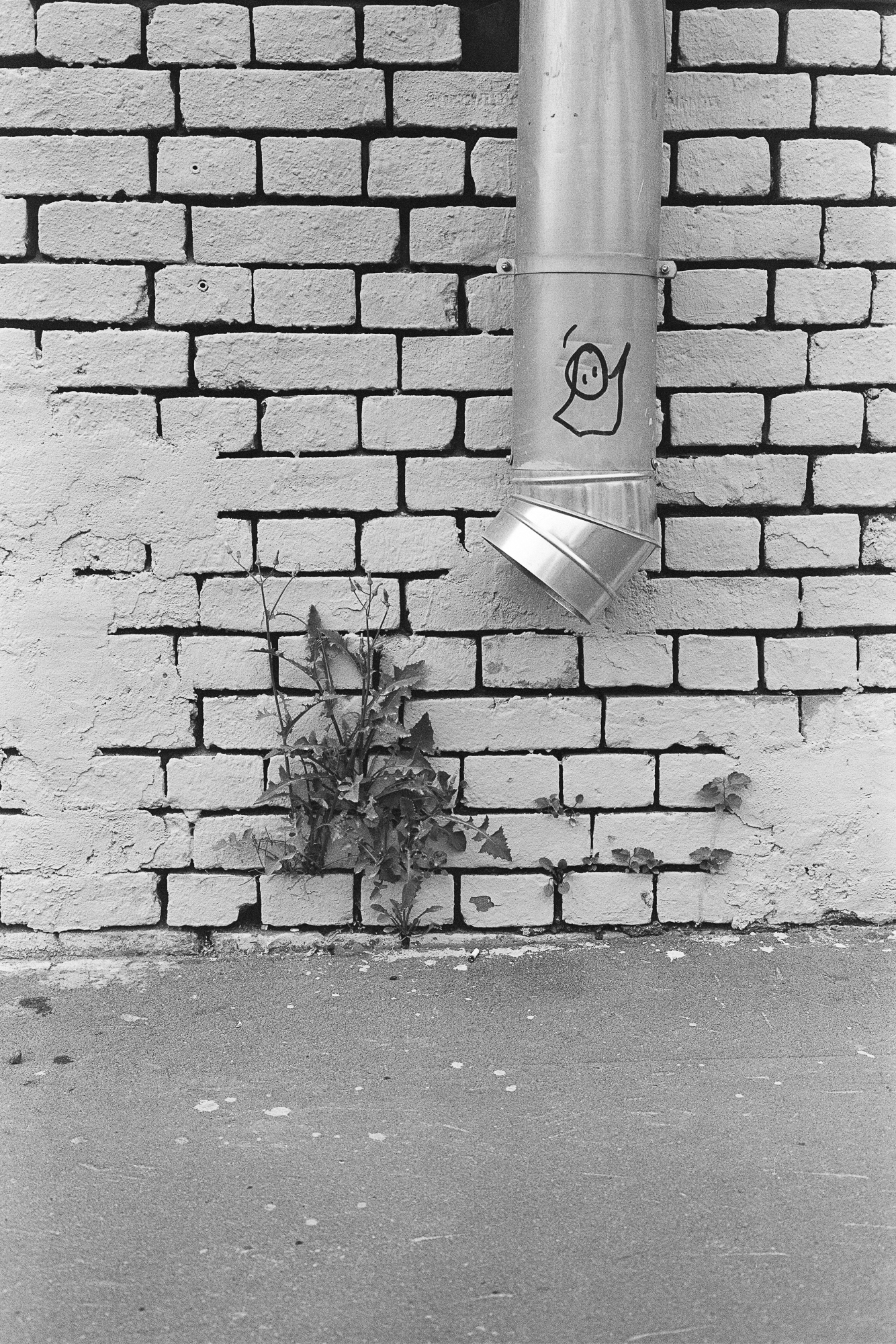
The photograph presented to me is a challenge to the dialogical nature of the image and the objecthood of the surrounding world. This shot is not merely the result of the photographer’s gesture but also a testament to the relationship between human and apparatus, between creator and tool.

Here, in this image, the pipe, wall, and plant cease to be “real” things. They become elements of a conceptual universe, visual symbols that “point” to meaning rather than contain it. The camera is not simply a device that records reality but an interface capable of transforming objects into concepts.

The image of the pipe, slightly tilted and marked with a graphic symbol, is a metaphor for functionality turned into cultural text. The act of someone drawing on the pipe is an example of the “play” humans engage in with objects of the industrial world. The graffiti transforms the pipe into a bearer of meaning, a medium of communication. Meanwhile, the plant growing against the backdrop of the brick wall challenges this very industry, presenting a contrast between the organic and the artificial, the living and the static.

The brick wall, even and orderly, symbolizes human-created structure, yet its cracks reveal the chaotic force of nature, whose power cannot be entirely subdued. This tension between the authentic, the natural, and the industrial introduces us to a new world, where the familiar desire for control is dismantled by its own logic.

What is significant here, however, is the act of photographing itself. The photographer is a “programmer” working with the “memory” of the apparatus. The choice of angle, framing, and the relationships between objects is a process that extracts the image from the flow of randomness and imbues it with meaning. The apparatus, despite its cold functionality, becomes a tool for cultural expression, and the photographer, interacting with it, does not merely record but creates.

This work reveals the essence of photography as communication. It speaks not only about the objects within the frame but also about the gaze that perceived them, the person behind the camera, and us, the viewers of this photograph. We become part of this visual dialogue, transforming from passive spectators into interpreters.

This photograph is not simply an object; it is a text we read. And therein lies its true value.

#Fujica6x9
#PosthumousGaze

An essay written as if by Roland Barthes

“The Death of the Author, the Birth of the Sign”

An essay written as if by Roland Barthes

This photograph is not merely an image but a text I read in my imagination. It unfolds before me as a field of signs, endlessly layered, each calling me to interpret, deconstruct, and immerse myself in its ambiguity. The image becomes a space of meanings, where the author vanishes, leaving us alone with the object—a sign that demands to be read.

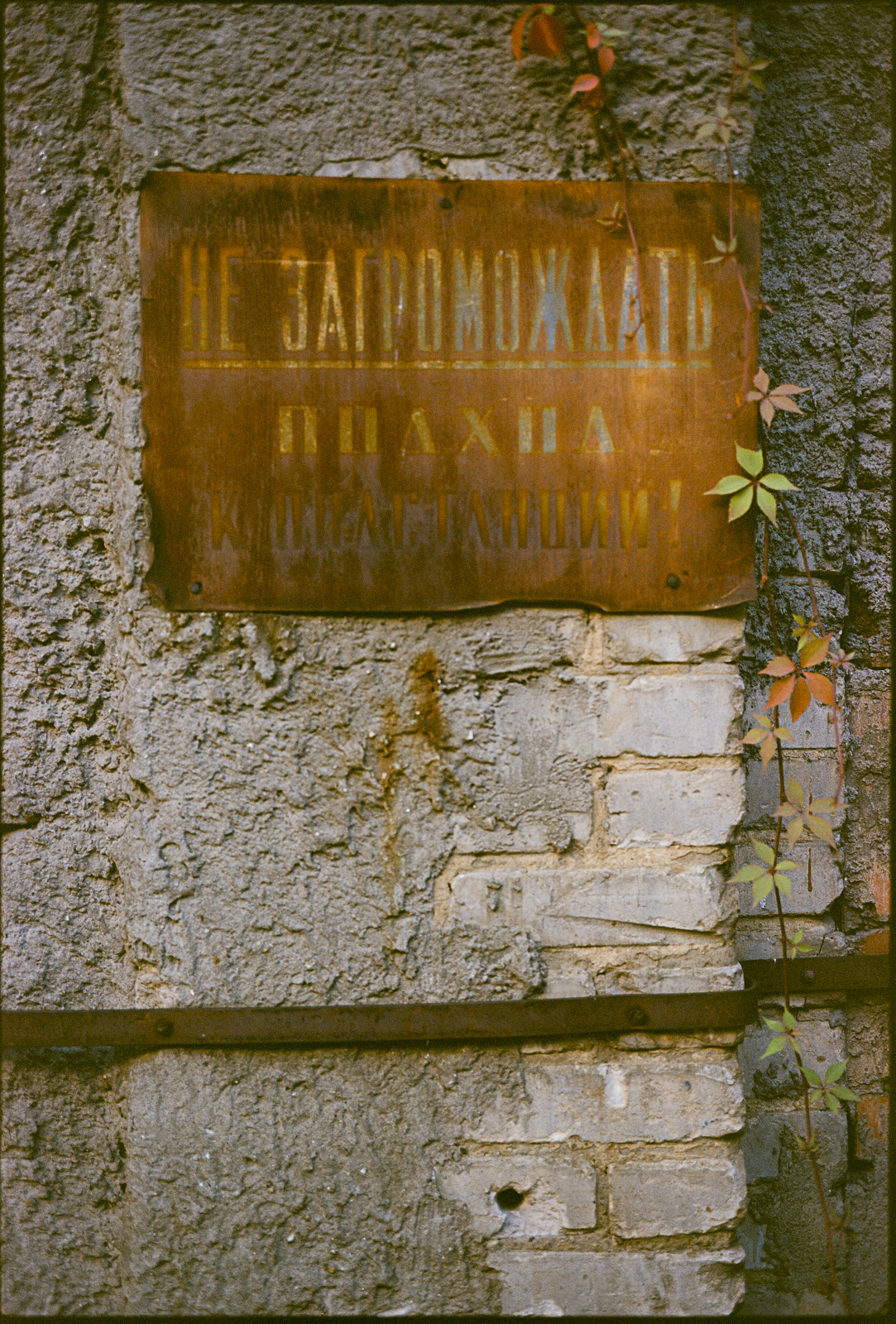
At the center of the composition, we see a sign with the inscription: “Do not block the passage to the boiler room.” At first glance, it is a simple utilitarian directive, a warning, a relic of the industrial age. But its placement, its wear, and its interaction with nature create a unique semiotic tension. This object is no longer functional in its literal sense. It has become a symbol of the past, which, through oblivion, transforms into poetry.

The rust on the sign speaks of time—of its destructive and, paradoxically, creative power. This is not merely loss but a new level of presence. The metal, corroded by decay, tells a story that, as a viewer, I can only imagine. The aesthetics of desolation turn into an invitation to reflect: what was this passage, to whom or to what did it lead?

The cracked wall is texture, a palimpsest, hiding countless past layers beneath it. It does not remain silent; on the contrary, it whispers of time, the passing of eras, of human labor and its traces. The wild grape leaves creeping along the wall challenge time itself. Nature asserts its dominion, softening the ruins with its organic persistence.

And yet, despite this wealth of meaning, the photograph resists a definitive interpretation. It remains open, like a sign that perpetually eludes a final reading. This is where its power lies. The photographer retreats into the shadows, allowing the objects to speak. I see only what already exists: the sign, the wall, the leaves. But these elements transform within the space of the photograph, becoming independent of their original purpose.

The photograph becomes a space where culture and nature, time and its decay, memory and its loss converge. It evokes in me, the viewer, a desire to immerse myself in its signs, returning again and again to read them differently. The “death of the author” here becomes the birth of new meaning.

#Fujica6x9
#PosthumousGaze