Maxim Ksuta
russian artist, contemporary art, sculpture, installation, photography
Category: Event
April 12, 2013
ГОСЗАКАЗ/GOSZAKAZ/Pechersky Gallery/Winzavod
Overcoming the Space
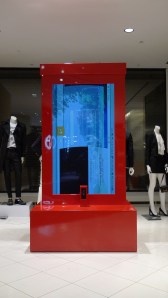
In my project, communication is a part of the space-time continuum. I know for sure that space and time is a single construct which is called “matter”. From ancient times mankind aims to embody the notion of time: Mexican and Egyptian pyramids are immense and incredible in their excellence, and these pieces of art will have a long life within the history. My “Teleports” are rather objects of contemporary art, although I have been thinking a lot about the practical side of the project.
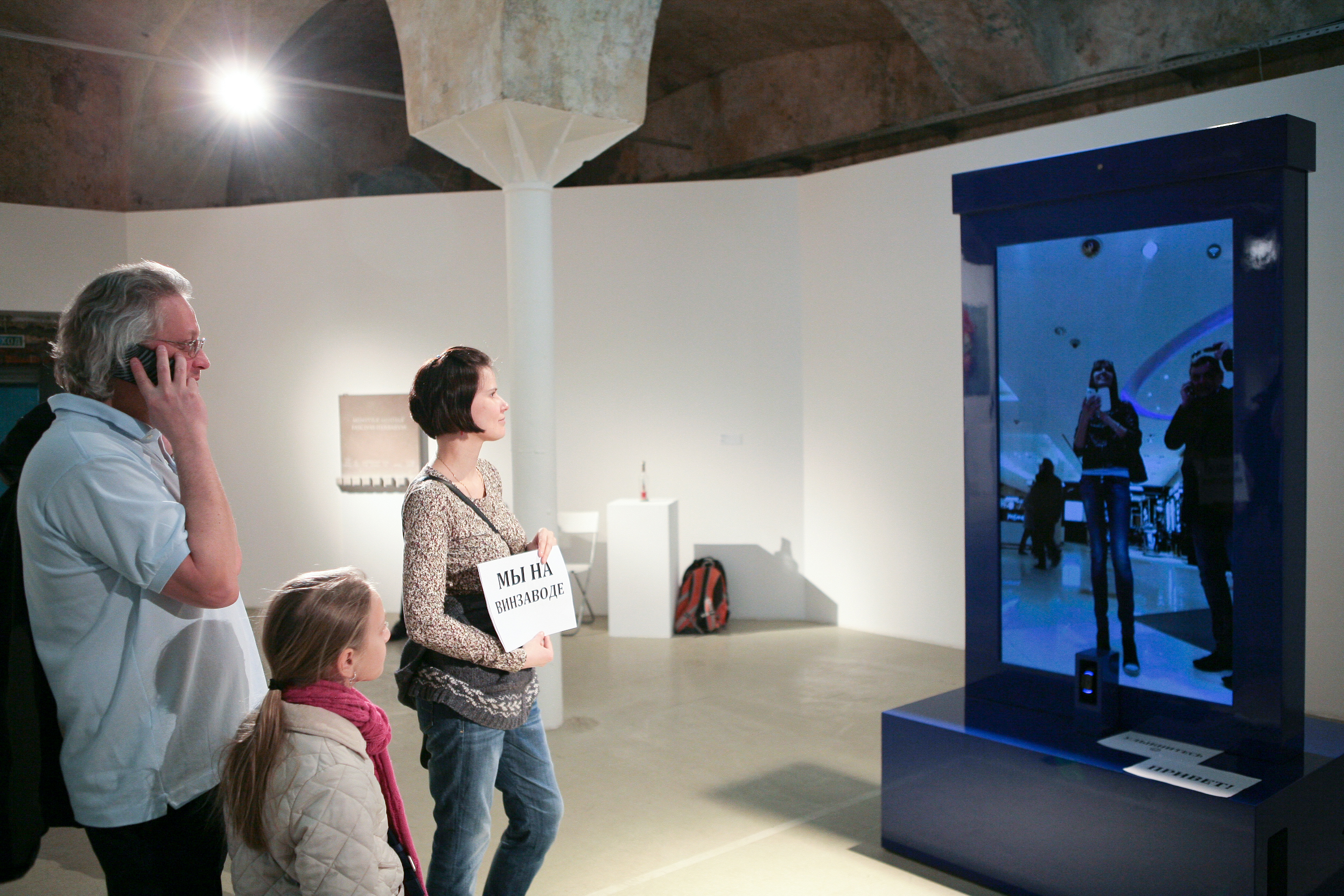
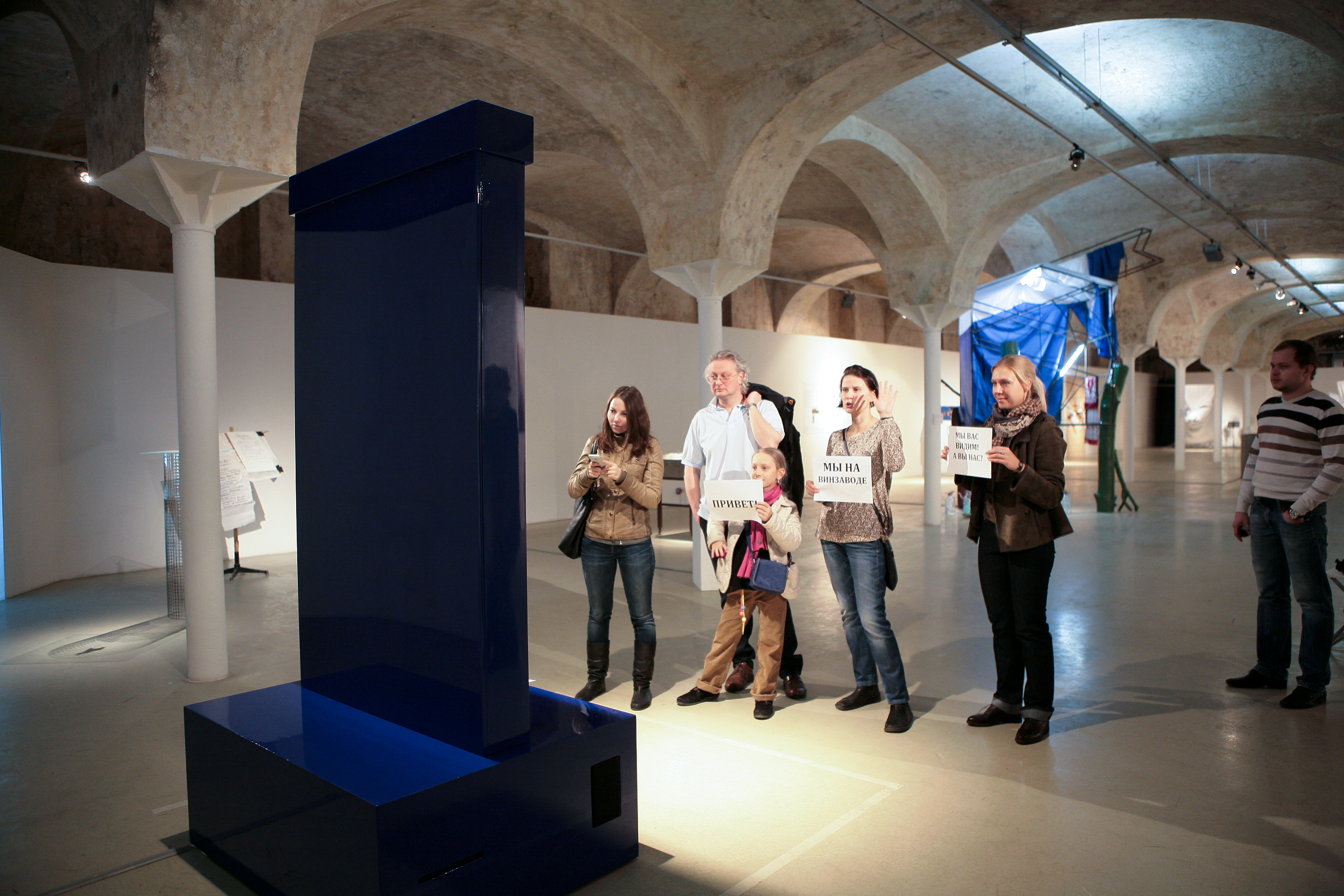
Interactive spacebridges with Liquid Crystal Displays broadcast the day stream of other world capitals – London, Rome, Berlin, Paris and others – with their unique rhythms and drawings of life. The main function of such objects is social communication. Objects are equipped with high-quality HD panoramic video cameras which enables the passers-by to greet citizens of other cities, to wave their hands, to give a wink, etc.
“Teleports” are objects for communication, but unlike iPad they are public, not individual. These are the windows to the “different reality” with its different life flow, which carry a user through space and expand its conscious in the right direction – direction of consolidation of the humanity as a whole, unification of it as a whole and its unit, a particular human individual. Not only “Teleports” would be of interest for citizens, but, I believe, they would become a true attraction for them.
Maxim Ksuta
Info … … … …
March 19, 2013
Maxim Ksuta – “CY”, Triumph Gallery

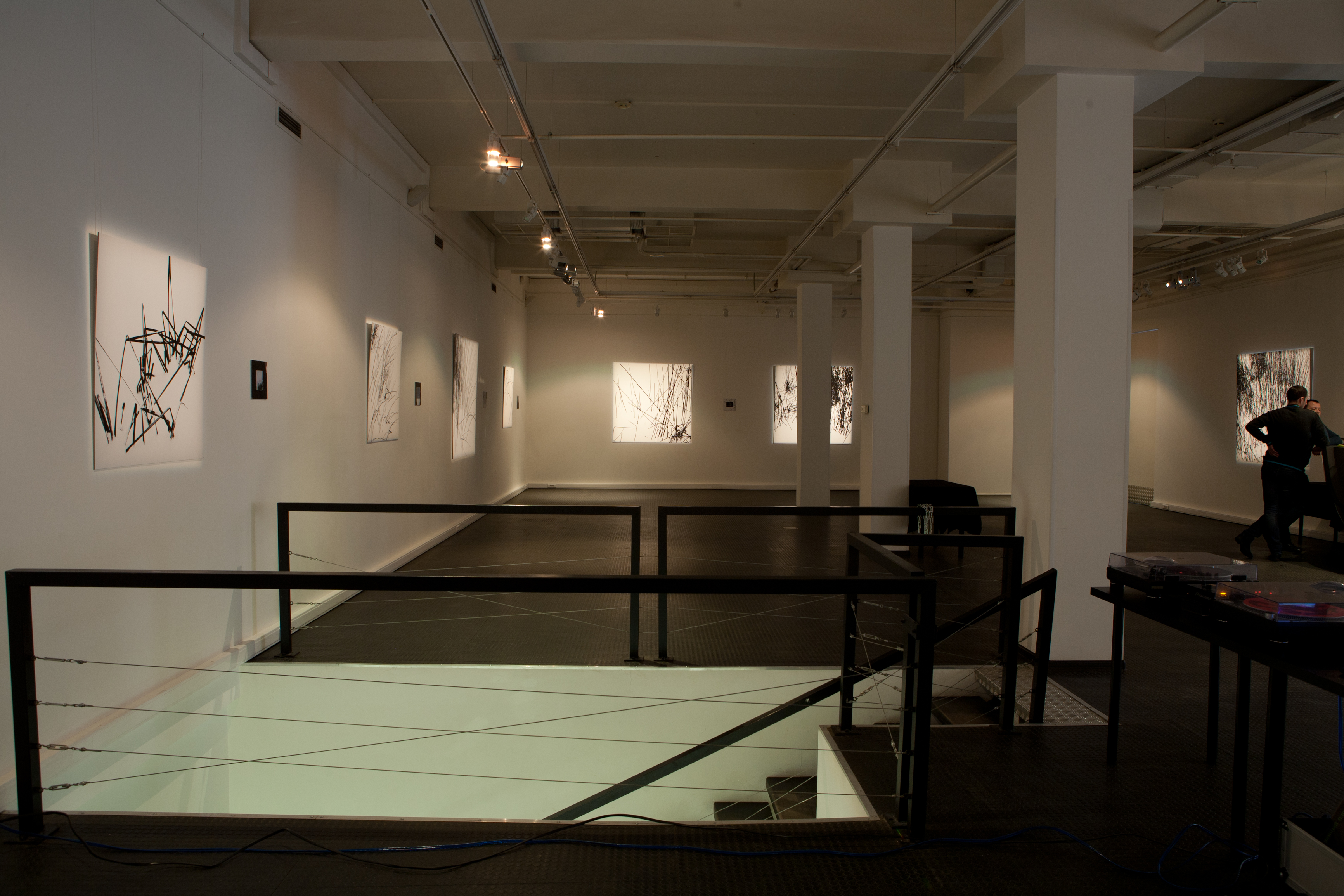

Over the course of recent years, Maxim Ksuta has been developing an entirely unique relationship to photography: he has consistently removed or weakened the firm bond between the photographic image and visible reality, the camera in his hands becoming not a means for “baring” or “revealing” reality or a means for freezing it in as concentrated form as possible – Ksuta’s camera, instead, almost appears to be overcoming the camera’s technological nature, and Ksuta himself, rather than pressing on the shutter button, appears to be painting with a brush or a charcoal pencil. He consciously forms not a shot but a sheet with geometric abstractions; his works begin to work to the laws of the drawing sheet, rather than the photographic print, as was the case in his previous series with electric cables cutting through the Moscow sky in dynamic diagonals.
The theme for Ksuta’s latest project appears to be far more inventive, because the starting point for the visual experiments turns out to be another work of art, specifically the work of the great American abstractionist Cy Twombly. Ksuta doesn’t relish the proportions, the balance of vacuums and the coloured “nervous” zones; he doesn’t occupy himself with deciphering Twombly’s codes, which reference the whole of world culture and history; he intently and intensively scrutinizes. His eye singles out, isolates the intricate movement of the pencil lines; at the same time it is clear that Ksuta is sincerely enraptured by the freedom of movement of Twombly, who crosses out, sketches and colours with the ingenuousness of a child who has been sat before a sheet of paper and given coloured crayons for the first time. Ksuta is posed a question about the nature of this freedom, of its ideal prototype, if you will, and finds astonishing formal correspondences in Twombly’s “writings” and the sticks, branches, blades of grass that fall under your feet during a walk. He creates a distinctive negative for Twombly’s paintings, a purely monochrome structure, consistently purifying Twombly, testing the viability of his plasticity among real natural objects. It is as if Ksuta is bearing witness to the natural, most organic provenance of Twombly’s art, making the dynamic of his objects literal, perceptible – this is not some conditional drive of colour flows, lines within the borders of a canvas, but a real walk, a stroll, during which the artistic forms are discovered beneath one’s feet, and with a clumsy movement one can disturb the fragile harmony. The appeals of the artist himself to the image of an enchanted forest, a magical, almost
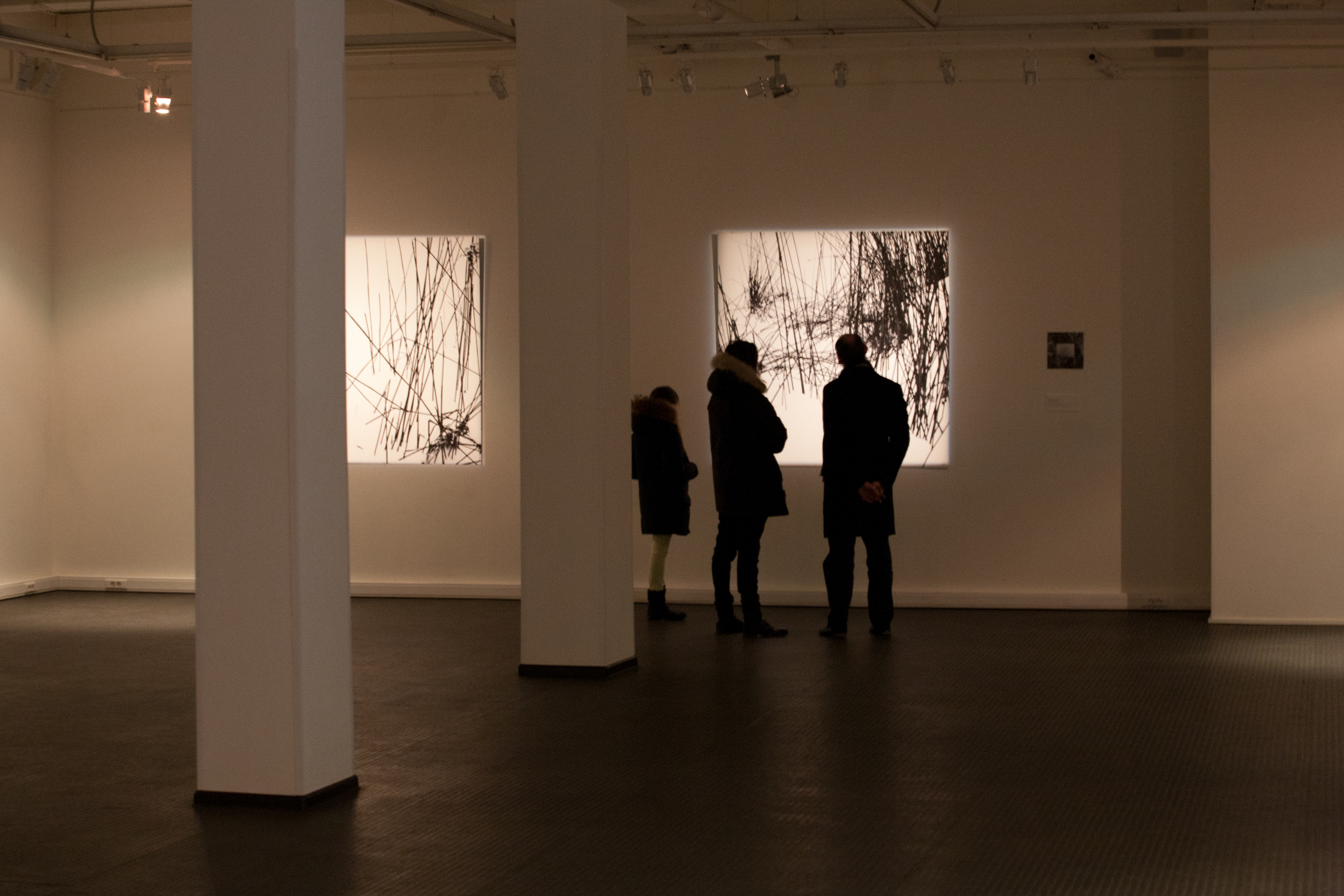
fairytale space, where everything that is familiar is suddenly miraculously revealed is no accident in this regard, and a walk through this forest is transformed into an allegory of life’s path (or the path of an artist) that is entirely in the spirit of Novalis. Along the way, Maxim Ksuta ontinues to resolve his own task, a task that has occupied him in recent times: He is feeling out a barely perceptible zone where the abstract and the concrete coexist. The concrete object is often embodied in the most abstract of forms, it loses its recognizable outlines, but it retains its essence: a branch remains a branch, wormwood thickets remain wormwood, and the viewer is enchanted by the game of form, the glimmering of the perceptible and the visible that, when viewing Ksuta’s photographs, it is so easy to give in to. He follows the logic of a “new objectivity,” recalling in memory the German “Neue Sachlichkeit”; at the same time as many young European artists (for the most part coming from Eastern Europe, of the general of Wilhelm Sasnal), he sees in this an opportunity for quiet deliverance, he suddenly understands that the diapason of variations can be as broad as you like, and with an artisanal persistence (in the very finest sense of the ancient techne’) continues to move
through this magical space, sometimes drawing into his orbit the great artists of the 20th century.
Ekaterina Inosemtseva
Cy – catalog

January 13, 2013
Skygraphics
To fail to find a way in a city is an ordinary thing. Another matter is to lose
your way there, like you do in a forest. This requires practice.
Walter Benjamin “Childhood in Berlin at the Turn of the Century”
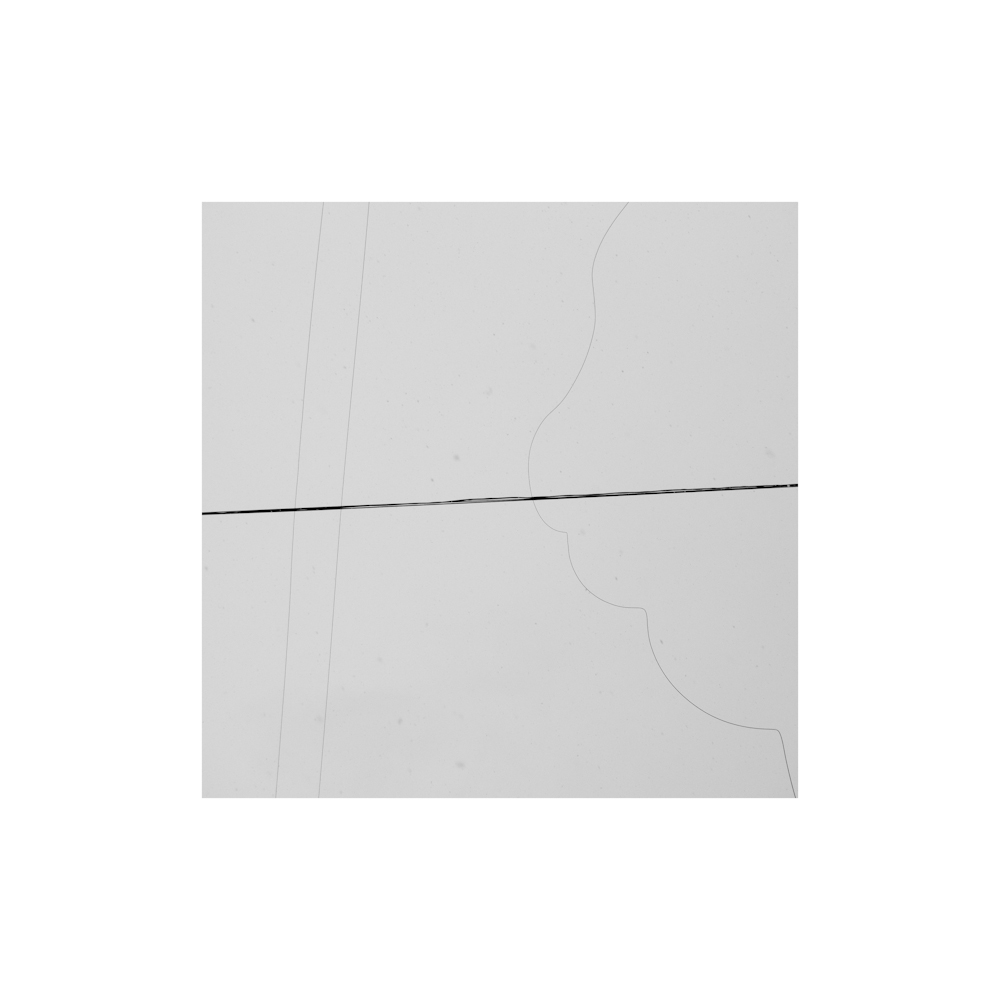
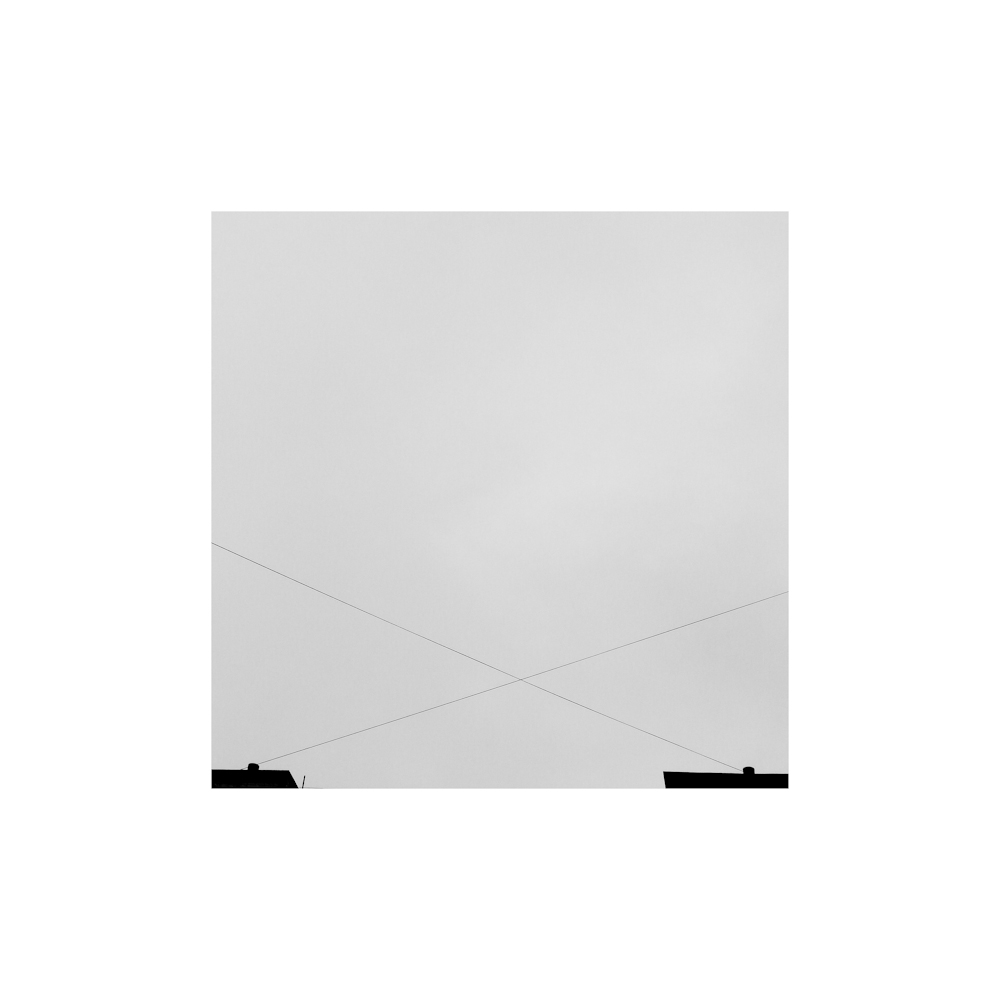
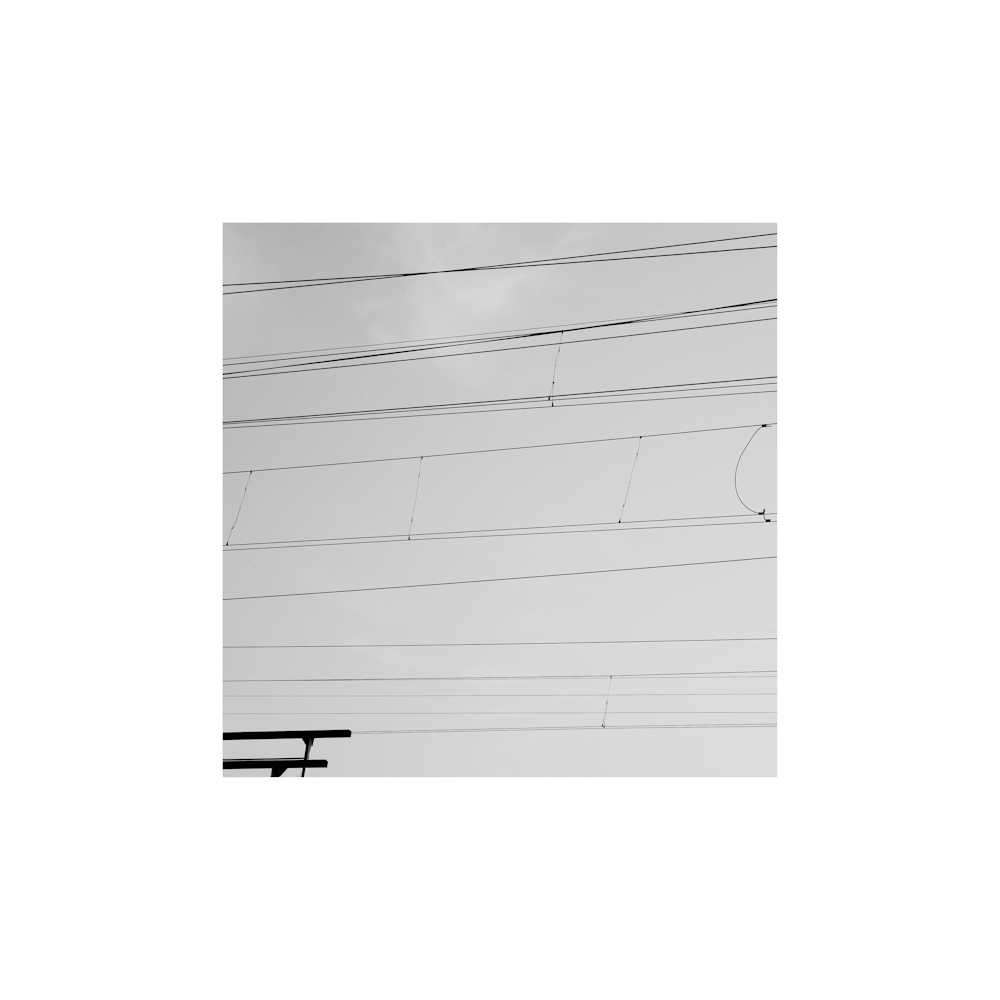

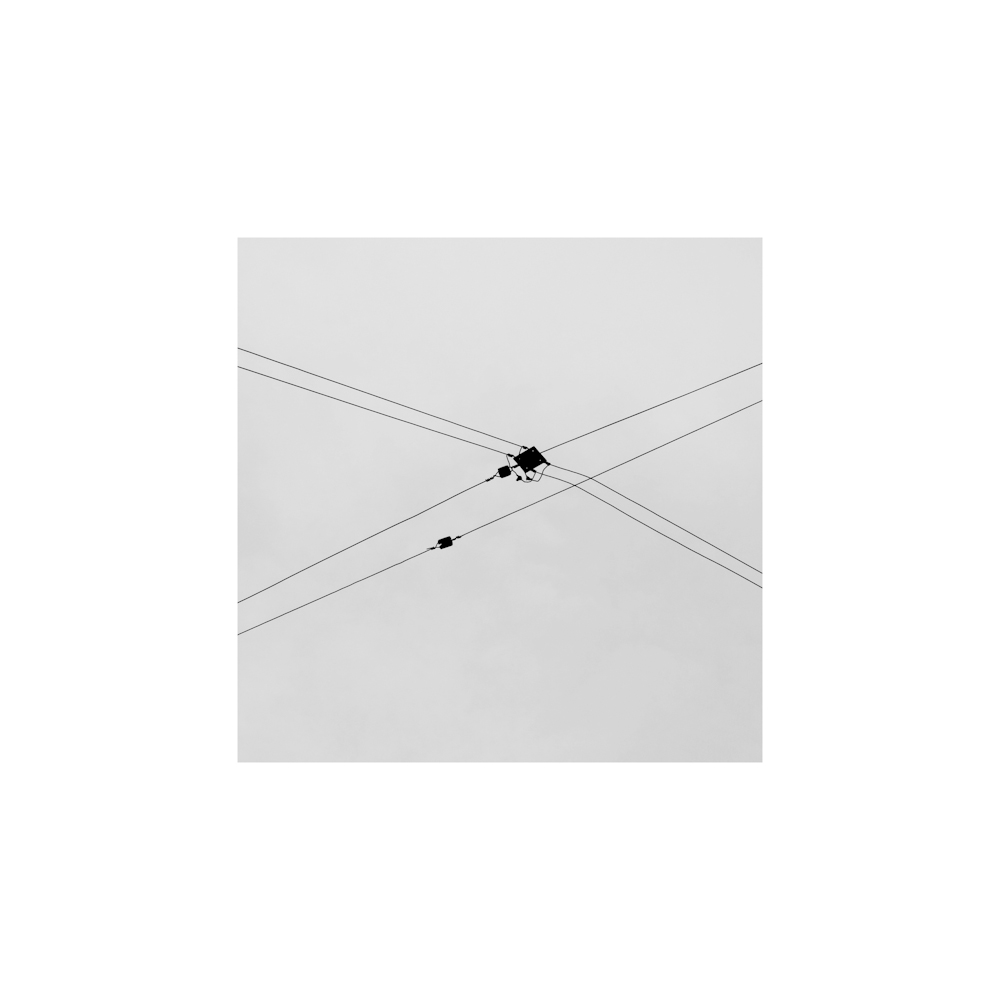
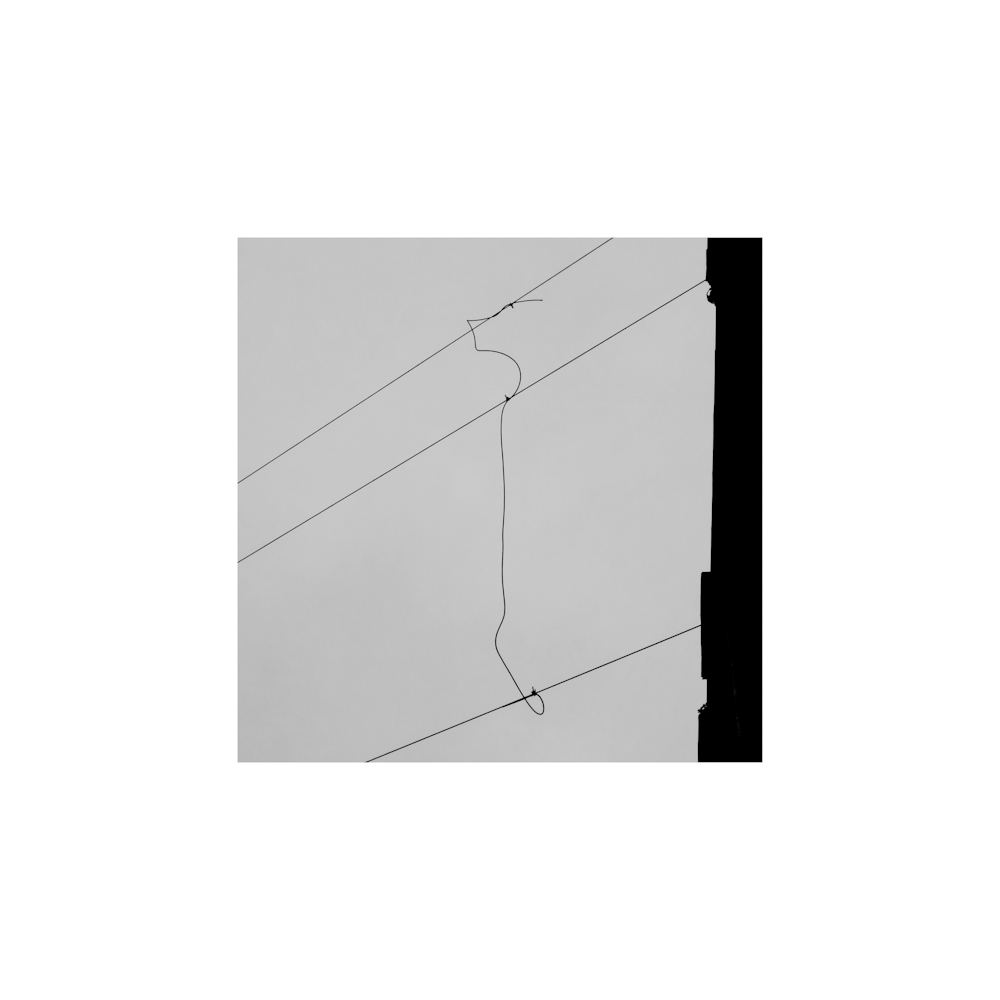
Losing your way in your own city is next to impossible: you need to possess Benjamin’s skills of a flaneur to stray from your habitual routes. anging around without any certain purpose is a task hardly feasible for the modern city dweller. A lonely walk is, rather, an attribute of literature, a true companion of romantics and melancholics, not of people always in a hurry on some extremely important business. At the very moment when an imaginary city map with a fantastic topography starts to form in Benjamin’s mind, Maxim Ksuta shifts his gaze upwards, and his routes lie in a different plane where the sky of the city is lined with electric wires turning it into a graphic surface. Fussy reality seems to draw back, the space is cleaned to a near sterility — before us there are “sheets” which resemble either works by the American minimalists — from Agnes Martin to Fred Sandbeck, or the static compositions of the Russian constructivists.
The comparison with minimalism in this case is far from being casual: Ksuta’s works come in a series. The same theme can be endlessly and aturally varied — the artist consciously uses his means sparingly, intensifying at the same time the effect of recognizing more than just specific electric cables in abstract lines and spirals. The serial nature of the works contain a different energy and another type of movement, the change of focus is dynamic, the viewer is led not by the logic of reality, but by the dimensional arrangement of each composition. In a certain sense, Ksuta does not build a photographic frame working with proportions, dimensions and density of real objects, but solves purely artistic tasks, as if he is free
to cover the sky of the city with lines of the required thickness, to build or to break the symmetry. There were few who allowed themselves the liberty to reshape visible reality: among them are Alexander Rodchenko and Laszlo Moholy-Nagy, who turned photography into a valuable artistic means which provided the artist with no fewer opportunities for imagination than traditional painting and drawing.
Ksuta skilfully maintains the balance between the specific and the entirely abstract. In his series you can even feel the almost imperceptible rhythm when in a row of ideal geometrical constructions are inserted images of a clearly identifiable landscape, of birds caught in the wires, of posts and other marks of the Moscow landscape. he doesn’t remove from the city its symbolic and visual essence which might express, indicate, determine. There is nothing exceptional in his attitude, no desire to make a grand gesture. On the contrary: his series develops steadily
and tactfully in relation to the viewer and, notably, not at all in the space, which is everywhere the same: the grey sky, the wires, but within time. All the photographs are marked with the date when they were taken, and one doesn’t even feel like seeking logic here: it’s hardly relevant, if there is any at all. It’s just that once you stray from what is familiar and come to see the previously unknown systems, structures and forms of life (as in the video ‘16072010’, which features in the exhibition), which are visible only to the perceptive eye of a flaneur. And the moths flying unbelievably fast around the lantern in Ksuta’s video turn into galaxies, clusters of strange, glowing objects. We lose our usual perception of gravity, scale and reality itself, falling readily for the power of the image which is capable of revealing a different, phantasmagoric space.
Ekaterina Inozemtseva
 Maxim Ksuta