Maxim Ksuta

russian artist, contemporary art, sculpture, installation, photography

Category: Video

Biennale of Ecological Art, “The Skin of the Earth”, Nizhny Novgorod

Maxim Ksuta, full HD video-installation

This project is a pure artistic expression, in the sense that my intervention in the process was minimal.
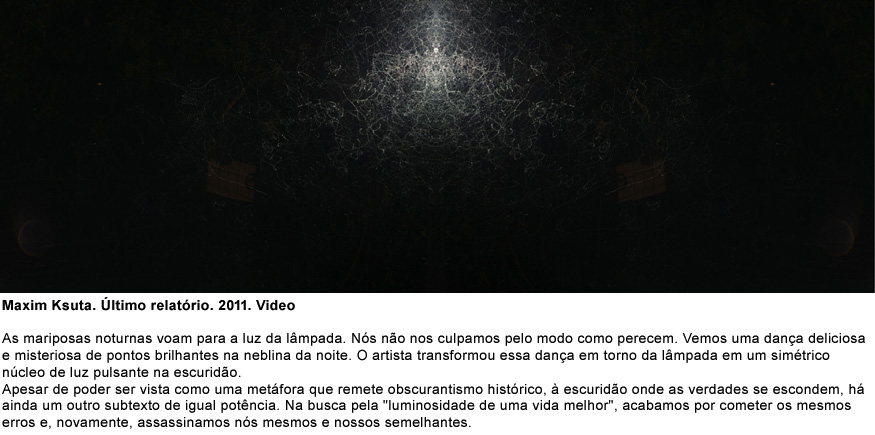
In this case, the artist—as the author—merely witnessed a strange and rare natural phenomenon: the bizarre dance of thousands of tiny moths within the light field of a streetlamp.

I set up the camera to capture the scene over a certain period of time with a specific interval between shots. The result of this experimental recording was around 1,200 photographs that strikingly resemble unusual calligraphic techniques, with elements of cryptography.

To reflect the dynamic nature of this phenomenon, I decided to create a video based on this footage, which I now present to your attention.

Scientists have long been trying to understand why so many nocturnal moths are irresistibly drawn to light. And to this day, there is no definitive answer. Researchers have observed that the brighter the light source, the more strongly it attracts insects.

For instance, if two lightbulbs are set up in a dark area—say, in a field, a forest clearing, or a garden at a summer cottage—one with 250 watts and the other with 1000 watts, more moths will gather around the brighter, 1000-watt bulb. Interestingly, the species composition of the moths doesn’t seem to influence this behavior.

But why do moths begin to circle rapidly around a lit lamp as they approach it? It turns out that during flight, these insects navigate by keeping a light source at a constant angle—specifically, they try to maintain the light beam perpendicular to the axis of their bodies. Since artificial lights are point sources, their rays spread out radially. As moths approach such a light, they attempt to keep themselves perpendicular to the rays, which are arranged in a circular pattern— and we, in turn, are captivated by their swift, spiraling dance around glowing lanterns.

Ragas Of Morning & Night

About the Artist: Pandit Pran Nath

Pandit Pran Nath was one of the last great masters of the Kirana gharana, a North Indian vocal tradition rooted in deep spirituality and microtonal precision.
Born in 1918 in India, he was a disciple of the legendary Abdul Wahid Khan.
In the 1970s, he became a guru and spiritual teacher to Western minimalist composers such as La Monte Young, Terry Riley, and Marian Zazeela.
His music is not a performance in the Western sense — it is sādhanā, a spiritual practice of sound as a path to transcendence.


🎶 About the Album: Ragas of Morning and Night

(Released in 1986 on Gramavision Records)

This album features two traditional ragas, ancient Indian musical forms designed to evoke specific moods and states of consciousness, each associated with a particular time of day.

1. Raga Todi (Morning Raga)

  • Performed at sunrise.
  • Mood: introspective, delicate, meditative.
  • It reflects the awakening of nature, the unfolding of light.
  • The vocal line slowly develops over a drone, dwelling in microtones — it feels as if each note trembles gently like a petal in the mist.

2. Raga Darbari (Night Raga)

  • Meant to be performed at night.
  • Mood: deep, mysterious, hypnotic.
  • Darbari is one of the most majestic and emotionally intense ragas in Indian music.
  • Pran Nath’s voice resonates like a mantra — not with words, but with pure emotional truth through sound.

🔊 The Sound

  • No melodic instruments are used, only tanpura (drone) and tabla (rhythm).
  • The development is very slow and contemplative, nearly a form of sonic meditation.
  • There’s no linear melody — instead, it explores the depth of a single tone, a single vibration.

🌀 Influence on Western Music

This album — and Pandit Pran Nath himself — had a profound impact on American minimalist music.
Artists like La Monte Young, Terry Riley, Jon Hassell, and even Brian Eno either studied with him or drew inspiration from his approach to extended duration and microtonality.
These ragas are more than music — they’re a transmission of inner states and meditative stillness through the human voice.

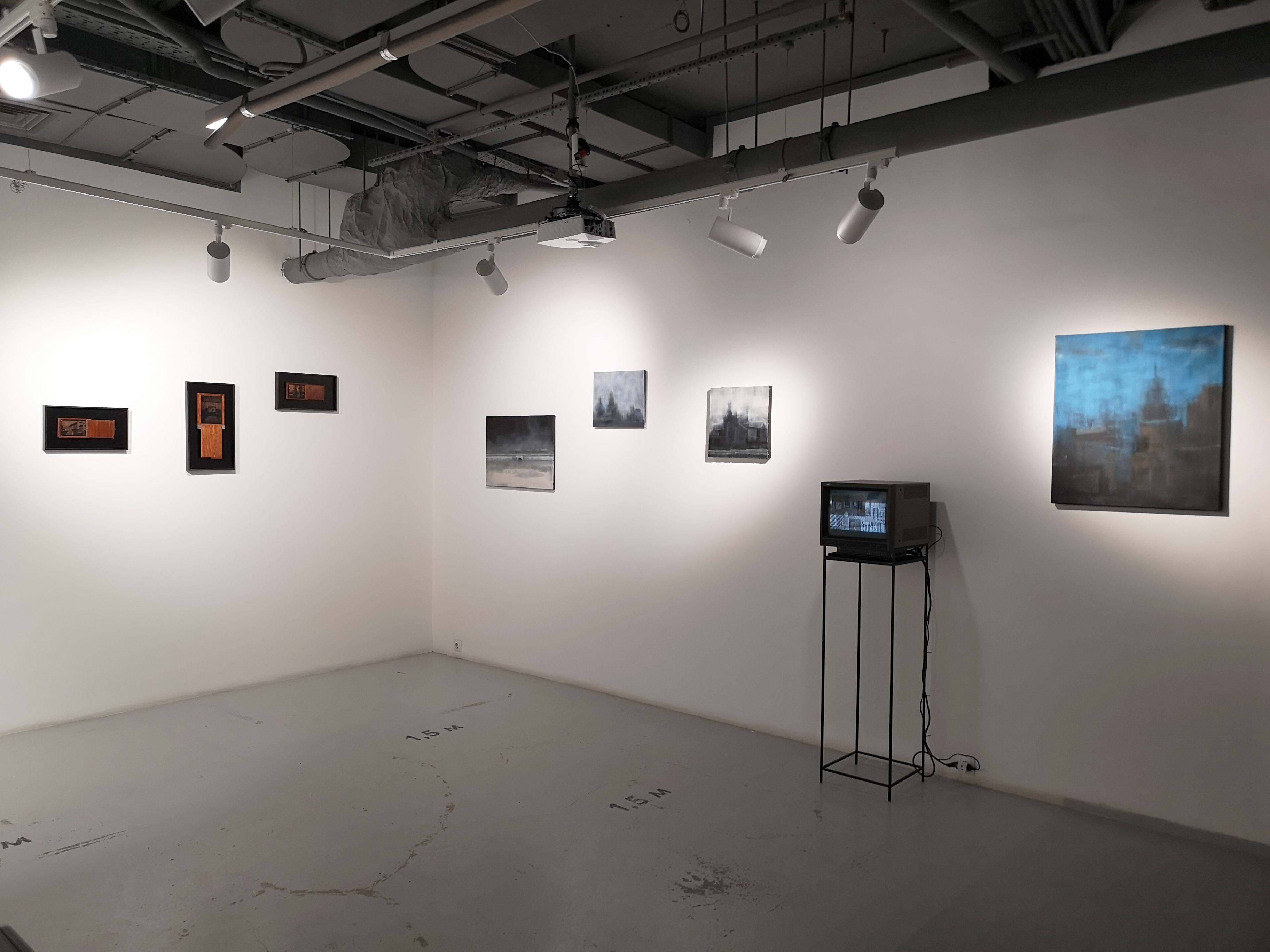
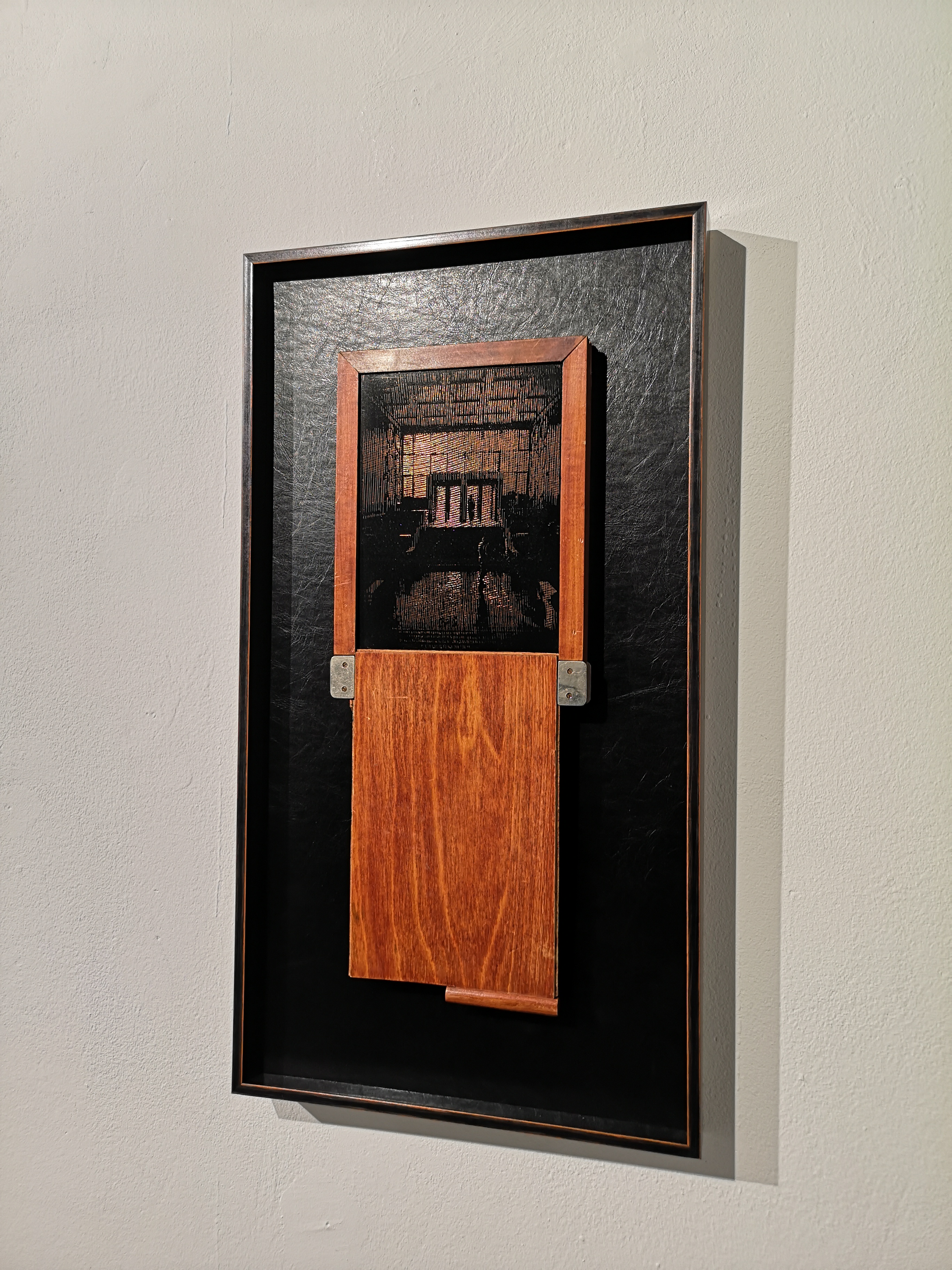
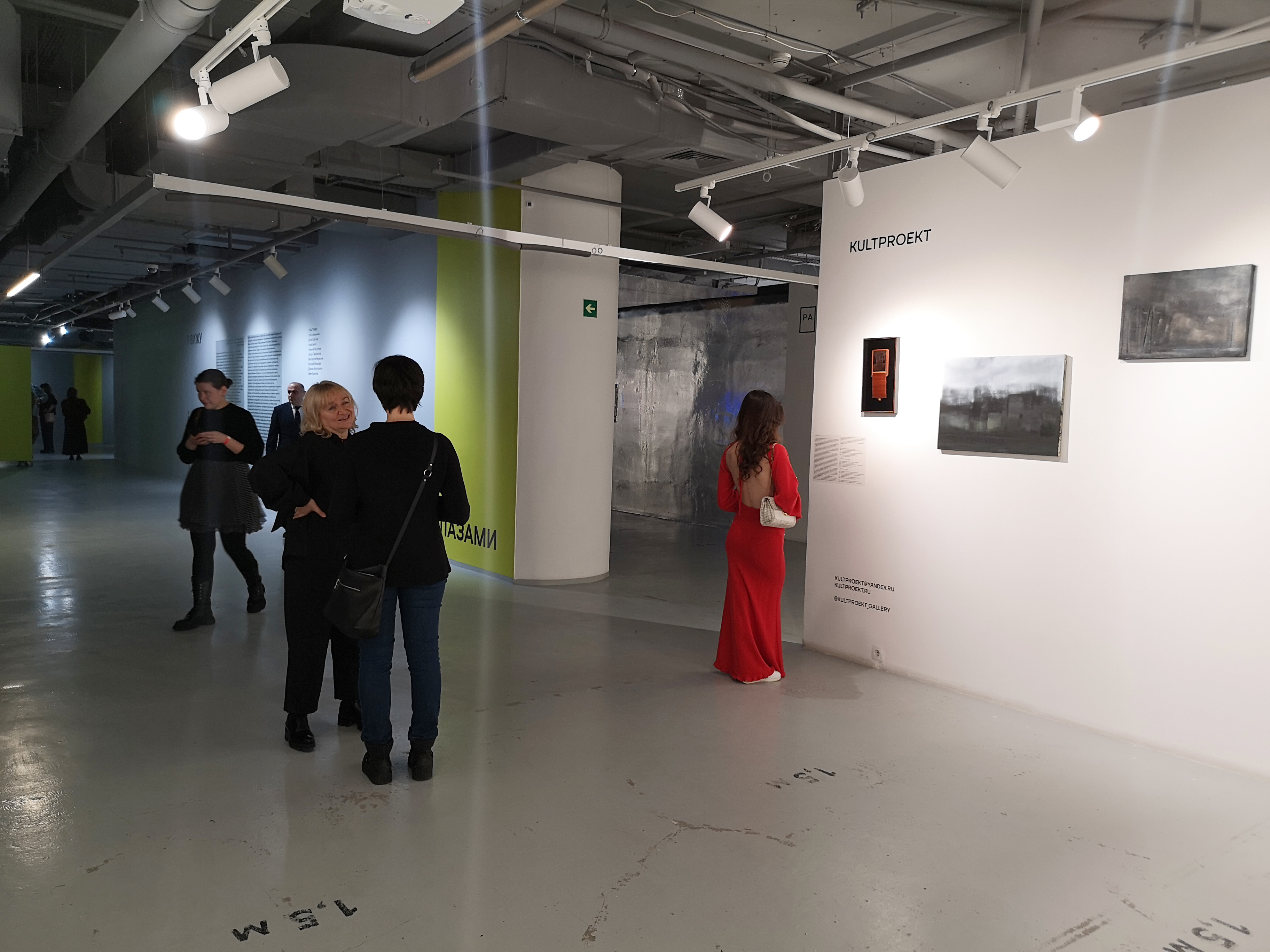
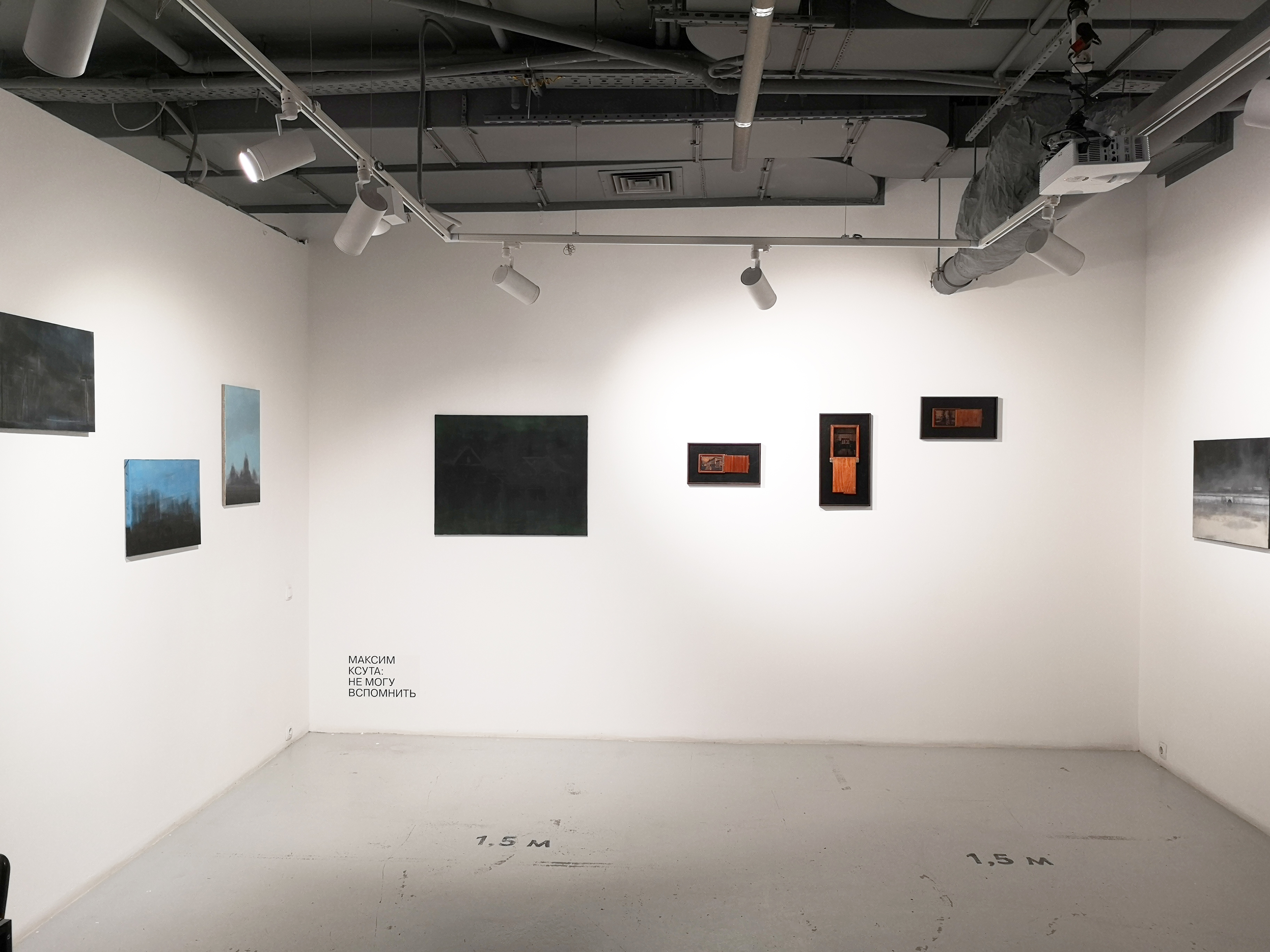
New solo exhibition – “I Can’t Remember”- KultProekt gallery CUBE, Moscow

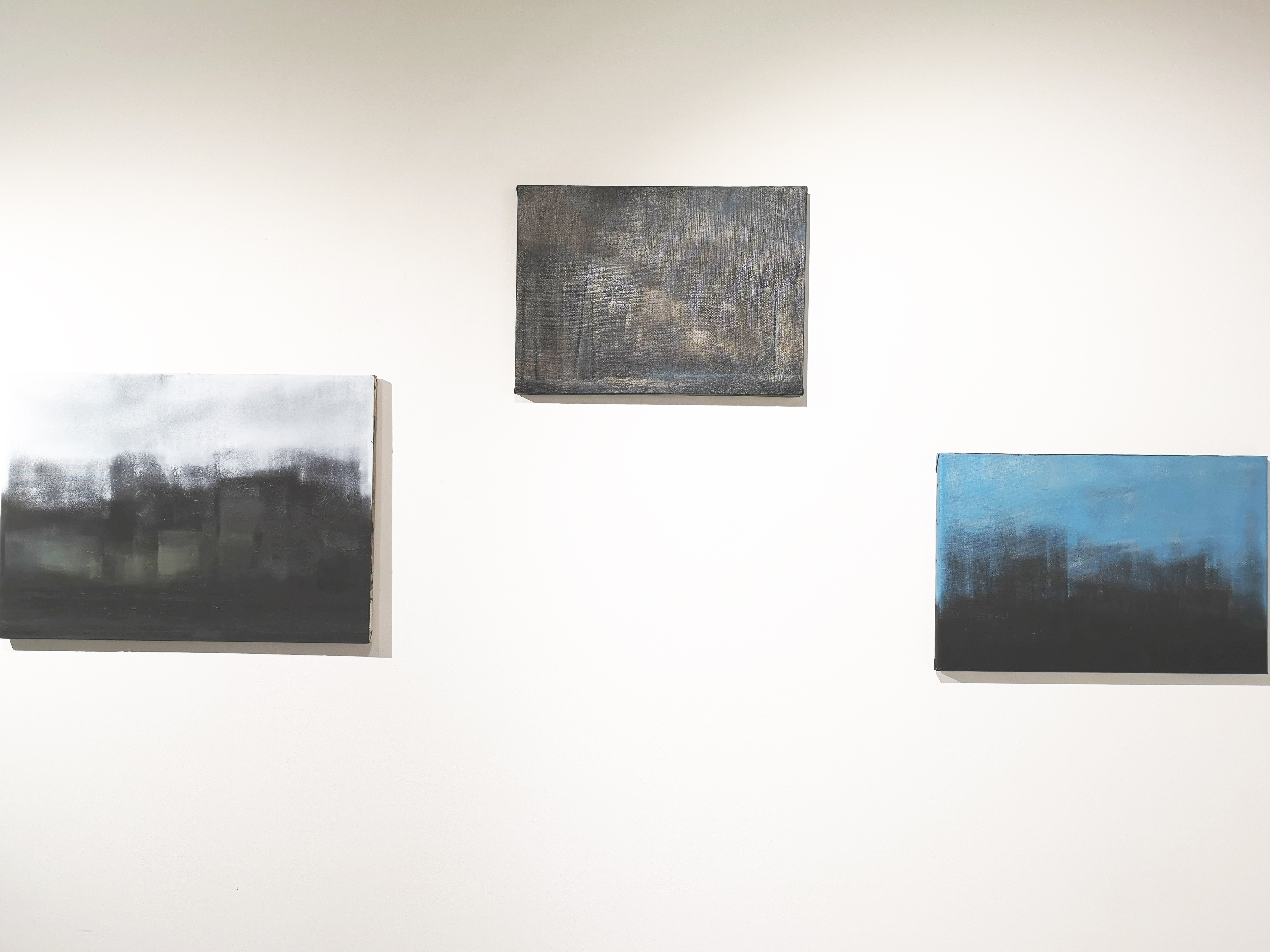
Inspiration can be found in the most unexpected places. For me, it came in the form of the colorful compositions left on walls and fences after anonymous painters, employed by the municipal services, paint over graffiti deemed undesirable by the city authorities.

However, instead of completely erasing the traces of street art, they always leave behind strange stains, sometimes resembling landscapes. This phenomenon made me reflect on the nature of memory, its instability, and abstractness.

In my works, I tried to embody this idea visually, creating abstract images that evoke a sense of familiarity, yet leave room for interpretation. Each painting is a combination of blurred shapes and colors that may remind one of something familiar, yet not fully discernible.

Through working with texture and layers of paint, I aimed to convey the complexity of the process of remembering. After all, the paintings are not an accurate representation of a specific moment or place but rather an abstract reflection of the state of consciousness in the process of trying to recall something lost. The viewer is given complete freedom for individual interpretation.

The video presented at the exhibition is a slideshow of my photographs uploaded to the now-banned social network Instagram over the past 12 years. Each frame in this photo archive becomes a link in time and flashes by so quickly that it is impossible to see all the details. This effect is similar to how our memory sometimes changes and inaccurately reproduces old moments.

New group exhibition – “Based on true events”

“ZENLEFORTOVO-I”, 7:00:00 min, Fill HD, video installation, 2023, Center for Contemporary Art Winzavod, Large Wine Storage

New exhibition. ATTRACTION: MANEGE — TRIUMPH GALLERY (MOSCOW). OTHER SHORES. St. Petersburg

Triumph Gallery (Moscow) will present its key artists at the Other Shores Exhibition in Manege. This project reviews opportunities to keep and pass on experience and knowledge through personal notes, maps and routes. The exhibition is based on the idea of a psychogeographic drifting or studying urban environment through one’s aesthetic and emotional experience (the term was introduced by Guy Debord). In their works, the artists conceptualize the changes in today’s world. The reality they recreate in installations, videos, paintings and sculpture becomes a true mosaic of observations, collective memory fragments and fantasies of a potential future.

The name of the exhibition alludes to a number of cultural narratives. One of them is Vladimir Nabokov’s autobiography that takes us back to certain episodes of his childhood and adolescence, as well as his relocation from one continent to another.

A Memória da Pessoa /O Destino da Sociedade. Rússia

A Memória da Pessoa /O Destino da Sociedade. Rússia

Artistas:
Maxim Ksuta Nikita Pirogov Svetlana Pozharskaya Dmitry Vyshemirsky

Curadora:
Irina Chmyreva
em parceria com PhotoVisa, International Festival of Photography, Russia

Via … … … …