Maxim Ksuta

russian artist, contemporary art, sculpture, installation, photography

Tag: conceptual art

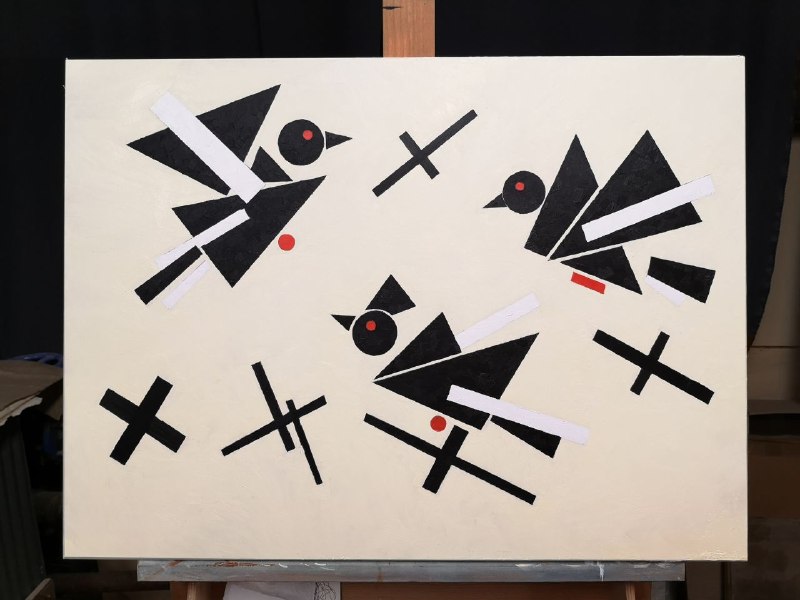
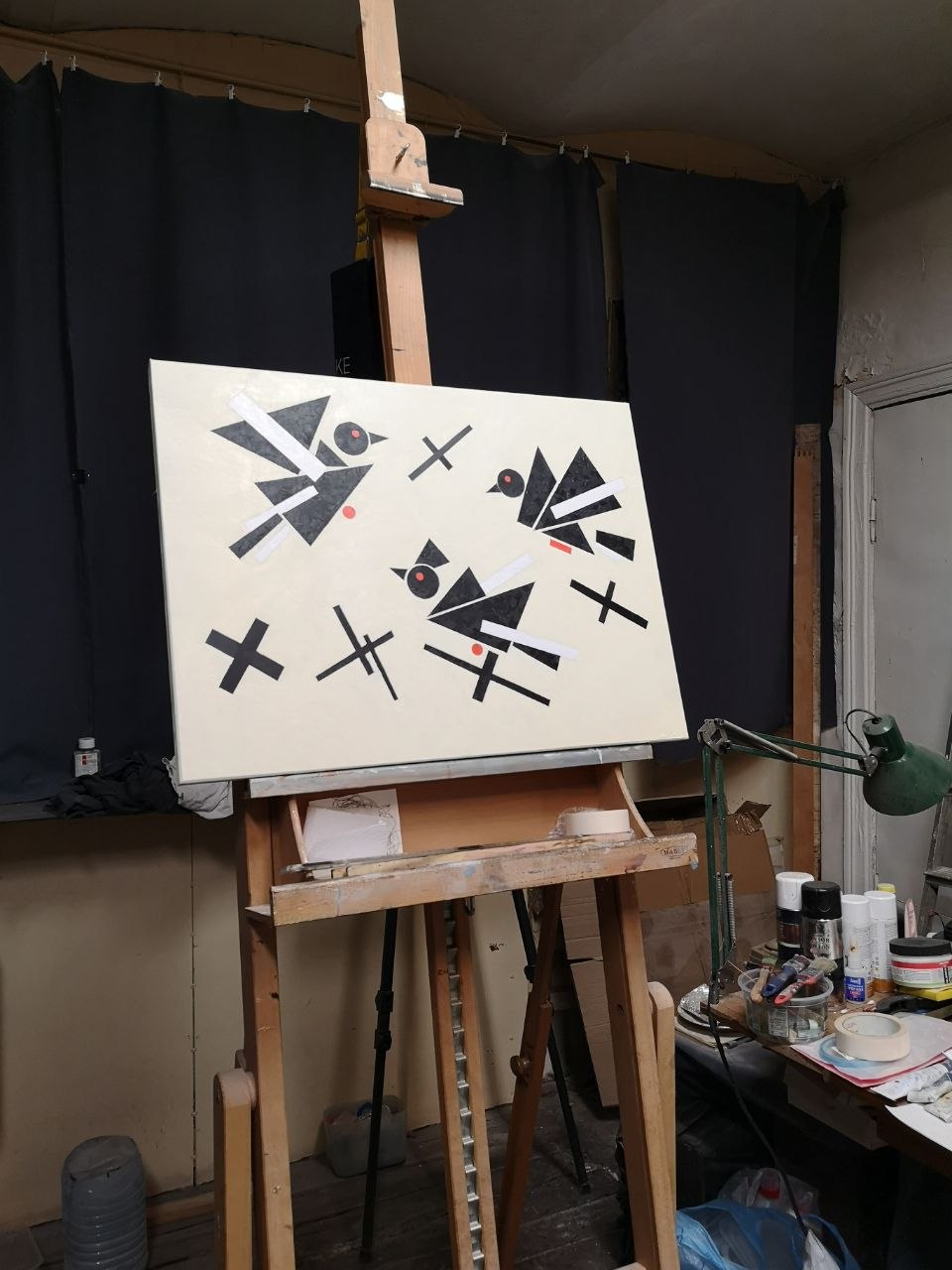
Супрематические сороки

Иногда мне кажется, что эту работу сделал не я, а какое-то упрямое пересечение внутри меня — между желанием дойти до чистоты формы и невозможностью отпустить живое. Я начинал с почти аскетического намерения: белое поле, чёрные конструкции, никакой лишней интонации. Хотел приблизиться к состоянию, где форма существует сама по себе, без опоры на мир.

Но в какой-то момент в этой конструкции появились сороки.

Не как образ, не как иллюстрация — скорее как сбой. Чёрные треугольники вдруг начали складываться в крылья, круги — в головы, линии — в траектории движения. И я понял, что это уже не геометрия в чистом виде. Это что-то, что хочет жить.

Сорока — странная птица. Она некрасивая и красивая одновременно. Она шумная, наглая, внимательная, всегда на границе между порядком и хаосом. И, наверное, именно поэтому она так точно легла в супрематическую структуру. Потому что супрематизм — это тоже про границу: между предметом и отсутствием предмета, между миром и его исчезновением.

Белое поле здесь для меня не космос в строгом смысле. Оно слишком тёплое, слишком земное. Это снег. Пространство, где всё упрощается до предела, но не исчезает. Где любой след становится событием. И в этом поле сороки не просто существуют — они оставляют знаки, пересечения, почти орнамент своего присутствия.

Эти чёрные перекрестия я долго не мог принять. Они казались слишком буквальными, слишком «узнаваемыми». Но со временем я увидел, что без них всё распадается. Они удерживают ритм, собирают разлёт форм, как каркас, как память о структуре внутри движения. И одновременно они отсылают к чему-то глубоко знакомому — к вышивке, к знаку, к жесту руки, которая повторяет крест снова и снова.

Красные точки появились почти случайно, но стали неизбежными. Это минимальное вмешательство жизни в систему. Почти ничто — и при этом центр внимания. Без них работа оставалась бы холодной, замкнутой в себе. С ними она начинает смотреть обратно.

Я всё больше думаю, что эта картина не про супрематизм и не про птиц. Она про невозможность довести абстракцию до конца. Про то, что в какой-то момент форма начинает сопротивляться чистоте и требует присутствия. Требует шума, следа, взгляда.

И, возможно, в этом есть что-то очень личное и очень общее одновременно: сколько бы мы ни стремились к ясности и пустоте, внутри всегда остаётся сорока — которая приносит случайную блестящую вещь и нарушает идеальный порядок.


“Suprematist Magpies”

Sometimes it feels to me that this work was not made by me, but by some stubborn intersection within me — between the desire to reach purity of form and the inability to let go of the living. I began with an almost ascetic intention: a white field, black constructions, no unnecessary intonation. I wanted to approach a state where form exists on its own, without support from the world.

But at some point, magpies appeared within this structure.

Not as an image, not as an illustration — more like a glitch. Black triangles suddenly began to assemble into wings, circles into heads, lines into trajectories of movement. And I understood that this was no longer geometry in its pure form. It was something that wants to live.

The magpie is a strange bird. It is ugly and beautiful at the same time. It is loud, bold, attentive, always on the border between order and chaos. And perhaps that is exactly why it fits so precisely into a suprematist structure. Because Suprematism is also about a boundary: between object and the absence of object, between the world and its disappearance.

The white field here is not space in a strict sense for me. It is too warm, too earthly. It is snow. A space where everything is reduced to the limit, but does not disappear. Where any trace becomes an event. And in this field, magpies do not simply exist — they leave signs, intersections, almost an ornament of their presence.

I struggled for a long time to accept these black crossings. They seemed too literal, too “recognizable.” But over time I saw that without them everything disintegrates. They hold the rhythm, gather the scattering of forms like a frame, like a memory of structure within movement. And at the same time, they refer to something deeply familiar — to embroidery, to a sign, to the gesture of a hand repeating a cross again and again.

The red dots appeared almost by accident, but became inevitable. This is the minimal intervention of life into the system. Almost nothing — and at the same time the center of attention. Without them, the work would remain cold, closed in on itself. With them, it begins to look back.

I increasingly think that this painting is not about Suprematism and not about birds. It is about the impossibility of carrying abstraction to its end. About how, at some point, form begins to resist purity and demands presence. Demands noise, trace, gaze.

And perhaps there is something very personal and very universal in this: no matter how much we strive for clarity and emptiness, inside there is always a magpie — bringing a random shiny thing and disturbing the perfect order.
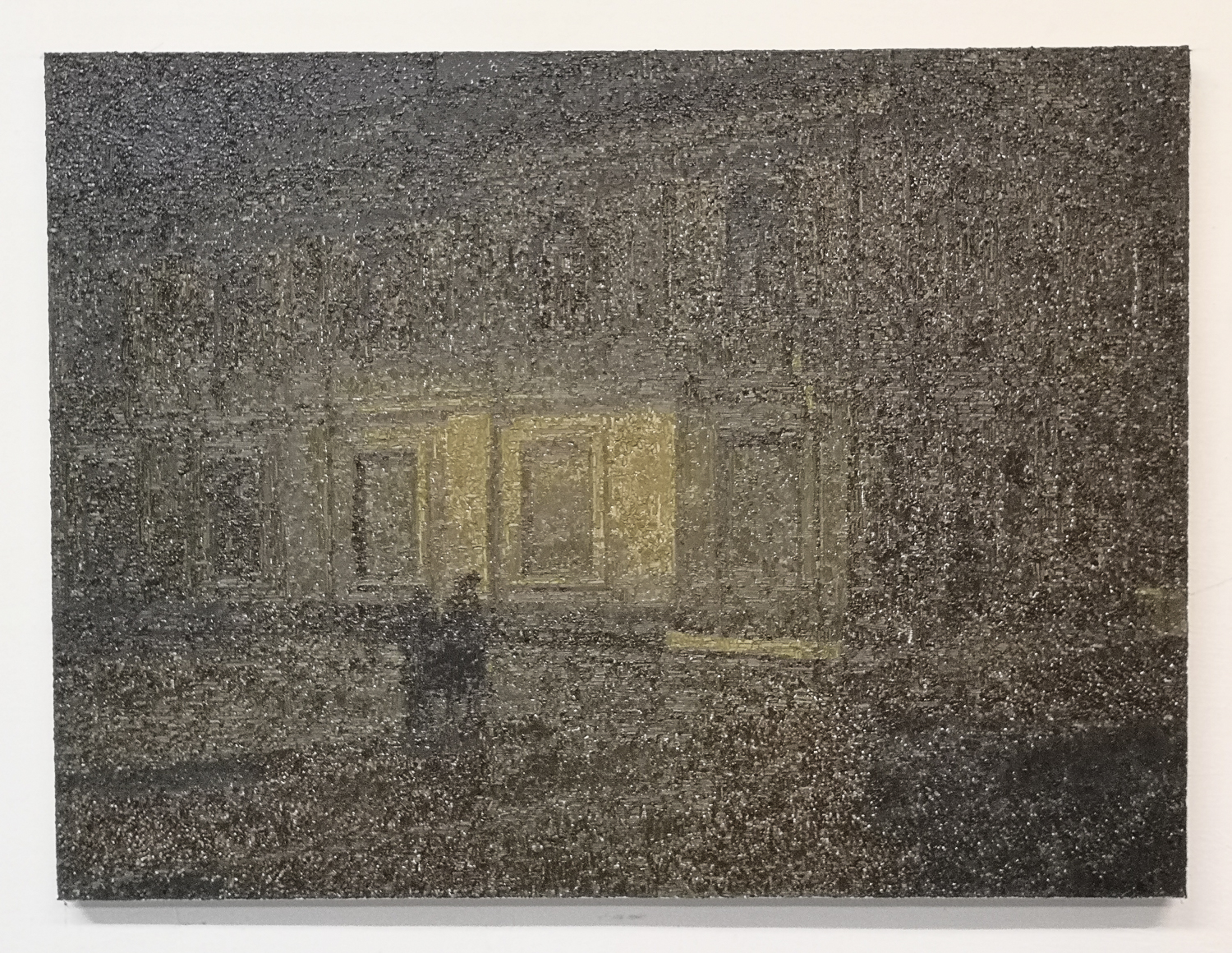
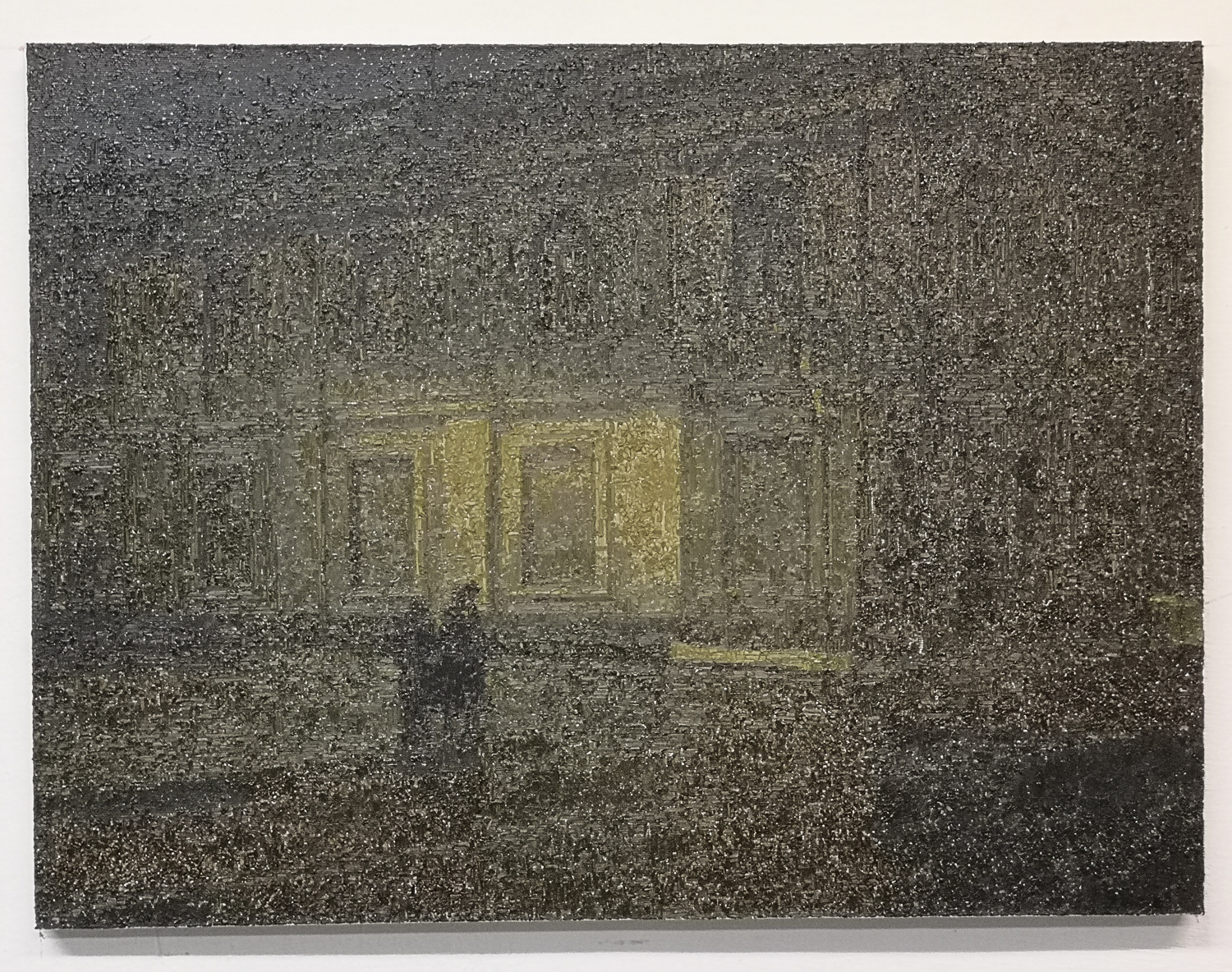
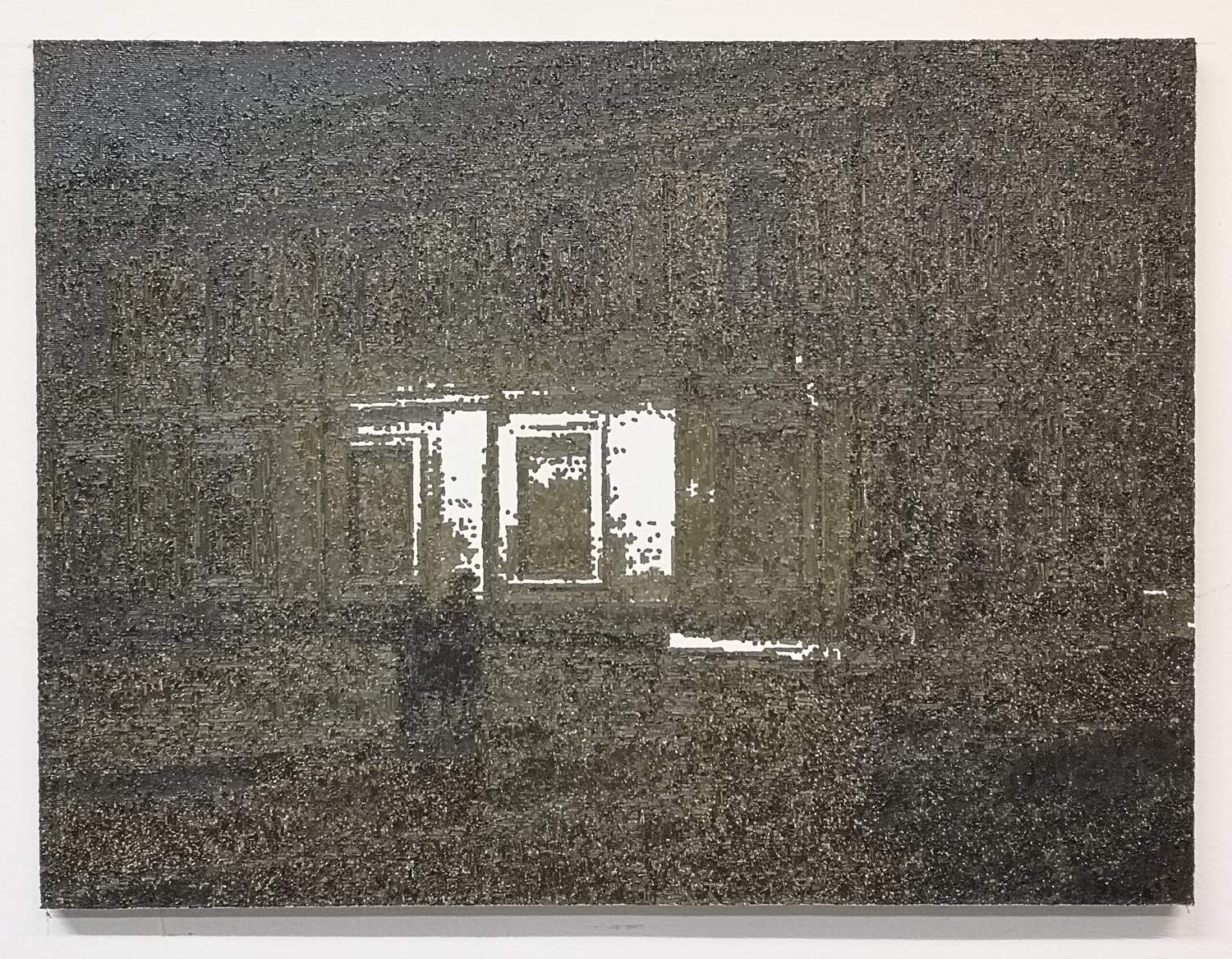
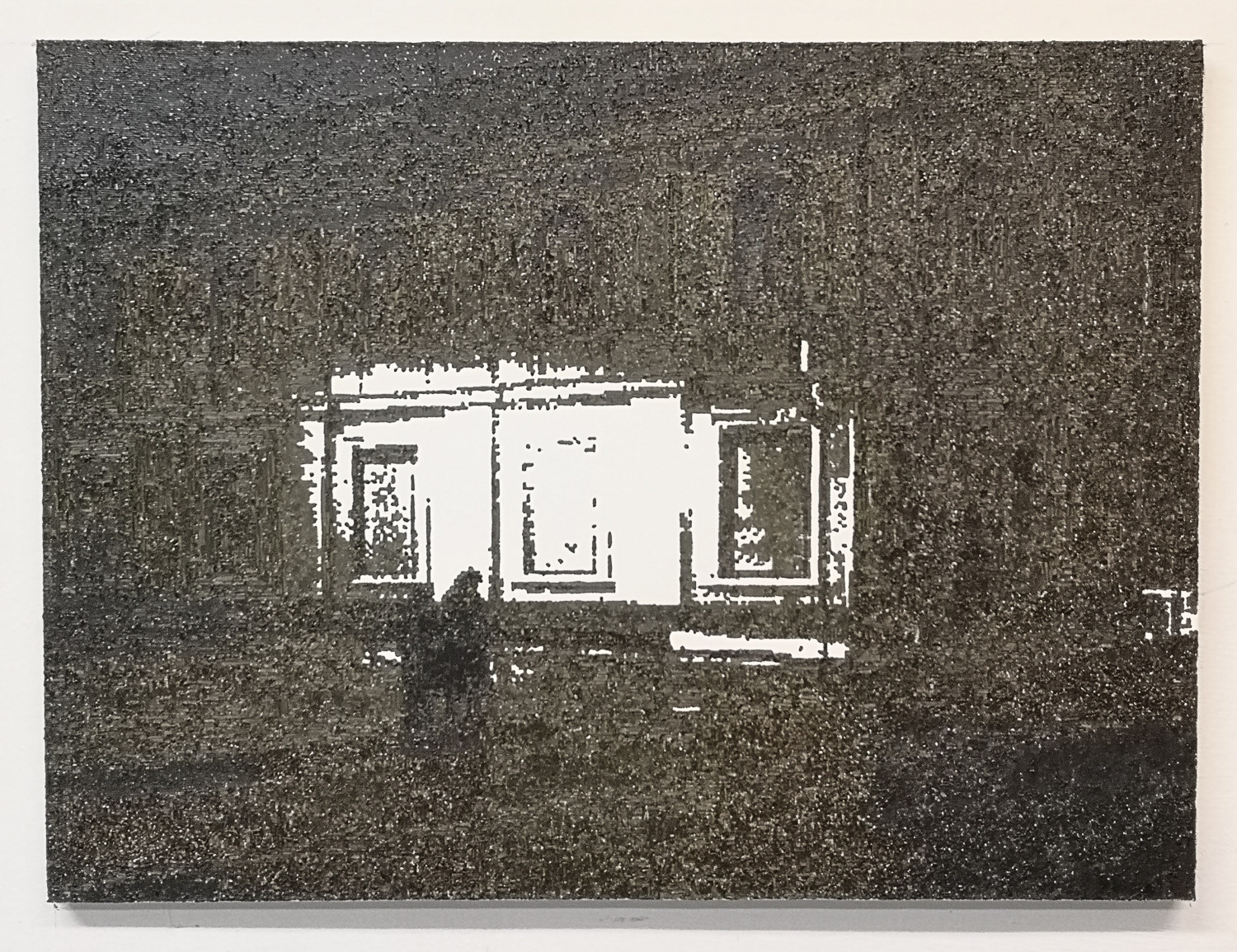
Quantum Project

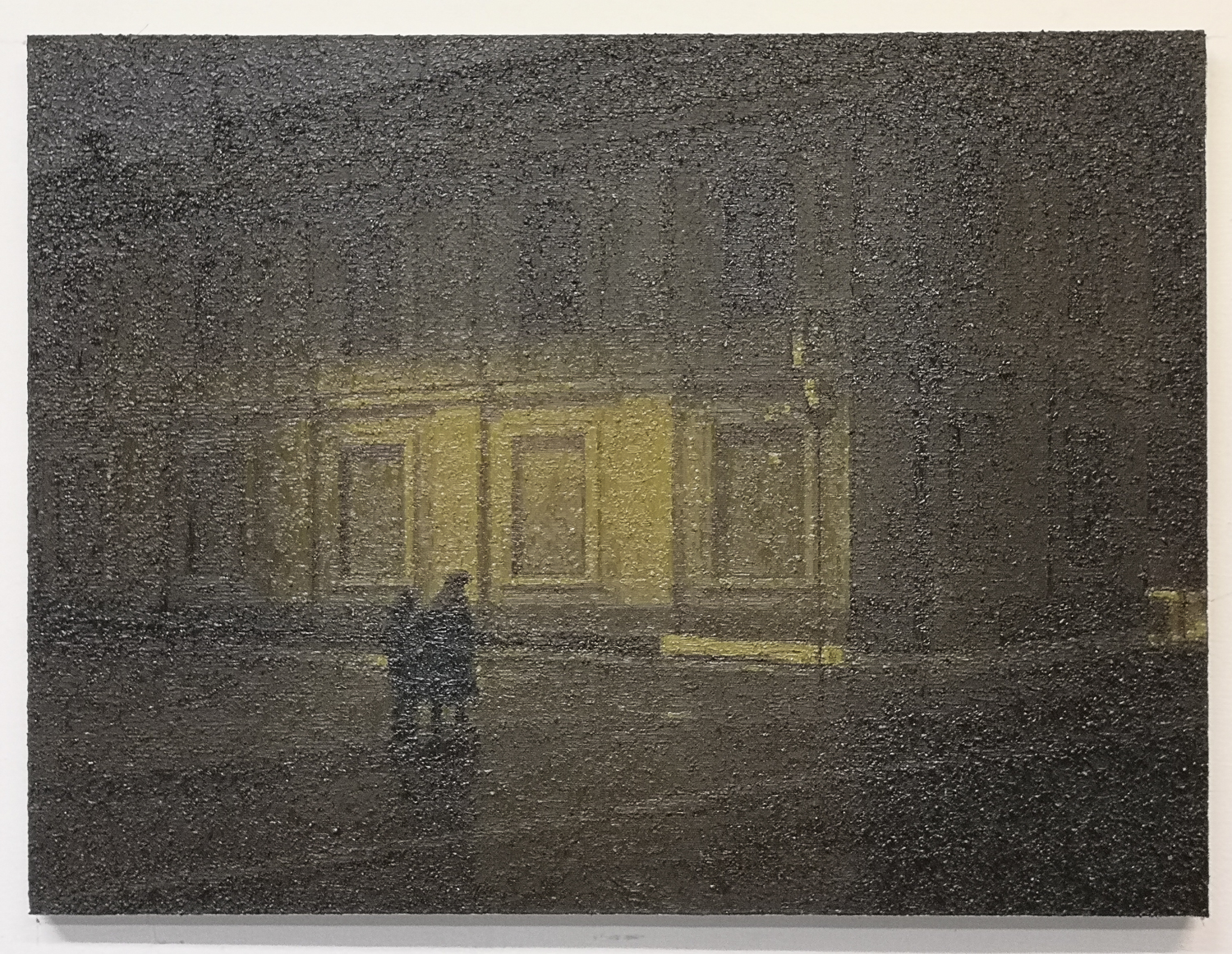
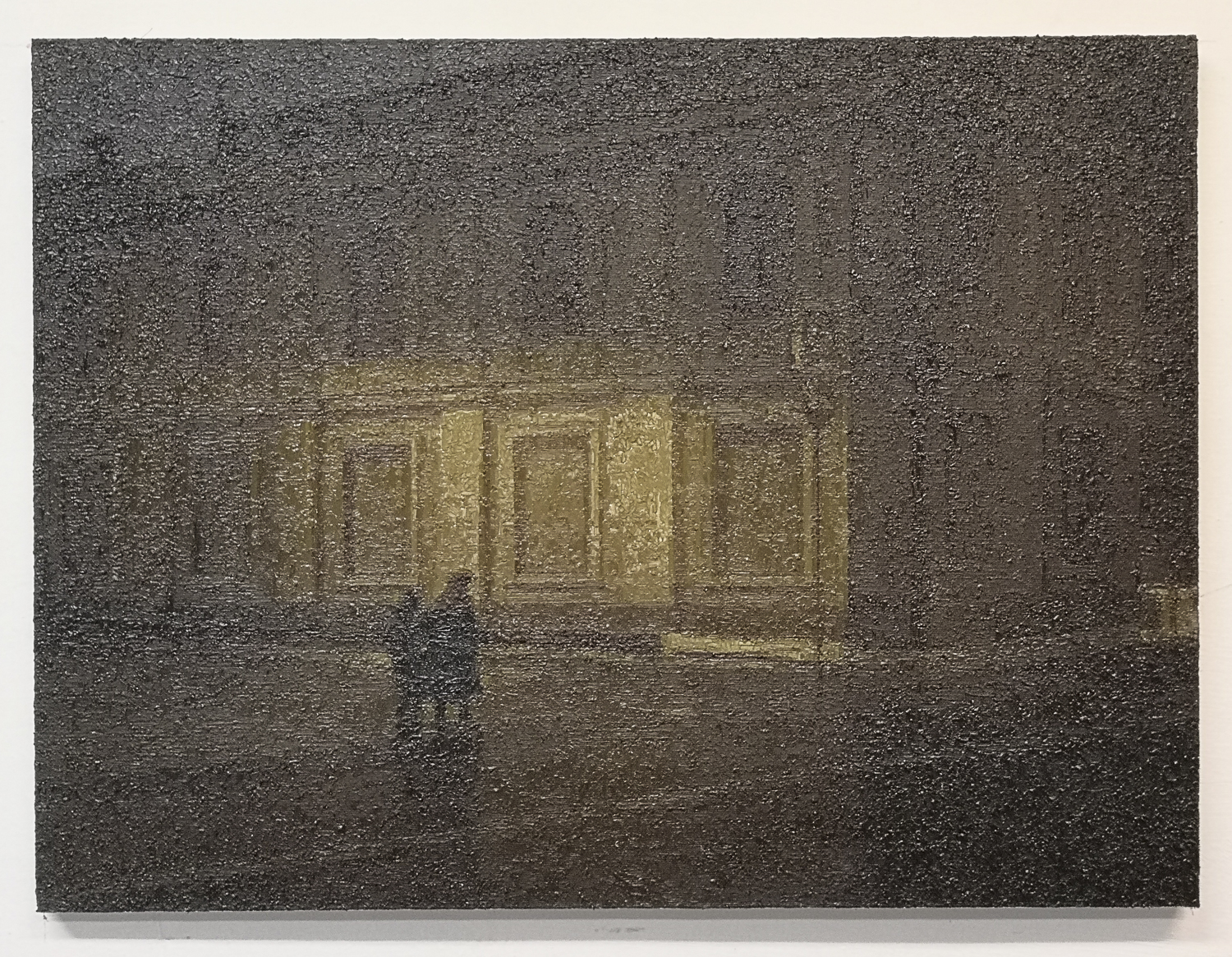
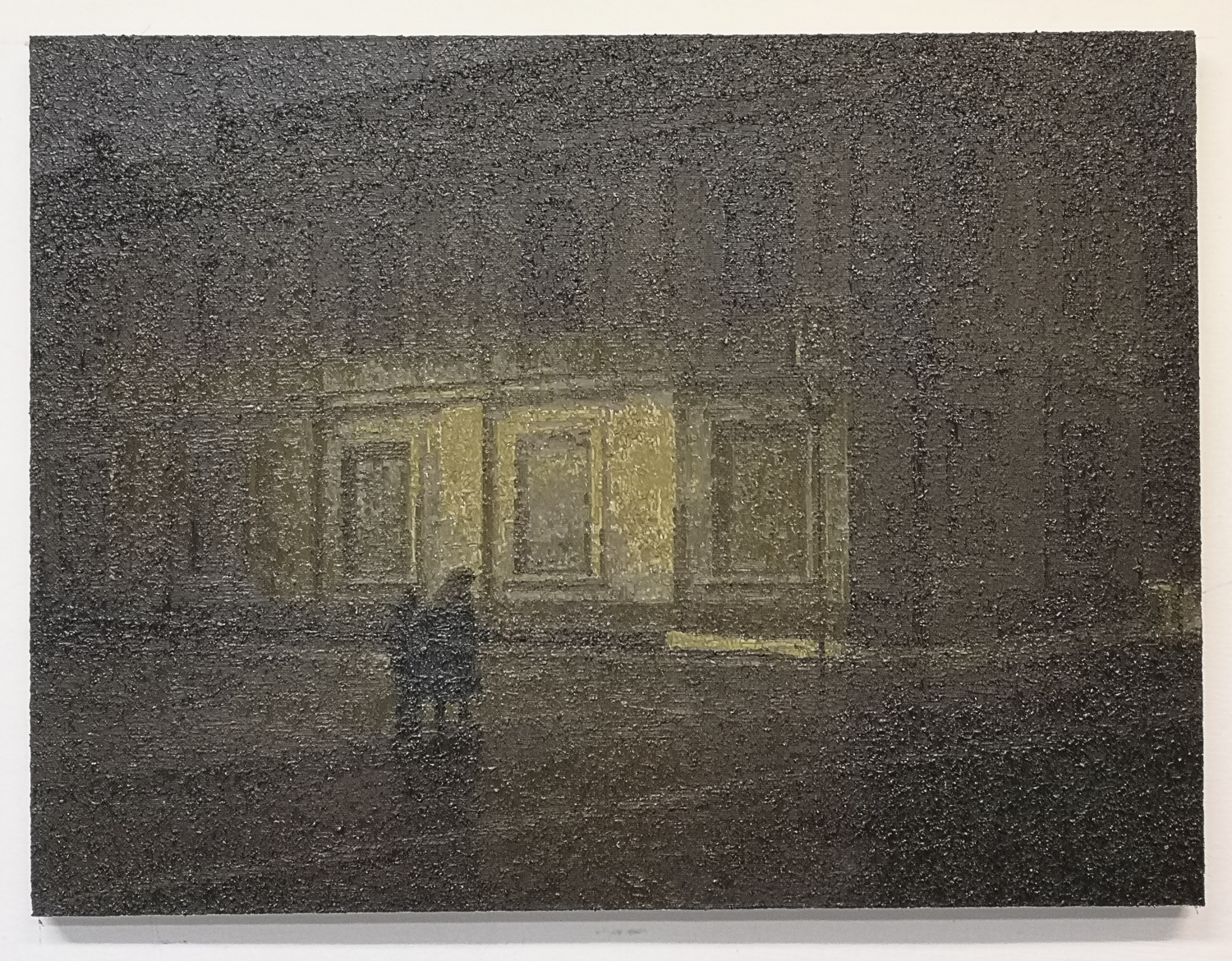
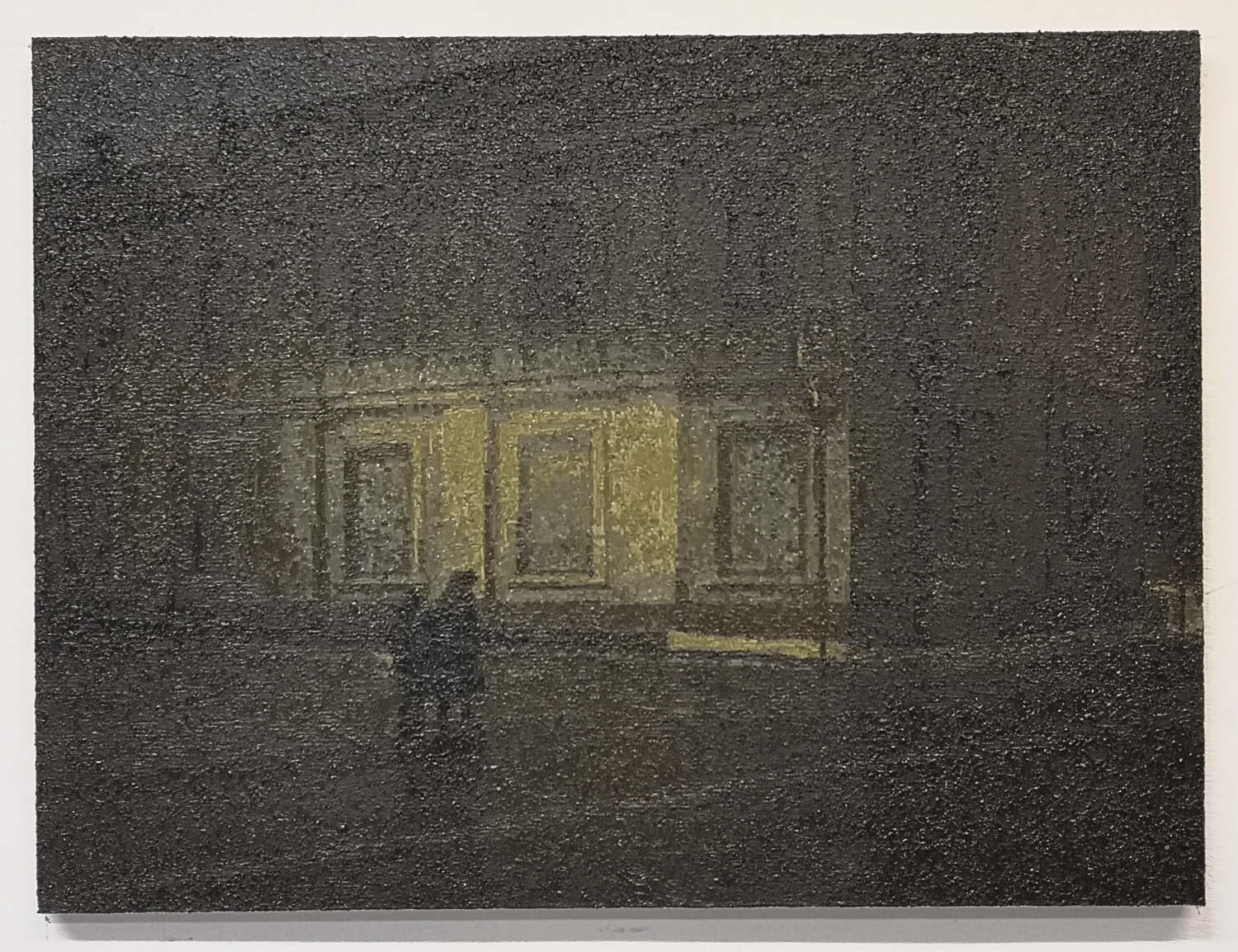
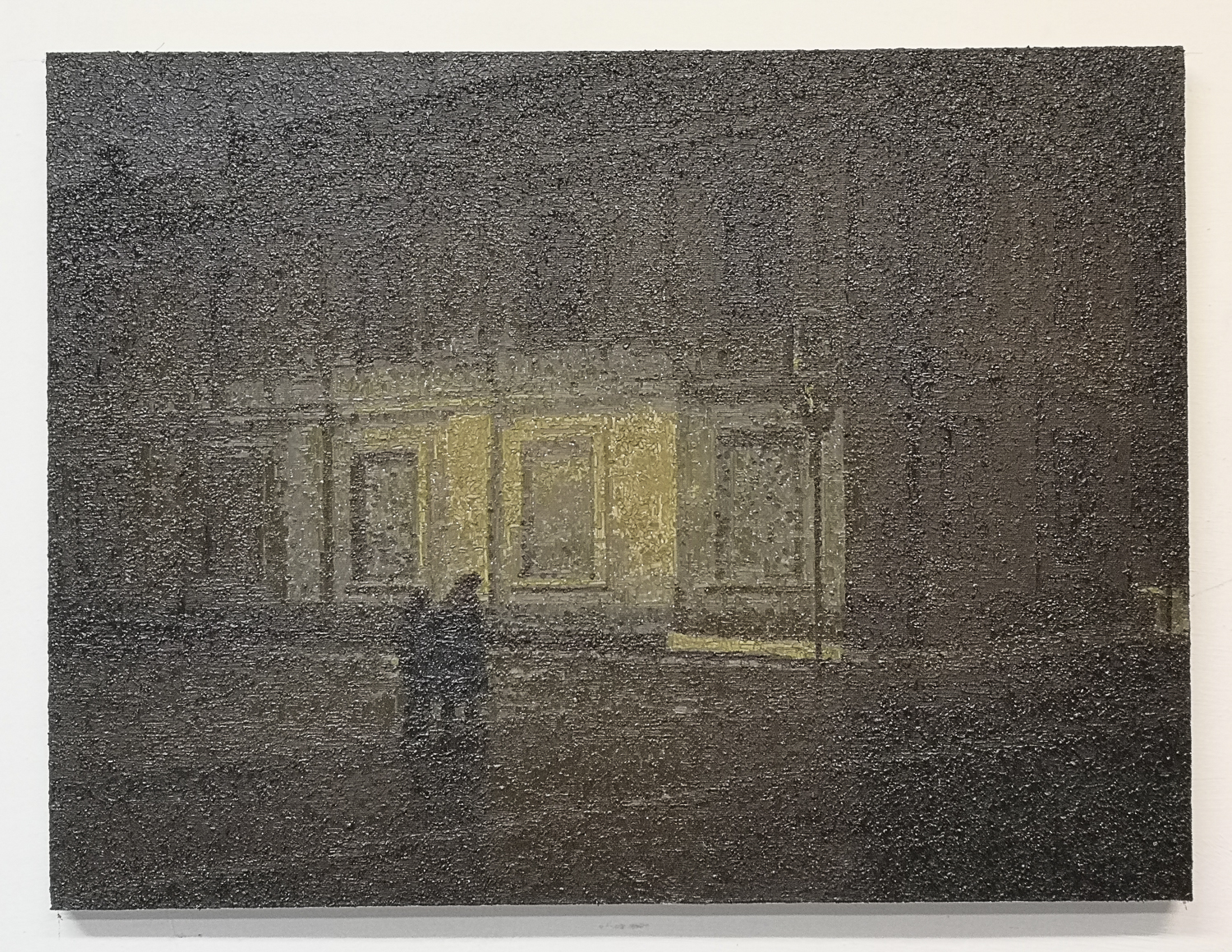
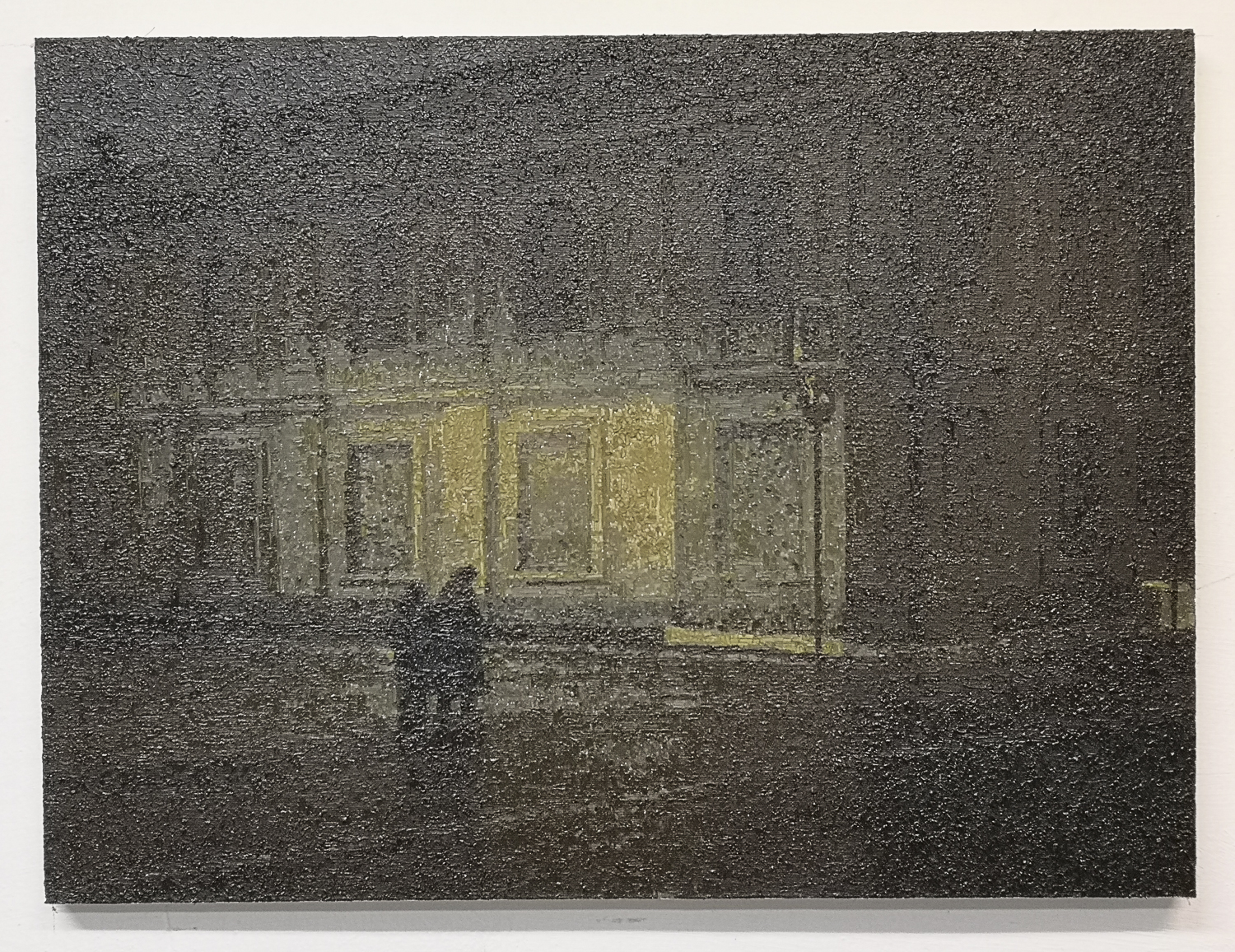
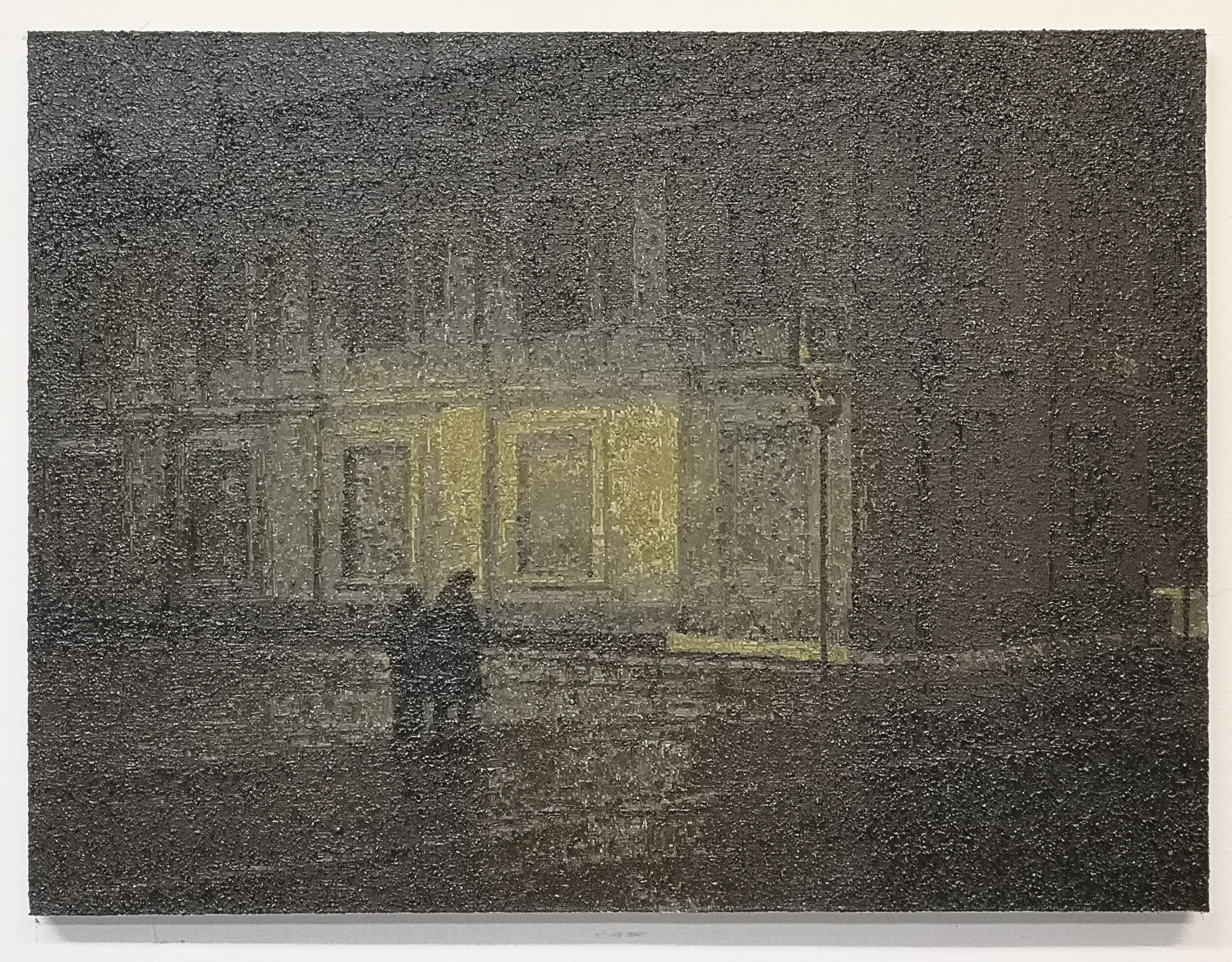
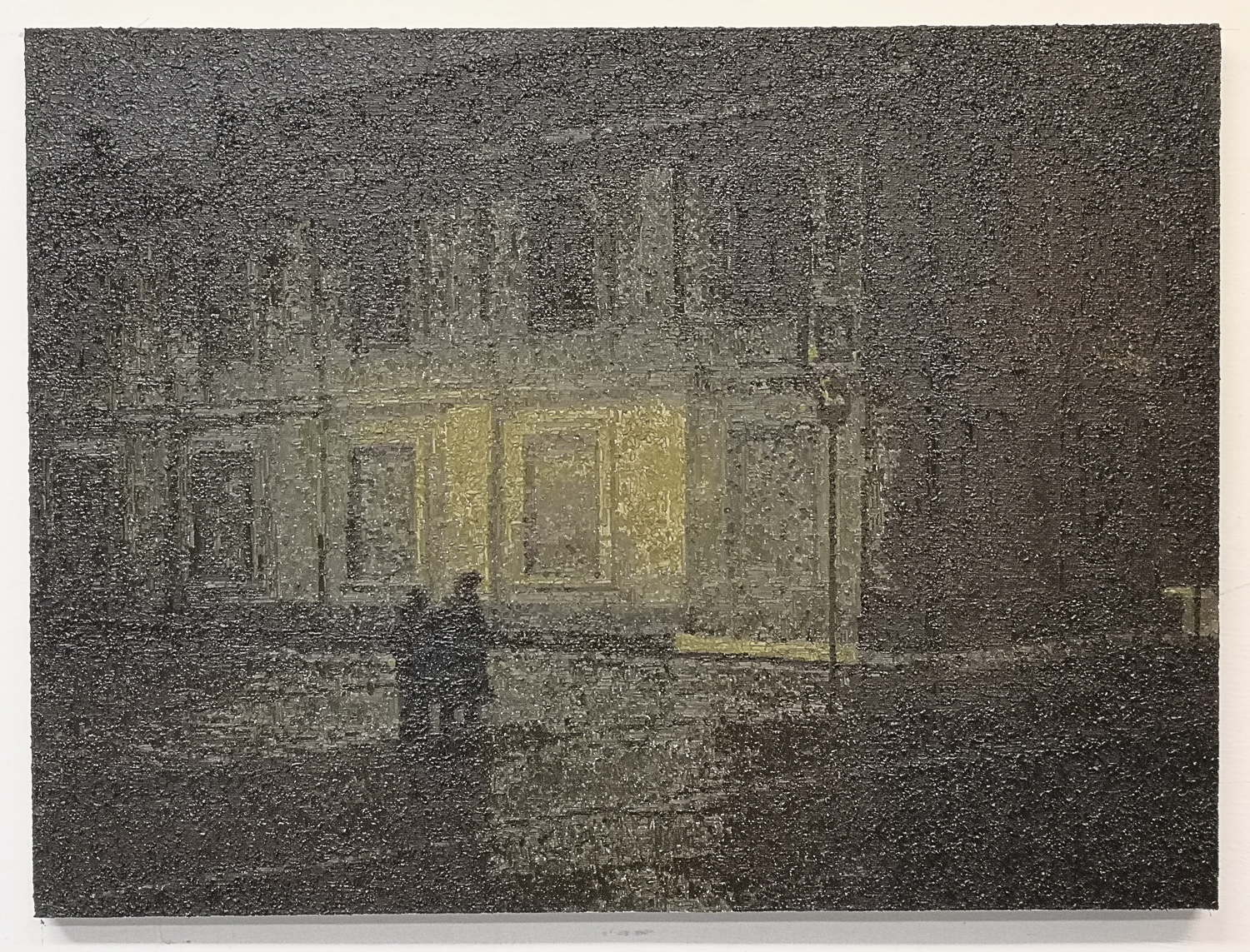
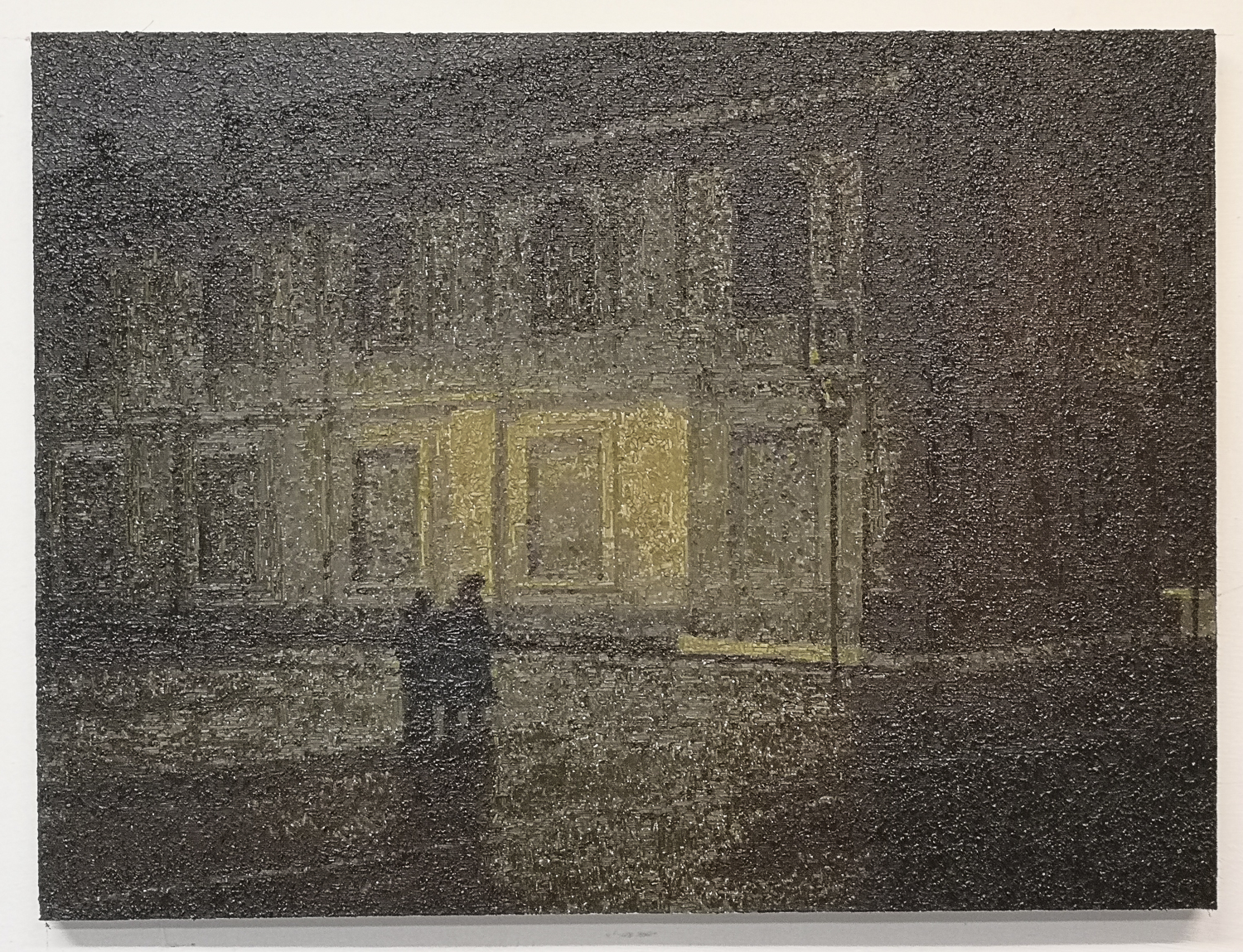
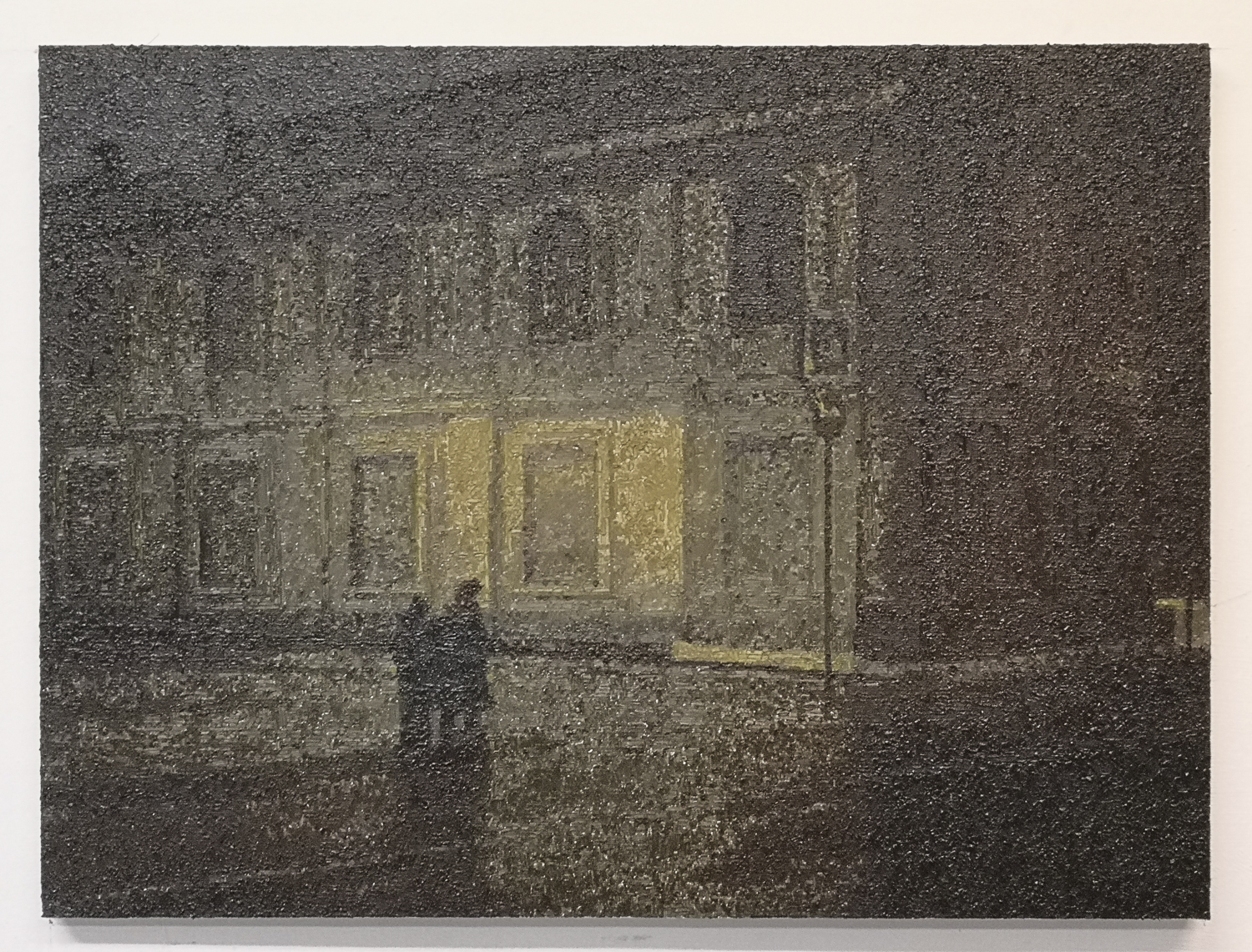
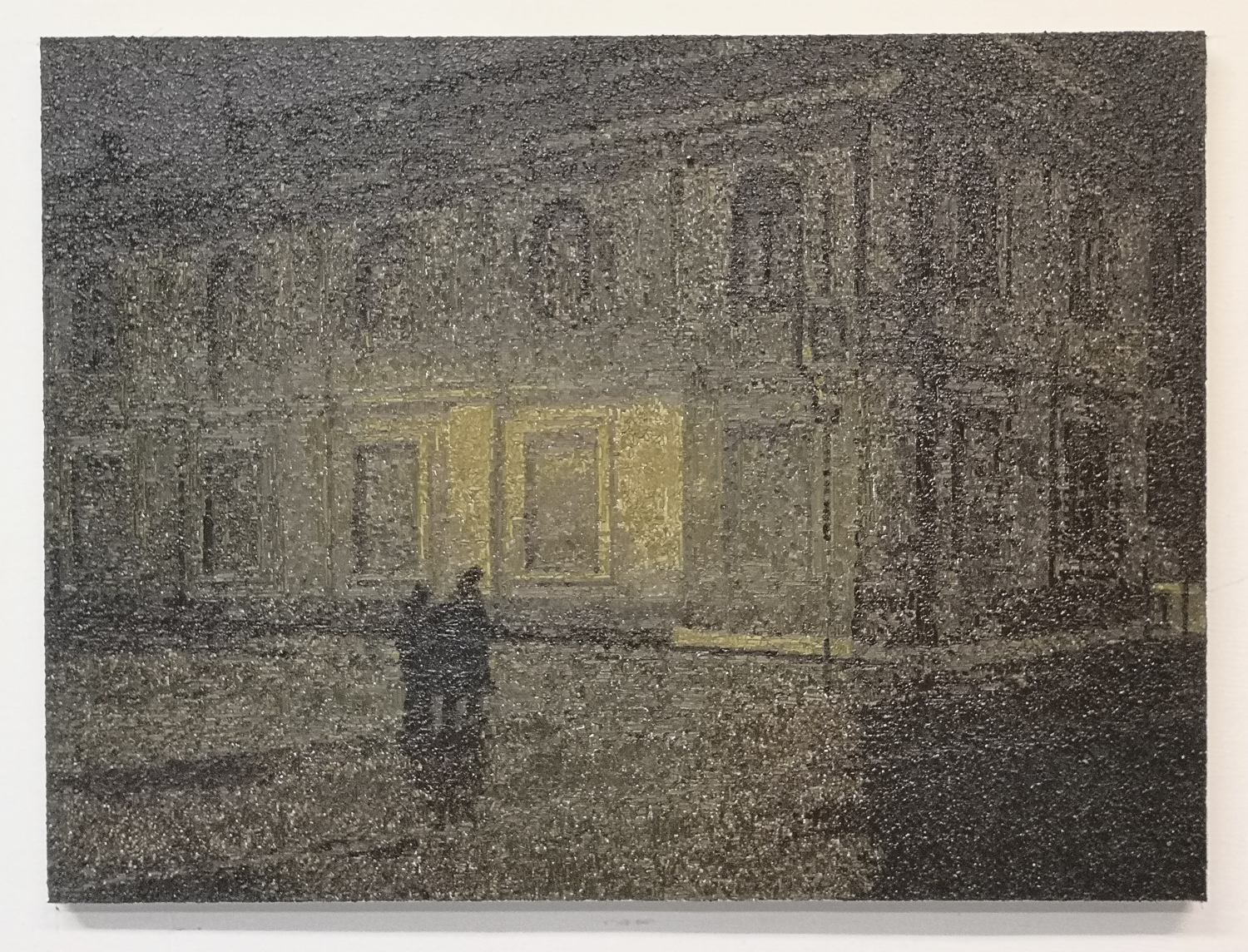
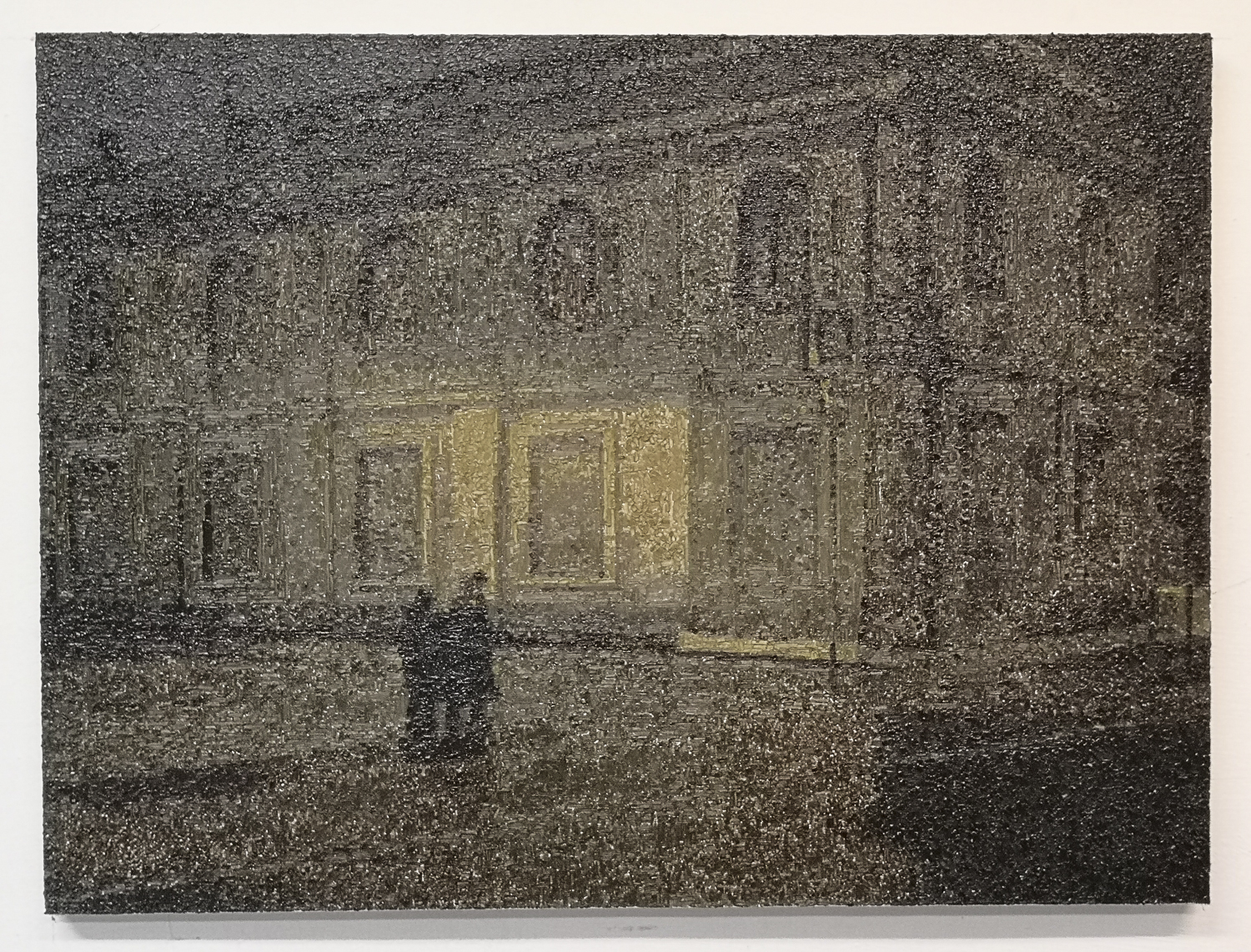
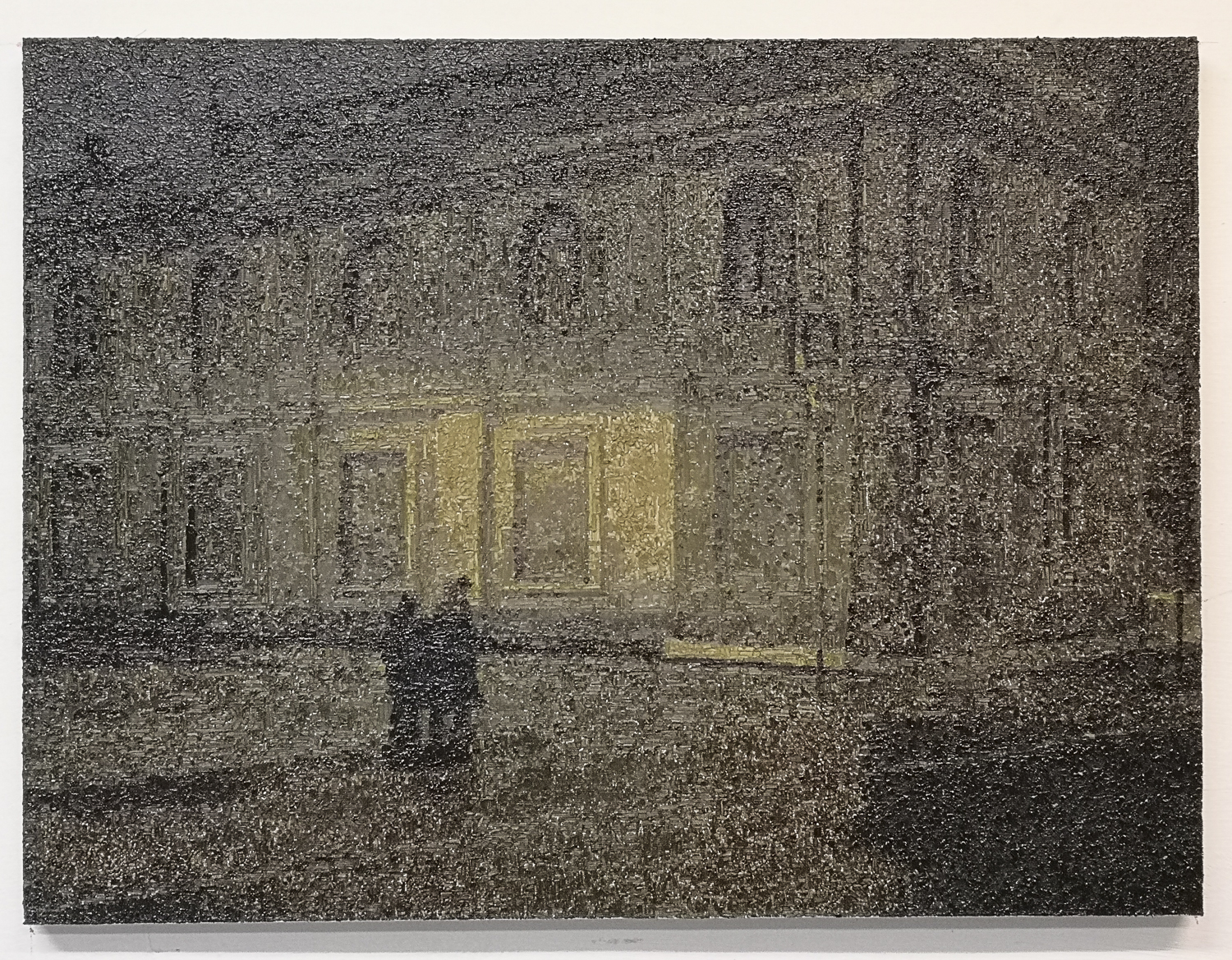
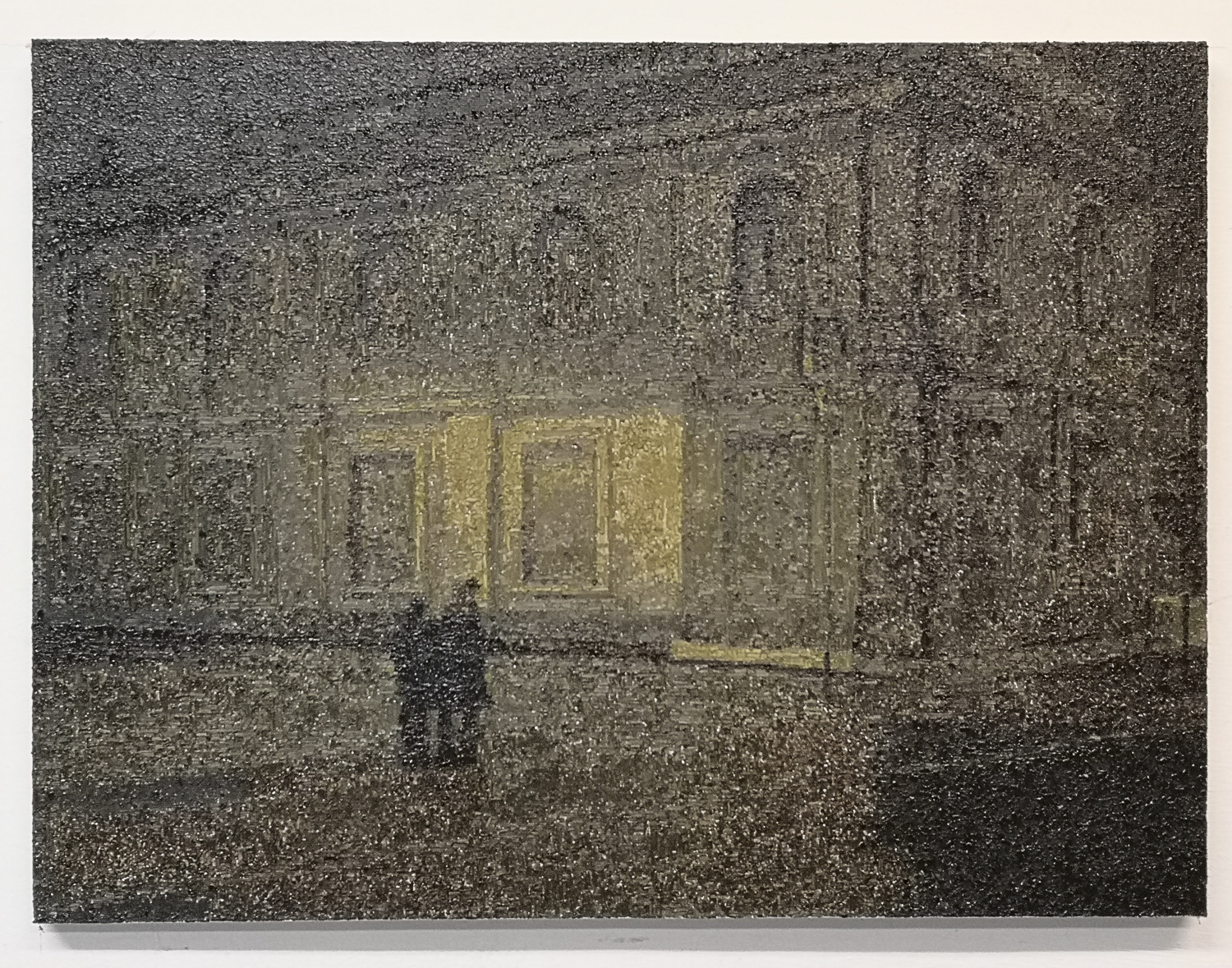
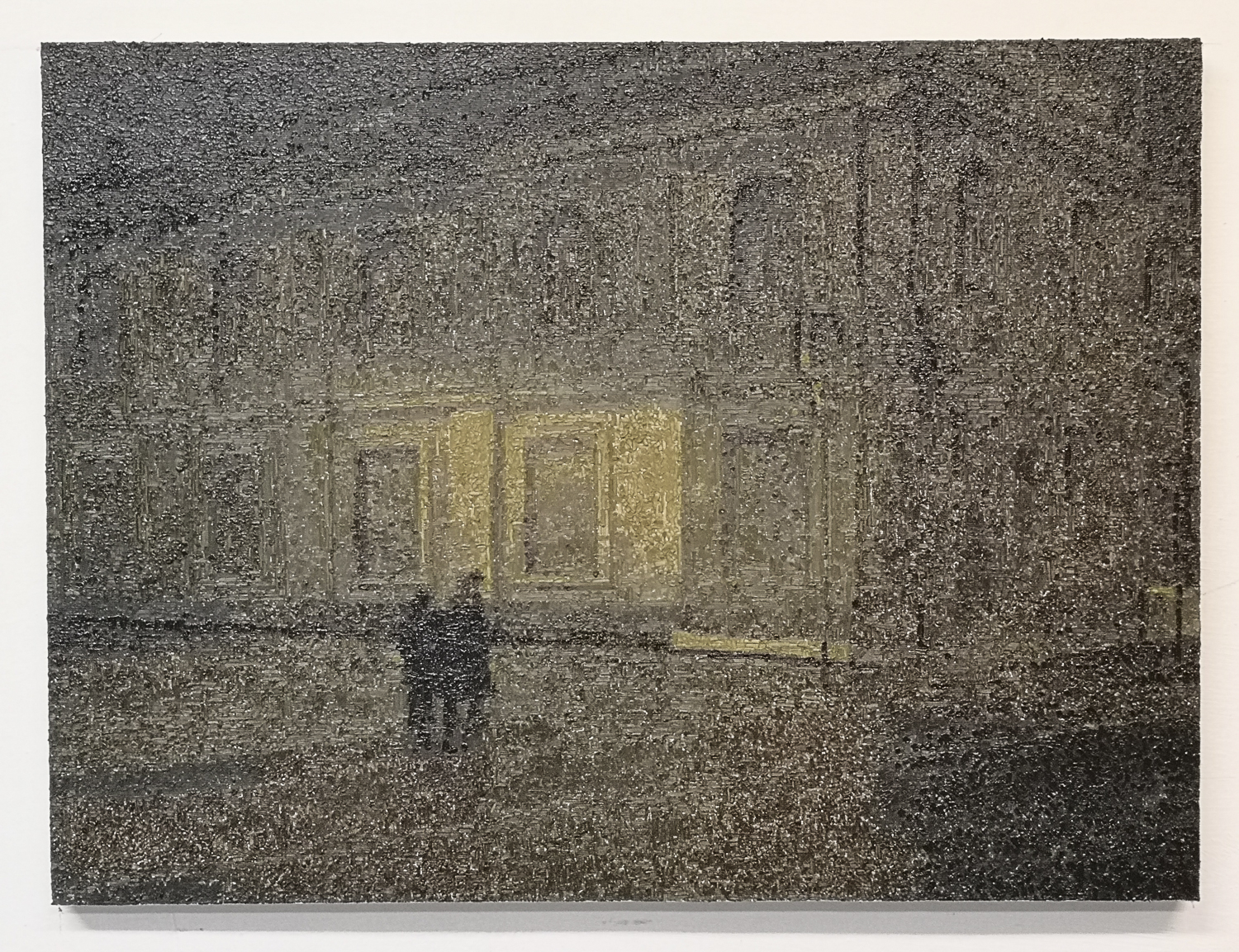
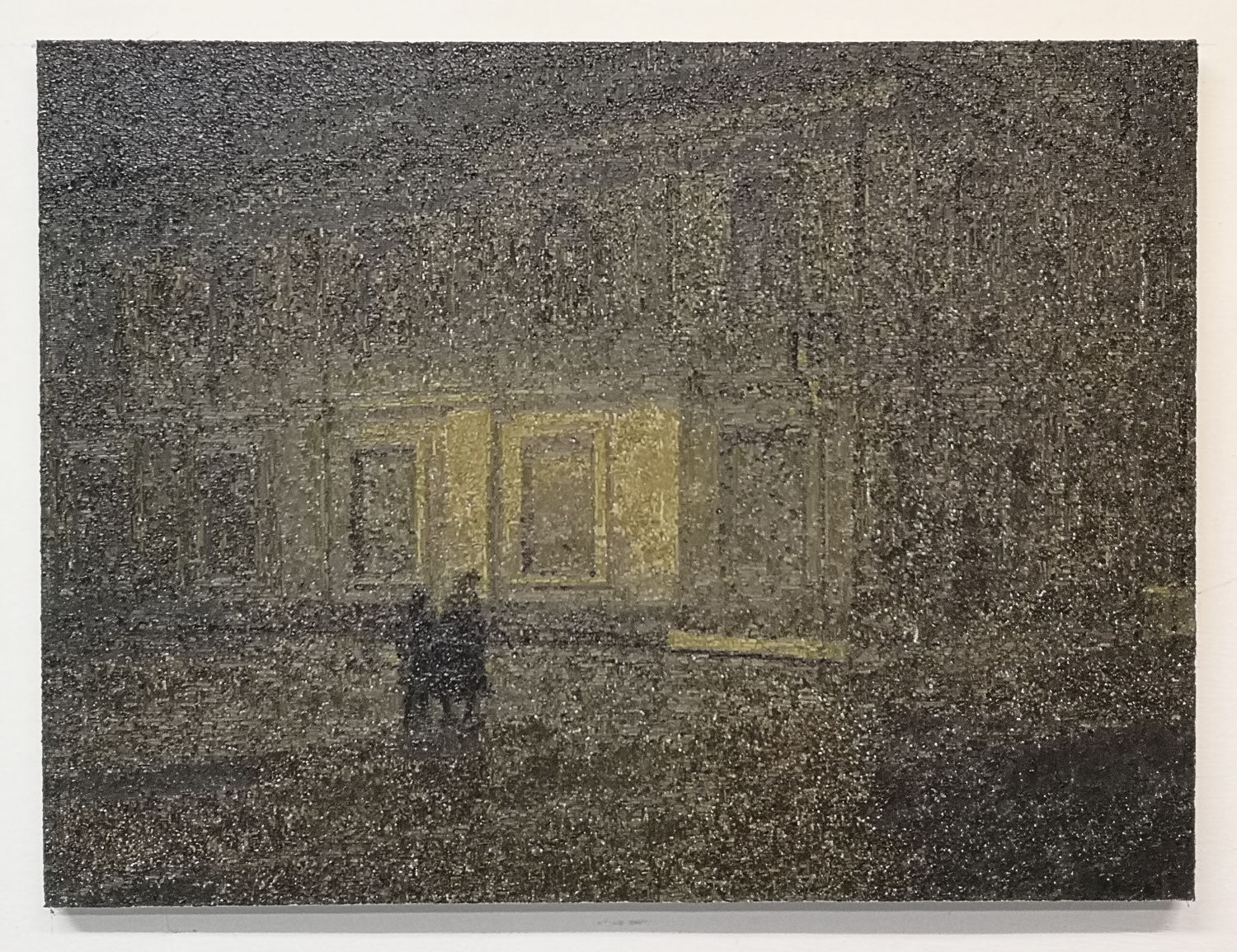
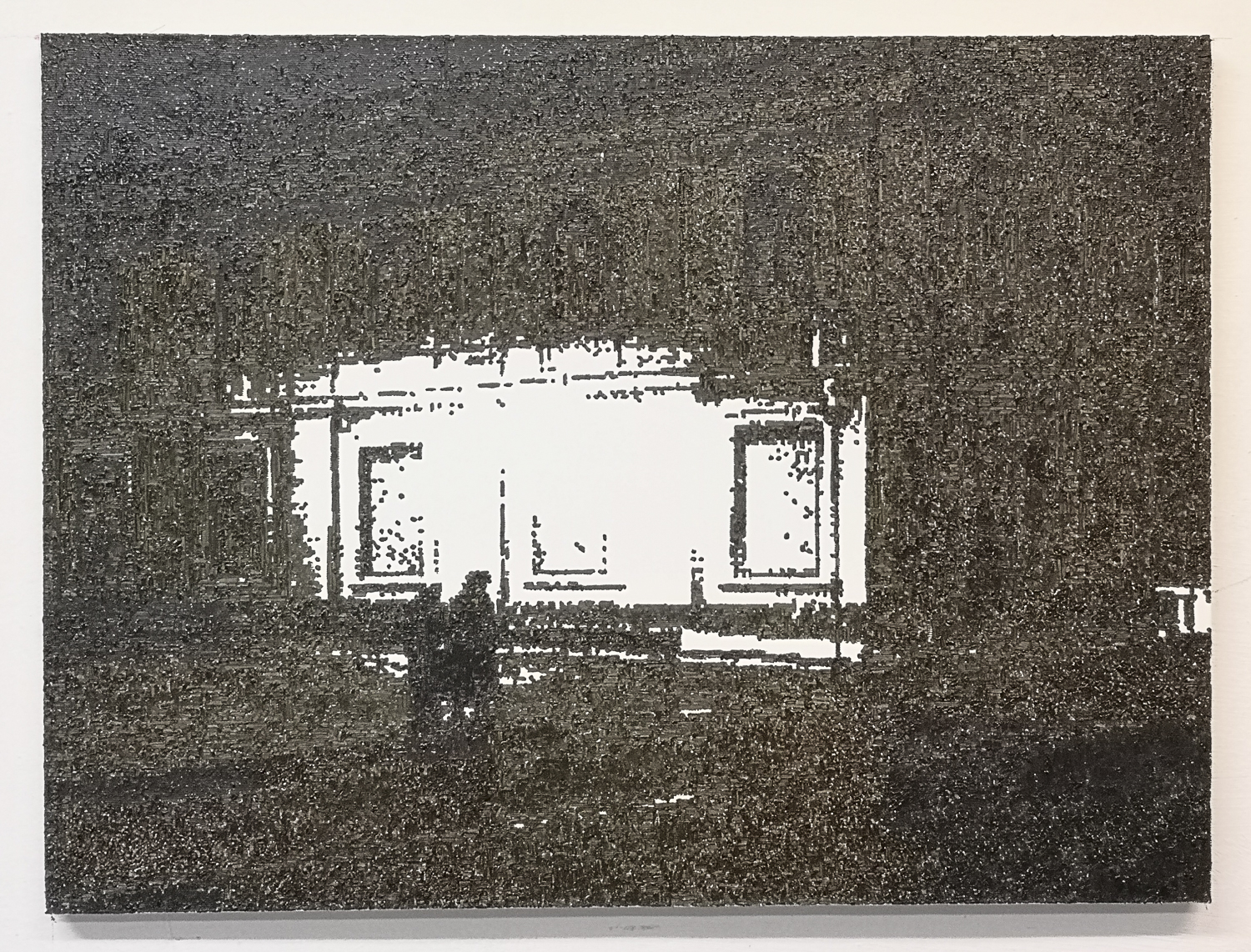
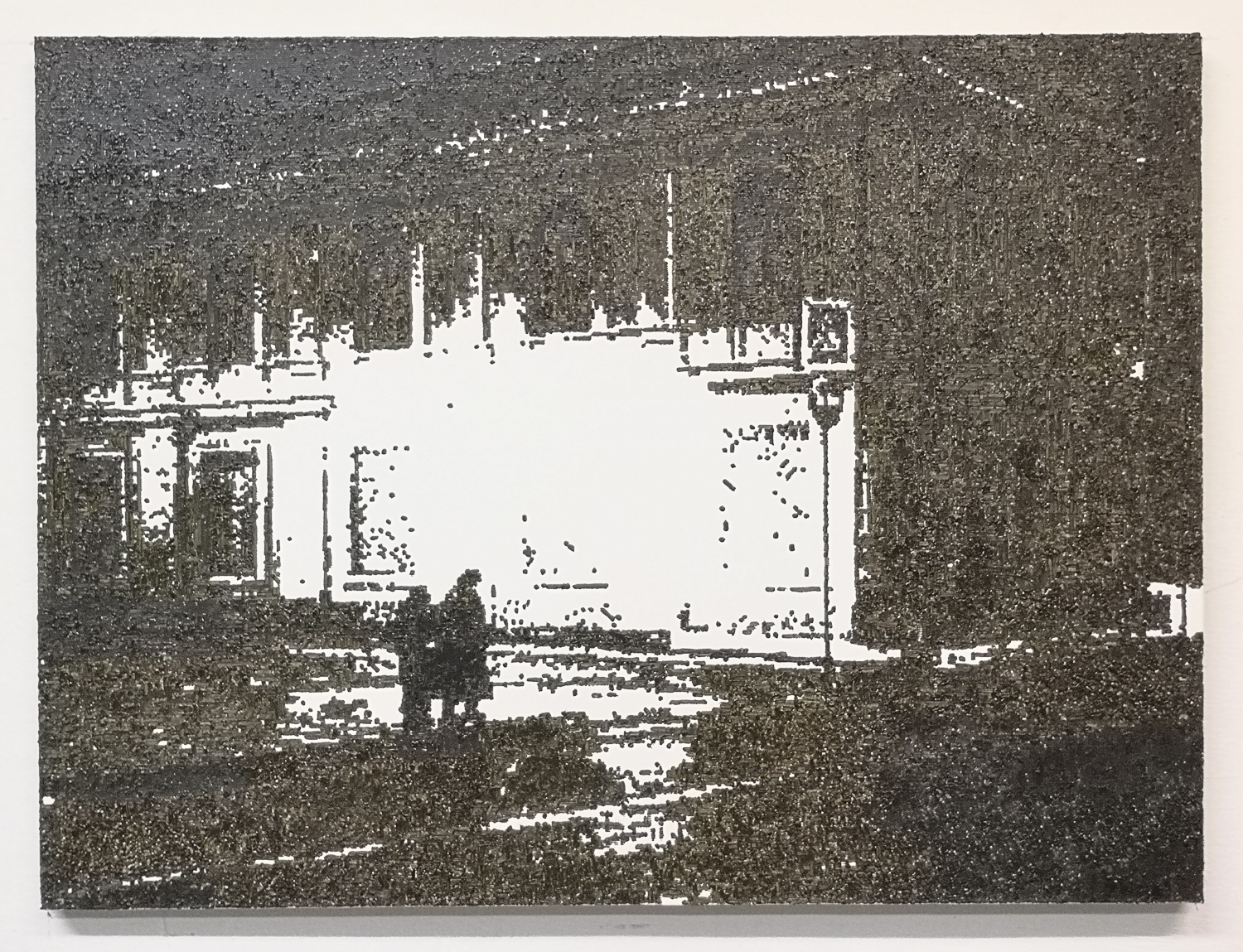
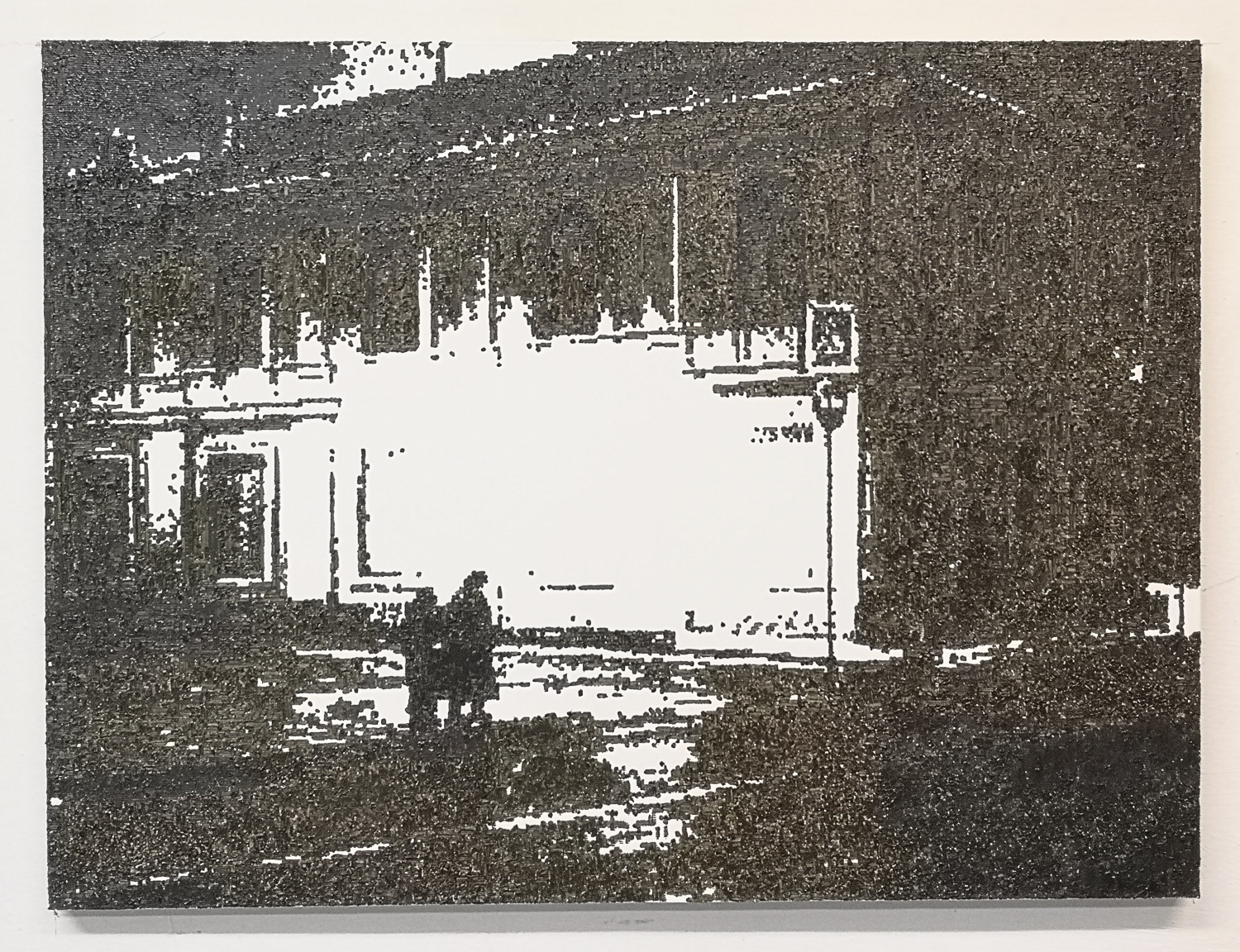
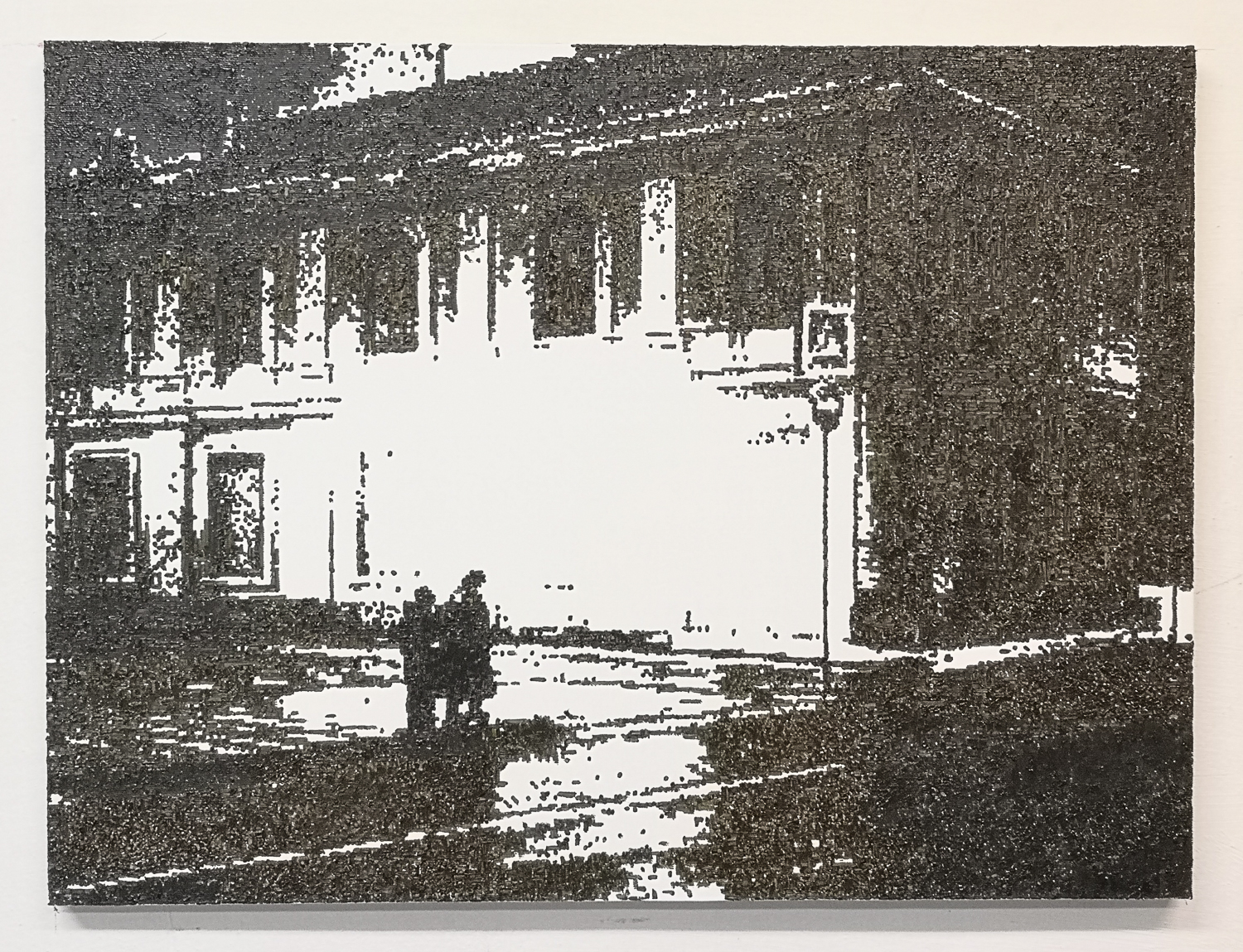
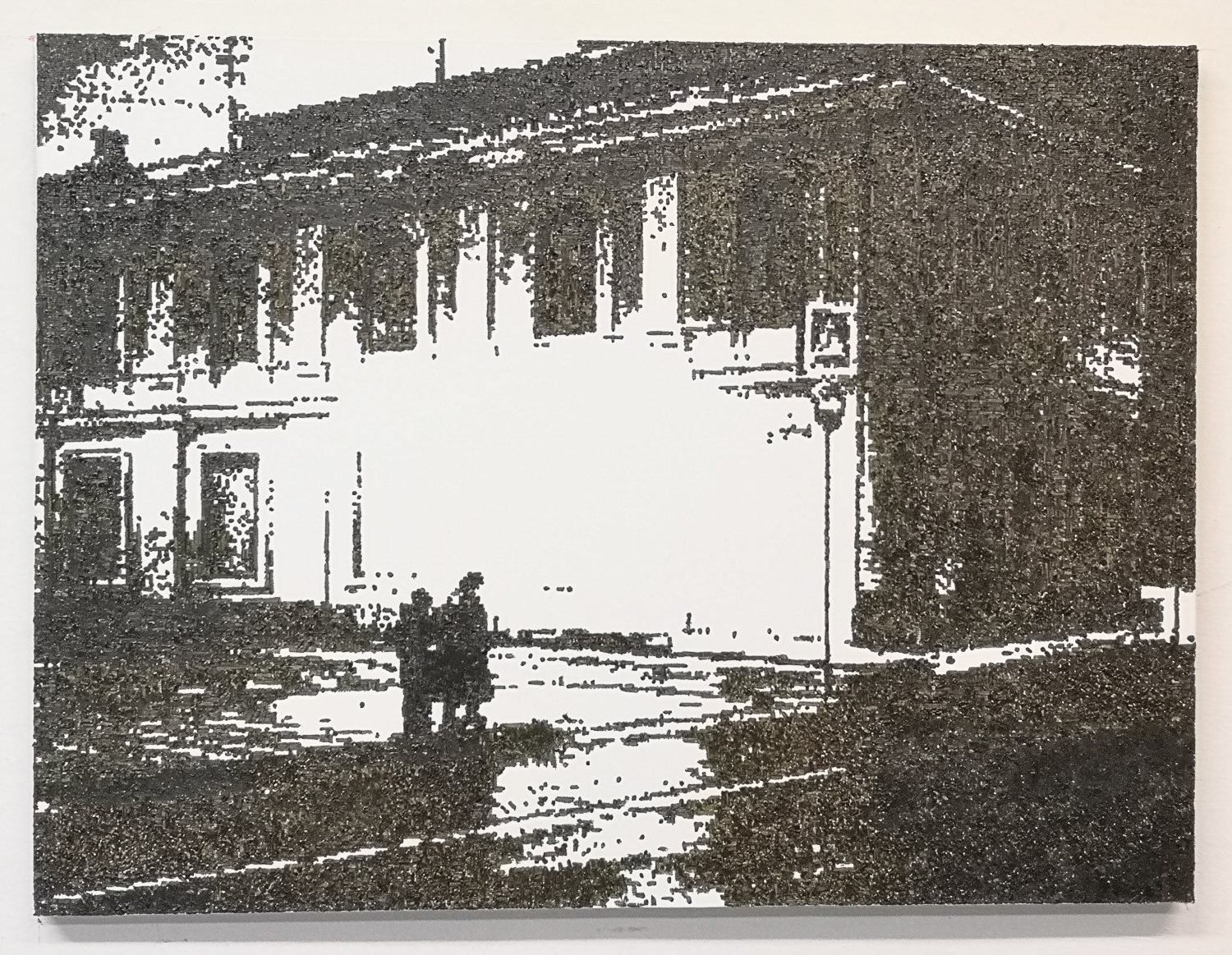
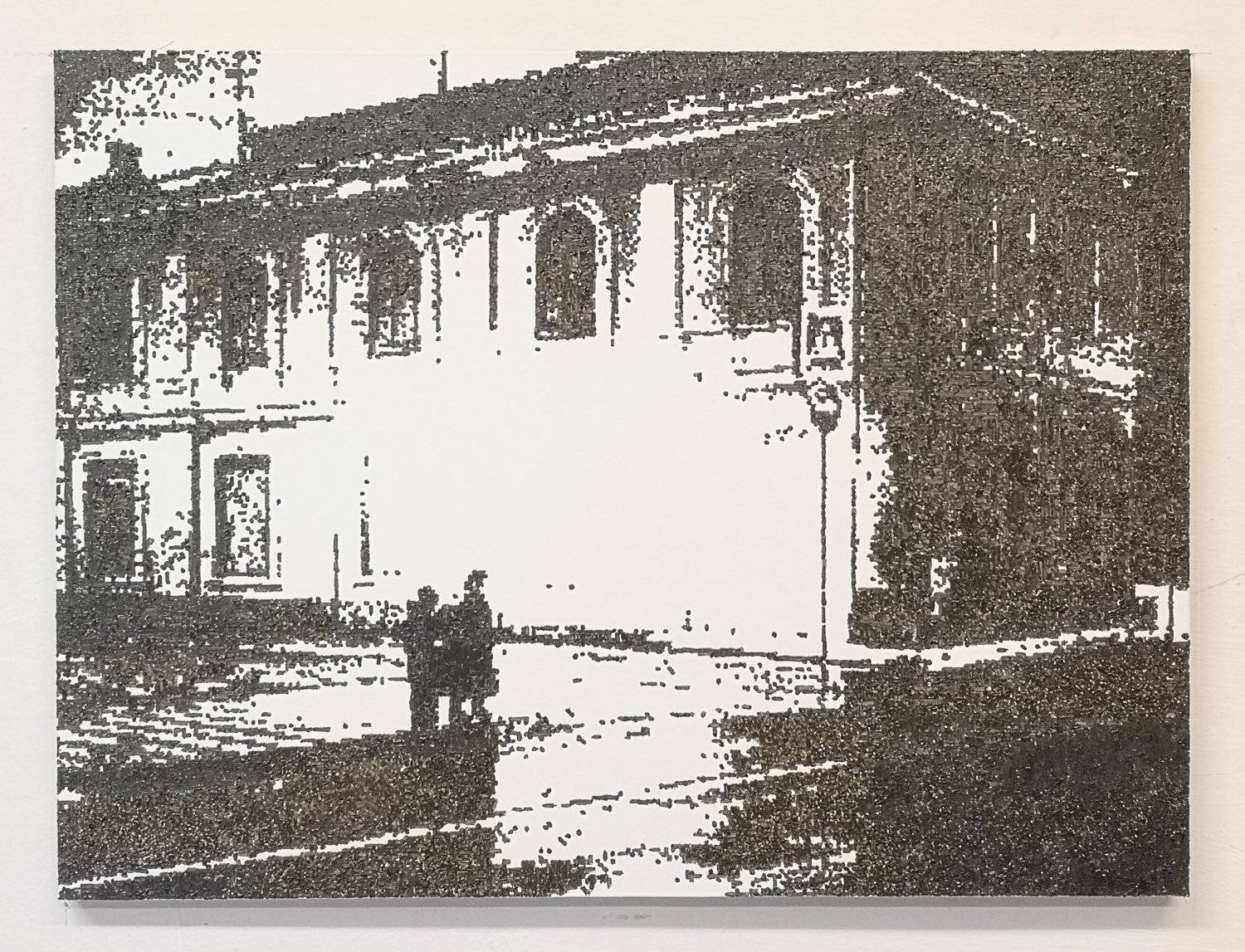
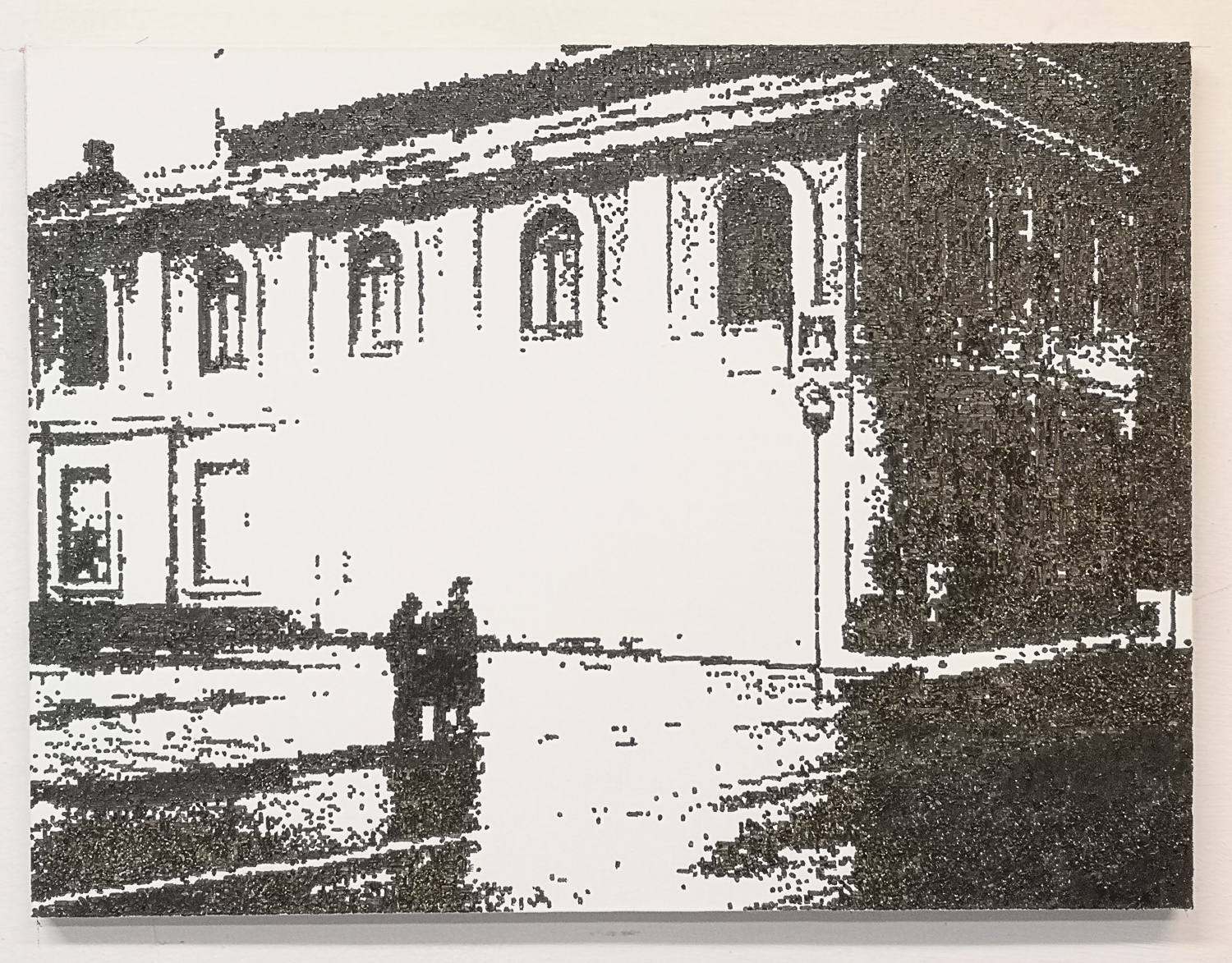
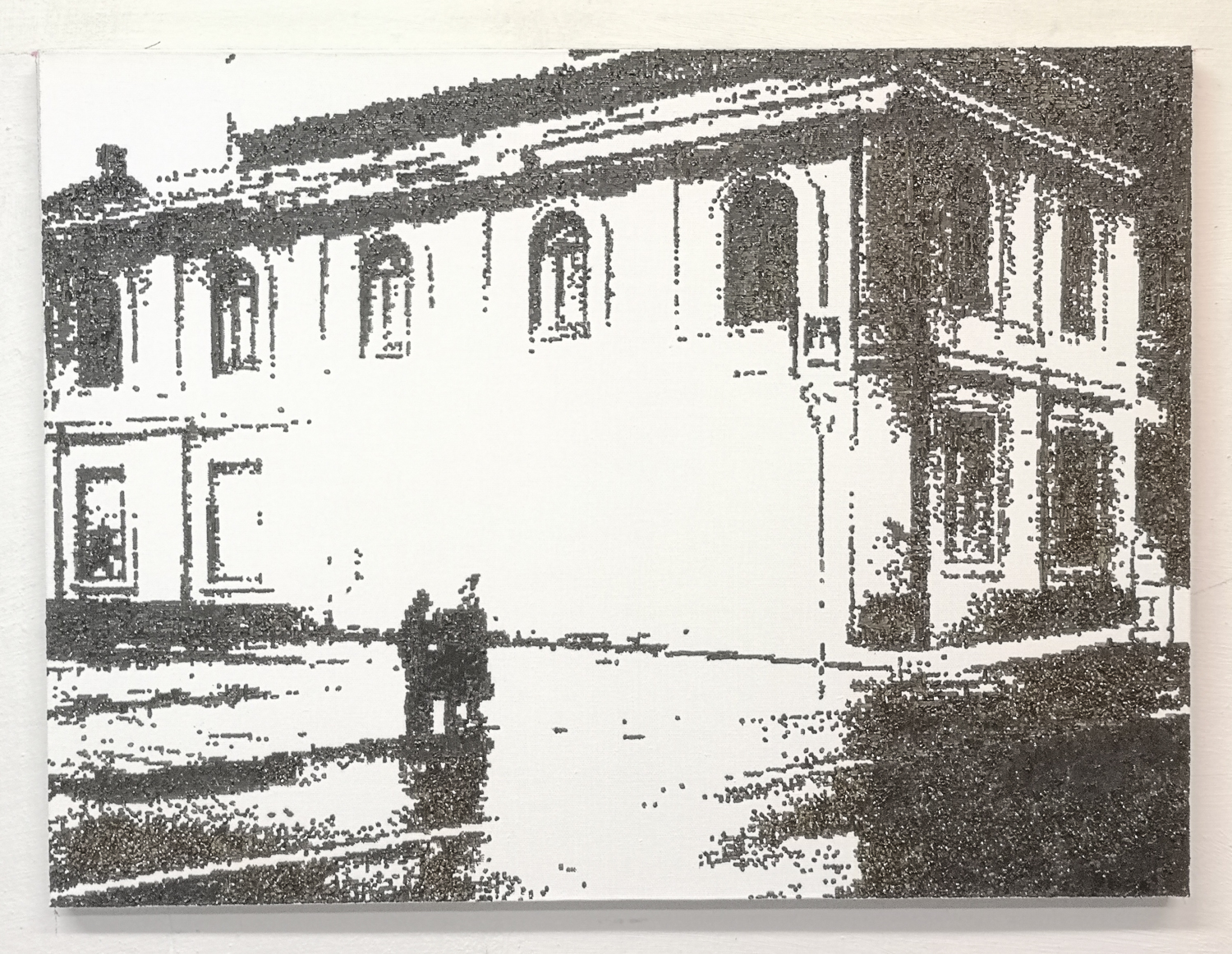
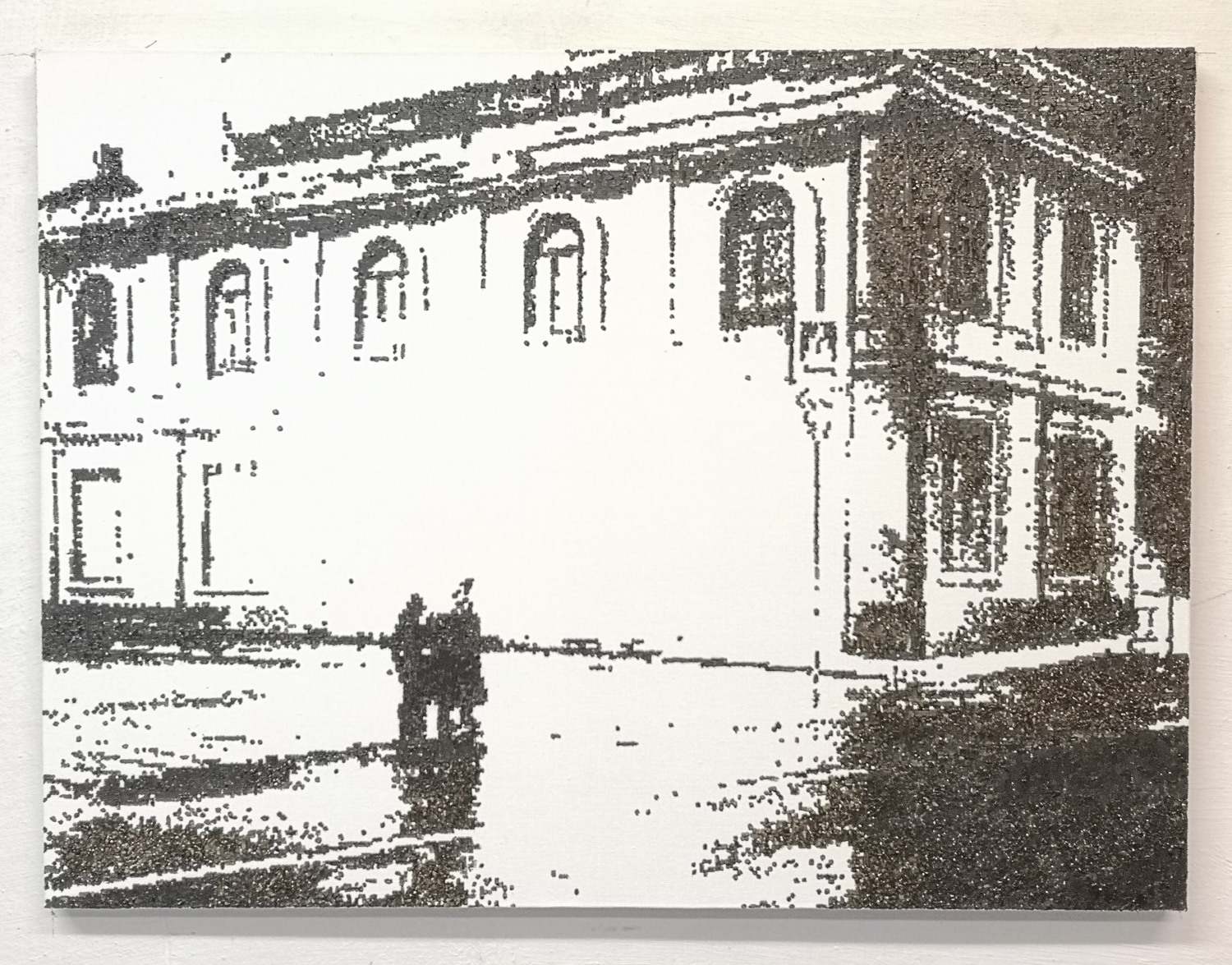
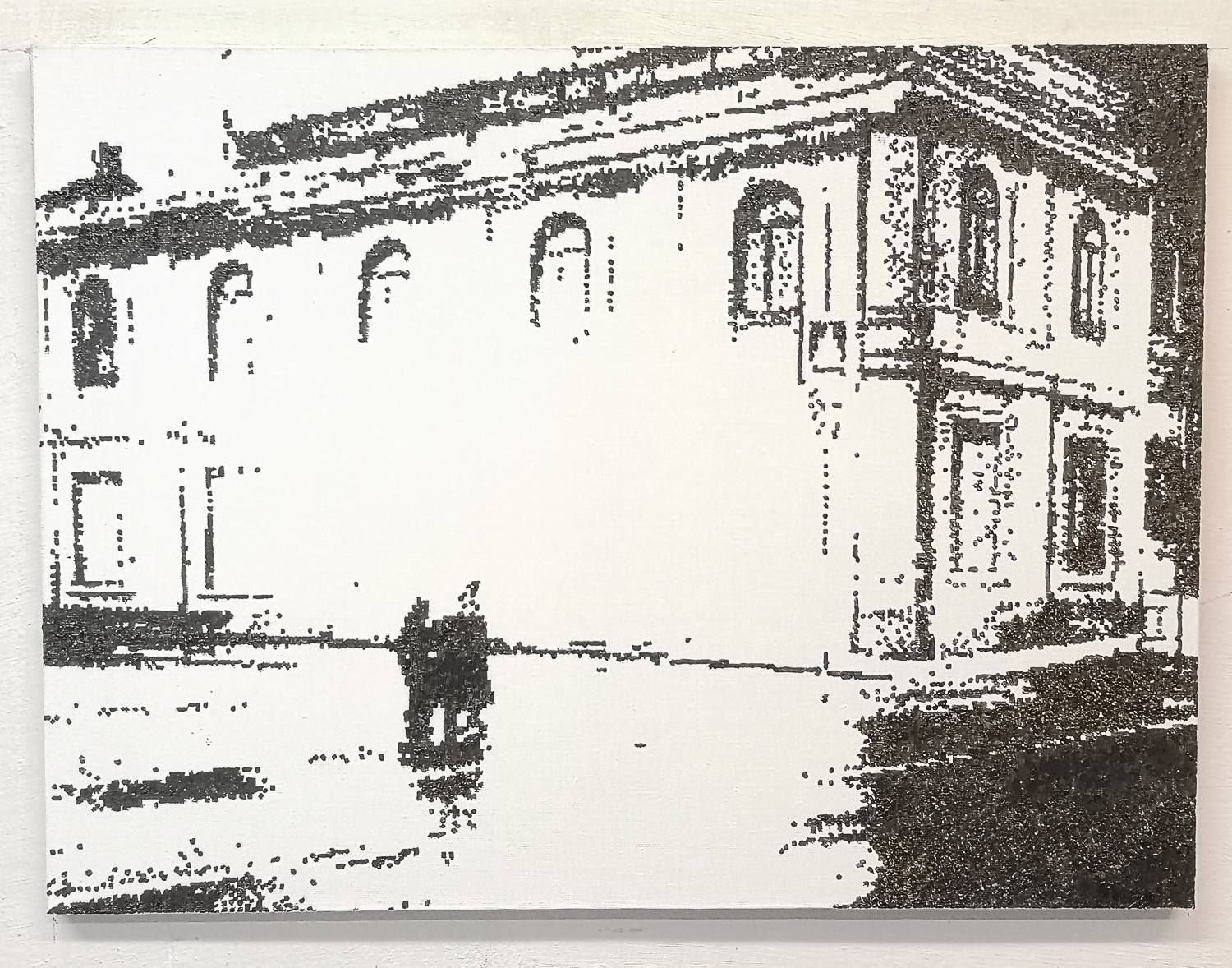
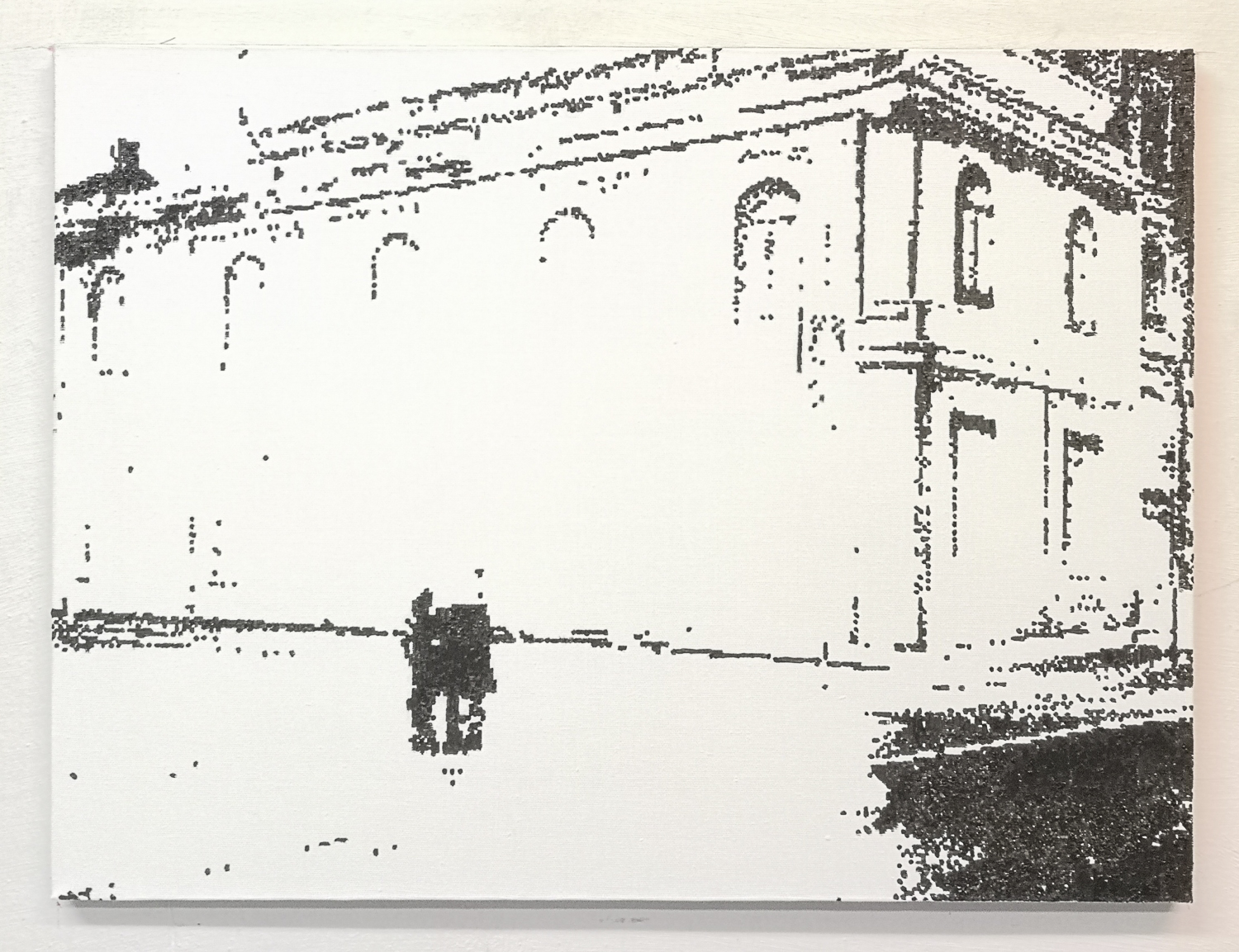
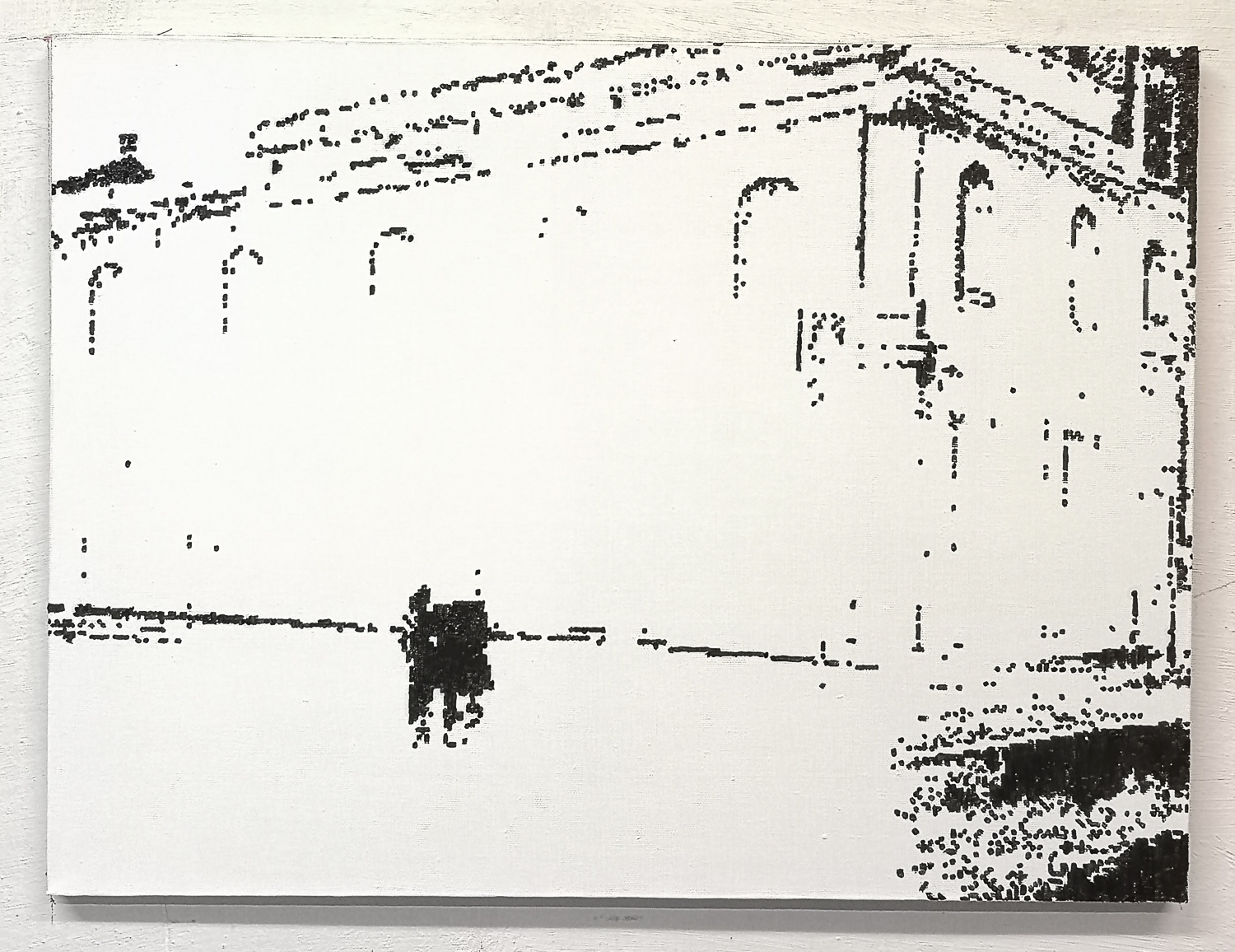
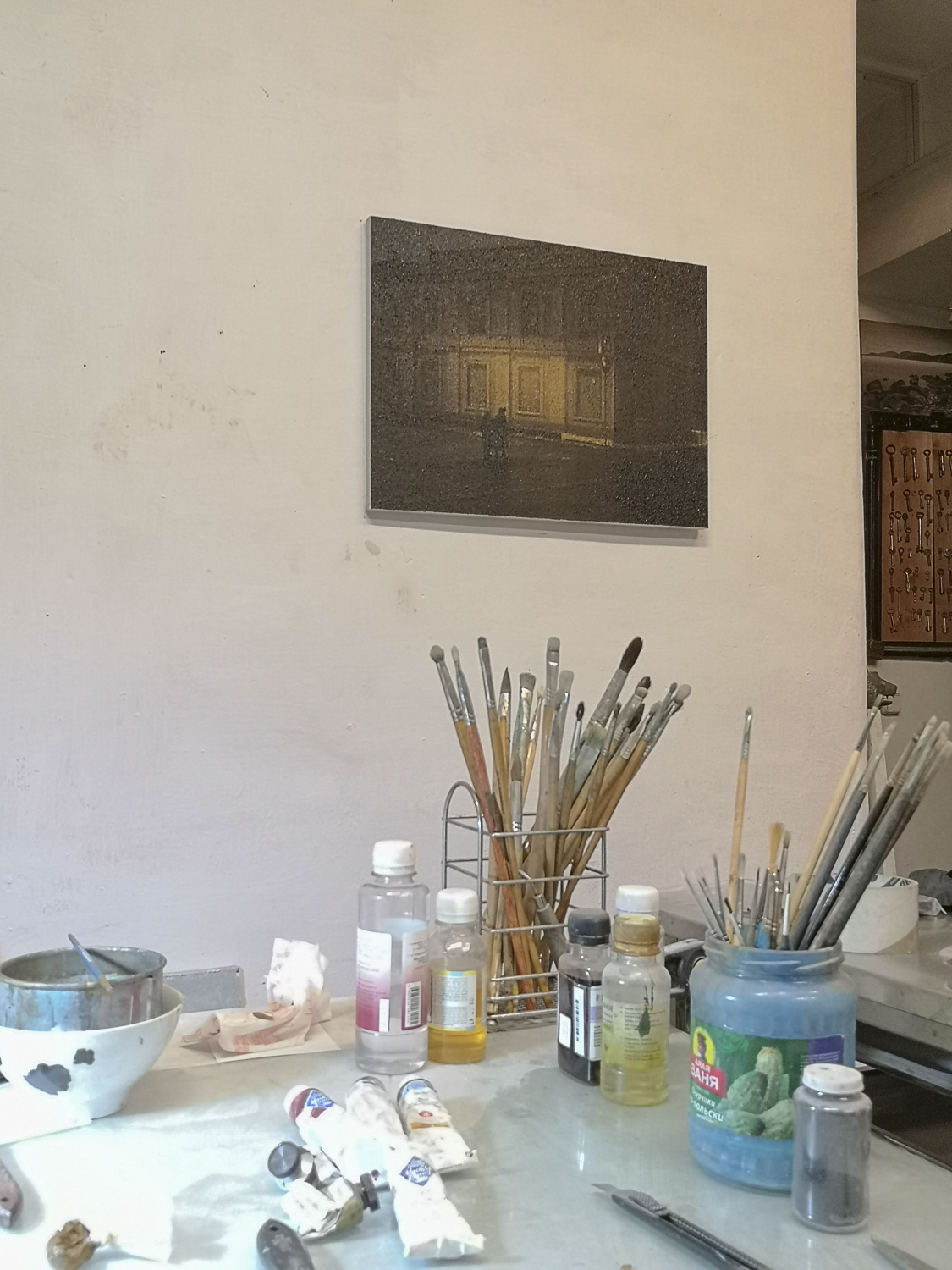
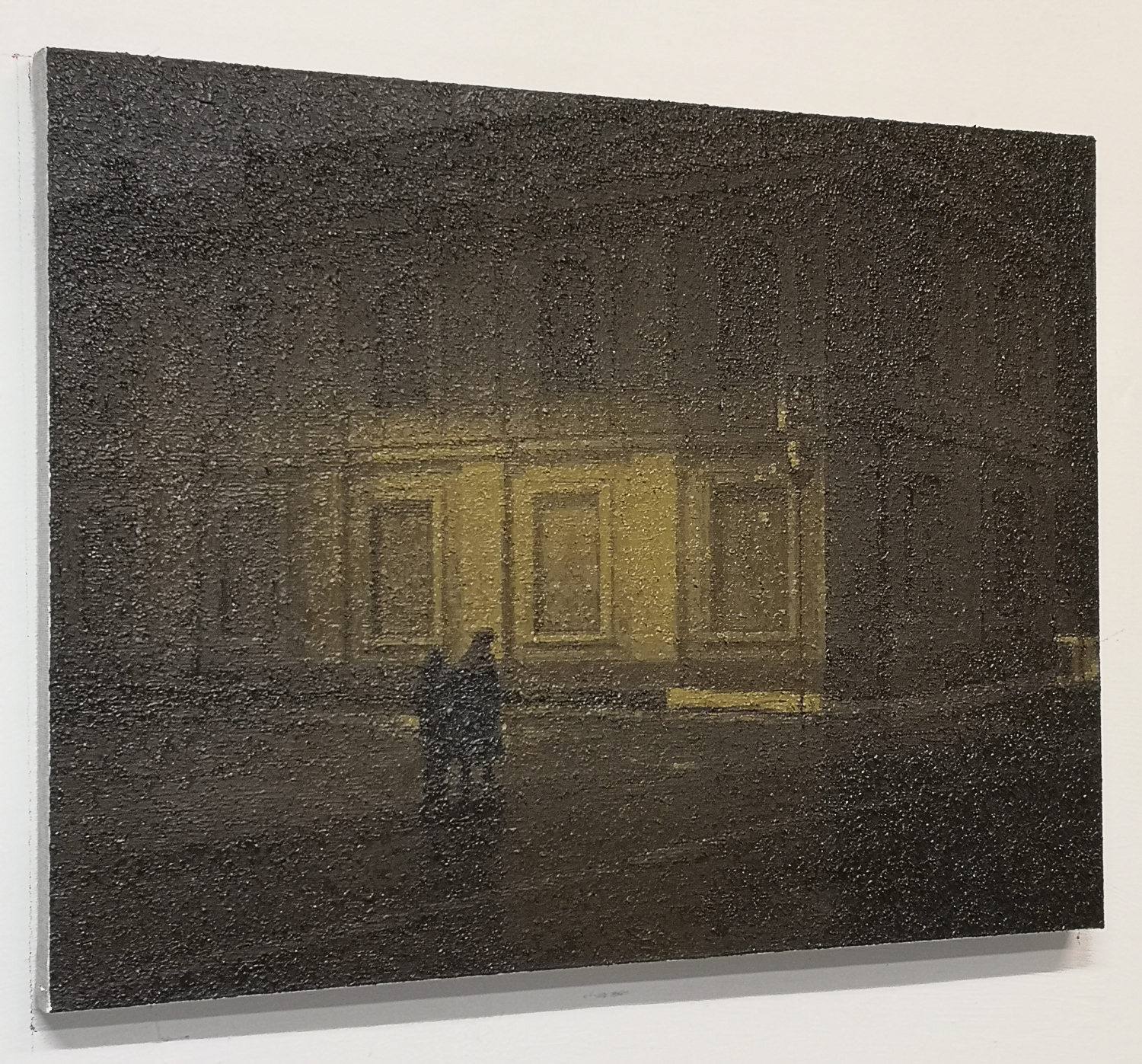
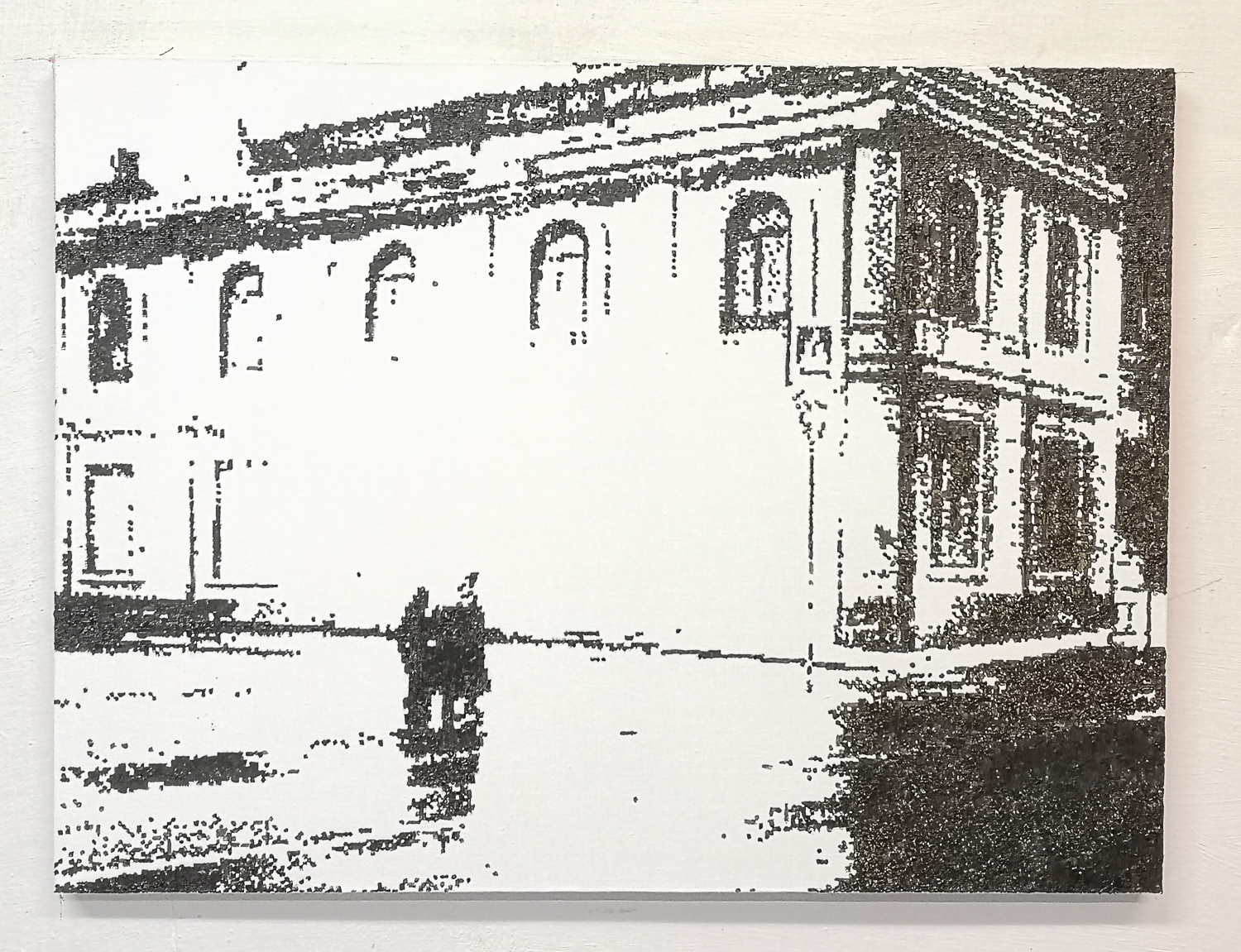
Представленная работа является частью серии «Квантовый проект», которая сочетает скрупулезную технику художника и концептуальную глубину. Картина, созданная полностью кистью № 2, черпает вдохновение в изысканной красоте римских микромозаик. Каждый мазок кисти становится фрагментом большего целого, формируя целостное изображение с тактильной, мозаикоподобной текстурой.

Художник тщательно разработал индивидуальную палитру, основанную на принципах индексированного цвета. Этот подход позволяет произведению достичь гармоничного баланса оттенков и систематической структуры, напоминающей цифровую пикселизацию, но при этом сохраняющей органическую суть традиционной живописи. Продуманный выбор и нанесение цвета превращают каждый элемент в символ точности, предполагая взаимосвязь микро- и макромира.

«Квантовая живопись» как техника соединяет миры науки и искусства. Название «Квантовый проект» воплощает концептуальную основу этой серии. Каждая картина отражает сложность квантовых процессов, где порядок и хаос сосуществуют, а мельчайшие частицы формируют ткань вселенной. Этот инновационный подход побуждает зрителей вникнуть в соотношение между структурой, случайностью и восприятием.

Серия приглашает к созерцанию времени и пространства, предлагая медитативный опыт, сродни наблюдению бесконечных деталей в природе или космосе. Это прославление сложного и монументального, достигнутого через мельчайшие жесты кисти, откликающееся вечным традициям древнего мозаичного мастерства, одновременно раздвигая границы современного искусства.


The presented artwork is part of the series “Quantum Project,” which combines the artist’s meticulous technique and conceptual depth. The painting, created entirely with a No. 2 brush, draws inspiration from the intricate beauty of Roman micro-mosaics. Each brushstroke becomes a fragment of a greater whole, forming a cohesive image with a tactile, mosaic-like texture.

The artist has meticulously developed a custom palette based on the principles of indexed color. This approach allows the artwork to achieve a harmonious balance of hues and a systematic structure, reminiscent of digital pixelation yet maintaining the organic essence of traditional painting. The deliberate selection and application of color transform each element into a symbol of precision, suggesting the interconnectivity of the micro and macro.

“Quantum Painting,” as a technique, bridges the worlds of science and art. The title “Quantum Project” encapsulates the conceptual underpinning of this series. Each painting reflects the complexity of quantum processes, where order and chaos coexist, and the smallest particles form the fabric of the universe. This innovative approach encourages viewers to delve into the relationship between structure, randomness, and perception.

The series invites contemplation of time and space, offering a meditative experience akin to observing the infinite detail in nature or the cosmos. It is a celebration of the intricate and the monumental, achieved through the smallest gestures of the brush, echoing the timeless traditions of ancient mosaic craftsmanship while pushing the boundaries of contemporary art.

The Photographic Poetics of Fragmentation

Эссе Клайва Скотта: «Фотографическая поэтика фрагментации»

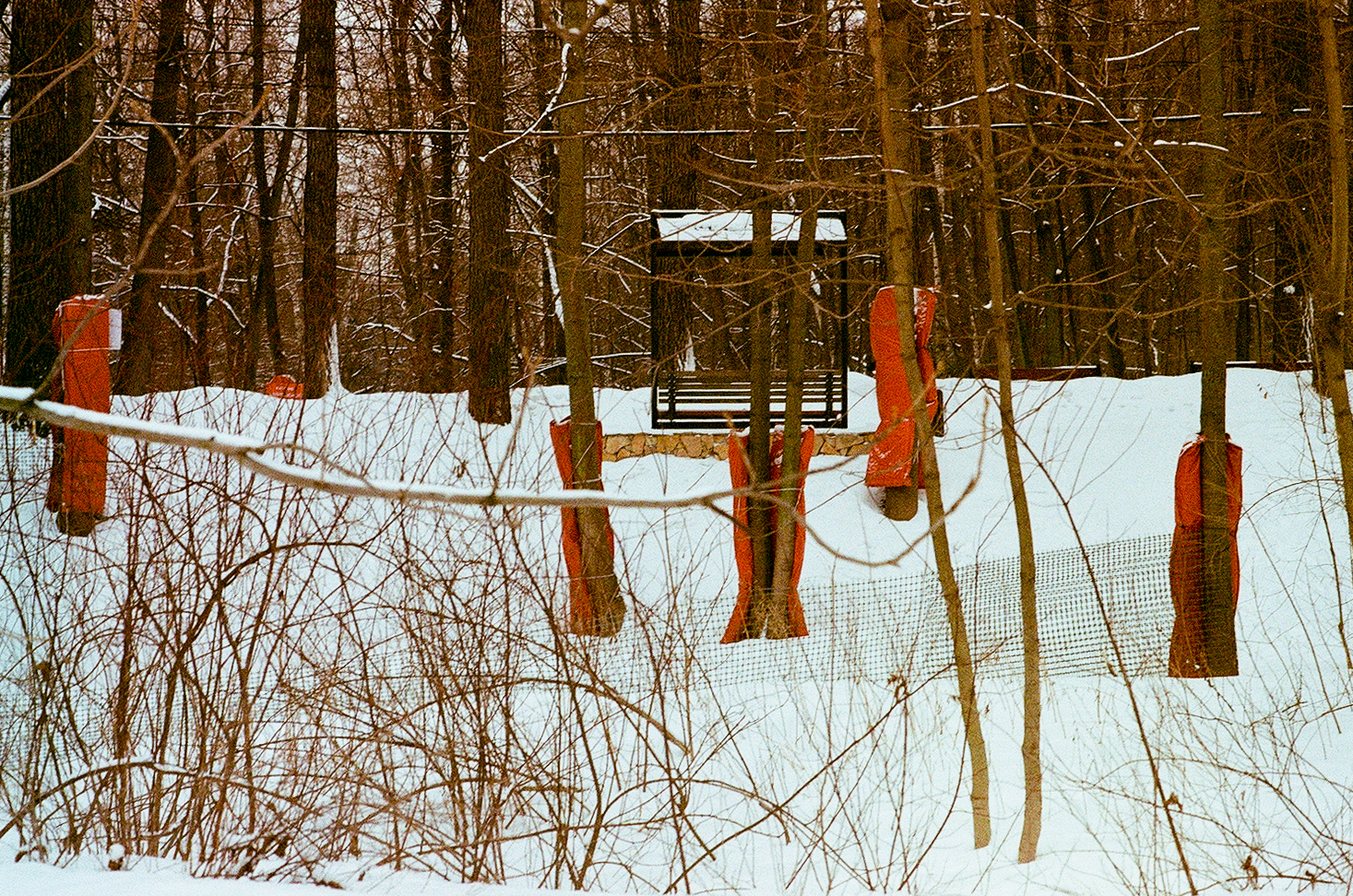
Эта фотография работает не только через свою образность, но через само восприятие, заставляя нас видеть сквозь её язык — язык разорванности, фрагментации и текстуры. Здесь действует особый подход к кадрированию: вместо того чтобы предложить зрителю законченную картину, она приглашает нас увидеть мир как совокупность визуальных элементов, каждый из которых несёт скрытое напряжение.

На переднем плане сплетение ветвей образует естественный хаос, частично скрывая сцену и оставляя её на грани откровения. За этим слоем возникает иначе структурированное пространство: строгие вертикали деревьев стоят как колонны, поддерживая ритм композиции. Их стволы обёрнуты красными защитными покрытиями — поразительный визуальный акцент, который нарушает монохромную гармонию зимнего леса. Красное здесь — это жест, утверждение — возможно, защиты, но оно также может быть прочитано как знак вторжения, изменения или насилия.

Фотография исследует границу между видимым и скрытым. Что находится за этими деревьями? Какую роль эта сцена играет в пространстве реального мира? Присутствие сетки на снегу и деревянного павильона указывает на место человеческого вмешательства — но в каком контексте? Мы не знаем, и изображение не предлагает ответов, лишь углубляя нашу вовлечённость в акт интерпретации.

Здесь фотография раскрывает свою сущность как фрагментарная форма искусства: она извлекает кусок реальности, но не заключает его в себе. Вместо этого она предлагает его как отправную точку для бесконечного повествования. Эта работа существует не только в своей визуальной плоскости, но и в сознании зрителя, где, следуя по путям её композиции, человек заполняет пробелы личными предположениями и ощущениями.

Это не просто изображение — это акт визуального мышления. Оно говорит на языке знаков, намёков и умолчаний, и в этом заключается его поэтическая сила.

#NikonFM2 #ПосмертныйВзгляд


Essay by Clive Scott: “The Photographic Poetics of Fragmentation”

This photograph operates not only through its imagery but through perception itself, compelling us to see through its language—a language of disjointedness, fragmentation, and texture. A distinct approach to framing is at work here: rather than offering the viewer a complete picture, it invites us to see the world as a collection of visual elements, each carrying an underlying tension.

In the foreground, a tangle of branches forms a natural chaos, partially obscuring the scene and leaving it on the verge of revelation. Beyond this layer, a differently structured space emerges: the strict verticals of trees stand like columns, supporting the rhythm of the composition. Their trunks are wrapped in red protective coverings—a striking visual accent that disrupts the monochromatic harmony of the winter forest. The red here is a gesture, a statement—perhaps one of protection, yet it may also be read as a sign of intrusion, alteration, or violence.

The photograph explores the boundary between the visible and the hidden. What lies beyond these trees? What role does this scene play in the space of the real world? The presence of a grid on the snow and a wooden pavilion suggests a place of human intervention—but in what context? We do not know, and the image offers no answers, only deepening our engagement in the act of interpretation.

Here, photography reveals its essence as a fragmentary art form: it extracts a piece of reality but does not enclose it within itself. Instead, it offers it as the starting point for an infinite narrative. This work exists not only in its visual plane but also in the viewer’s consciousness, where, following the pathways of its composition, one fills in the gaps with personal assumptions and sensations.

This is not just an image—it is an act of visual thinking. It speaks in the language of signs, suggestions, and omissions, and therein lies its poetic power.

#NikonFM2 #PosthumousGaze

Photography as a Witness to Time and Space (in the Spirit of John Szarkowski)

Фотография как свидетель времени и пространства (в духе Джона Жарковски)

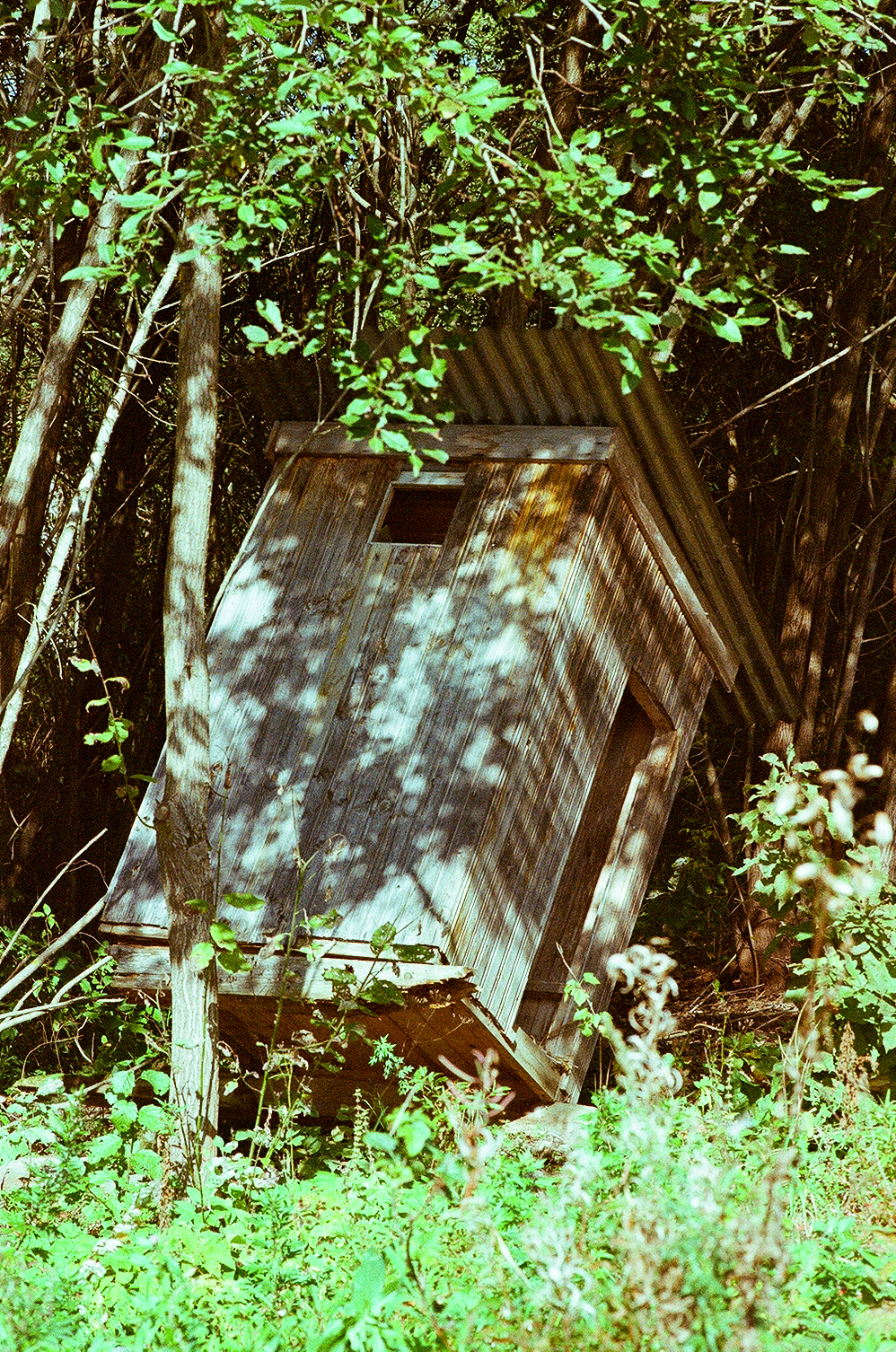
Фотография всегда была не просто средством запечатления реальности, но и способом раскрытия невидимых структур в обыденном. Это изображение — доказательство тому. На первый взгляд мы видим не более чем заброшенный сельский туалет, покосившийся и поглощённый зелёным хаосом растительности. Однако взгляд фотографа превращает его в нечто большее: символ, историю, свидетельство времени.

Я всегда считал, что одна из важнейших функций фотографии — не просто документировать, но интерпретировать. Здесь композиция играет с напряжением между созданным человеком объектом и природой, возвращающей его себе. Вертикальные линии деревьев вступают в диалог с наклонной геометрией деревянной структуры, создавая ощущение движения — словно природа постепенно возвращает себе то, что когда-то было частью человеческой повседневной жизни.

Этот объект, некогда служивший утилитарной цели, теперь отброшен за границы усадьбы, стоя на пороге между цивилизацией и дикой природой. В этом есть странная поэзия: объект, который когда-то был неотъемлемой частью повседневной жизни, стал устаревшим, лишённым своей функции, ожидающим окончательного растворения в окружающем ландшафте.

Фотография запечатлевает момент этой трансформации, одновременно напоминая нам о непостоянстве всех вещей и их неизбежном возвращении к изначальному хаосу. Это изображение вызывает в памяти работы Уильяма Эгглстона и его способность обнаруживать красоту и смысл в самых неожиданных, даже банальных предметах. В конце концов, великая фотография не просто показывает — она позволяет нам видеть.

#NikonFM2 #ПосмертныйВзгляд


Photography as a Witness to Time and Space (in the Spirit of John Szarkowski)

Photography has always been not just a means of capturing reality but also a way of revealing the invisible structures within the ordinary. This image is proof of that. At first glance, we see nothing more than an abandoned rural outhouse, leaning and engulfed by the green chaos of vegetation. Yet the photographer’s gaze transforms it into something more: a symbol, a story, a testament to time.

I have always believed that one of photography’s most essential functions is not merely to document but to interpret. Here, composition plays with the tension between the man-made object and the nature reclaiming it. The vertical lines of the trees engage in a dialogue with the slanted geometry of the wooden structure, creating a sense of movement—as if nature is gradually reclaiming what was once part of human daily life.

This object, once serving a utilitarian purpose, has now been discarded beyond the boundaries of the homestead, standing at the threshold between civilization and wilderness. There is a strange poetry in this: an object that was once an essential part of everyday life has become obsolete, stripped of its function, awaiting its final dissolution into the surrounding landscape.

Photography captures the moment of this transformation, simultaneously reminding us of the impermanence of all things and their inevitable return to primordial chaos. This image brings to mind the works of William Eggleston and his ability to uncover beauty and meaning in the most unexpected, even banal, subjects. In the end, a great photograph does not merely show—it allows us to see.

#NikonFM2 #PosthumousGaze

Essay by Architectural Critic Sylvia Lavin

Эссе архитектурного критика Сильвии Лавин: «Архитектура руины и укрощённая энтропия»

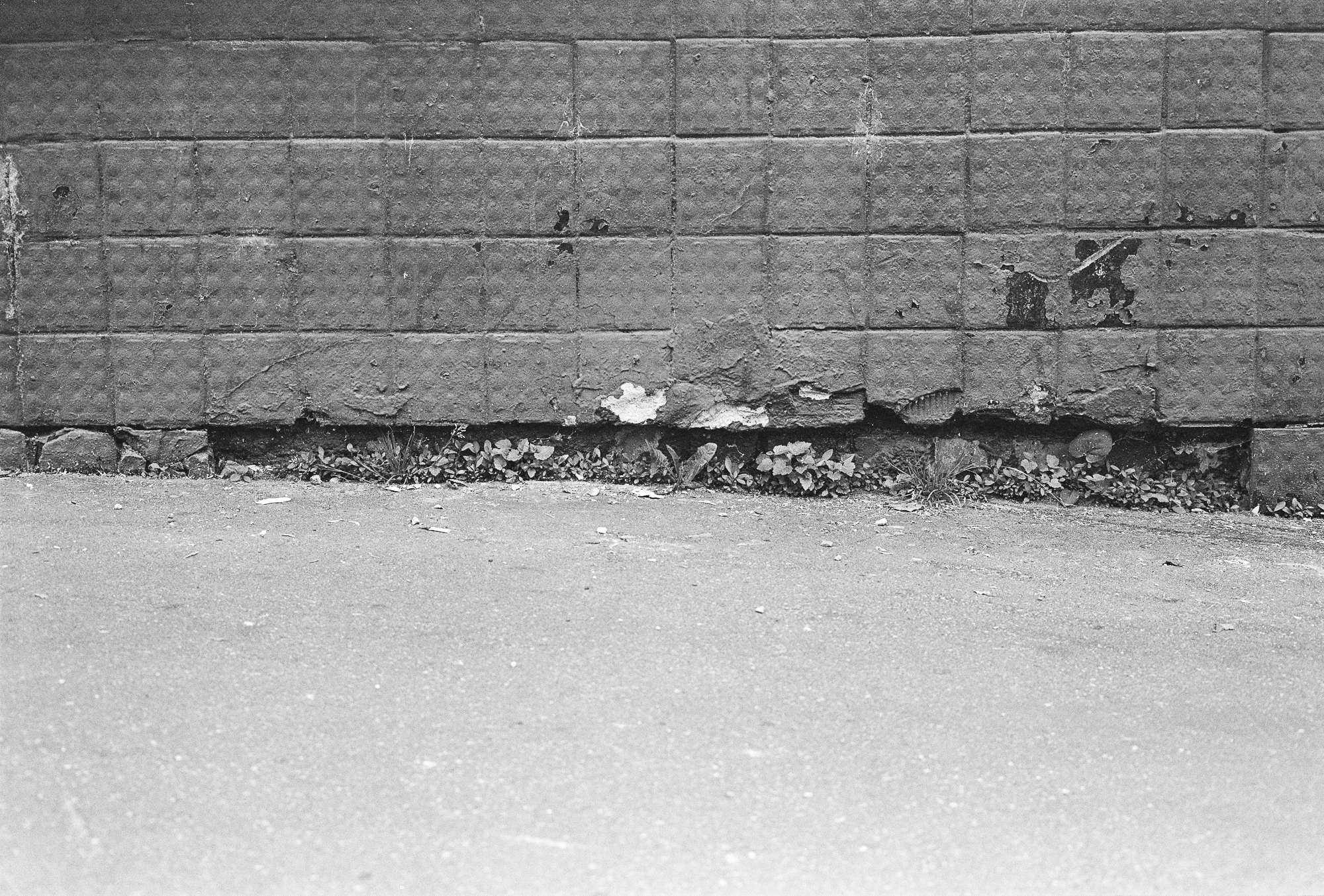
Эта фотография — редкое свидетельство архитектурной энтропии, застывшей в моменте, когда распад и обновление существуют в хрупком равновесии. Здесь городская стена — некогда спроектированная как строго рациональная поверхность, облицованная геометрически упорядоченными панелями — вступает в диалог с природой, которая возвращает себе пространство.

Эта сцена — не драматическая катастрофа, а скорее иллюстрация медленной дезинтеграции, где границы между архитектурным и органическим растворяются. Повреждённая облицовка обнажает внутренние слои структуры, раскрывая скрытую уязвимость городской ткани. В трещинах, оставленных осыпающейся штукатуркой, начинает расти трава — скромный, но решительный акт сопротивления.

Фотография отвергает традиционную иерархию объектов: здесь нет целого здания, нет панорамного вида на улицу или её окружение. Вместо этого кадр запечатлевает фрагмент — детали, которые обычно остаются за пределами архитектурной фотографии, но несут важнейшее свидетельство процессов, разворачивающихся в пространстве. В этом смысле изображение напоминает практику архитектурных критиков, которые исследуют не только завершённые формы, но и их нестабильные состояния, трансформации, происходящие вне контроля архитектора.

Это изображение можно рассматривать как часть более широкой дискуссии об архитектуре пост-антропоцена — той, что не борется с природой, но сосуществует с ней, позволяя ей модифицировать и переосмысливать городскую среду. Здесь нет ностальгии по утраченной целостности здания, есть лишь внимательное наблюдение за его новой жизнью — жизнью в руинах, жизнью среди сорняков, жизнью, которая продолжается даже тогда, когда архитектура перестаёт служить своей первоначальной функции.

#Fujica6x9 #ПосмертныйВзгляд


Essay by Architectural Critic Sylvia Lavin: “The Architecture of Ruin and Tamed Entropy”

This photograph is a rare testament to architectural entropy, frozen in a moment where decay and renewal exist in fragile equilibrium. Here, an urban wall—once designed as a strictly rational surface, clad in geometrically ordered panels—enters into dialogue with nature, which is reclaiming the space.

This scene is not one of dramatic catastrophe but rather an illustration of slow disintegration, where the boundaries between the architectural and the organic dissolve. The damaged cladding exposes the inner layers of the structure, revealing the hidden vulnerability of the urban fabric. In the cracks left by the crumbling plaster, grass begins to grow—a modest yet resolute act of resistance.

The photograph rejects the conventional hierarchy of objects: there is no intact building, no expansive view of the street or its surroundings. Instead, the frame captures a fragment—details that typically remain outside the scope of architectural photography yet bear crucial evidence of the processes unfolding within space. In this sense, the image recalls the practice of architectural critics who examine not only completed forms but also their unstable states, the transformations that occur beyond the architect’s control.

This image can be seen as part of a broader discussion on post-Anthropocene architecture—one that does not fight against nature but coexists with it, allowing it to modify and reinterpret the urban environment. There is no nostalgia here for the lost wholeness of a building, only a careful observation of its new life—a life in ruins, a life among weeds, a life that continues even when architecture ceases to serve its original function.

#Fujica6x9 #PosthumousGaze

An Essay from the Perspective of Alain Badiou

Эссе Алена Бадью: «Форма, событие, истина»

Эта фотография не спрашивает нас, что мы видим, а скорее — как структурируется само видение. Здесь, в центре открытого ландшафта, стоит пустая рама — лишённая собственного содержания, но превращённая в место для истины. Это не просто рама, но событие, которое организует пространство и заставляет нас усомниться в его естественности.

В традиции платонической философии истина никогда не даётся нам напрямую — она требует конструирования, опосредования. Эта рама — структура, которая обозначает отсутствие, но именно через это отсутствие она раскрывает сам процесс различения: что внутри, а что снаружи? Отличается ли поле внутри рамы от того, что его окружает? Нет, и всё же мы начинаем видеть его иначе.

Так рождается событие — внезапный разрыв в порядке видимого. Мы оказываемся в ситуации, где искусственное создаёт условия для нового восприятия реального. Поле, которое всегда было полем, теперь превращается в знак. Граница между ландшафтом и его репрезентацией становится нестабильной, и мы оказываемся внутри этой двойственности, не в силах определить, где именно проходит черта между искусством и миром.

Важно здесь не только то, что изображено, но и сам акт обрамления. Это не жест власти, не упорядочивание хаоса, а скорее вызов — приглашение зрителю осознать, что всякое видение есть выбор, что истина никогда не даётся нам напрямую, но всегда возникает через разрыв, через событие, которое реорганизует наши структуры восприятия.

В этом смысле фотография не просто документирует реальность; она играет с ней, раскрывая то, что иначе осталось бы незамеченным в повседневной жизни. Она становится актом мысли и, следовательно, пространством для истины.

#NikonFM2 #ПосмертныйВзгляд


Essay by Alain Badiou: “Form, Event, Truth”

This photograph does not ask us what we see but rather how seeing itself is structured. Here, at the center of an open landscape, stands an empty frame—devoid of its own content, yet transformed into a site for truth. It is not merely a frame but an event, one that organizes space and compels us to question its naturalness.

In the tradition of Platonic philosophy, truth is never given to us directly—it requires construction, mediation. This frame is a structure that marks an absence, yet through this very absence, it reveals the process of distinction itself: what is inside, and what is outside? Does the field within the frame differ from what surrounds it? No, and yet we begin to see it differently.

This is how an event is born—a sudden rupture in the order of the visible. We find ourselves in a situation where the artificial creates the conditions for a new perception of the real. The field, which has always been a field, is now transformed into a sign. The boundary between landscape and its representation becomes unstable, and we find ourselves inside this duality, unable to determine where exactly the line between art and the world is drawn.

What matters here is not only what is depicted but also the very act of framing. This is not a gesture of authority, not an ordering of chaos, but rather a challenge—an invitation for the viewer to recognize that all vision is a choice, that truth is never given to us directly but always emerges through rupture, through an event that reorganizes our structures of perception.

In this sense, photography does not merely document reality; it plays with it, revealing what would otherwise remain unnoticed in everyday life. It becomes an act of thought and, therefore, a space for truth.

#NikonFM2 #PosthumousGaze

An Essay from the Perspective of Thomas Veski

Эссе Томас Вески: «Подвешенный момент»

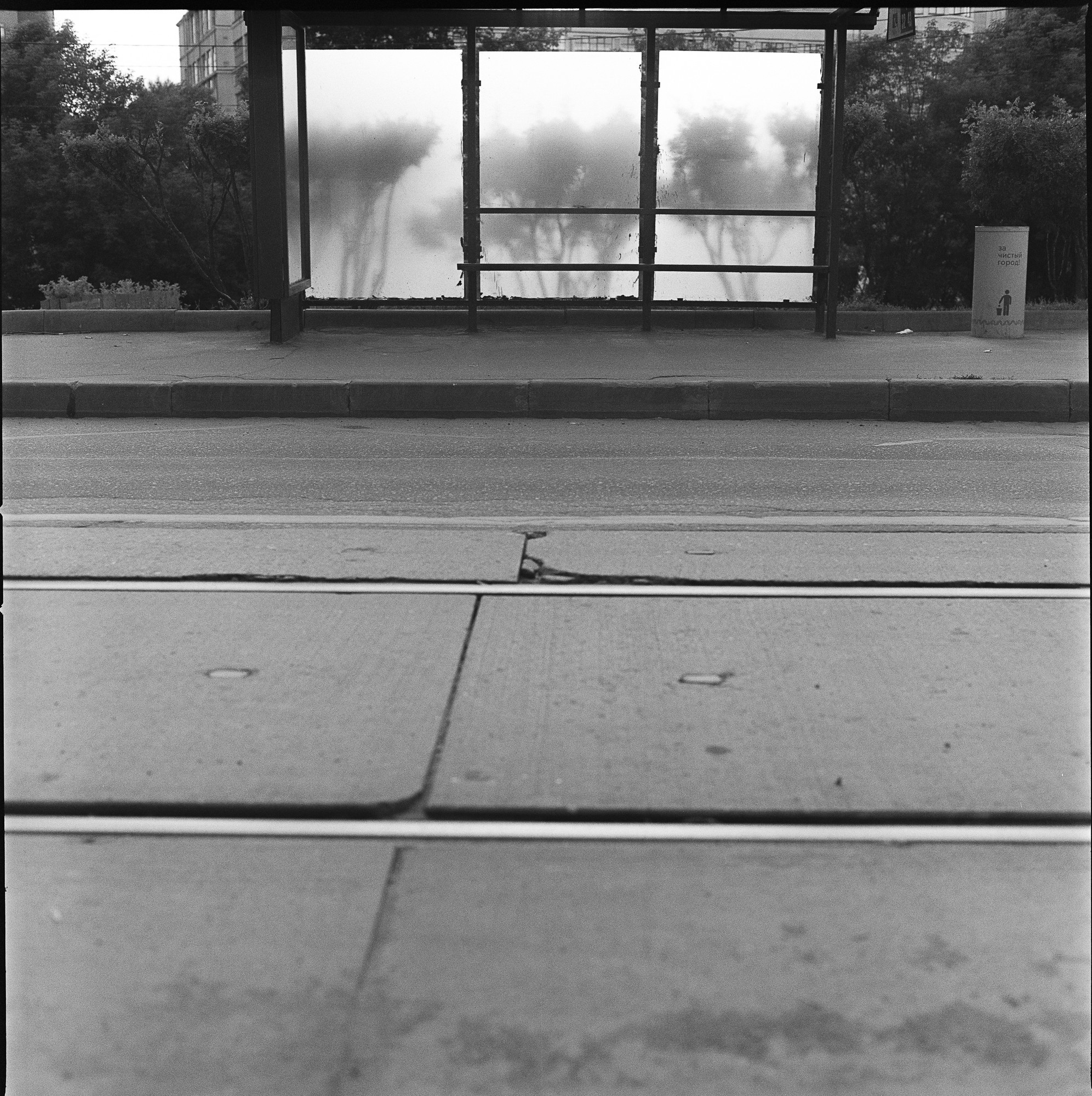
Эта фотография обладает редкой способностью удерживать зрителя в промежуточном состоянии. Здесь нет очевидного движения, нет человеческого присутствия, и именно это отсутствие наполняет изображение потенцией. Мы стоим перед трамвайными рельсами, перед бетонными плитами, которые, покрытые тонкими трещинами и пятнами, напоминают следы времени. Этот кадр захватывает нечто большее, чем просто улицу или остановку — он становится метафорой ожидания, перехода из одного состояния в другое.

Разделение пространства играет здесь ключевую роль. Передний план чётко очерчен, с детализированной фактурой асфальта и металла, тогда как фон растворяется в рассеянной дымке. Стекло остановки действует как граница между миром ясности и миром размытых контуров. Деревья за этим стеклом больше не принадлежат реальности в привычном смысле. Они становятся тенями, воспоминаниями, намёками на нечто живое, но недосягаемое.

Этот приём перекликается с эстетическими принципами документальной фотографии, где простая сцена раскрывается как нечто большее, чем сумма своих частей. Мы не видим людей, но их отсутствие лишь усиливает ощущение их возможного появления. Мы ждём их так же, как ждём приближающийся трамвай, остающийся за пределами кадра.

Использование перспективы также значимо. Рельсы уводят наш взгляд вглубь изображения, но не дают ясной цели. Они обрываются у края кадра, оставляя нас в подвешенном состоянии. Подобно самой фотографии, мы остаёмся на пороге чего-то ускользающего.

#Fujica6x9
#ПосмертныйВзгляд


An Essay by Thomas Veski: “Suspended Moment”

This photograph holds the viewer in a rare condition of suspension. There is no evident movement, no human presence, and yet it is precisely this absence that charges the image with potential. We stand before tram tracks, before concrete slabs marked by fine cracks and stains that register the passage of time. The frame exceeds its subject: it is no longer merely a street or a stop, but a metaphor for waiting, for transition between states.

The division of space is essential. The foreground is rendered with clarity — the textures of asphalt and metal sharply articulated — while the background dissolves into a soft, indeterminate haze. The glass of the tram shelter functions as a threshold, separating a world of definition from one of diffusion. The trees beyond it withdraw from immediate reality; they appear instead as shadows, as traces, as distant signs of life.

This approach recalls a documentary sensibility in which the ordinary discloses a latent structure of meaning. The absence of people does not empty the scene; it intensifies it. Their presence is implied, anticipated. We wait for them, just as we wait for the tram that never enters the frame.

Perspective deepens this condition. The tracks guide the gaze inward, yet they refuse resolution. They do not arrive; they terminate at the edge of the image. In this, the photograph withholds completion. It leaves us suspended — not within the scene, but before it, on the threshold of something that remains unresolved.

#Fujica6x9
#PosthumousGaze

Essay from the Perspective of Georges Bataille

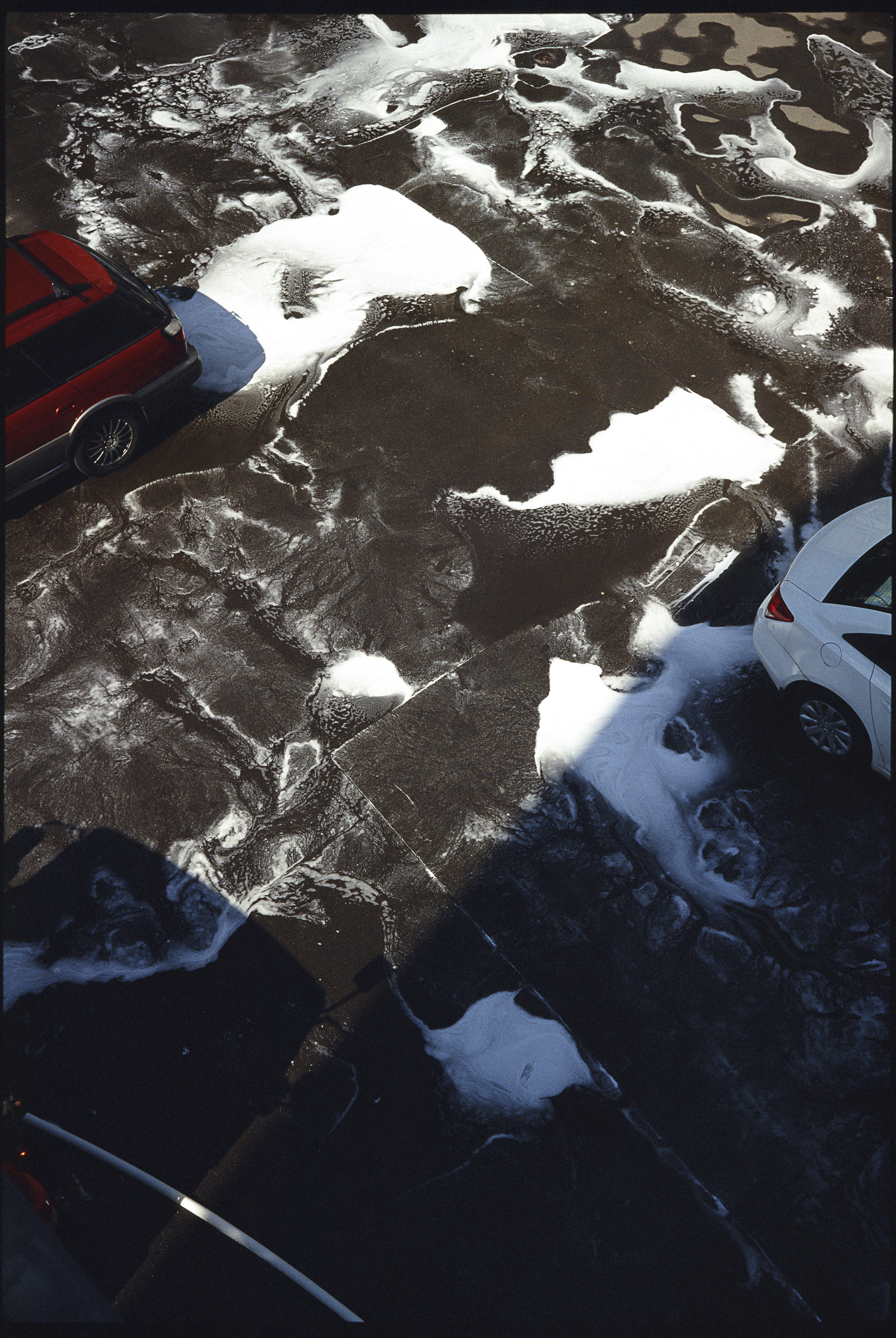
Эссе с позиции Жорж Батай: «Пена как язык случая»

В этом изображении пена выходит на первый план — язык хаоса, растёкшийся по тёмной поверхности асфальта. Её присутствие вызывает вопросы: откуда она появилась? что вызвало её движение? Пена — нечто мимолётное, эфемерное, и всё же здесь она находит способ заявить о себе, оставляя следы, говорящие о взаимодействии природы и человеческого действия.

Она напоминает облака, спустившиеся на землю, чтобы разлиться по материальной основе нашего мира. Каждая линия и каждое пятно — результат случайного потока, неподвластного контролю. В этом проявляется истина случая — та же истина, что управляет нашими мыслями, желаниями и страхами. Пена проживает краткий, но интенсивный цикл, проникая в каждую трещину, в каждую щель, словно заполняя пустоты, которые мы предпочитаем не замечать.

Припаркованные автомобили выступают символами нашего стремления к контролю, порядку, фиксированной системе. Они подобны границам, которые пена стремится нарушить, проникая в их тени, соединяя материальное с эфемерным. Влажный, пористый асфальт становится поверхностью для этой силы, где пена — уже не просто вещество, а жест, действие, размывающее жёсткие границы.

Тени автомобилей и углы зданий также участвуют в этом процессе. Они поглощают пену, взаимодействуют с её формами, создавая иллюзию глубины и слоёв. Это напоминает, как часто наше восприятие реальности формируется на пересечении материального и нематериального. В этой игре света и формы присутствует нечто почти сакральное — как в каждом процессе распада или рождения.

Пена символизирует неконтролируемое, неструктурированное. Она стремится обнажить абсурдность наших усилий навязать порядок хаосу. Это изображение говорит о мимолётности и о постоянной борьбе между структурой и анархией. Пена — след действия, не оставляющего за собой смысла, но именно в этом отсутствии она напоминает нам о нашей уязвимости перед силами времени и забвения.

#Fujica6x9
#ПосмертныйВзгляд


An Essay in the Spirit of Georges Bataille: “Foam as the Language of Chance”

In this image, foam assumes a central, almost excessive presence — a language of chaos spread across the dark skin of asphalt. It provokes a question that cannot be resolved: from where does it come, and toward what end does it move? Foam is the ephemeral made visible, an eruption that leaves behind only unstable traces, signs of an encounter between natural forces and human residue.

It recalls clouds fallen to the ground, spilling themselves across the material base of the world. Each line, each stain, is the effect of a movement without intention, governed by chance alone. Here, chance reveals its sovereignty — the same sovereignty that traverses our desires, our fears, our thoughts. Foam lives briefly, but with an intensity that exceeds duration, infiltrating cracks and fissures as if seeking out the voids we refuse to acknowledge.

The parked cars appear as figures of order, of containment, of a system that aspires to permanence. Yet they are fragile boundaries. The foam violates them, seeps into their shadows, dissolves the distinction between the solid and the fleeting. The wet asphalt becomes not merely a ground, but a site of expenditure — where foam acts not as substance, but as gesture, an event that erodes all fixed limits.

Shadows and architectural edges participate in this drama. They absorb and distort the foam, producing a shifting illusion of depth, of layers without stability. In this interplay of light and dissolution, something akin to the sacred emerges — not as purity, but as excess, as the threshold where creation and decay become indistinguishable.

Foam stands for the ungovernable, the formless. It exposes the futility of our insistence on order. What we see here is not simply transience, but a continuous undoing — a struggle between structure and its inevitable collapse. Foam is the trace of an act that produces no lasting meaning; yet precisely in this absence, it confronts us with our own exposure to time, to loss, to oblivion.

#Fujica6x9
#PosthumousGaze

An Essay from the Perspective of Vilém Flusser

Эссе с позиции Вилем Флюссер

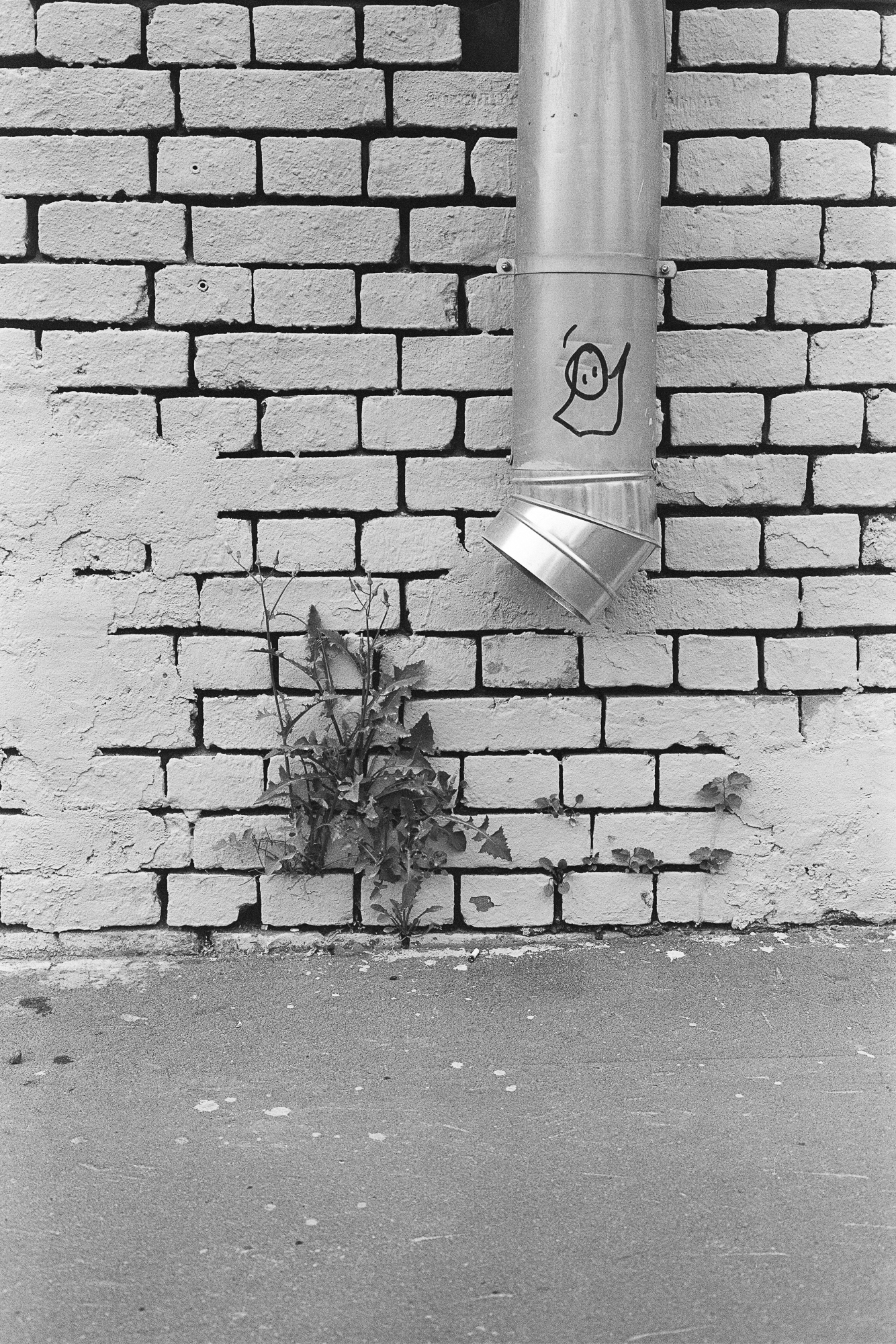
Представленная мне фотография — это вызов диалогической природе изображения и вещности окружающего мира. Этот снимок — не просто результат жеста фотографа, но и свидетельство отношений между человеком и аппаратом, между создателем и инструментом.

Здесь, в этом изображении, труба, стена и растение перестают быть «реальными» вещами. Они становятся элементами концептуальной вселенной, визуальными символами, которые «указывают» на смысл, а не содержат его. Камера — не просто устройство, фиксирующее реальность, но интерфейс, способный преобразовывать объекты в концепты.

Образ трубы, слегка наклонённой и отмеченной графическим знаком, становится метафорой функциональности, превращённой в культурный текст. Сам акт нанесения рисунка на трубу — пример той «игры», которую человек ведёт с объектами индустриального мира. Граффити превращает трубу в носителя значения, в медиум коммуникации. В то же время растение, растущее на фоне кирпичной стены, бросает вызов самой индустриальности, создавая контраст между органическим и искусственным, живым и статичным.

Кирпичная стена, ровная и упорядоченная, символизирует созданную человеком структуру, однако её трещины обнаруживают хаотическую силу природы, которую невозможно полностью подчинить. Это напряжение между подлинным, природным и индустриальным вводит нас в новый мир, где привычное стремление к контролю разрушается собственной логикой.

Однако решающим здесь является сам акт фотографирования. Фотограф выступает как «программист», работающий с «памятью» аппарата. Выбор угла, кадрирования и соотношений между объектами — это процесс, извлекающий изображение из потока случайности и наделяющий его смыслом. Аппарат, несмотря на свою холодную функциональность, становится инструментом культурного выражения, а фотограф, взаимодействуя с ним, не просто фиксирует, но создаёт.

Эта работа раскрывает сущность фотографии как коммуникации. Она говорит не только об объектах внутри кадра, но и о взгляде, который их воспринял, о человеке за камерой и о нас — зрителях этого изображения. Мы становимся частью этого визуального диалога, превращаясь из пассивных наблюдателей в интерпретаторов.

Эта фотография — не просто объект; это текст, который мы читаем. И в этом заключается её подлинная ценность.

#Fujica6x9
#ПосмертныйВзгляд


An Essay in the Spirit of Vilém Flusser

The photograph presented here challenges both the dialogical nature of images and the apparent objecthood of the world. It is not merely the result of a photographer’s gesture, but a manifestation of the relationship between human and apparatus, between operator and program.

Within this image, the pipe, the wall, and the plant cease to function as “things.” They are transposed into elements of a conceptual universe — visual symbols that do not contain meaning but rather point toward it. The camera is no longer a recording device; it operates as an interface that translates objects into concepts.

The pipe, slightly inclined and marked by a graphic intervention, becomes a metaphor for functionality re-coded as cultural text. The act of inscribing it is an instance of “play” — the human engagement with the technical objects of the industrial world. The graffiti transforms the pipe into a carrier of meaning, into a medium of communication. In contrast, the plant growing against the brick wall introduces a counter-gesture: the organic confronting the artificial, the living interrupting the static.

The brick wall, regular and structured, stands as a symbol of human design, yet its cracks reveal the intrusion of entropy — the force of nature that resists total control. This tension between the natural and the industrial exposes a field in which the very logic of control begins to unravel.

What is decisive, however, is the act of photographing itself. The photographer functions as a “programmer,” operating within the memory of the apparatus. Framing, angle, and the relational arrangement of objects are not neutral choices but acts that extract an image from the flux of contingency and inscribe it with meaning. The apparatus, despite its technical rigidity, becomes a vehicle of cultural expression, and the photographer, in dialogue with it, produces rather than merely records.

This work reveals photography as a form of communication. It speaks not only of the objects it depicts, but of the gaze that constituted them, of the operator behind the camera, and of us — the viewers who complete the circuit. We are no longer passive spectators; we become interpreters within a visual dialogue.

The photograph is not an object. It is a text to be read — and it is in this that its significance resides.

#Fujica6x9
#PosthumousGaze

An essay written as if by Roland Barthes

«Смерть автора, рождение знака»
Эссе, написанное как если бы его автором был Ролан Барт

Эта фотография — не просто изображение, но текст, который я читаю в своём воображении. Она разворачивается передо мной как поле знаков, бесконечно наслоённых друг на друга, каждый из которых призывает меня к интерпретации, деконструкции и погружению в её двусмысленность. Образ становится пространством смыслов, где автор исчезает, оставляя нас наедине с объектом — знаком, требующим прочтения.

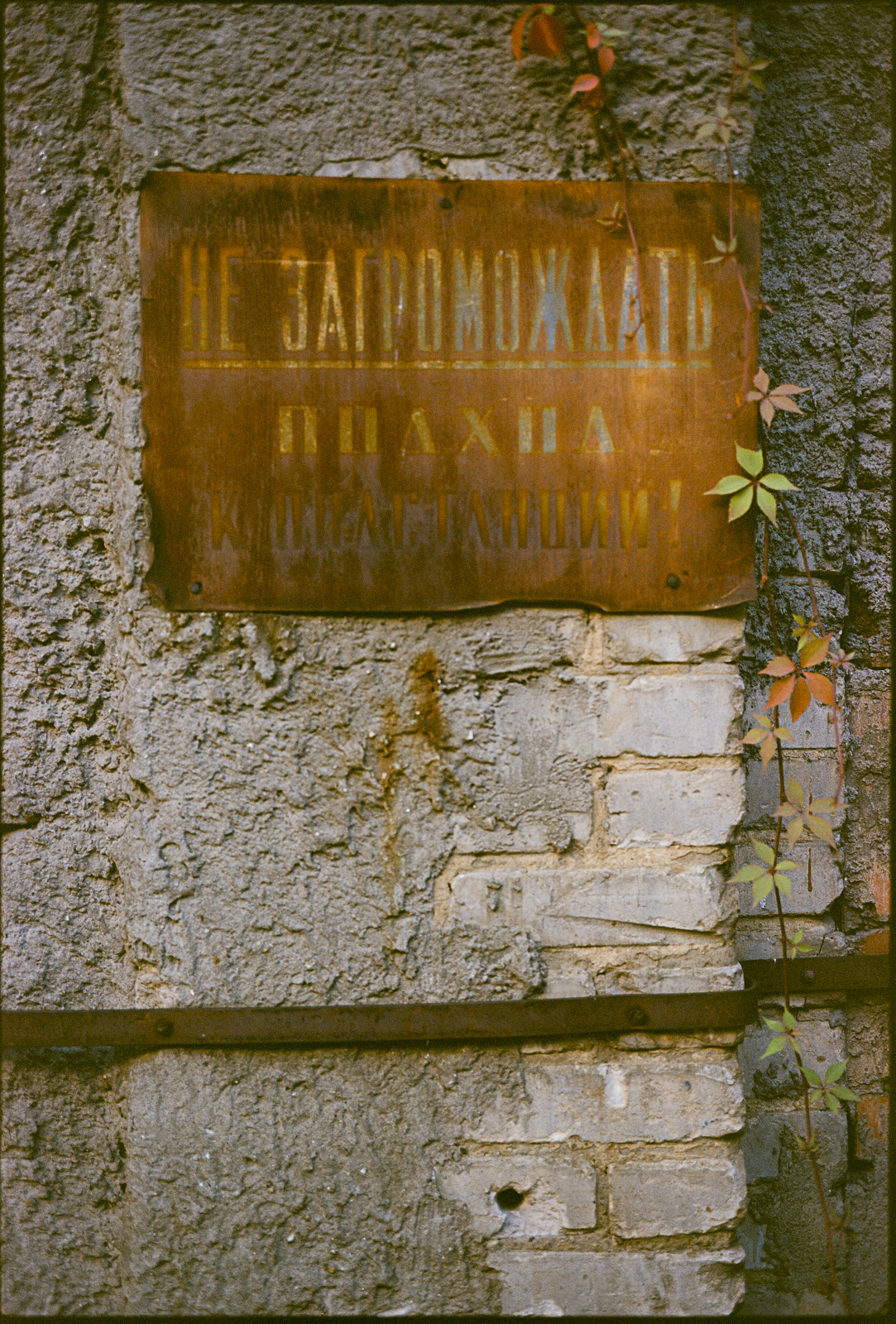
В центре композиции мы видим табличку с надписью: «Не загромождать проход к котельной». На первый взгляд — это простое утилитарное предписание, предупреждение, реликт индустриальной эпохи. Но её расположение, степень изношенности и взаимодействие с природой создают особое семиотическое напряжение. Этот объект более не функционирует в своём буквальном смысле. Он становится символом прошлого, которое, проходя через забвение, превращается в поэзию.

Ржавчина на табличке говорит о времени — о его разрушительной и, парадоксальным образом, созидательной силе. Это уже не просто утрата, но новый уровень присутствия. Металл, разъедаемый распадом, рассказывает историю, которую я, как зритель, могу лишь вообразить. Эстетика запустения становится приглашением к размышлению: что это был за проход, к кому или к чему он вёл?

Потрескавшаяся стена — это фактура, палимпсест, скрывающий под собой бесчисленные прошлые слои. Она не молчит; напротив, она шепчет о времени, о смене эпох, о человеческом труде и его следах. Листья дикого винограда, ползущие вдоль стены, бросают вызов самому времени. Природа утверждает своё господство, смягчая руины своей органической настойчивостью.

И всё же, несмотря на это богатство смыслов, фотография сопротивляется окончательной интерпретации. Она остаётся открытой, подобно знаку, который постоянно ускользает от финального прочтения. В этом и заключается её сила. Фотограф отступает в тень, позволяя объектам говорить. Я вижу лишь то, что уже существует: табличку, стену, листья. Но в пространстве фотографии эти элементы трансформируются, становясь независимыми от своего первоначального назначения.

Фотография становится пространством, где сходятся культура и природа, время и его распад, память и её утрата. Она пробуждает во мне, зрителе, желание вновь и вновь возвращаться к её знакам, читая их каждый раз иначе. «Смерть автора» здесь оборачивается рождением нового смысла.

#Fujica6x9
#ПосмертныйВзгляд


“The Death of the Author, the Birth of the Sign”
An essay in the manner of Roland Barthes

This photograph is not simply an image, but a text I read within the space of my imagination. It unfolds as a field of signs, infinitely stratified, each layer inviting interpretation, deconstruction, and a surrender to ambiguity. The image becomes a site of meaning in which the author dissolves, leaving us alone before the object — a sign that insists upon being read.

At the center of the composition appears a sign bearing the inscription: “Do not block the passage to the boiler room.” At first glance, it is merely a utilitarian directive, a warning — a residue of the industrial age. Yet its placement, its erosion, and its entanglement with nature produce a distinct semiotic tension. The object no longer functions in its literal capacity; it has drifted into the realm of the symbolic, where the past, passing through oblivion, becomes poetic.

The rust upon the sign speaks of time — of its destructive force and, paradoxically, its generative power. What we witness is not mere loss, but a transformed presence. The metal, consumed by corrosion, narrates a story that I, as viewer, can only reconstruct in imagination. The aesthetics of desolation become an invitation: what was this passage, and toward whom — or what — did it lead?
The fractured wall presents itself as texture, as palimpsest, concealing innumerable prior inscriptions. It does not remain silent; rather, it murmurs of time, of successive epochs, of human labor and its residual traces. The wild grapevine creeping along its surface stages a quiet defiance against time itself. Nature reasserts its dominion, softening the ruin through its persistent organic gesture.

And yet, despite this proliferation of meaning, the photograph resists closure. It remains open, like a sign that perpetually evades its final reading. Herein lies its force. The photographer withdraws into shadow, allowing the objects to speak. I perceive only what is already there — the sign, the wall, the leaves — yet within the photographic frame these elements are transfigured, emancipated from their original function.

Thus the photograph becomes a space in which culture and nature, time and decay, memory and loss converge. It awakens in me, the viewer, a desire to return, again and again, to read its signs otherwise. Here, the “death of the author” is inseparable from the birth of meaning.

#Fujica6x9
#PosthumousGaze