“The new nothing”
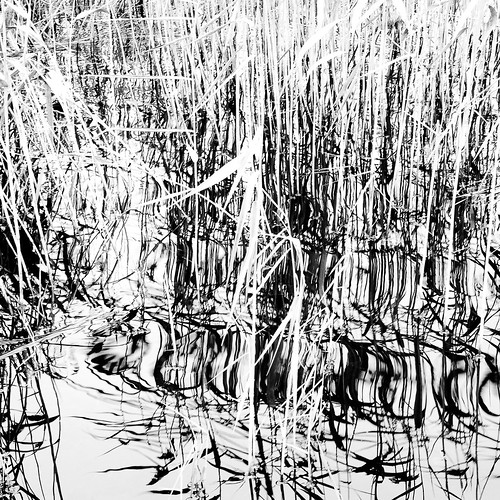
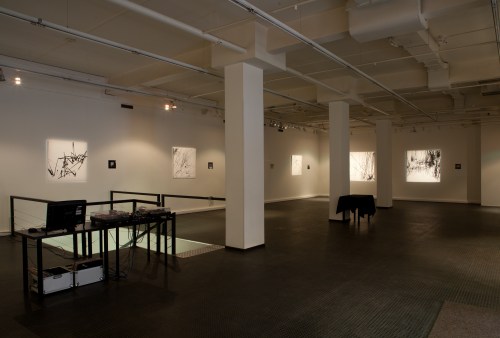
На протяжении последних лет Максим Ксута выстраивает совершенно особые отношения с фотографией: он последовательно снимает или ослабляет жёсткую связь фотографического изображения с видимой реальностью. Камера в его руках перестаёт быть инструментом «обнажения» или «выявления» реальности, перестаёт служить средством фиксации её в максимально концентрированном виде. Напротив, она словно преодолевает собственную технологическую природу. Сам Ксута уже не нажимает на кнопку затвора — он словно рисует кистью или угольным карандашом.
Сознательно формируя не кадр, а лист с геометрическими абстракциями, его работы начинают подчиняться законам рисовального листа, а не фотографического отпечатка, как это было в предыдущей серии с электрическими проводами, рассекающими московское небо динамичными диагоналями.
Тема новейшего проекта Ксуты выглядит ещё более изобретательной, поскольку отправной точкой визуальных экспериментов становится другое произведение искусства — творчество великого американского абстракциониста Сая Туомбли.
Ксута не наслаждается пропорциями, балансом пустот и цветовых «нервных» зон, не занимается расшифровкой кодов Туомбли, отсылающих ко всей мировой культуре и истории. Он пристально и напряжённо всматривается. Его взгляд вычленяет, изолирует сложное движение карандашных линий. При этом очевидно, что Ксута искренне заворожен свободой жеста Туомбли — той непосредственностью, с которой художник перечёркивает, набрасывает и раскрашивает, словно ребёнок, впервые получивший перед чистым листом цветные мелки.
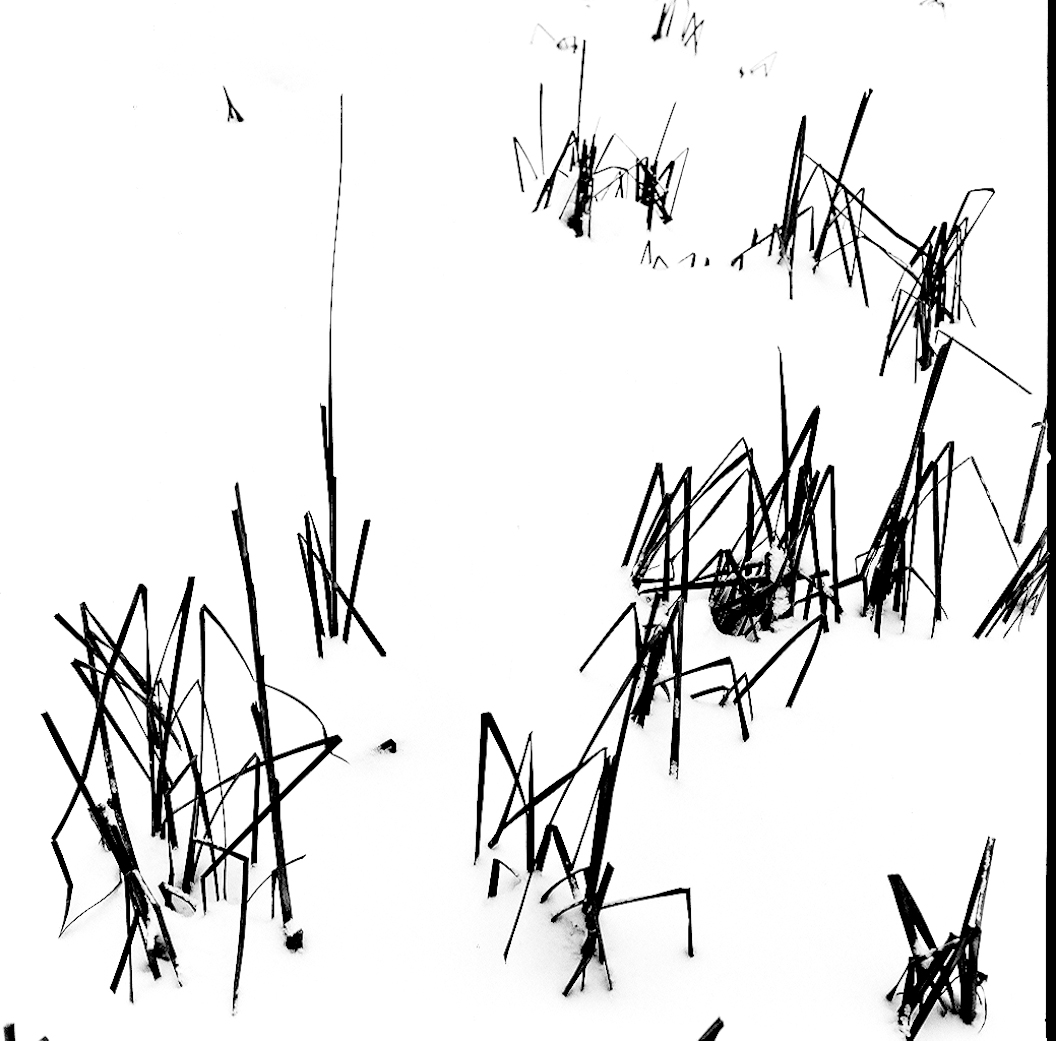
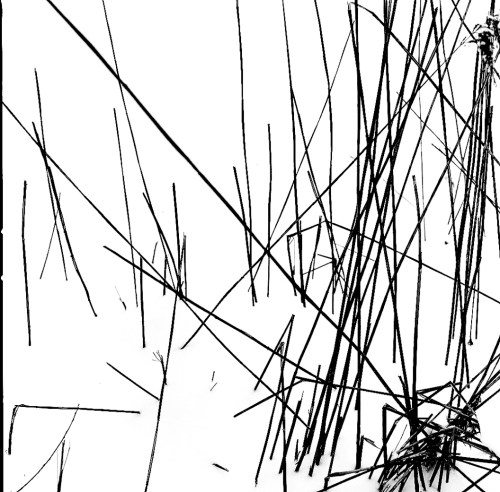
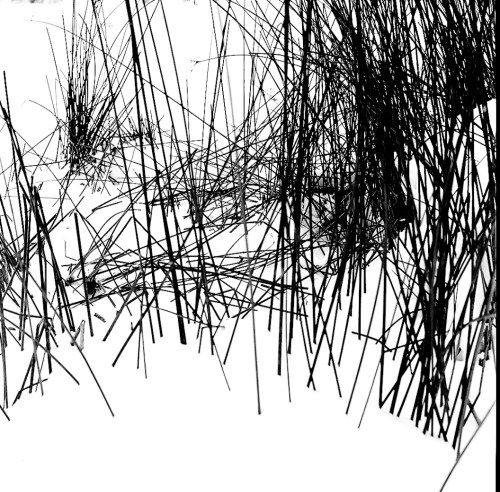
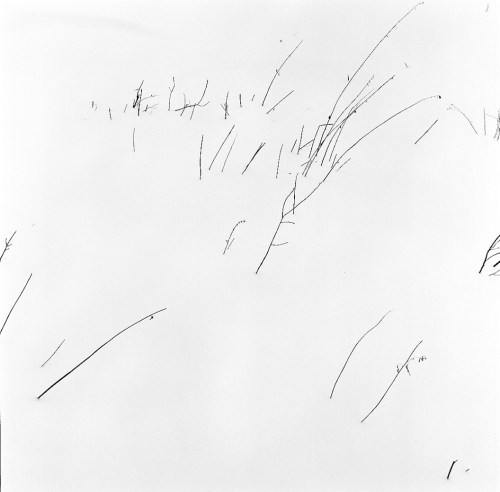
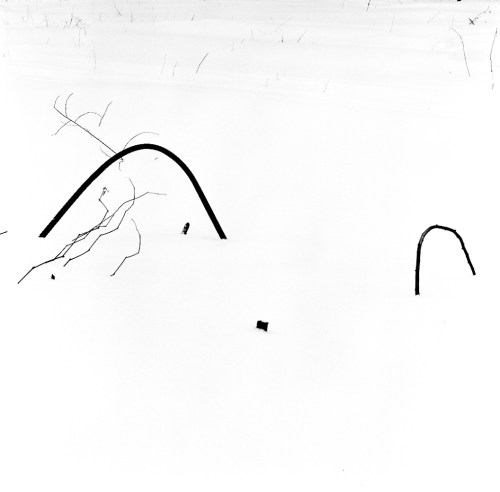
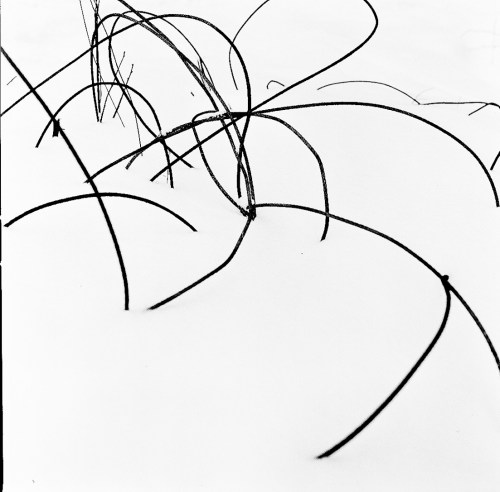
Ксуту занимает вопрос о природе этой свободы, о её идеальном прототипе. И он находит удивительные формальные соответствия между «письменами» Туомбли и теми палками, ветками, стеблями травы, что попадаются под ноги во время прогулки. Он создаёт своеобразный негатив картин Туомбли — чисто монохромную структуру, последовательно очищая Туомбли, проверяя жизнеспособность его пластики среди реальных природных объектов.
Таким образом, Ксута словно свидетельствует о естественном, самом органичном происхождении искусства Туомбли, делая динамику его форм буквальной и ощутимой. Это уже не условное движение цветовых потоков и линий в границах холста, а настоящая прогулка, во время которой художественные формы обнаруживаются у тебя под ногами, и неловким движением можно нарушить хрупкую гармонию.
Не случайно сам художник обращается к образу зачарованного леса — волшебного, почти сказочного пространства, где всё привычное вдруг чудесным образом обнаруживается заново. Прогулка по такому лесу превращается в аллегорию жизненного пути (или пути художника) — полностью в духе Новалиса.
Попутно Максим Ксута продолжает решать собственную задачу, которая занимает его в последнее время: он нащупывает едва уловимую зону, где абстрактное и конкретное сосуществуют. Конкретный объект часто воплощается в самой абстрактной форме, теряет узнаваемые очертания, но сохраняет свою сущность: ветка остаётся веткой, заросли полыни — зарослями полыни. Зритель зачаровывается игрой формы, мерцанием ощутимого и видимого — тому легко поддаться при взгляде на фотографии Ксуты.
Он следует логике «новой объективности», напоминая о немецкой «Neue Sachlichkeit». При этом, как и многие молодые европейские художники (в основном выходцы из Восточной Европы, одного поколения с Вильгельмом Сасналем), он видит в этом возможность тихого освобождения. Вдруг понимаешь, что диапазон вариаций может быть сколь угодно широким, и с ремесленным упорством (в самом лучшем смысле древней techne) продолжает двигаться по этому волшебному пространству, время от времени втягивая в свою орбиту великих художников XX века.
Екатерина Иноземцева
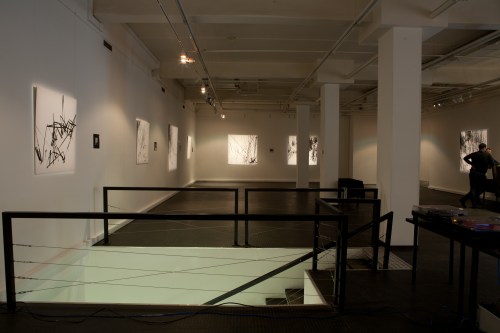
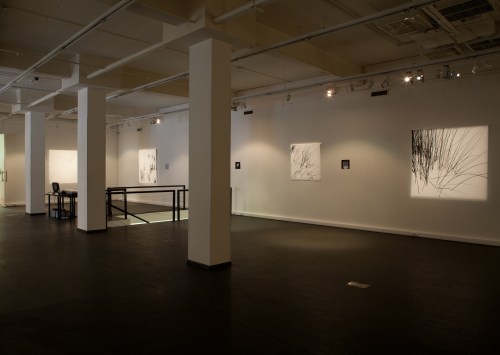
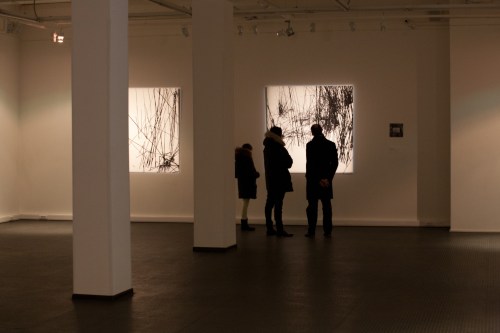
Over the course of recent years, Maxim Ksuta has been developing an entirely unique relationship to photography: he has consistently removed or weakened the firm bond between the photographic image and visible reality, the camera in his hands becoming not a means for “baring” or “revealing” reality or a means for freezing it in as concentrated form as possible – Ksuta’s camera, instead, almost appears to be overcoming the camera’s technological nature, and Ksuta himself, rather than pressing on the shutter button, appears to be painting with a brush or a charcoal pencil. He consciously forms not a shot but a sheet with geometric abstractions; his works begin to work to the laws of the drawing sheet, rather than the photographic print, as was the case in his previous series with electric cables cutting through the Moscow sky in dynamic diagonals.
The theme for Ksuta’s latest project appears to be far more inventive, because the starting point for the visual experiments turns out to be another work of art, specifically the work of the great American abstractionist Cy Twombly. Ksuta doesn’t relish the proportions, the balance of vacuums and the coloured “nervous” zones; he doesn’t occupy himself with deciphering Twombly’s codes, which reference the whole of world culture and history; he intently and intensively scrutinizes. His eye singles out, isolates the intricate movement of the pencil lines; at the same time it is clear that Ksuta is sincerely enraptured by the freedom of movement of Twombly, who crosses out, sketches and colours with the ingenuousness of a child who has been sat before a sheet of paper and given coloured crayons for the first time. Ksuta is posed a question about the nature of this freedom, of its ideal prototype, if you will, and finds astonishing formal correspondences in Twombly’s “writings” and the sticks, branches, blades of grass that fall under your feet during a walk. He creates a distinctive negative for Twombly’s paintings, a purely monochrome structure, consistently purifying Twombly, testing the viability of his plasticity among real natural objects. It is as if Ksuta is bearing witness to the natural, most organic provenance of Twombly’s art, making the dynamic of his objects literal, perceptible – this is not some conditional drive of colour flows, lines within the borders of a canvas, but a real walk, a stroll, during which the artistic forms are discovered beneath one’s feet, and with a clumsy movement one can disturb the fragile harmony. The appeals of the artist himself to the image of an enchanted forest, a magical, almost
fairytale space, where everything that is familiar is suddenly miraculously revealed is no accident in this regard, and a walk through this forest is transformed into an allegory of life’s path (or the path of an artist) that is entirely in the spirit of Novalis. Along the way, Maxim Ksuta ontinues to resolve his own task, a task that has occupied him in recent times: He is feeling out a barely perceptible zone where the abstract and the concrete coexist. The concrete object is often embodied in the most abstract of forms, it loses its recognizable outlines, but it retains its essence: a branch remains a branch, wormwood thickets remain wormwood, and the viewer is enchanted by the game of form, the glimmering of the perceptible and the visible that, when viewing Ksuta’s photographs, it is so easy to give in to. He follows the logic of a “new objectivity,” recalling in memory the German “Neue Sachlichkeit”; at the same time as many young European artists (for the most part coming from Eastern Europe, of the general of Wilhelm Sasnal), he sees in this an opportunity for quiet deliverance, he suddenly understands that the diapason of variations can be as broad as you like, and with an artisanal persistence (in the very finest sense of the ancient techne’) continues to move
through this magical space, sometimes drawing into his orbit the great artists of the 20th century.
Ekaterina Inosemtseva
Cy – catalog
В своё время мне довелось побывать на двух больших выставках американского художника Сая Туомбли. Первая — его масштабная ретроспектива в Tate Modern — стала моим первым знакомством с его творчеством. Вторая, проходившая в Dulwich Picture Gallery, поразила меня неожиданным сопоставлением двух, казалось бы, совершенно разных художников: Туомбли и Николя Пуссена.
Размышления о природе абстракции и творческом феномене этого загадочного, но, безусловно, великого художника долго не оставляли меня и со временем вылились в этот проект.
Тема поиска образов в окружающем мире интересует меня уже много лет. В данном случае мне было интересно найти и сфотографировать природные объекты, которые стихийно, спонтанно сложились в естественные абстракции. Фотографию я рассматривал здесь как инструмент для создания работ, находящихся на границе между графикой и живописью.
Рассматривая отснятые слайды, я заметил, что практически все кадры из этой серии удивительно напоминают абстрактные композиции Сая Туомбли. Это открытие вдохновило меня на поиск и отбор работ Туомбли, близких моим фотографиям по настроению, ритму и композиции.
Some time ago I had the opportunity to visit two major exhibitions of the American artist Cy Twombly. The first was his large-scale retrospective at Tate Modern, where I first became acquainted with his work. The second, held at Dulwich Picture Gallery, struck me with its unexpected juxtaposition of two seemingly completely different artists — Twombly and Nicolas Poussin.
Reflections on the nature of abstraction and the creative phenomenon of this enigmatic yet undoubtedly great artist stayed with me for a long time and eventually developed into this project.
The search for images in the surrounding world has long been one of my central interests. In this case, I set out to find and photograph natural objects that had spontaneously formed into organic abstractions. I treated photography as a tool for creating works that sit on the border between graphic art and painting.
While reviewing the developed slides, I noticed that almost every frame in the series strikingly resembled Cy Twombly’s abstract compositions. This discovery inspired me to search for and select works by Twombly that echo my photographs in mood, rhythm, and compositional structure.
Cy… Catalog best viewed reversals – (two pages on the view)!

 Maxim Ksuta