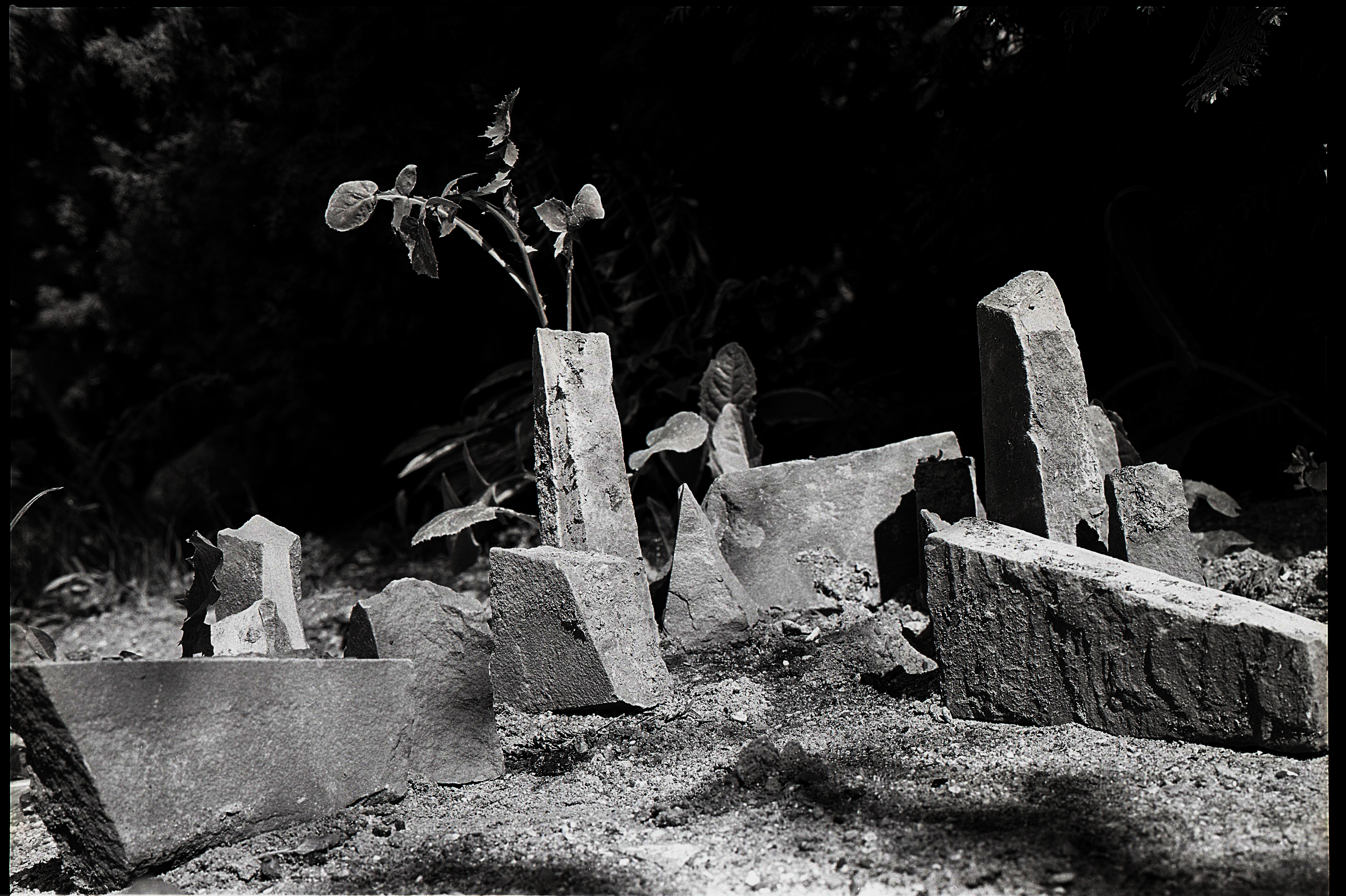
My objects from the series – “Exile from Eden” in the film.
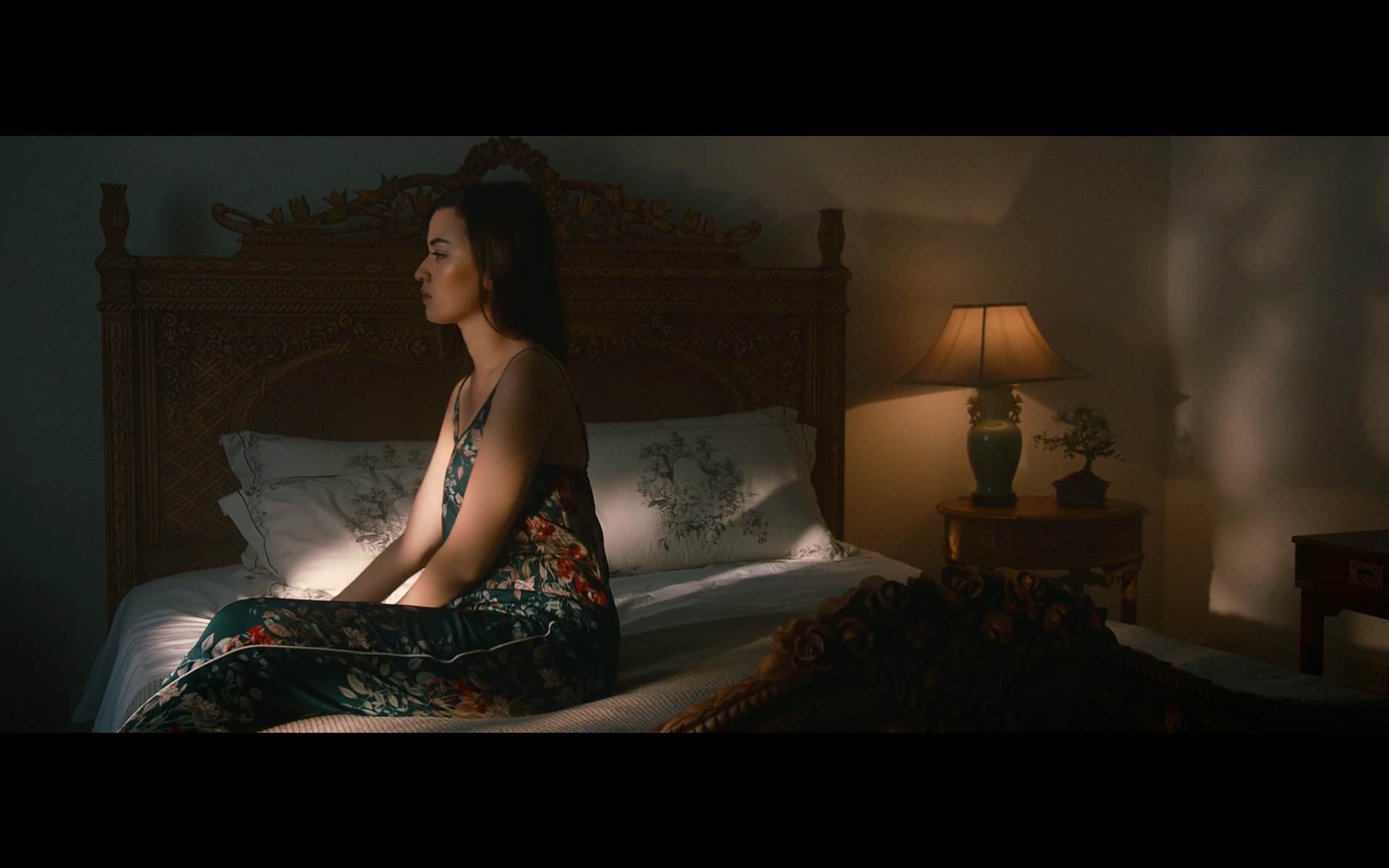

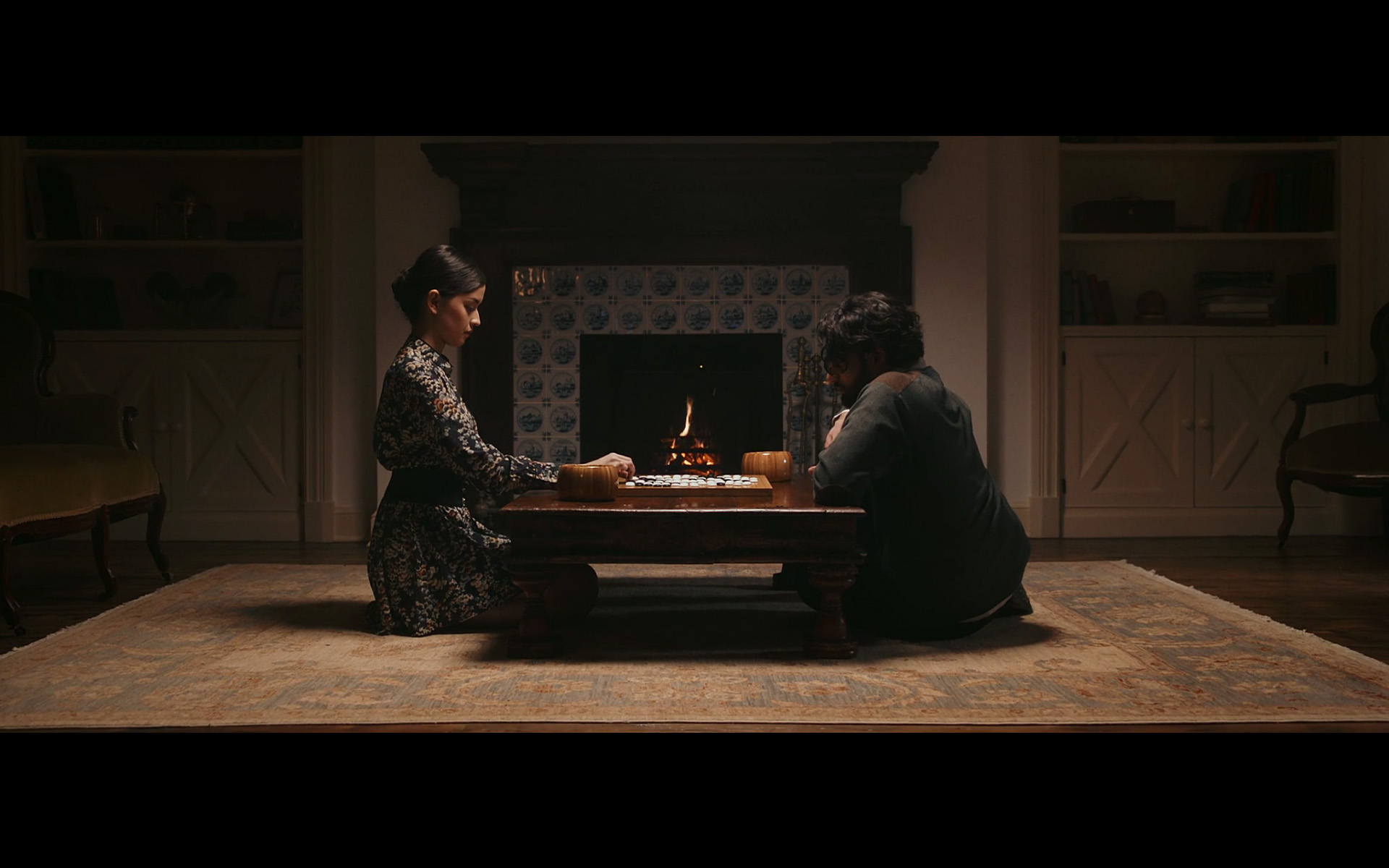
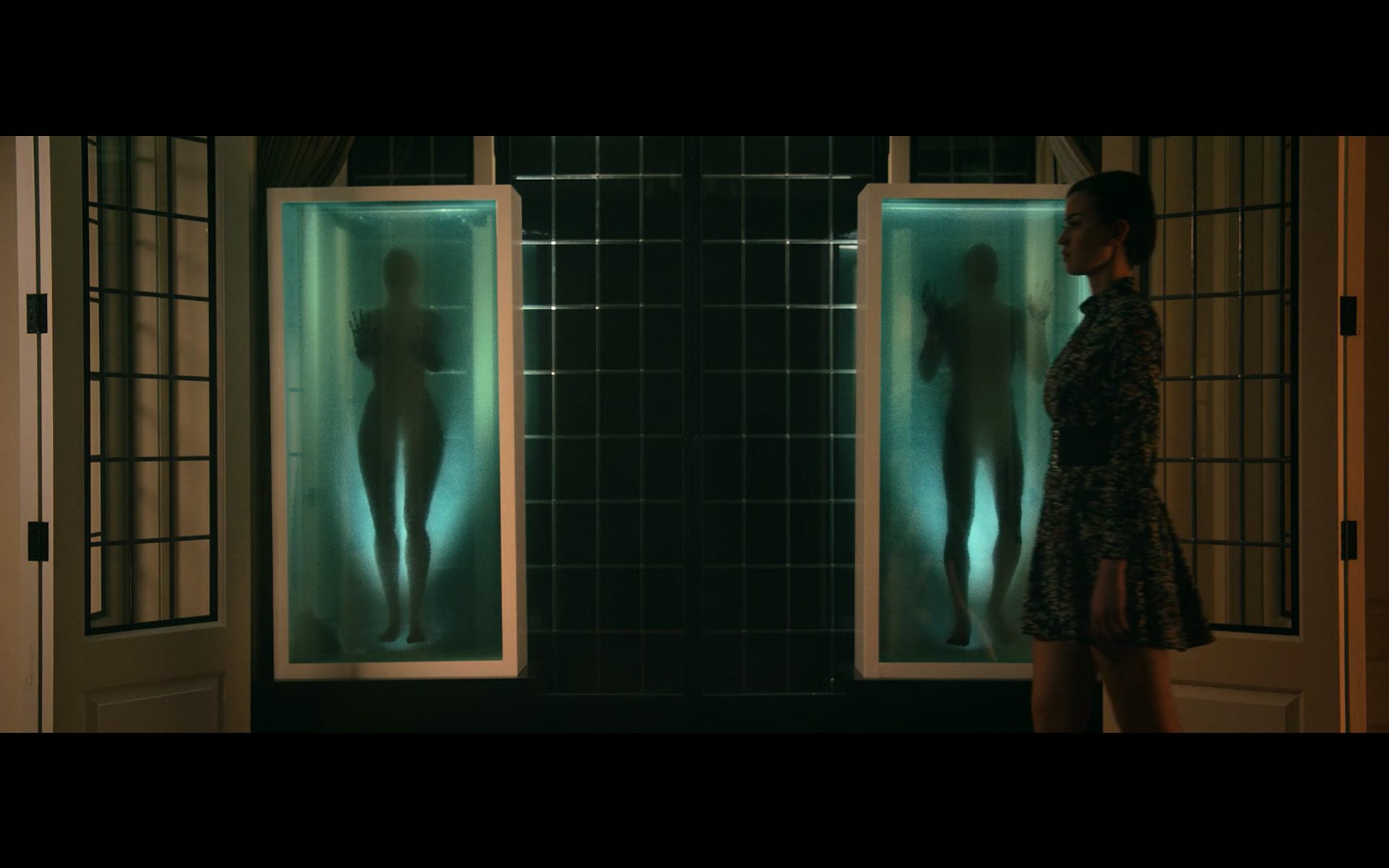
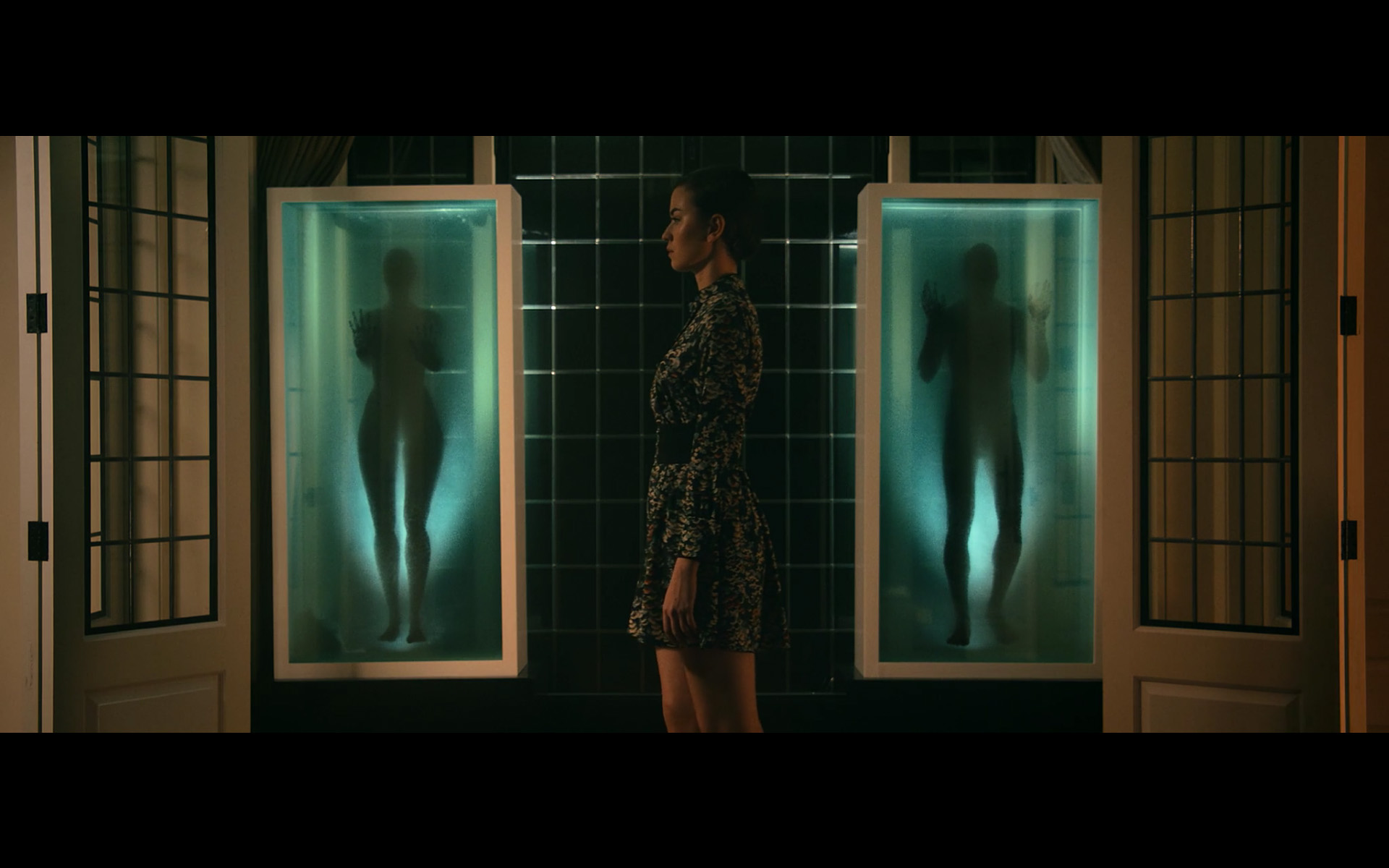
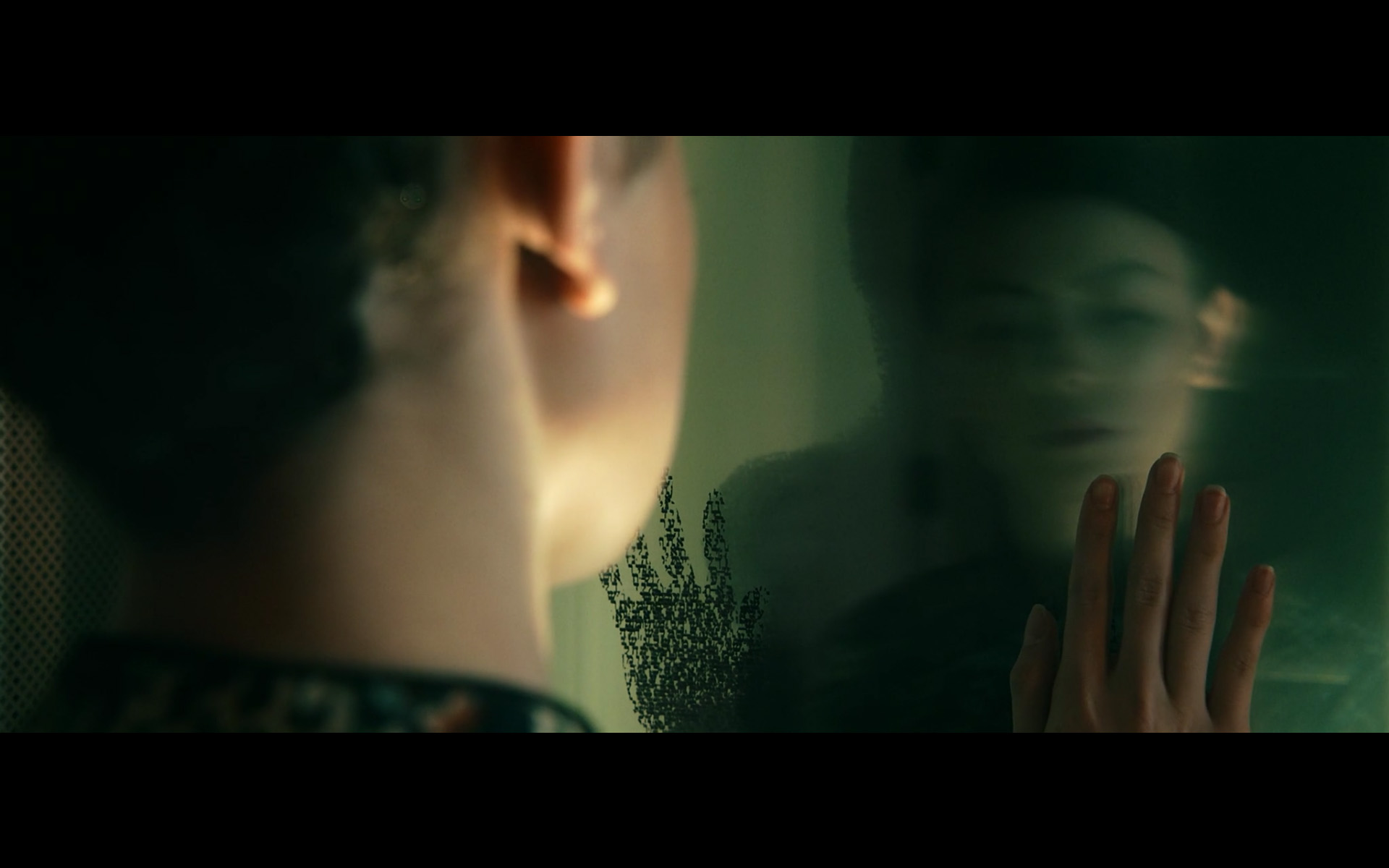
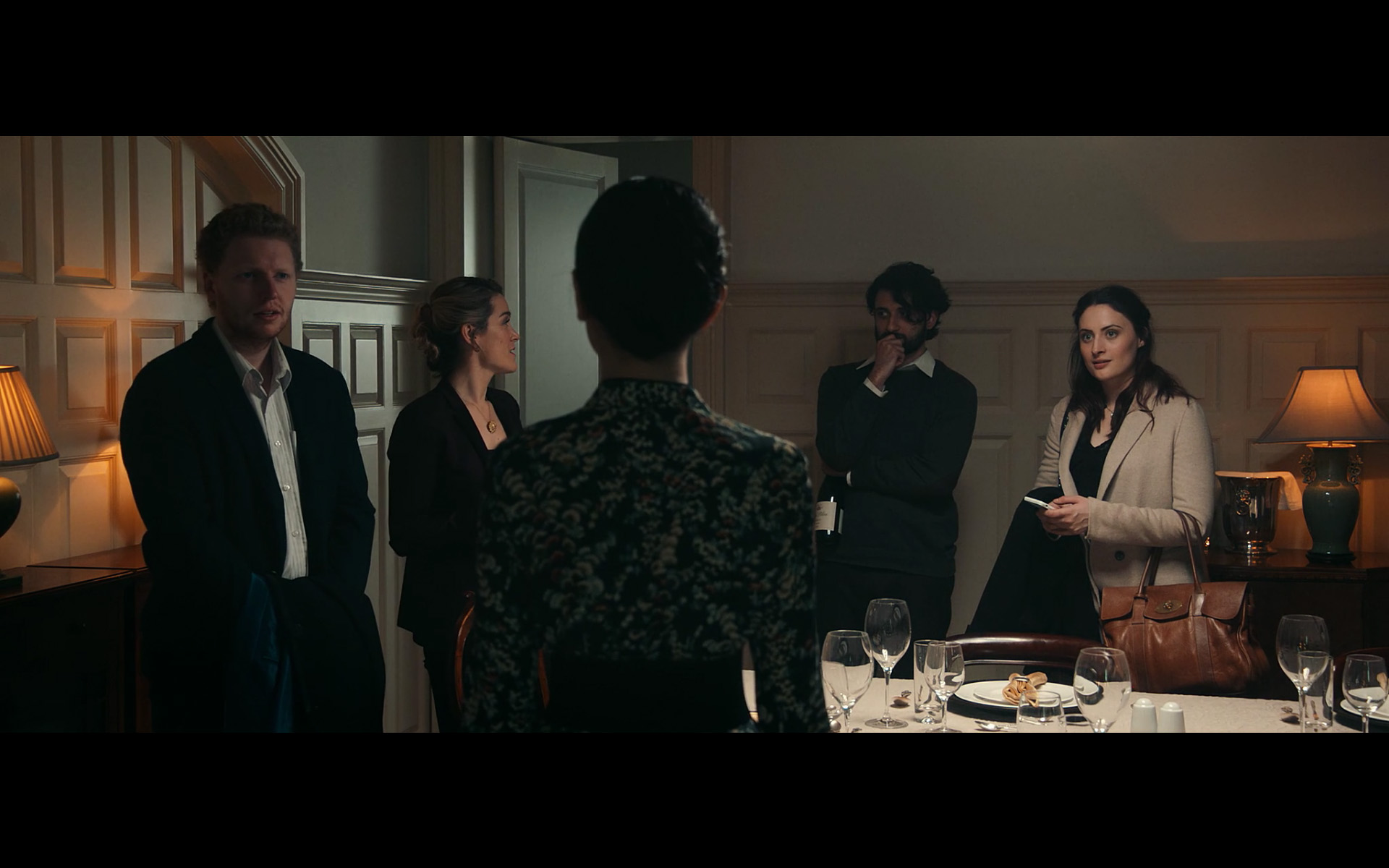
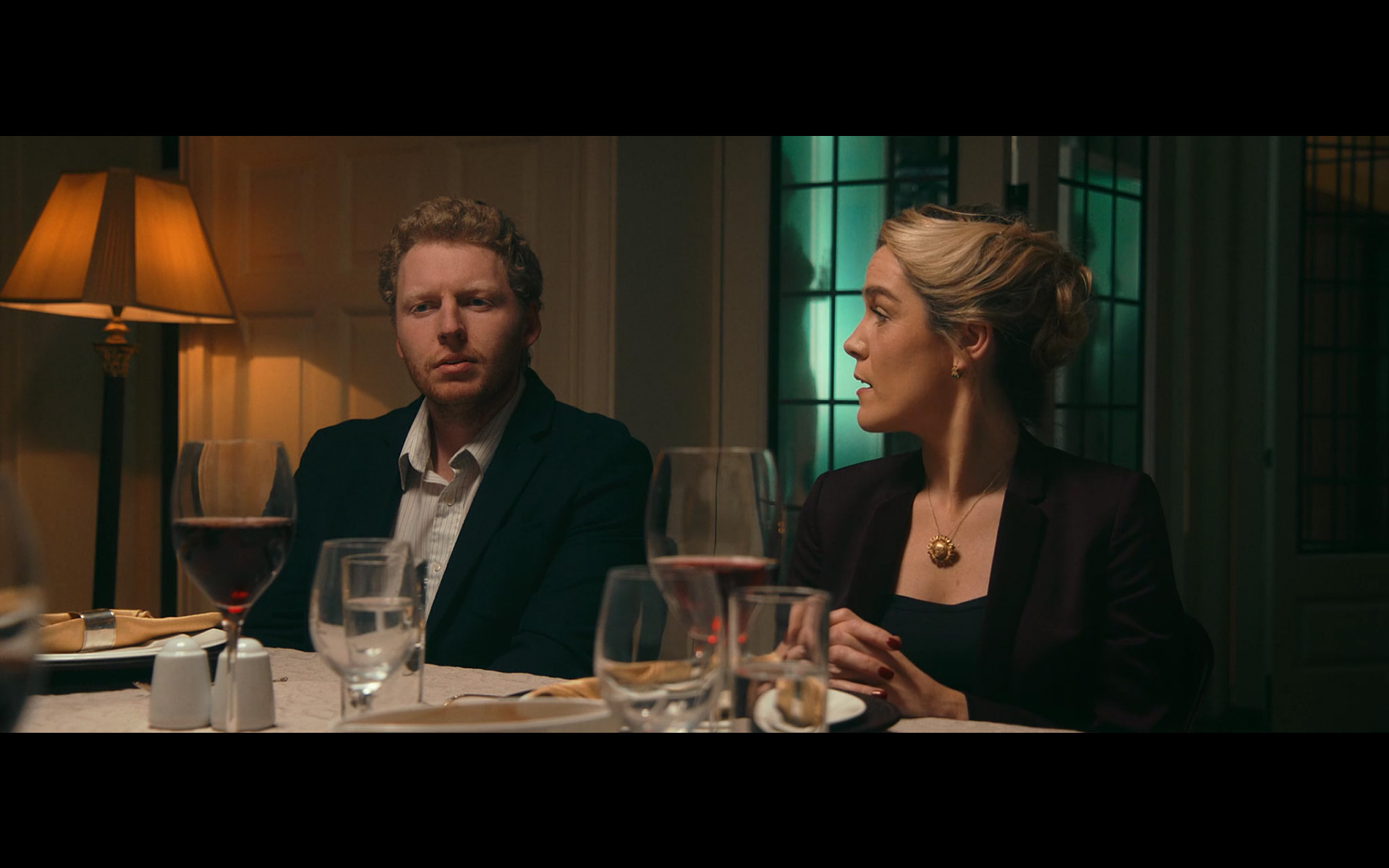
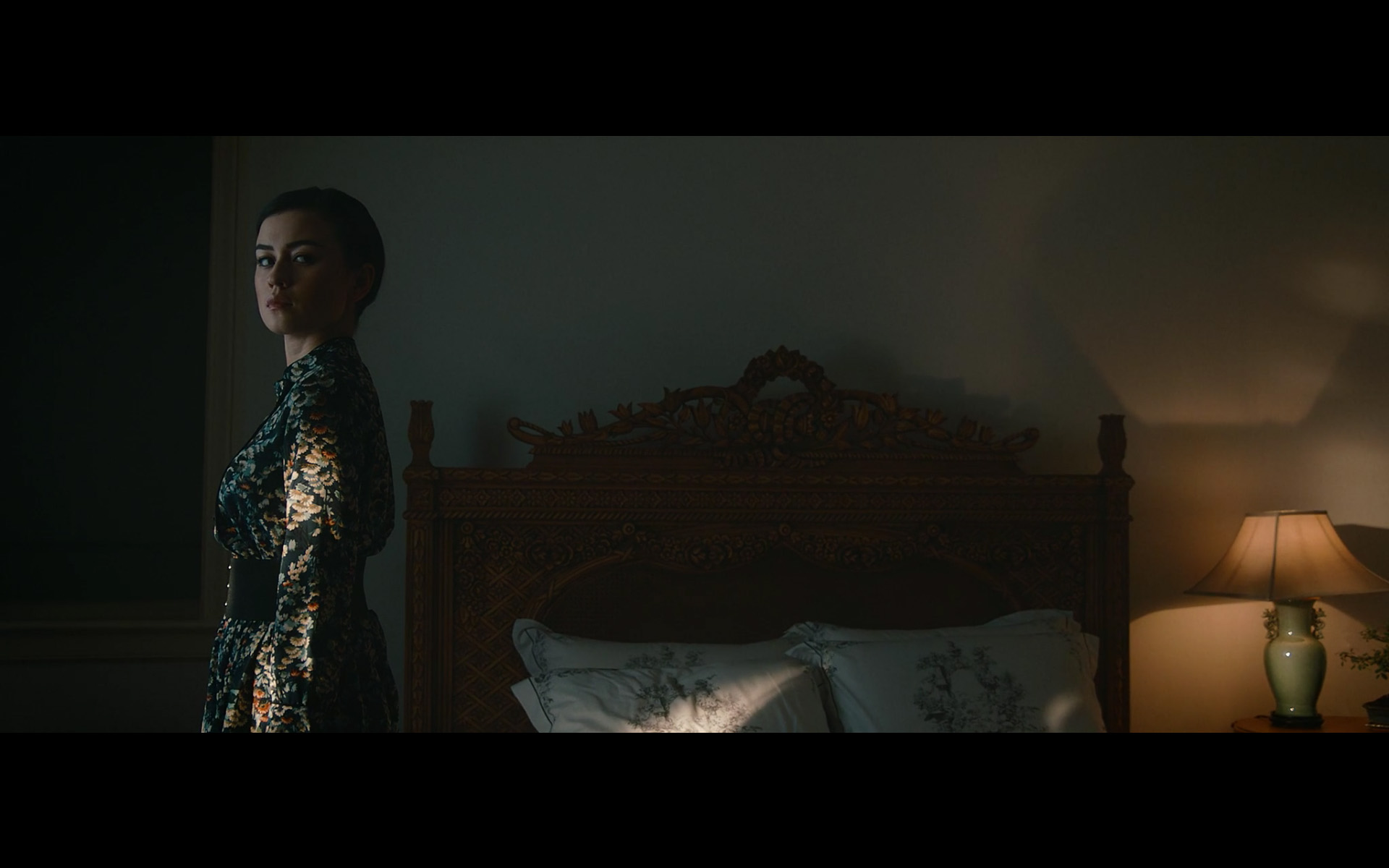
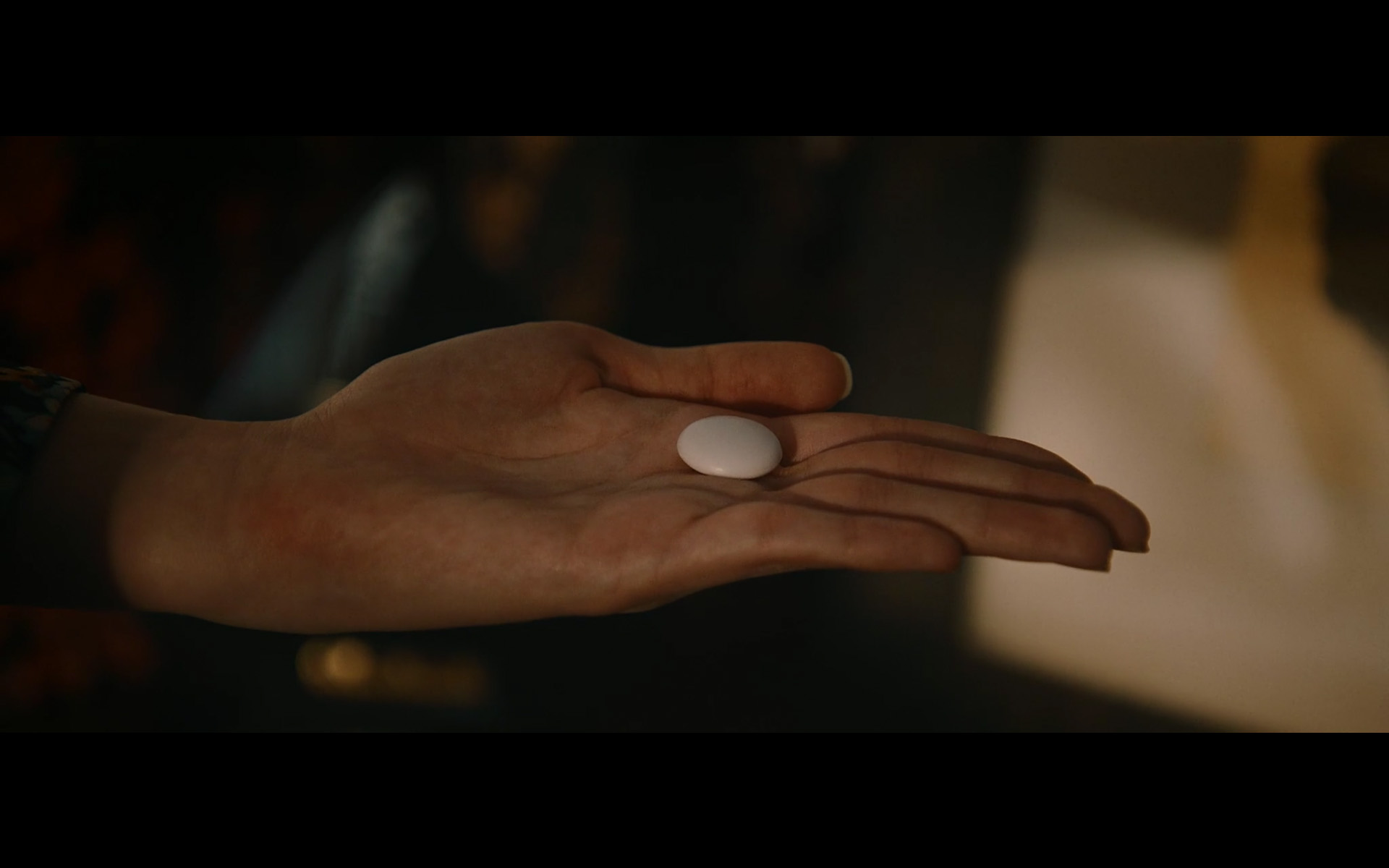
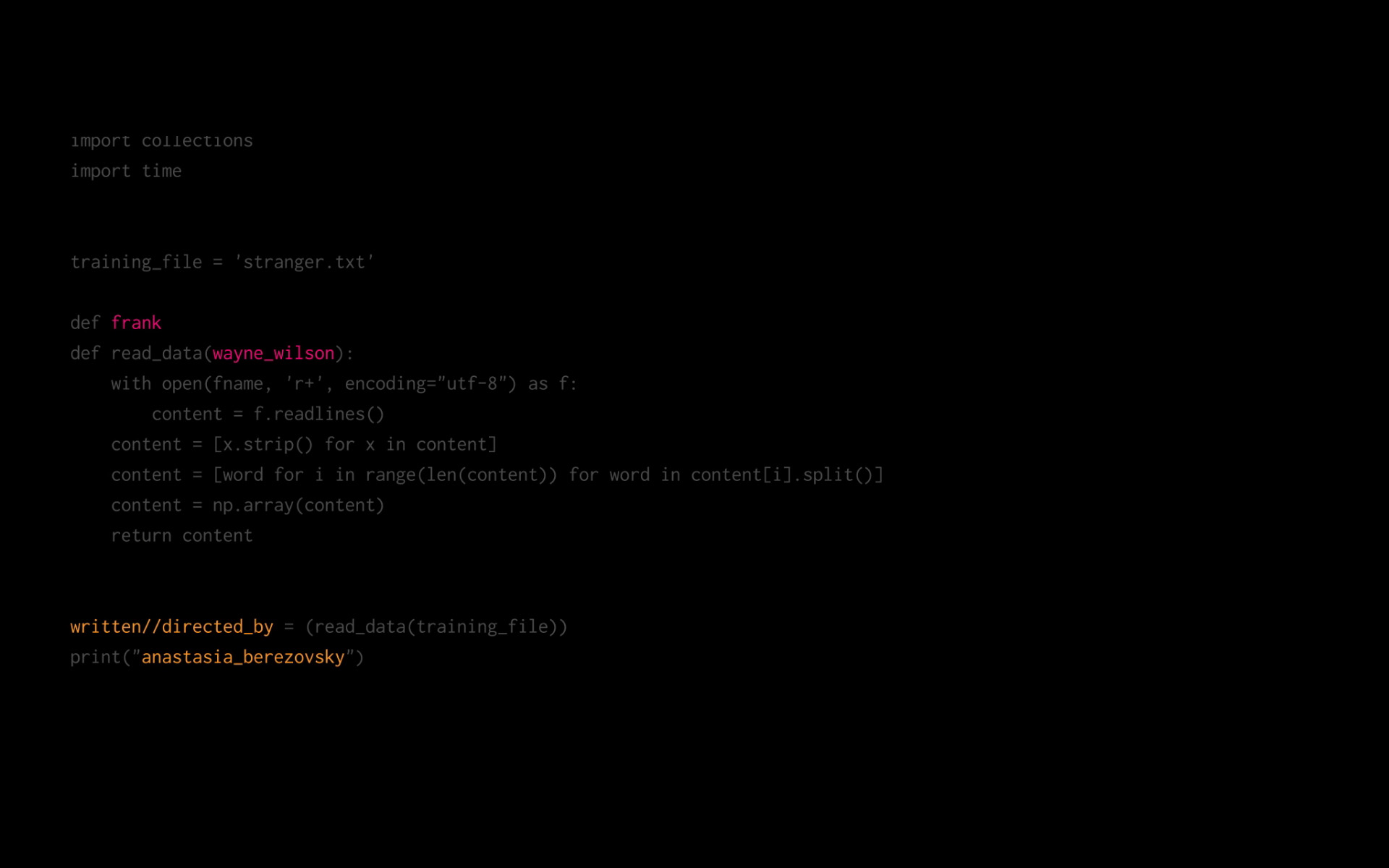
My objects from the series “Exile from Paradise” 2006\2007 in the film “AJI” directed by Anastasia Berezovsky, 2018
My objects from the series “Exile from Paradise” 2006\2007 in the film “AJI” directed by Anastasia Berezovsky, 2018
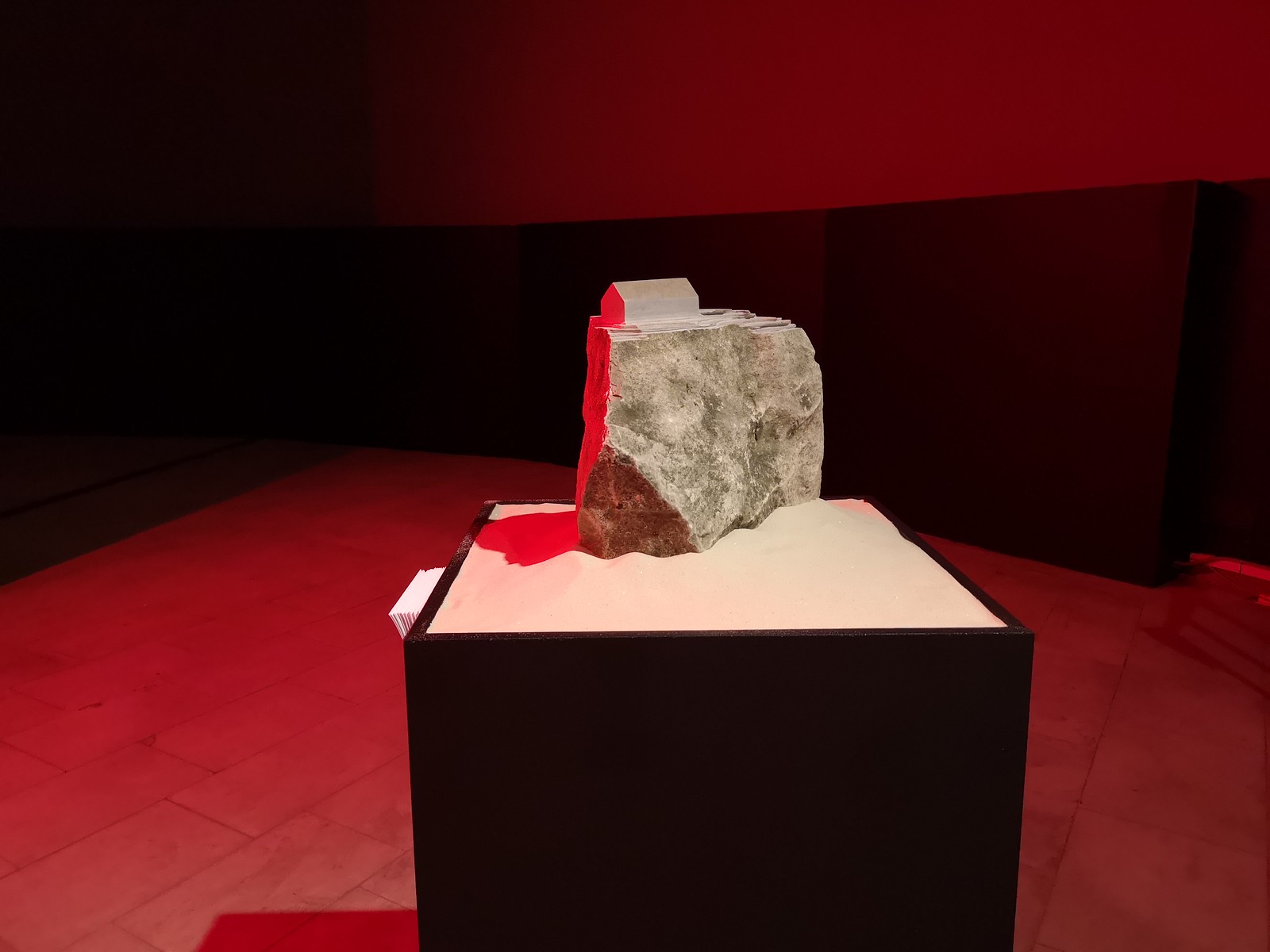
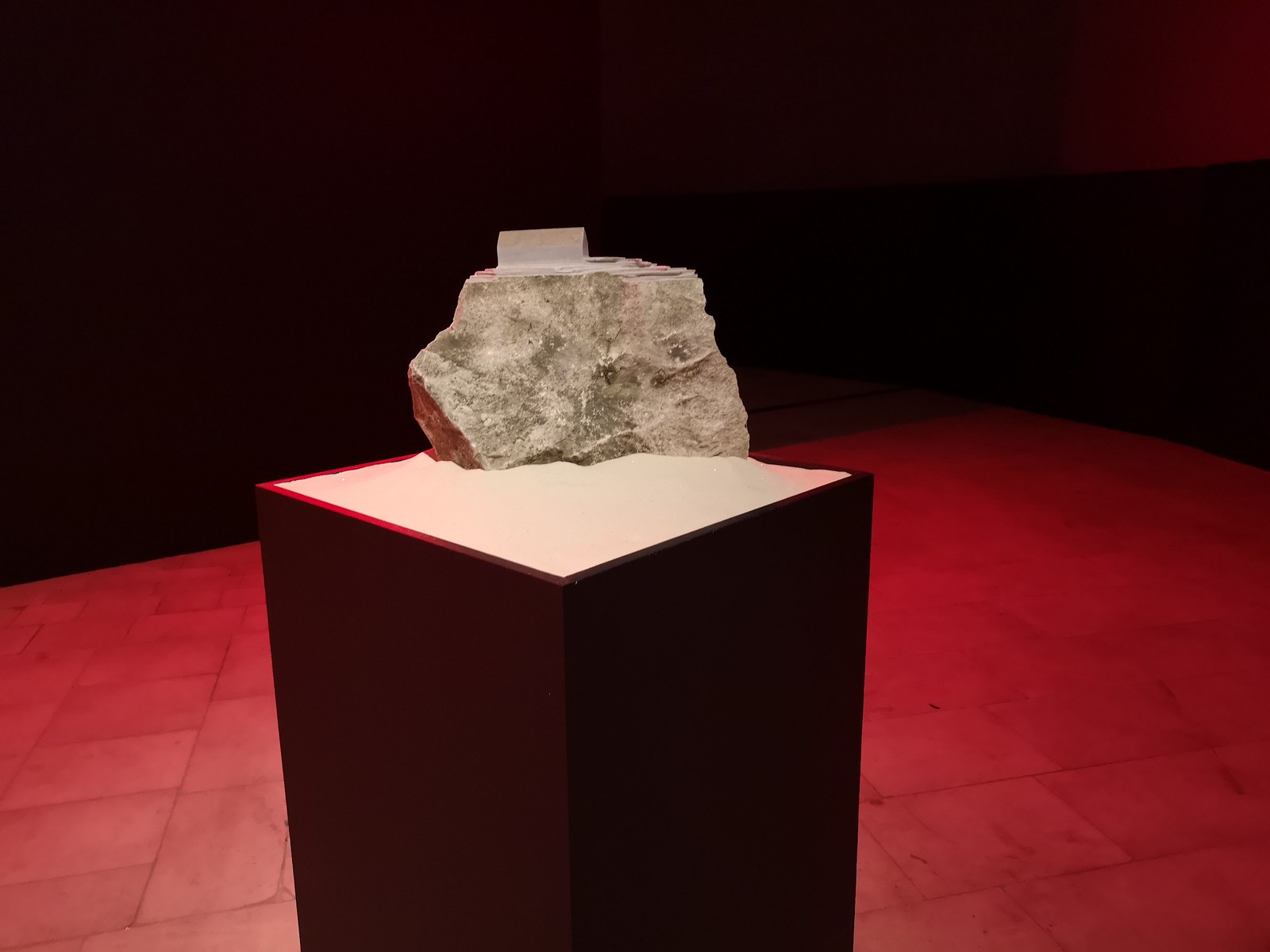
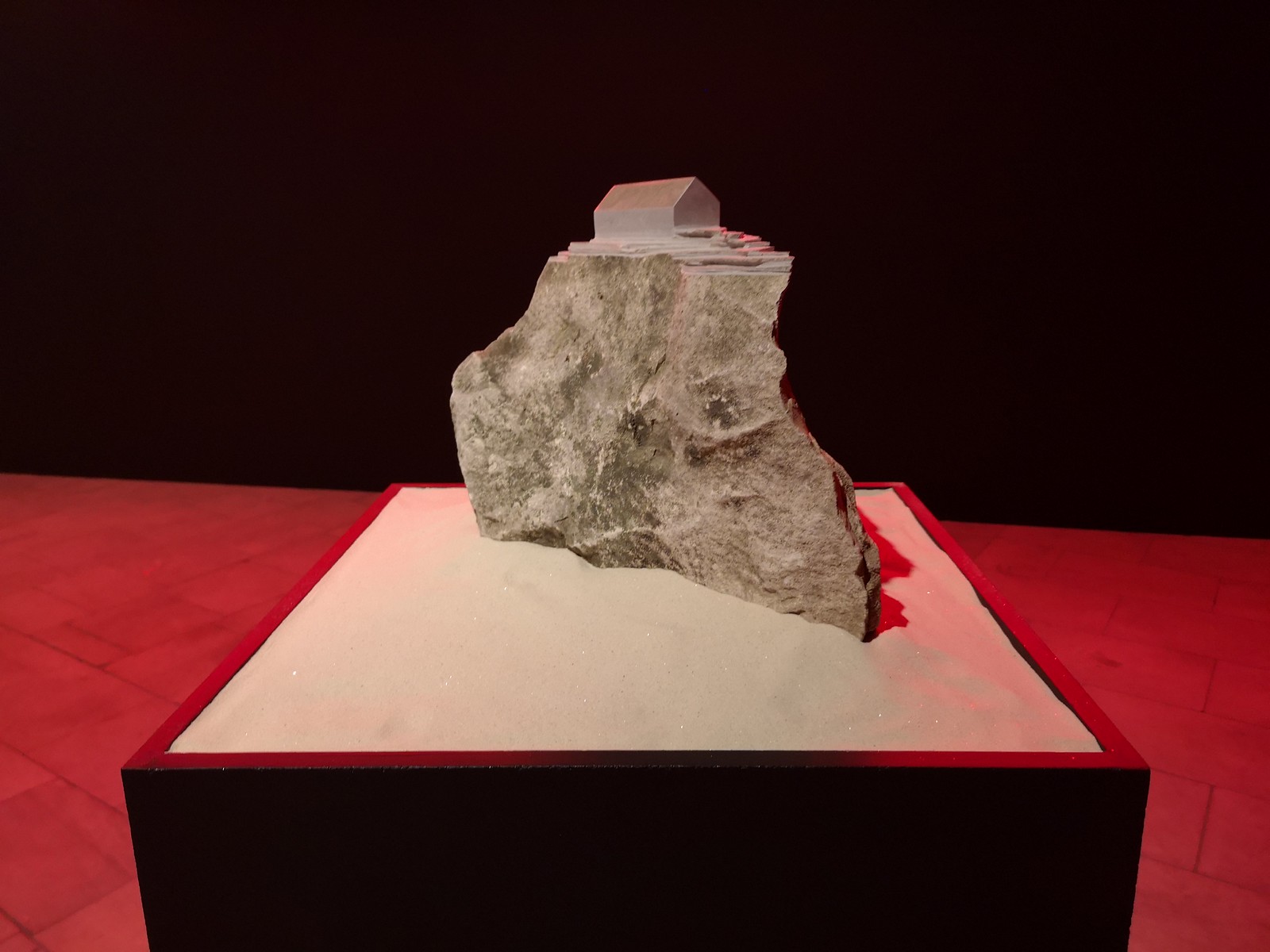
«Окраина» — выставка, организованная Отделом художественных исследований (Department of Research Arts), центром, специализирующимся на междисциплинарных проектах, сфокусированных на российской территории. Этот новый проект исследует жизнь на периферии и в пограничных регионах России, где «края» понимаются не только как государственные границы, но и как природные рубежи, ландшафтные разломы и пределы пространства.
Территории, которые исторически считались «удаленными», «оторванными» или «изолированными», обретают особую значимость в современном обществе, так как средства коммуникации стали органичной частью человеческой экосистемы и трансформировали наше восприятие пространства. Окраины стали ближе, чем когда-либо, но все еще остаются в некотором роде дистанцированными. Это могут быть как пространства внутри страны, так и приграничные области.
Связность пространства — как в России, так и во всем мире — неоднородна, что порождает современные формы географического неравенства. Эта неоднородность проявляется в том, что одни части страны хорошо изучены, в то время как другие остаются «белыми пятнами»; проект берет это несоответствие за отправную точку.
Выставка открывается документальными проектами, каждый из которых представляет интерпретацию архивных или документальных свидетельств (фотографий, официальных документов, эскизов, полевых заметок, видео), посвященных окраинным регионам.
Отдельную часть проекта составляет «постоянная экспозиция». В нее входят живопись и фотография, воссоздающие образ окраины с разной степенью визуальной детализации. Раздел дополнен библиотекой, позволяющей глубже изучить историю российского пространства и его ключевые социальные, философские и художественные концепции.
В третьей части экспозиции акустический опыт становится столь же важным, как и визуальный. Зритель погружается в пространство окраины через инсталляции и объекты.
Проект реализован при поддержке Фонда президентских грантов.
At the Fringes is an exhibition organized by the Department of Research Arts, a center for artistic research focused on the Russian landscape. This project explores life on the periphery and within Russia’s borderlands, where “fringes” are defined not only as state borders but also as natural boundaries, territorial divides, and the limits of physical space.
Areas historically viewed as “remote,” “disconnected,” or “isolated” have gained new relevance in today’s society. As communication technologies have become integrated into the human ecosystem, they have fundamentally transformed our perception of distance. These fringes—found both deep within the country’s interior and along its borders—are closer than ever, yet they retain a sense of profound detachment.
Spatial cohesiveness, both in Russia and globally, is non-uniform, giving rise to modern forms of geographic inequality. This disparity is evident in the contrast between well-documented regions and those that remain terra incognita; the project uses this gap as its conceptual starting point.
The exhibition opens with documentary-based projects, each offering an interpretation of archival records—photographs, official documents, sketches, field notes, and video—covering various fringe regions.
A distinct section of the project serves as its “core collection.” It comprises paintings and photography that reconstruct the imagery of the periphery with varying degrees of abstraction and detail. This is complemented by a library section offering insights into the history of Russian space and its landmark social, philosophical, and artistic concepts.
In the final part of the exposition, the acoustic experience is prioritized alongside the visual. The audience is immersed in the atmosphere of the fringes through multisensory installations and objects.
The project is supported by the Presidential Grants Foundation.
Evgeniya Buravleva, Sofya Gavrilova, Alexander Gronsky, Maria Gruzdeva, Olga Davydova, ZAPOVEDNIK research group, Elizaveta Konovalova, Taisia Korotkova, Alexey Korsi, Maxim Ksuta, Anton Kuznetsov, Alexander Morozov, Ivan Napreenko, Valeri Nistratov, Sergey Novikov, Nikolay Onischenko, Pavel Otdelnov, Alexander Povzner, Egor Plotnikov, Sergei Prokofiev, Igor Samolet, Maria Safronova, Maxim Sher, Natasha Timofeeva.
Галерея «Триумф» (Москва) представит своих ключевых художников на выставке «Другие берега» в Манеже. Этот проект исследует возможности сохранения и передачи опыта и знаний через личные заметки, карты и маршруты. В основе выставки лежит идея «психогеографического дрейфа» — изучения городской среды через личный эстетический и эмоциональный опыт (термин, введенный Ги Дебором).
В своих работах художники осмысляют перемены в современном мире. Реальность, которую они воссоздают в инсталляциях, видео, живописи и скульптуре, превращается в подлинную мозаику наблюдений, фрагментов коллективной памяти и фантазий о возможном будущем.
Название выставки отсылает к ряду культурных контекстов. Один из них — автобиография Владимира Набокова, которая возвращает нас к эпизодам его детства и юности, а также к его переезду с одного континента на другой.
Triumph Gallery (Moscow) will present its key artists at the Other Shores exhibition at the Manege. This project explores the ways in which experience and knowledge are preserved and transmitted through personal notes, maps, and routes. The exhibition is rooted in the concept of psychogeographical “drifting” (dérive)—the study of the urban environment through one’s own aesthetic and emotional experience (a term introduced by Guy Debord).
In their works, the artists conceptualize the shifts occurring in today’s world. The reality they reconstruct through installations, videos, paintings, and sculptures becomes a true mosaic of observations, fragments of collective memory, and visions of a potential future.
The exhibition’s title alludes to several cultural narratives. Primary among them is Vladimir Nabokov’s autobiography, which revisits episodes of his childhood and adolescence, as well as his migration from one continent to another.

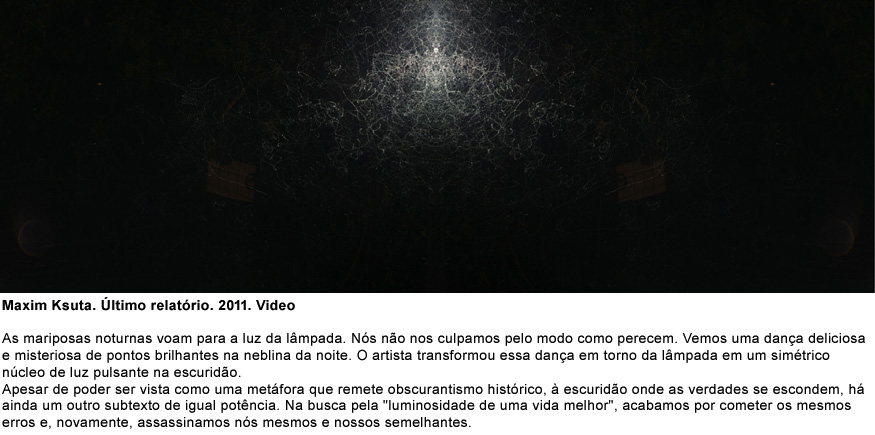
Artistas:
Maxim Ksuta Nikita Pirogov Svetlana Pozharskaya Dmitry Vyshemirsky
Curadora:
Irina Chmyreva
em parceria com PhotoVisa, International Festival of Photography, Russia
Via … … … …
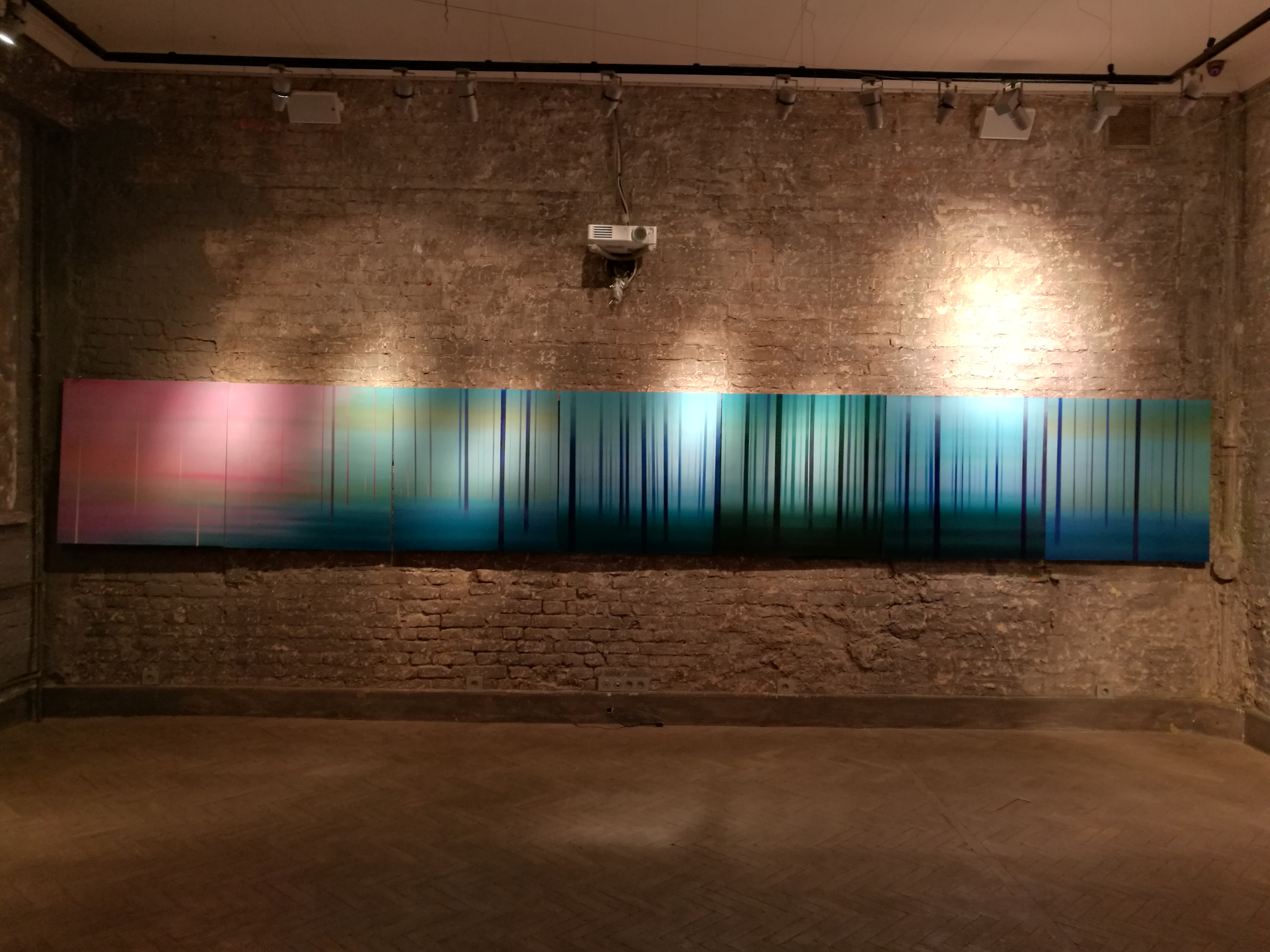
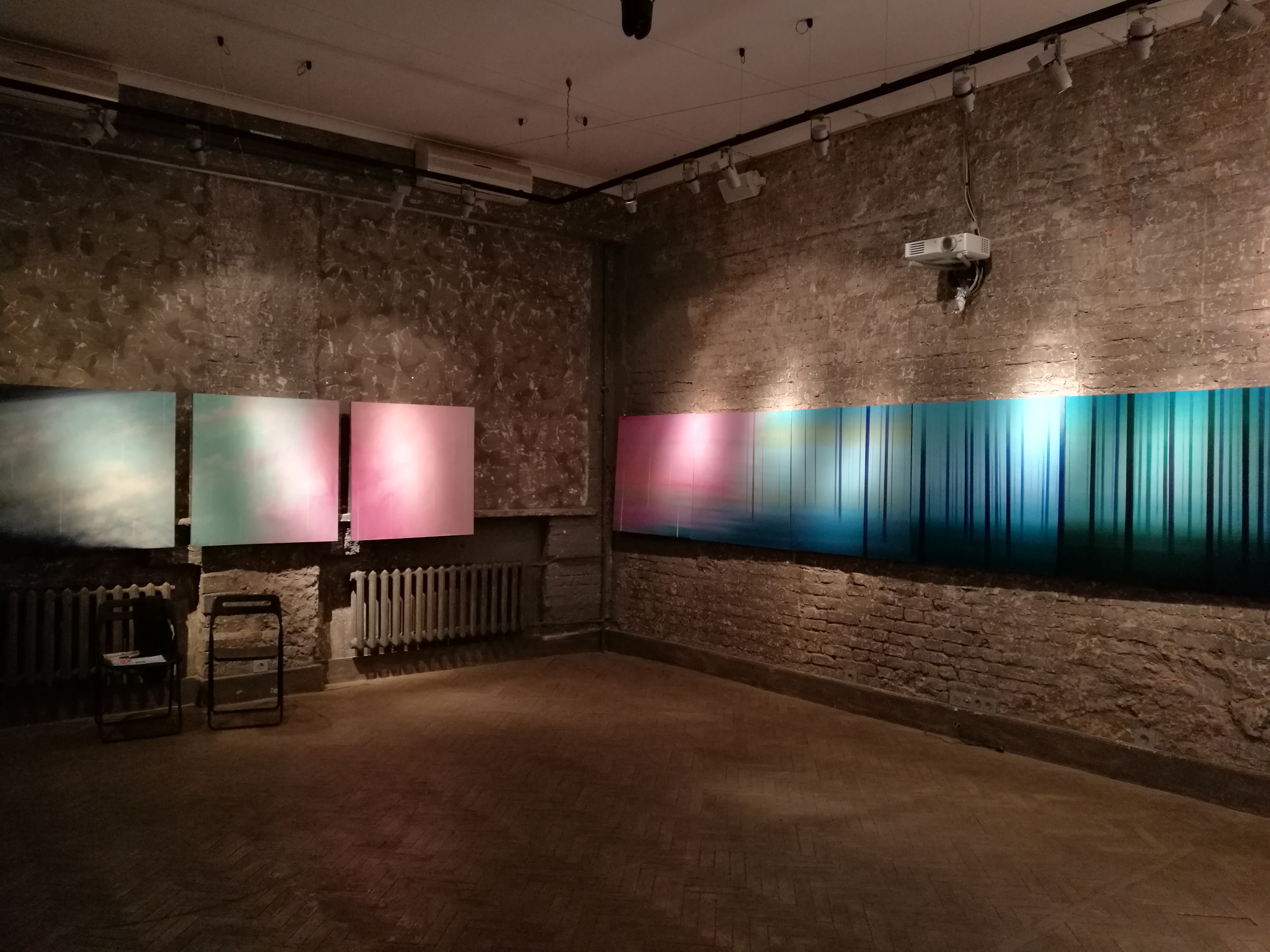
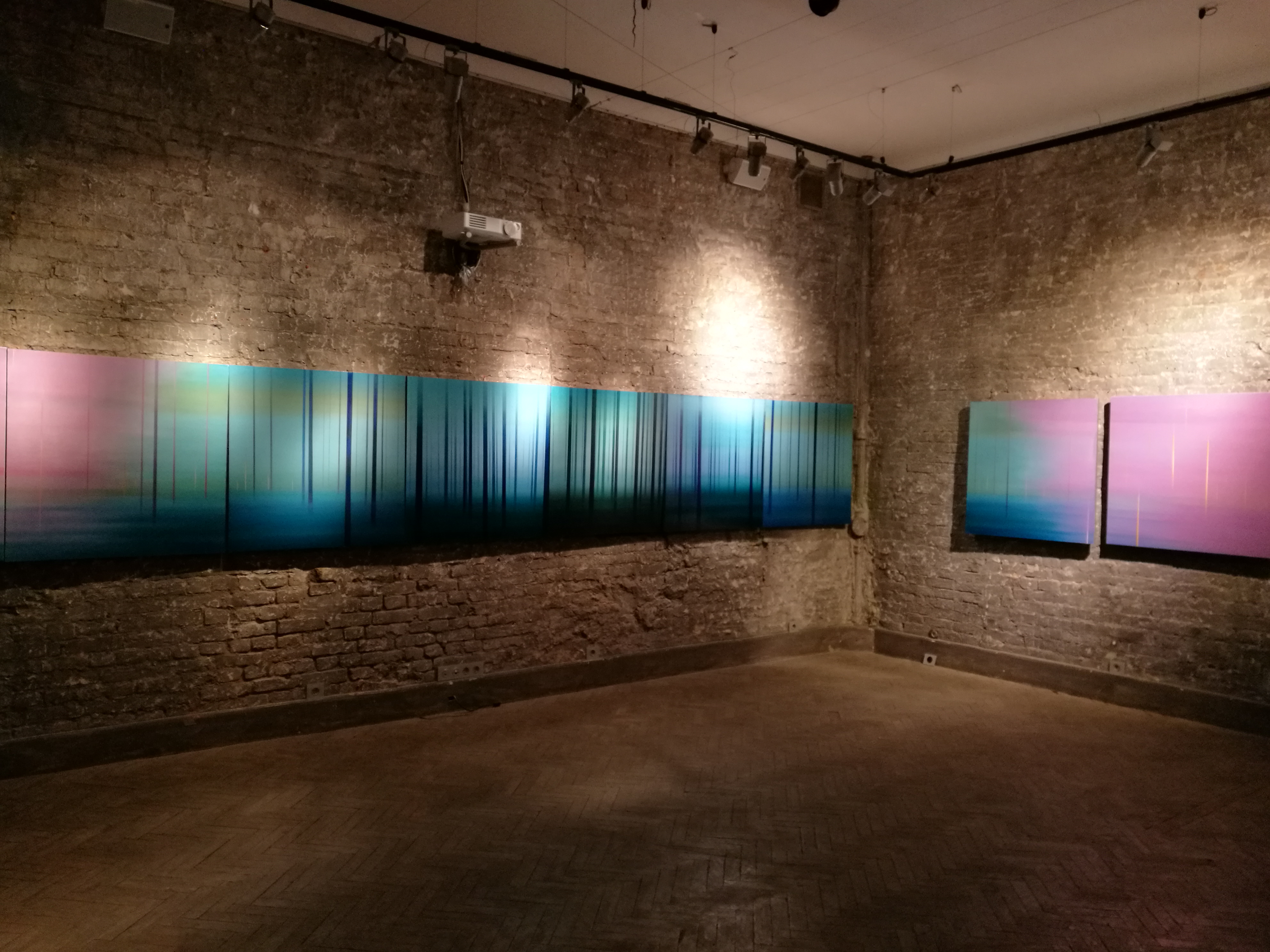
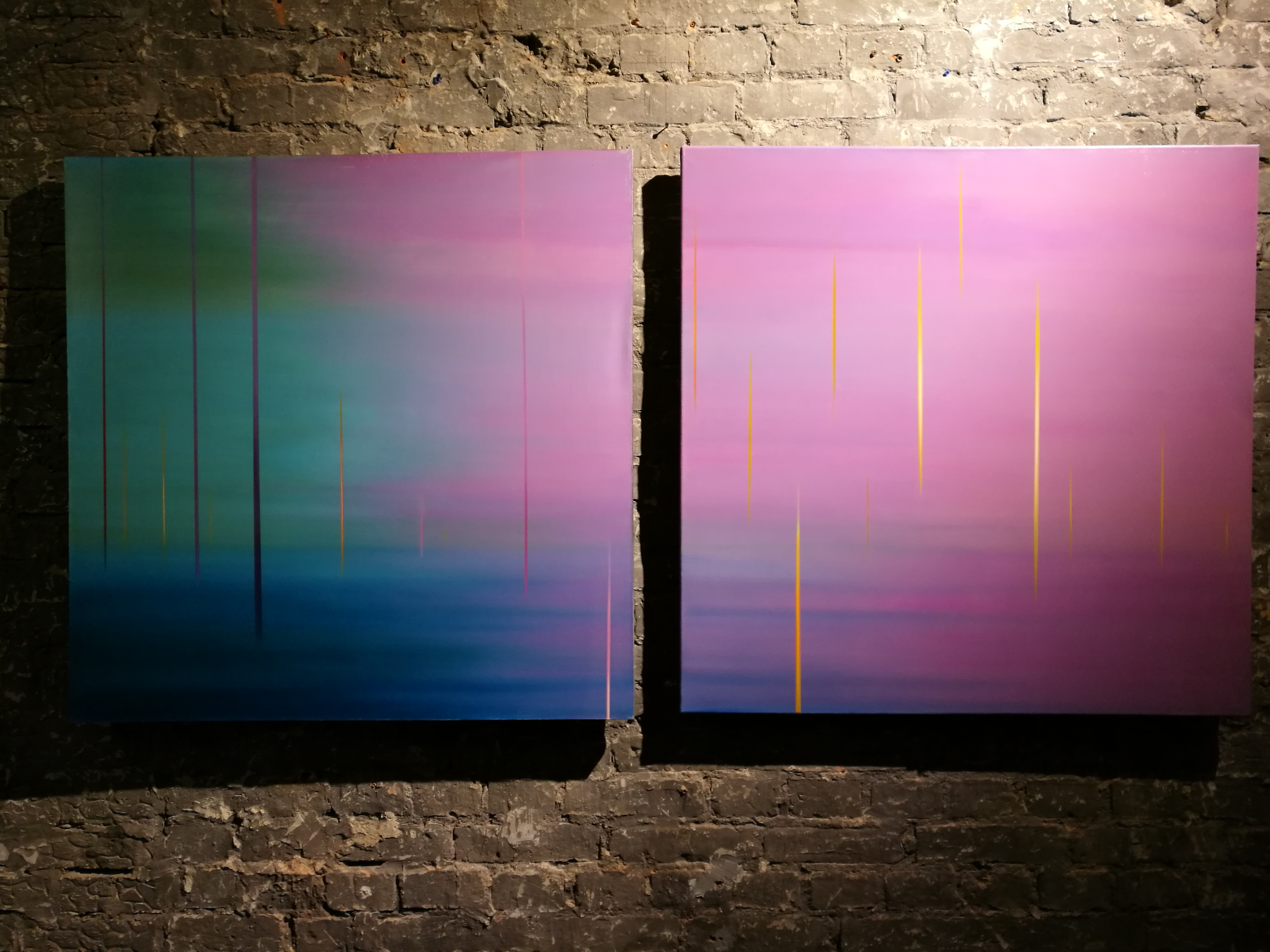
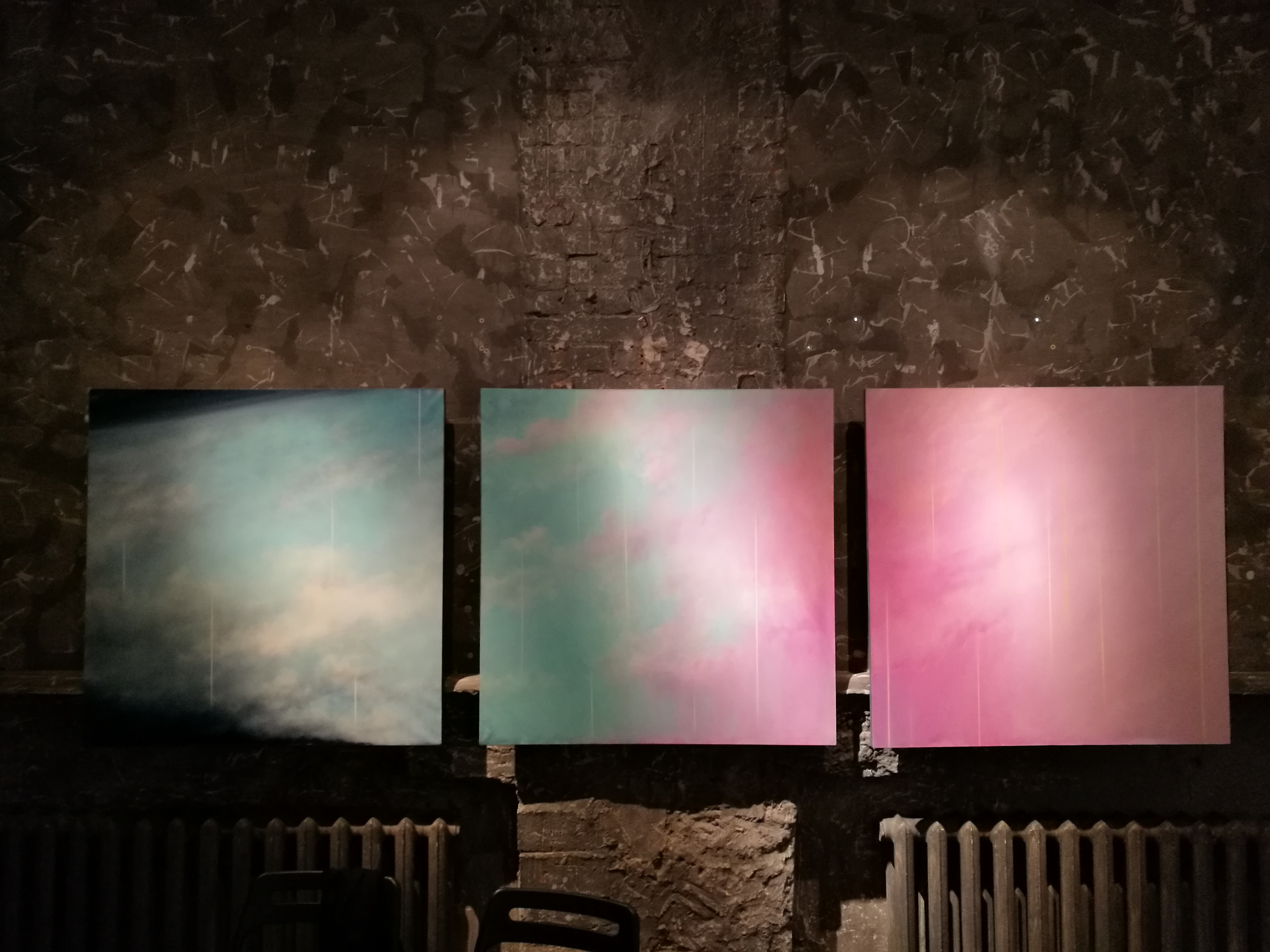
http://kultproekt.ru/proekti/66102052017123728963/
The Kultproekt gallery begins a series of new exhibitions – “Environment contexts”.
2015 — The exhibition “Russian Chrestomathy”
NCCA, Nizhny Novgorod, Arsenal. Curator: Vera Pogodina
2015 — The exhibition “Sound Moebius Strip” exhibition (Belyaevo Gallery)