Maxim Ksuta
russian artist, contemporary art, sculpture, installation, photography
Tag: Maxim Ksuta


May 13, 2013
Dialogue With Technogeneous Reality – Samara Art Centre
t HD audio-video-installation, Triumph gallery, Moscow 2013
Program: [Context of the visual]
Curators: [Vitaly Patsyukov], [Aliya Berdigaliyeva]
Coordinator: [Maria Punina]
Participants: [Leonid Tishkov], [Vladimir Tarasov], [Anna Ermolayeva], [Marina Chernikova], [Vladislav Efimov], [Vladimir Martynov], [Aristarkh Chernyshev], Dziga Vertov, Fernand Léger, Dudley Murphy, [Mikhail Tsekhanovsky], [Boris Yurtsev], [AES+F group], [Maxim Ksuta], [Nelya and Roman Korzhov], [Alexander Zaytsev], [Vladimir Logutov], [Social Adaptation group]
Organizers: NCCA Volga Branch, Samara Regional Public Charity Fund “Contemporary Art Centre”, ART-CENTRE Gallery SAMARA-CENTRE Ltd.
With the support of: RUSS OUTDOOR, VICTORYA Gallery, Moscow State Cinema Museum, XL Gallery, Triumph Gallery, Samara Regional Art Museum
Opening: May, 11, 7 pm
Place: Samara Art Centre (90, Michurina, Samara, Russia)
Coontacts: samara-center.ru/artcenter, +7 (846) 212-03-80, +7 (927) 604-33-05
This exhibition project, built on rare 1930s film footage and works by prominent contemporary artists, poses questions about the relationship of humans with man-made reality and the possibilities of self-identification through technology and production. Today, the humans’ attitude towards technology is consumerist. Perhaps it is because of the lack of direct contact with machines of production that the postindustrial man loses his positive attitude not only towards the mass-produced objects but also his own life which, much like machines and technology, is not under his control any longer.
May 4, 2013
Trees Reconstruction

Old Version … … … …
April 12, 2013
ГОСЗАКАЗ/GOSZAKAZ/Pechersky Gallery/Winzavod
Overcoming the Space
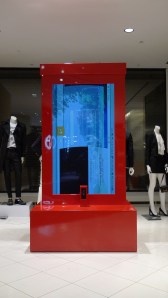
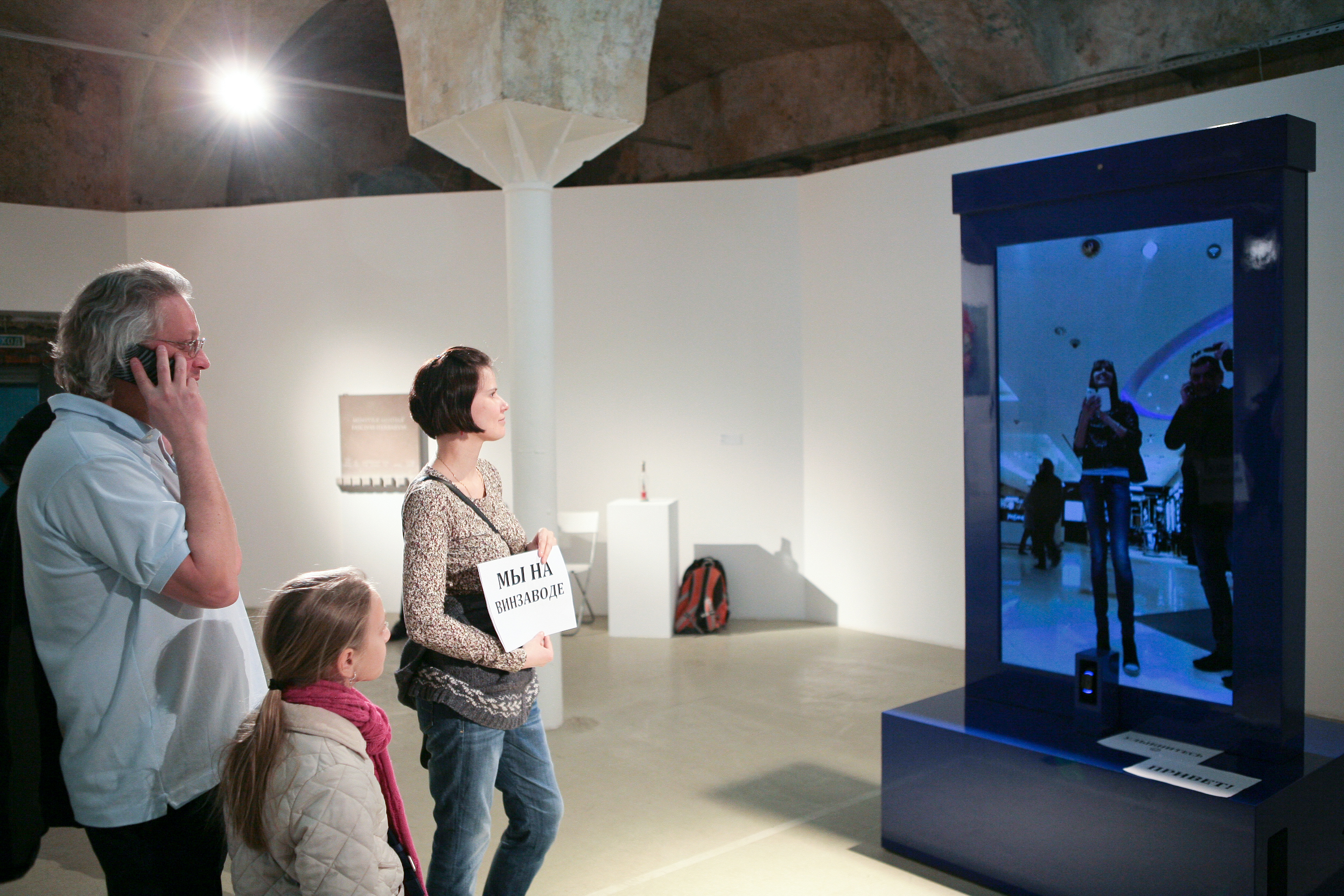
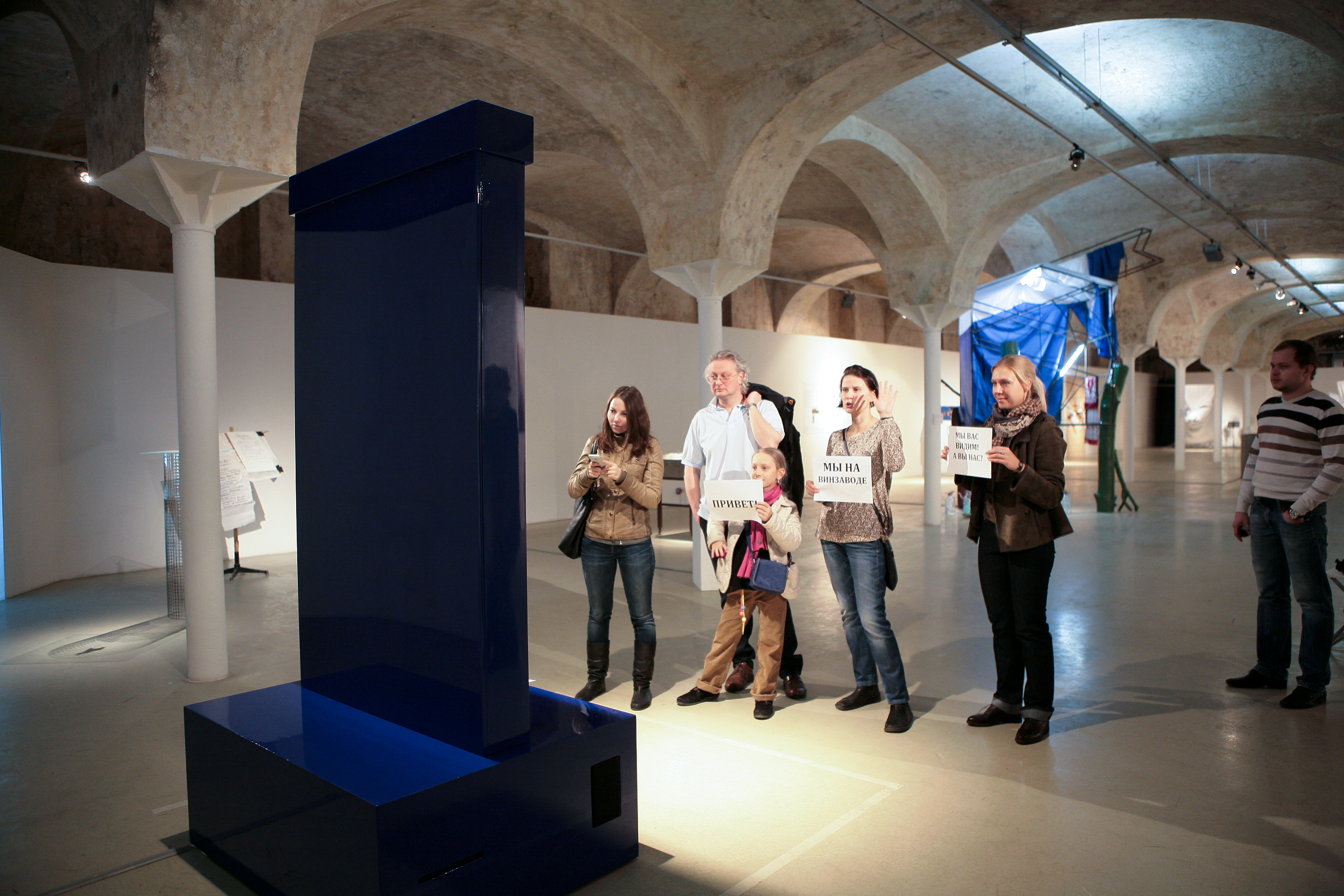
In my project, communication is a part of the space-time continuum. I know for sure that space and time is a single construct which is called “matter”. From ancient times mankind aims to embody the notion of time: Mexican and Egyptian pyramids are immense and incredible in their excellence, and these pieces of art will have a long life within the history. My “Teleports” are rather objects of contemporary art, although I have been thinking a lot about the practical side of the project.
Interactive spacebridges with Liquid Crystal Displays broadcast the day stream of other world capitals – London, Rome, Berlin, Paris and others – with their unique rhythms and drawings of life. The main function of such objects is social communication. Objects are equipped with high-quality HD panoramic video cameras which enables the passers-by to greet citizens of other cities, to wave their hands, to give a wink, etc.
“Teleports” are objects for communication, but unlike iPad they are public, not individual. These are the windows to the “different reality” with its different life flow, which carry a user through space and expand its conscious in the right direction – direction of consolidation of the humanity as a whole, unification of it as a whole and its unit, a particular human individual. Not only “Teleports” would be of interest for citizens, but, I believe, they would become a true attraction for them.
Maxim Ksuta
Info … … … …
Video | April 8, 2013
Teleport
Teleport from maxmaxovich on Vimeo.
Teleports in process
Maxim Ksuta & Mikhail Kiselev – Pechersky Gallery – Vinzavod
March 19, 2013
Maxim Ksuta – “CY”, Triumph Gallery

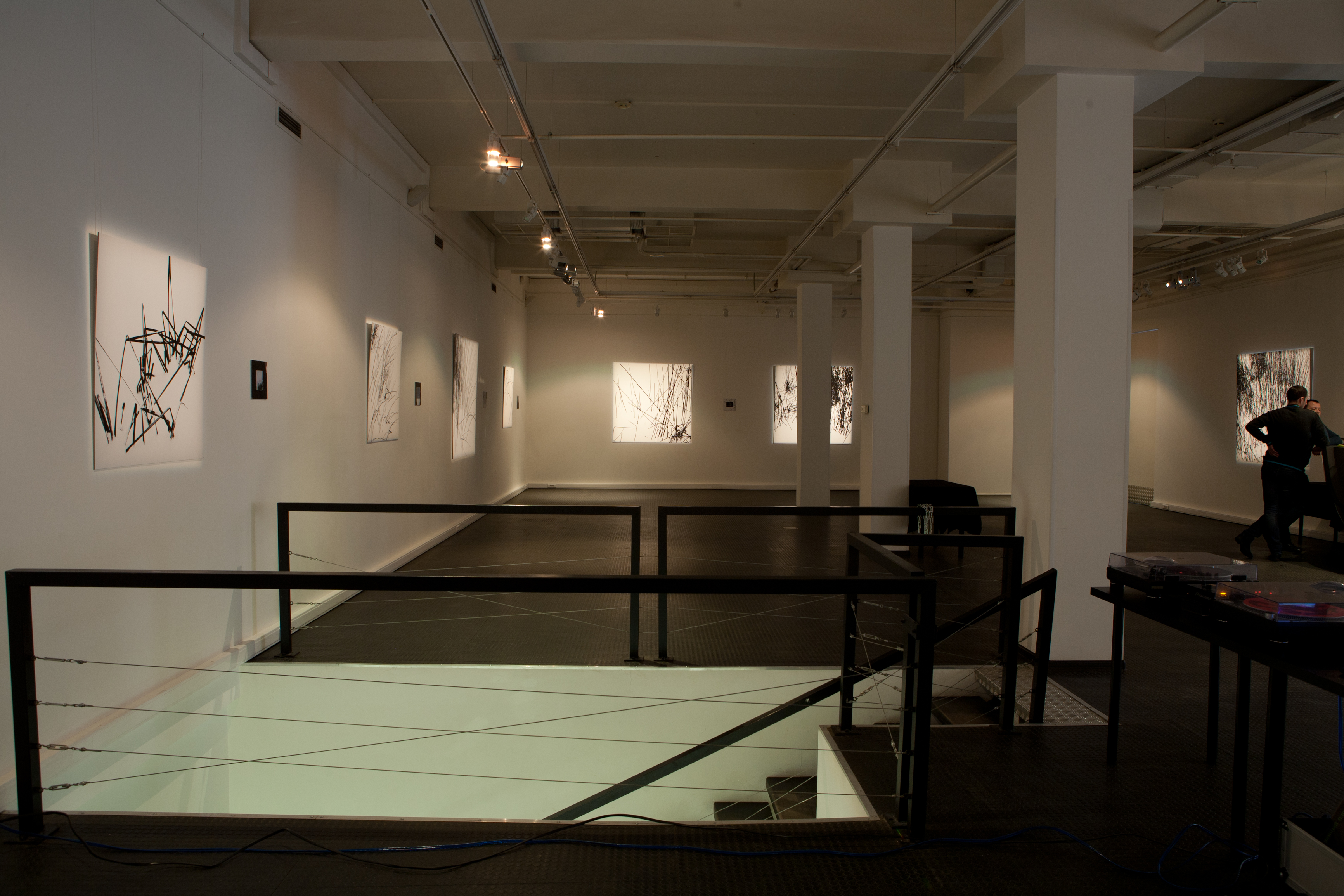

Over the course of recent years, Maxim Ksuta has been developing an entirely unique relationship to photography: he has consistently removed or weakened the firm bond between the photographic image and visible reality, the camera in his hands becoming not a means for “baring” or “revealing” reality or a means for freezing it in as concentrated form as possible – Ksuta’s camera, instead, almost appears to be overcoming the camera’s technological nature, and Ksuta himself, rather than pressing on the shutter button, appears to be painting with a brush or a charcoal pencil. He consciously forms not a shot but a sheet with geometric abstractions; his works begin to work to the laws of the drawing sheet, rather than the photographic print, as was the case in his previous series with electric cables cutting through the Moscow sky in dynamic diagonals.
The theme for Ksuta’s latest project appears to be far more inventive, because the starting point for the visual experiments turns out to be another work of art, specifically the work of the great American abstractionist Cy Twombly. Ksuta doesn’t relish the proportions, the balance of vacuums and the coloured “nervous” zones; he doesn’t occupy himself with deciphering Twombly’s codes, which reference the whole of world culture and history; he intently and intensively scrutinizes. His eye singles out, isolates the intricate movement of the pencil lines; at the same time it is clear that Ksuta is sincerely enraptured by the freedom of movement of Twombly, who crosses out, sketches and colours with the ingenuousness of a child who has been sat before a sheet of paper and given coloured crayons for the first time. Ksuta is posed a question about the nature of this freedom, of its ideal prototype, if you will, and finds astonishing formal correspondences in Twombly’s “writings” and the sticks, branches, blades of grass that fall under your feet during a walk. He creates a distinctive negative for Twombly’s paintings, a purely monochrome structure, consistently purifying Twombly, testing the viability of his plasticity among real natural objects. It is as if Ksuta is bearing witness to the natural, most organic provenance of Twombly’s art, making the dynamic of his objects literal, perceptible – this is not some conditional drive of colour flows, lines within the borders of a canvas, but a real walk, a stroll, during which the artistic forms are discovered beneath one’s feet, and with a clumsy movement one can disturb the fragile harmony. The appeals of the artist himself to the image of an enchanted forest, a magical, almost
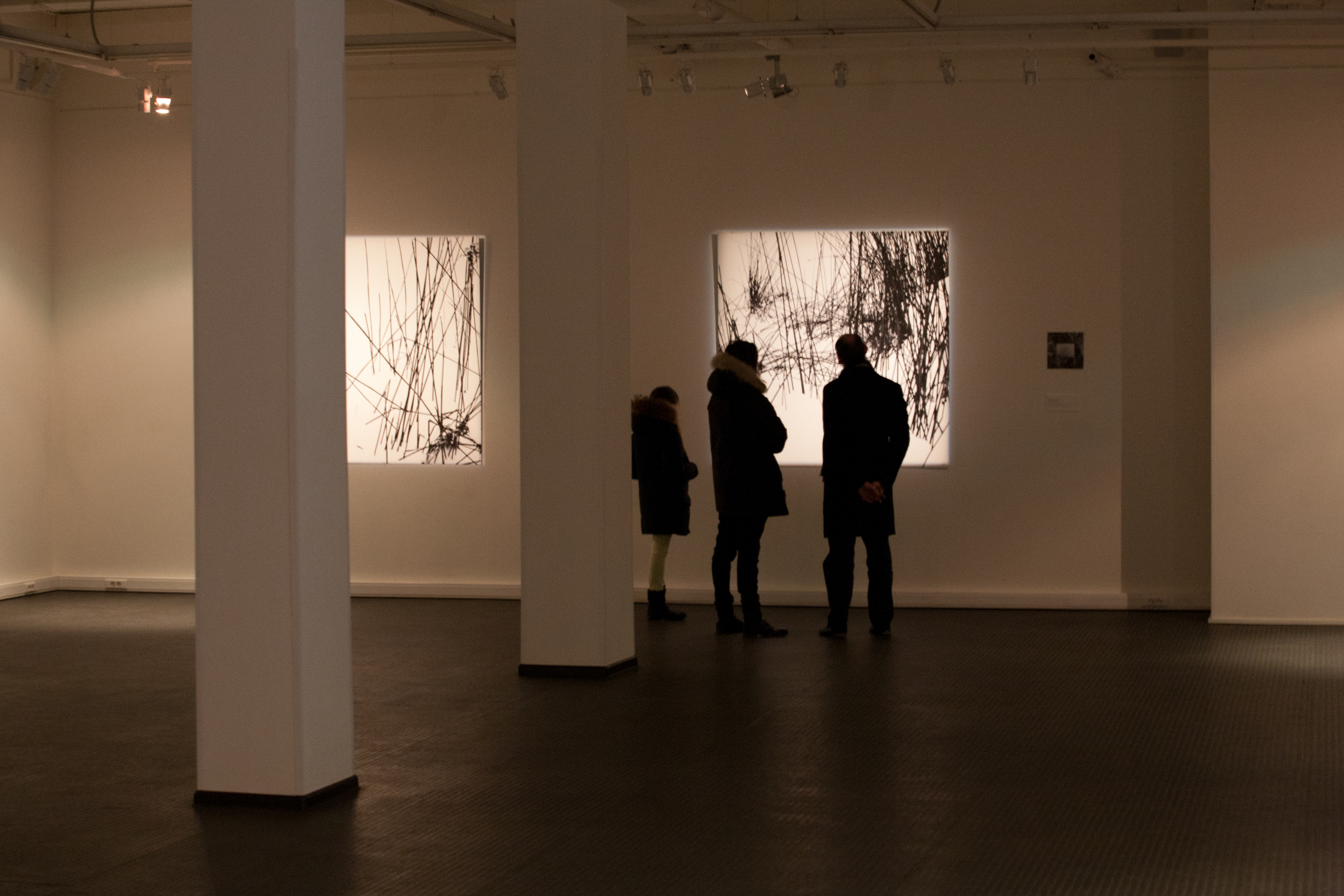
fairytale space, where everything that is familiar is suddenly miraculously revealed is no accident in this regard, and a walk through this forest is transformed into an allegory of life’s path (or the path of an artist) that is entirely in the spirit of Novalis. Along the way, Maxim Ksuta ontinues to resolve his own task, a task that has occupied him in recent times: He is feeling out a barely perceptible zone where the abstract and the concrete coexist. The concrete object is often embodied in the most abstract of forms, it loses its recognizable outlines, but it retains its essence: a branch remains a branch, wormwood thickets remain wormwood, and the viewer is enchanted by the game of form, the glimmering of the perceptible and the visible that, when viewing Ksuta’s photographs, it is so easy to give in to. He follows the logic of a “new objectivity,” recalling in memory the German “Neue Sachlichkeit”; at the same time as many young European artists (for the most part coming from Eastern Europe, of the general of Wilhelm Sasnal), he sees in this an opportunity for quiet deliverance, he suddenly understands that the diapason of variations can be as broad as you like, and with an artisanal persistence (in the very finest sense of the ancient techne’) continues to move
through this magical space, sometimes drawing into his orbit the great artists of the 20th century.
Ekaterina Inosemtseva
Cy – catalog
 Maxim Ksuta