Sweep of a broom in dust
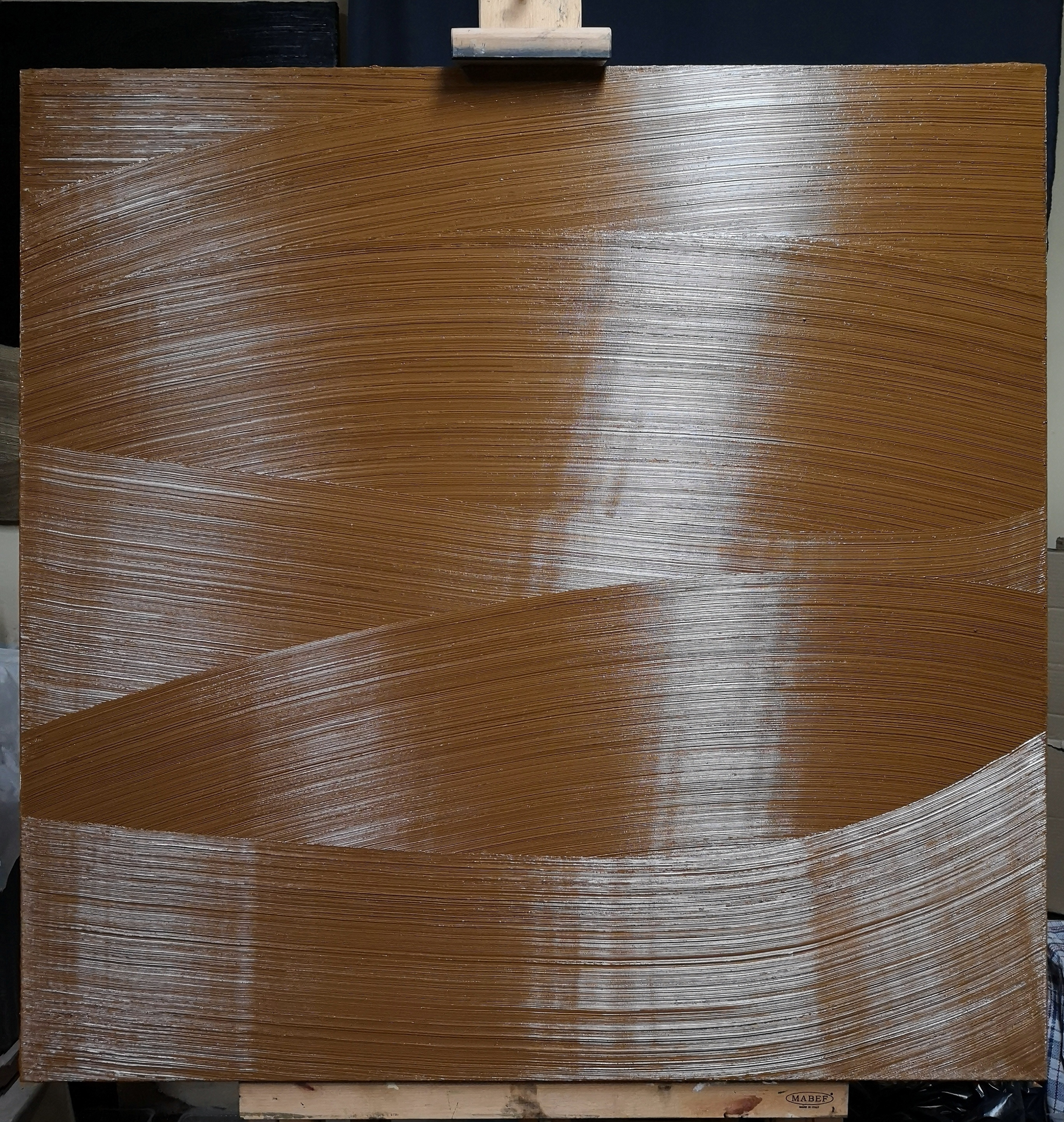
Oil on canvas, 100×100 cm
Sweep of a broom in dust,
on Siena’s ancient earth —
all traces vanish…
Oil on canvas, 100×100 cm
Sweep of a broom in dust,
on Siena’s ancient earth —
all traces vanish…


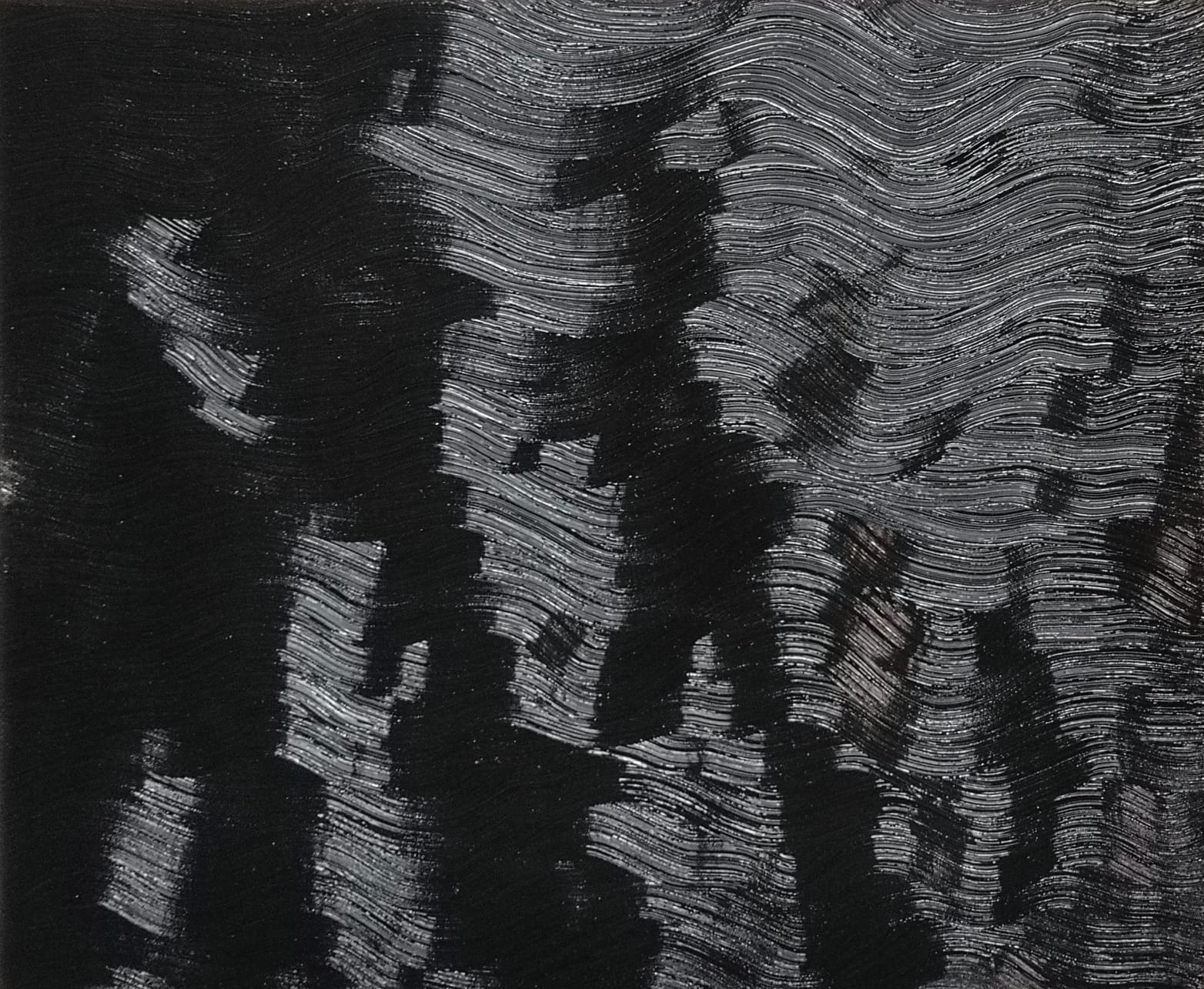

Oil on canvas, 70 x 90 cm, summa 140 x x180 cm
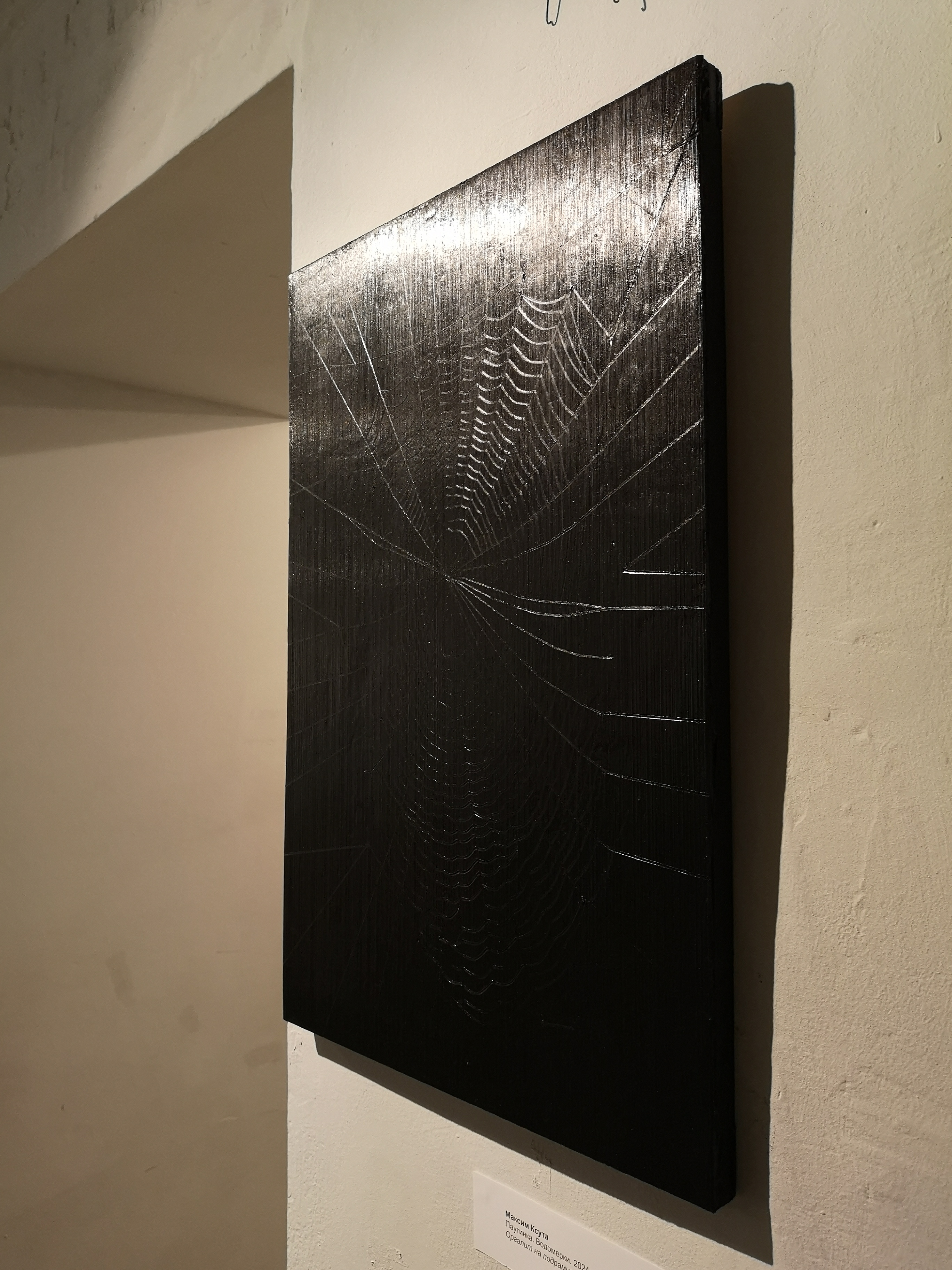
Wave in Black
Before us lies a work that appears at once monochrome and infinitely multicolored. Black paint — gas soot — has been laid flat on the canvas, without the slightest hint of relief. And yet, it is precisely within this flatness that optical depth emerges: lines and gestures of the brush, layered upon one another, form a fabric where light plays as if on water or silk.
The scale of the piece — 140 × 180 cm — makes it almost a wall, a membrane through which the viewer encounters the phenomenon of light itself. As the angle of vision shifts, the surface comes alive: the threads reflect light differently, transforming black into a space of continuous oscillations.
This is painting without color in the usual sense, yet full of a whole spectrum of states. There is no subject, no image to “hold on to”; instead, the viewer is confronted with the pure energy of perception. The work breathes like a wave — at times contracting into darkness, at times opening into a brilliance reminiscent of metal, glass, or the shimmer of a nocturnal sea.
This black optics is both an experiment and a meditation. It takes painting beyond the conventional role of carrying color and form, turning it into a field where vision travels, splits, lingers — and it is precisely this tension between the stillness of the surface and its shifting radiance that generates the true experience.
Ultimately, the work feels like a meditation on the nature of light and darkness: how black becomes luminous if one looks long enough; how simplicity proves more complex than illusion; how a surface devoid of depth suddenly reveals an abyss.
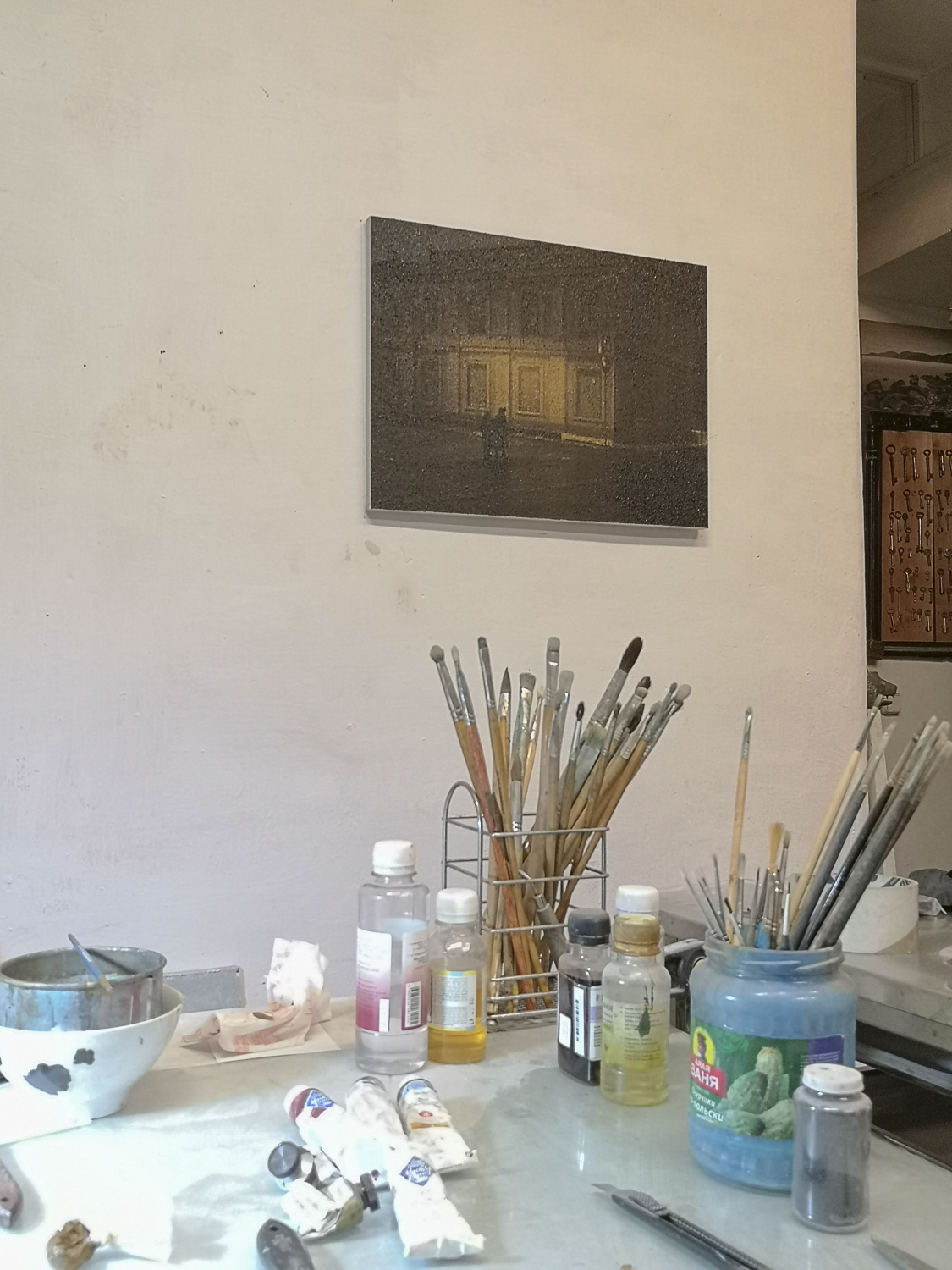
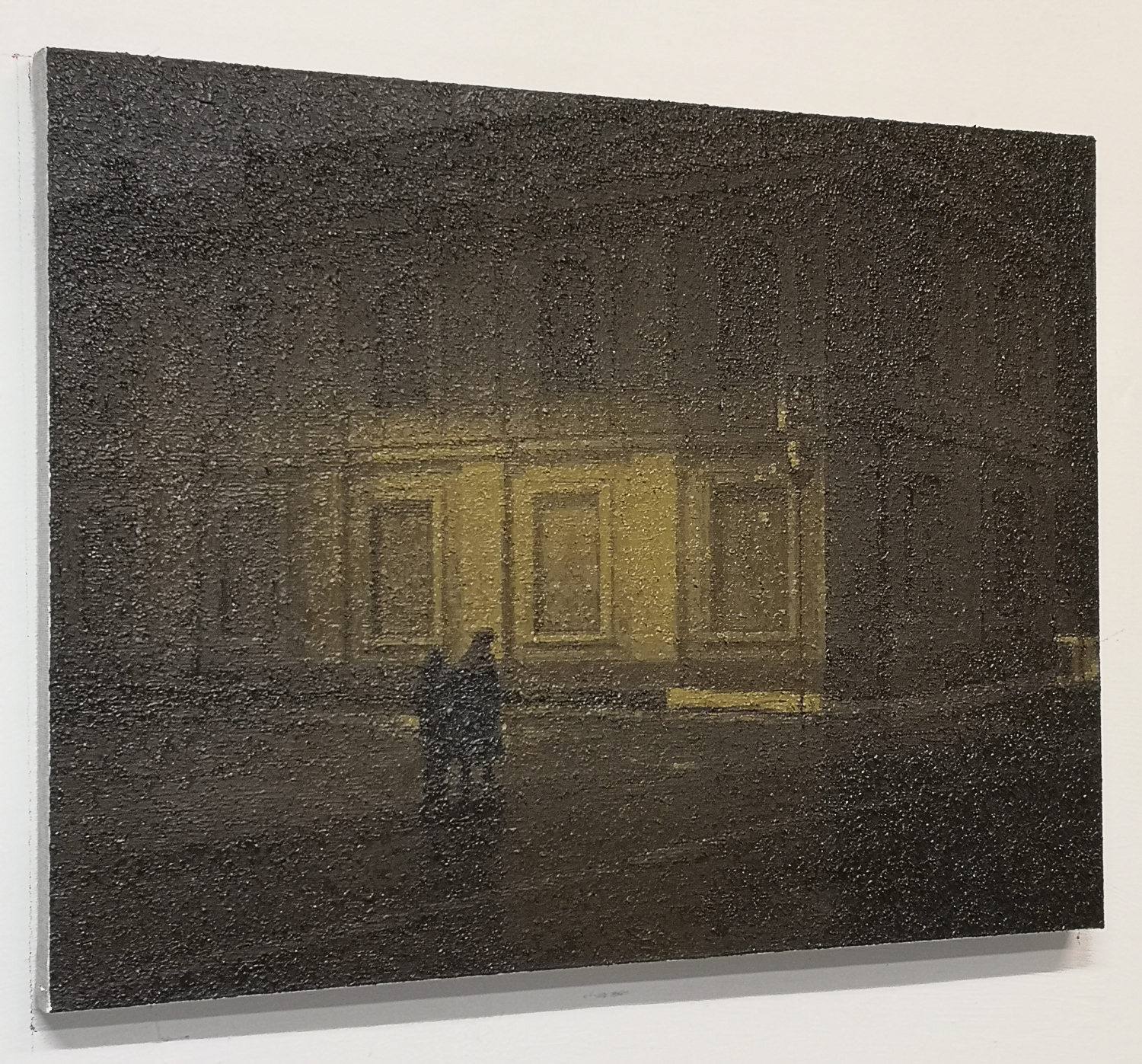
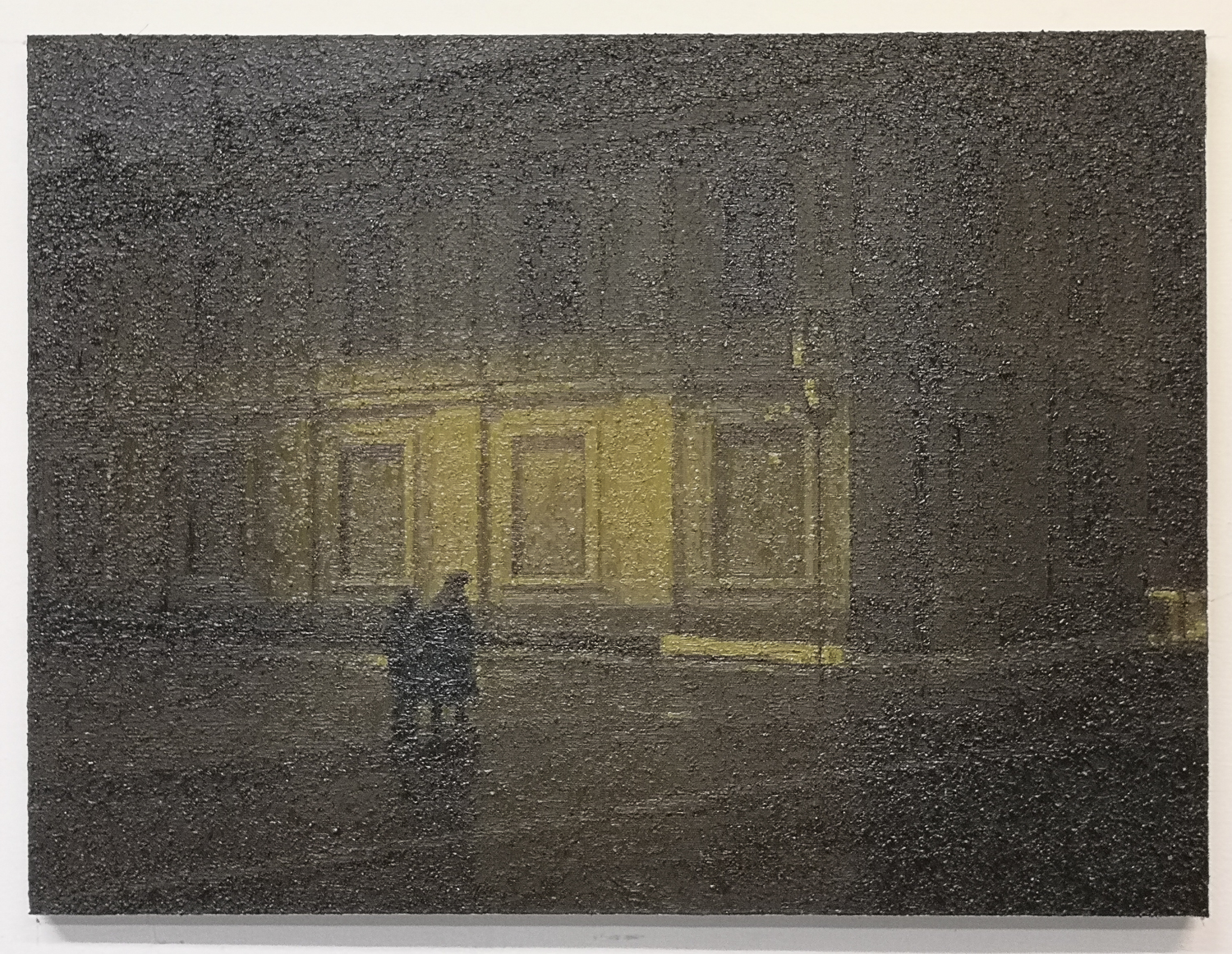
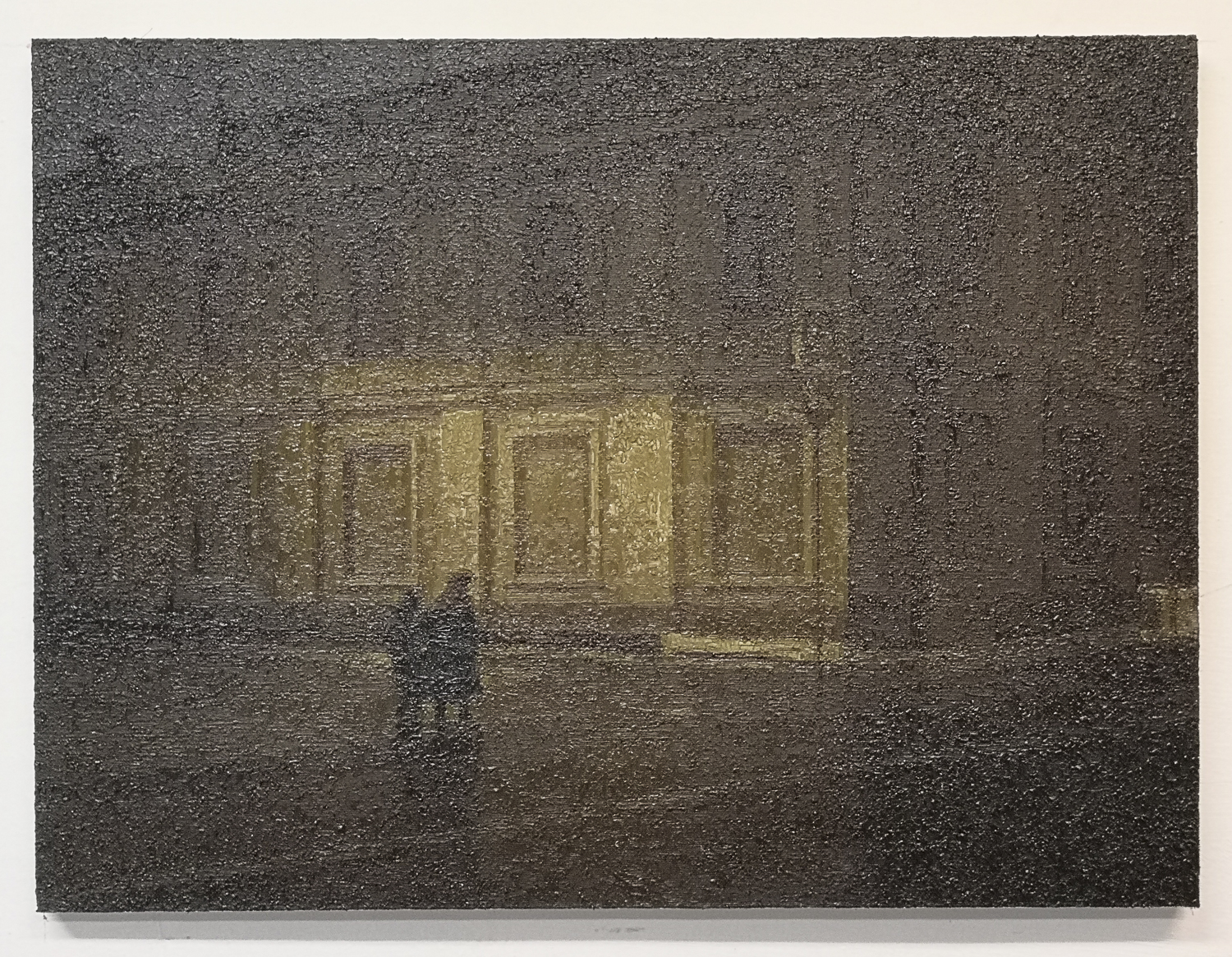
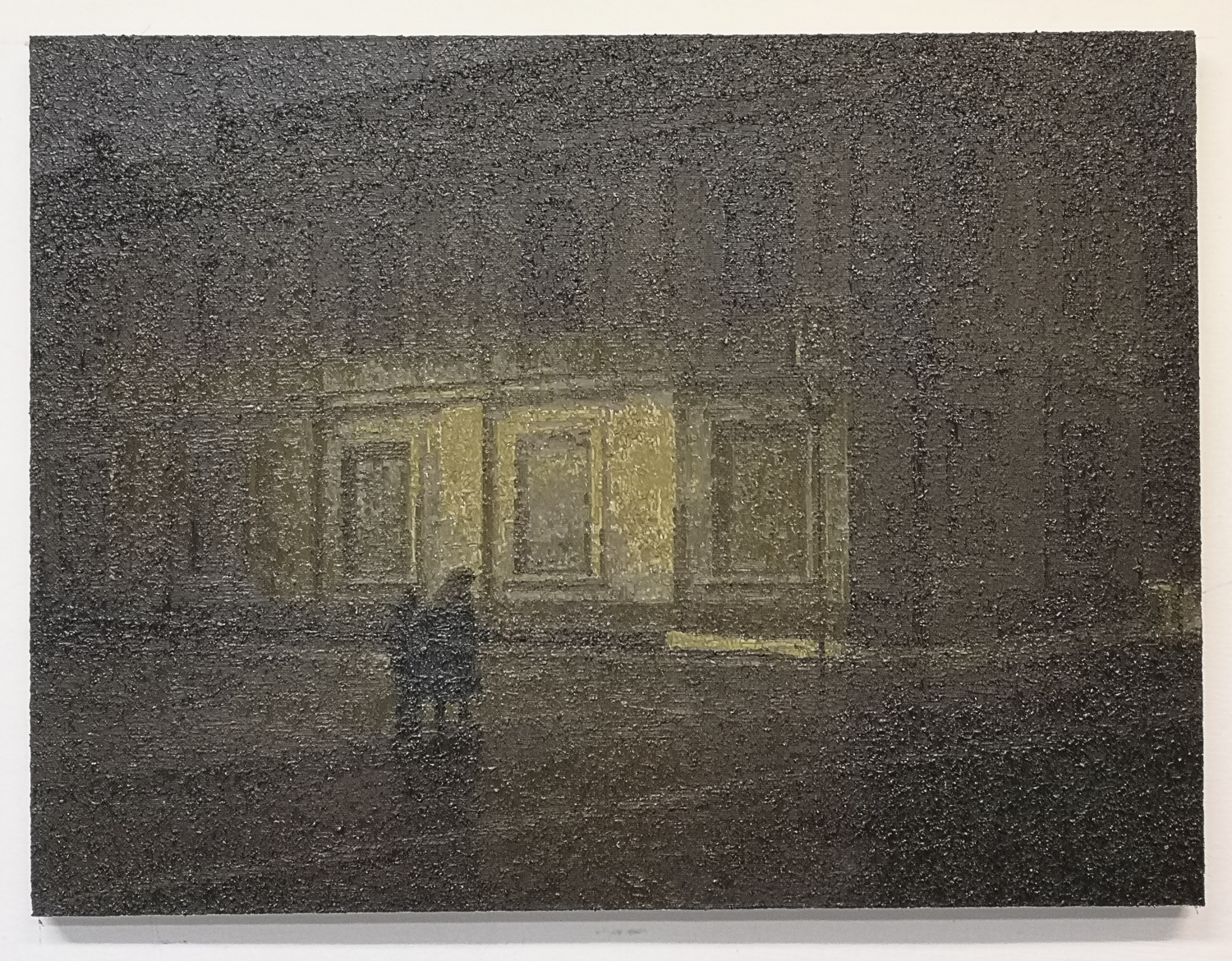
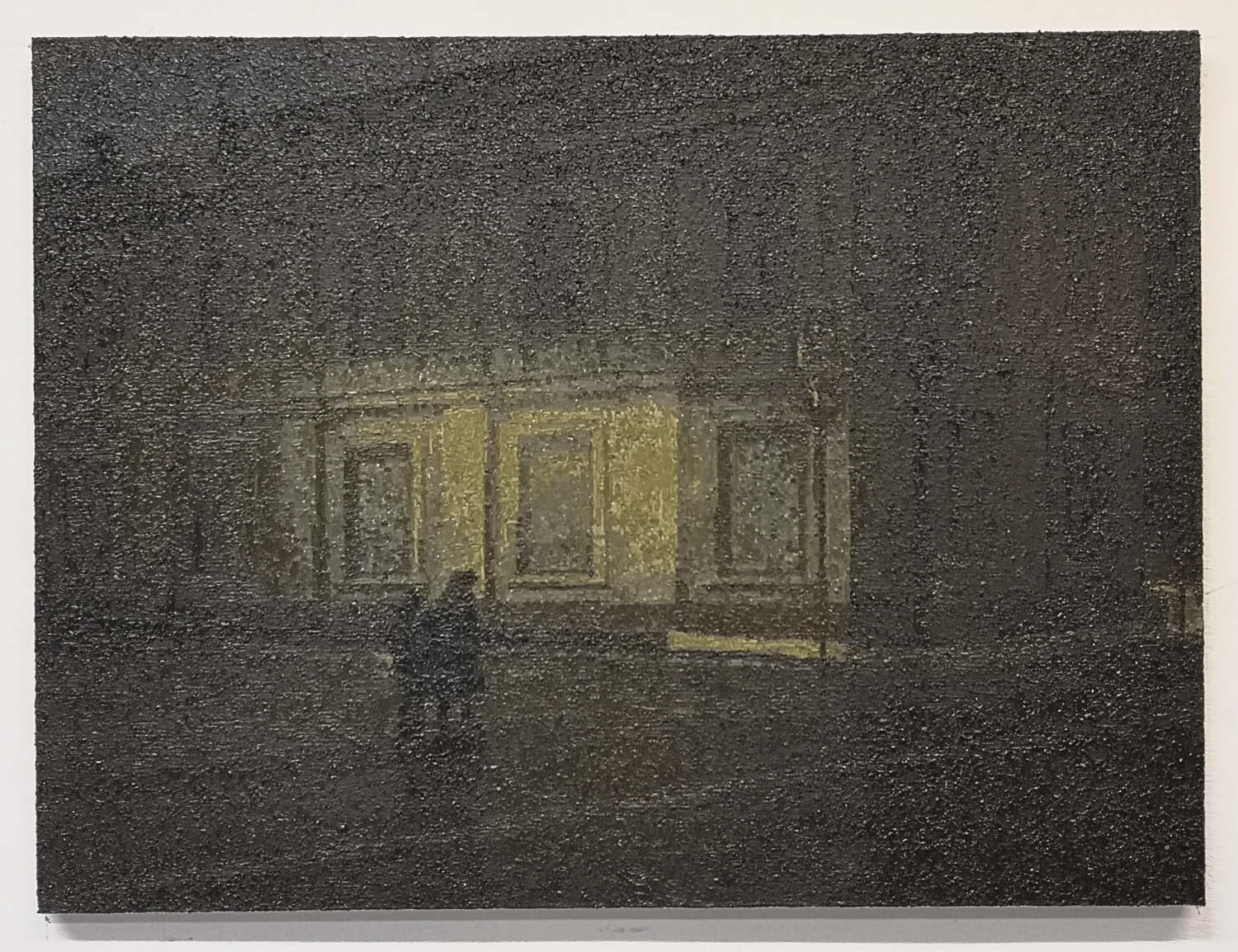
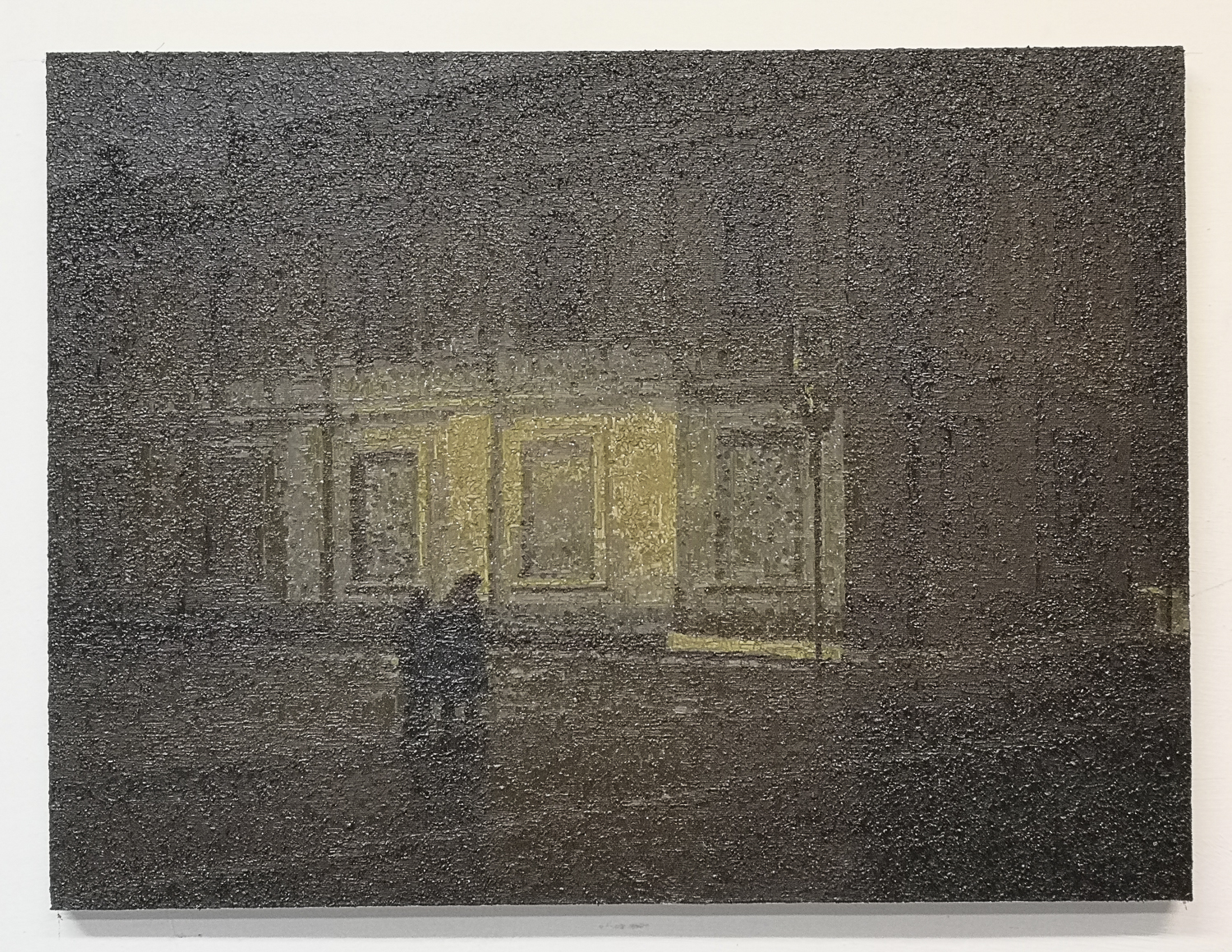
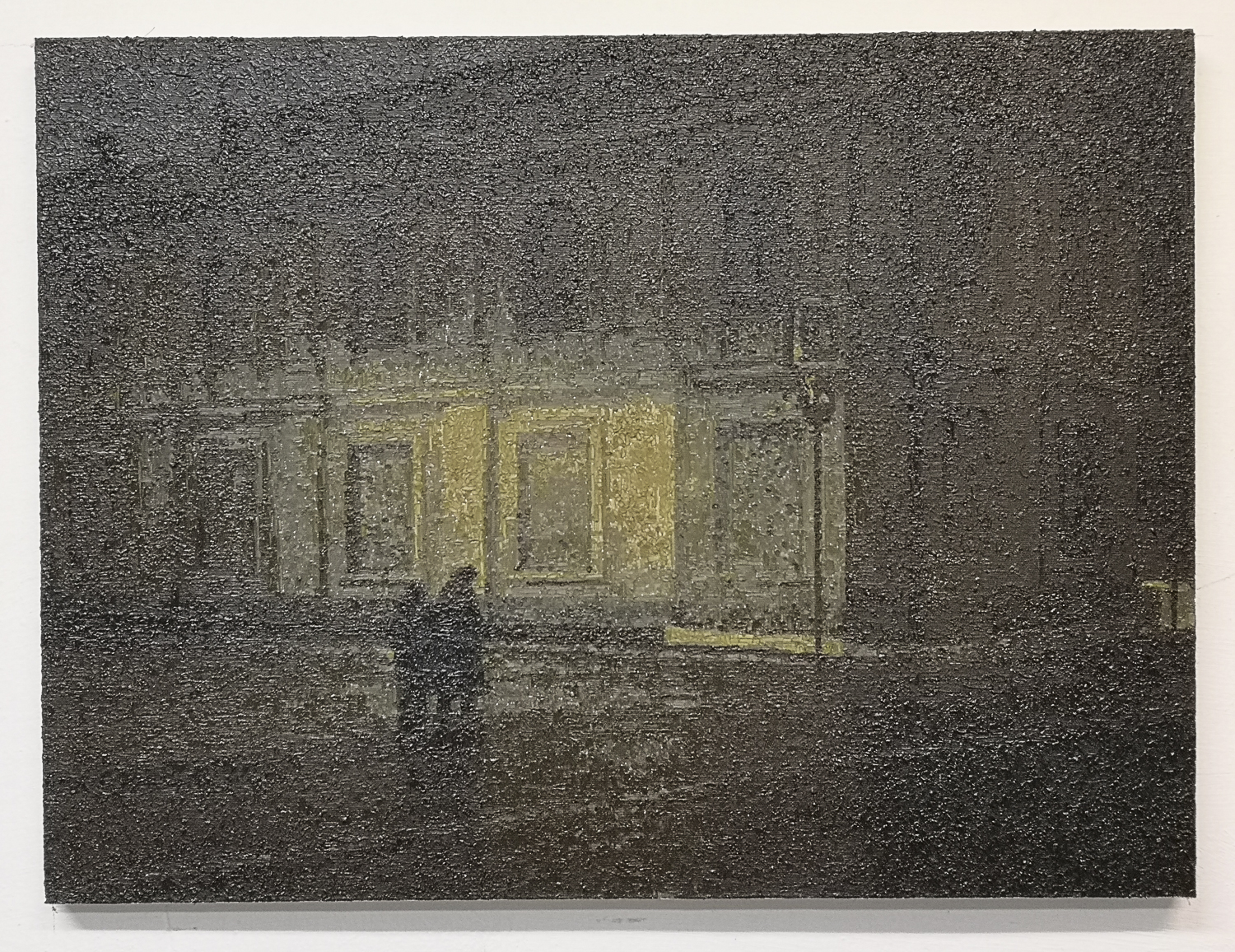
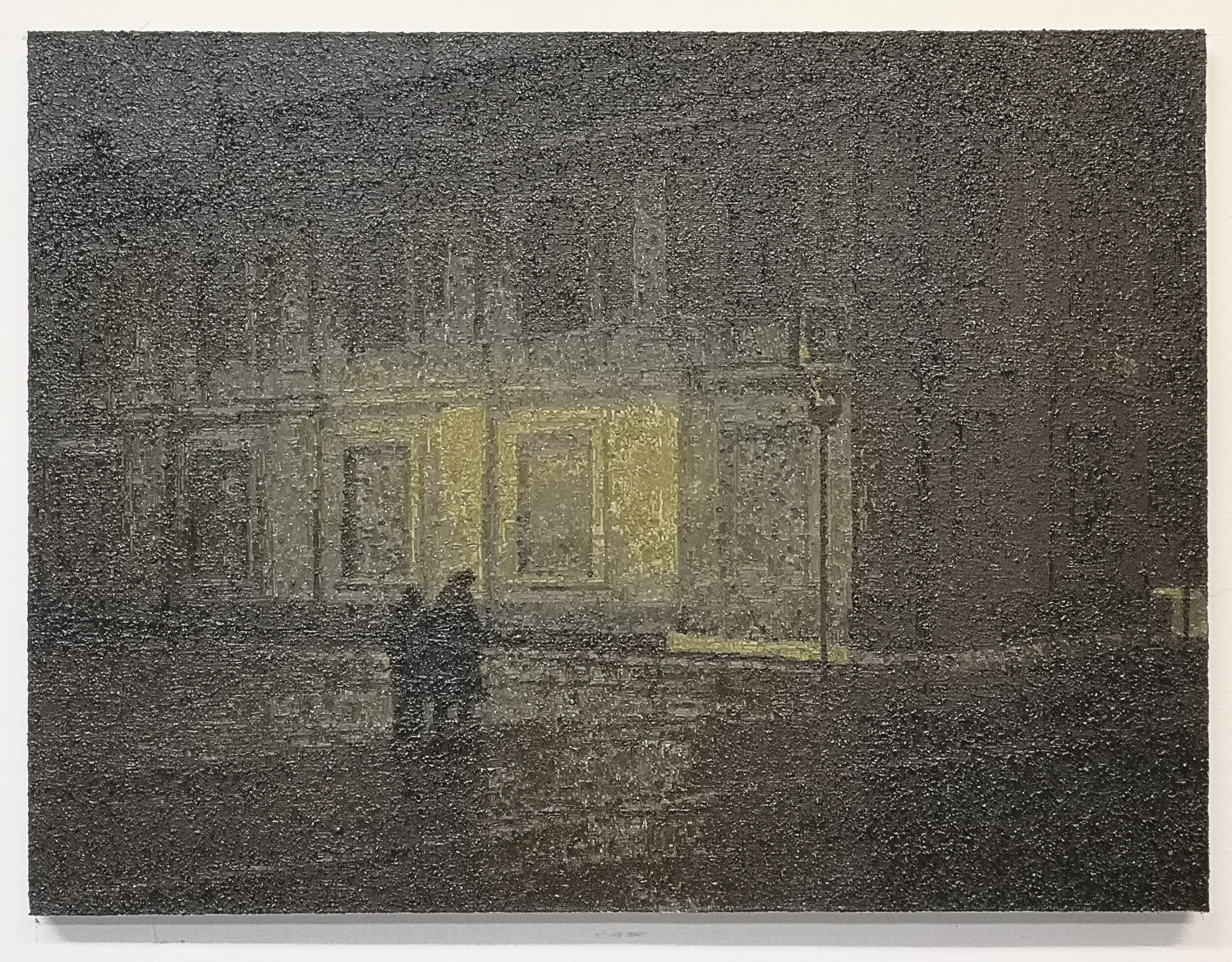
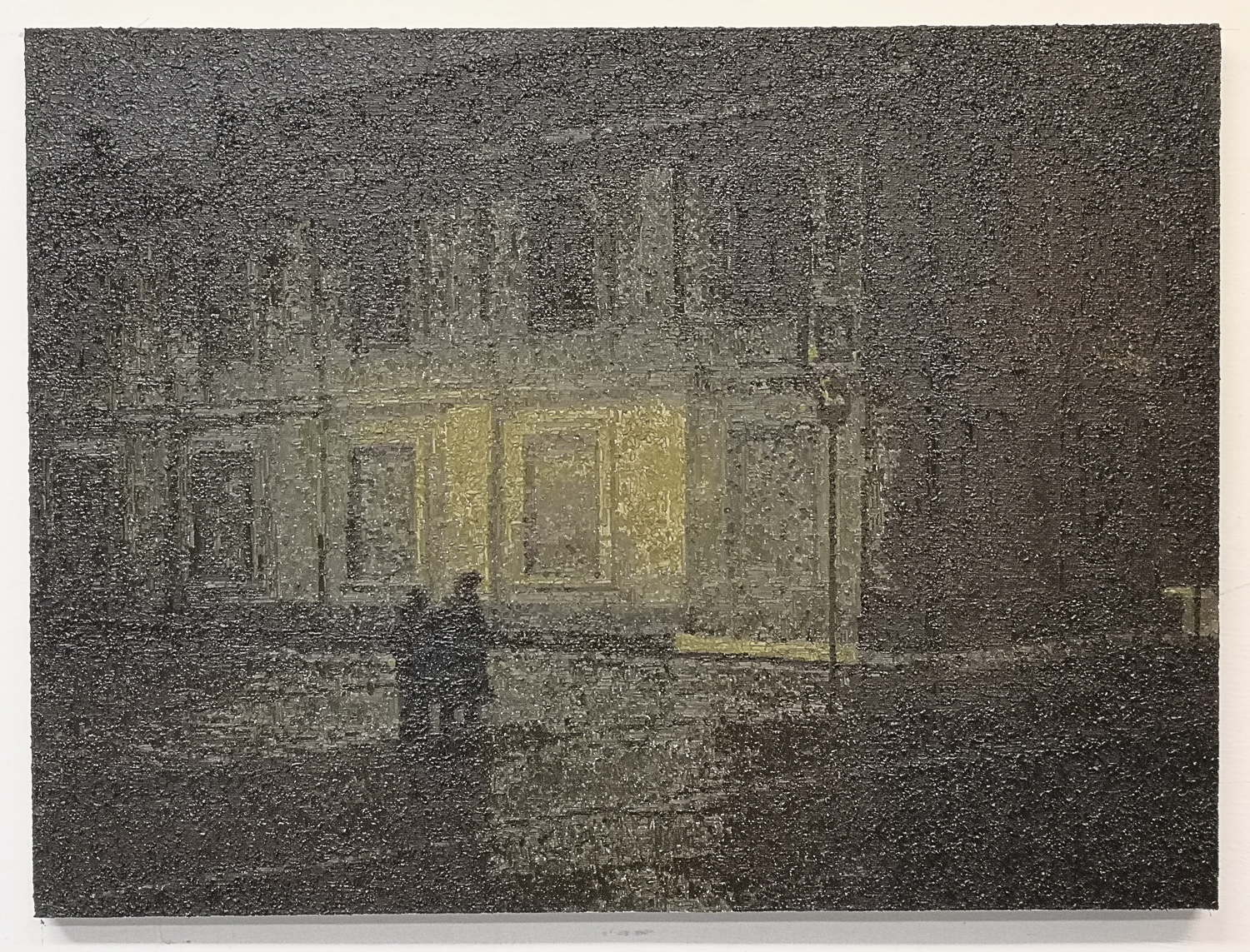
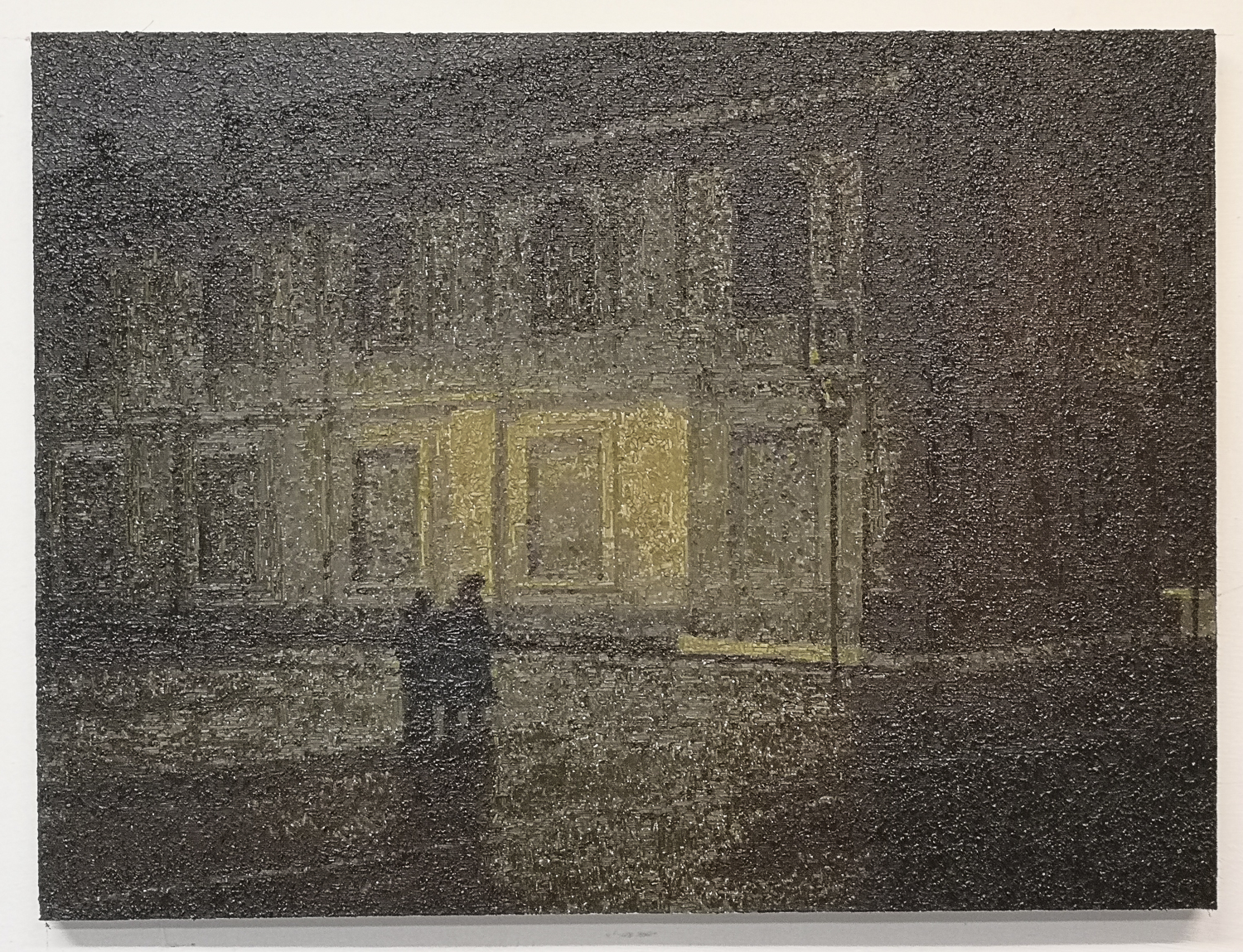
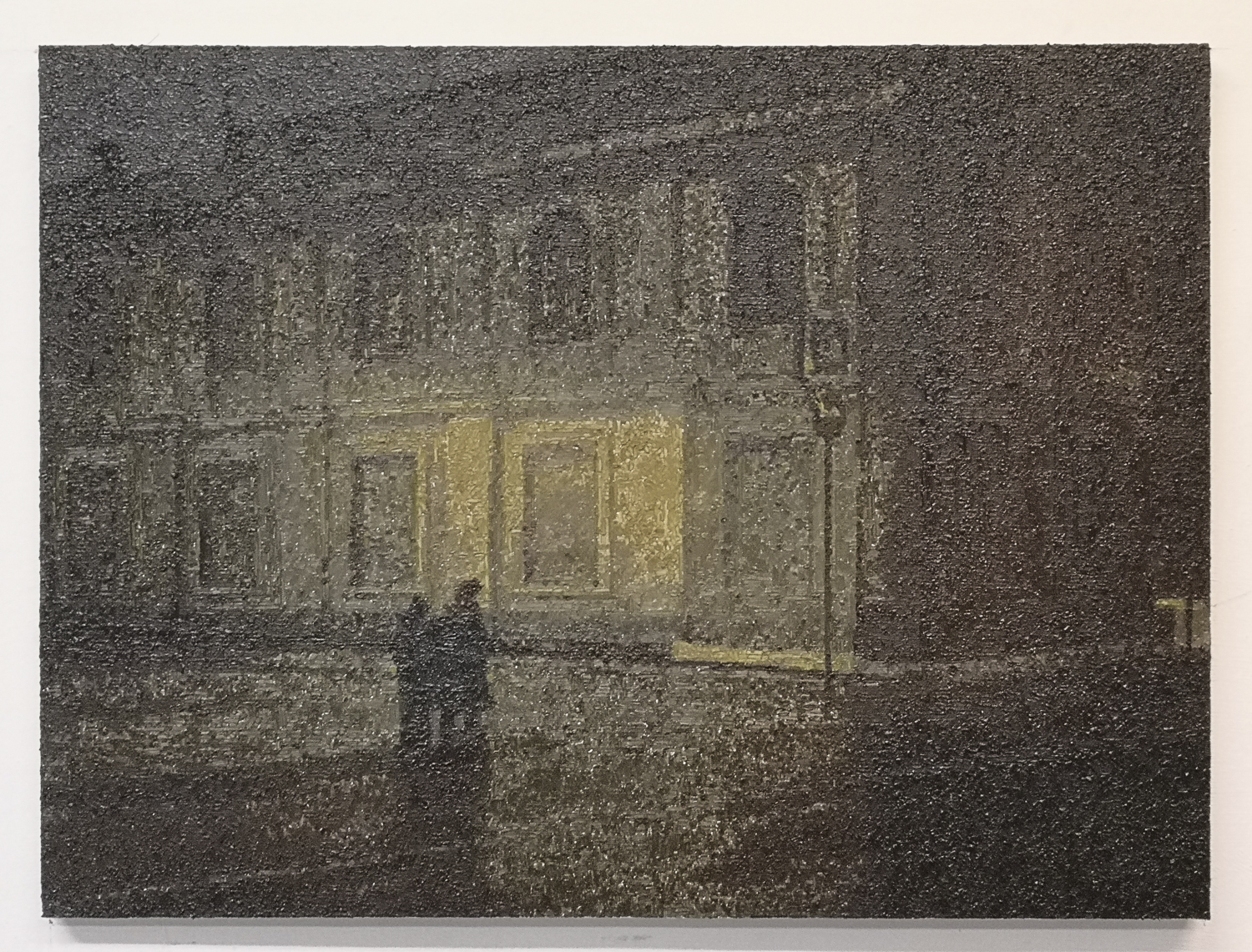


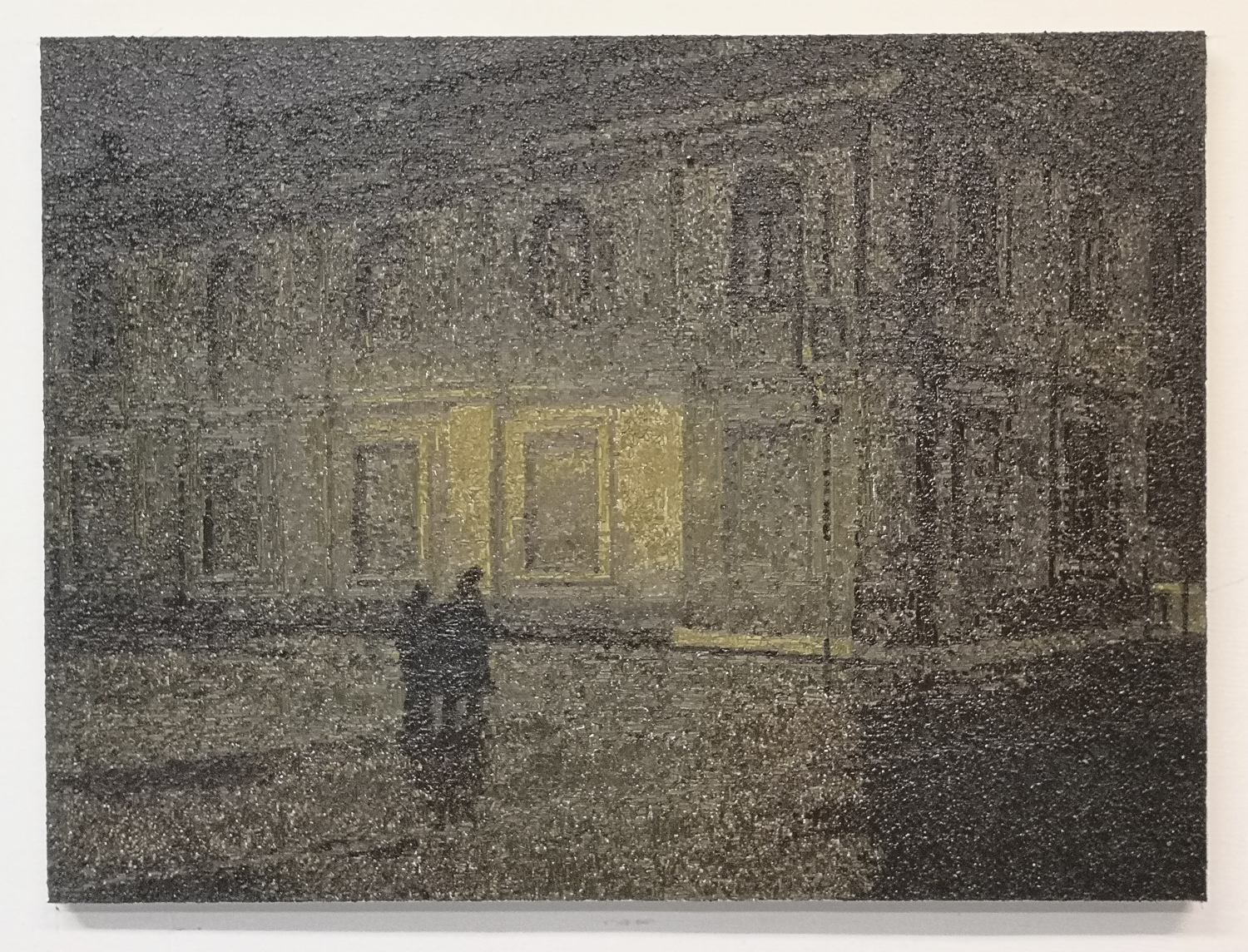
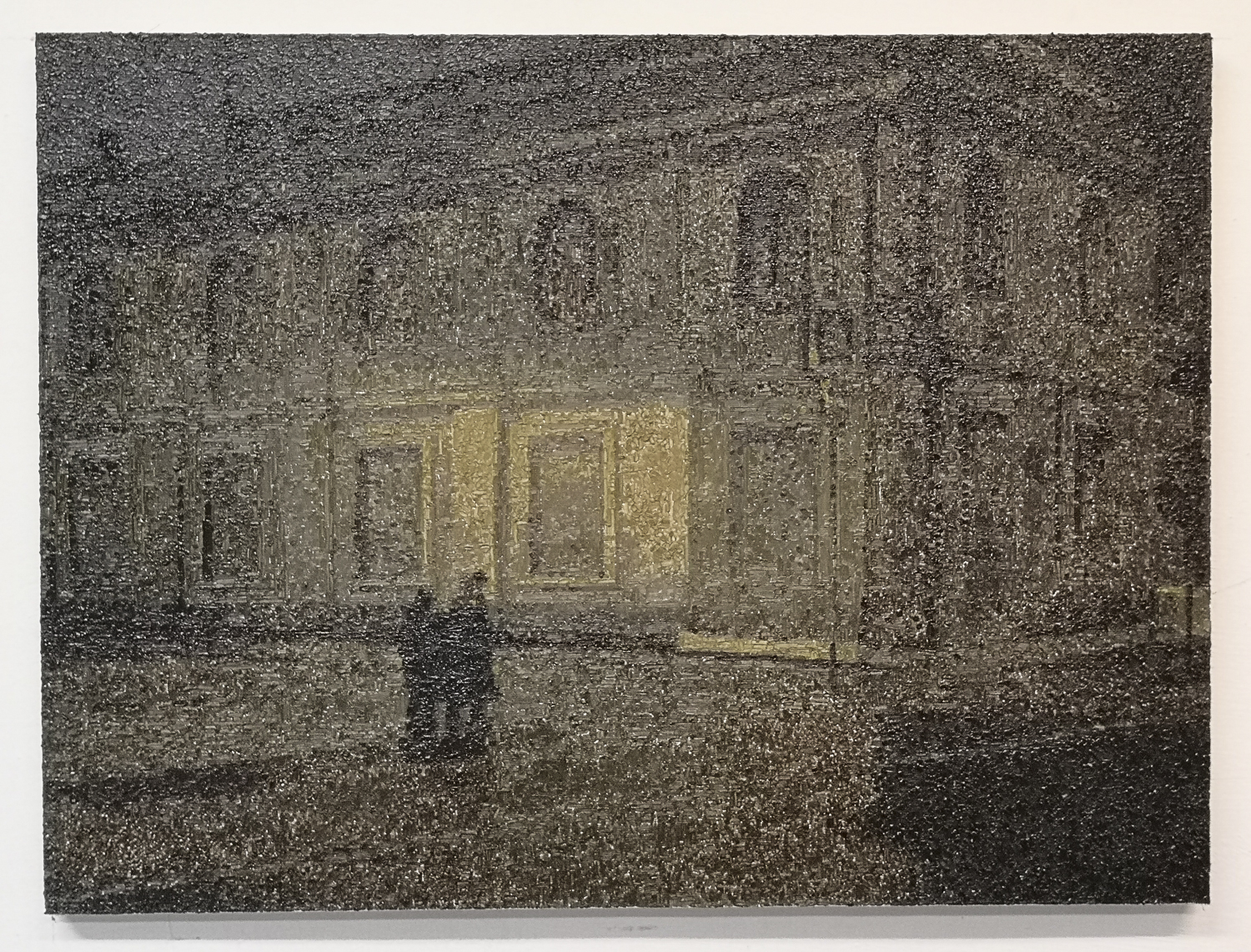
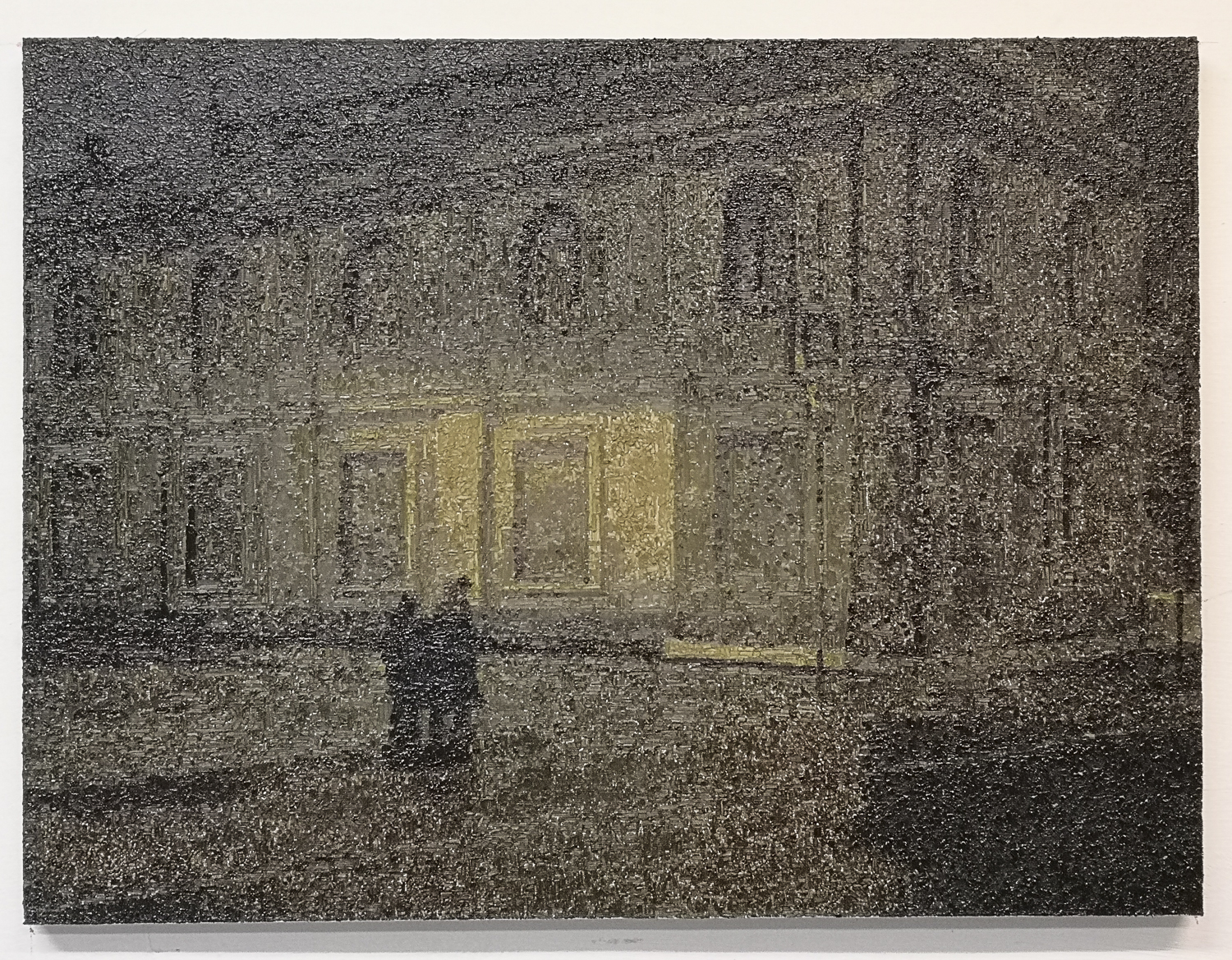
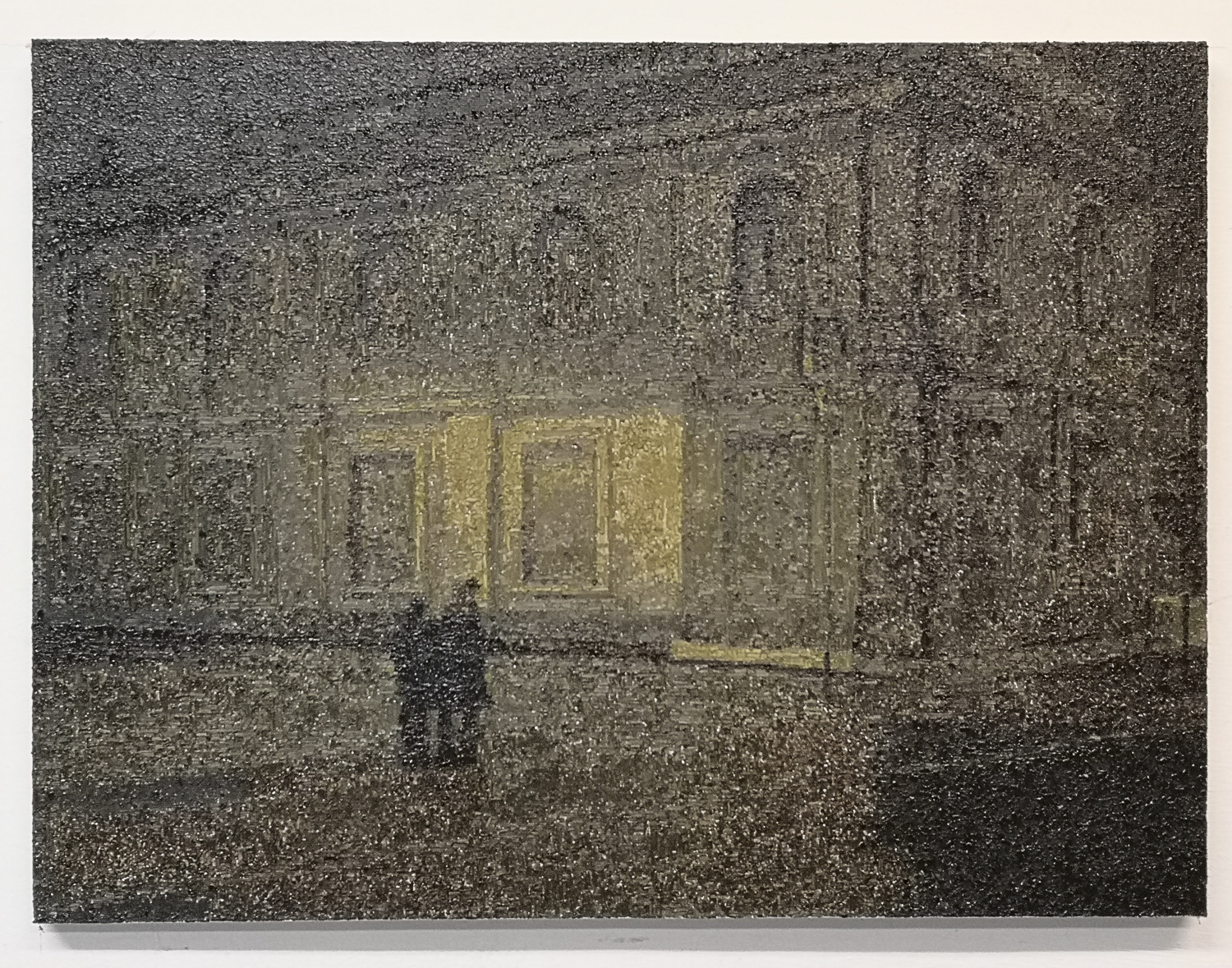
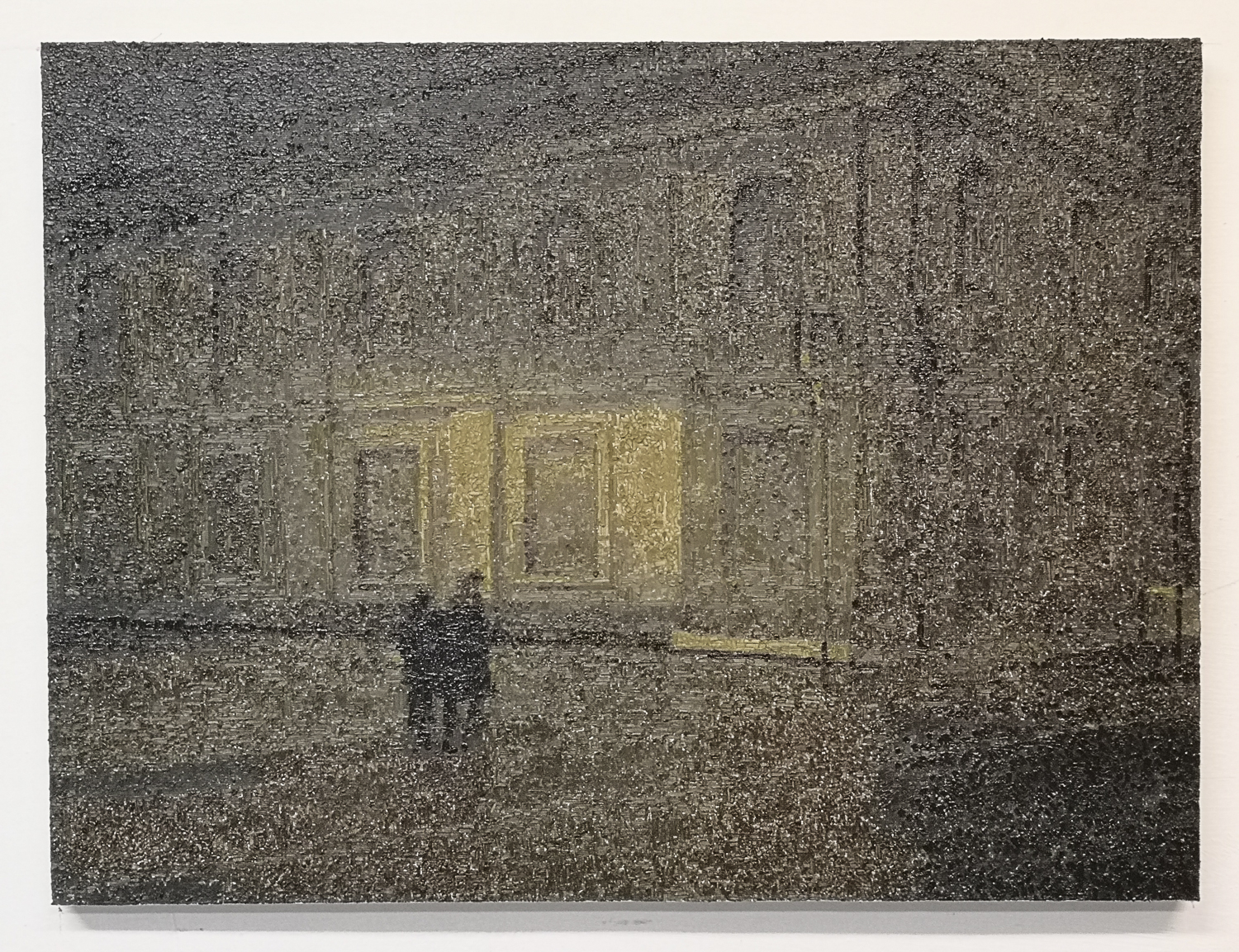
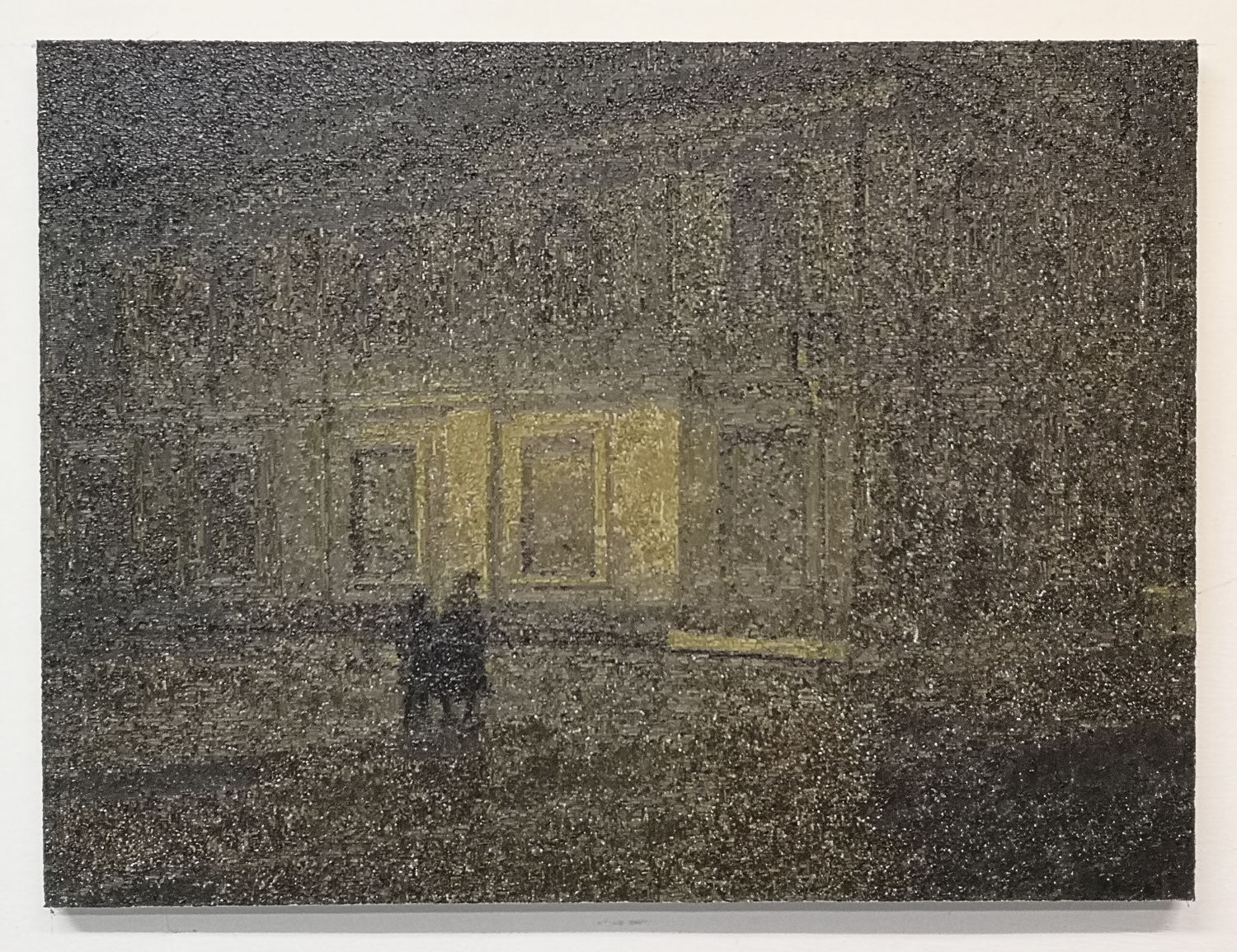
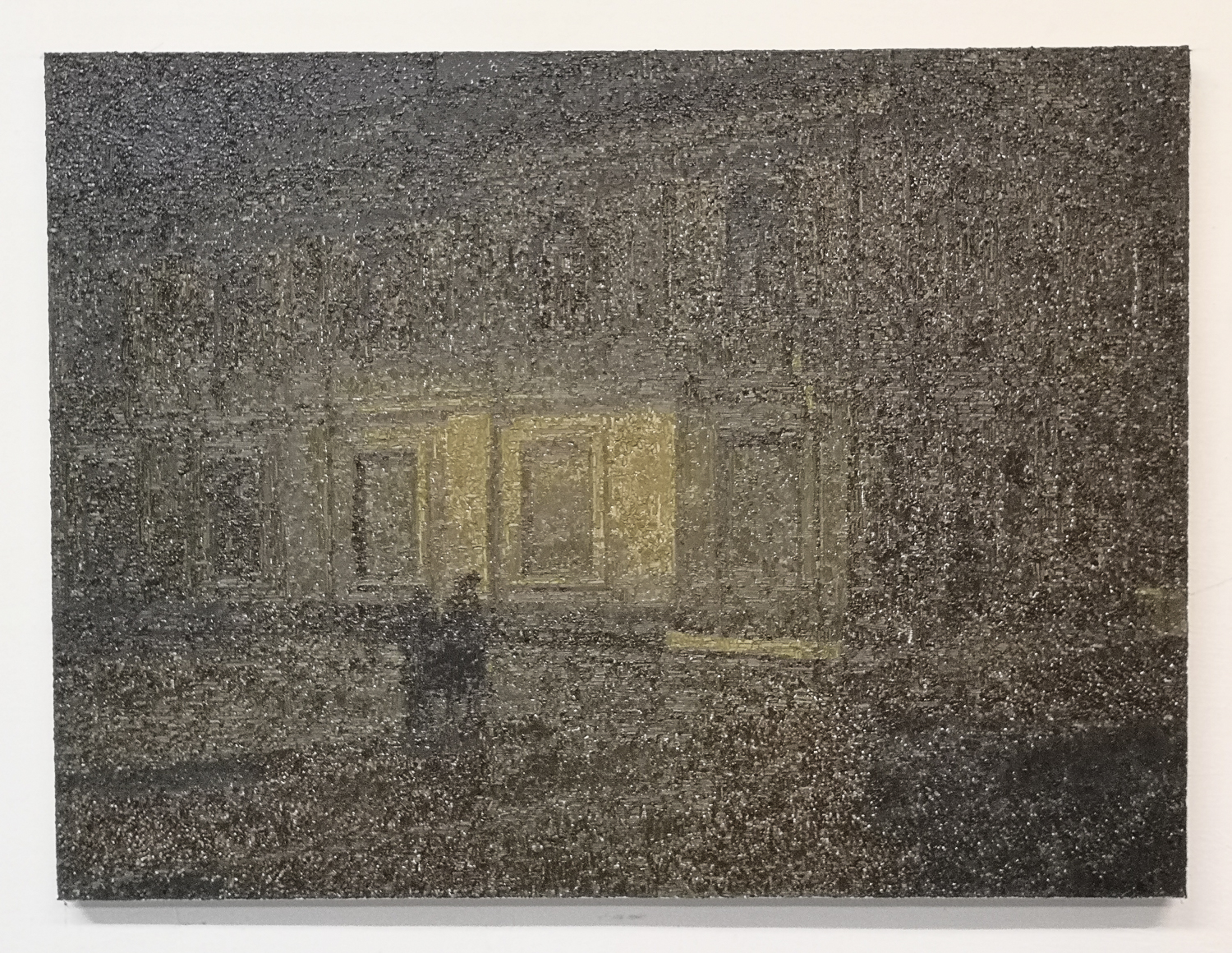
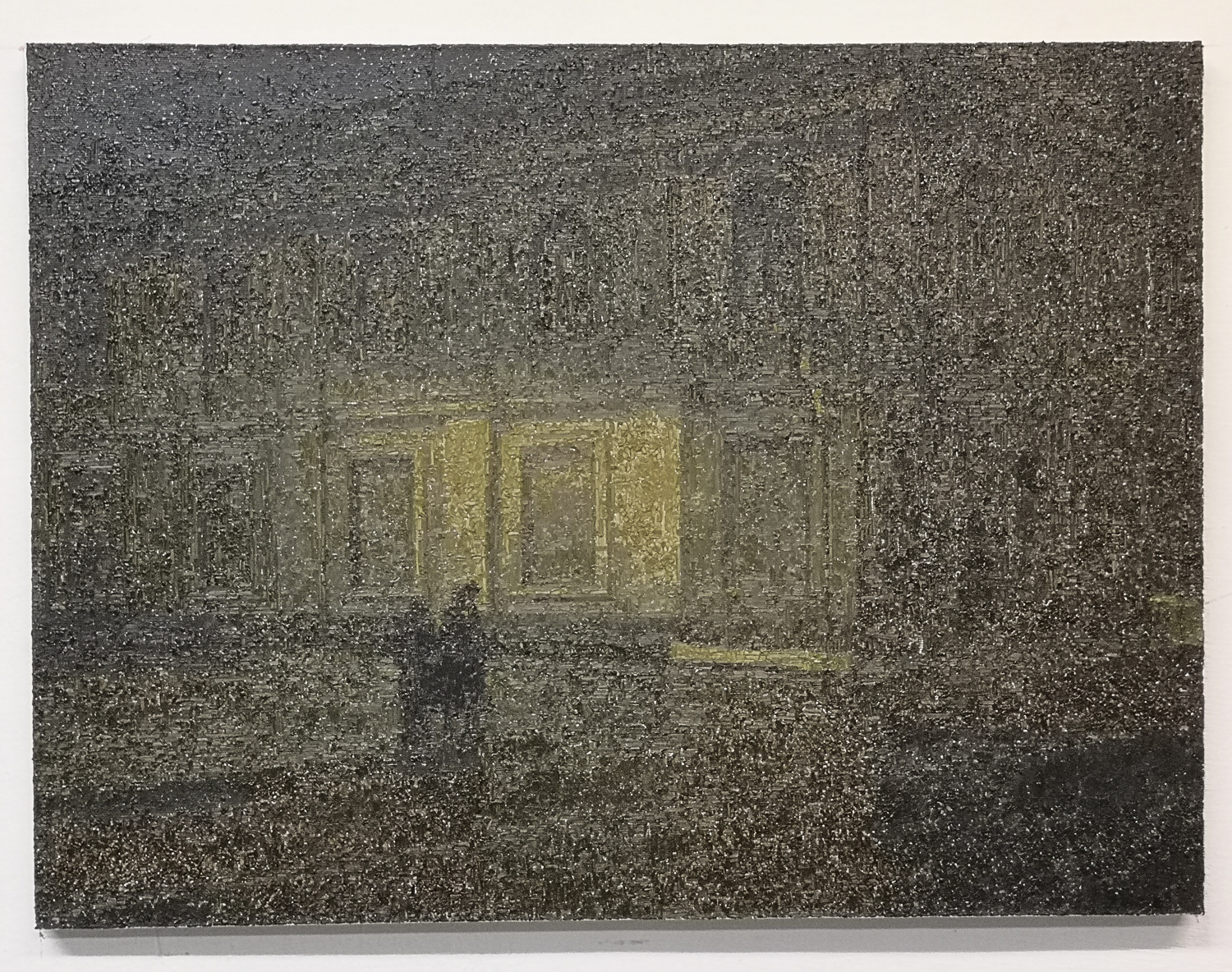
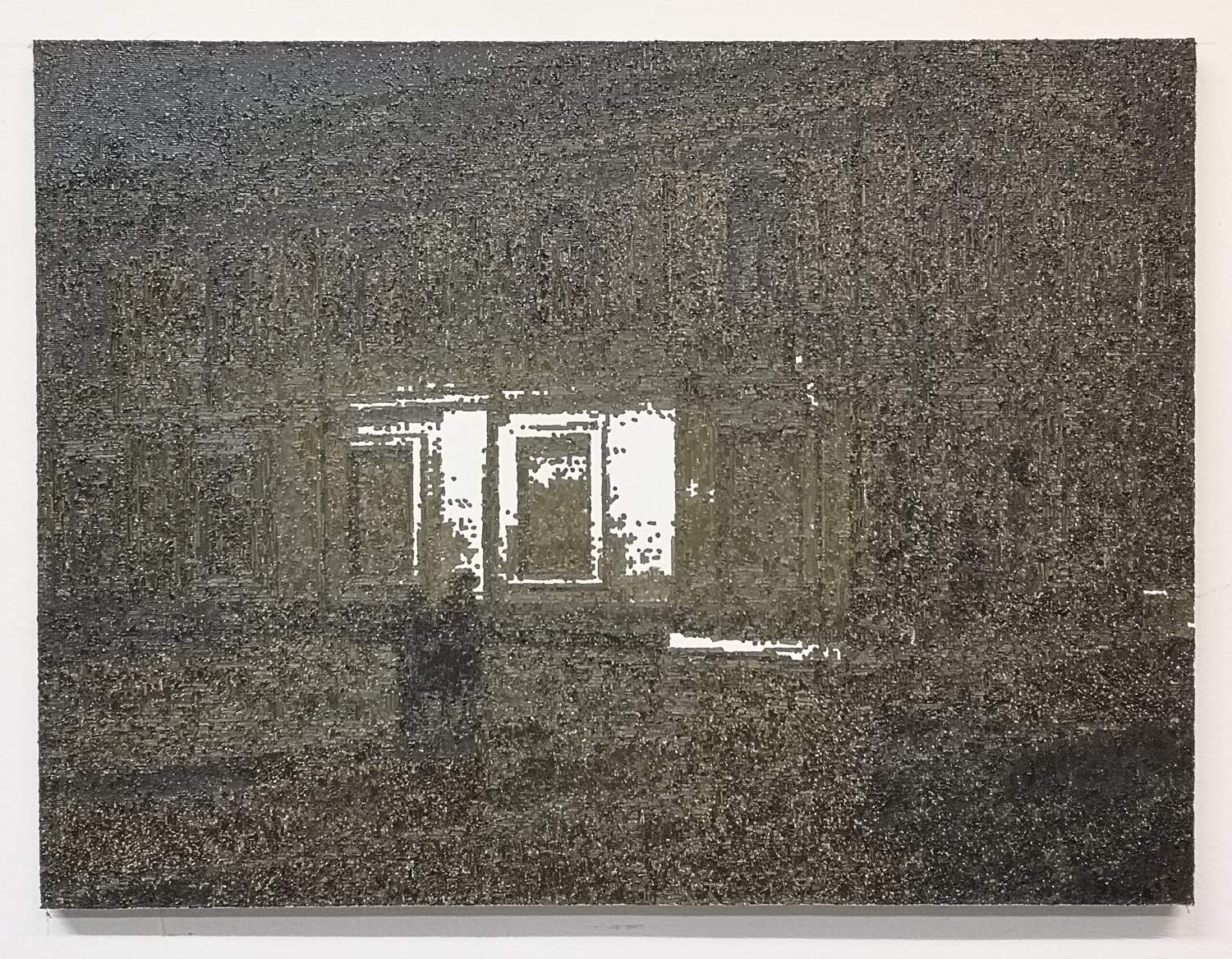
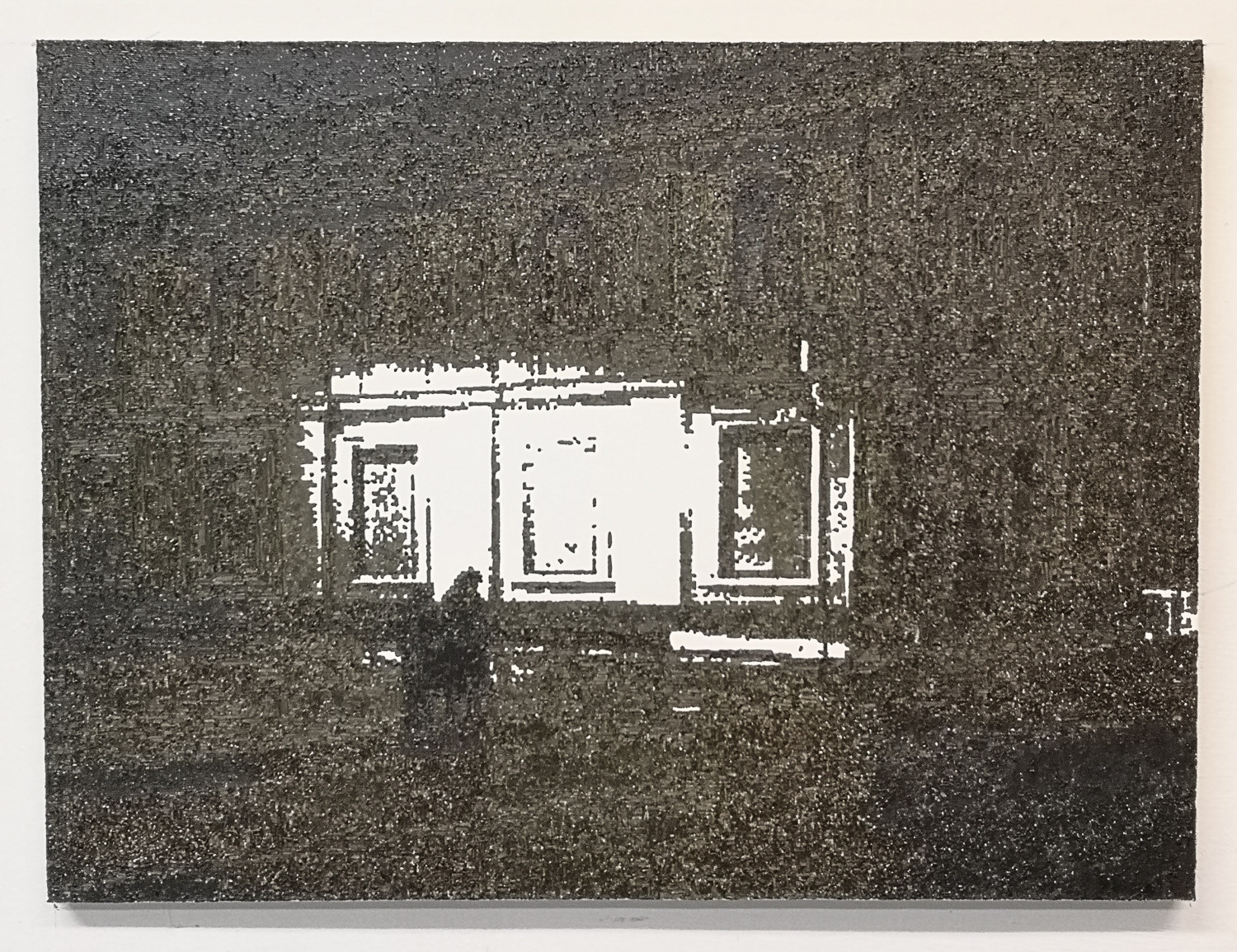
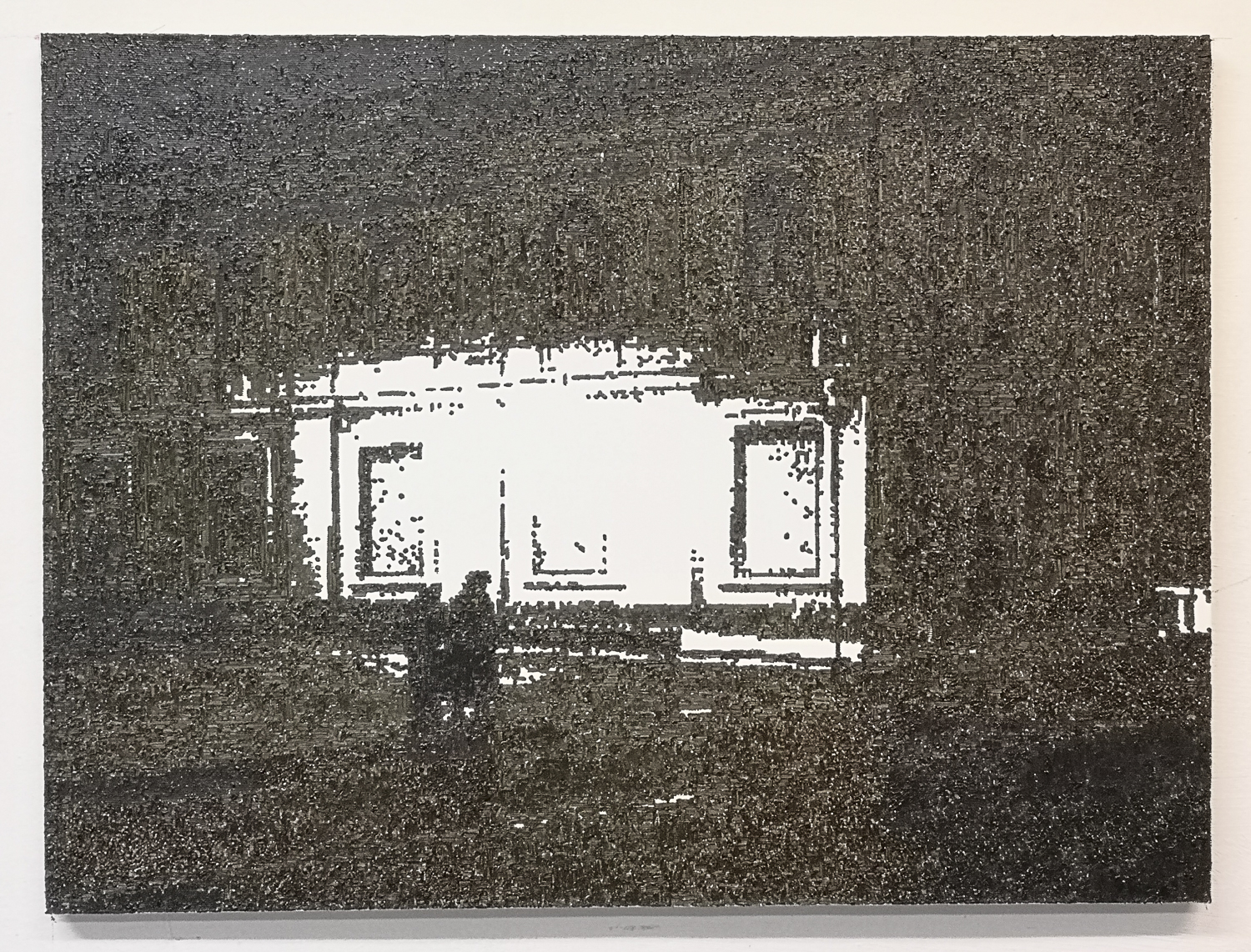
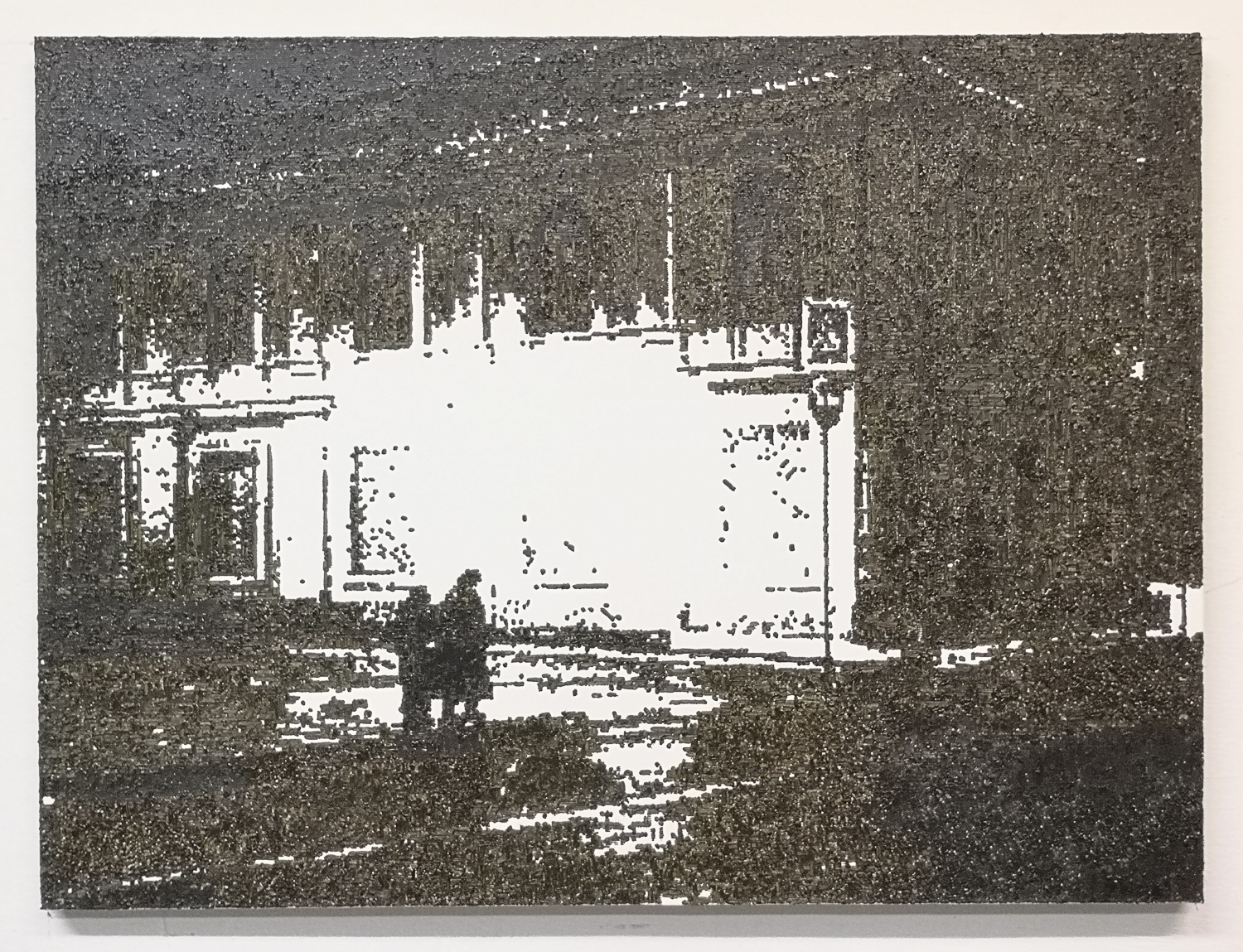
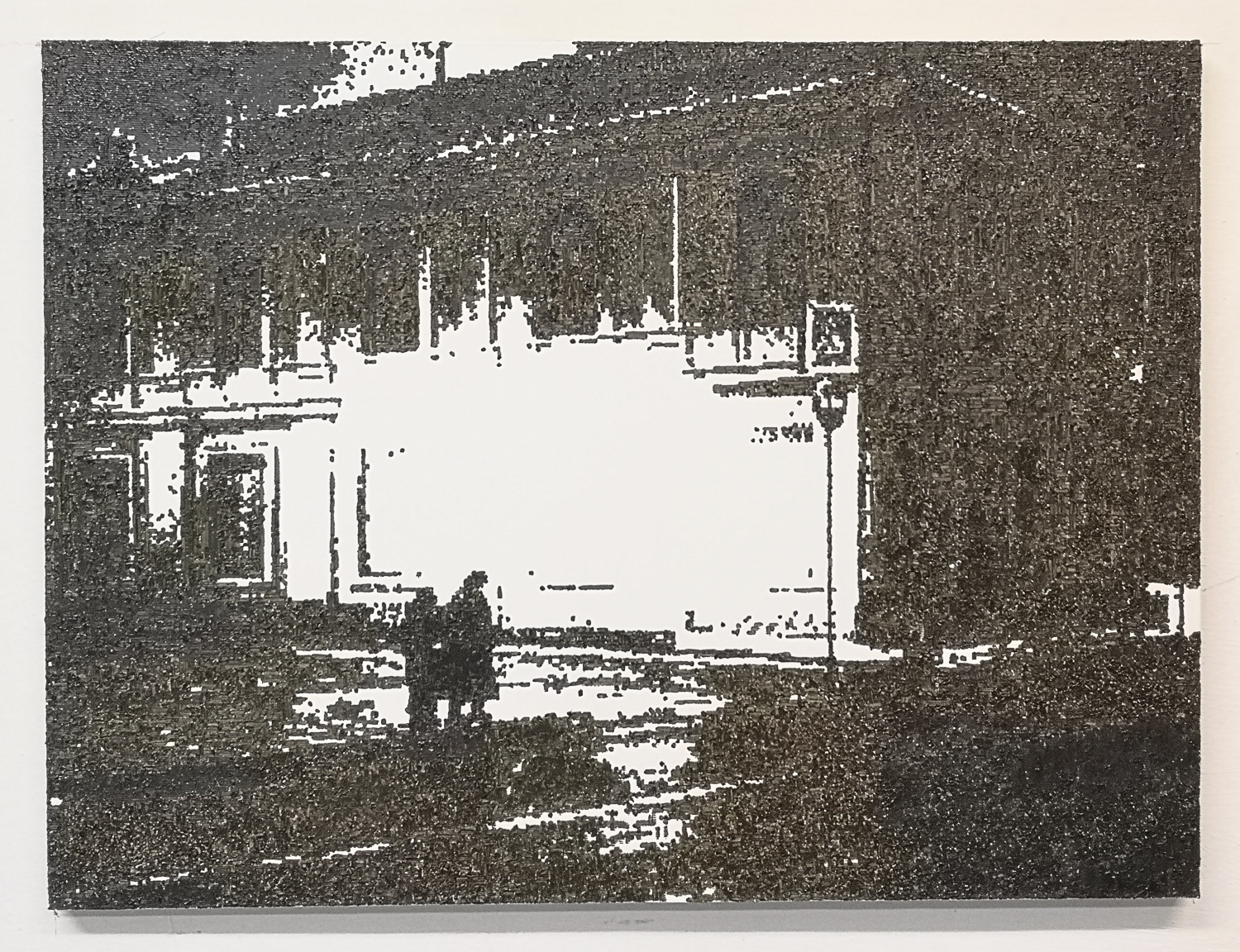
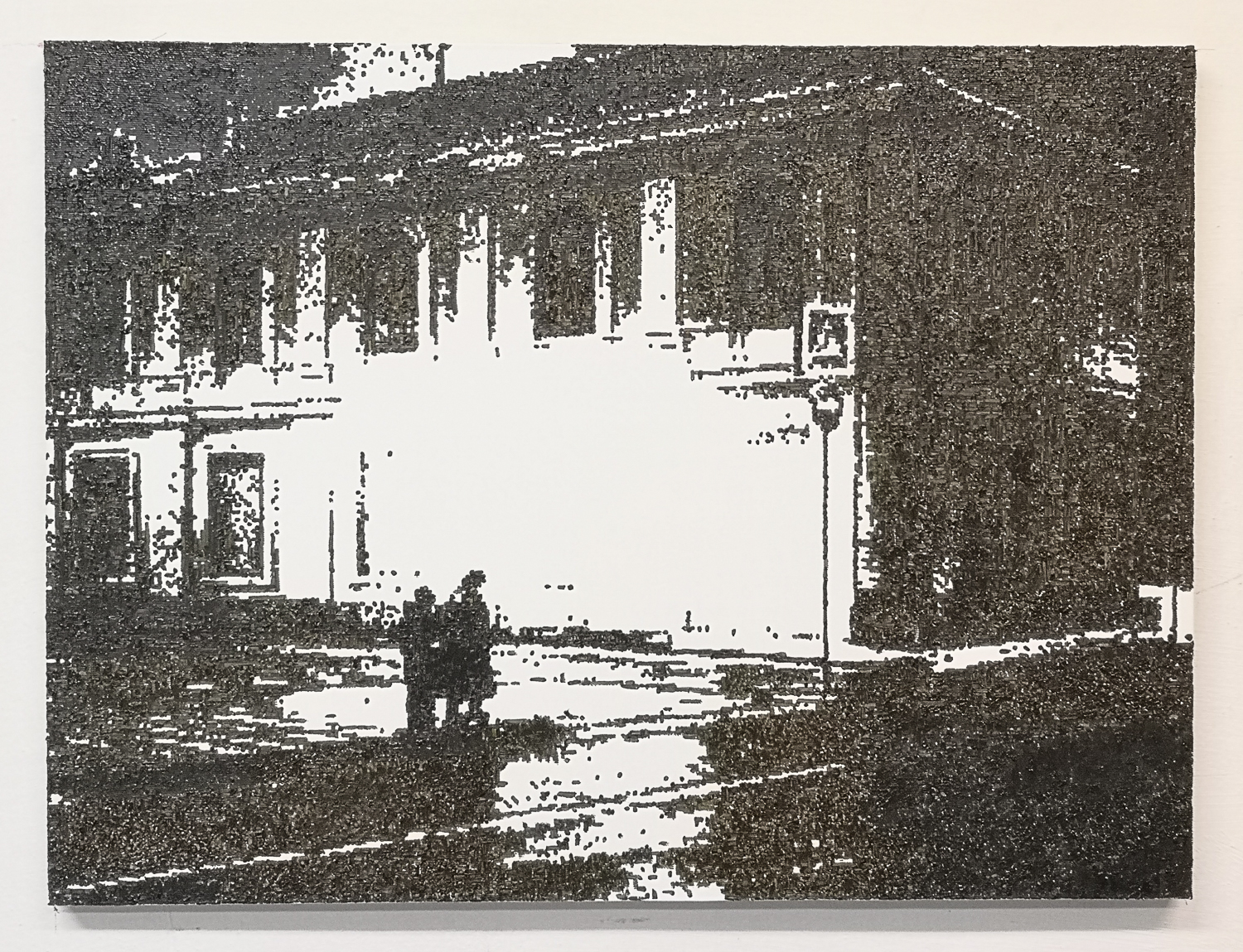
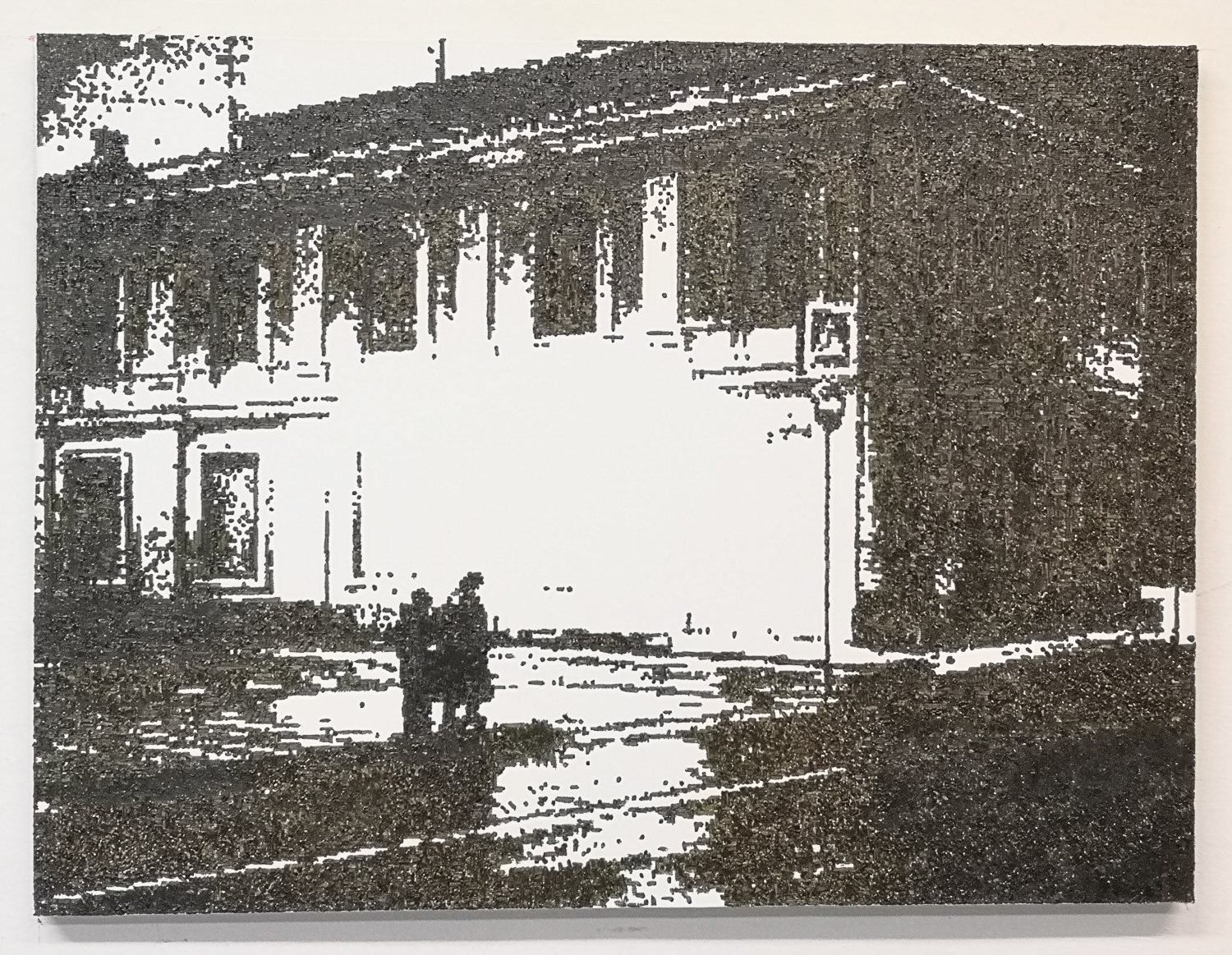
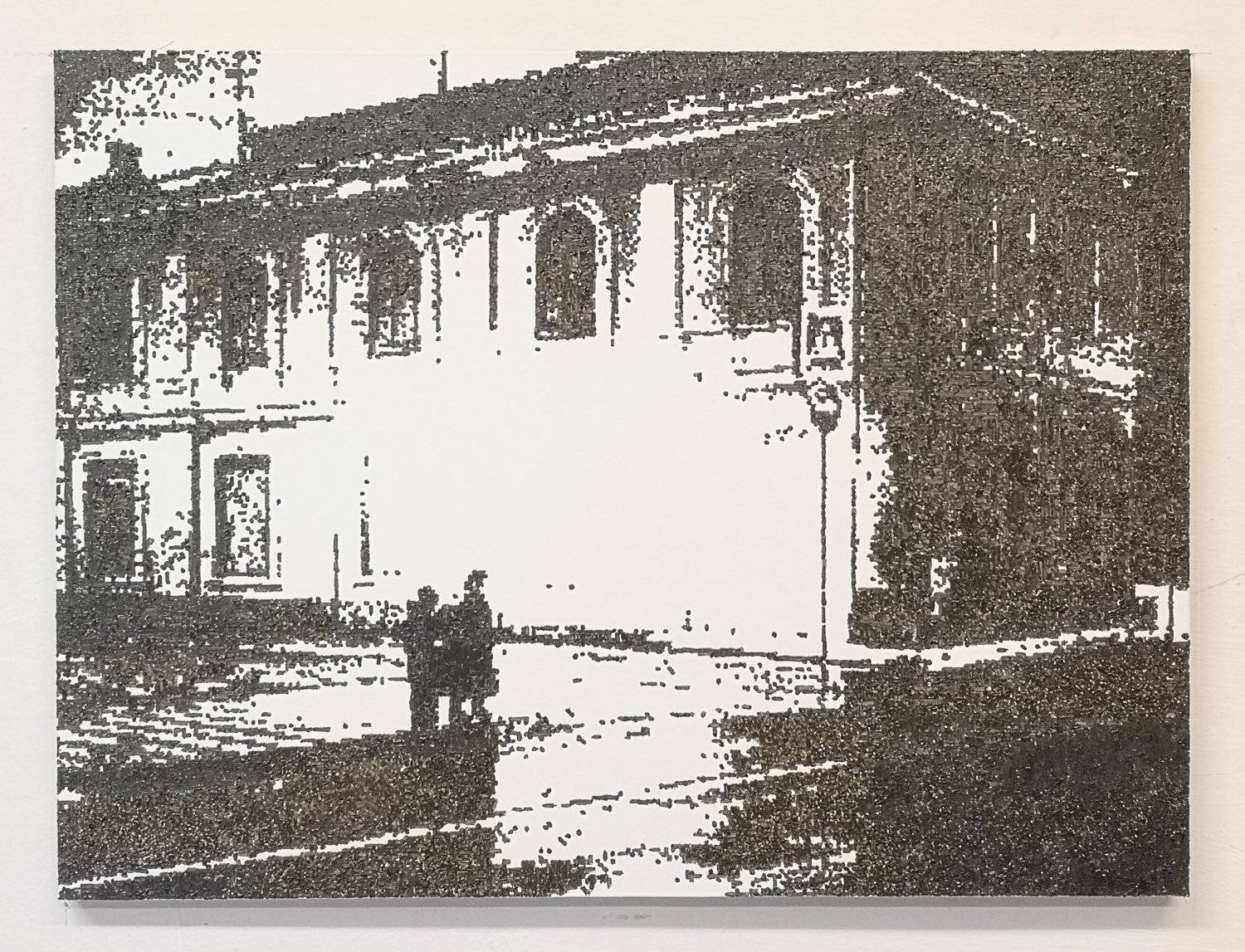

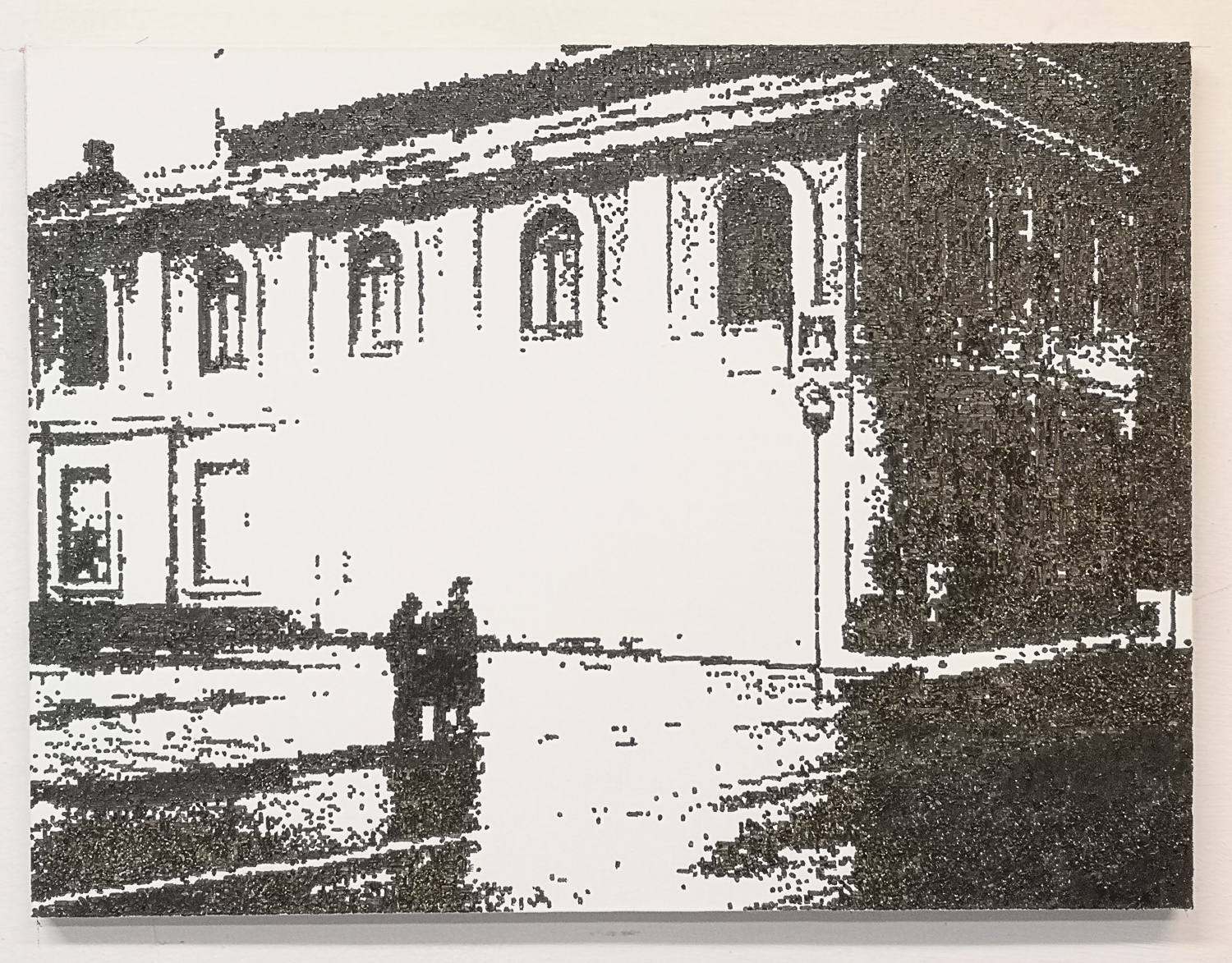
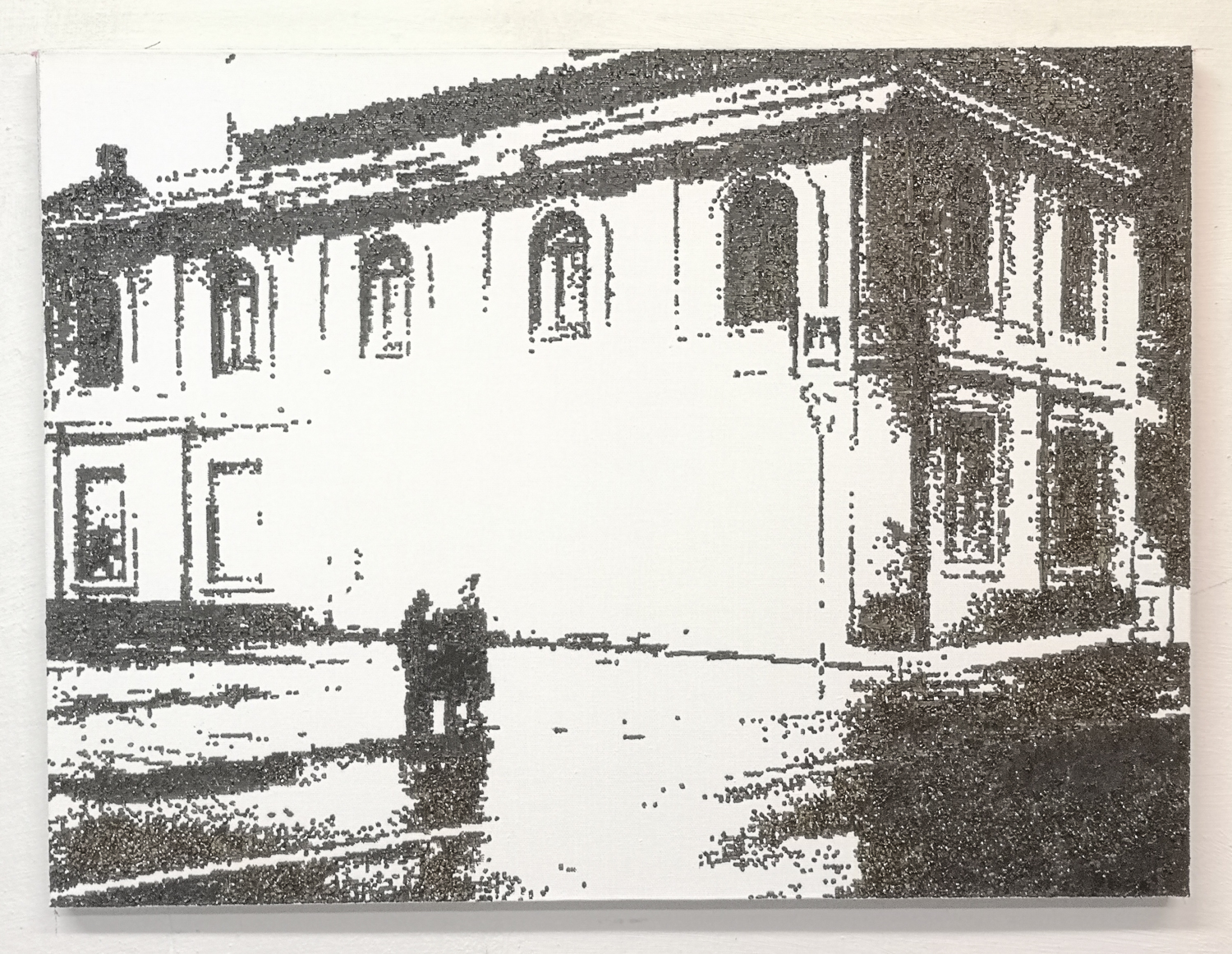
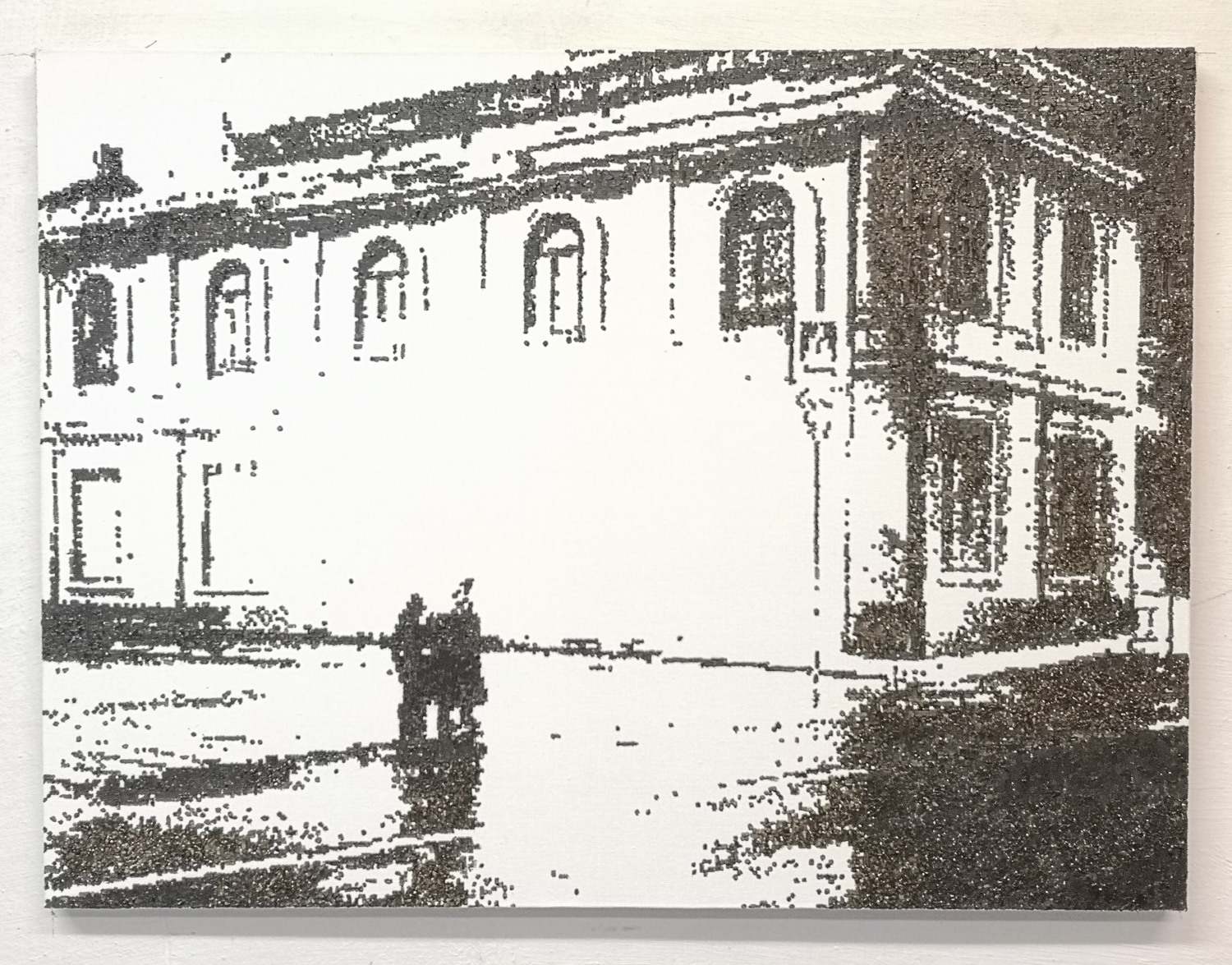
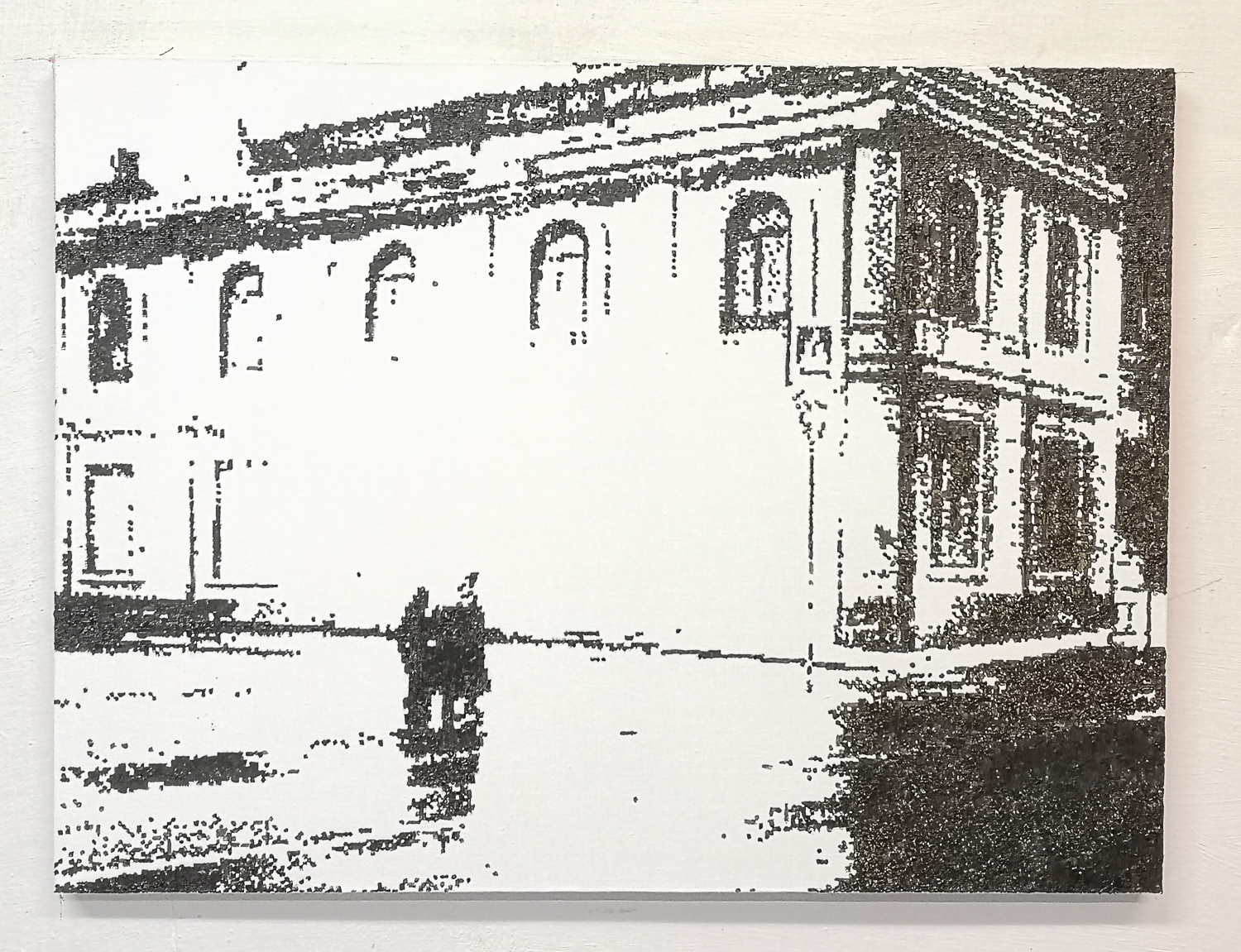
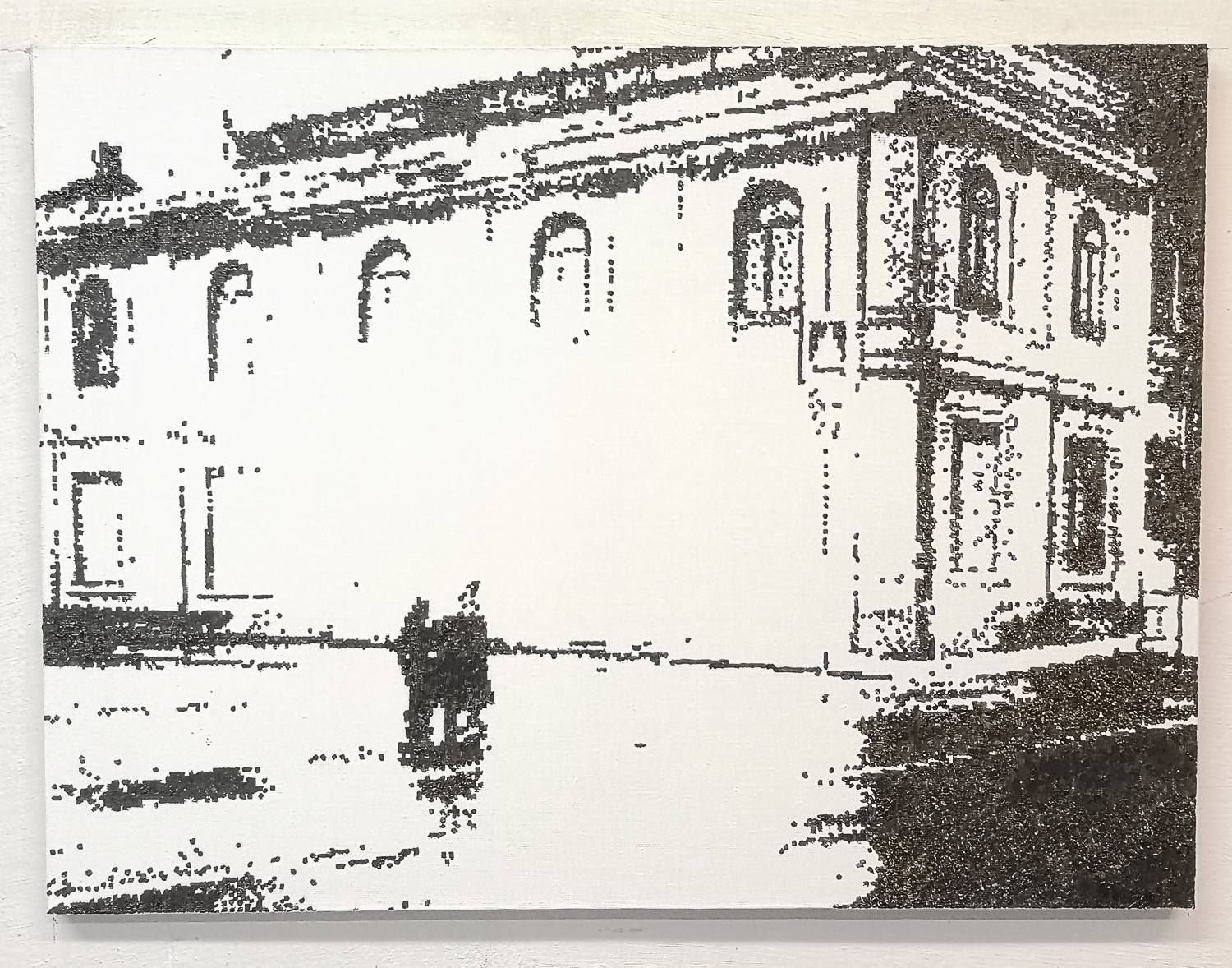


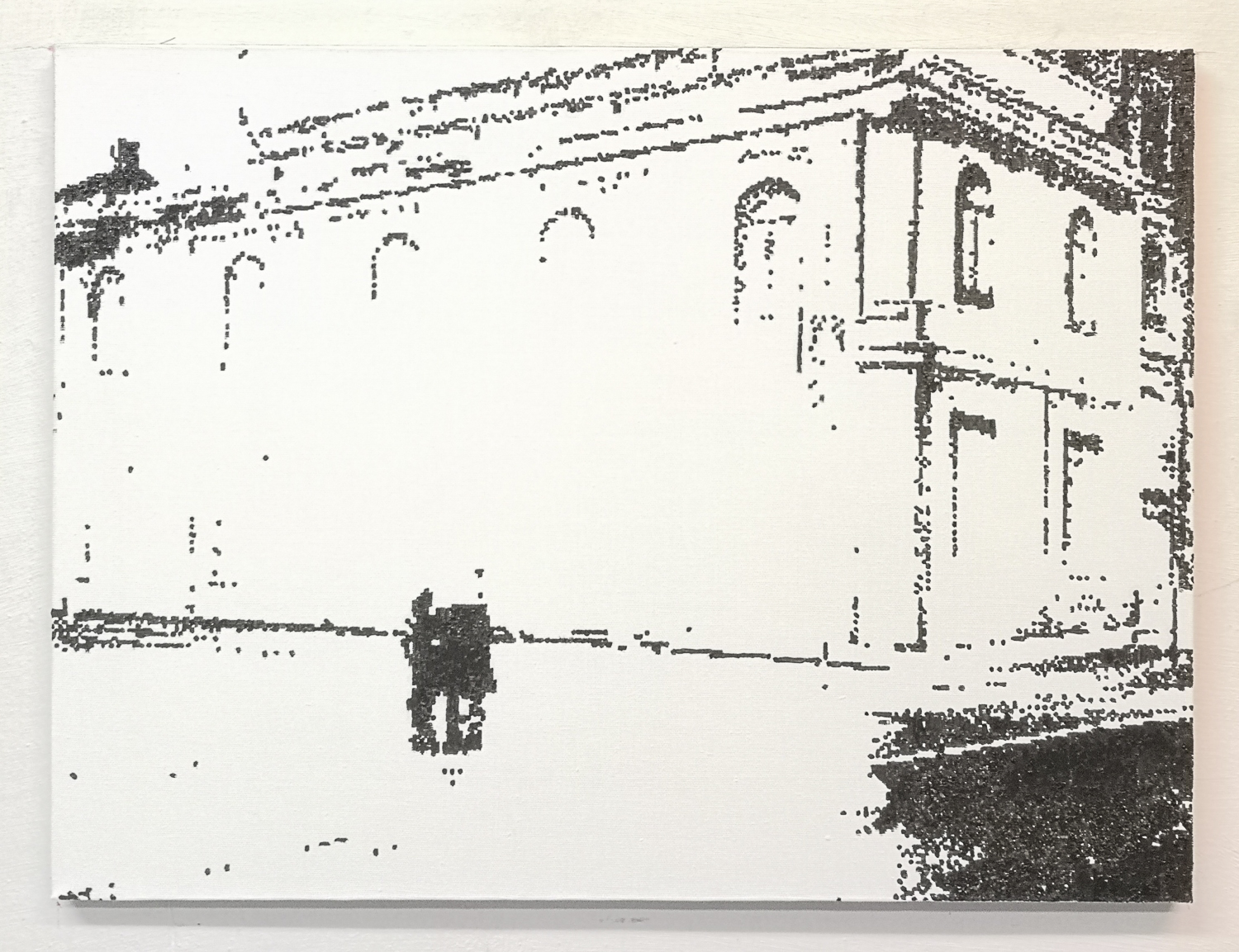
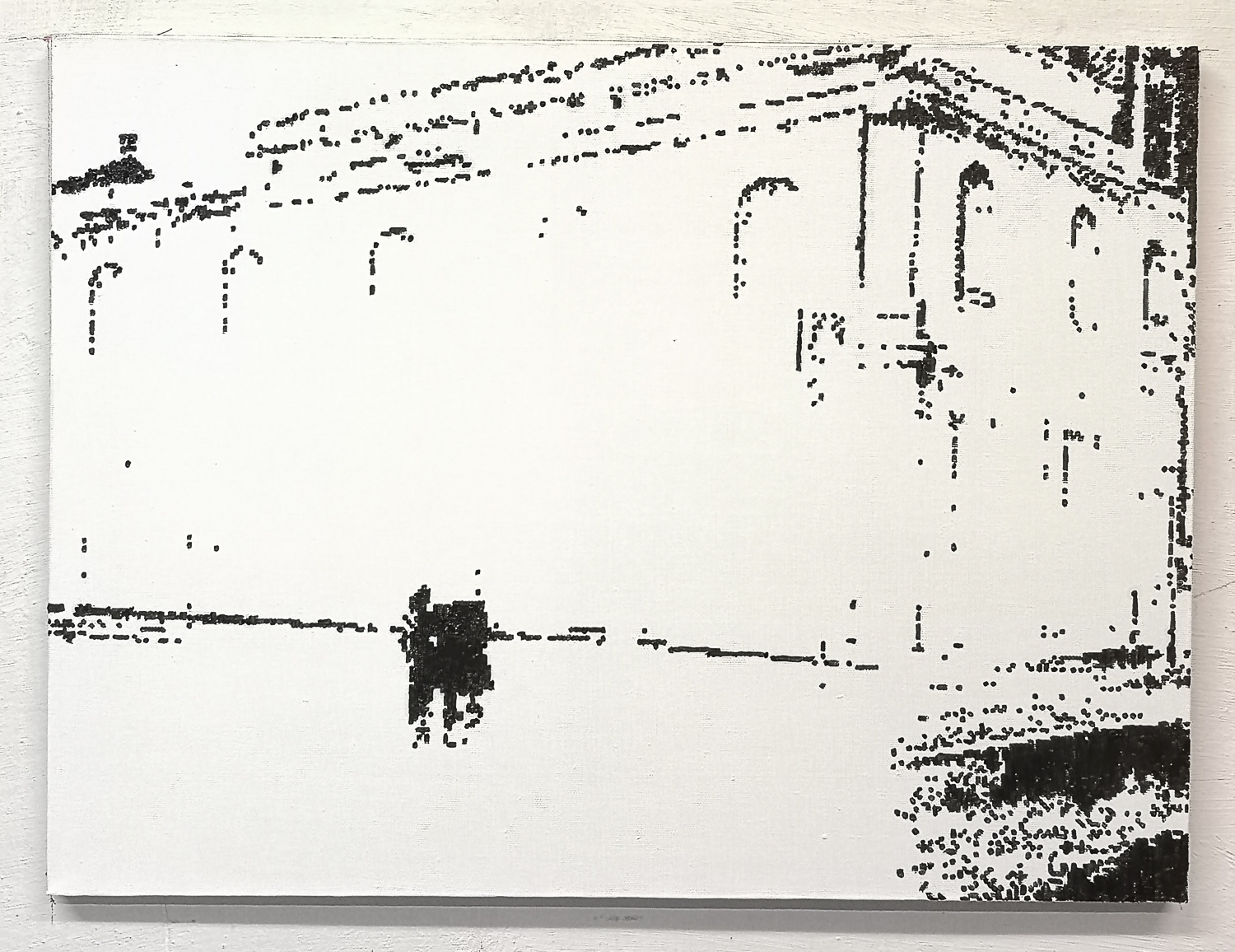

The presented artwork is part of the series “Quantum Project,” which combines the artist’s meticulous technique and conceptual depth. The painting, created entirely with a No. 2 brush, draws inspiration from the intricate beauty of Roman micro-mosaics. Each brushstroke becomes a fragment of a greater whole, forming a cohesive image with a tactile, mosaic-like texture.
The artist has meticulously developed a custom palette, based on the principles of index color. This approach allows the artwork to achieve a harmonious balance of hues and a systematic structure, reminiscent of digital pixelation yet maintaining the organic essence of traditional painting. The deliberate selection and application of color transform each element into a symbol of precision, suggesting the interconnectivity of the micro and macro.
“Quantum Painting,” as a technique, bridges the worlds of science and art. The title “Quantum Project” encapsulates the conceptual underpinning of this series. Each painting reflects the complexity of quantum processes, where order and chaos coexist, and the smallest particles form the fabric of the universe. This innovative approach encourages viewers to delve into the relationship between structure, randomness, and perception.
The series invites contemplation of time and space, offering a meditative experience akin to observing the infinite detail in nature or the cosmos. It is a celebration of the intricate and the monumental, achieved through the smallest gestures of the brush, echoing the timeless traditions of ancient mosaic craftsmanship while pushing the boundaries of contemporary art.

Architecture and Astronomy
At the exhibition “Archipelago of Utopias”, which can still be visited today and tomorrow at the KultProekt gallery, there is an intriguing example of architectural painting inspired by architectural installations. Maxim Ksuta’s painting “Orion Observatory” stands as an independent piece of art while simultaneously drawing connections to the work of one of the pioneers of land art—a name that seems relatively unknown in our country. Thanks to the artist for the detailed story about his source of inspiration and for creating a meditative painting that reconstructs architecture connected to the cosmos while convincingly conveying the essence of its materials and environment.
Maxim Ksuta:
“I created this piece under the influence of projects by Hannsjörg Voth—a renowned German artist and sculptor, born in 1940 in Baden-Baden. Voth gained fame for his monumental land art projects, which blend elements of architecture, sculpture, and symbolism. In his works, Voth seeks to bridge human culture with nature, often exploring themes of time, space, and the cosmos.
In the 1960s and 1970s, Voth actively investigated ways to integrate art into public spaces, creating installations that responded to questions about humanity’s place in the world and its interaction with the surrounding environment. However, his true fame came with projects located in remote and harsh settings, such as the deserts of Morocco, where he worked with natural materials like clay and sand.
One of Voth’s most famous projects is the “City of Orion” (1998–2003), located in the vast deserts of Morocco. In this work, Voth united his interests in astronomy, ancient cultures, and large-scale architectural forms. His aim was not merely to construct sculptural objects but to create structures that interact with nature and cosmic phenomena, such as the movement of stars. The City of Orion project reflects the Orion constellation through towers precisely positioned to mirror the stars’ placement in the sky.
City of Orion (1998–2003):
The seven primary stars of Orion—Rigel, Saiph, the three “belt stars” Mintaka, Alnitak, and Alnilam, as well as Bellatrix and Betelgeuse—are most prominently visible worldwide during winter months due to their location on the celestial equator. The concept of the project was to represent these seven stars on Earth with the same number of observation towers made from compacted clay. Each tower symbolizes one of the seven stars, and their arrangement within the complex (approximately 40 x 100 meters) corresponds to the constellation’s layout. The towers’ dimensions (ranging from 6 to 15 meters in height, width, and depth) reflect the stars’ brightness and size.
In the upper third of each tower, observation platforms were constructed, accessible via external staircases. Narrow openings in the towers’ walls, carefully calculated for their height, width, and orientation, allow for the observation of specific stars and constellations at certain times. The Orion Nebula (M42)—a star-forming region surrounded by vast clouds of gas—is represented in the complex by a fountain, marking the grouping of stars known as Orion’s “sword.” Seven smaller stars forming parts of Orion, such as its “head,” are also represented by additional compacted-earth towers.
The City of Orion was located in southeastern Morocco. Guided tours, lasting about 90 minutes at specific times, led visitors through all the towers, allowing them to observe the stars in sequence. While the seven large towers serve as astronomical structures illustrating the movement of specific celestial bodies through their positioning and orientation, the artist’s primary intent was to depict the Orion constellation in three dimensions as a large-scale sculpture on Earth.*
▪︎ Orion Observatory. Maxim Ksuta. Canvas, oil. 100 x 100 cm.
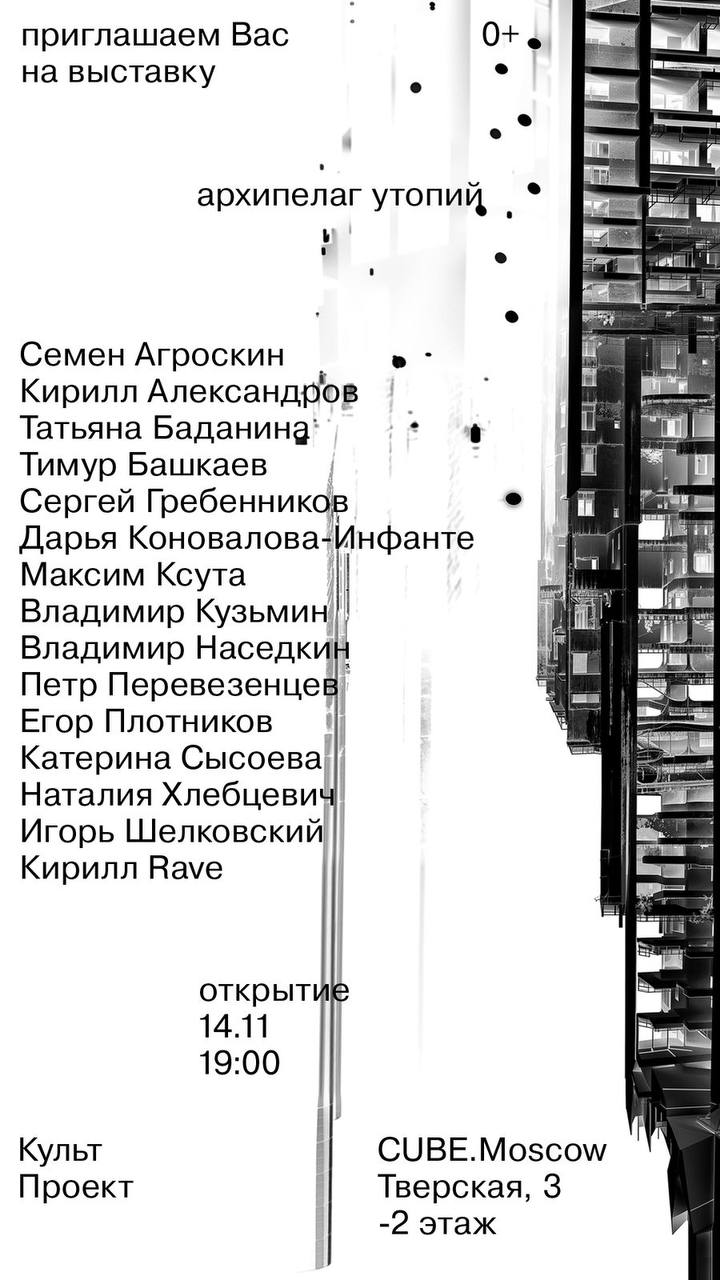
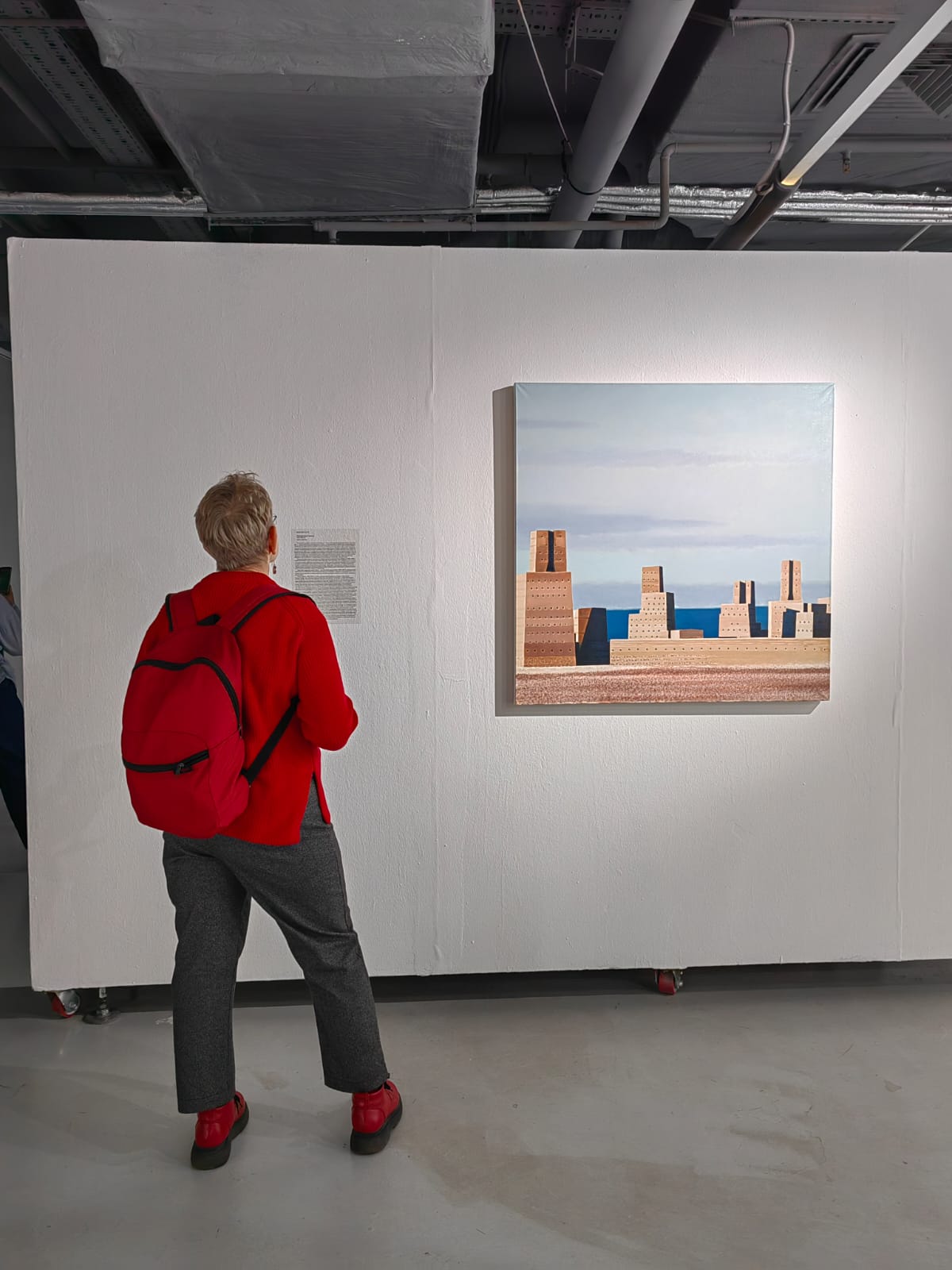

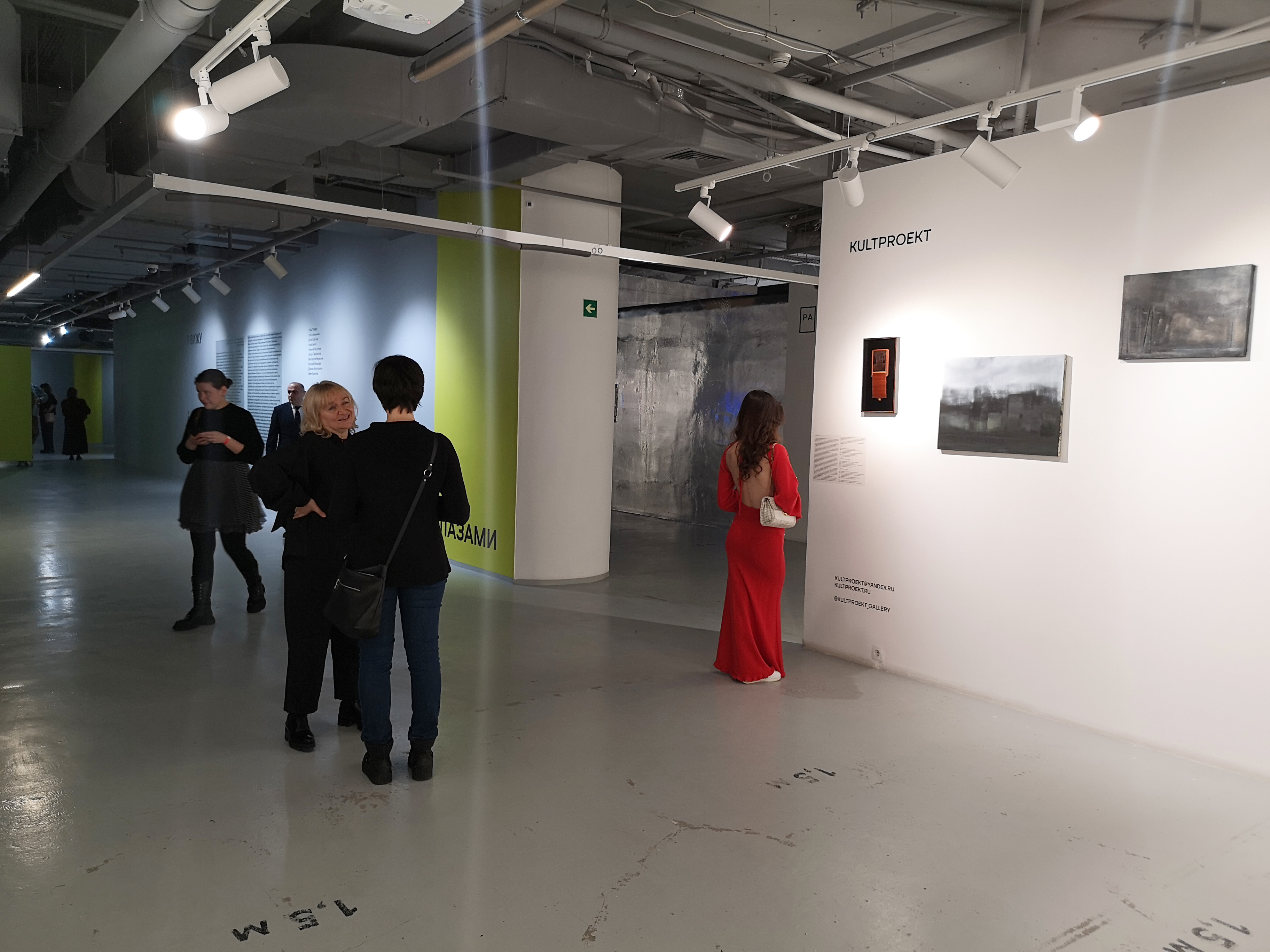
2024 “Archipelago of Utopias”, Kultproekt Gallery (CUBE), Moscow
Photo – Elena Rubunina
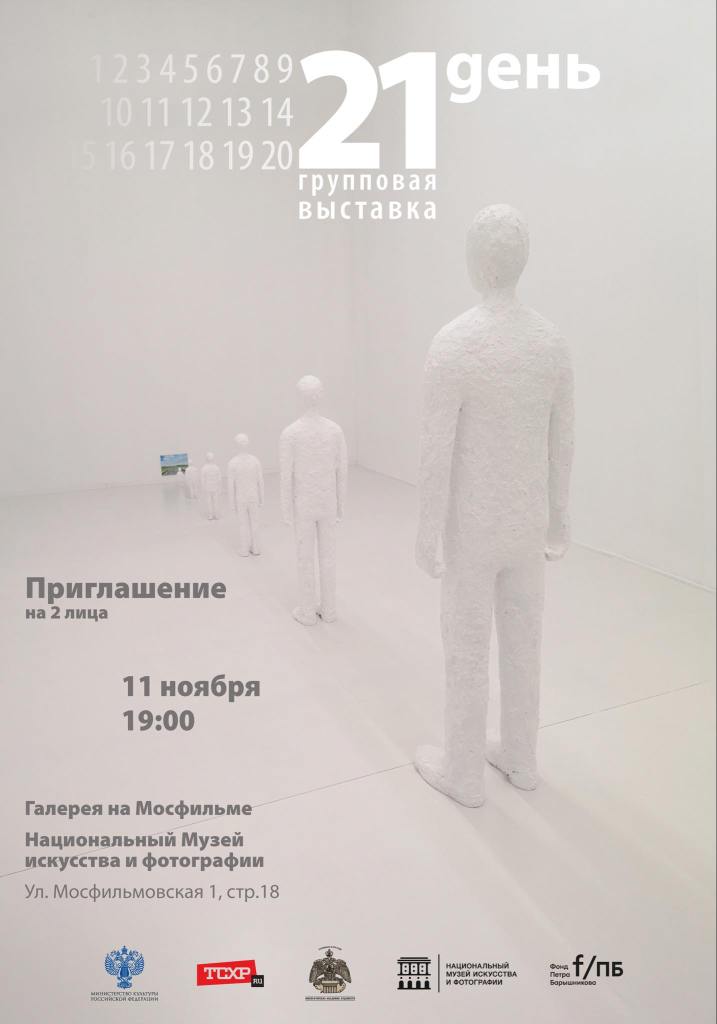
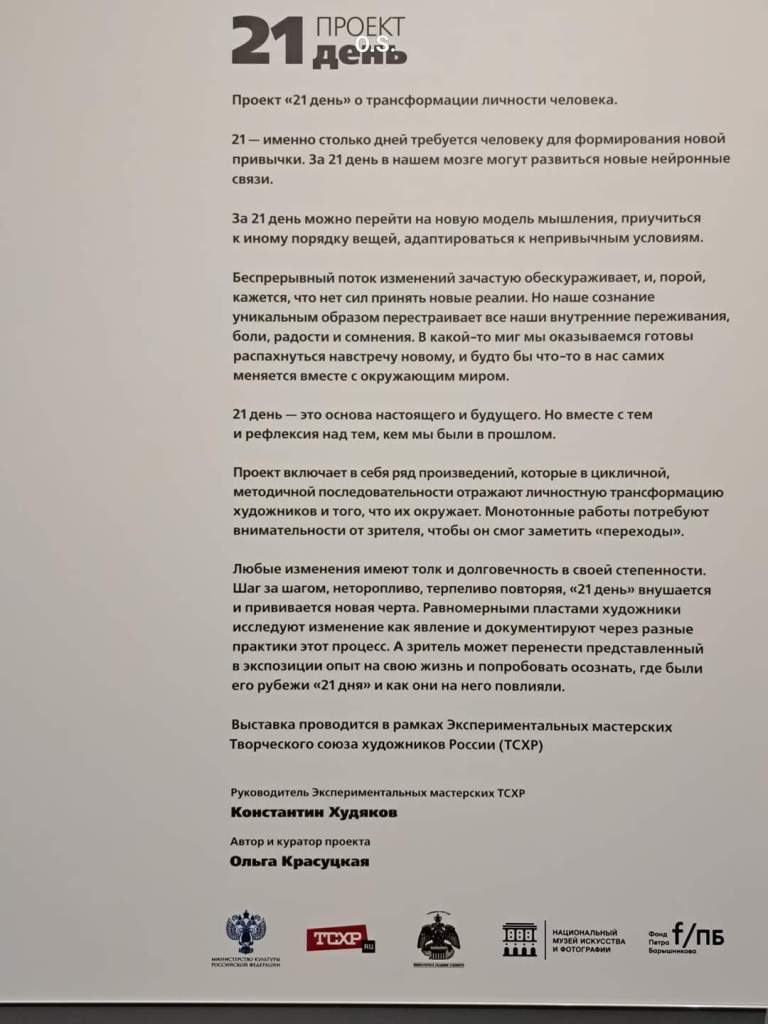

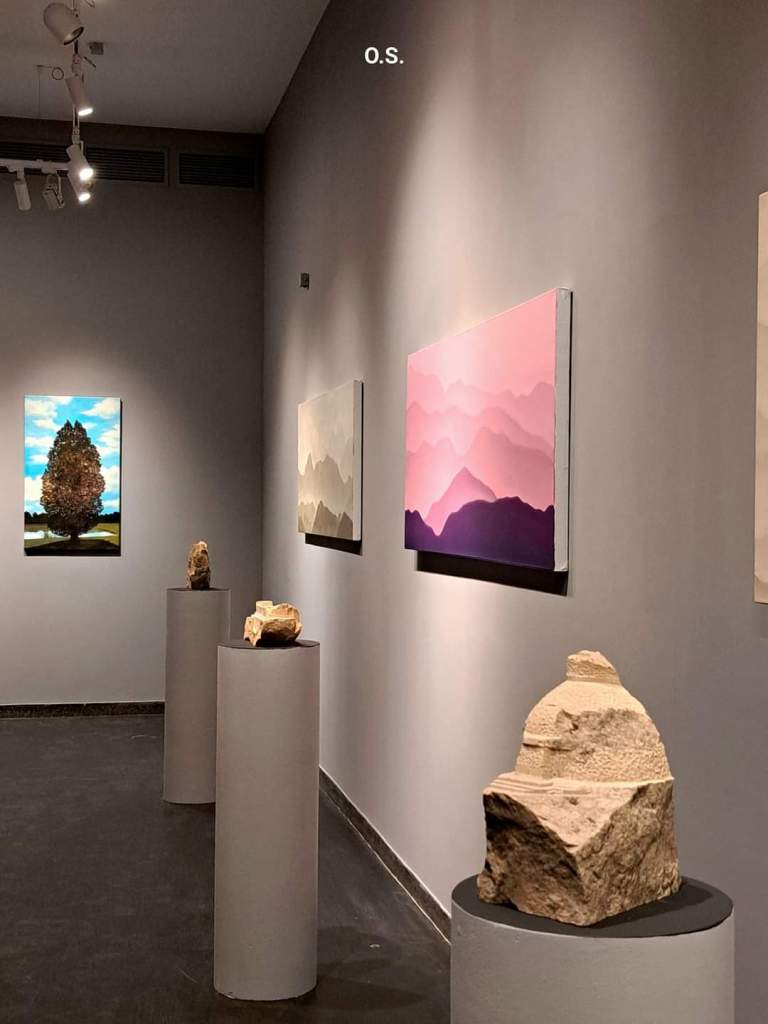
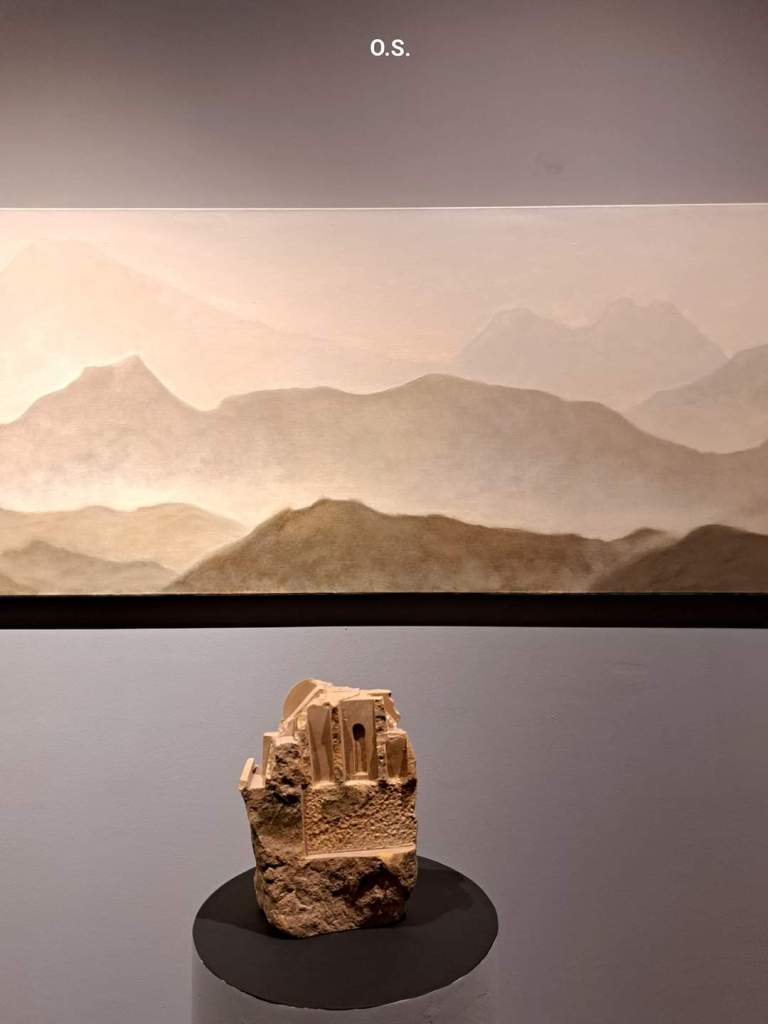
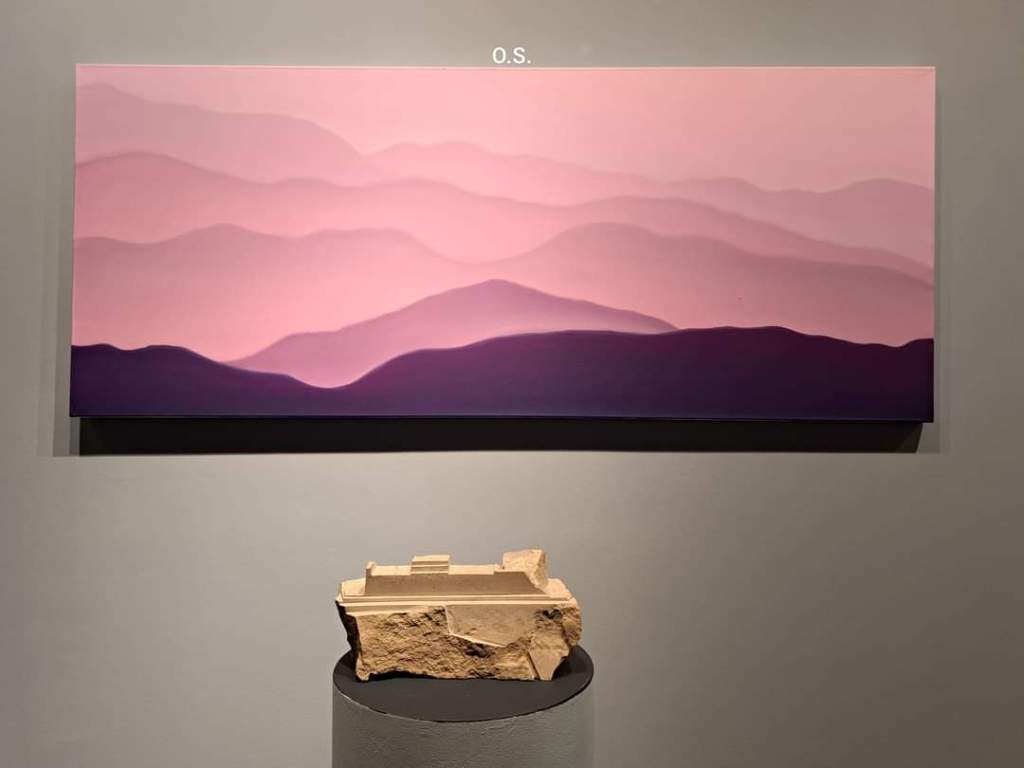
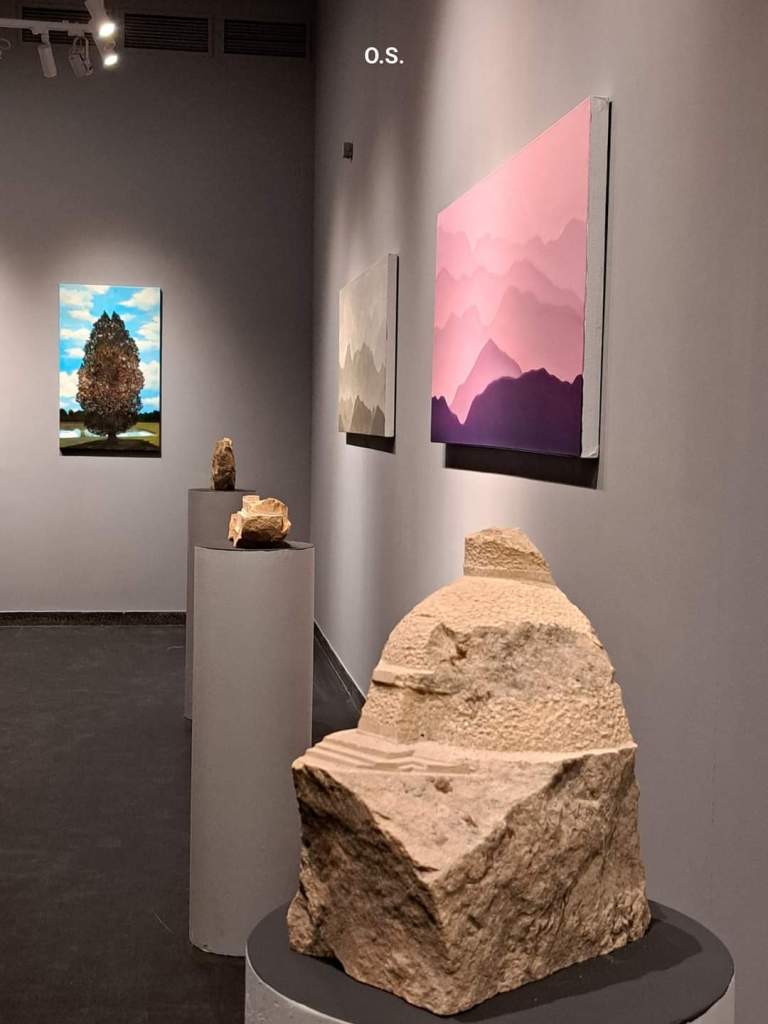
“21 days”, Gallery at Mosfilm National Museum of Art and Photography, Moscow
Photo – Olga Seregina
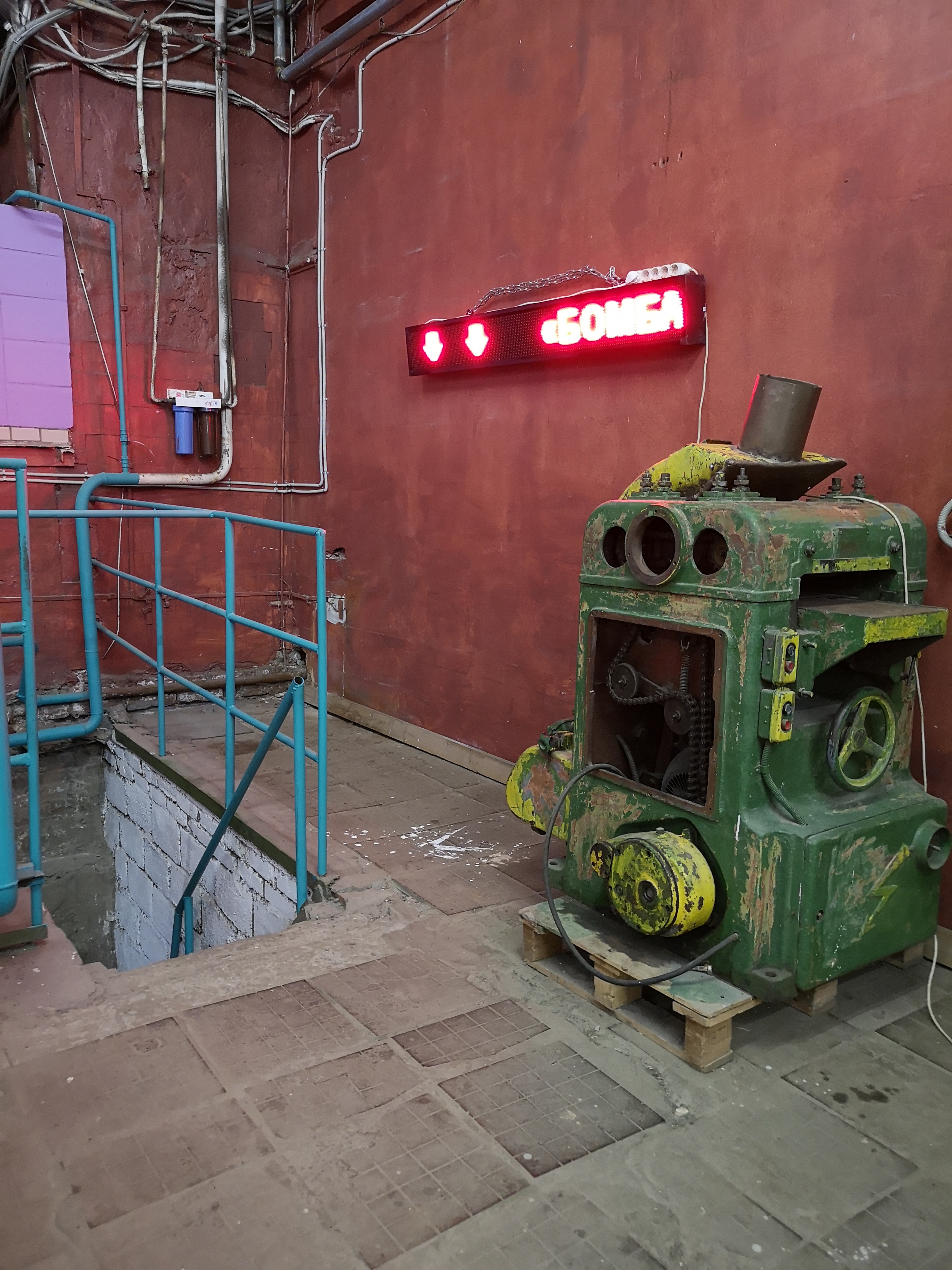
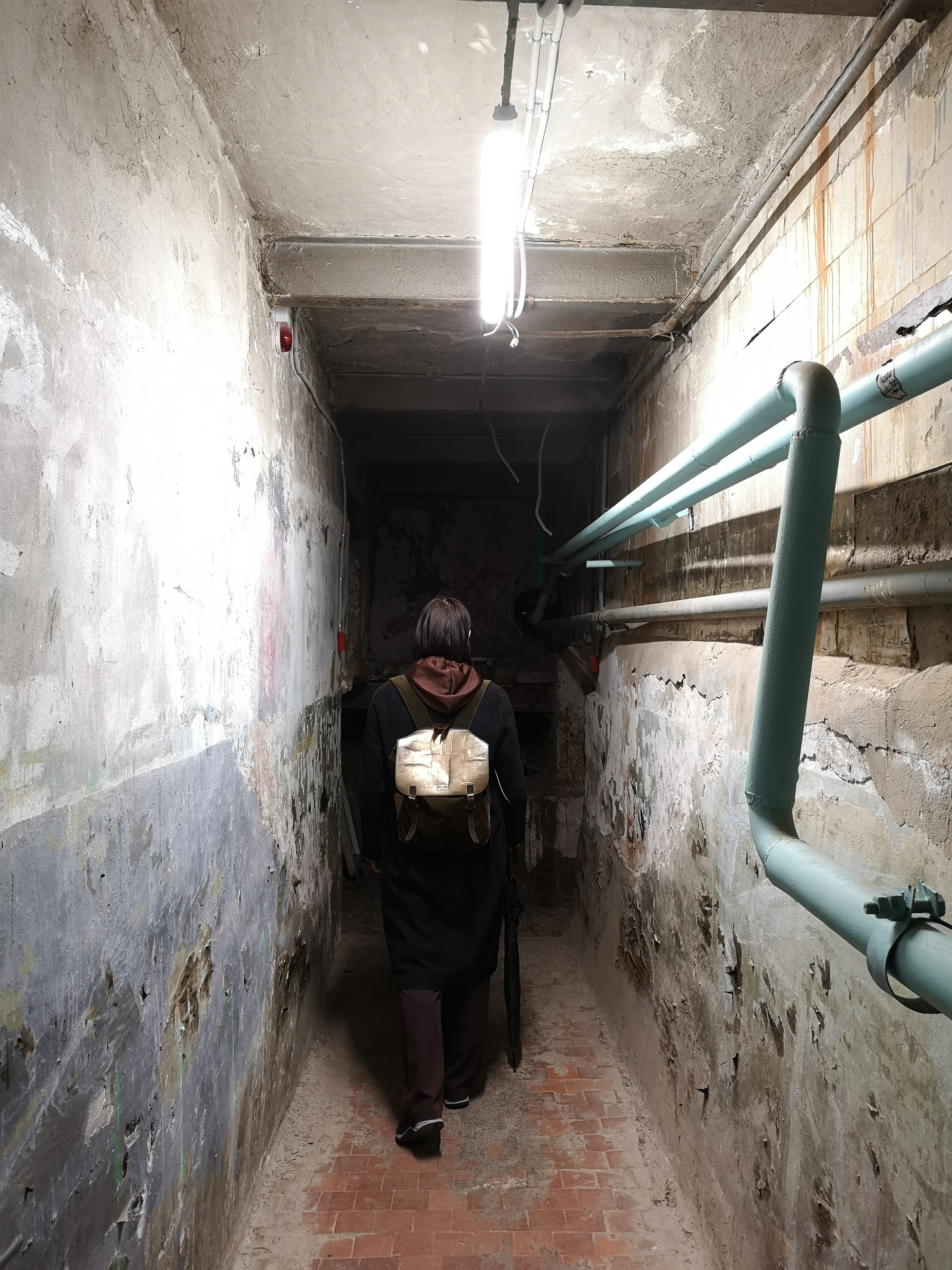
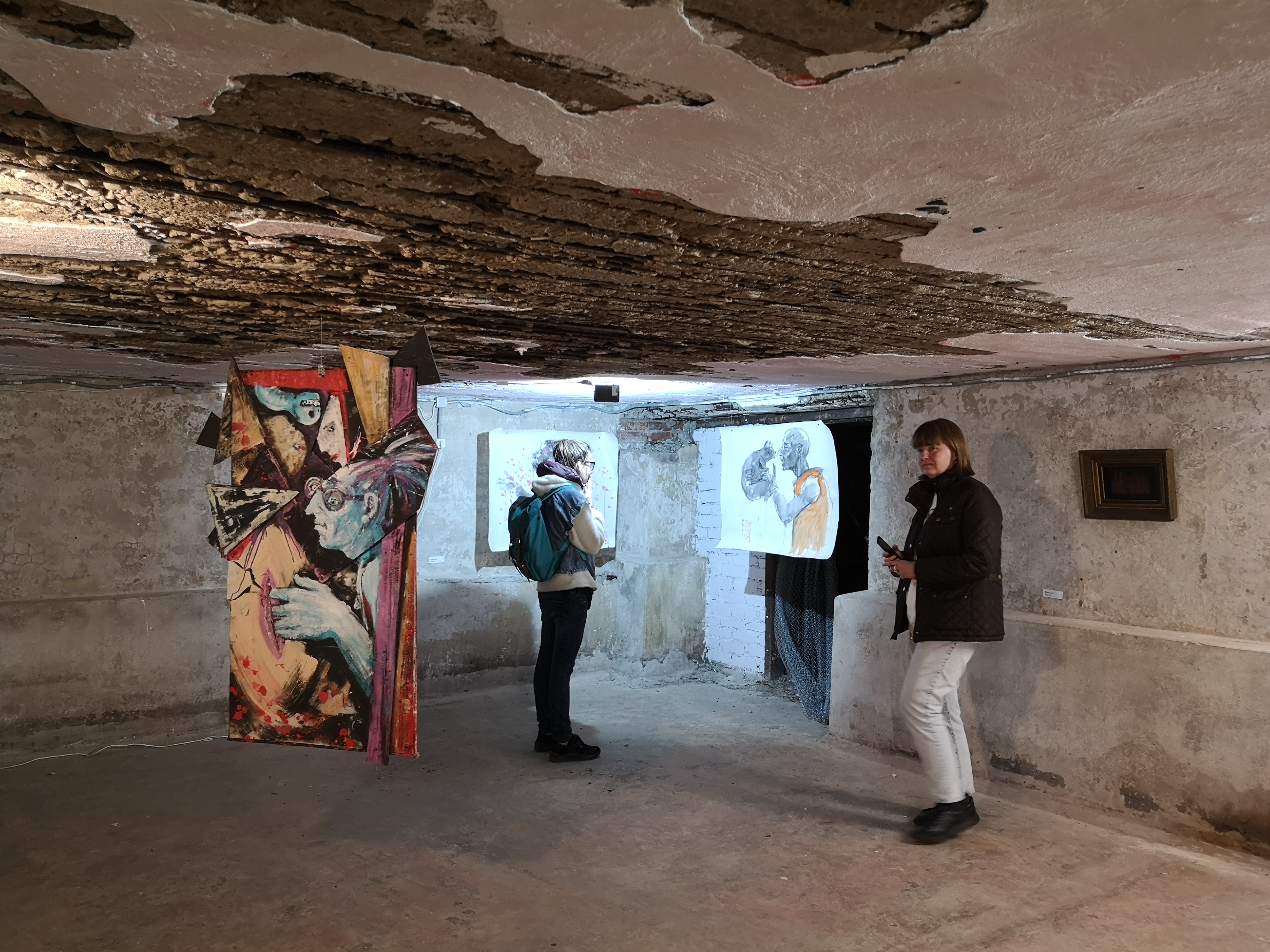
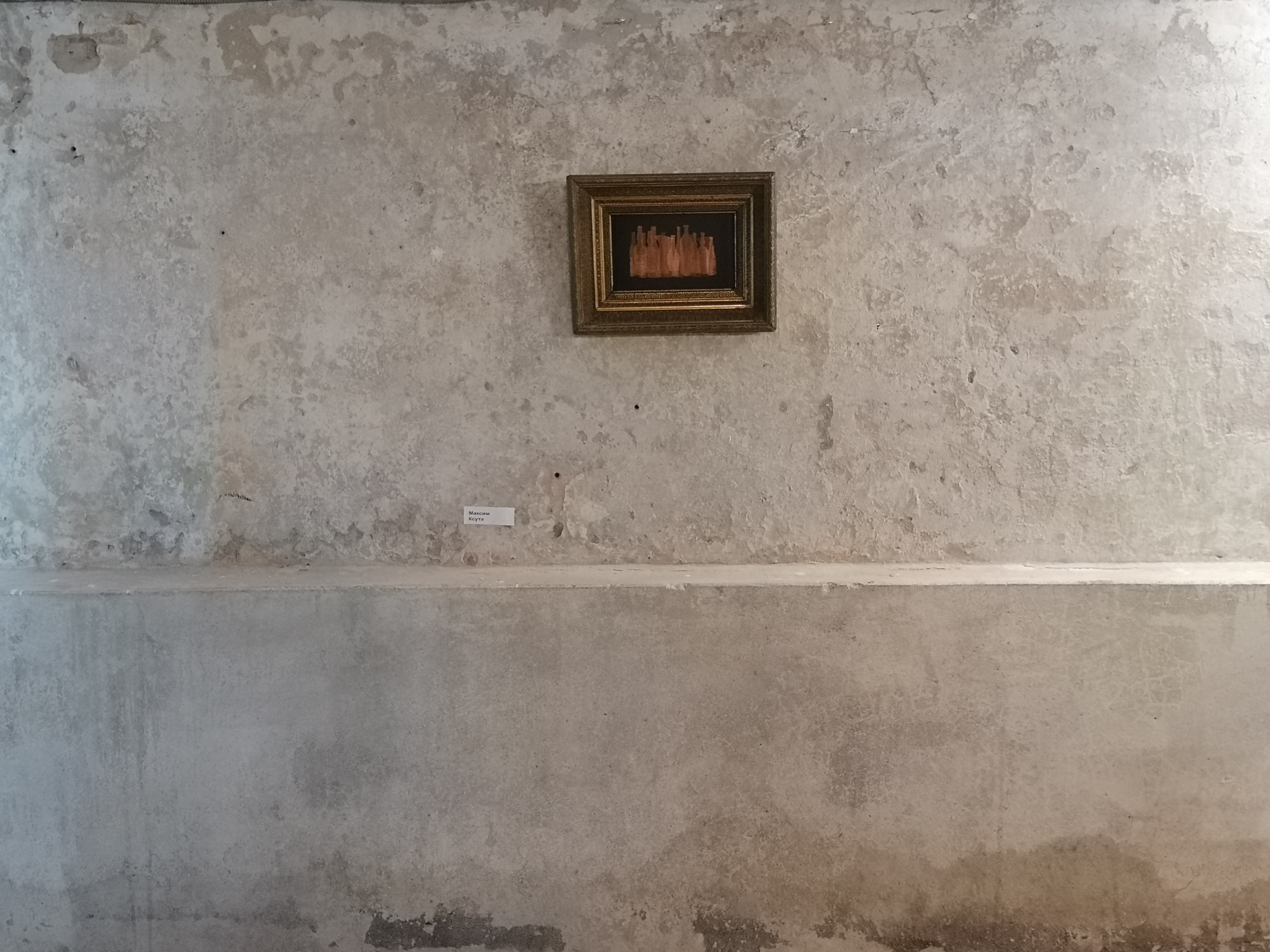
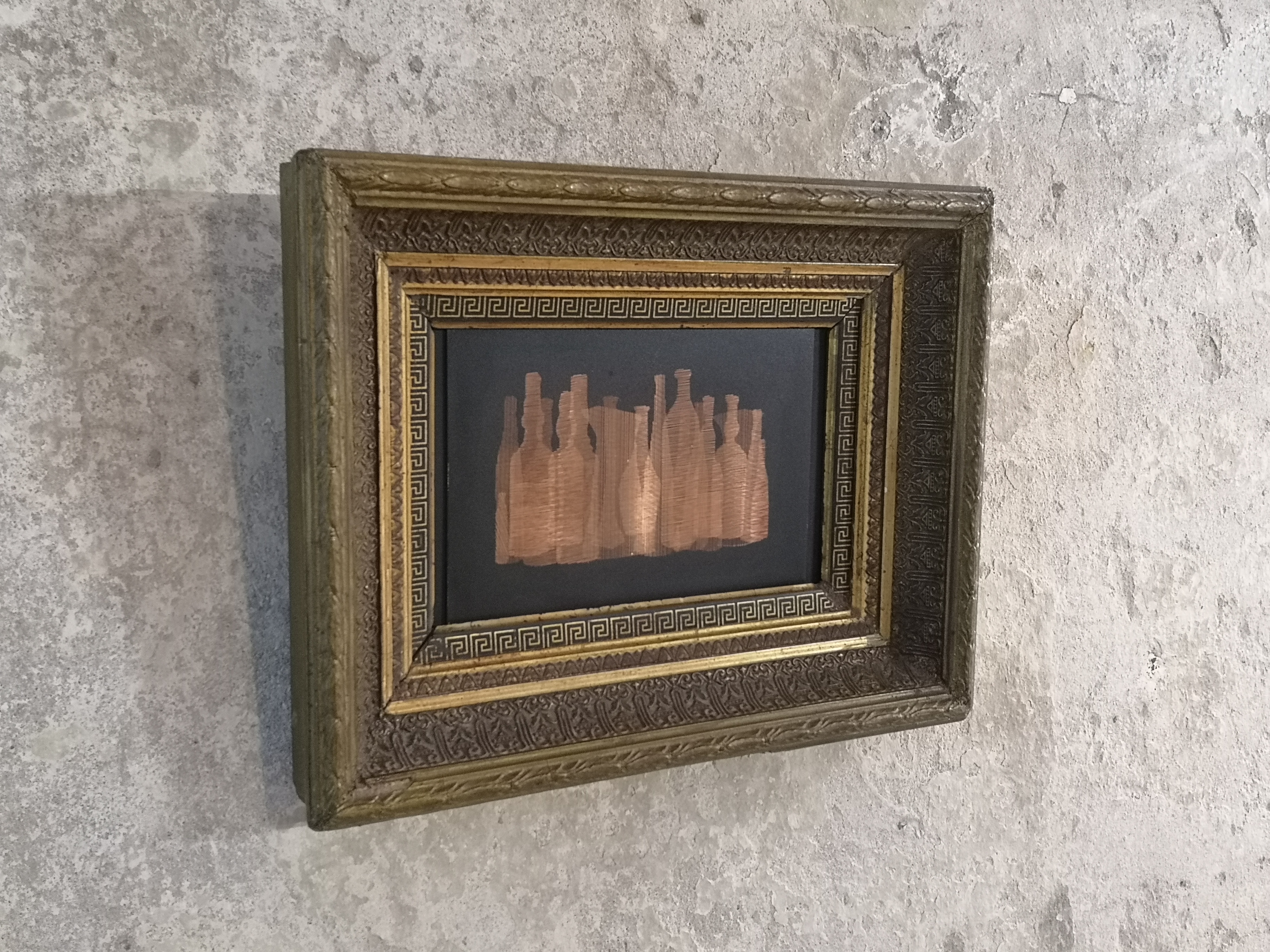

“Weakness” – a new group exhibition at the “Bomba” gallery space in the CCI Fabrika.


Photo by Mariya Solonetskaya & Alisia Prokhorova … My sculpture, “Blockchain,” has recently moved to the town of Chekhov.


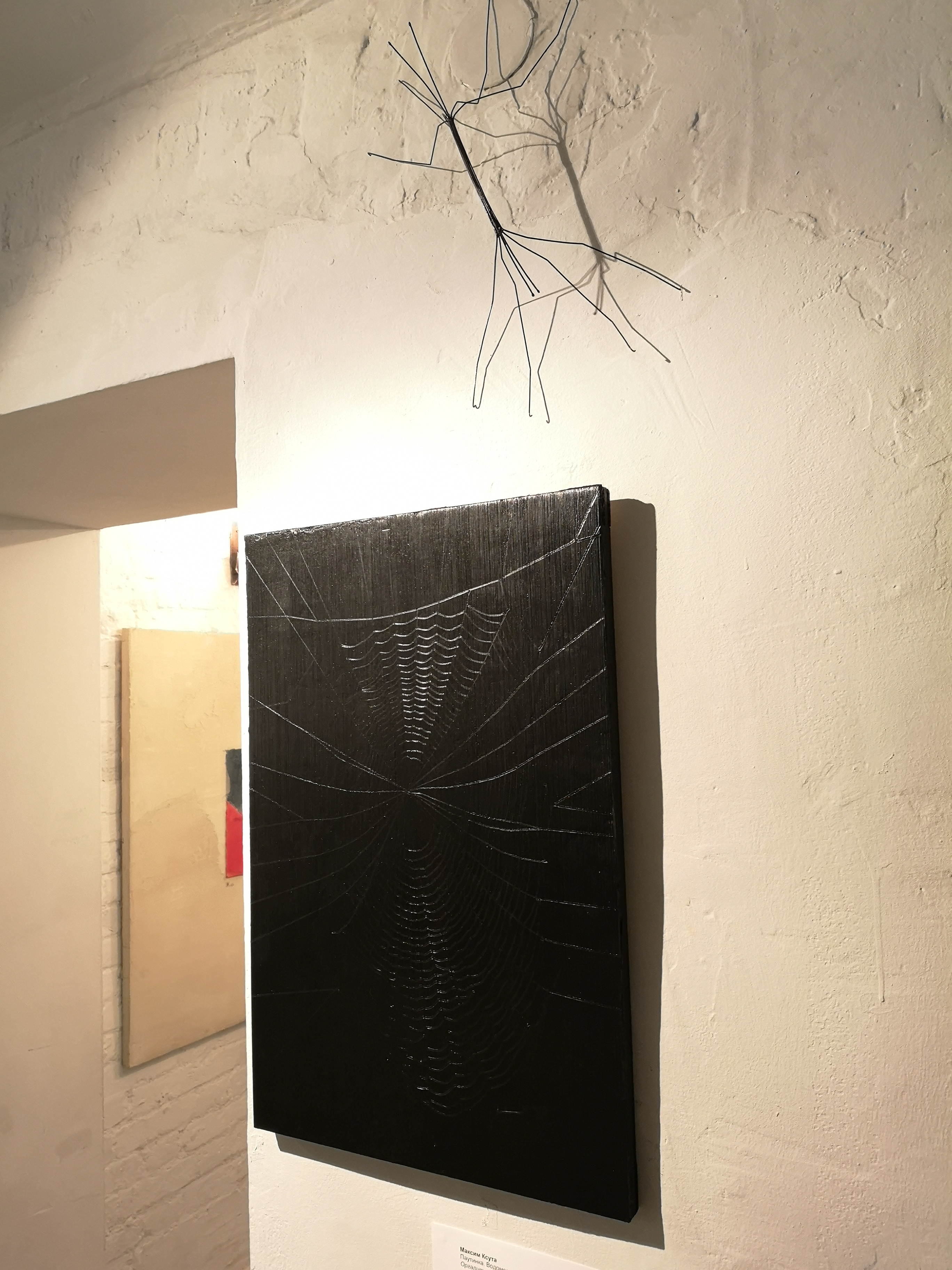

Oil, hardboard, 2019

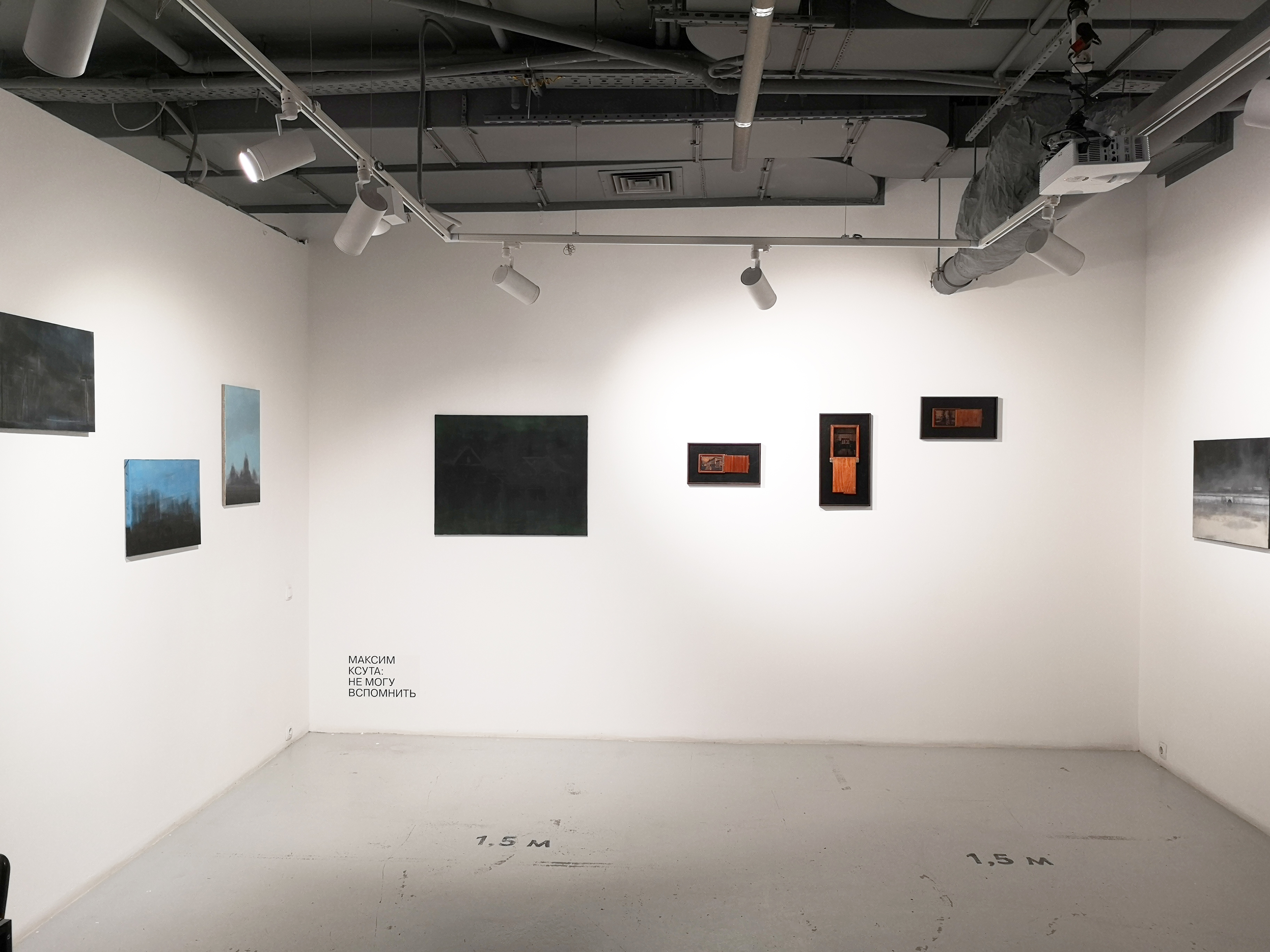
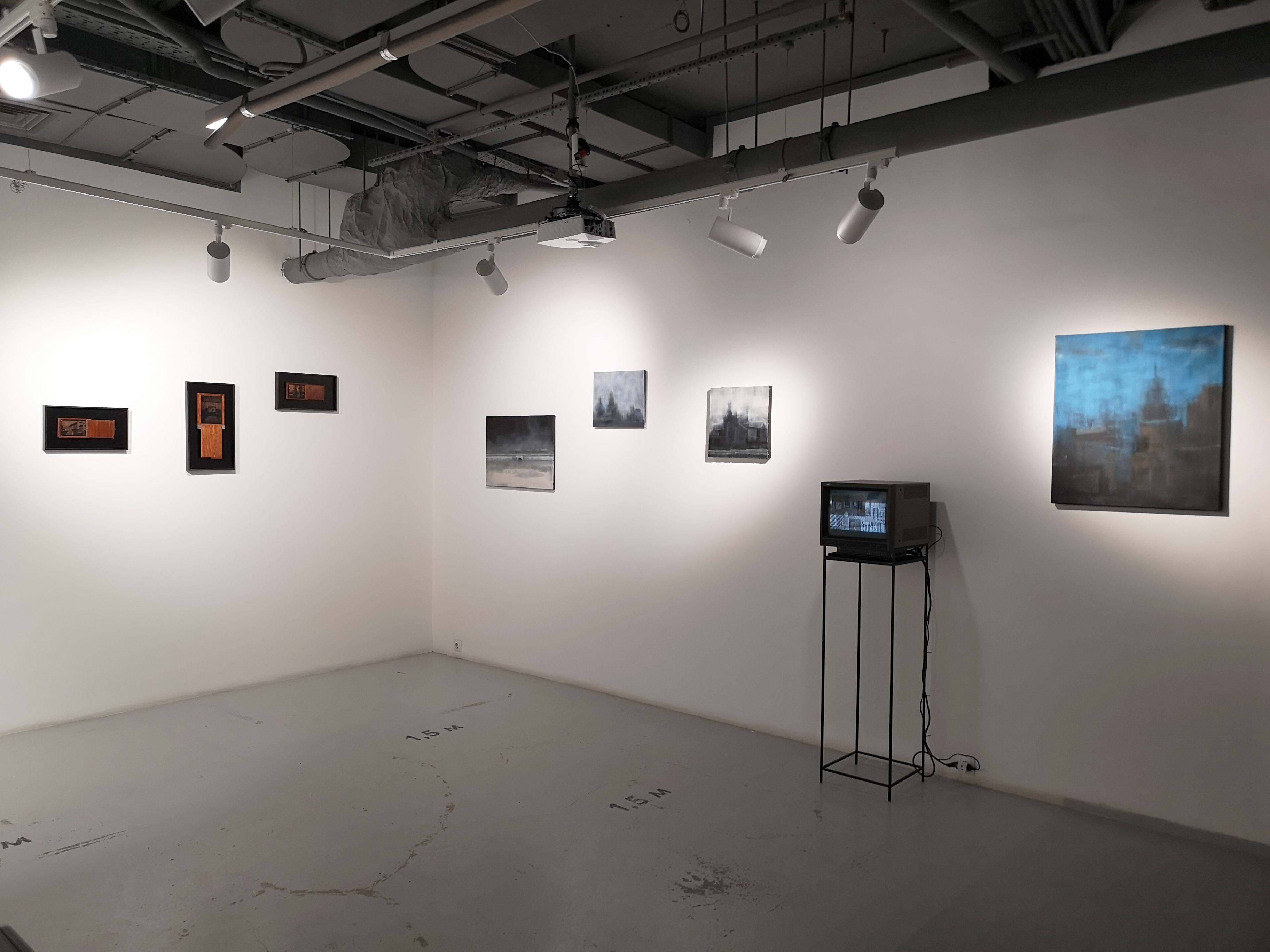

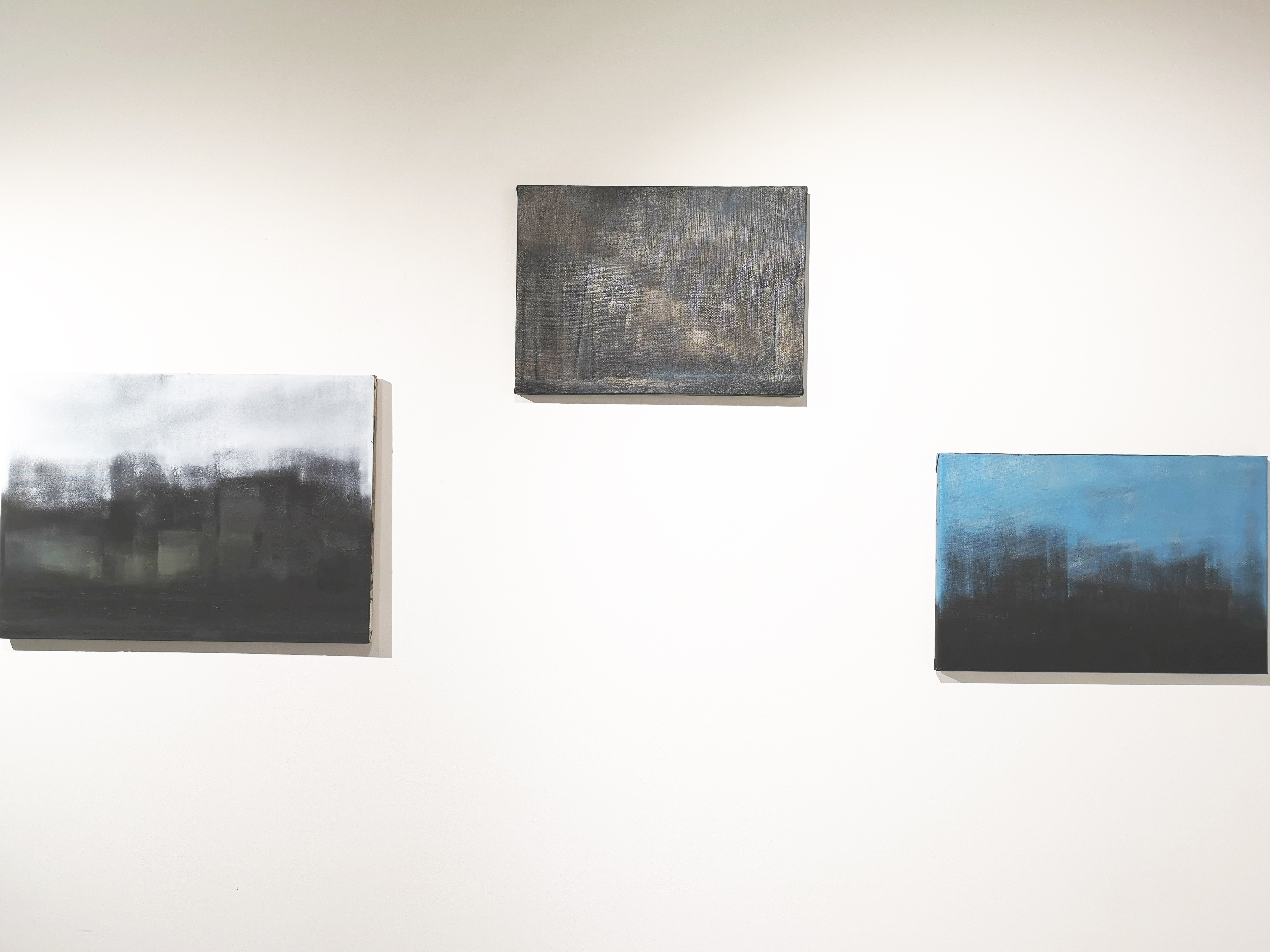




Inspiration can be found in the most unexpected places. For me, it came in the form of the colorful compositions left on walls and fences after anonymous painters, employed by the municipal services, paint over graffiti deemed undesirable by the city authorities.
However, instead of completely erasing the traces of street art, they always leave behind strange stains, sometimes resembling landscapes. This phenomenon made me reflect on the nature of memory, its instability, and abstractness.
In my works, I tried to embody this idea visually, creating abstract images that evoke a sense of familiarity, yet leave room for interpretation. Each painting is a combination of blurred shapes and colors that may remind one of something familiar, yet not fully discernible.
Through working with texture and layers of paint, I aimed to convey the complexity of the process of remembering. After all, the paintings are not an accurate representation of a specific moment or place but rather an abstract reflection of the state of consciousness in the process of trying to recall something lost. The viewer is given complete freedom for individual interpretation.
The video presented at the exhibition is a slideshow of my photographs uploaded to the now-banned social network Instagram over the past 12 years. Each frame in this photo archive becomes a link in time and flashes by so quickly that it is impossible to see all the details. This effect is similar to how our memory sometimes changes and inaccurately reproduces old moments.
 Maxim Ksuta