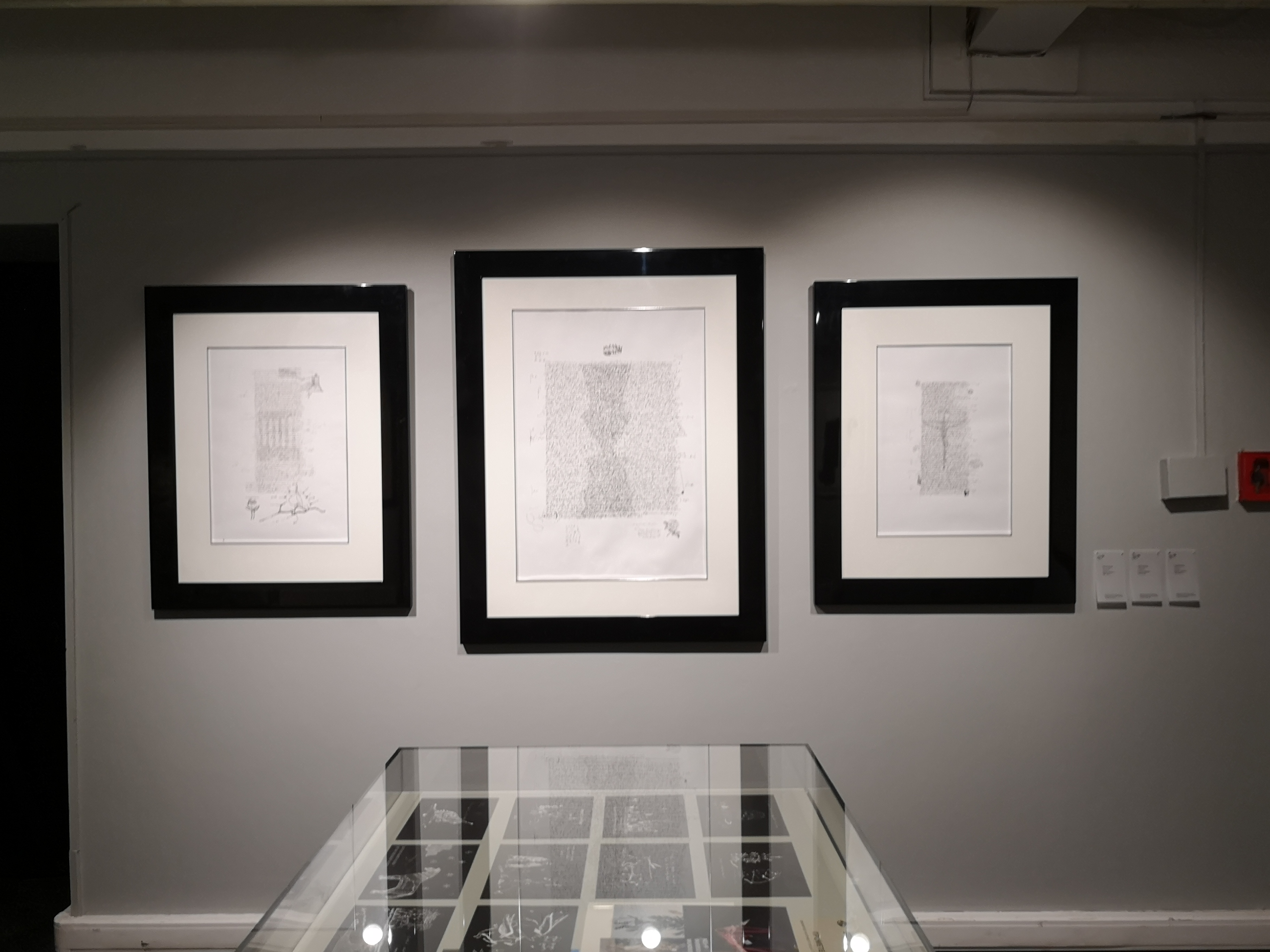
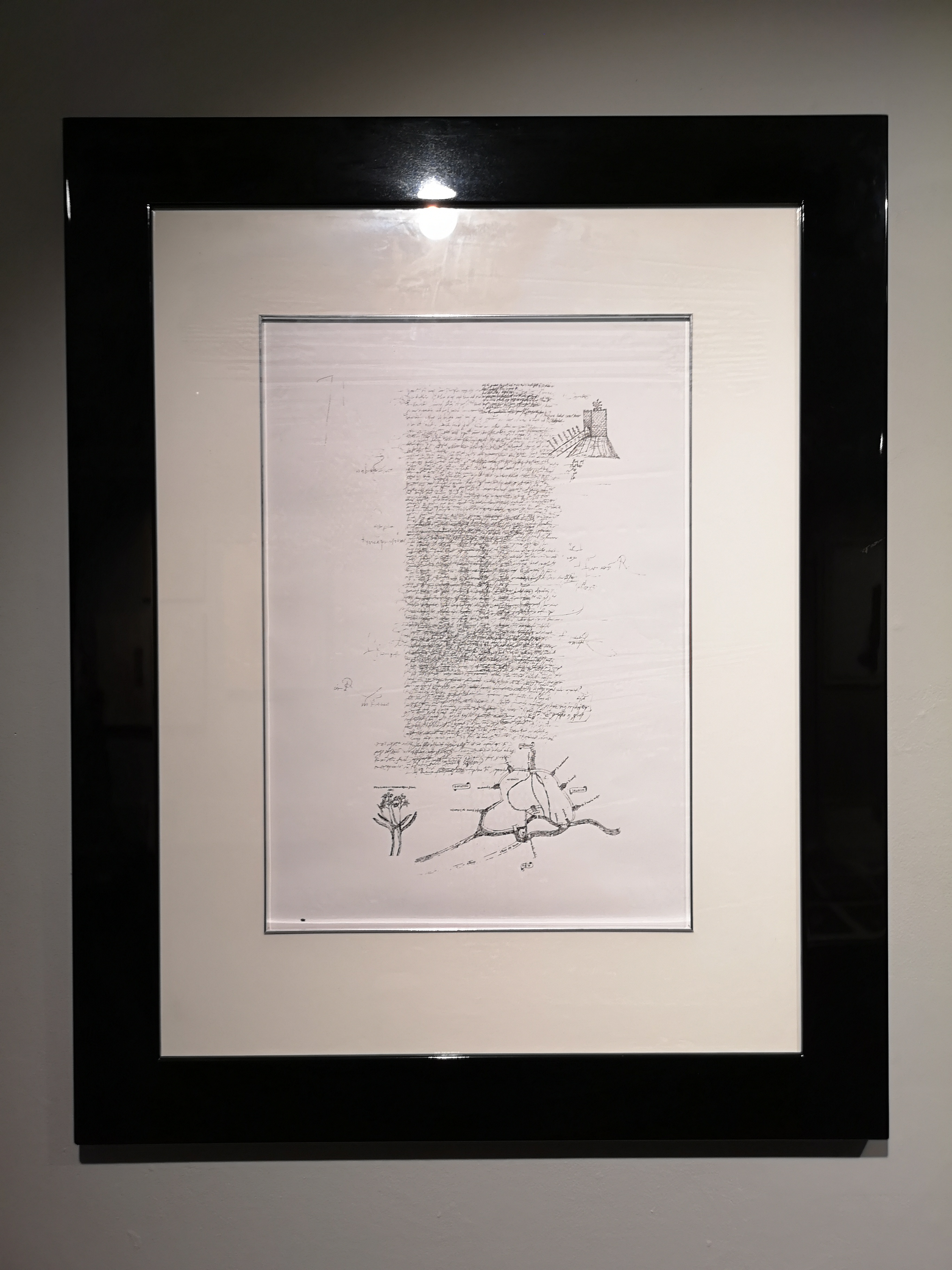
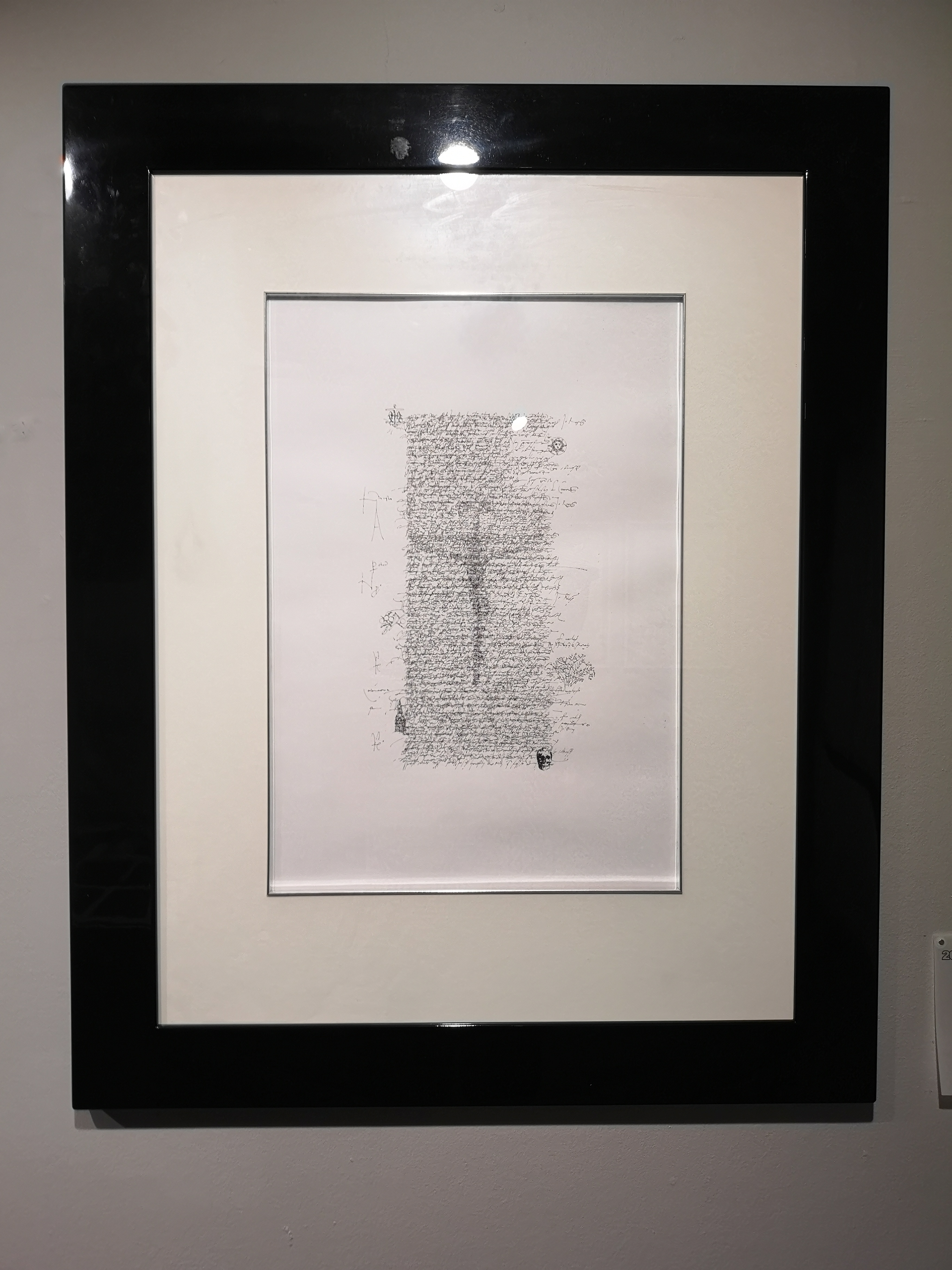
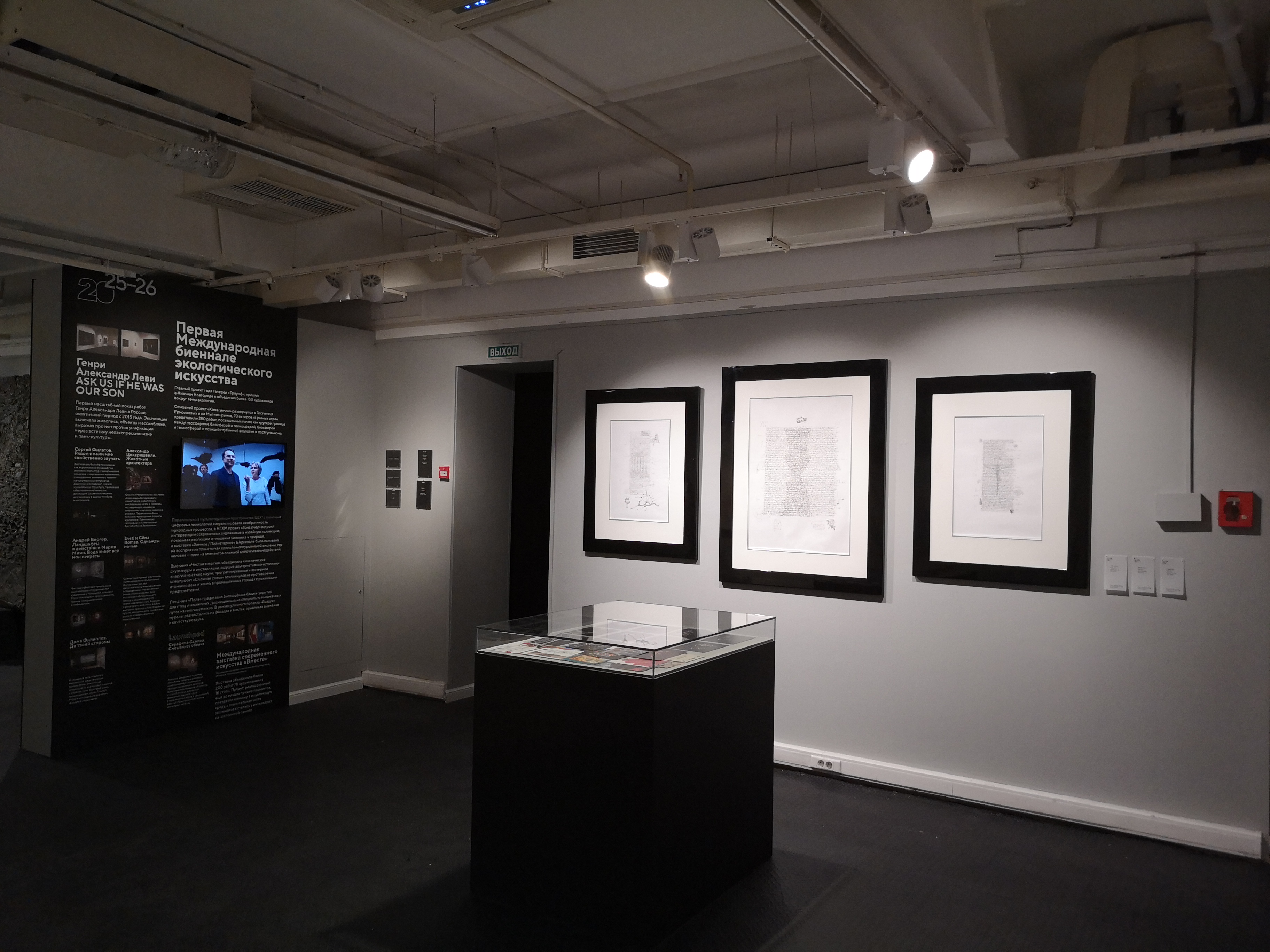
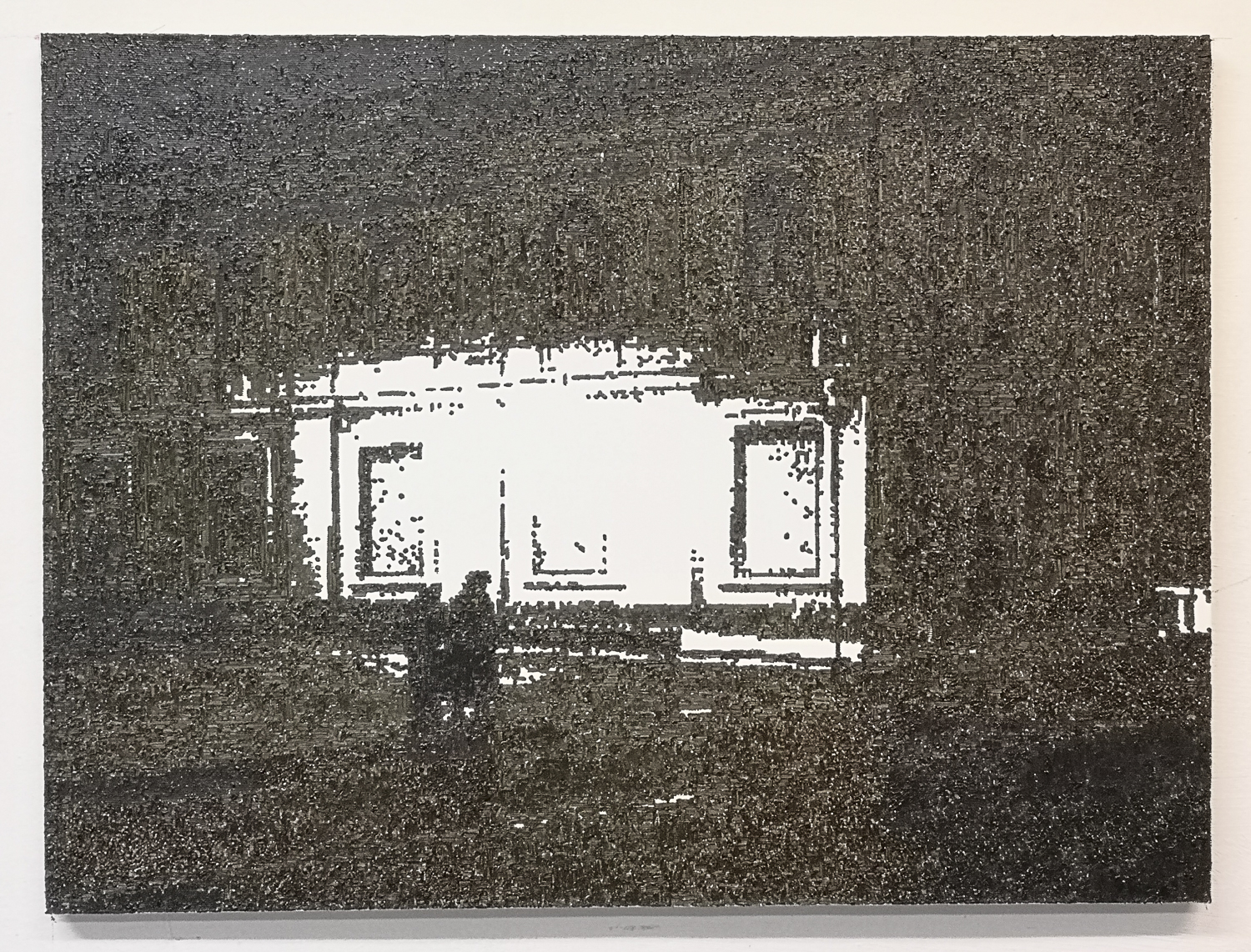
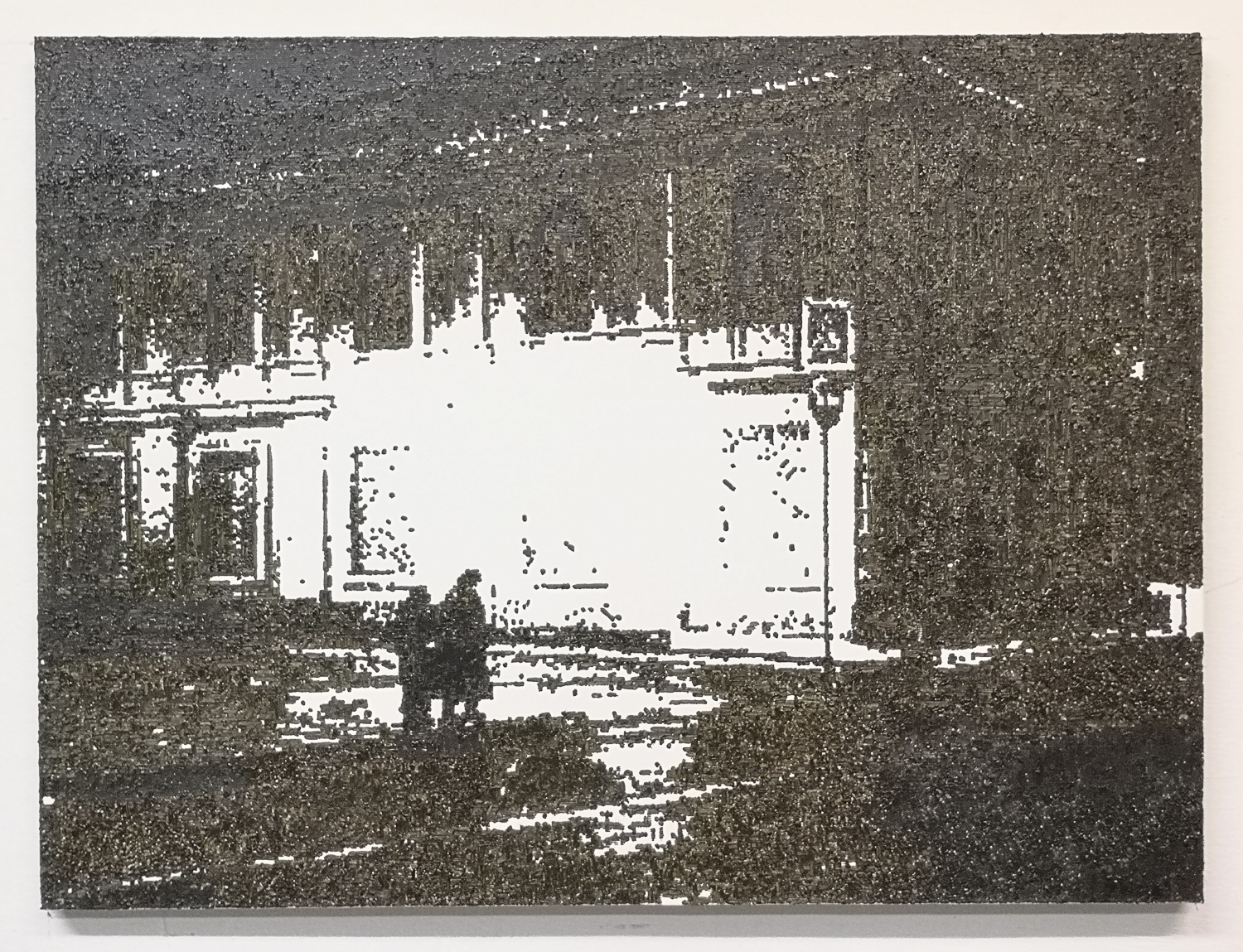
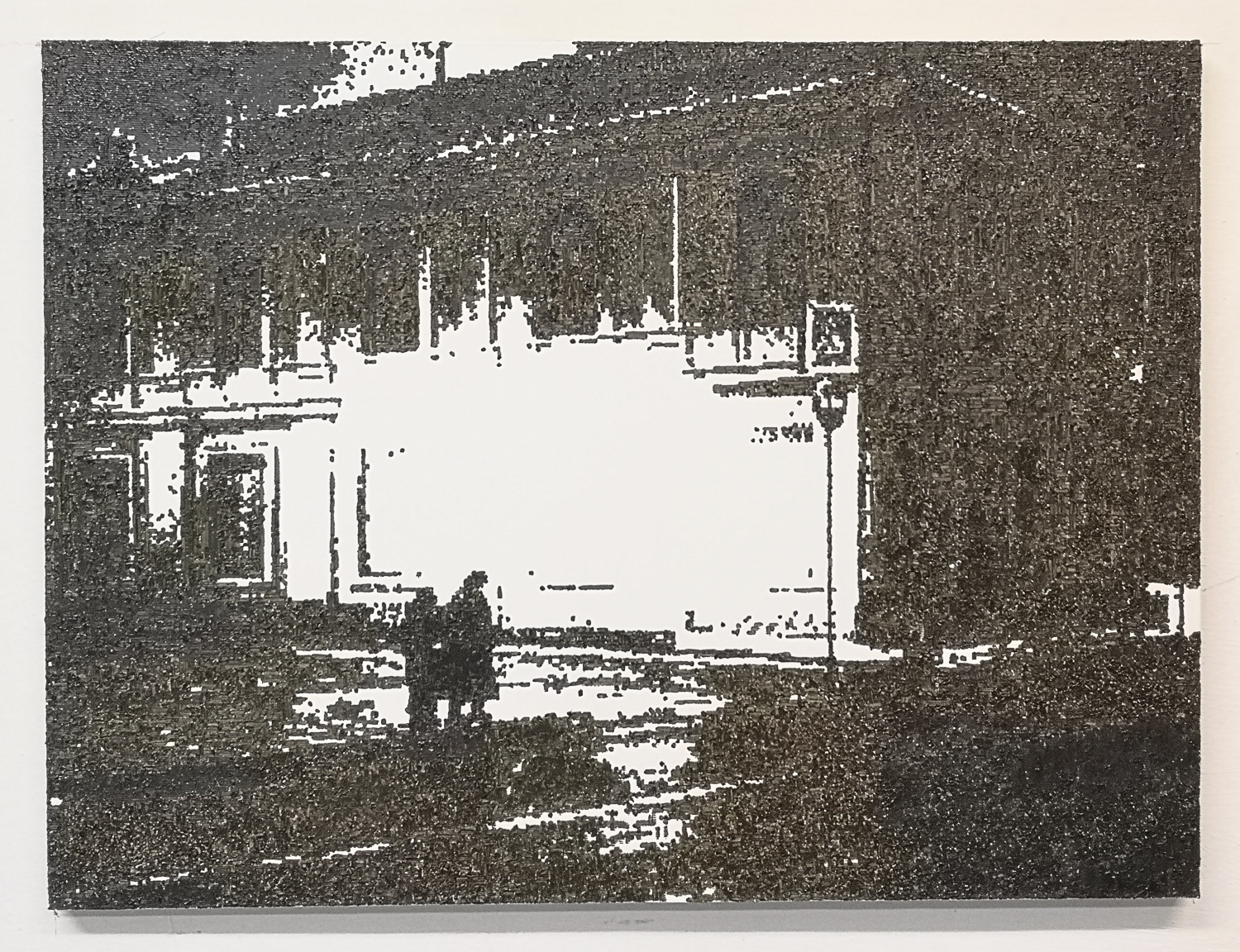
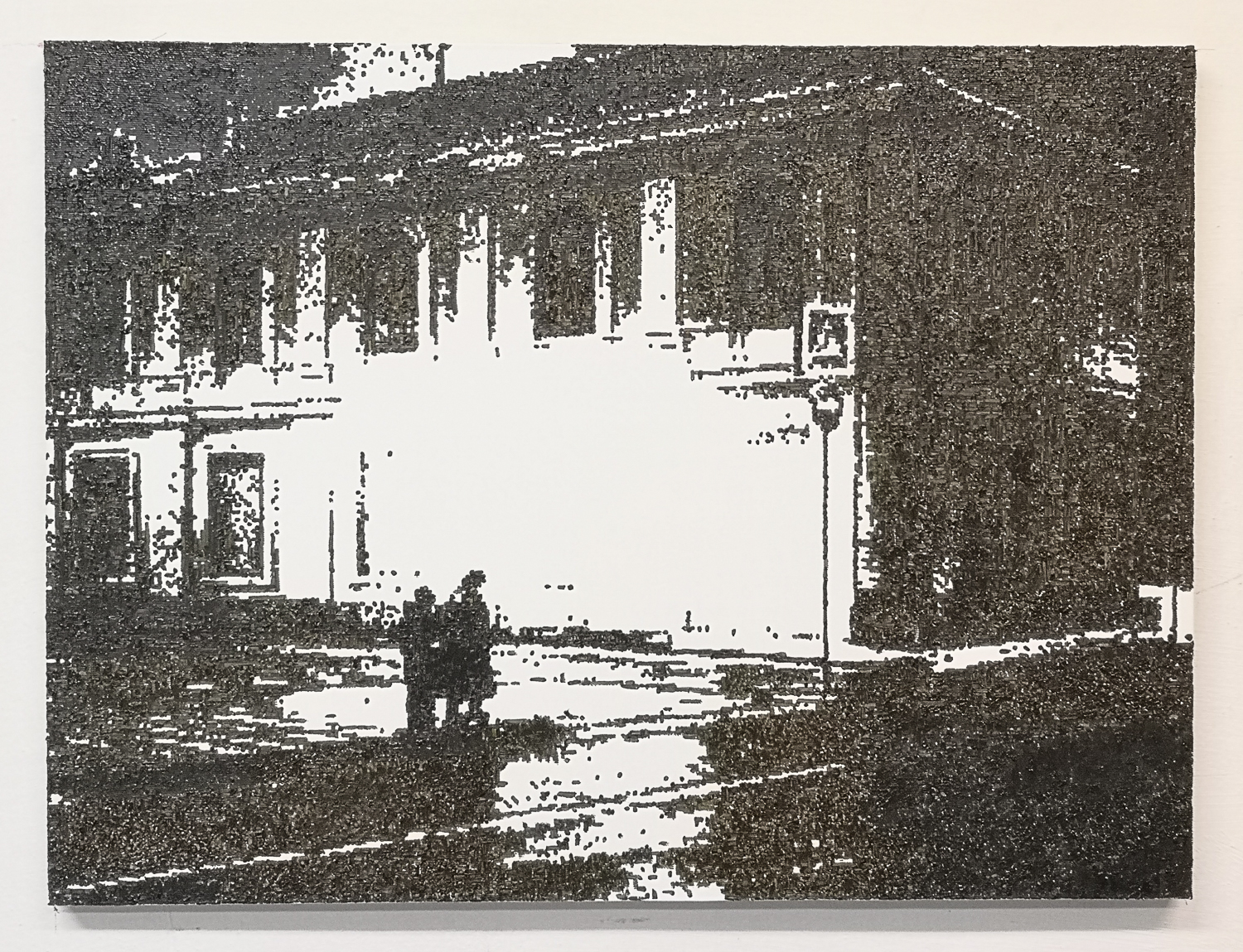
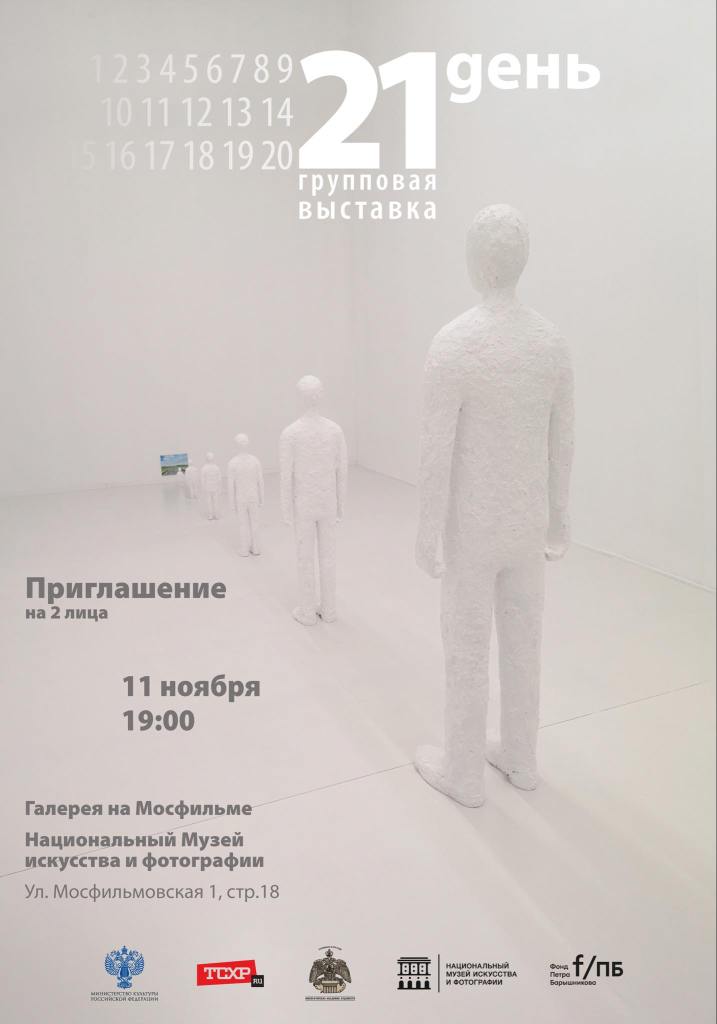
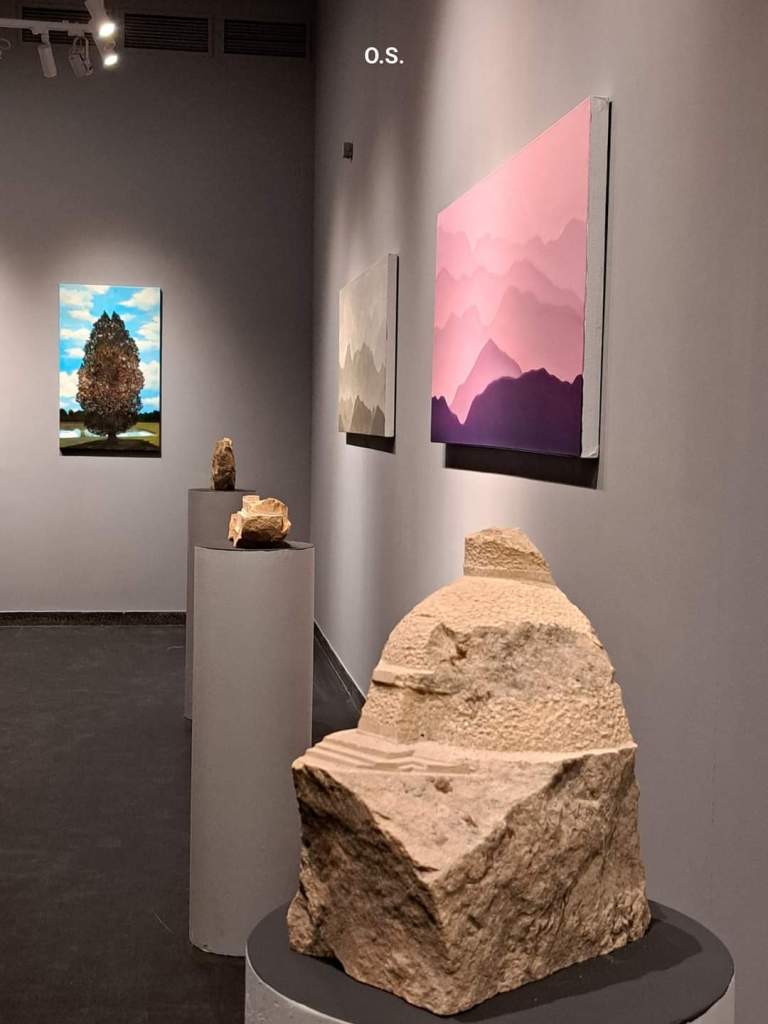
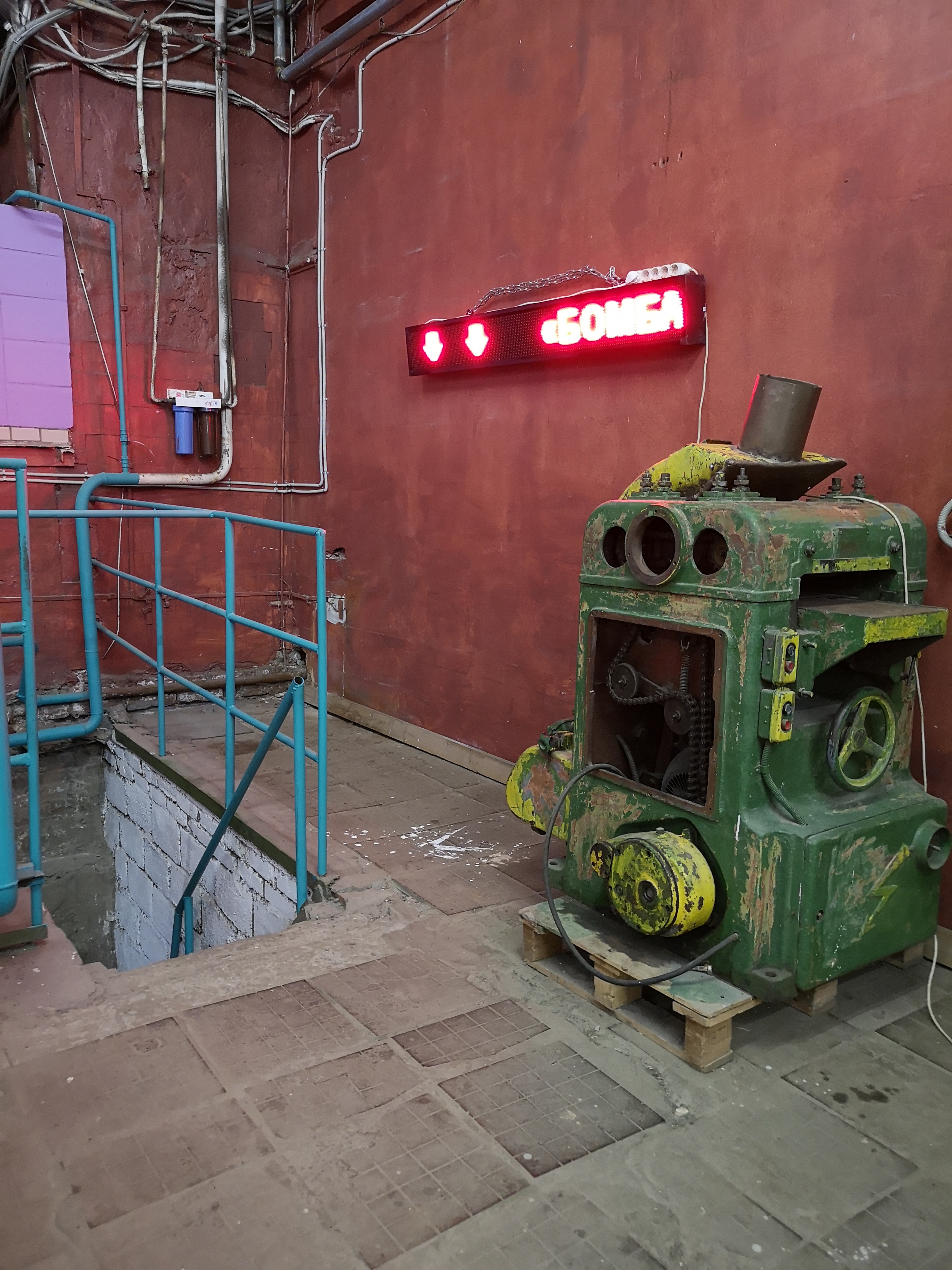
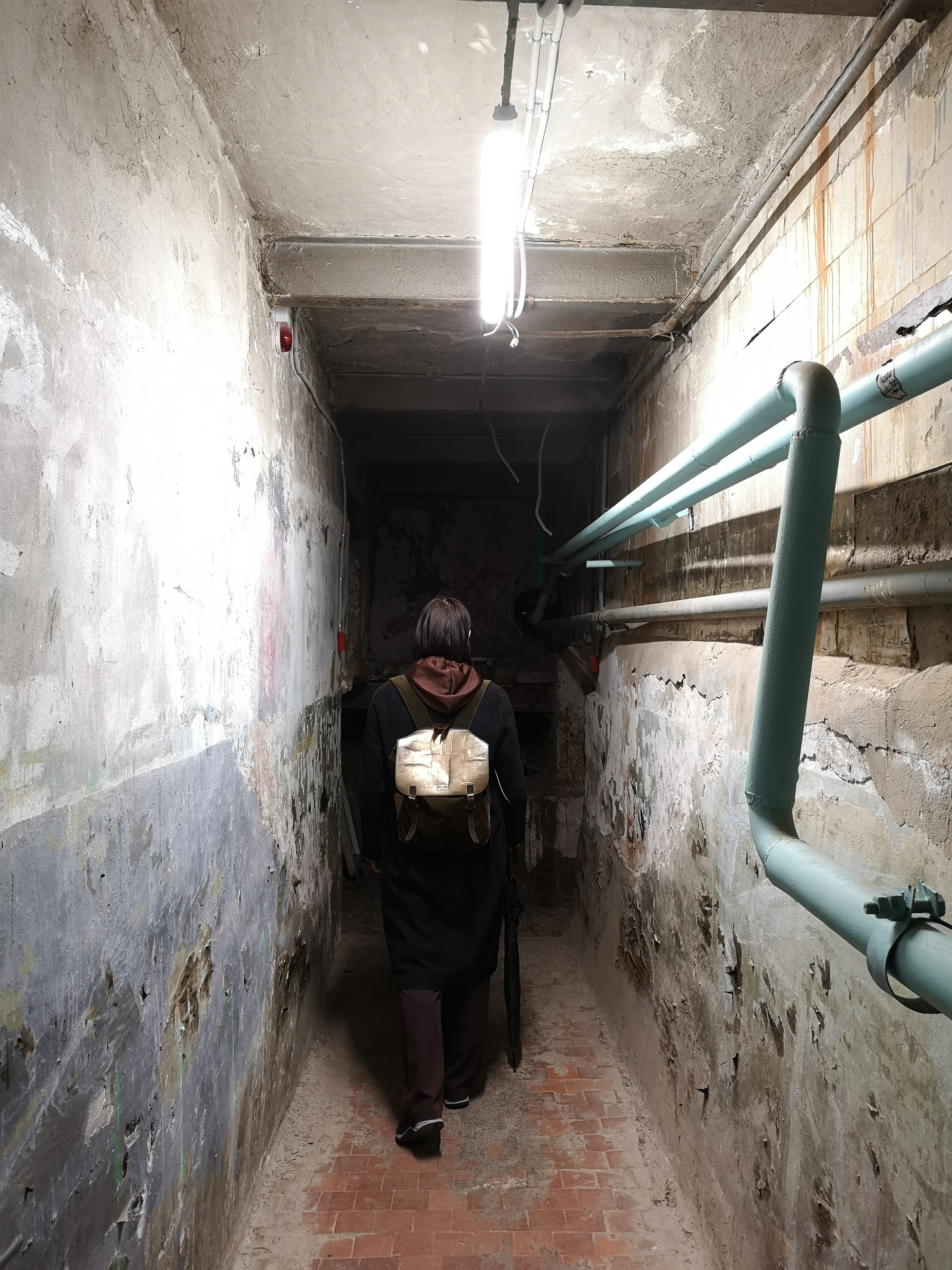
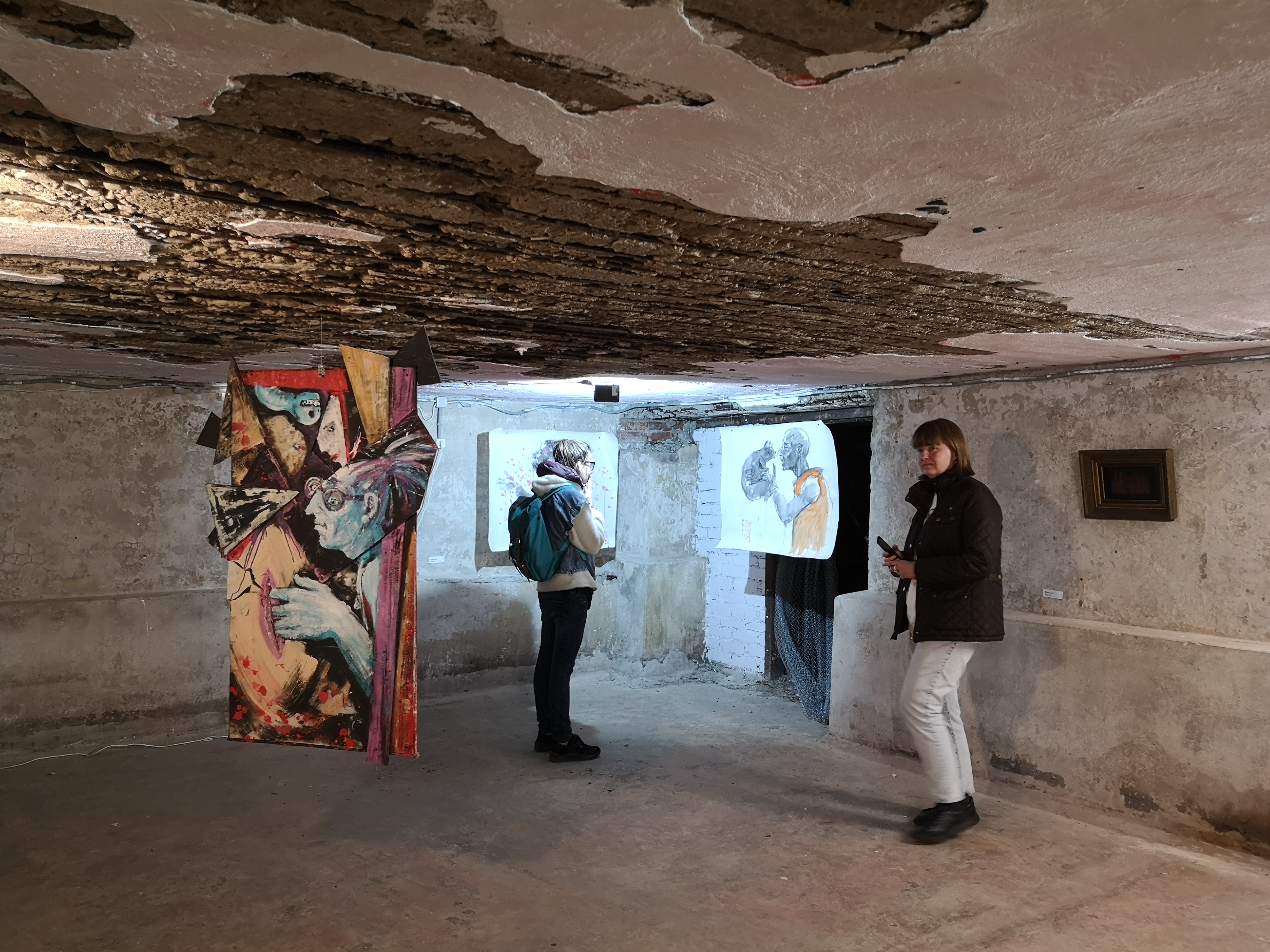
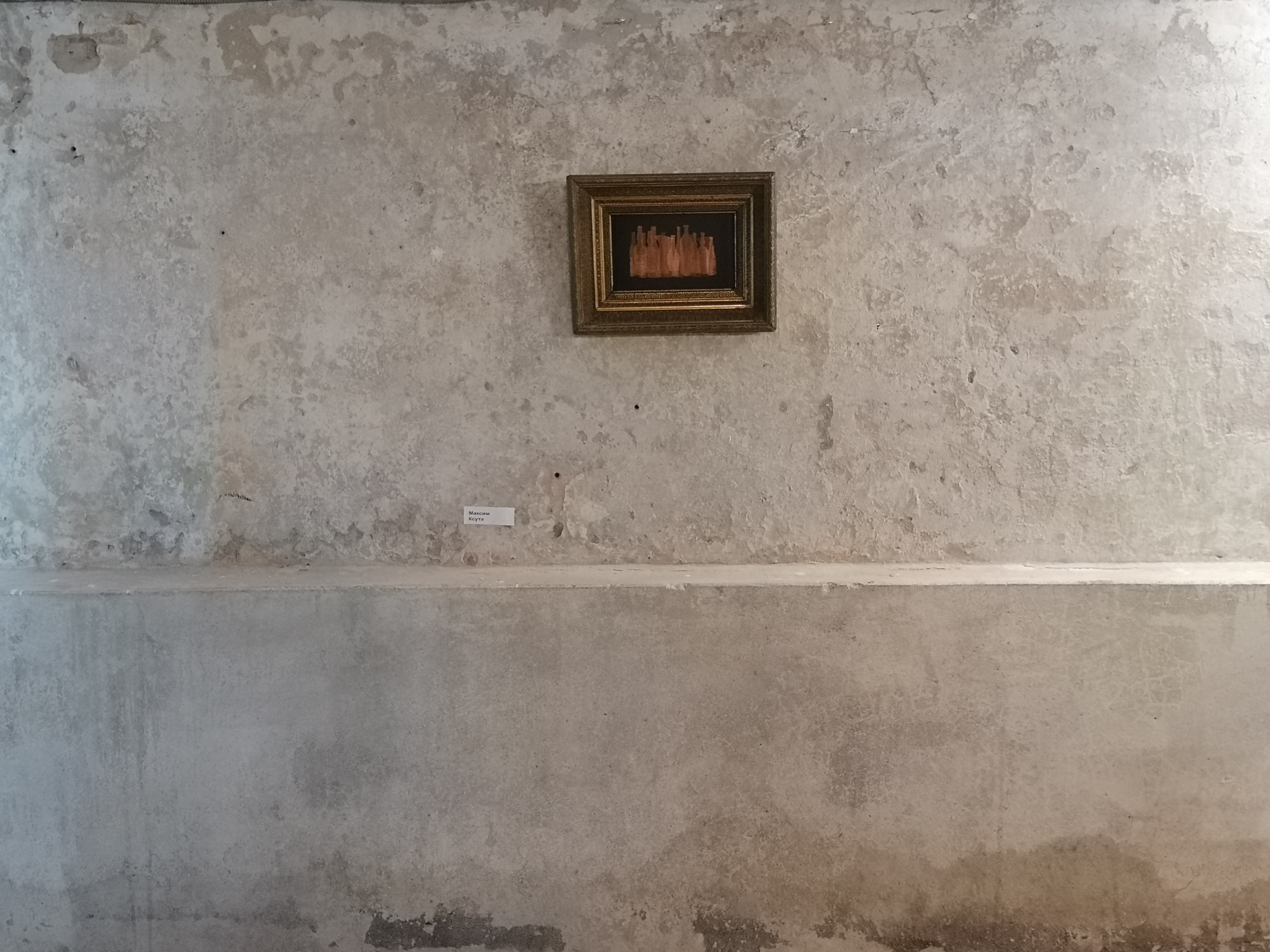
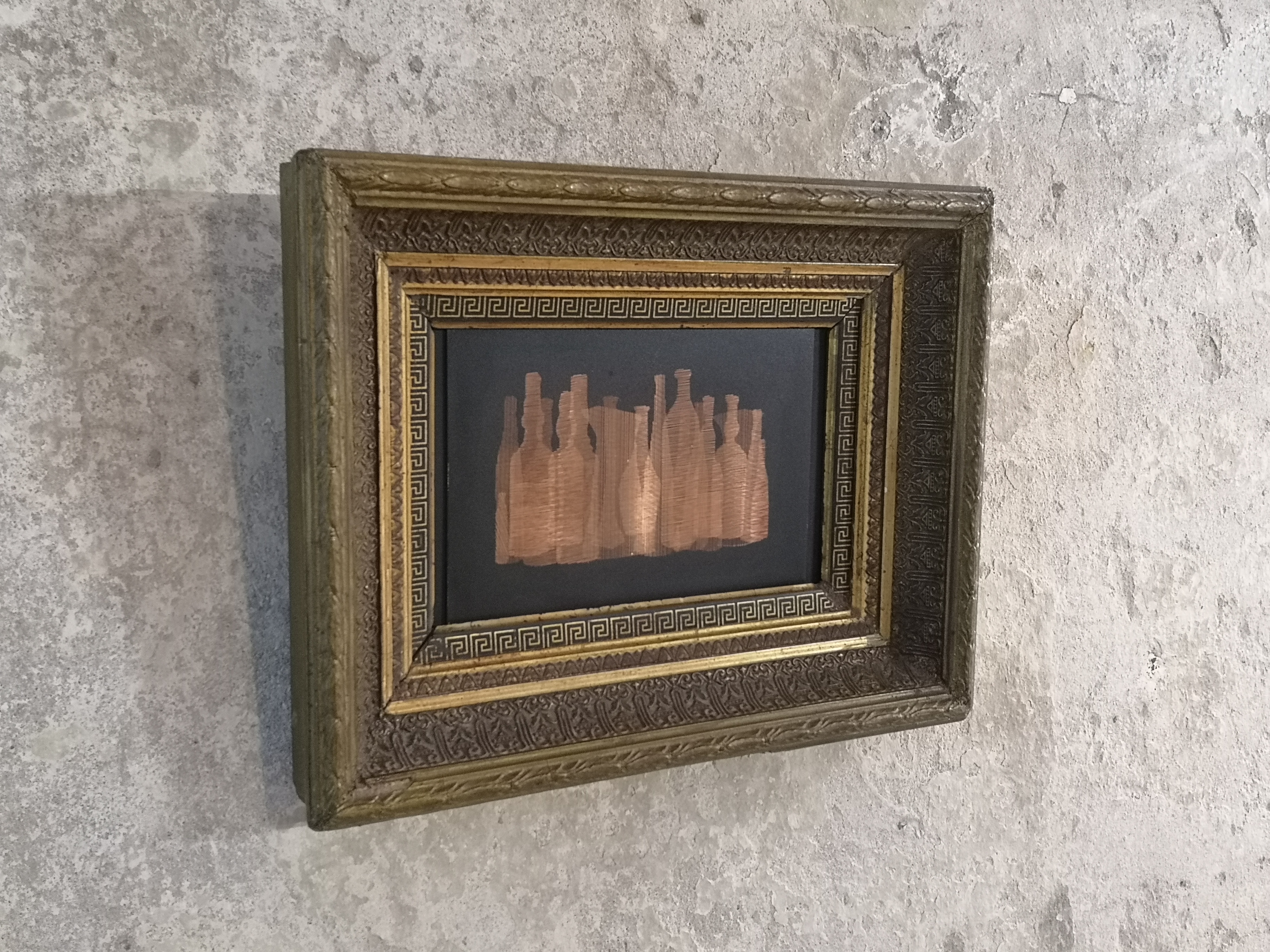
Галерея «Триумф» отмечает 20-летие масштабным выставочным проектом «Триумф. Избранное».
Проект состоит из двух частей. Первый «том», открывающий юбилейный цикл, посвящён художникам, сформировавшим образ галереи. Экспозиция выстраивается как нелинейное повествование, пространство которого собрано из множества индивидуальных творческих судеб.
Экспозиция исследует путь институции от классической частной галереи до гибридной платформы, которая объединяет выставочные, музейные и исследовательские проекты.
Отдельный блок посвящён проектам, реализованным в рамках программ Launchpad, «Отцы и дети», «Молодые львы» и «Большие надежды»
Выставка предоставляет возможность увидеть работы в контексте их первого появления на публике — через архивные материалы, реконструкции инсталляций и авторские парафразы знаковых проектов.
Triumph Gallery marks its 20th anniversary with the large-scale exhibition project “Triumph. Selected Works.”
The project consists of two parts. The first “volume,” opening the anniversary cycle, is dedicated to the artists who shaped the gallery’s identity. The exhibition is built as a non-linear narrative, its space assembled from a multitude of individual creative trajectories.
The exhibition traces the institution’s path from a classical private gallery to a hybrid platform that brings together exhibition, museum, and research projects.
A separate section is devoted to projects realized within the Launchpad, “Fathers and Sons,” “Young Lions,” and “Great Expectations” programs.
The exhibition offers an opportunity to see the works in the context of their first public appearance — through archival materials, reconstructions of installations, and the artists’ own paraphrases of landmark projects.
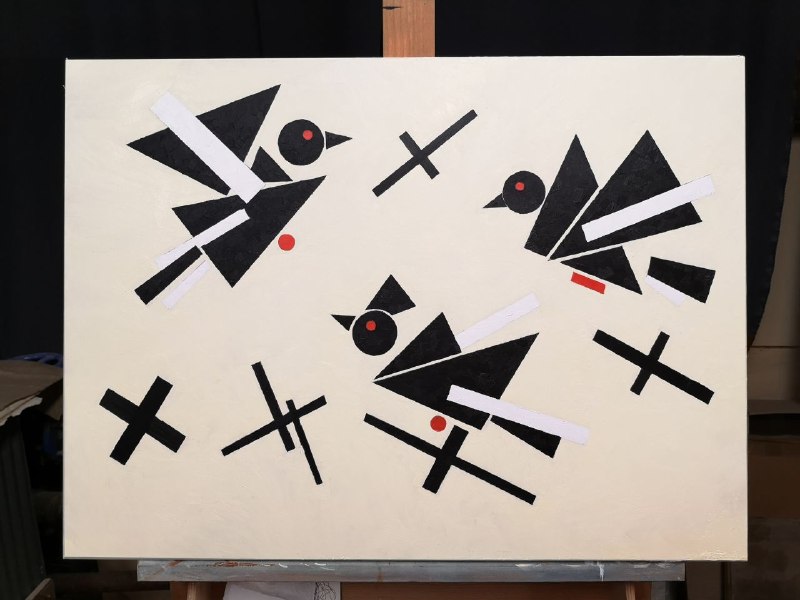
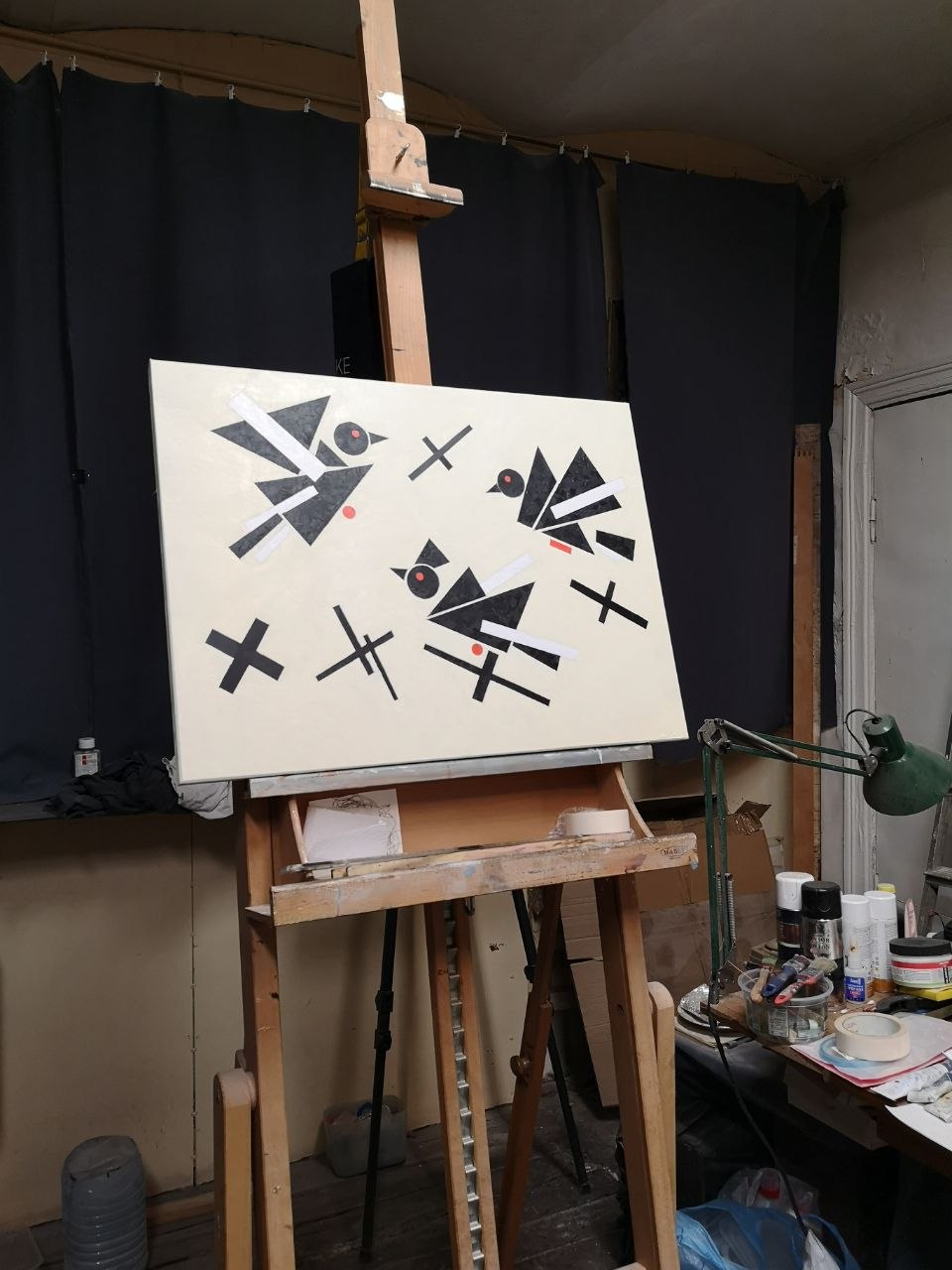
Иногда мне кажется, что эту работу сделал не я, а какое-то упрямое пересечение внутри меня — между желанием дойти до чистоты формы и невозможностью отпустить живое. Я начинал с почти аскетического намерения: белое поле, чёрные конструкции, никакой лишней интонации. Хотел приблизиться к состоянию, где форма существует сама по себе, без опоры на мир.
Но в какой-то момент в этой конструкции появились сороки.
Не как образ, не как иллюстрация — скорее как сбой. Чёрные треугольники вдруг начали складываться в крылья, круги — в головы, линии — в траектории движения. И я понял, что это уже не геометрия в чистом виде. Это что-то, что хочет жить.
Сорока — странная птица. Она некрасивая и красивая одновременно. Она шумная, наглая, внимательная, всегда на границе между порядком и хаосом. И, наверное, именно поэтому она так точно легла в супрематическую структуру. Потому что супрематизм — это тоже про границу: между предметом и отсутствием предмета, между миром и его исчезновением.
Белое поле здесь для меня не космос в строгом смысле. Оно слишком тёплое, слишком земное. Это снег. Пространство, где всё упрощается до предела, но не исчезает. Где любой след становится событием. И в этом поле сороки не просто существуют — они оставляют знаки, пересечения, почти орнамент своего присутствия.
Эти чёрные перекрестия я долго не мог принять. Они казались слишком буквальными, слишком «узнаваемыми». Но со временем я увидел, что без них всё распадается. Они удерживают ритм, собирают разлёт форм, как каркас, как память о структуре внутри движения. И одновременно они отсылают к чему-то глубоко знакомому — к вышивке, к знаку, к жесту руки, которая повторяет крест снова и снова.
Красные точки появились почти случайно, но стали неизбежными. Это минимальное вмешательство жизни в систему. Почти ничто — и при этом центр внимания. Без них работа оставалась бы холодной, замкнутой в себе. С ними она начинает смотреть обратно.
Я всё больше думаю, что эта картина не про супрематизм и не про птиц. Она про невозможность довести абстракцию до конца. Про то, что в какой-то момент форма начинает сопротивляться чистоте и требует присутствия. Требует шума, следа, взгляда.
И, возможно, в этом есть что-то очень личное и очень общее одновременно: сколько бы мы ни стремились к ясности и пустоте, внутри всегда остаётся сорока — которая приносит случайную блестящую вещь и нарушает идеальный порядок.
“Suprematist Magpies”
Sometimes it feels to me that this work was not made by me, but by some stubborn intersection within me — between the desire to reach purity of form and the inability to let go of the living. I began with an almost ascetic intention: a white field, black constructions, no unnecessary intonation. I wanted to approach a state where form exists on its own, without support from the world.
But at some point, magpies appeared within this structure.
Not as an image, not as an illustration — more like a glitch. Black triangles suddenly began to assemble into wings, circles into heads, lines into trajectories of movement. And I understood that this was no longer geometry in its pure form. It was something that wants to live.
The magpie is a strange bird. It is ugly and beautiful at the same time. It is loud, bold, attentive, always on the border between order and chaos. And perhaps that is exactly why it fits so precisely into a suprematist structure. Because Suprematism is also about a boundary: between object and the absence of object, between the world and its disappearance.
The white field here is not space in a strict sense for me. It is too warm, too earthly. It is snow. A space where everything is reduced to the limit, but does not disappear. Where any trace becomes an event. And in this field, magpies do not simply exist — they leave signs, intersections, almost an ornament of their presence.
I struggled for a long time to accept these black crossings. They seemed too literal, too “recognizable.” But over time I saw that without them everything disintegrates. They hold the rhythm, gather the scattering of forms like a frame, like a memory of structure within movement. And at the same time, they refer to something deeply familiar — to embroidery, to a sign, to the gesture of a hand repeating a cross again and again.
The red dots appeared almost by accident, but became inevitable. This is the minimal intervention of life into the system. Almost nothing — and at the same time the center of attention. Without them, the work would remain cold, closed in on itself. With them, it begins to look back.
I increasingly think that this painting is not about Suprematism and not about birds. It is about the impossibility of carrying abstraction to its end. About how, at some point, form begins to resist purity and demands presence. Demands noise, trace, gaze.
And perhaps there is something very personal and very universal in this: no matter how much we strive for clarity and emptiness, inside there is always a magpie — bringing a random shiny thing and disturbing the perfect order.
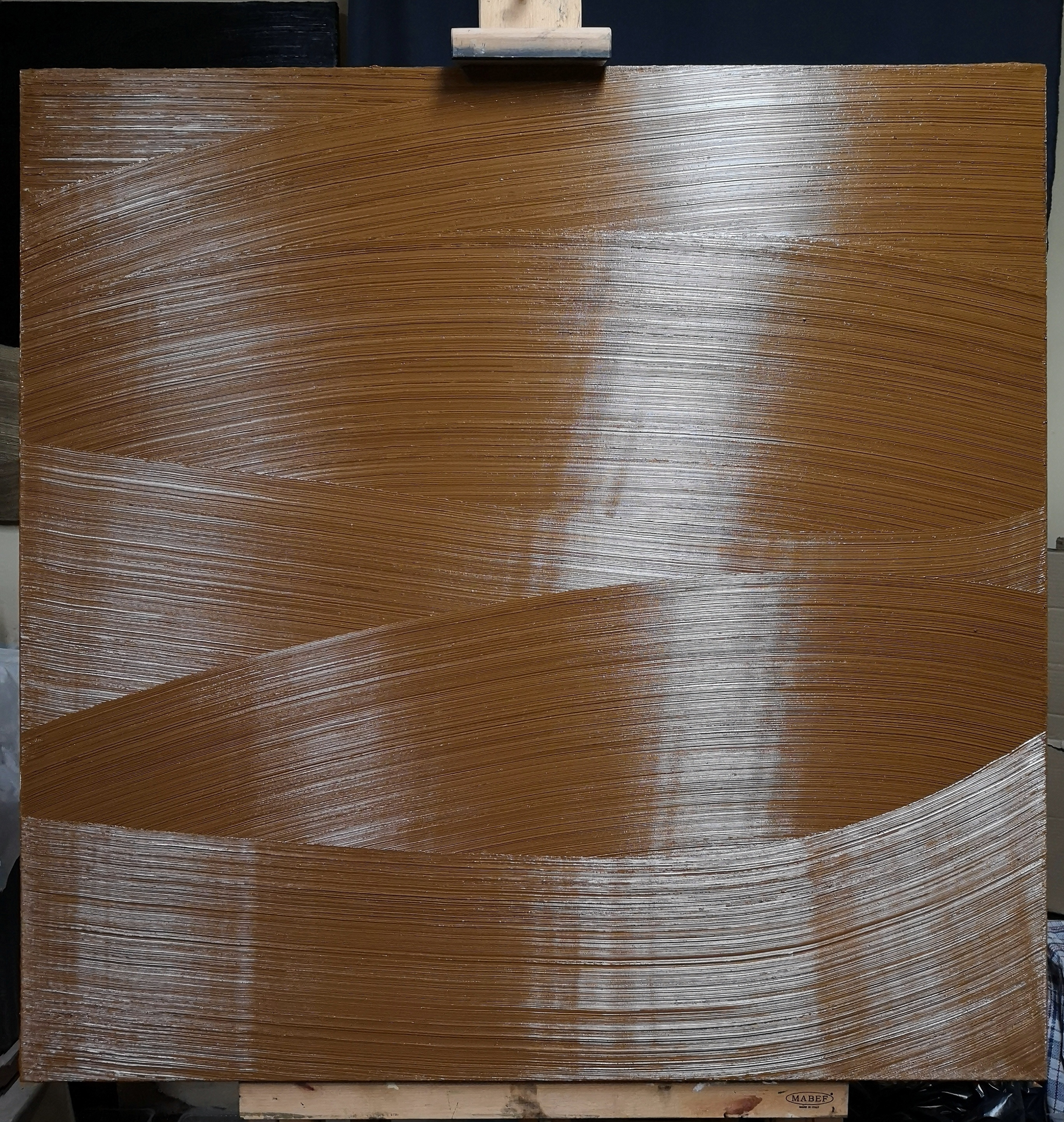
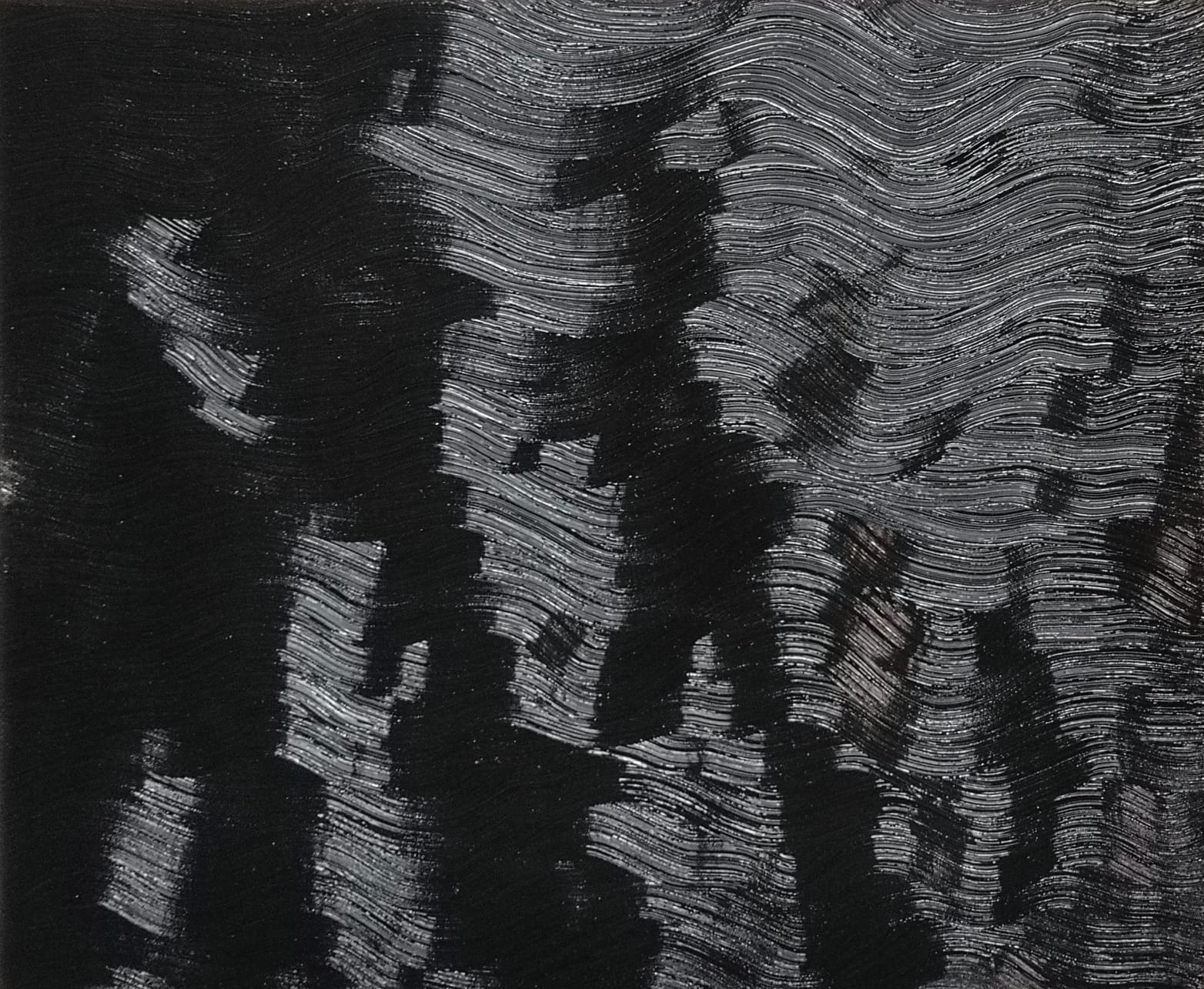
Холст, масло, 70 x 90 см, сумма 140 x 180 смВолна в чёрном
Перед нами работа, которая кажется одновременно монохромной и бесконечно многоцветной. Чёрная краска — газовая сажа — положена плоско на холст, без малейшего намёка на рельеф. И всё же именно в этой плоскостности возникает оптическая глубина: линии и жесты кисти, наложенные друг на друга, образуют ткань, где свет играет, словно на воде или шёлке.
Масштаб произведения — 140 × 180 см — делает его почти стеной, мембраной, через которую зритель встречается с самим феноменом света. По мере изменения угла зрения поверхность оживает: нити отражают свет по-разному, превращая чёрное в пространство непрерывных колебаний.
Это живопись без цвета в обычном смысле, но полная целого спектра состояний. Здесь нет сюжета, нет образа, за который можно «зацепиться»; вместо этого зритель сталкивается с чистой энергией восприятия. Работа дышит как волна — то сжимаясь в темноту, то раскрываясь в сияние, напоминающее металл, стекло или мерцание ночного моря.
Эта чёрная оптика — одновременно эксперимент и медитация. Она выводит живопись за пределы традиционной роли носителя цвета и формы, превращая её в поле, где зрение движется, расщепляется, задерживается — и именно это напряжение между неподвижностью поверхности и её изменчивым сиянием порождает подлинный опыт.
В конечном счёте работа ощущается как медитация на природу света и тьмы: как чёрное становится светоносным, если смотреть достаточно долго; как простота оказывается сложнее иллюзии; как поверхность, лишённая глубины, внезапно открывает бездну.
Oil on canvas, 70 × 90 cm, summa 140 × 180 cmWave in Black
Before us lies a work that appears at once monochrome and infinitely multicolored. Black paint — gas soot — has been laid flat on the canvas, without the slightest hint of relief. And yet, it is precisely within this flatness that optical depth emerges: lines and gestures of the brush, layered upon one another, form a fabric where light plays as if on water or silk.
The scale of the piece — 140 × 180 cm — makes it almost a wall, a membrane through which the viewer encounters the phenomenon of light itself. As the angle of vision shifts, the surface comes alive: the threads reflect light differently, transforming black into a space of continuous oscillations.
This is painting without color in the usual sense, yet full of a whole spectrum of states. There is no subject, no image to “hold on to”; instead, the viewer is confronted with the pure energy of perception. The work breathes like a wave — at times contracting into darkness, at times opening into a brilliance reminiscent of metal, glass, or the shimmer of a nocturnal sea.
This black optics is both an experiment and a meditation. It takes painting beyond the conventional role of carrying color and form, turning it into a field where vision travels, splits, lingers — and it is precisely this tension between the stillness of the surface and its shifting radiance that generates the true experience.
Ultimately, the work feels like a meditation on the nature of light and darkness: how black becomes luminous if one looks long enough; how simplicity proves more complex than illusion; how a surface devoid of depth suddenly reveals an abyss.
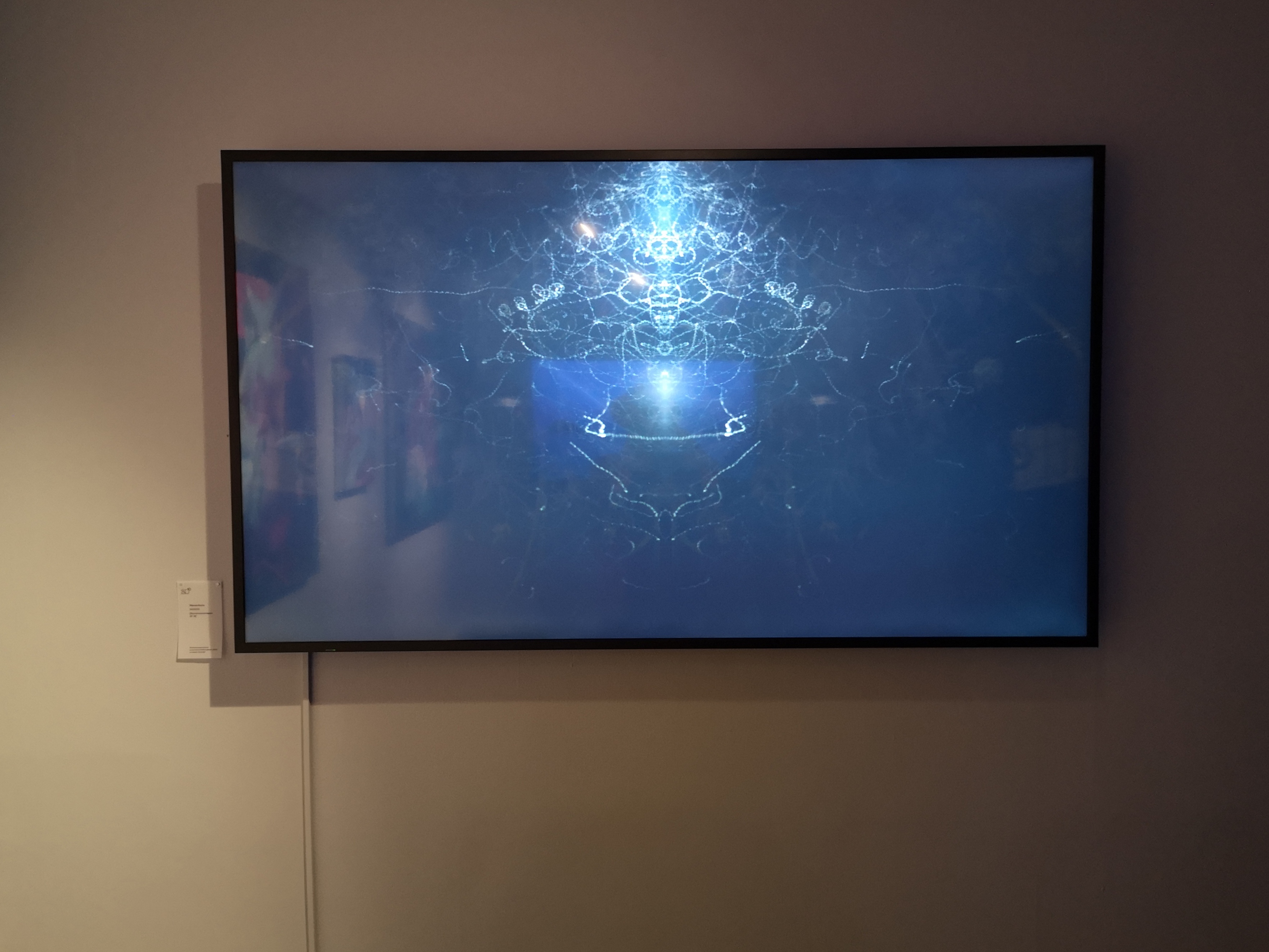
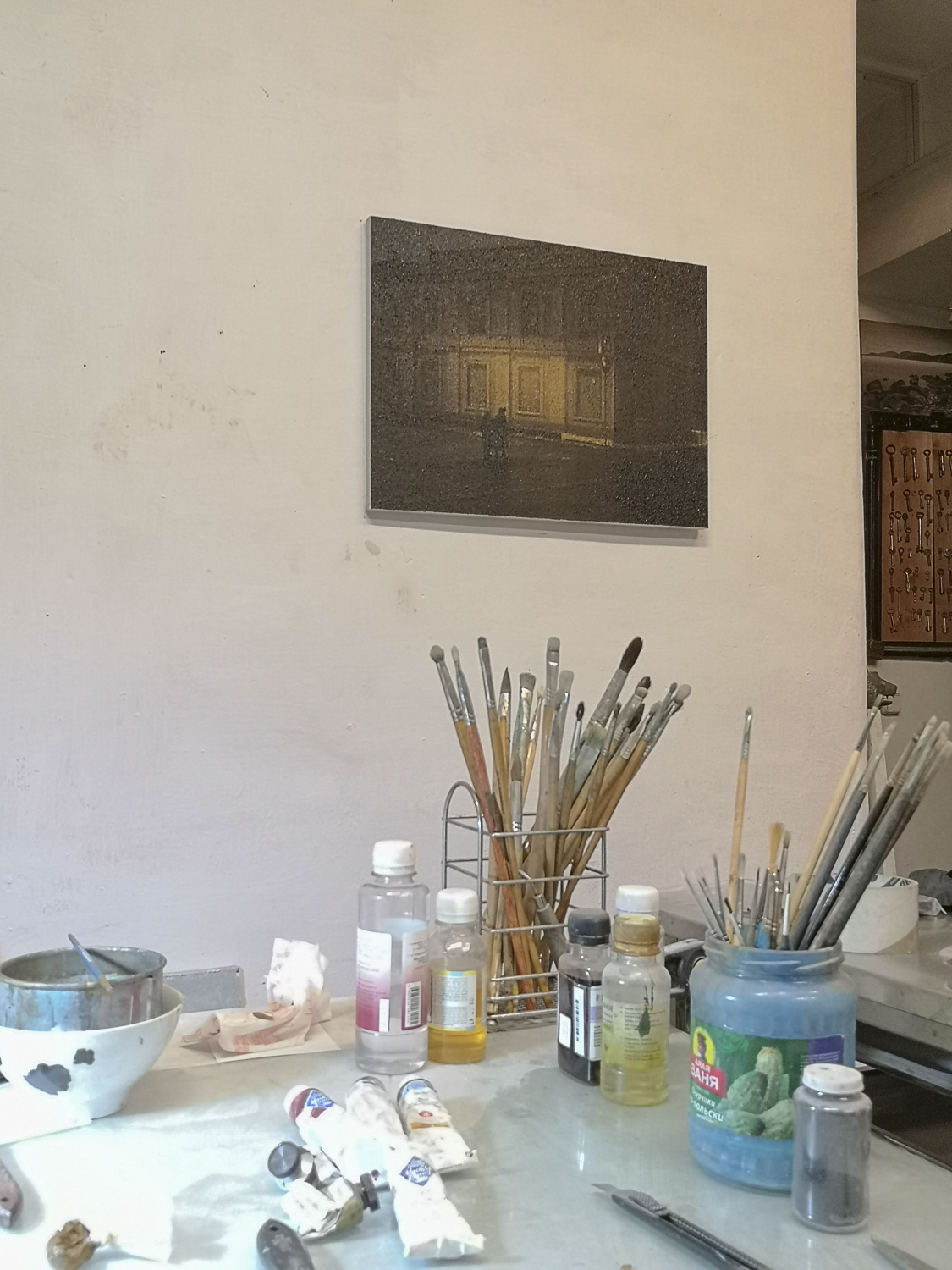
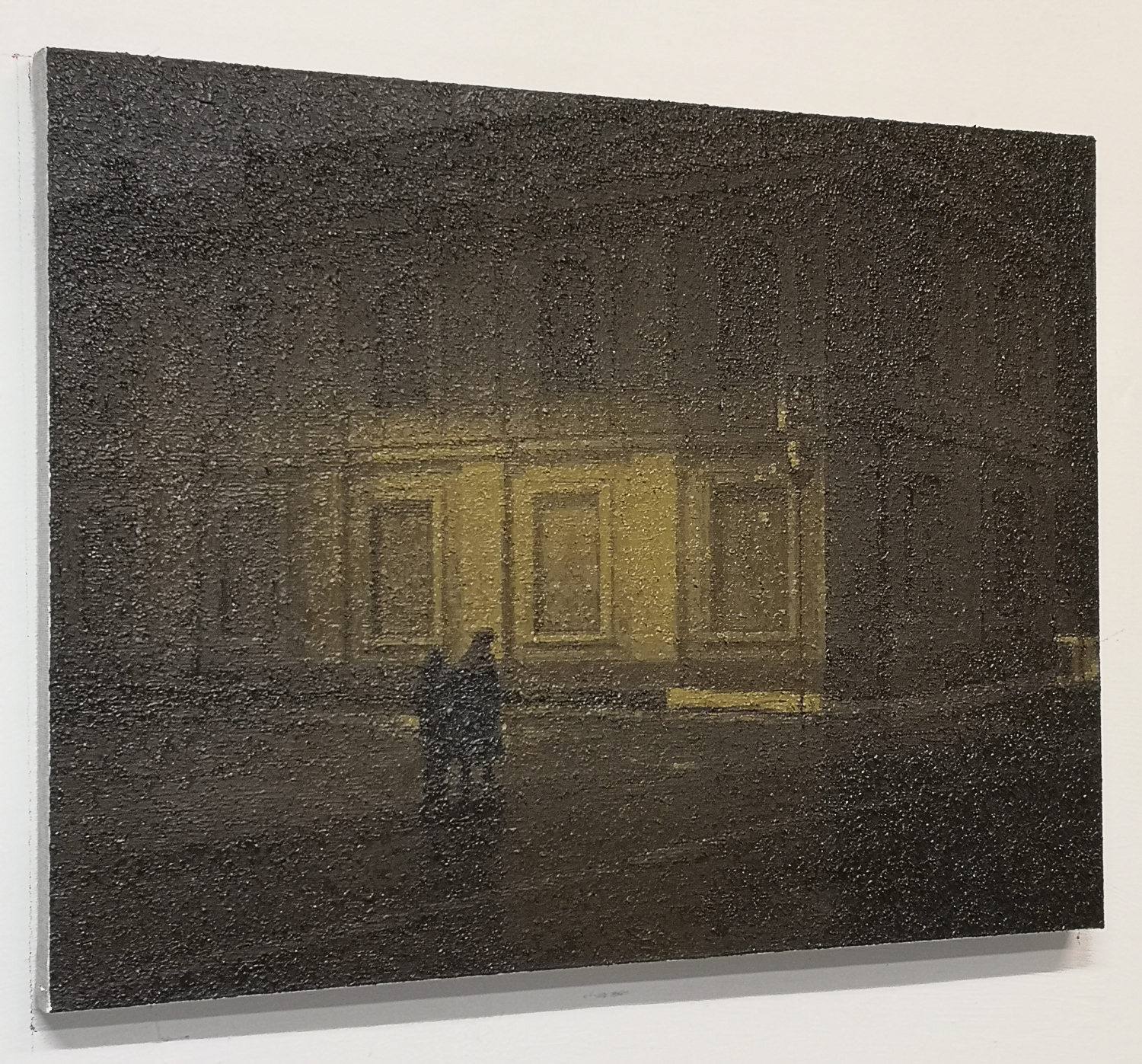
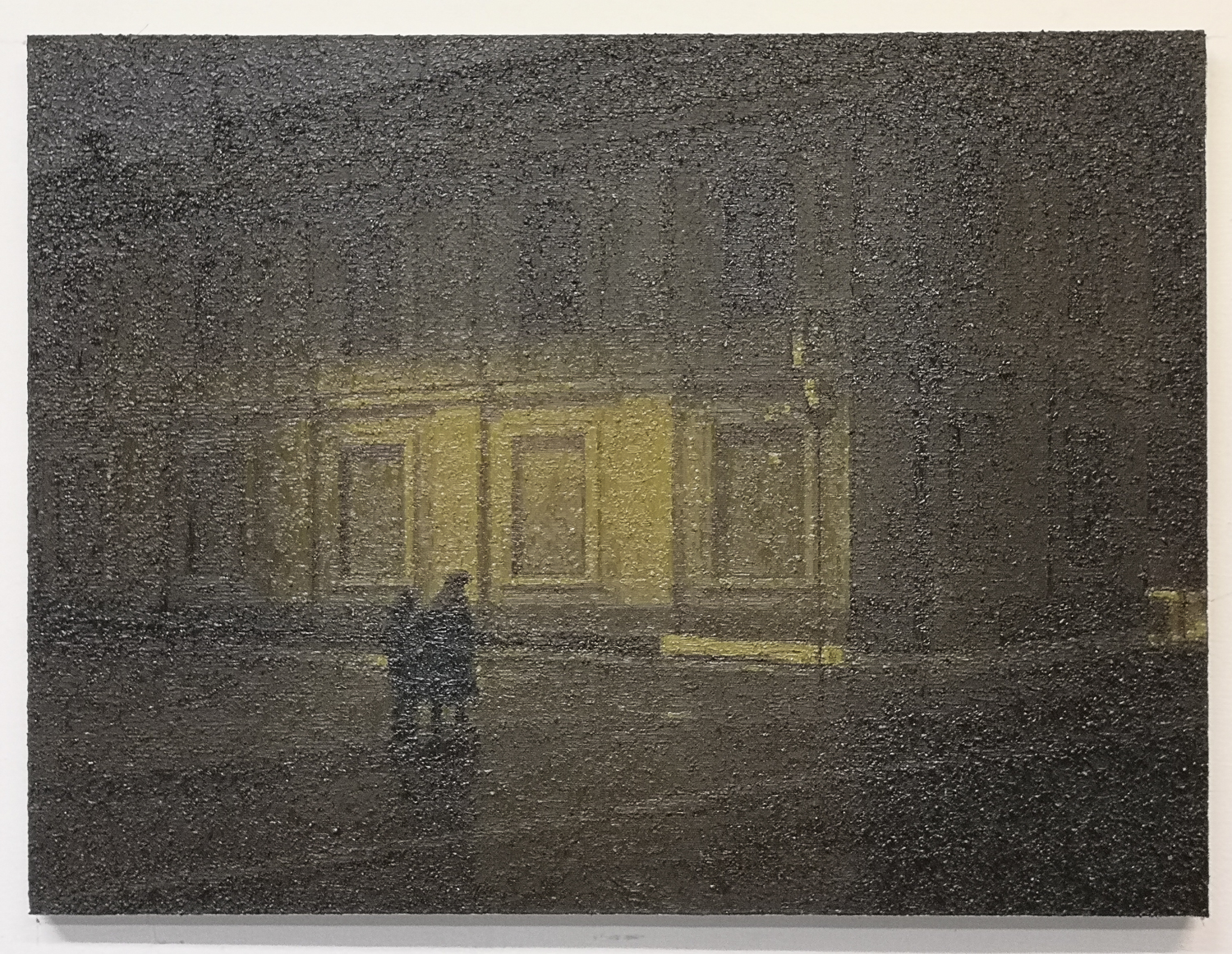
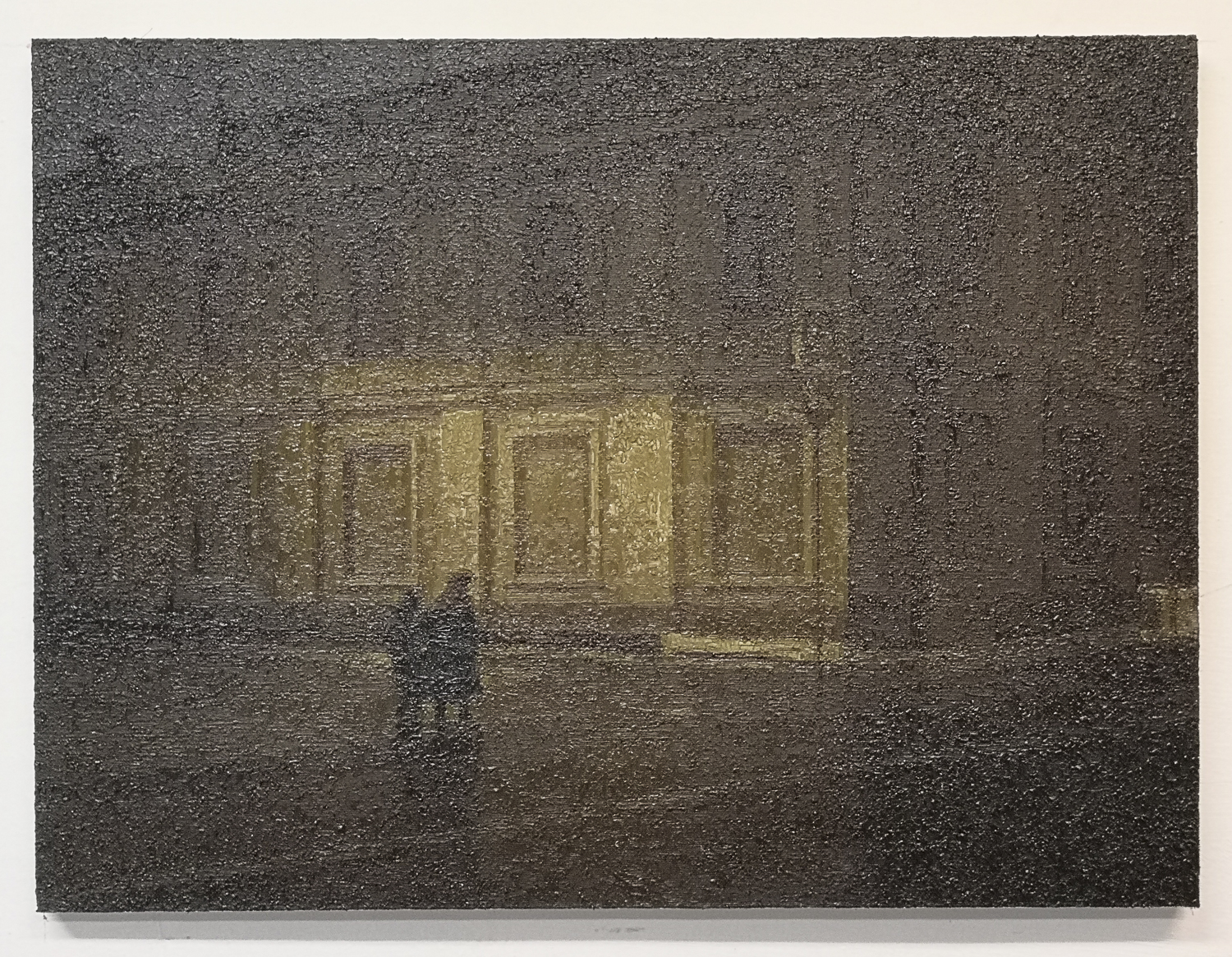
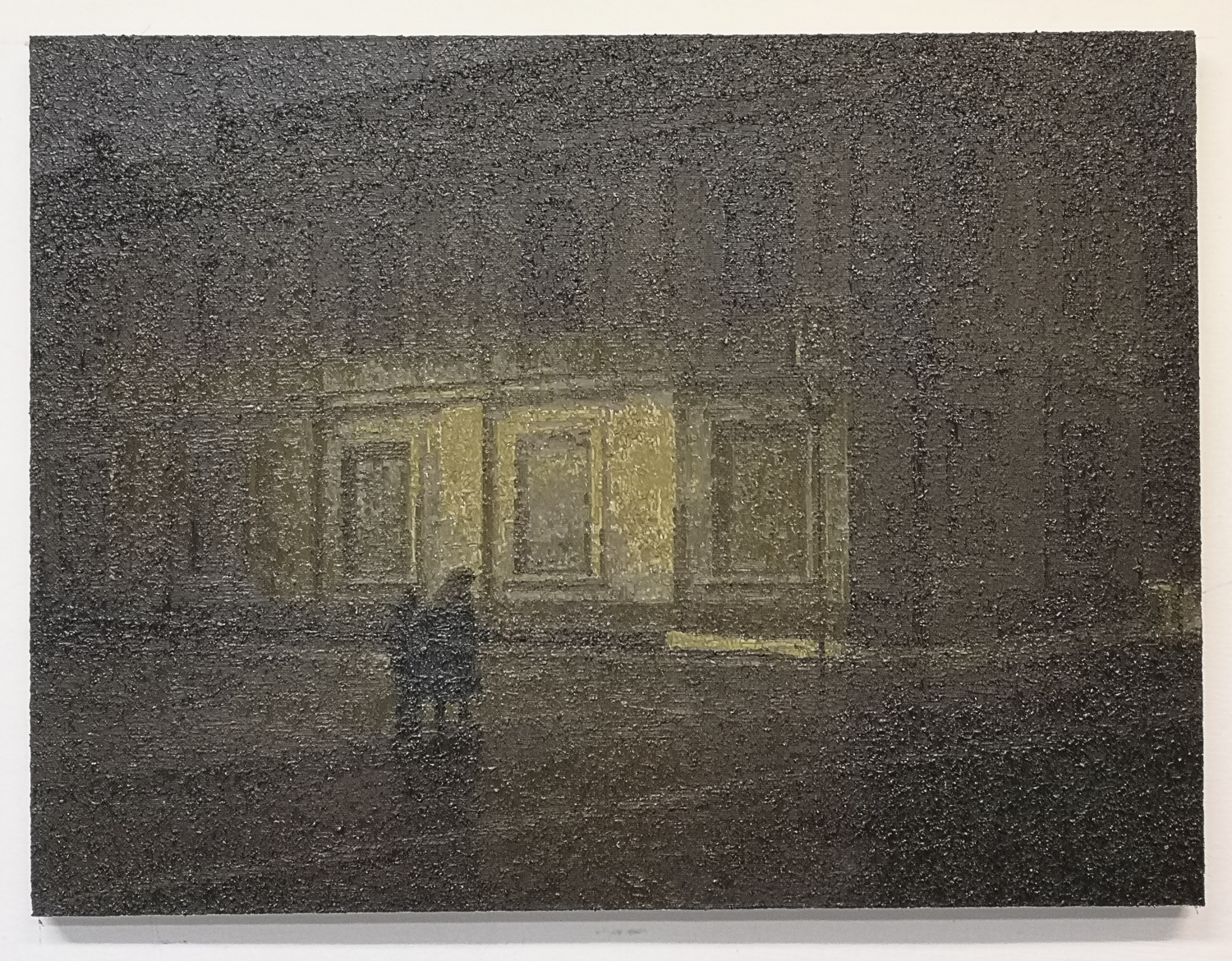
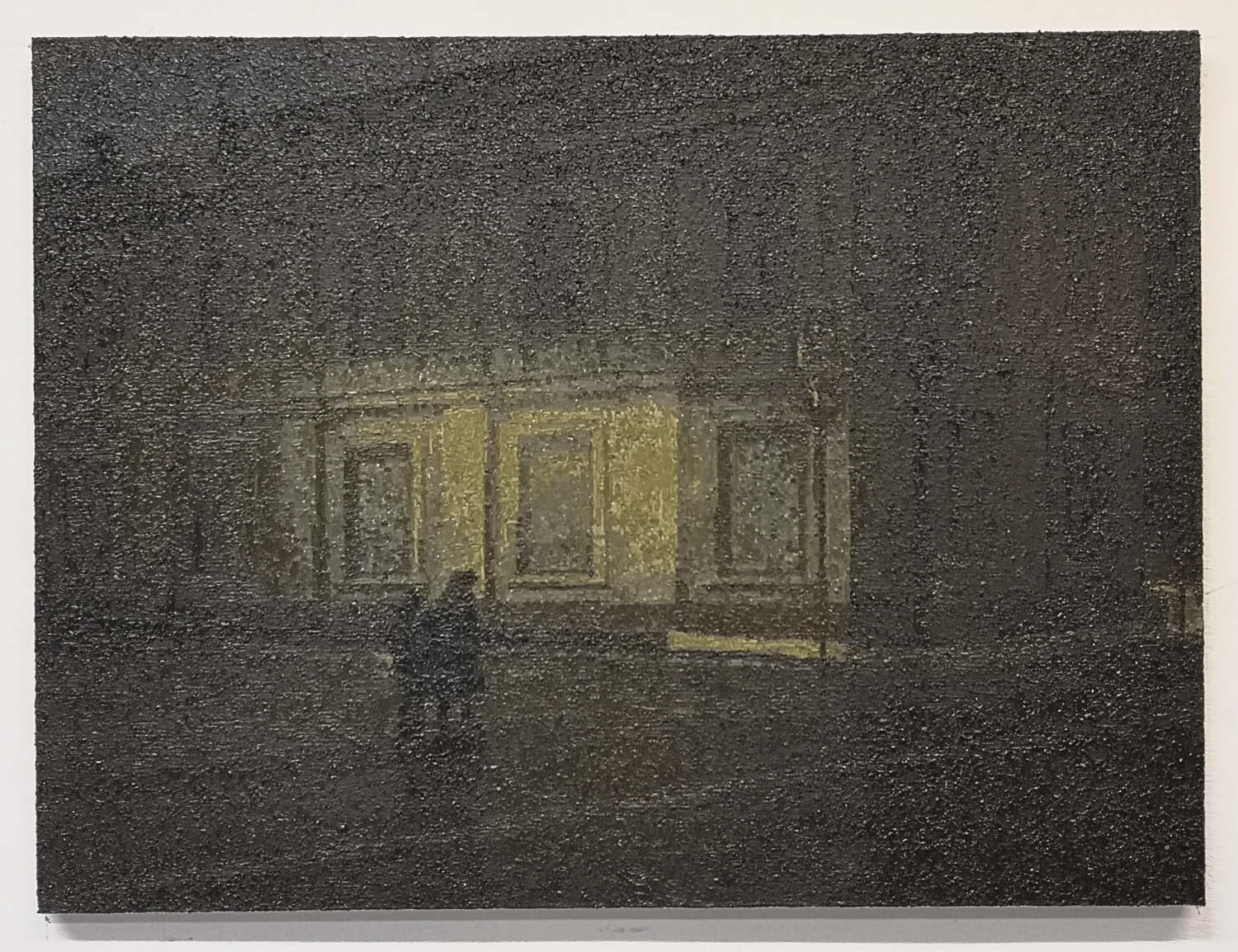
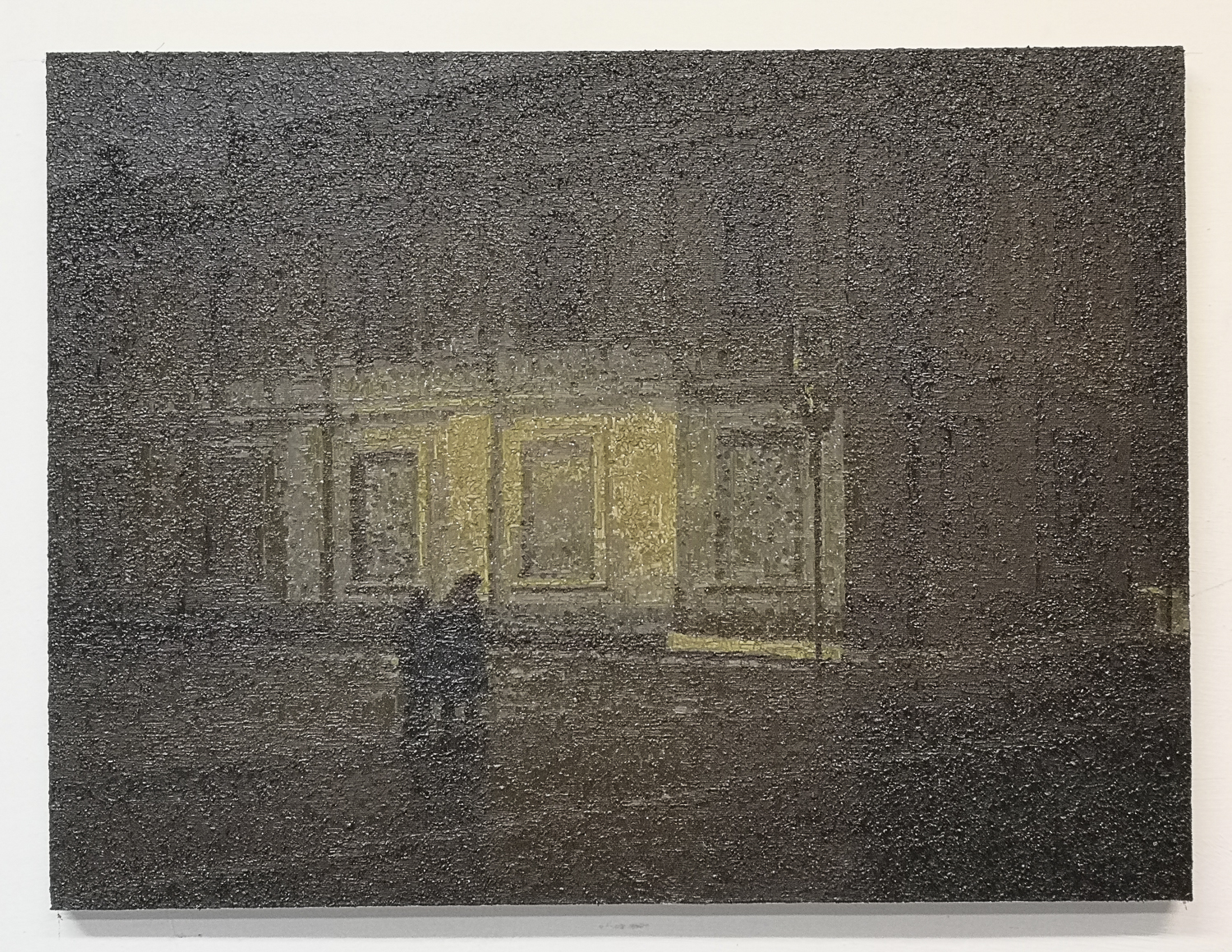
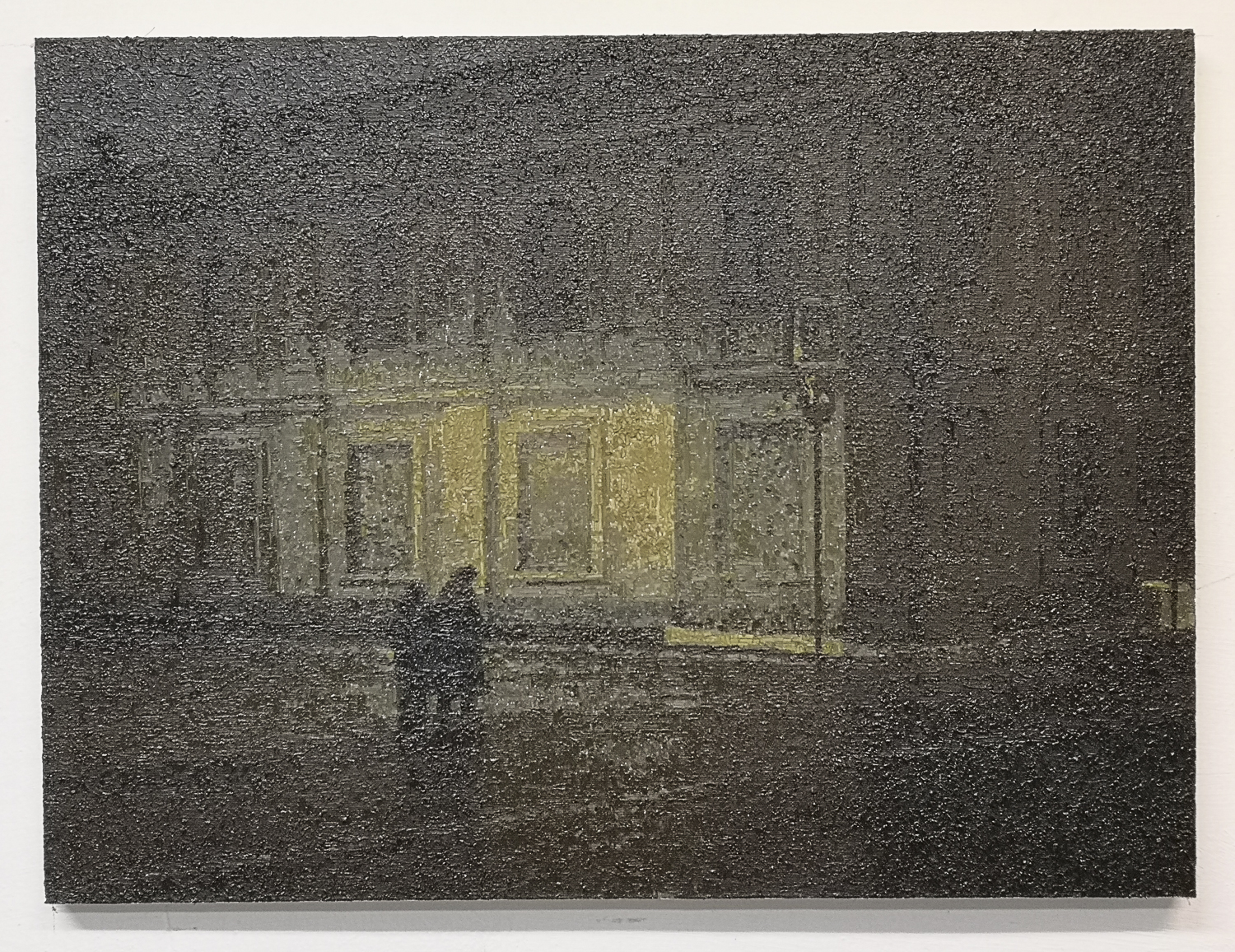
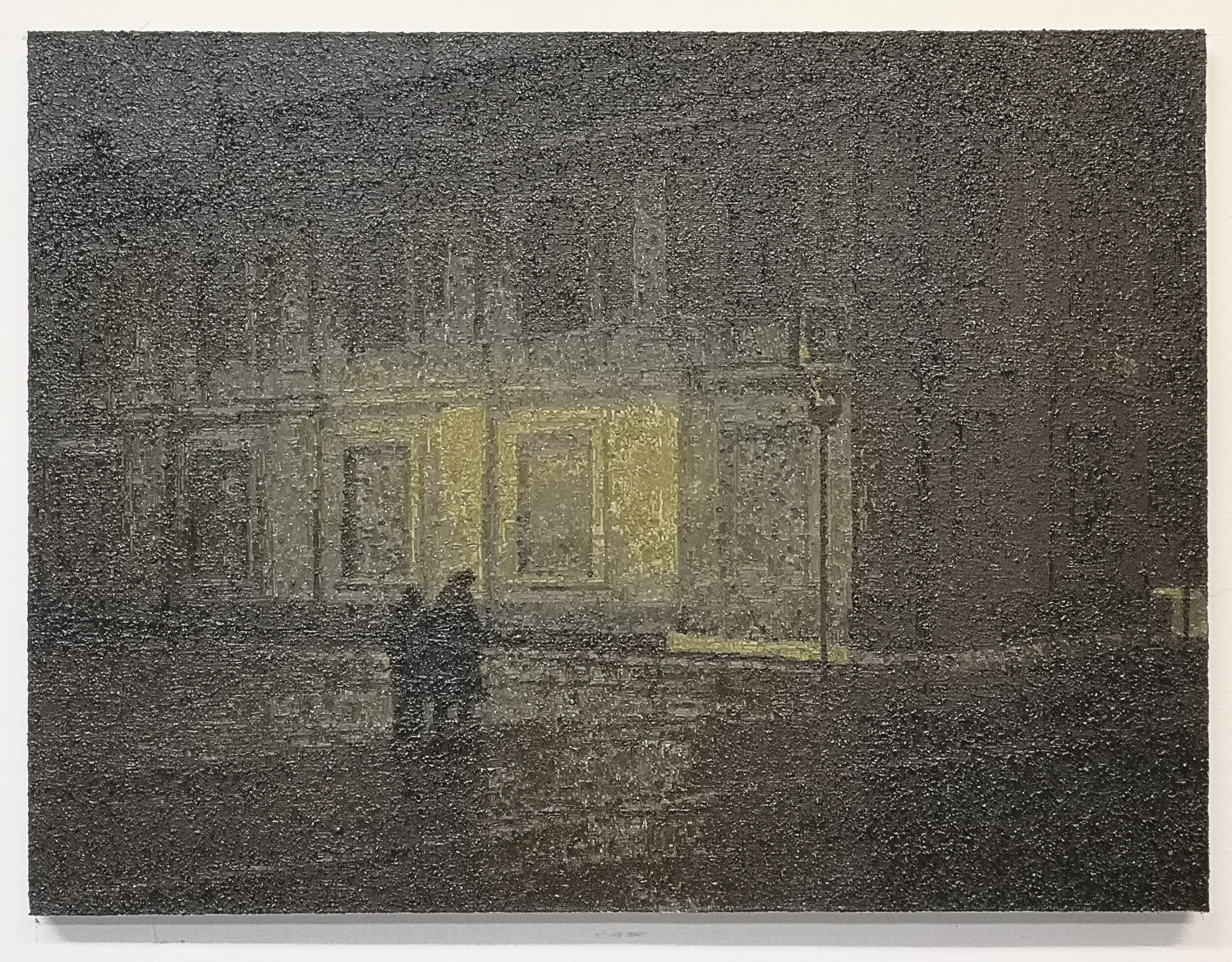
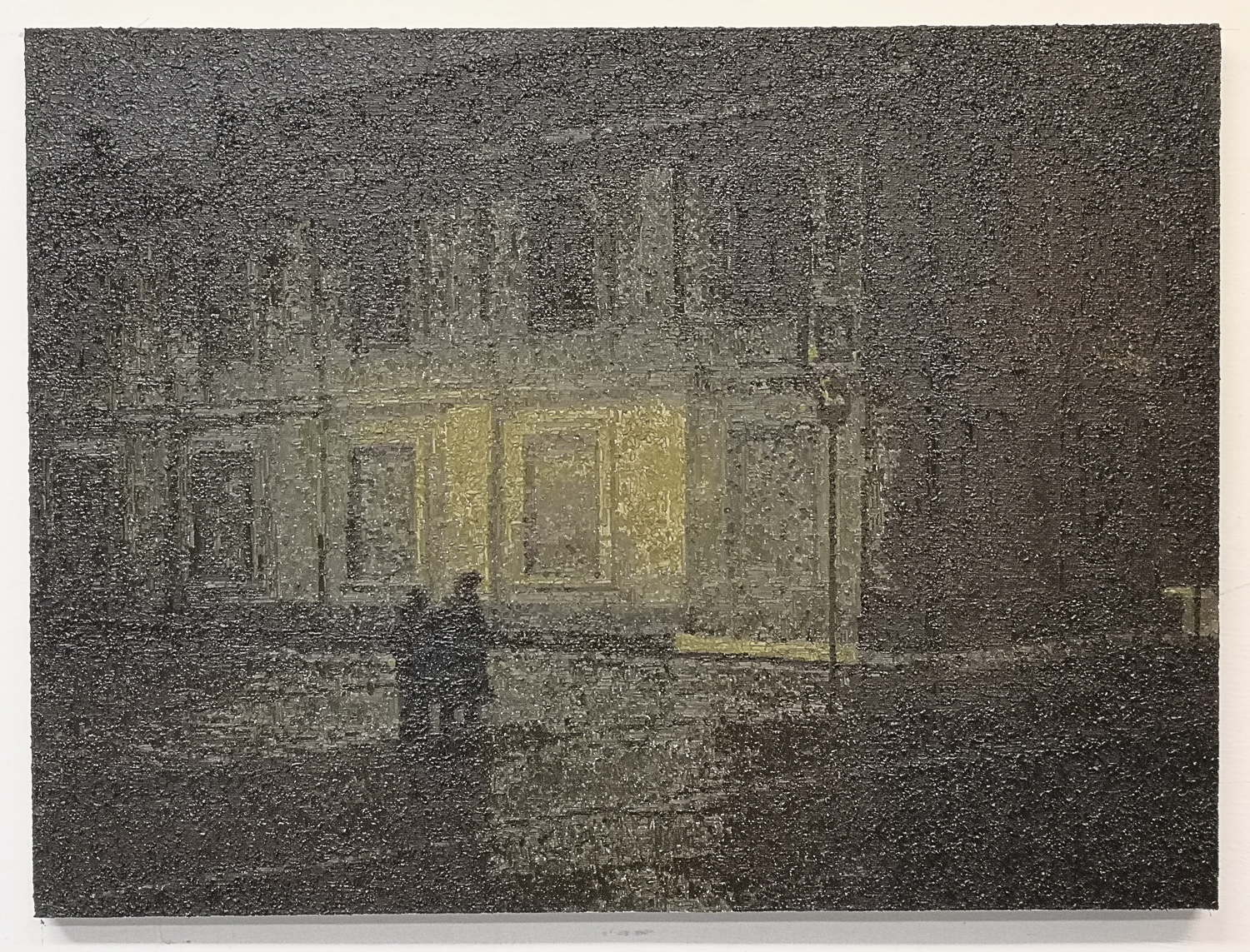
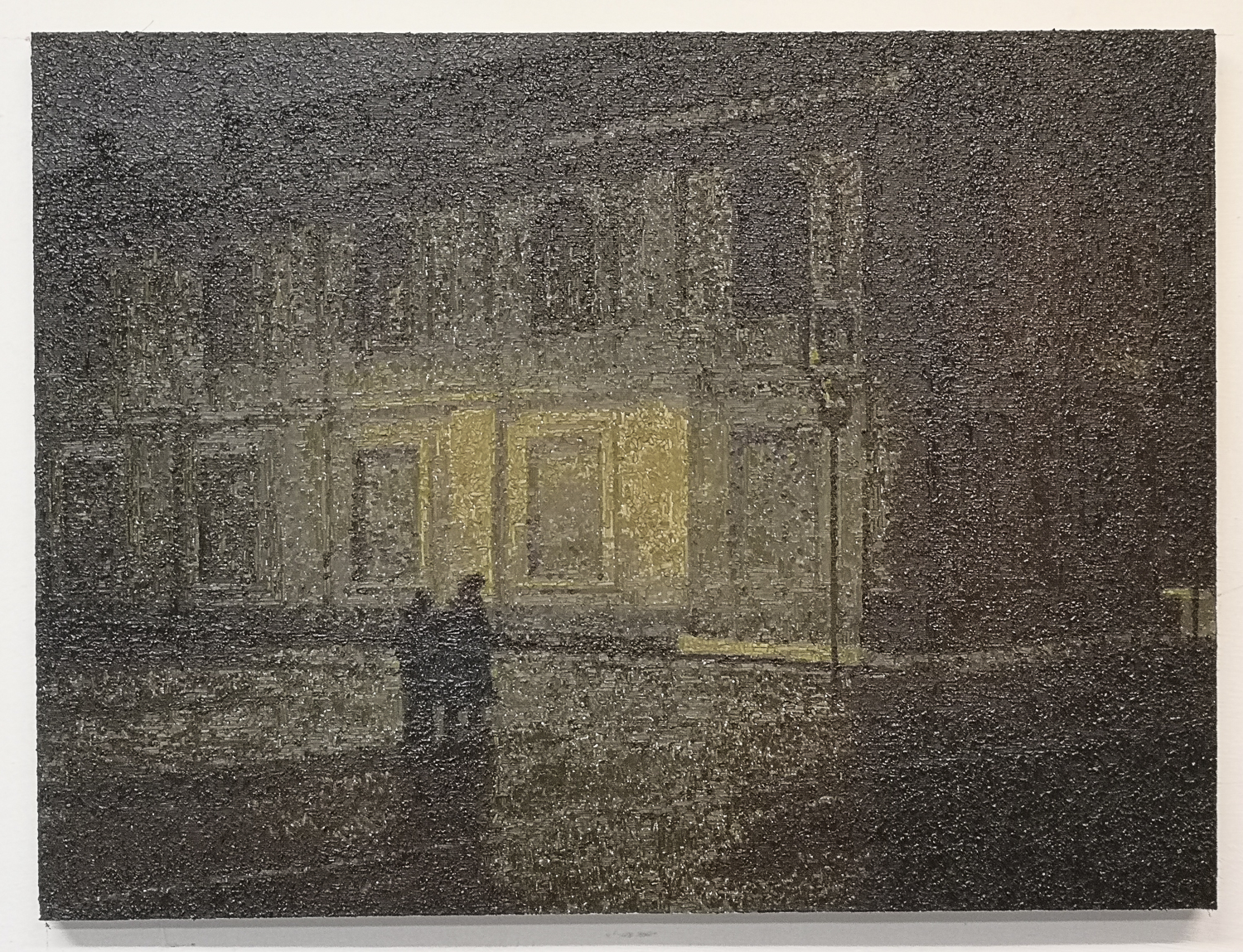
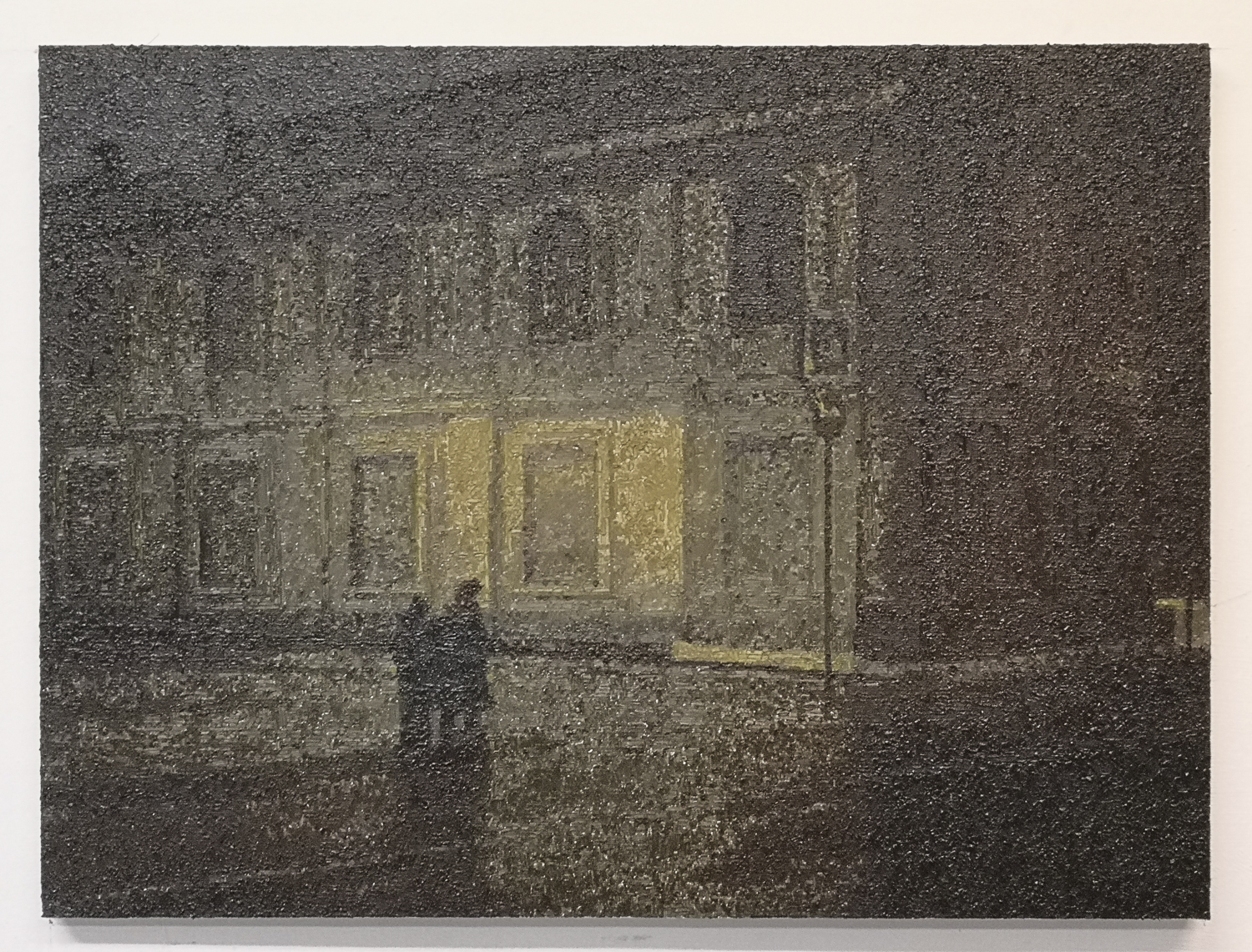
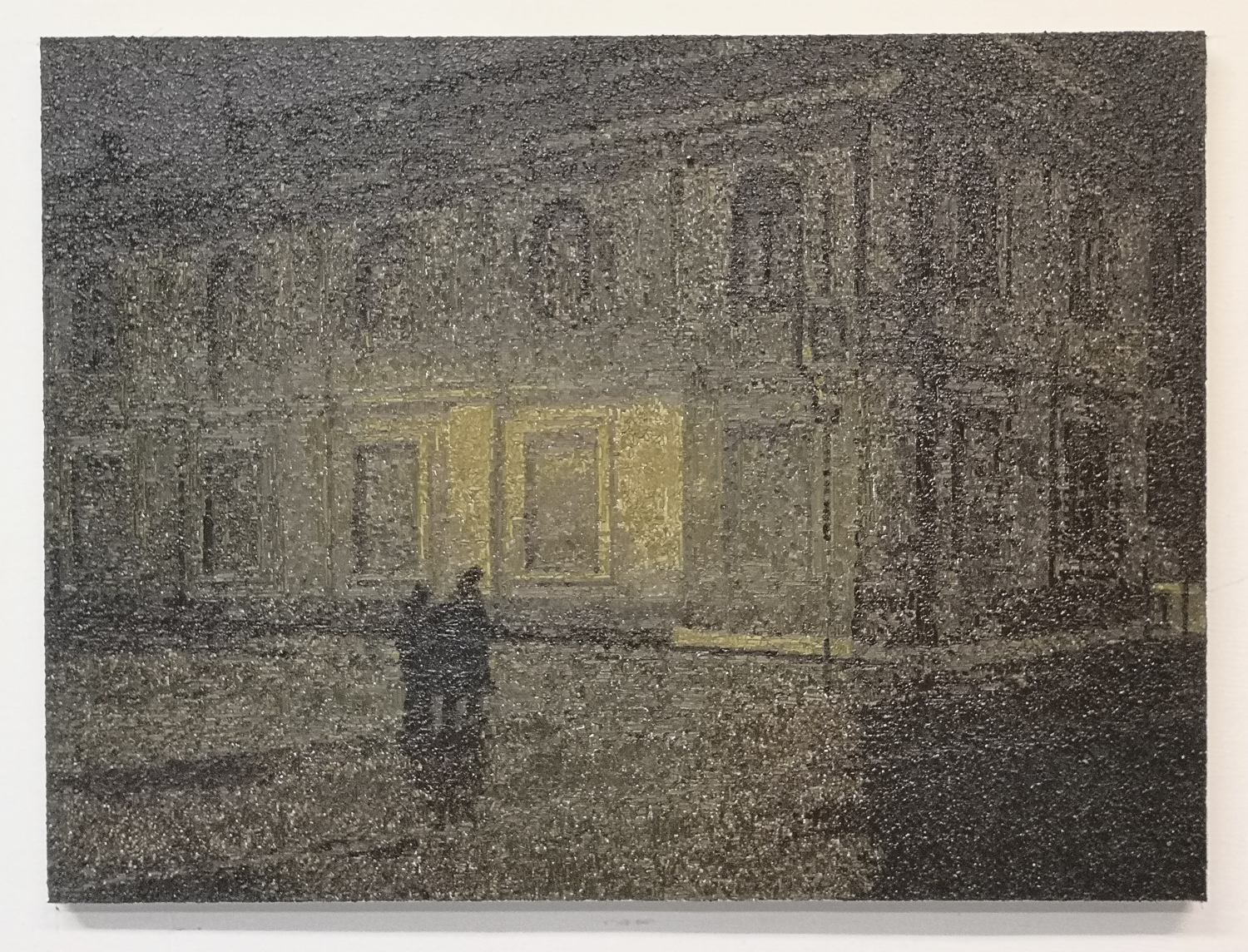
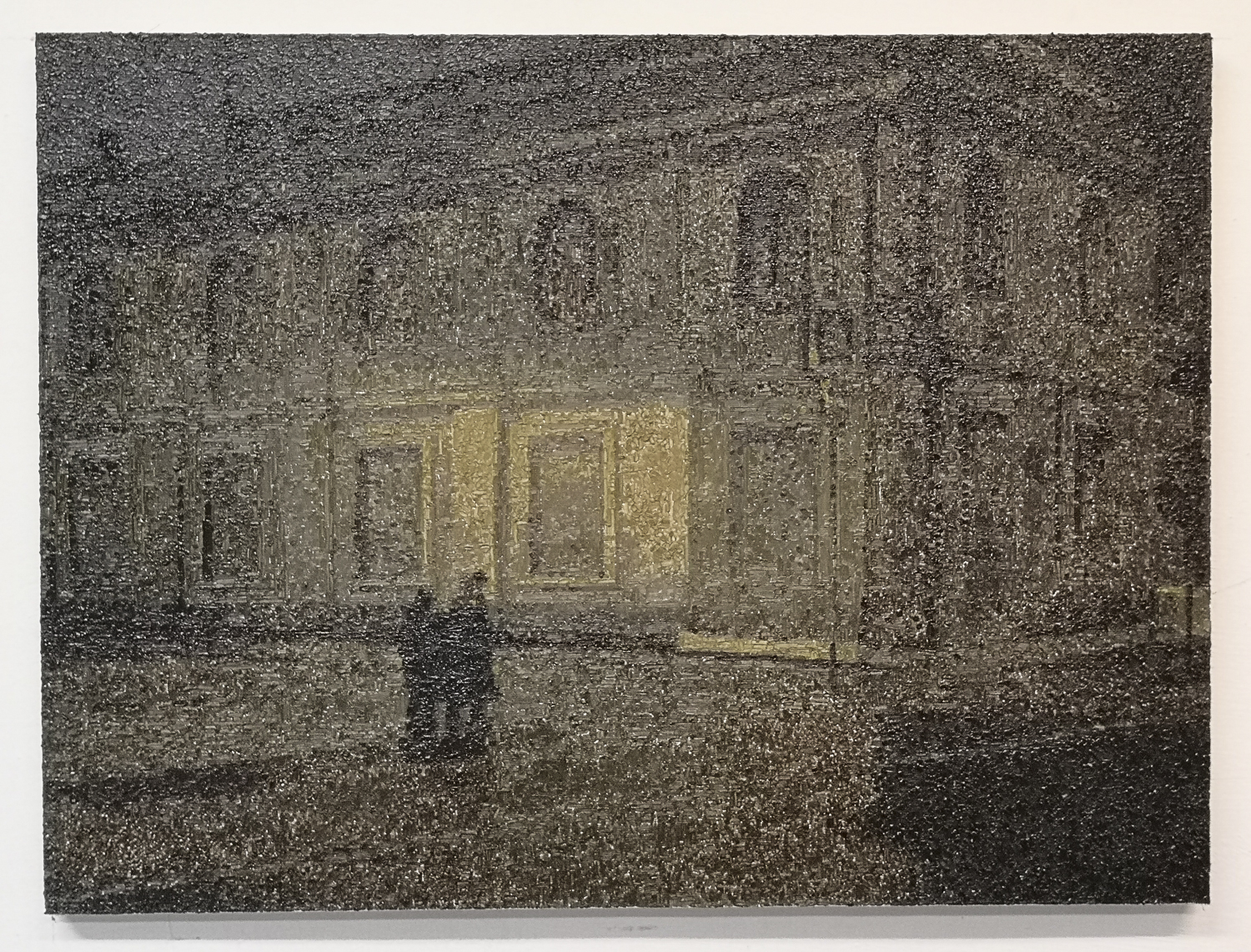
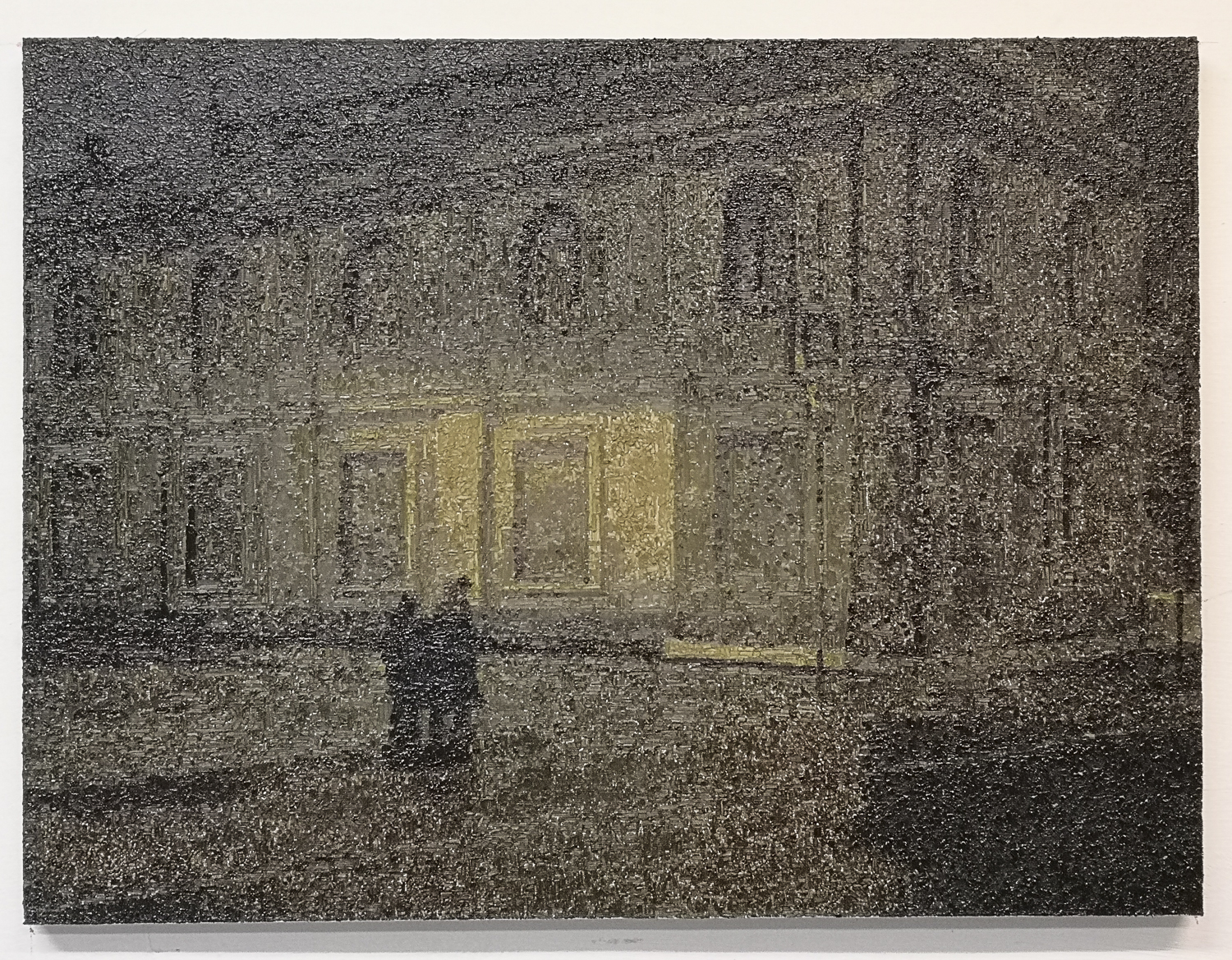
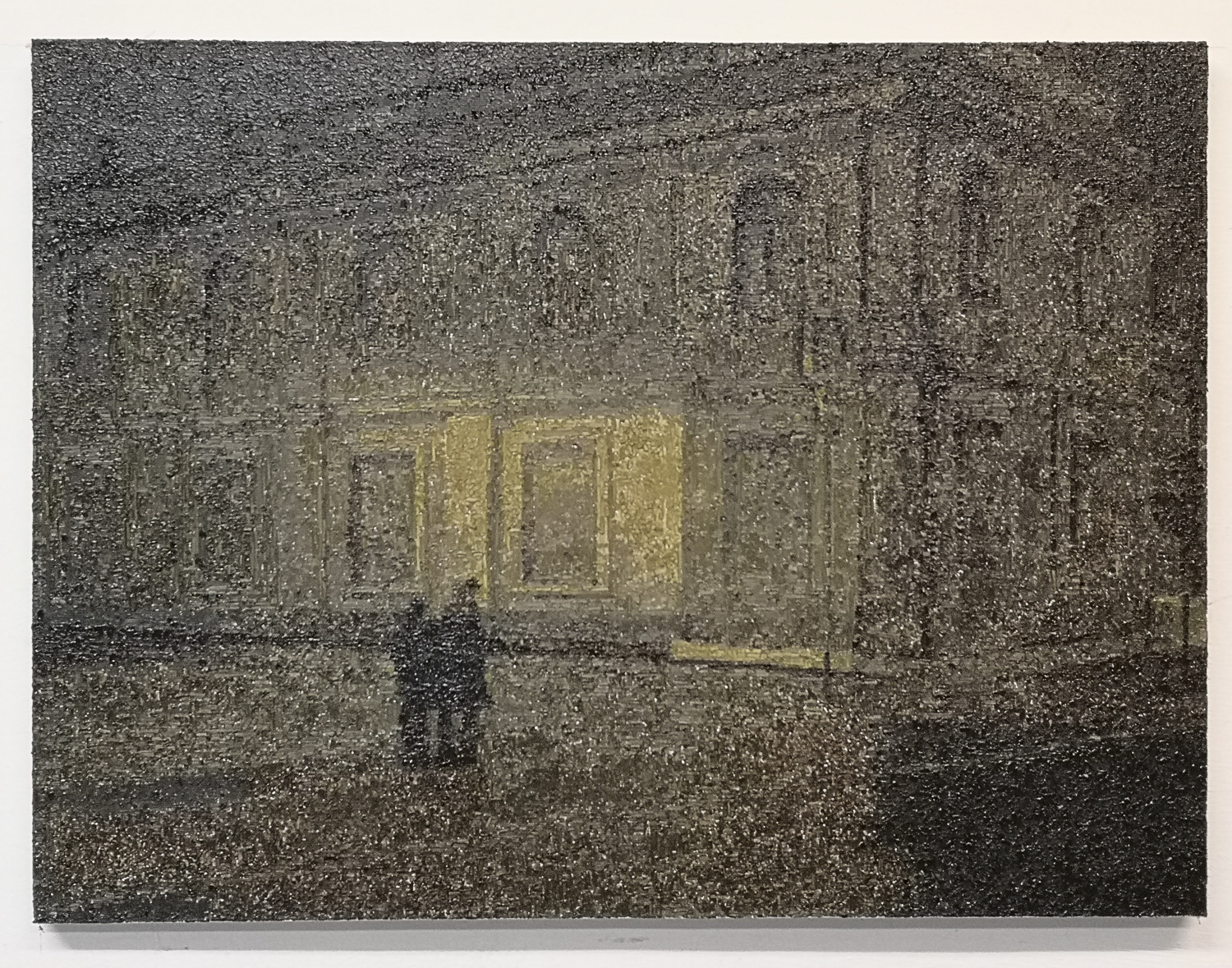
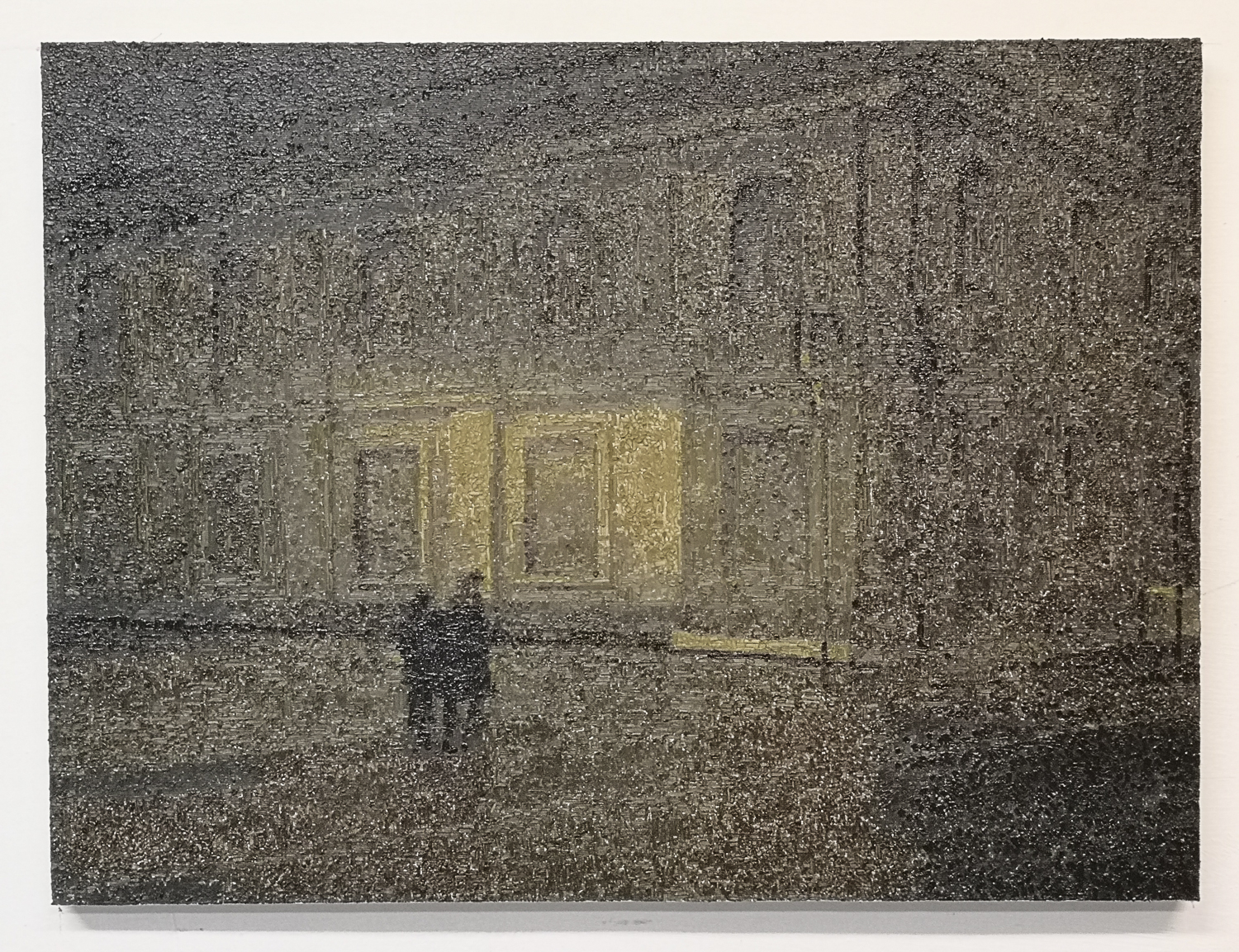
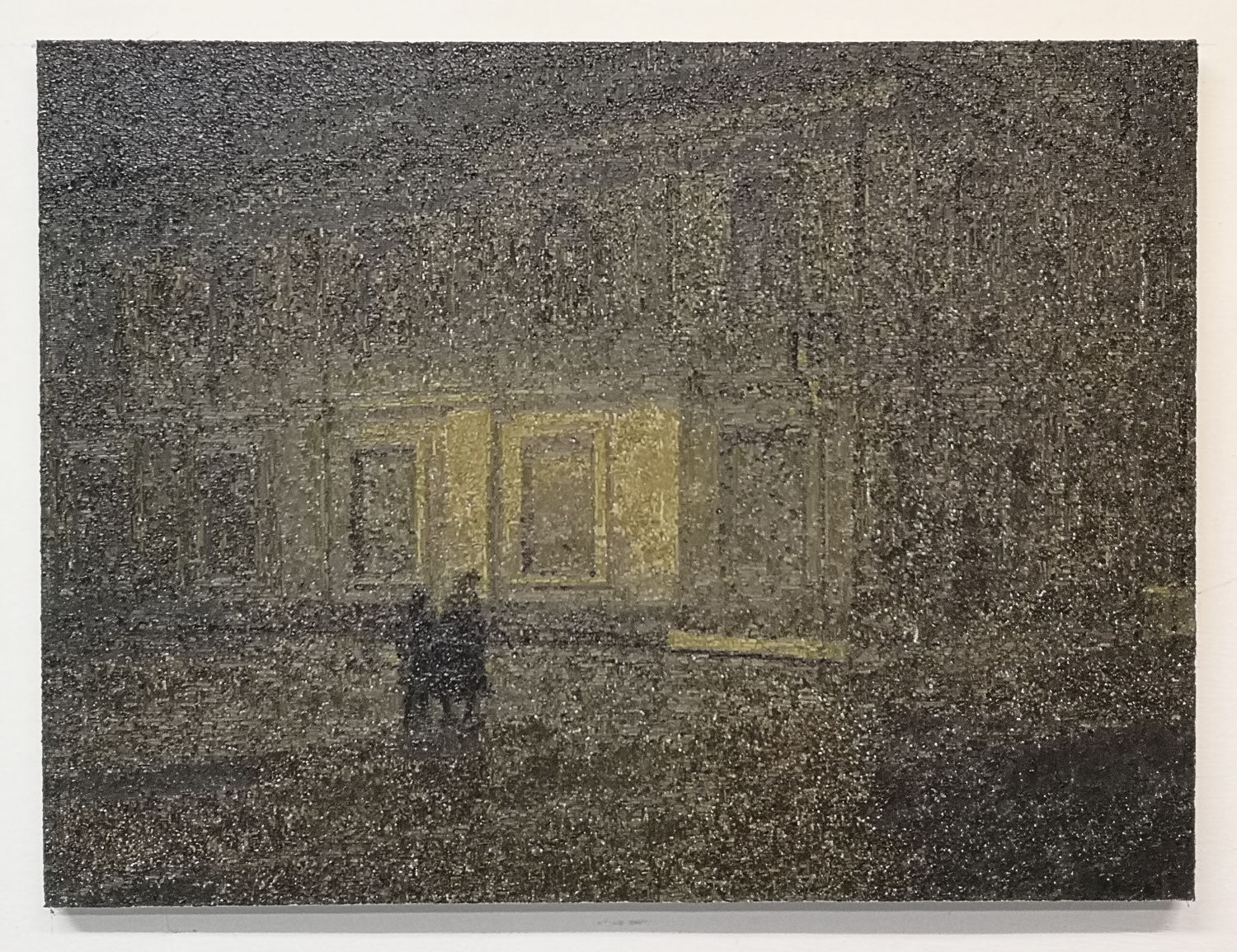
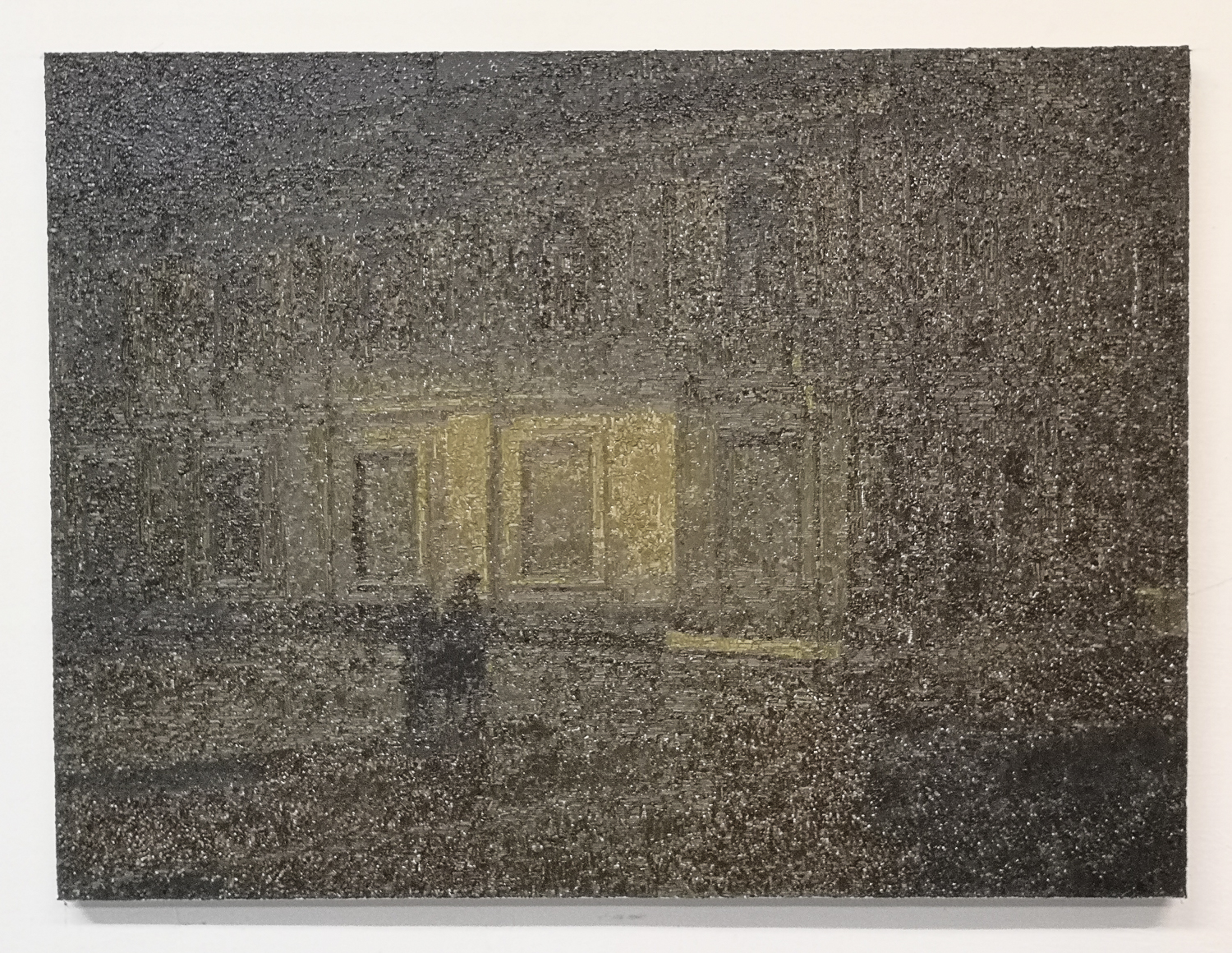
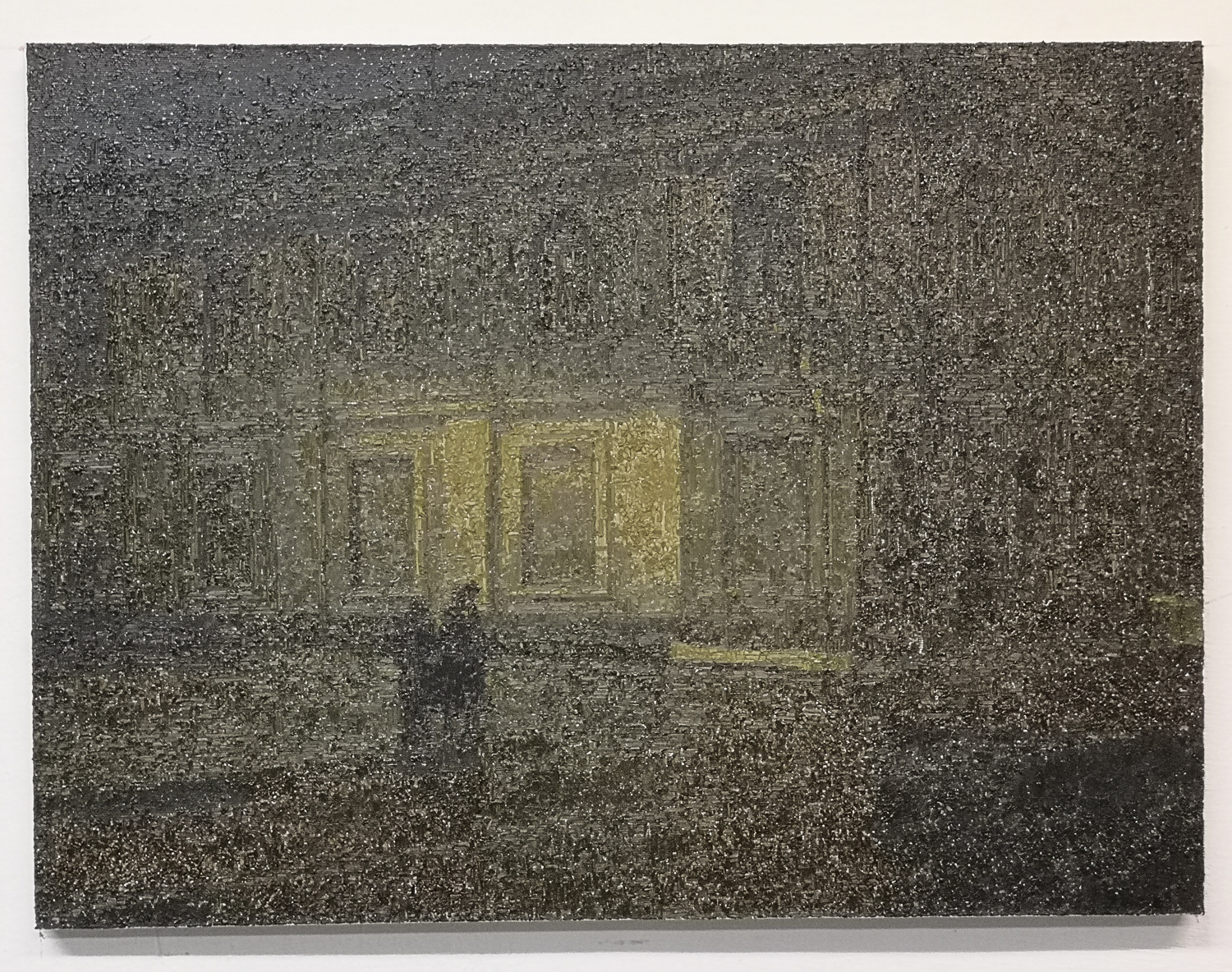
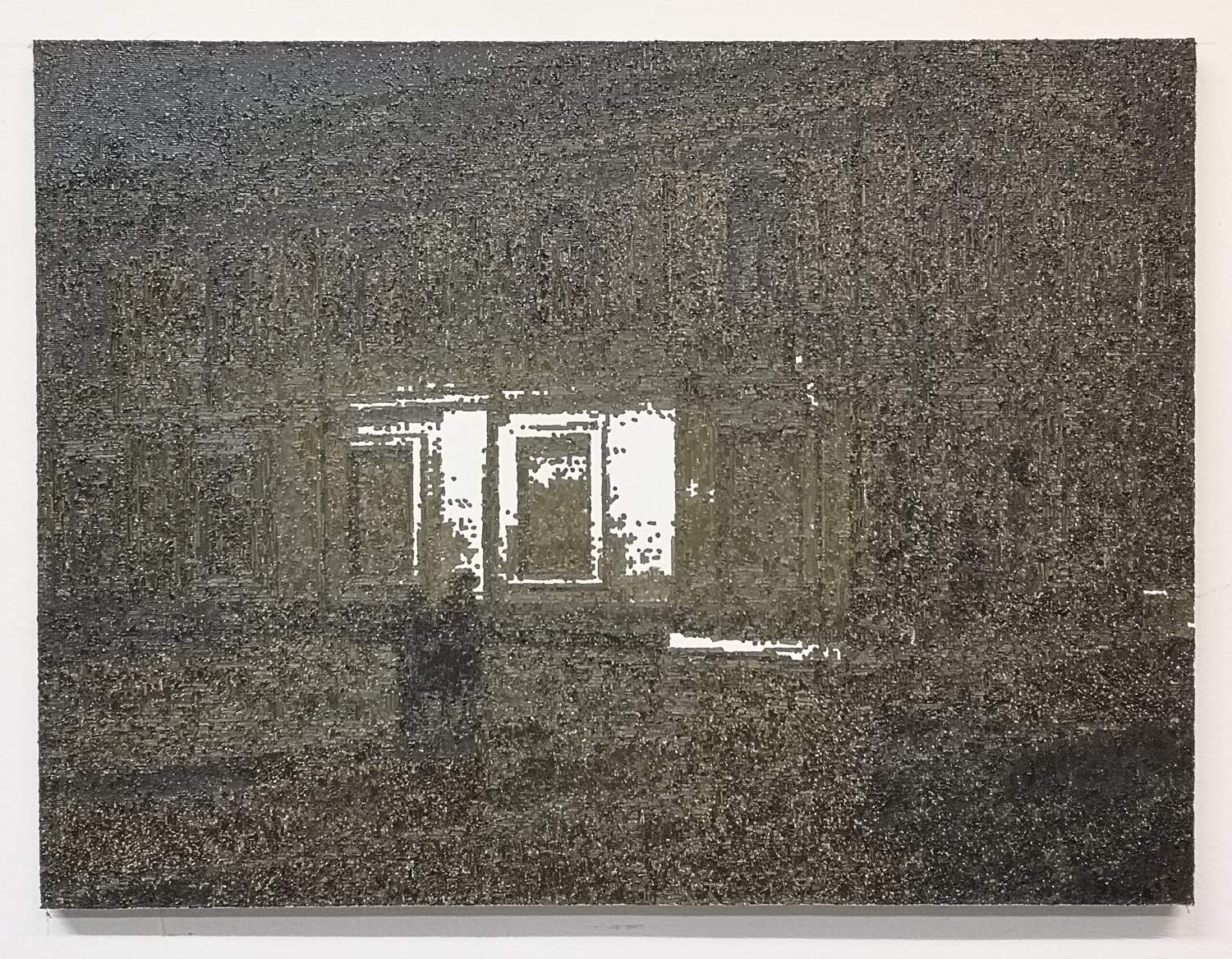
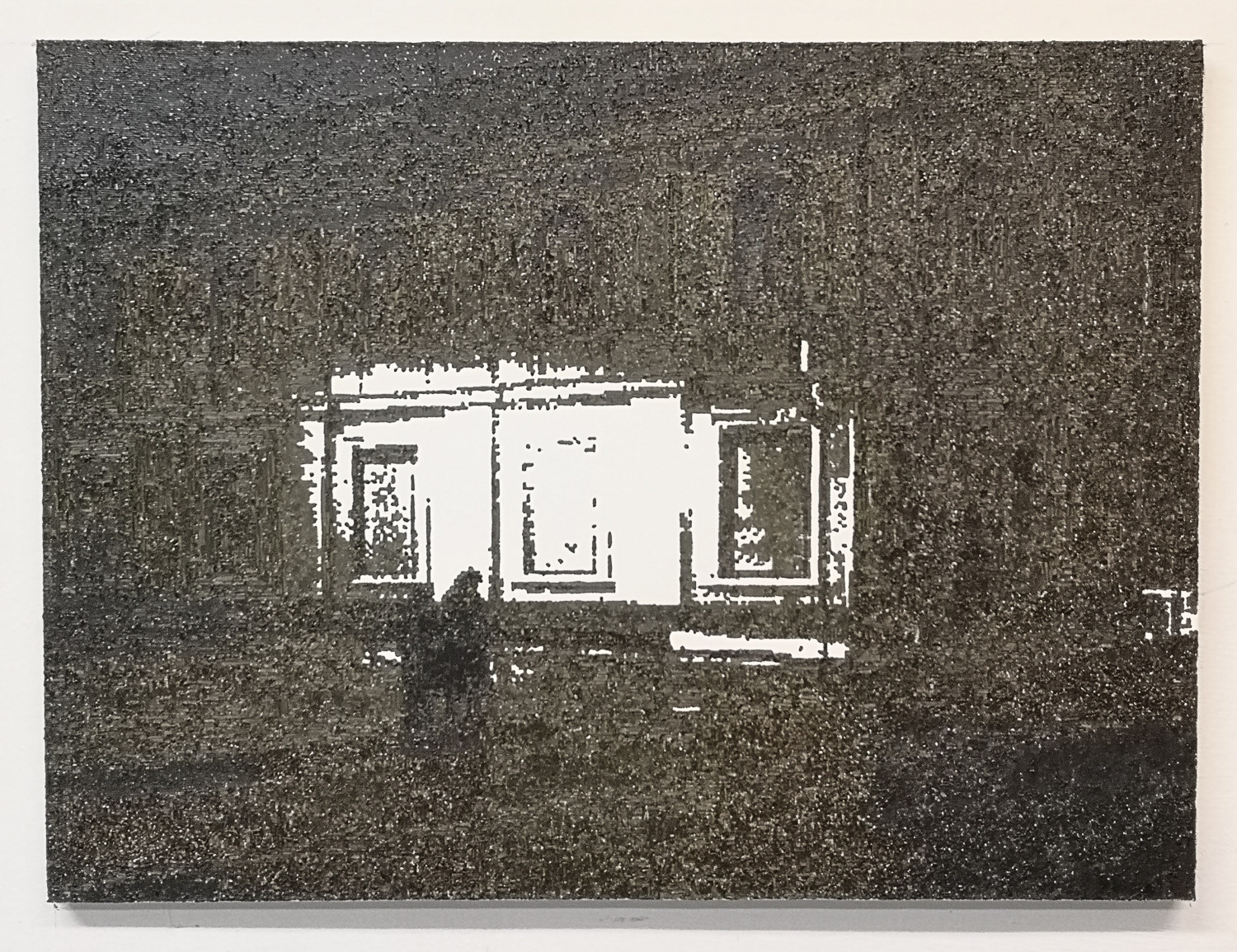
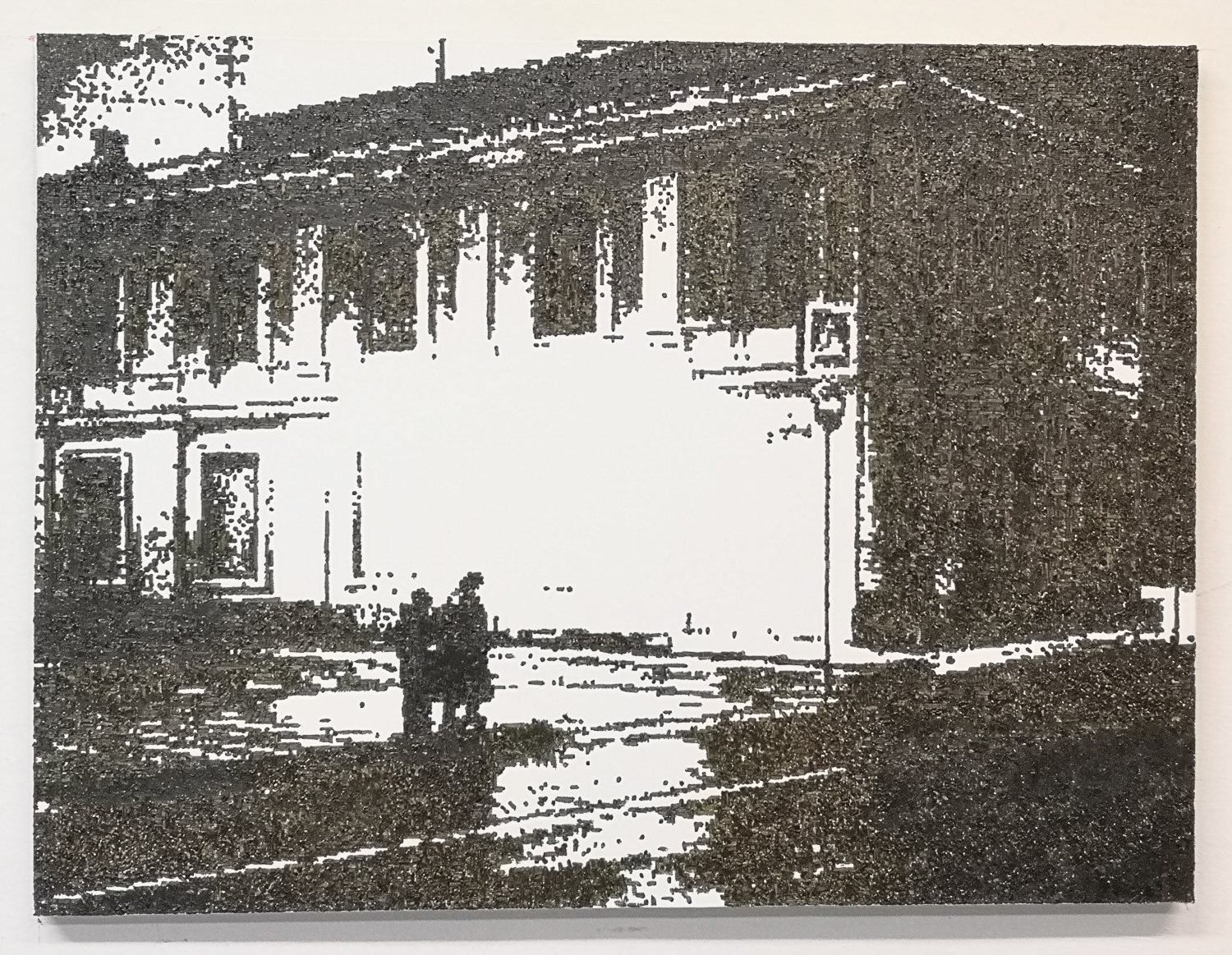
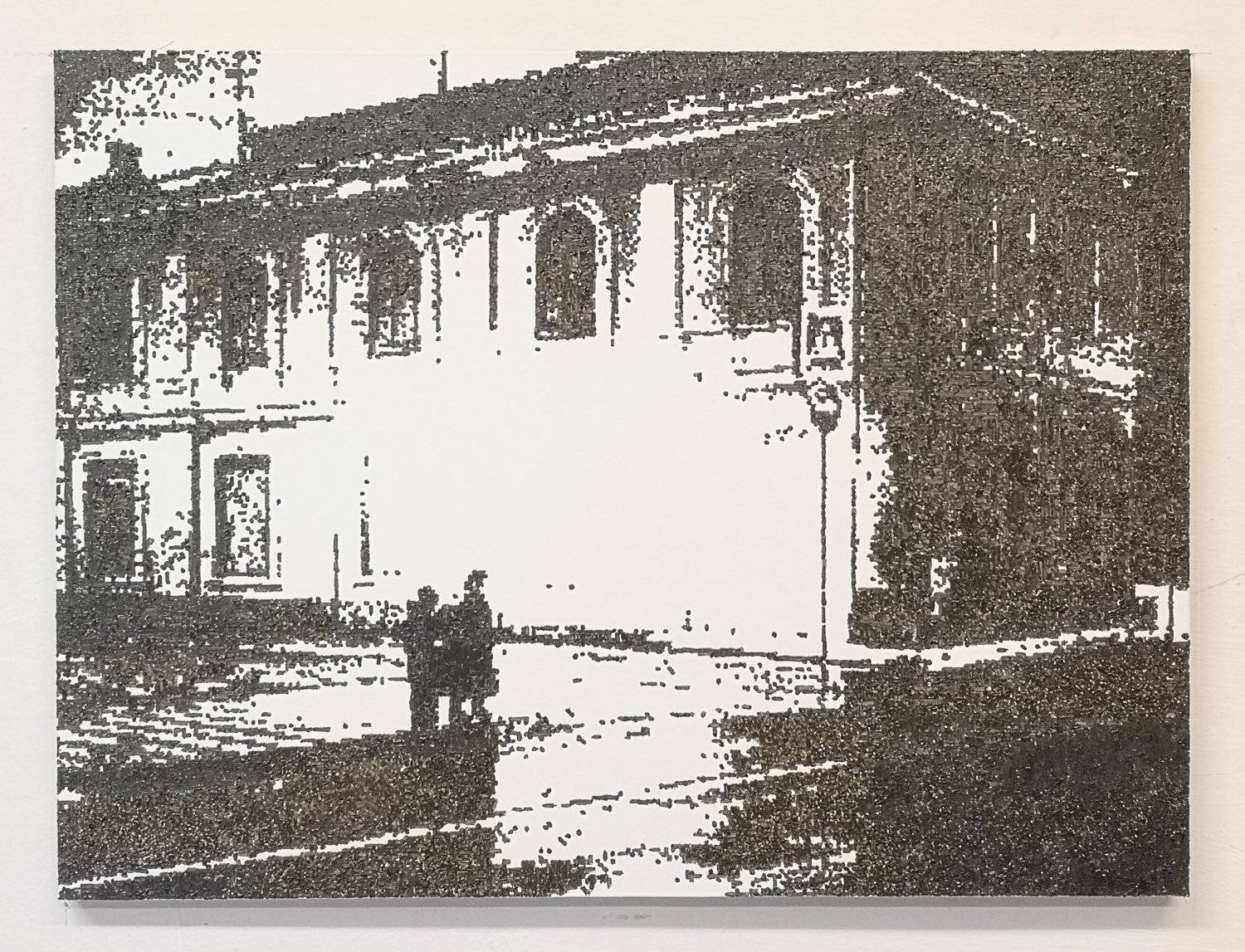
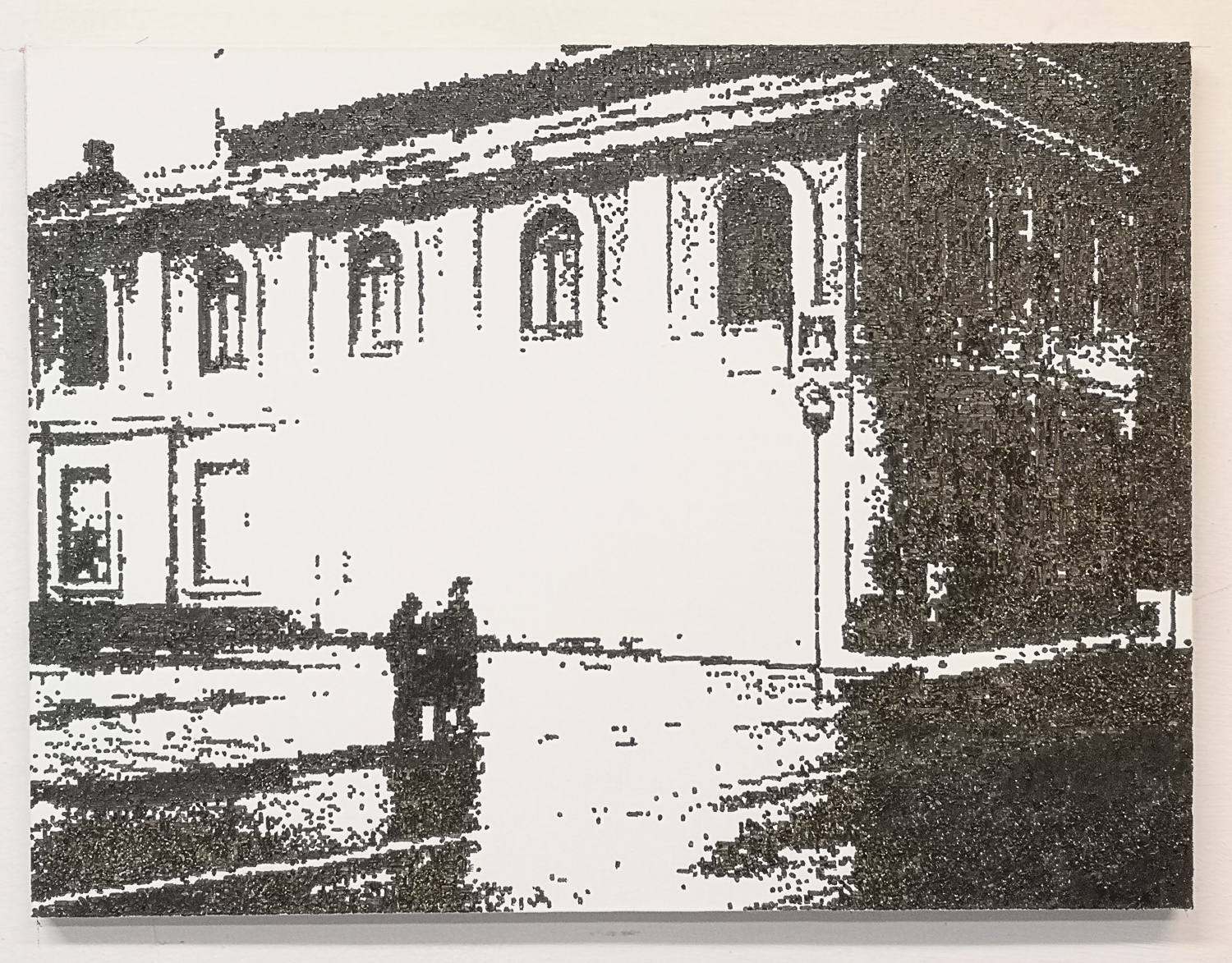
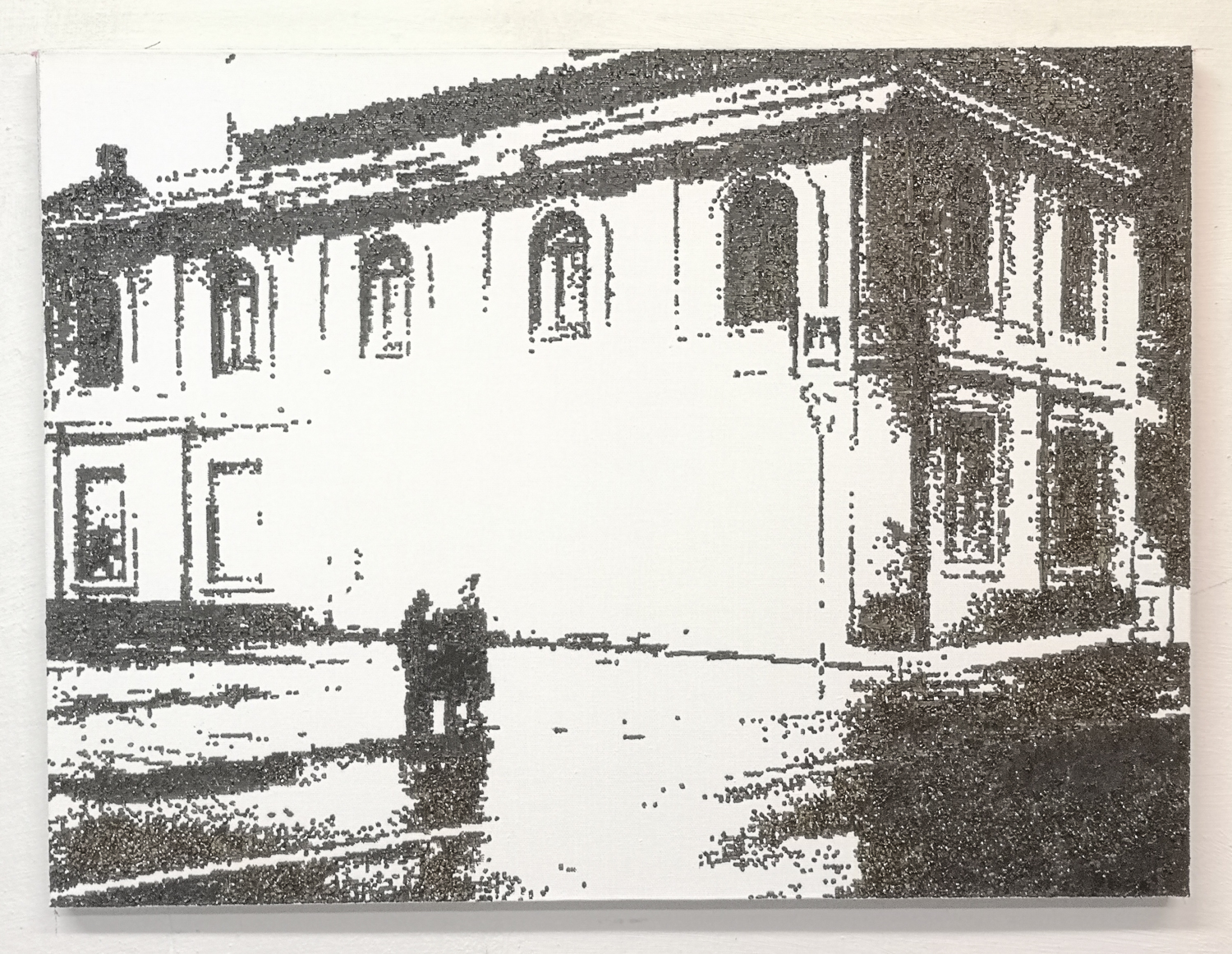
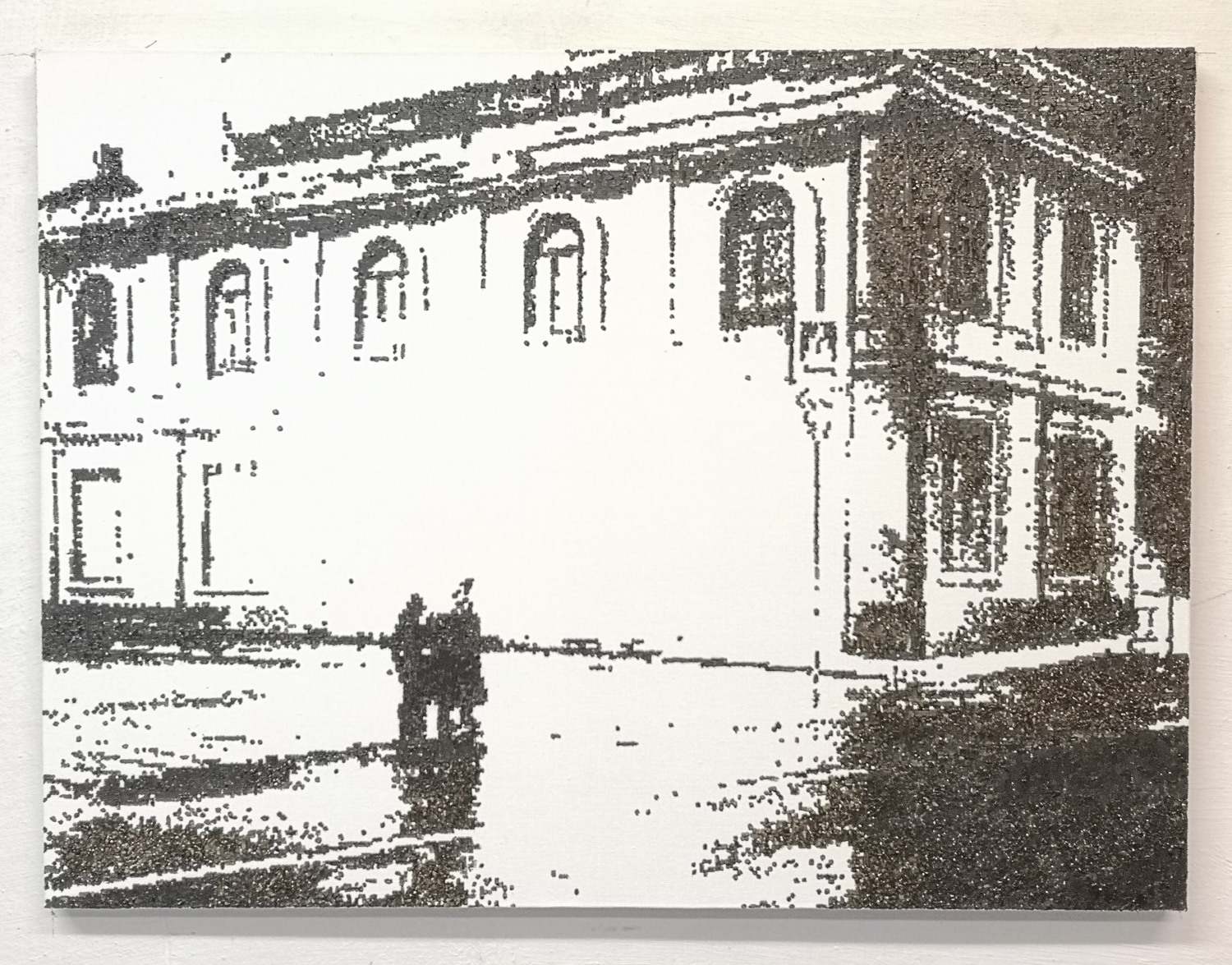
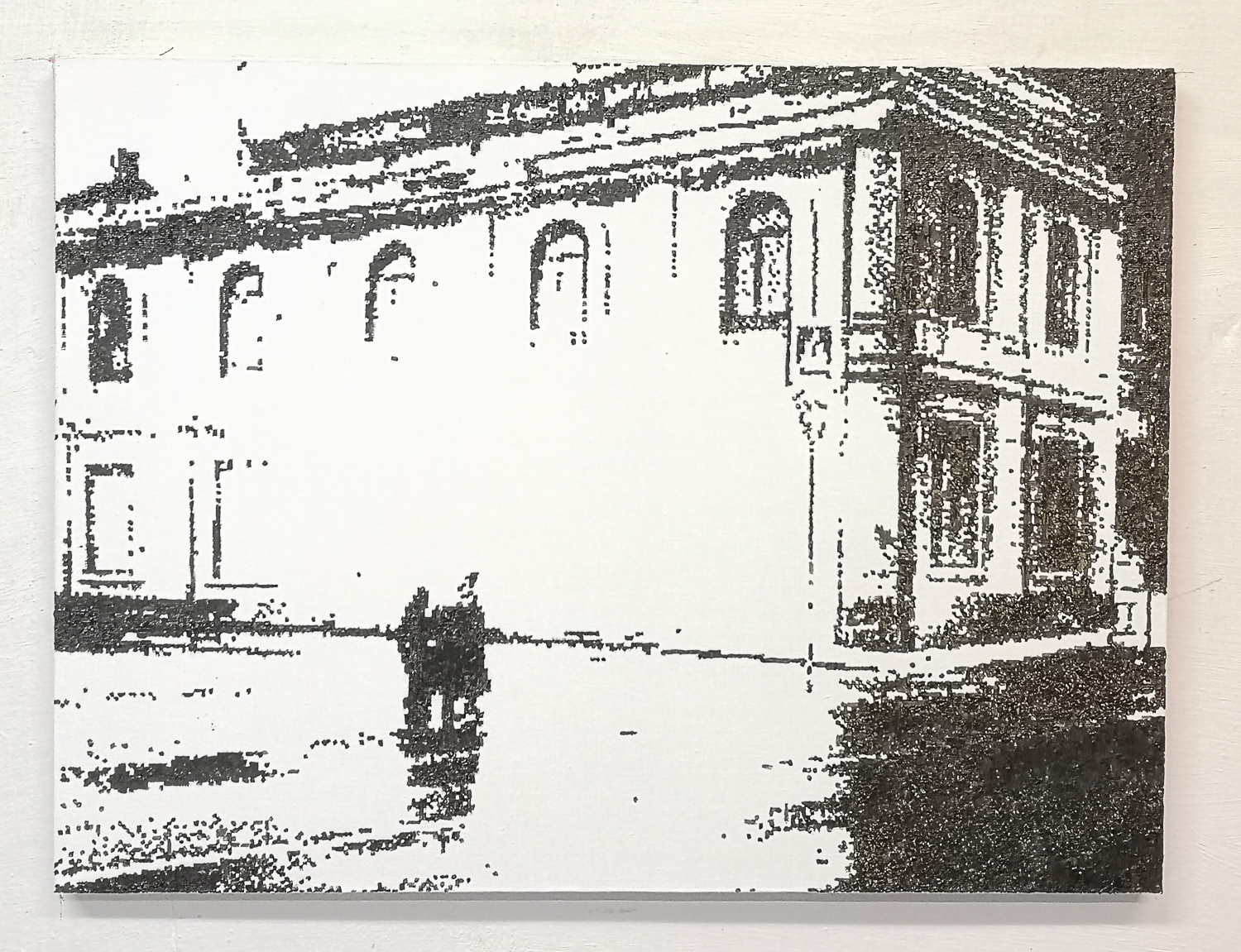
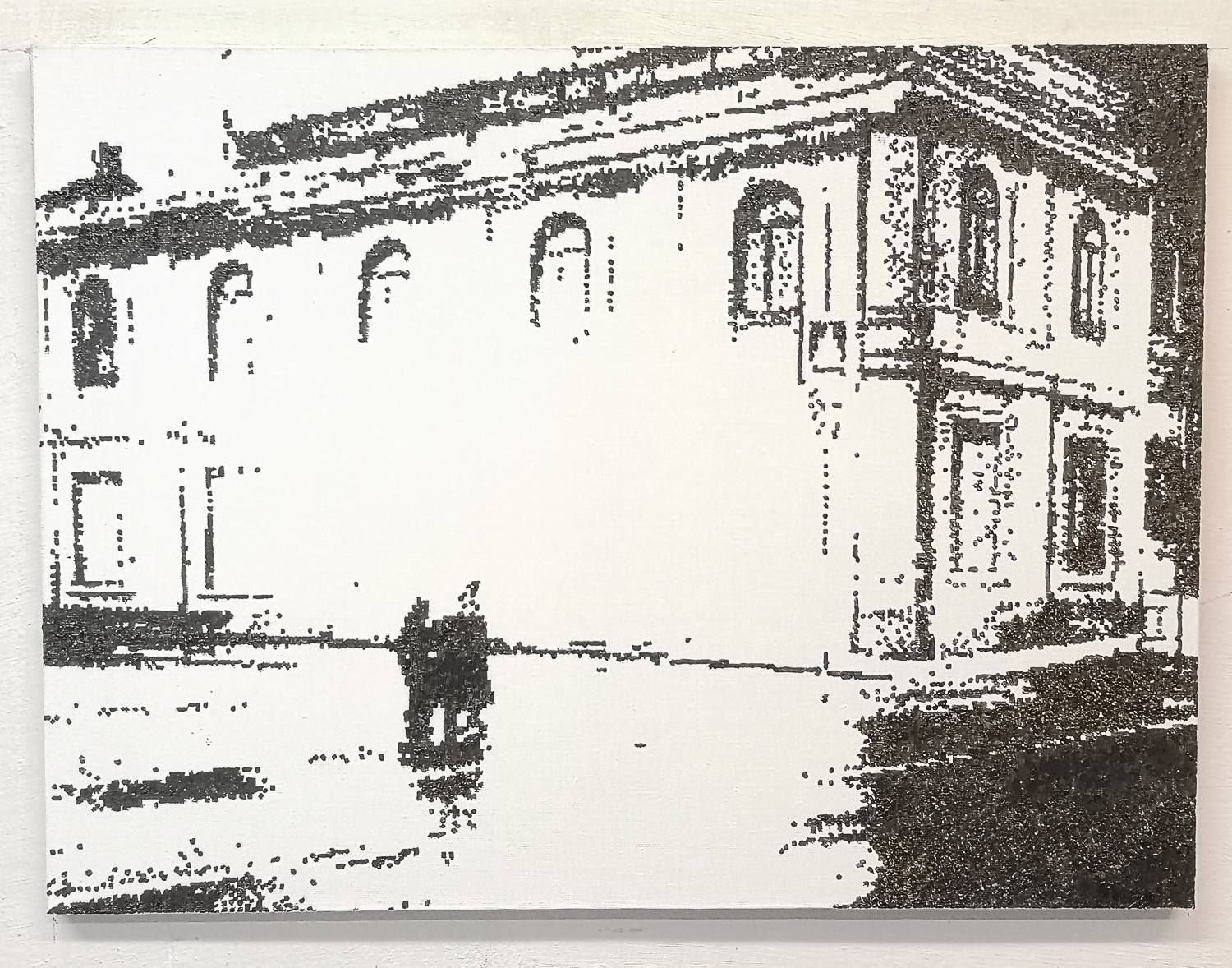
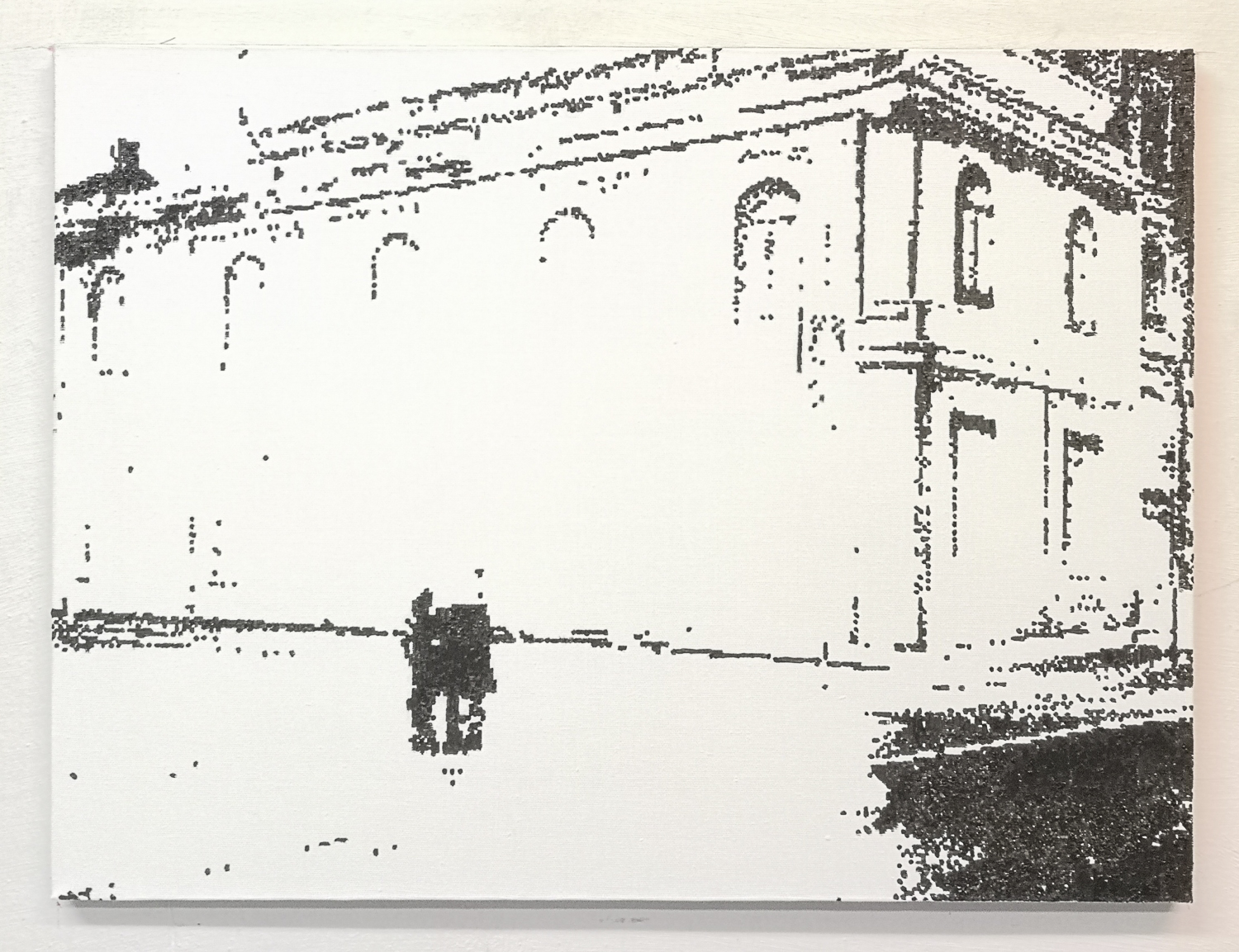
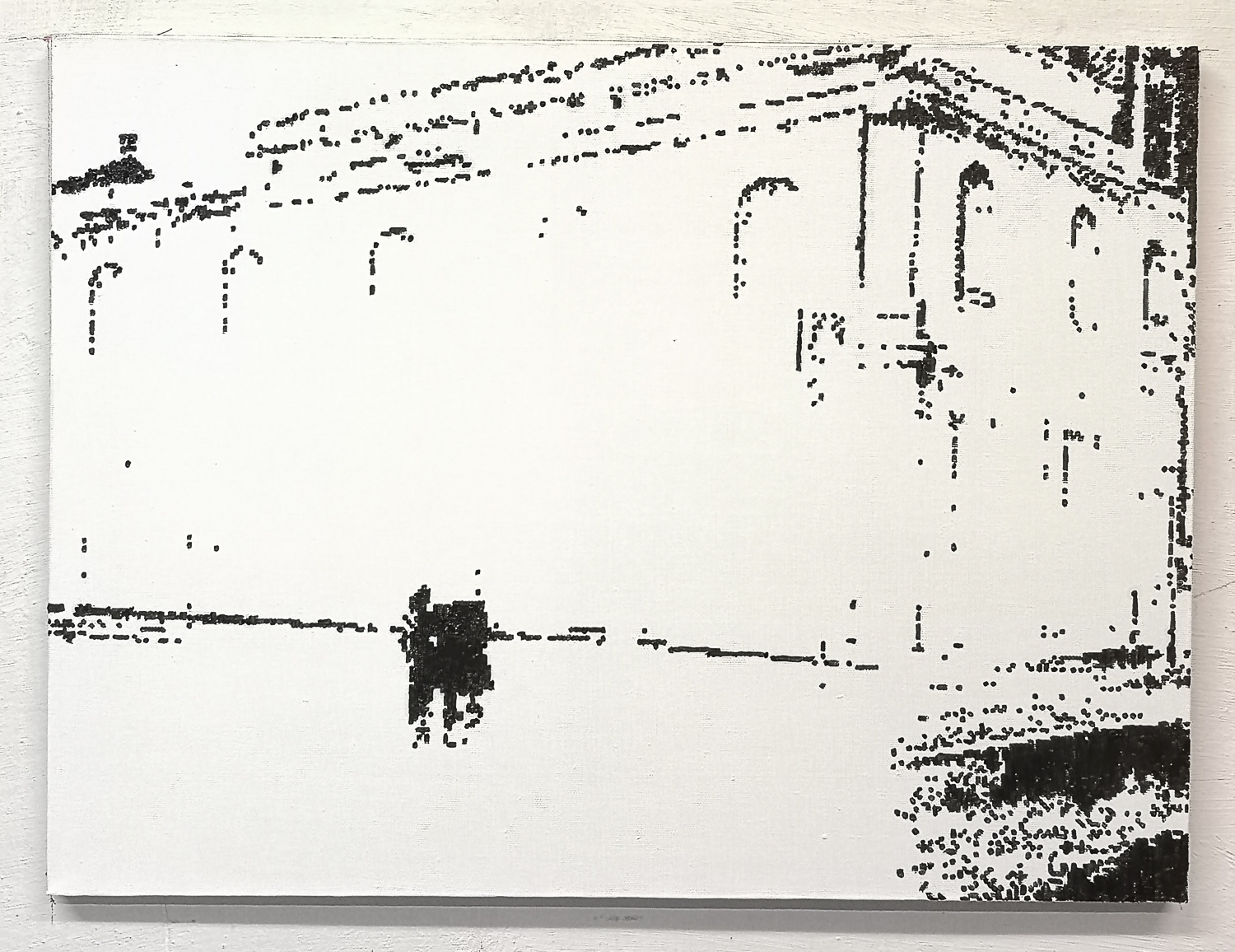
Представленная работа является частью серии «Квантовый проект», которая сочетает скрупулезную технику художника и концептуальную глубину. Картина, созданная полностью кистью № 2, черпает вдохновение в изысканной красоте римских микромозаик. Каждый мазок кисти становится фрагментом большего целого, формируя целостное изображение с тактильной, мозаикоподобной текстурой.
Художник тщательно разработал индивидуальную палитру, основанную на принципах индексированного цвета. Этот подход позволяет произведению достичь гармоничного баланса оттенков и систематической структуры, напоминающей цифровую пикселизацию, но при этом сохраняющей органическую суть традиционной живописи. Продуманный выбор и нанесение цвета превращают каждый элемент в символ точности, предполагая взаимосвязь микро- и макромира.
«Квантовая живопись» как техника соединяет миры науки и искусства. Название «Квантовый проект» воплощает концептуальную основу этой серии. Каждая картина отражает сложность квантовых процессов, где порядок и хаос сосуществуют, а мельчайшие частицы формируют ткань вселенной. Этот инновационный подход побуждает зрителей вникнуть в соотношение между структурой, случайностью и восприятием.
Серия приглашает к созерцанию времени и пространства, предлагая медитативный опыт, сродни наблюдению бесконечных деталей в природе или космосе. Это прославление сложного и монументального, достигнутого через мельчайшие жесты кисти, откликающееся вечным традициям древнего мозаичного мастерства, одновременно раздвигая границы современного искусства.
The presented artwork is part of the series “Quantum Project,” which combines the artist’s meticulous technique and conceptual depth. The painting, created entirely with a No. 2 brush, draws inspiration from the intricate beauty of Roman micro-mosaics. Each brushstroke becomes a fragment of a greater whole, forming a cohesive image with a tactile, mosaic-like texture.
The artist has meticulously developed a custom palette based on the principles of indexed color. This approach allows the artwork to achieve a harmonious balance of hues and a systematic structure, reminiscent of digital pixelation yet maintaining the organic essence of traditional painting. The deliberate selection and application of color transform each element into a symbol of precision, suggesting the interconnectivity of the micro and macro.
“Quantum Painting,” as a technique, bridges the worlds of science and art. The title “Quantum Project” encapsulates the conceptual underpinning of this series. Each painting reflects the complexity of quantum processes, where order and chaos coexist, and the smallest particles form the fabric of the universe. This innovative approach encourages viewers to delve into the relationship between structure, randomness, and perception.
The series invites contemplation of time and space, offering a meditative experience akin to observing the infinite detail in nature or the cosmos. It is a celebration of the intricate and the monumental, achieved through the smallest gestures of the brush, echoing the timeless traditions of ancient mosaic craftsmanship while pushing the boundaries of contemporary art.
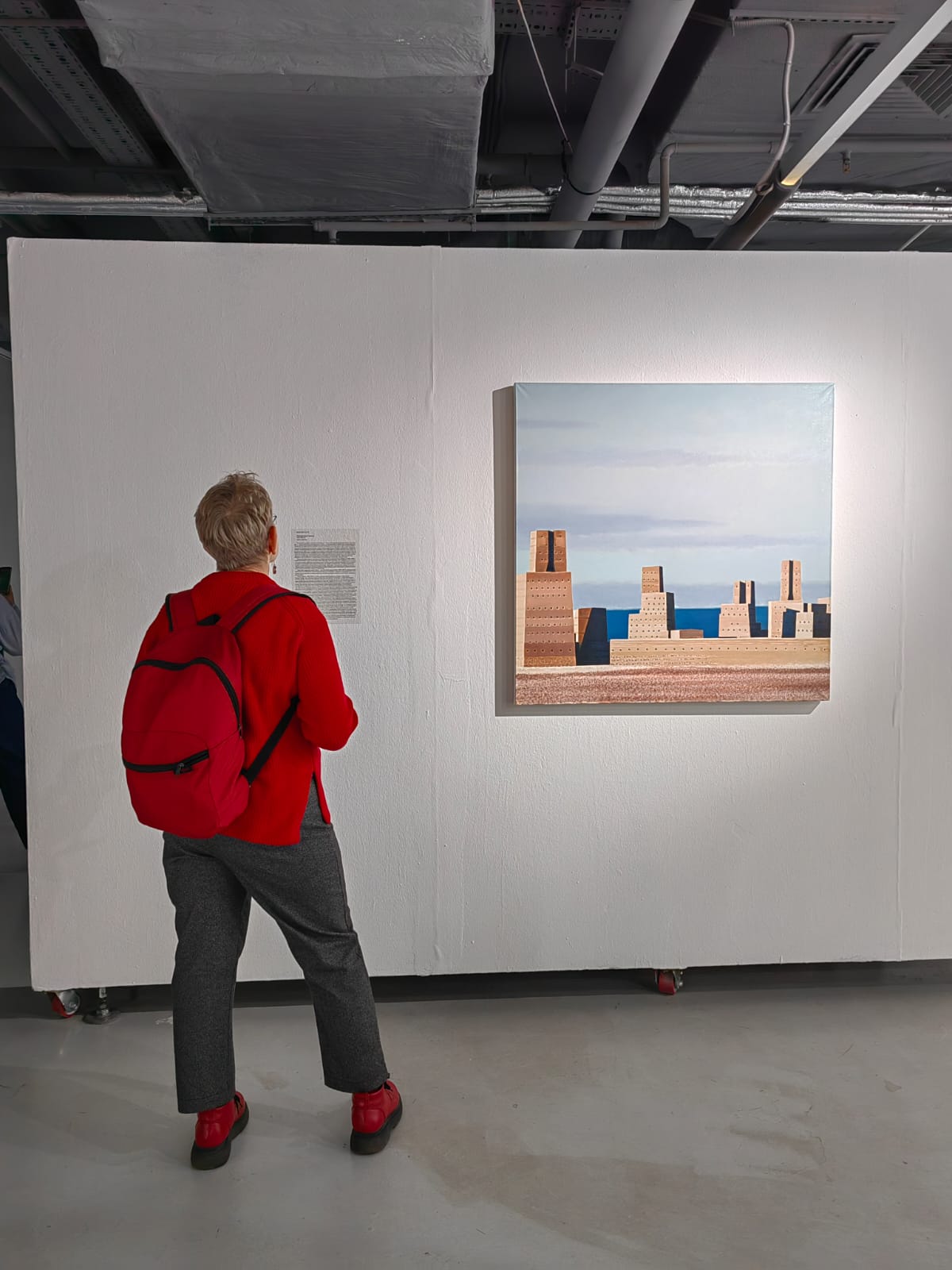
▪︎ Обсерватория Ориона. Максим Ксута. Холст, масло. 100 x 100 см.
Архитектура и астрономия
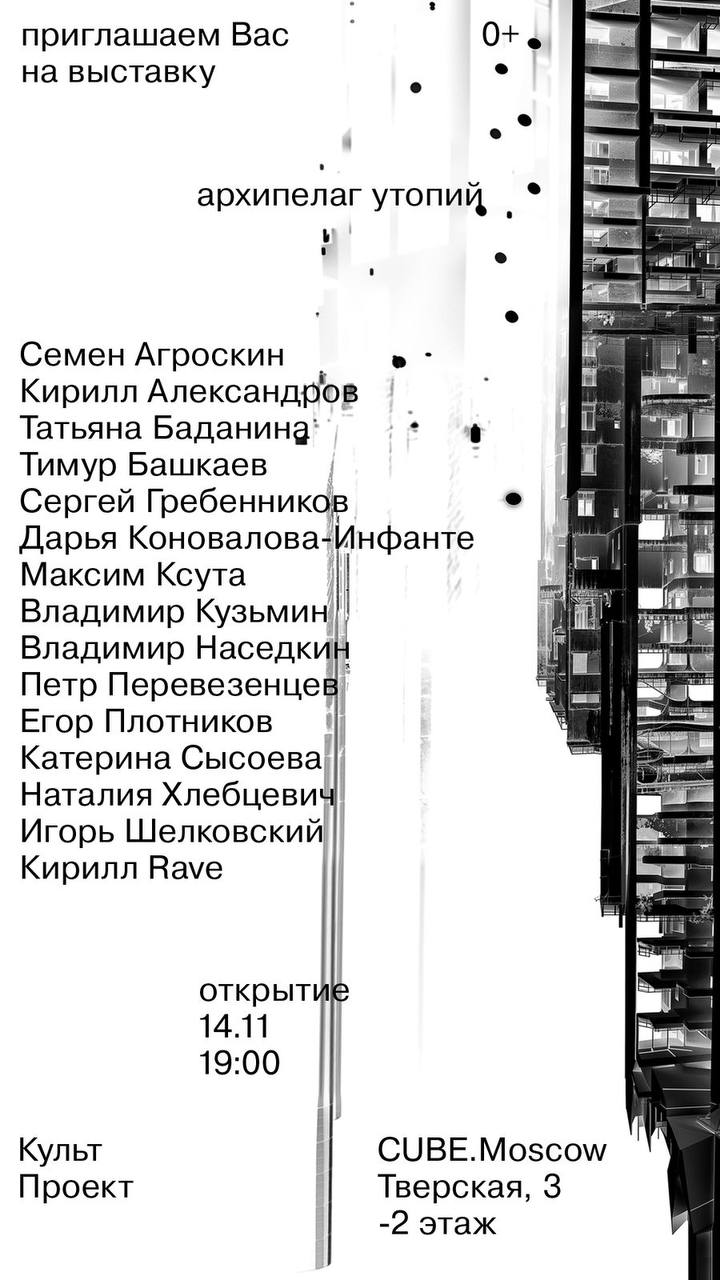
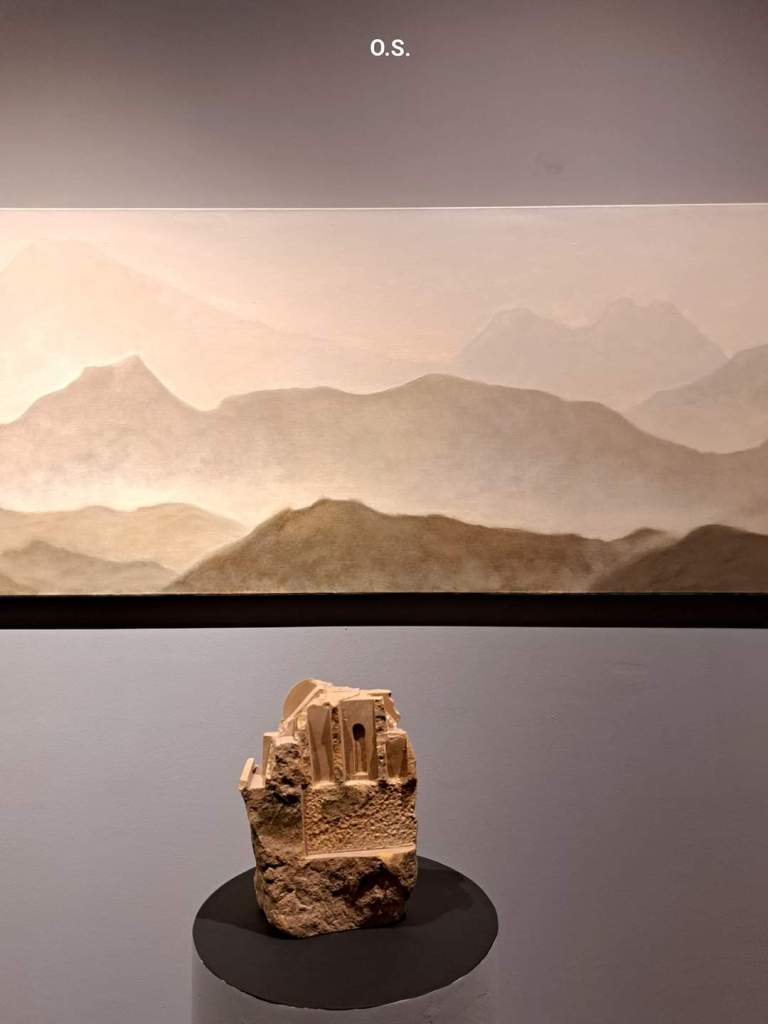
На выставке «Архипелаг утопий», которую еще можно посетить сегодня и завтра в галерее «КультПроект», представлен интригующий пример архитектурной живописи, вдохновленной архитектурными инсталляциями. Картина Максима Ксуты «Обсерватория Ориона» существует как самостоятельное произведение искусства, одновременно устанавливая связи с работой одного из пионеров ленд-арта — имя, которое кажется относительно неизвестным в нашей стране. Благодарность художнику за подробный рассказ об источнике его вдохновения и за создание медитативной живописи, реконструирующей архитектуру, связанную с космосом, убедительно передавая суть её материалов и окружения.
Максим Ксута: «Я создал эту работу под влиянием проектов Ханнсйорга Фота — известного немецкого художника и скульптора, родившегося в 1940 году в Баден-Бадене. Фот получил известность благодаря своим монументальным проектам ленд-арта, которые сочетают элементы архитектуры, скульптуры и символизма. В своих работах Фот стремится соединить человеческую культуру с природой, часто исследуя темы времени, пространства и космоса.
В 1960-х и 1970-х годах Фот активно изучал способы интеграции искусства в общественные пространства, создавая инсталляции, которые отвечали на вопросы о месте человечества в мире и его взаимодействии с окружающей средой. Однако подлинная слава пришла к нему с проектами, расположенными в отдаленных и суровых условиях, таких как пустыни Марокко, где он работал с природными материалами, такими как глина и песок.
Одним из самых известных проектов Фота является «Город Ориона» (1998–2003), расположенный в обширных пустынях Марокко. В этой работе Фот объединил свои интересы к астрономии, древним культурам и масштабным архитектурным формам. Его целью было не просто построить скульптурные объекты, но создать структуры, которые взаимодействуют с природой и космическими явлениями, такими как движение звезд. Проект «Город Ориона» отражает созвездие Ориона через башни, точно расположенные так, чтобы отразить размещение звезд на небе.
Город Ориона (1998–2003): Семь основных звезд Ориона — Ригель, Сайф, три звезды «пояса» Минтака, Альнитак и Альнилам, а также Беллатрикс и Бетельгейзе — наиболее заметны по всему миру в зимние месяцы из-за их расположения на небесном экваторе. Концепция проекта заключалась в том, чтобы представить эти семь звезд на Земле таким же количеством наблюдательных башен, сделанных из утрамбованной глины. Каждая башня символизирует одну из семи звезд, и их расположение в комплексе (приблизительно 40 x 100 метров) соответствует конфигурации созвездия. Размеры башен (от 6 до 15 метров в высоту, ширину и глубину) отражают яркость и размер звезд.
В верхней трети каждой башни были построены смотровые площадки, доступные через внешние лестницы. Узкие отверстия в стенах башен, тщательно рассчитанные по высоте, ширине и ориентации, позволяют наблюдать определенные звезды и созвездия в определенное время. Туманность Ориона (М42) — область звездообразования, окруженная обширными облаками газа — представлена в комплексе фонтаном, обозначающим группу звезд, известную как «меч» Ориона. Семь меньших звезд, формирующих части Ориона, такие как его «голова», также представлены дополнительными башнями из утрамбованной земли.
Город Ориона был расположен на юго-востоке Марокко. Экскурсии с гидом, длящиеся около 90 минут в определенное время, проводили посетителей через все башни, позволяя наблюдать звезды последовательно. Хотя семь больших башен служат астрономическими структурами, иллюстрирующими движение конкретных небесных тел через их позиционирование и ориентацию, основным намерением художника было изобразить созвездие Ориона в трех измерениях как масштабную скульптуру на Земле.*
Architecture and Astronomy
At the exhibition “Archipelago of Utopias”, which can still be visited today and tomorrow at the KultProekt gallery, there is an intriguing example of architectural painting inspired by architectural installations. Maxim Ksuta’s painting “Orion Observatory” stands as an independent piece of art while simultaneously drawing connections to the work of one of the pioneers of land art—a name that seems relatively unknown in our country. Thanks to the artist for the detailed story about his source of inspiration and for creating a meditative painting that reconstructs architecture connected to the cosmos while convincingly conveying the essence of its materials and environment.
Maxim Ksuta: “I created this piece under the influence of projects by Hannsjörg Voth—a renowned German artist and sculptor**,** born in 1940 in Baden-Baden. Voth gained fame for his monumental land art projects, which blend elements of architecture, sculpture, and symbolism. In his works, Voth seeks to bridge human culture with nature, often exploring themes of time, space, and the cosmos.
In the 1960s and 1970s, Voth actively investigated ways to integrate art into public spaces, creating installations that responded to questions about humanity’s place in the world and its interaction with the surrounding environment. However, his true fame came with projects located in remote and harsh settings, such as the deserts of Morocco, where he worked with natural materials like clay and sand.
One of Voth’s most famous projects is the “City of Orion” (1998–2003), located in the vast deserts of Morocco. In this work, Voth united his interests in astronomy, ancient cultures, and large-scale architectural forms. His aim was not merely to construct sculptural objects but to create structures that interact with nature and cosmic phenomena, such as the movement of stars. The City of Orion project reflects the Orion constellation through towers precisely positioned to mirror the stars’ placement in the sky.
City of Orion (1998–2003): The seven primary stars of Orion—Rigel, Saiph, the three “belt stars” Mintaka, Alnitak, and Alnilam, as well as Bellatrix and Betelgeuse—are most prominently visible worldwide during winter months due to their location on the celestial equator. The concept of the project was to represent these seven stars on Earth with the same number of observation towers made from compacted clay. Each tower symbolizes one of the seven stars, and their arrangement within the complex (approximately 40 x 100 meters) corresponds to the constellation’s layout. The towers’ dimensions (ranging from 6 to 15 meters in height, width, and depth) reflect the stars’ brightness and size.
In the upper third of each tower, observation platforms were constructed, accessible via external staircases. Narrow openings in the towers’ walls, carefully calculated for their height, width, and orientation, allow for the observation of specific stars and constellations at certain times. The Orion Nebula (M42)—a star-forming region surrounded by vast clouds of gas—is represented in the complex by a fountain, marking the grouping of stars known as Orion’s “sword.” Seven smaller stars forming parts of Orion, such as its “head,” are also represented by additional compacted-earth towers.
The City of Orion was located in southeastern Morocco. Guided tours, lasting about 90 minutes at specific times, led visitors through all the towers, allowing them to observe the stars in sequence. While the seven large towers serve as astronomical structures illustrating the movement of specific celestial bodies through their positioning and orientation, the artist’s primary intent was to depict the Orion constellation in three dimensions as a large-scale sculpture on Earth.*
▪︎ Orion Observatory. Maxim Ksuta. Canvas, oil. 100 x 100 cm.