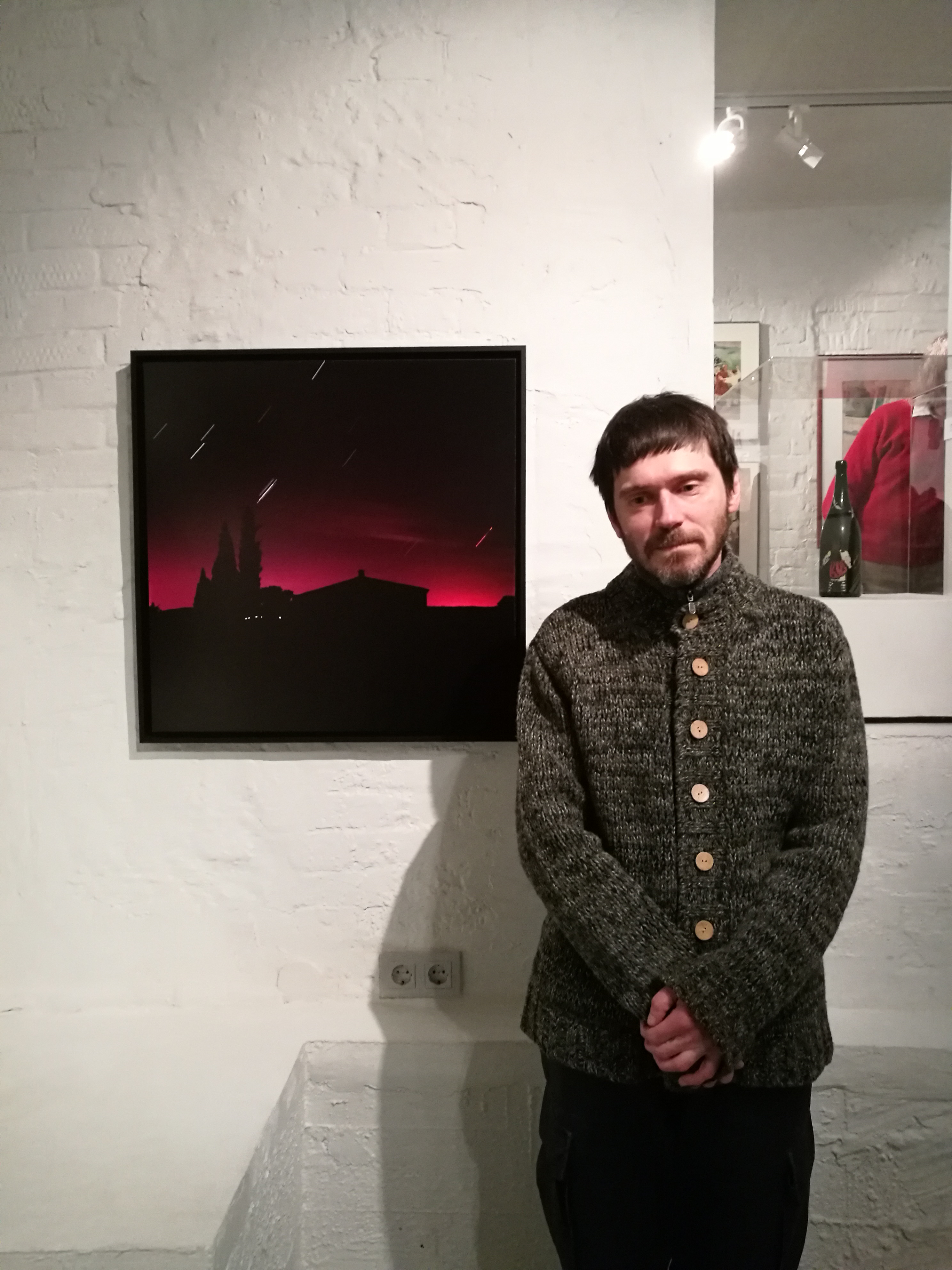
New Goup exhibition in Triumph gallery, “Library”

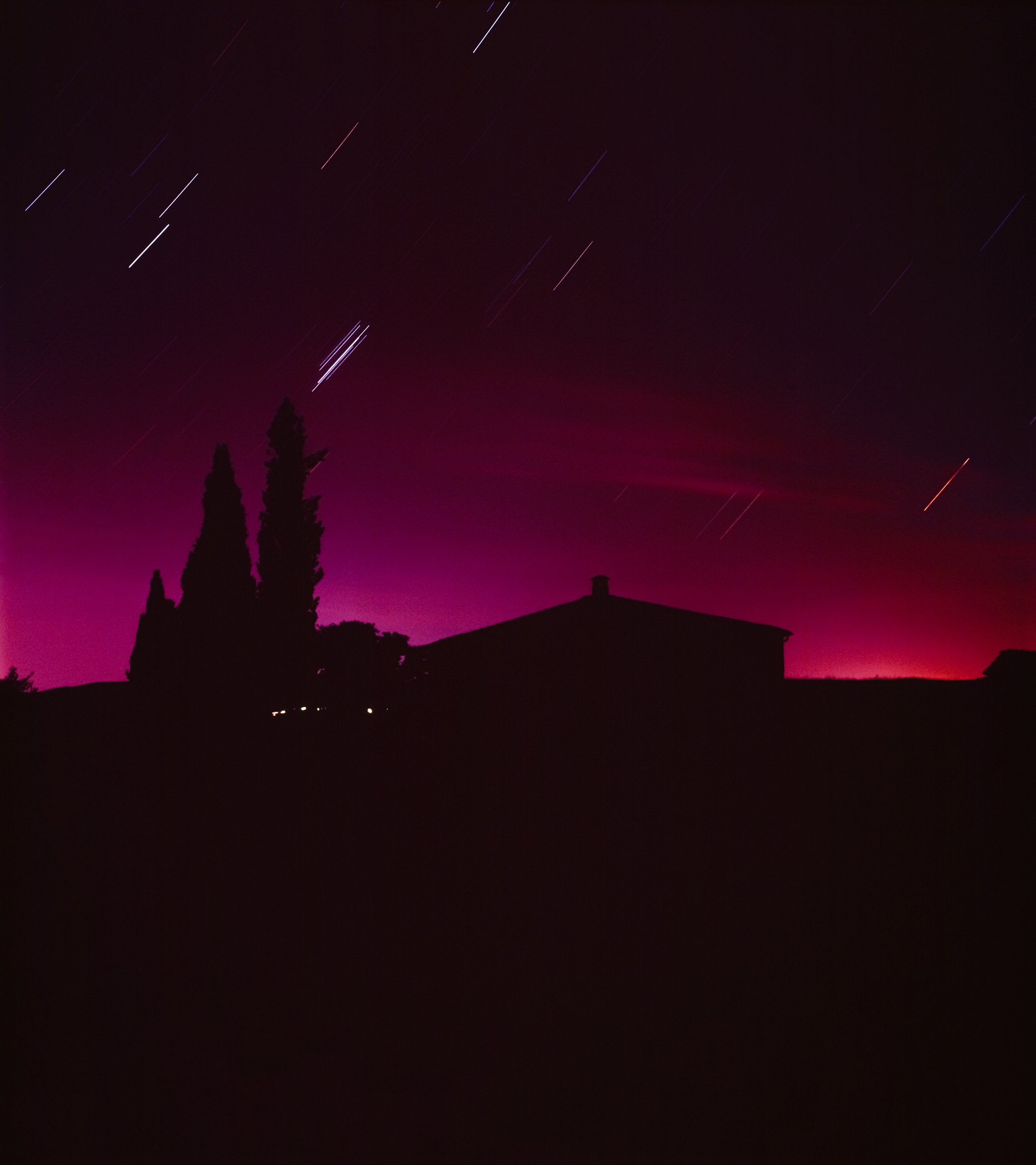
From the Random Photos 01082018 series

From the Random Photos 01082018 series

From the Random Photos 01082018 series
From the Random Photos 01082018 series
From the Random Photos 01082018 series
From the Random Photos 01082018 series
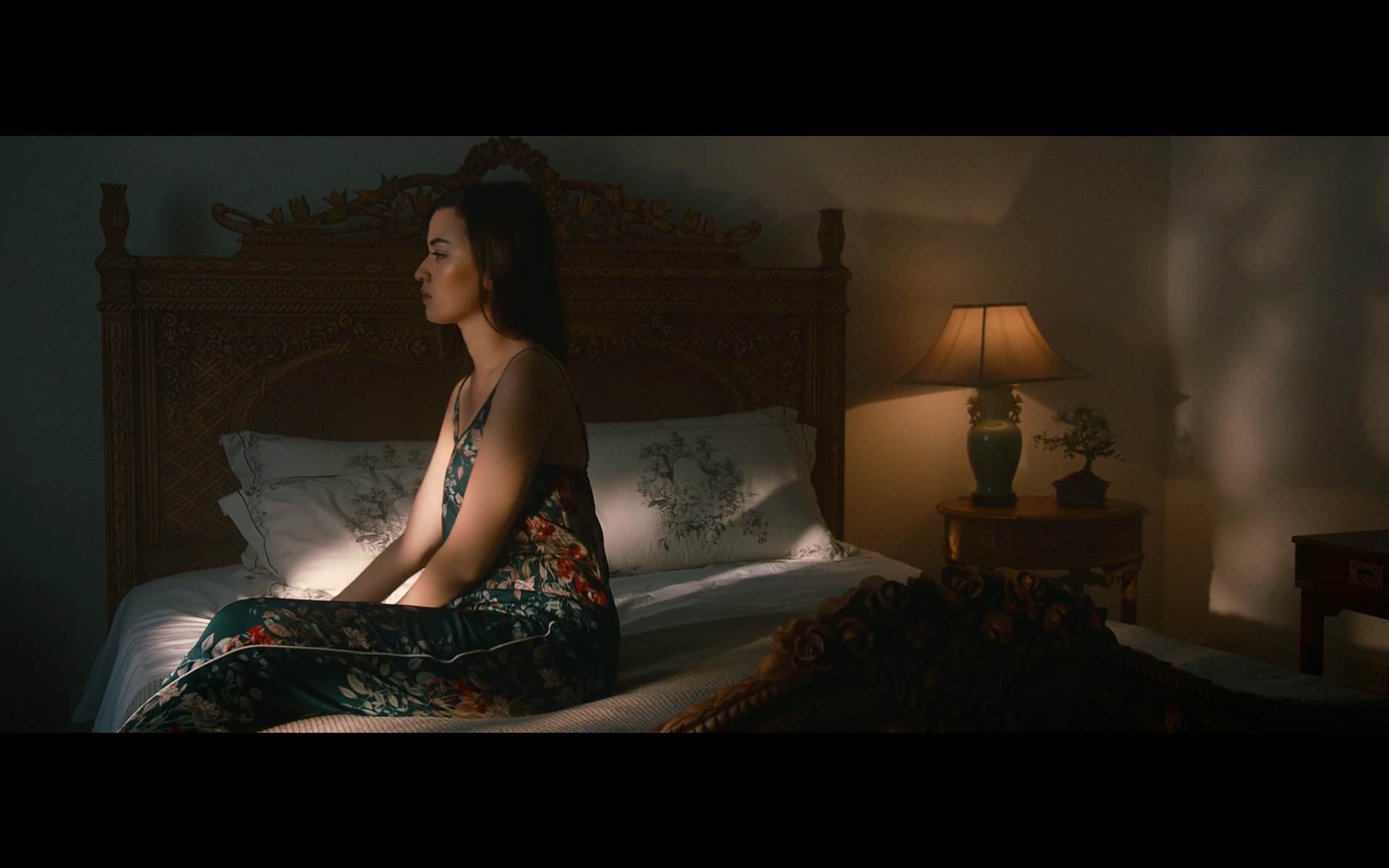
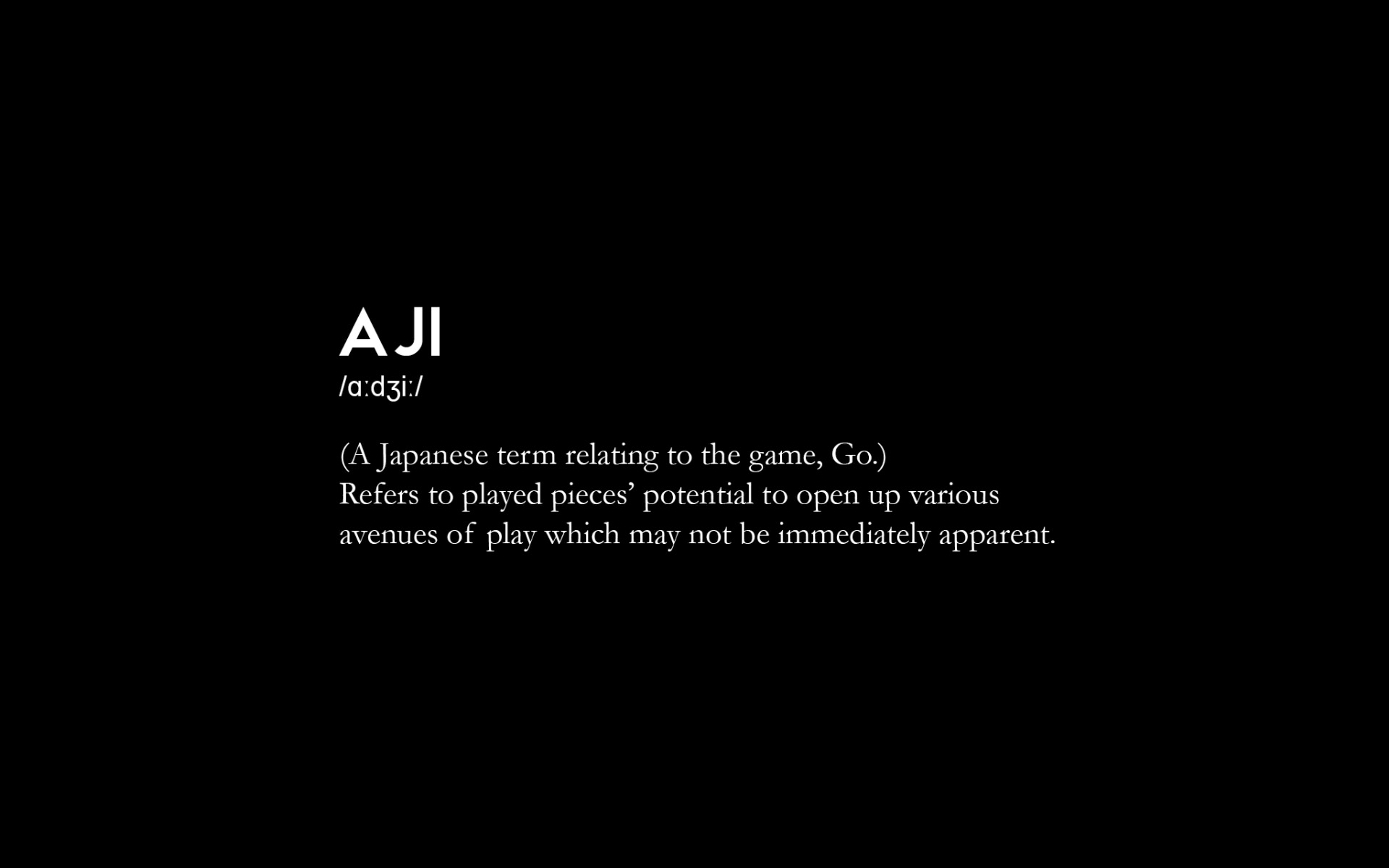
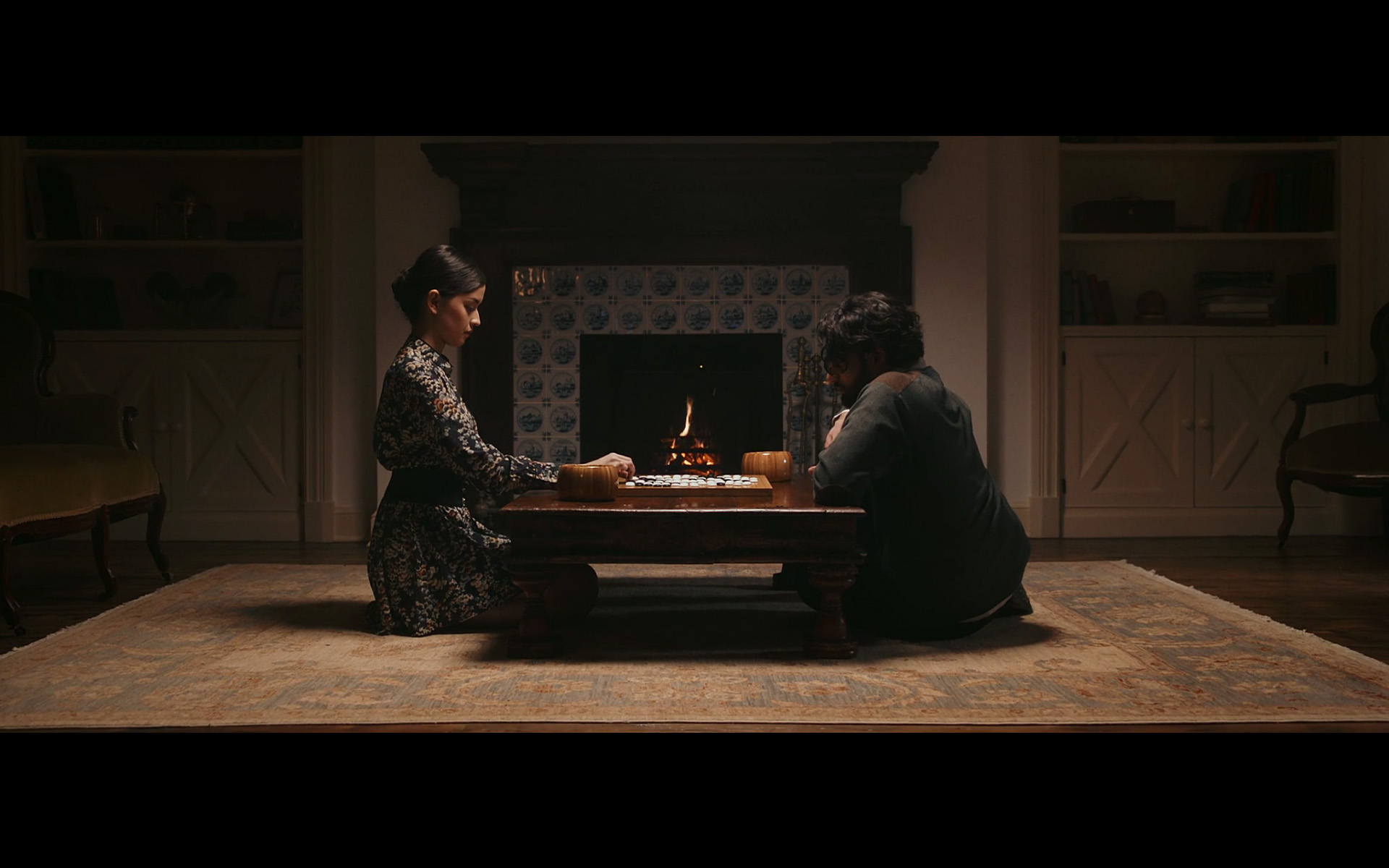
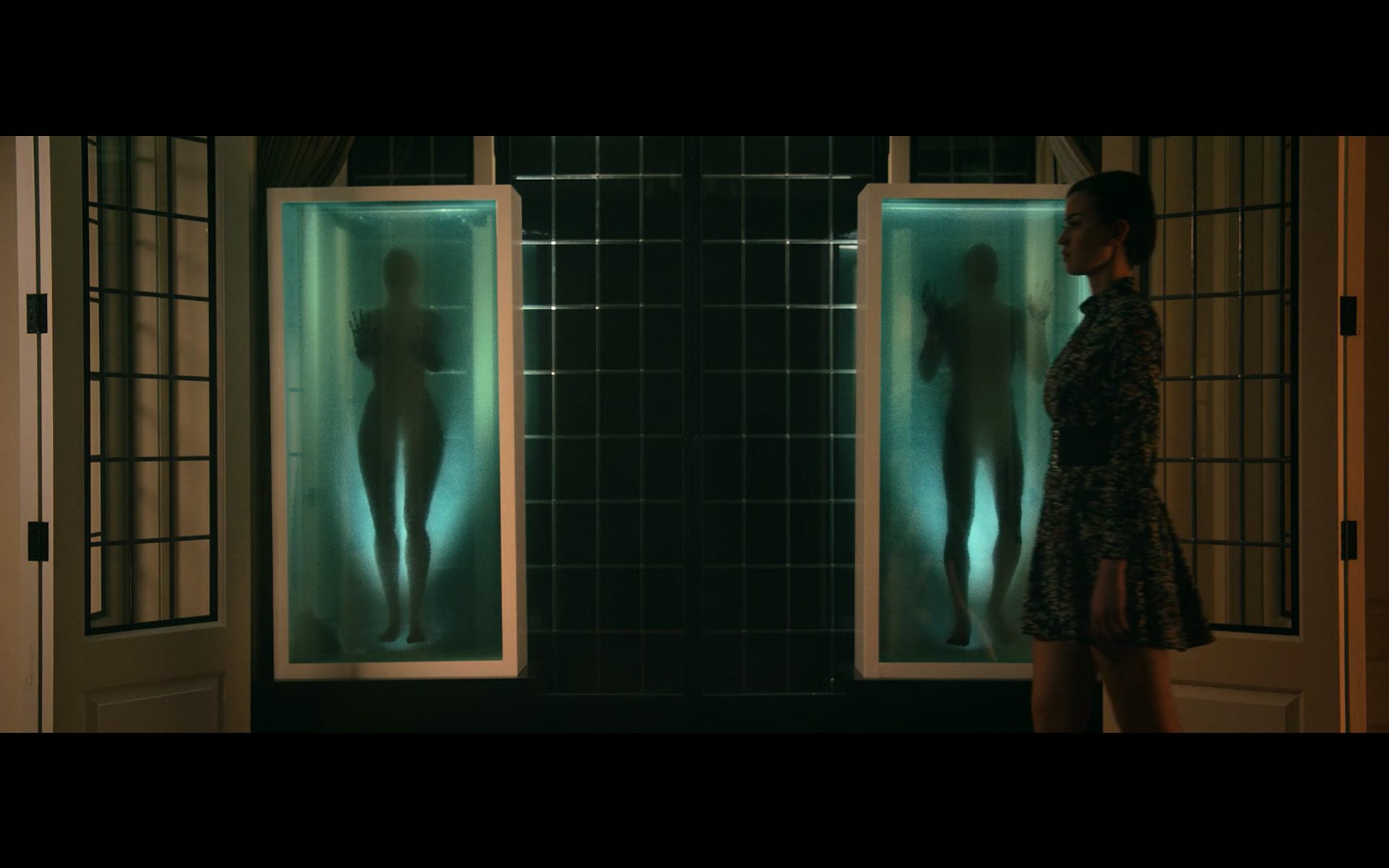
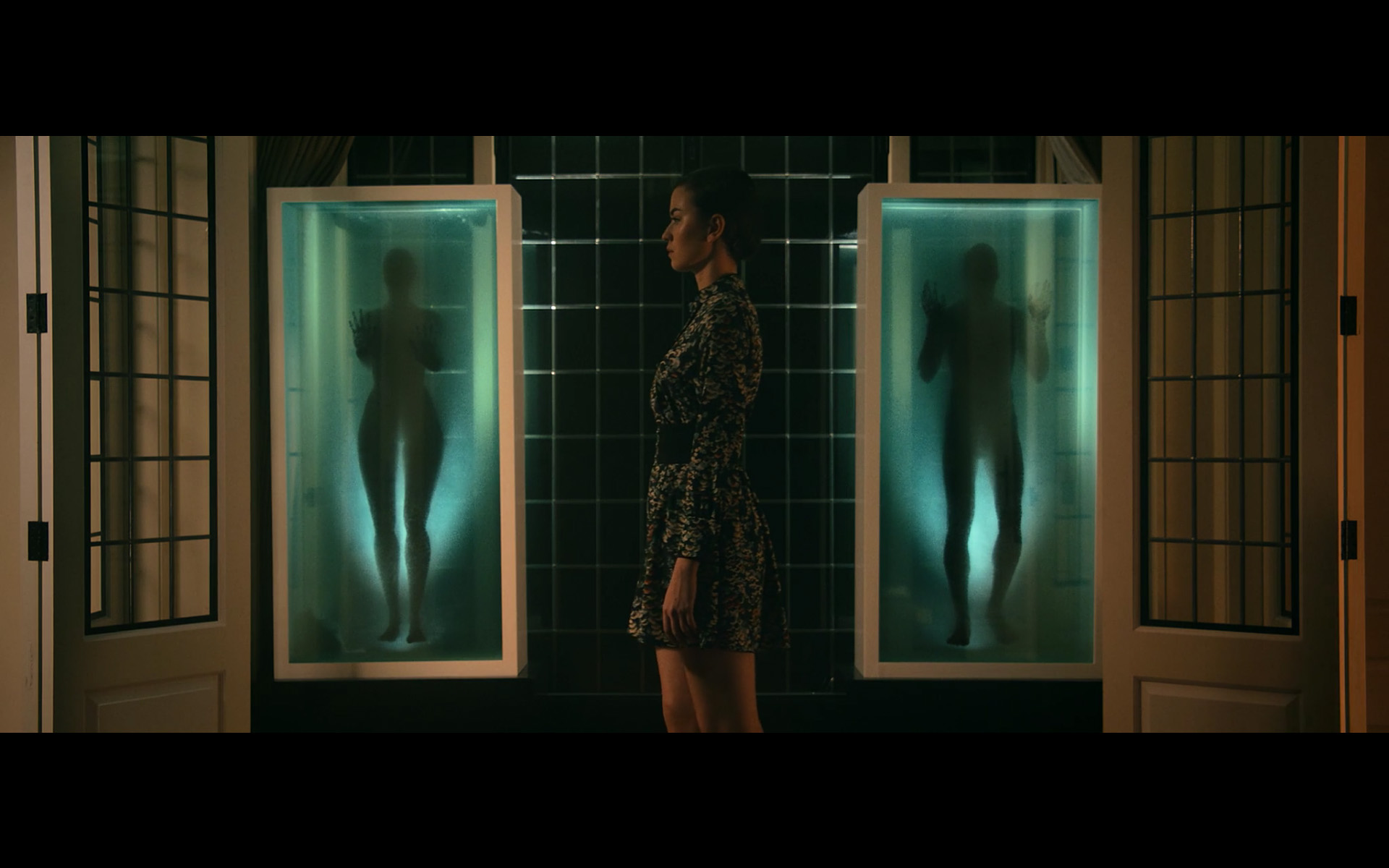
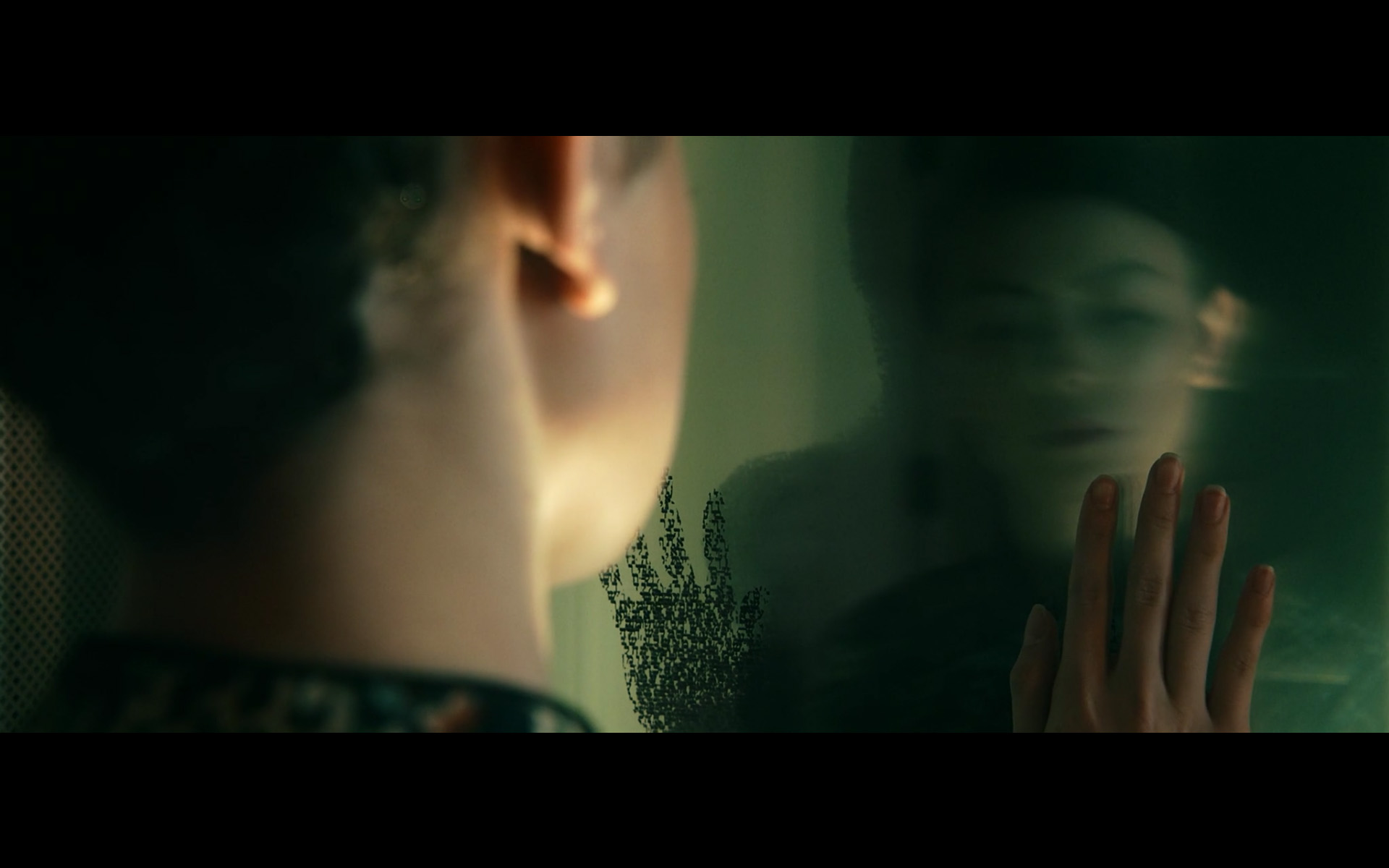
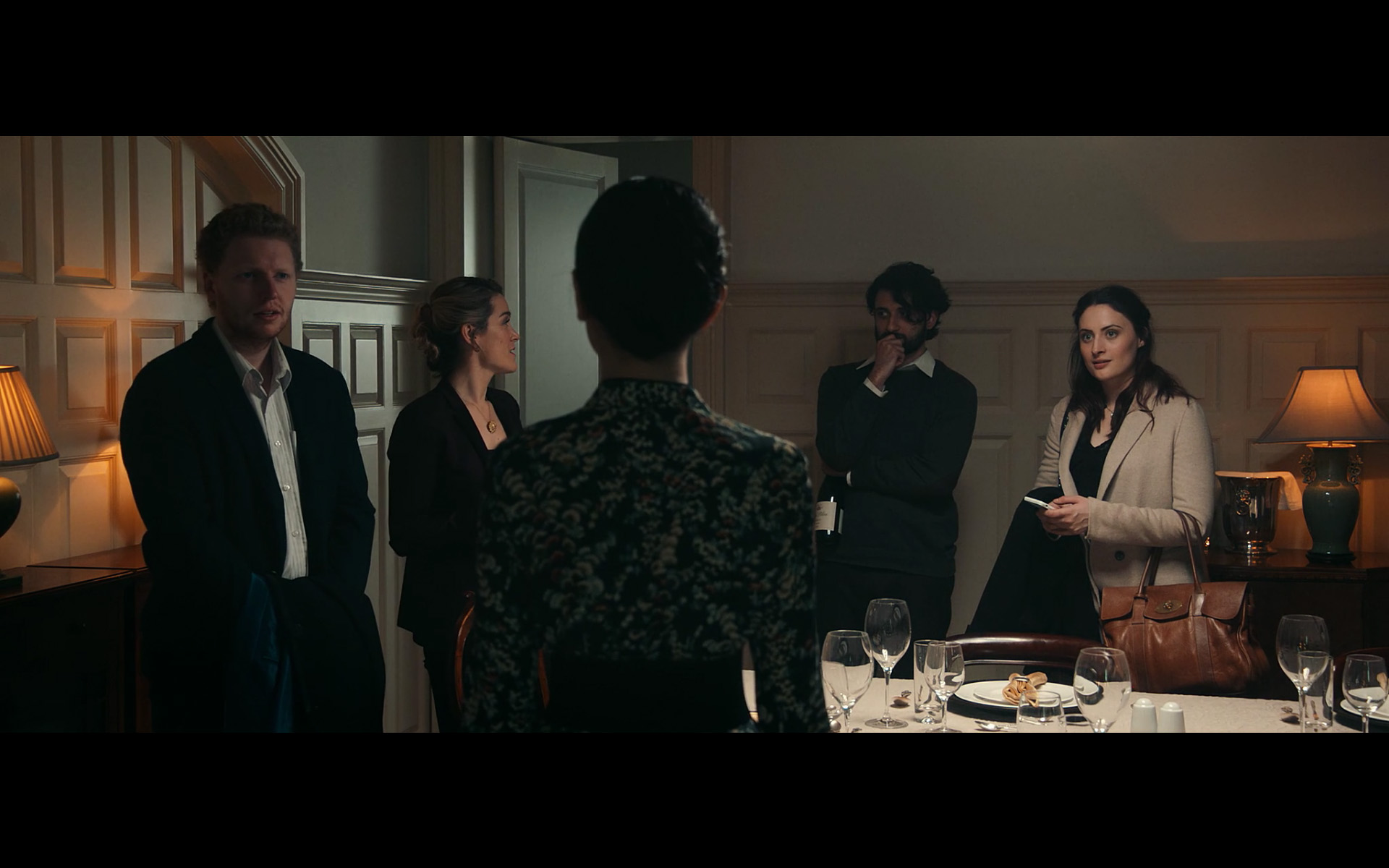
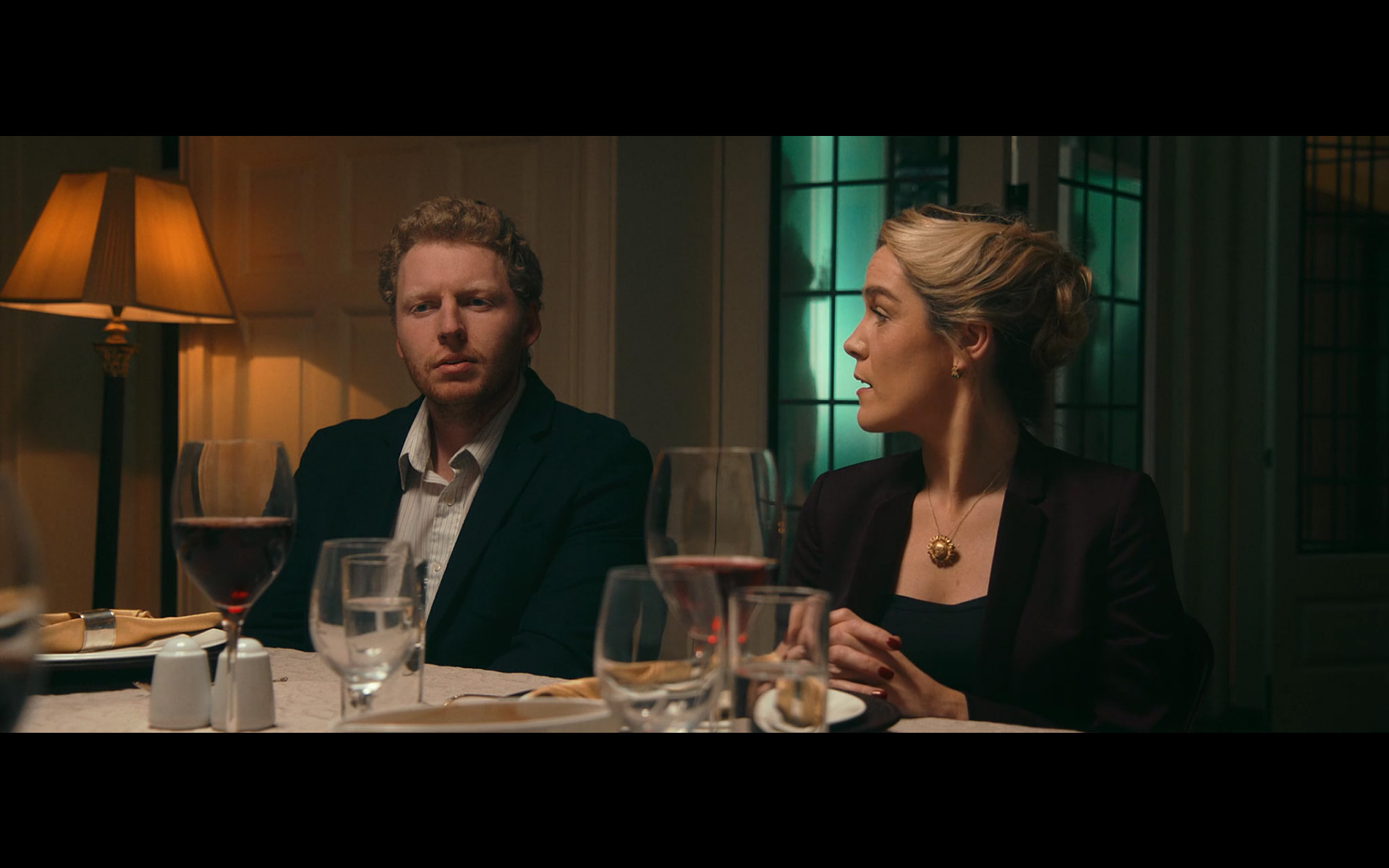
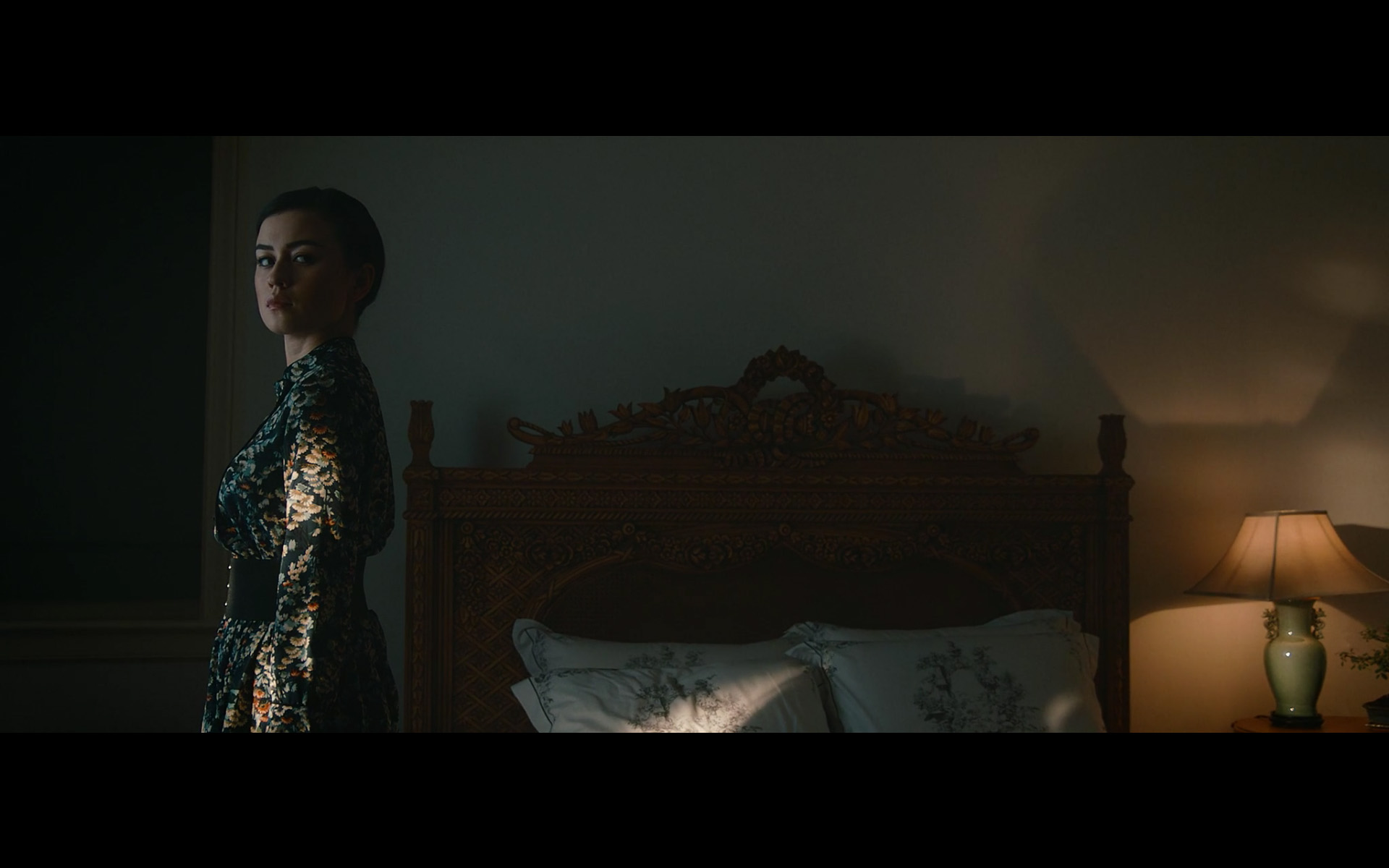
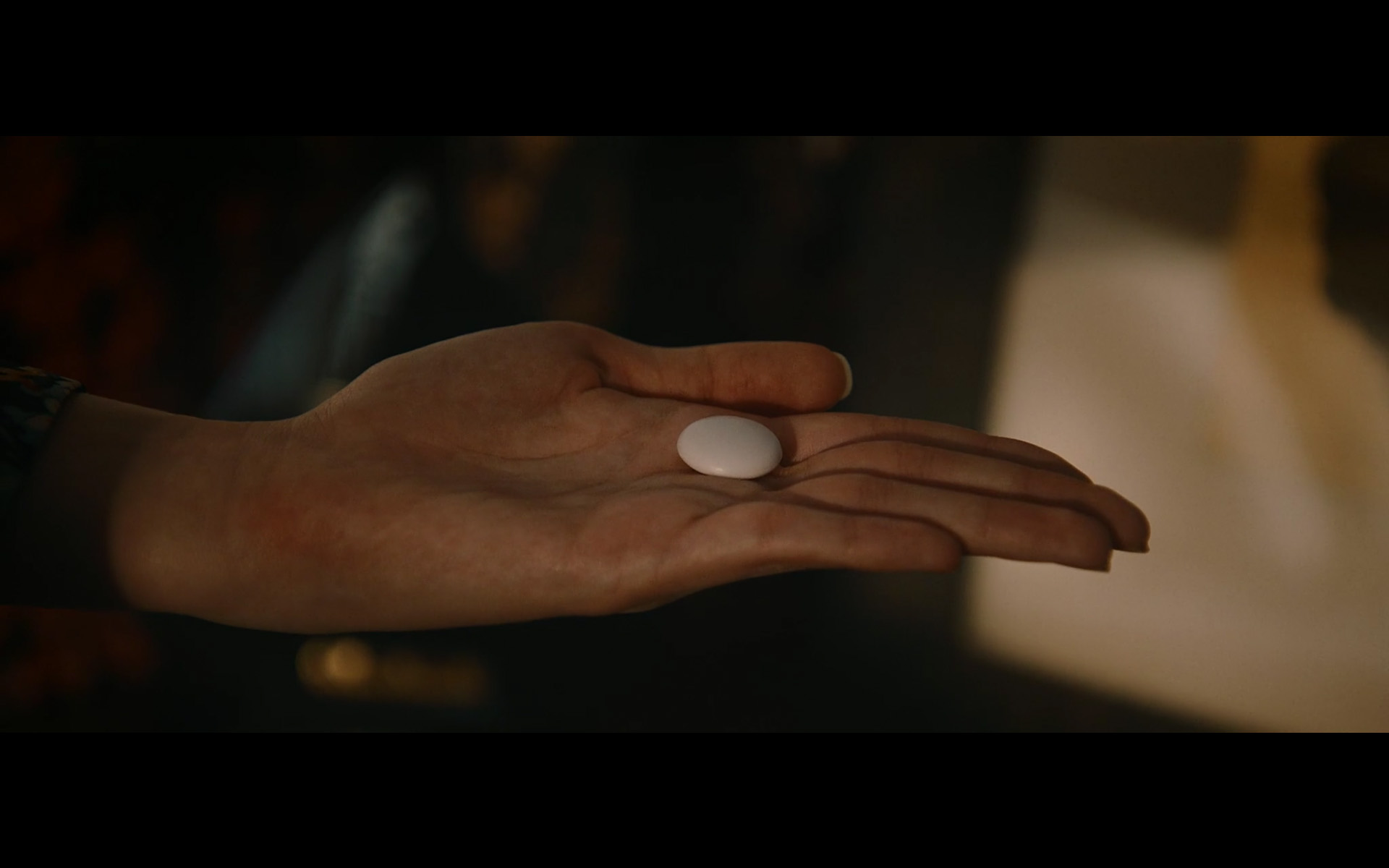
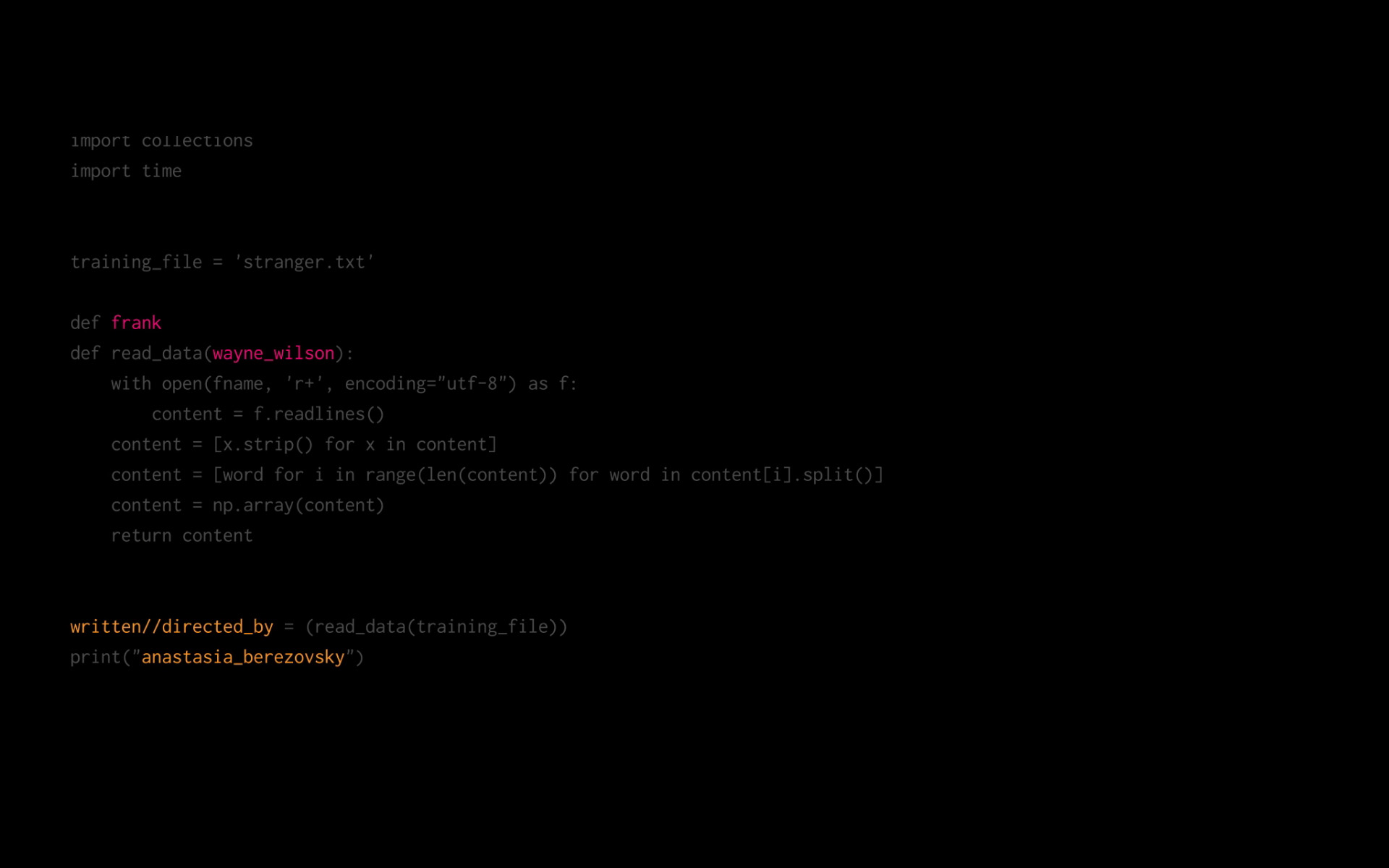
My objects from the series “Exile from Paradise” 2006\2007 in the film “AJI” directed by Anastasia Berezovsky, 2018
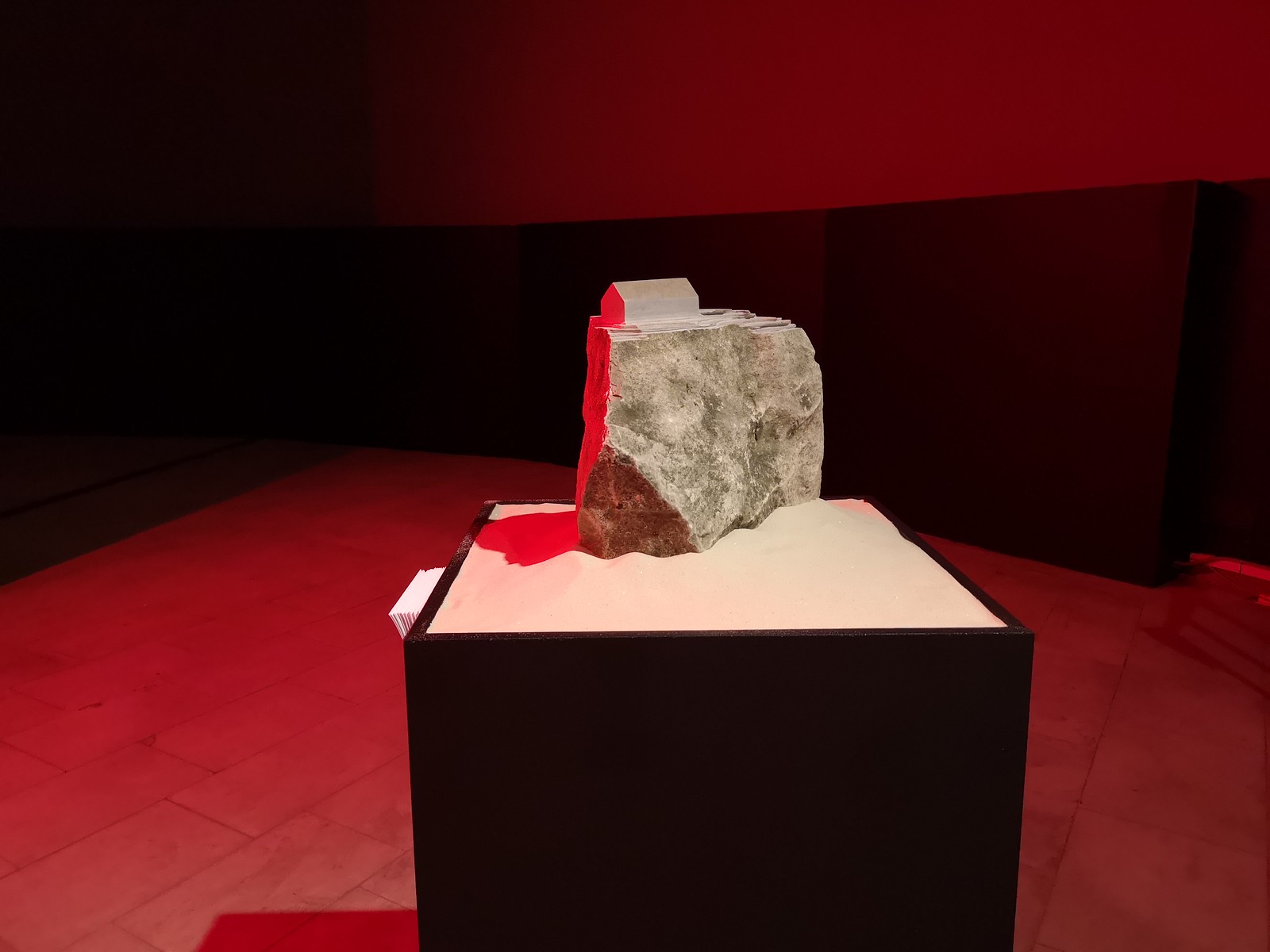
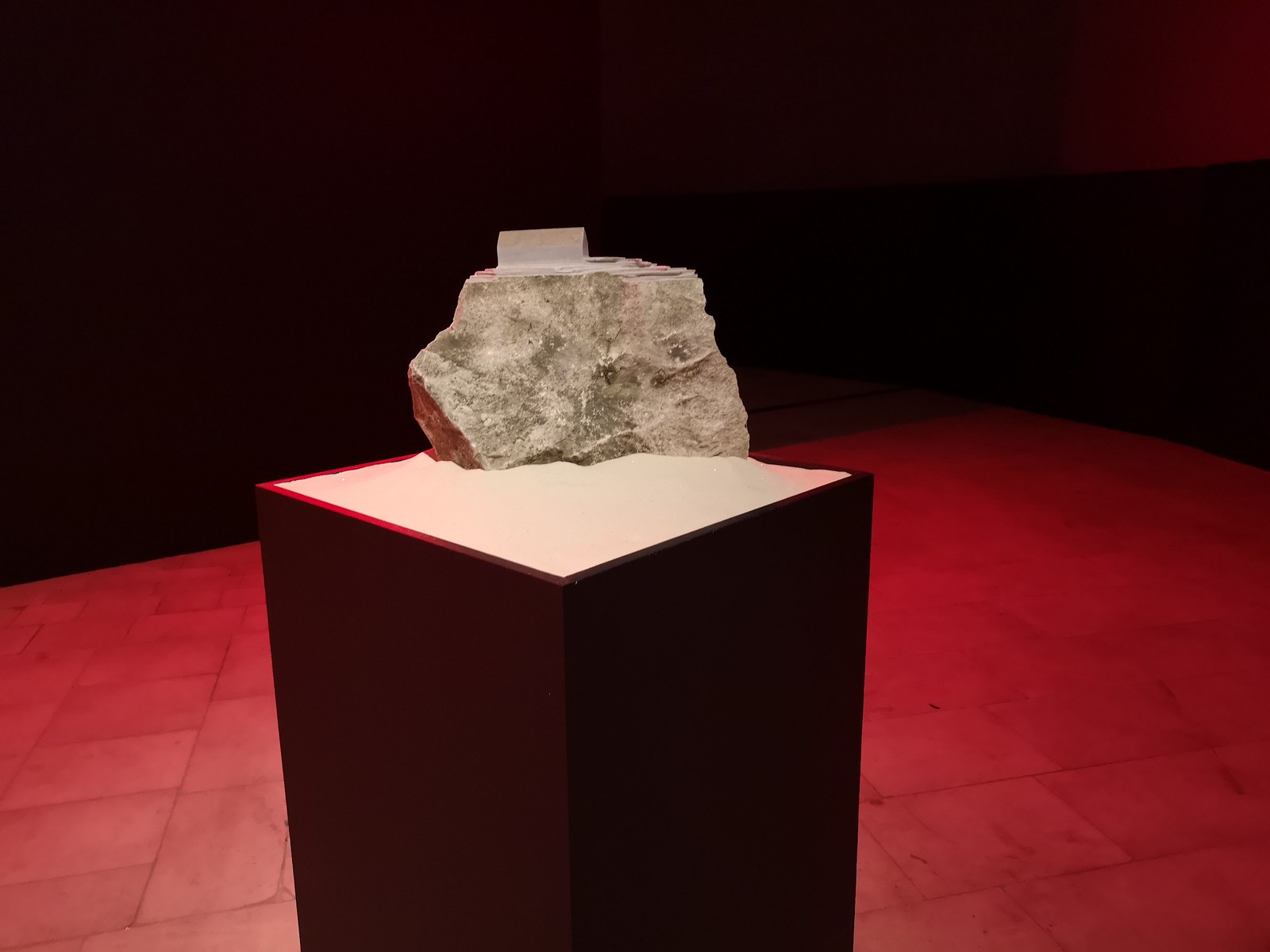
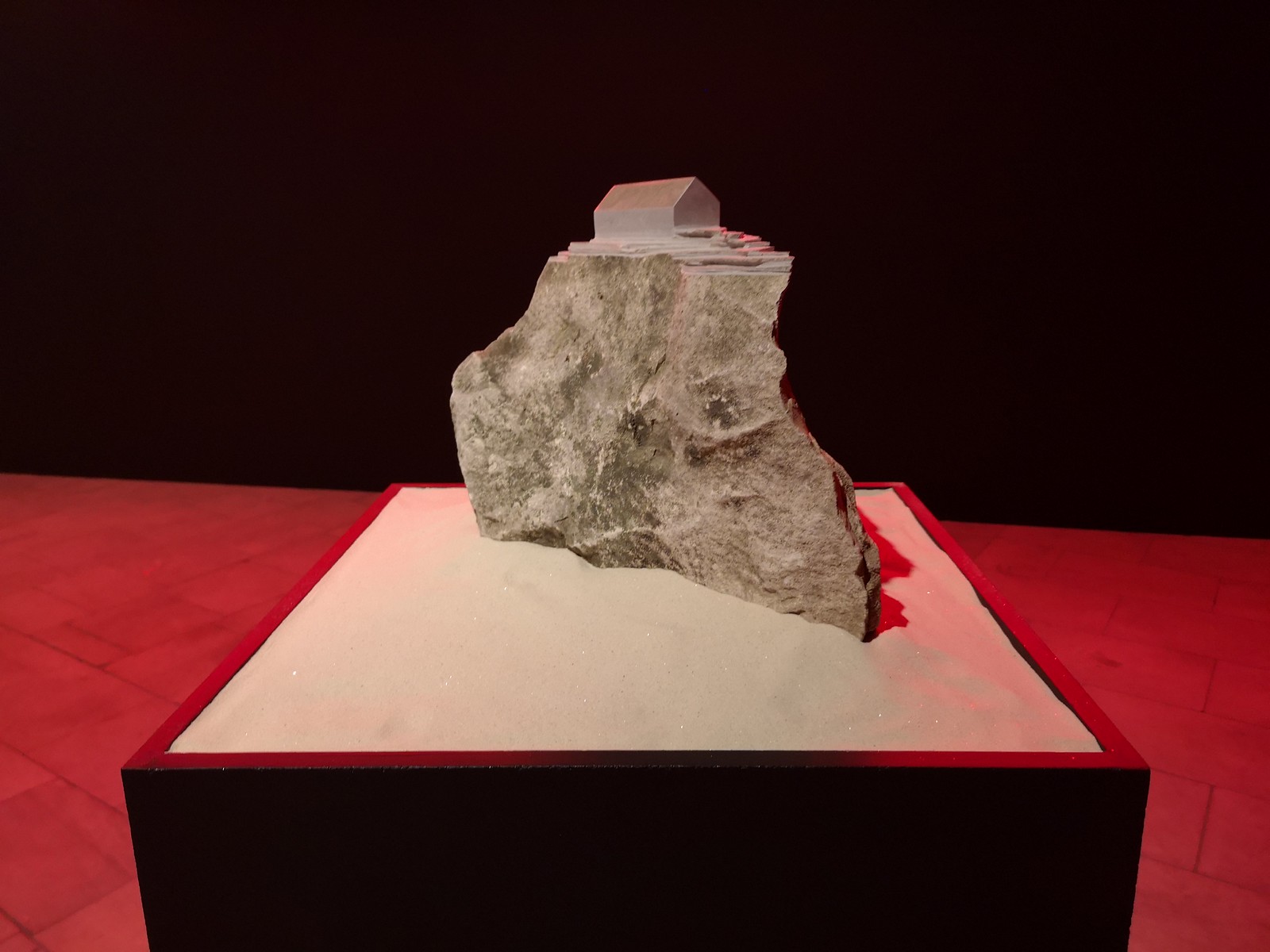
«Окраина» — выставка, организованная Отделом художественных исследований (Department of Research Arts), центром, специализирующимся на междисциплинарных проектах, сфокусированных на российской территории. Этот новый проект исследует жизнь на периферии и в пограничных регионах России, где «края» понимаются не только как государственные границы, но и как природные рубежи, ландшафтные разломы и пределы пространства.
Территории, которые исторически считались «удаленными», «оторванными» или «изолированными», обретают особую значимость в современном обществе, так как средства коммуникации стали органичной частью человеческой экосистемы и трансформировали наше восприятие пространства. Окраины стали ближе, чем когда-либо, но все еще остаются в некотором роде дистанцированными. Это могут быть как пространства внутри страны, так и приграничные области.
Связность пространства — как в России, так и во всем мире — неоднородна, что порождает современные формы географического неравенства. Эта неоднородность проявляется в том, что одни части страны хорошо изучены, в то время как другие остаются «белыми пятнами»; проект берет это несоответствие за отправную точку.
Выставка открывается документальными проектами, каждый из которых представляет интерпретацию архивных или документальных свидетельств (фотографий, официальных документов, эскизов, полевых заметок, видео), посвященных окраинным регионам.
Отдельную часть проекта составляет «постоянная экспозиция». В нее входят живопись и фотография, воссоздающие образ окраины с разной степенью визуальной детализации. Раздел дополнен библиотекой, позволяющей глубже изучить историю российского пространства и его ключевые социальные, философские и художественные концепции.
В третьей части экспозиции акустический опыт становится столь же важным, как и визуальный. Зритель погружается в пространство окраины через инсталляции и объекты.
Проект реализован при поддержке Фонда президентских грантов.
At the Fringes is an exhibition organized by the Department of Research Arts, a center for artistic research focused on the Russian landscape. This project explores life on the periphery and within Russia’s borderlands, where “fringes” are defined not only as state borders but also as natural boundaries, territorial divides, and the limits of physical space.
Areas historically viewed as “remote,” “disconnected,” or “isolated” have gained new relevance in today’s society. As communication technologies have become integrated into the human ecosystem, they have fundamentally transformed our perception of distance. These fringes—found both deep within the country’s interior and along its borders—are closer than ever, yet they retain a sense of profound detachment.
Spatial cohesiveness, both in Russia and globally, is non-uniform, giving rise to modern forms of geographic inequality. This disparity is evident in the contrast between well-documented regions and those that remain terra incognita; the project uses this gap as its conceptual starting point.
The exhibition opens with documentary-based projects, each offering an interpretation of archival records—photographs, official documents, sketches, field notes, and video—covering various fringe regions.
A distinct section of the project serves as its “core collection.” It comprises paintings and photography that reconstruct the imagery of the periphery with varying degrees of abstraction and detail. This is complemented by a library section offering insights into the history of Russian space and its landmark social, philosophical, and artistic concepts.
In the final part of the exposition, the acoustic experience is prioritized alongside the visual. The audience is immersed in the atmosphere of the fringes through multisensory installations and objects.
The project is supported by the Presidential Grants Foundation.
Evgeniya Buravleva, Sofya Gavrilova, Alexander Gronsky, Maria Gruzdeva, Olga Davydova, ZAPOVEDNIK research group, Elizaveta Konovalova, Taisia Korotkova, Alexey Korsi, Maxim Ksuta, Anton Kuznetsov, Alexander Morozov, Ivan Napreenko, Valeri Nistratov, Sergey Novikov, Nikolay Onischenko, Pavel Otdelnov, Alexander Povzner, Egor Plotnikov, Sergei Prokofiev, Igor Samolet, Maria Safronova, Maxim Sher, Natasha Timofeeva.
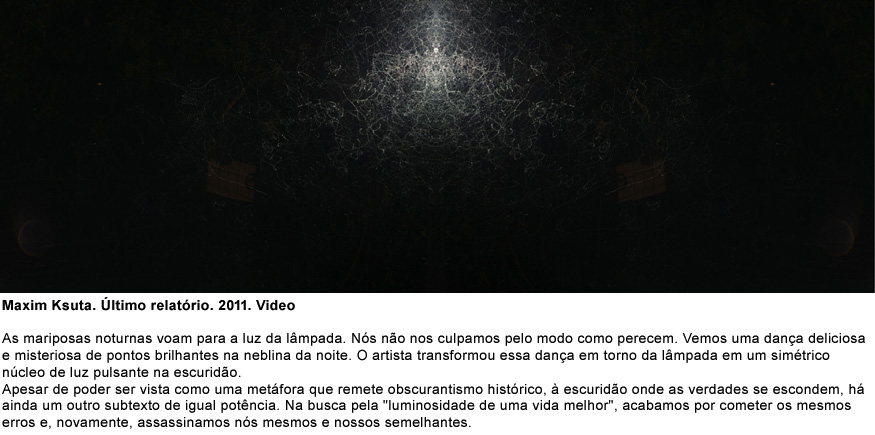
Artistas:
Maxim Ksuta Nikita Pirogov Svetlana Pozharskaya Dmitry Vyshemirsky
Curadora:
Irina Chmyreva
em parceria com PhotoVisa, International Festival of Photography, Russia
Via … … … …
http://kultproekt.ru/proekti/66102052017123728963/
The Kultproekt gallery begins a series of new exhibitions – “Environment contexts”.
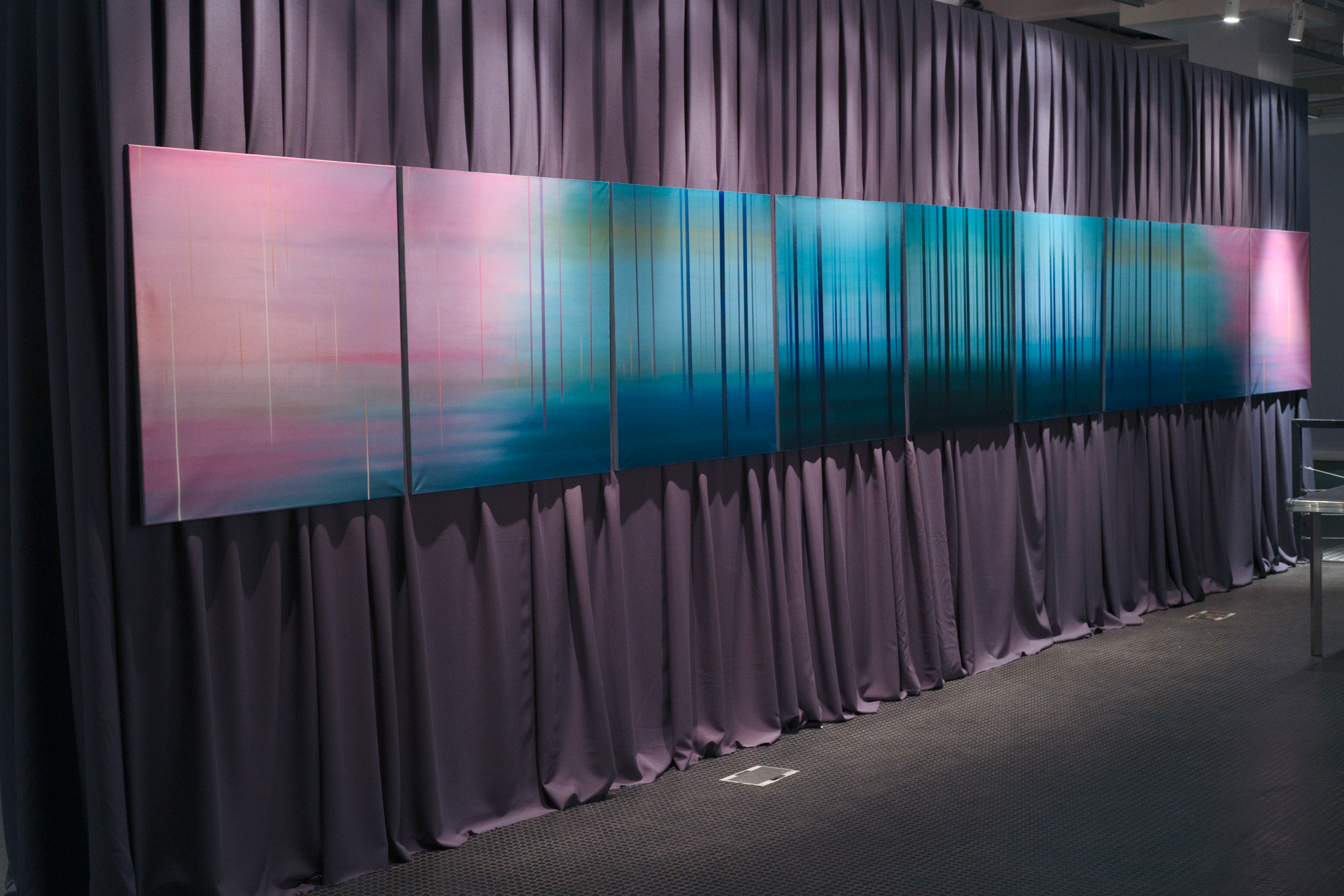
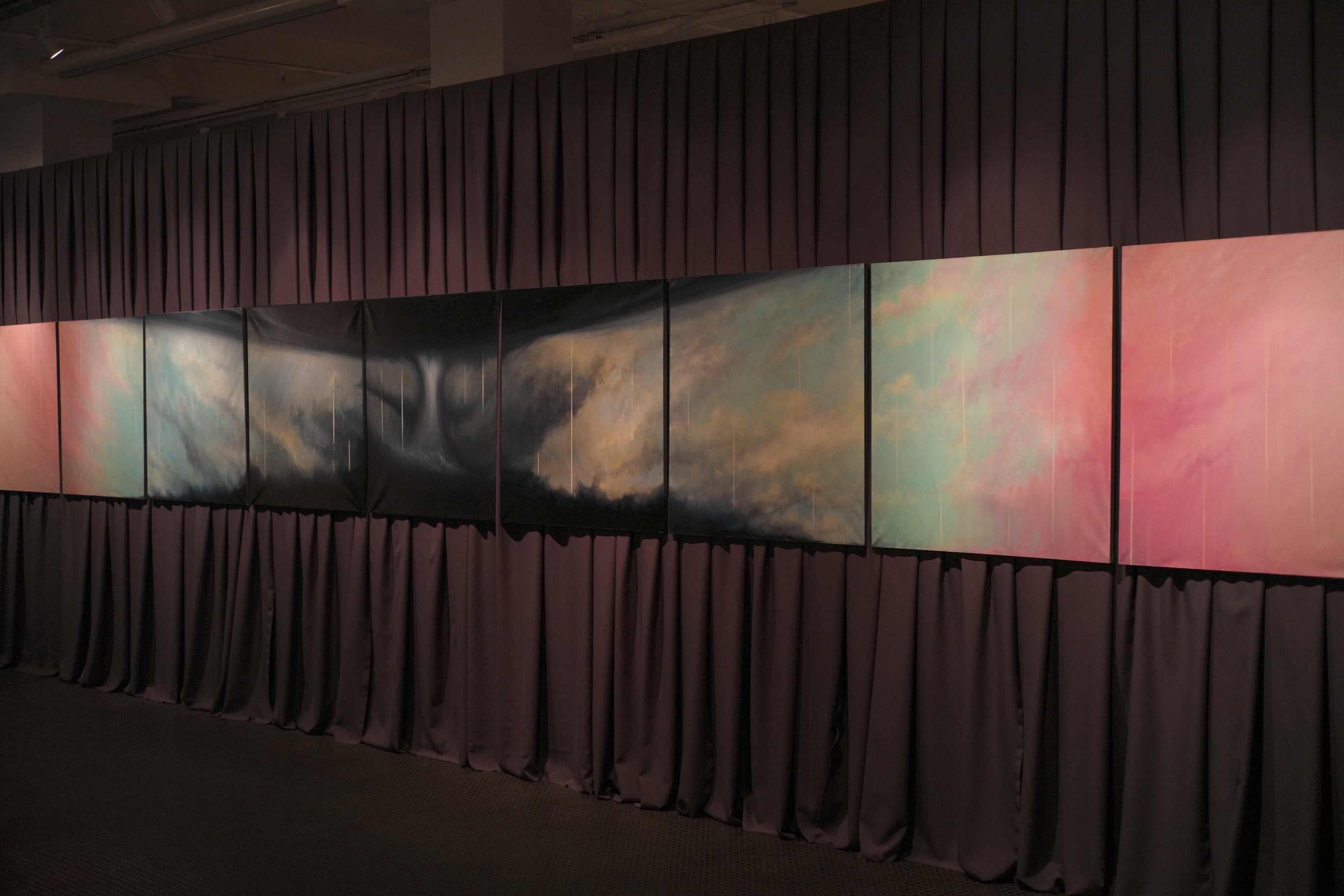
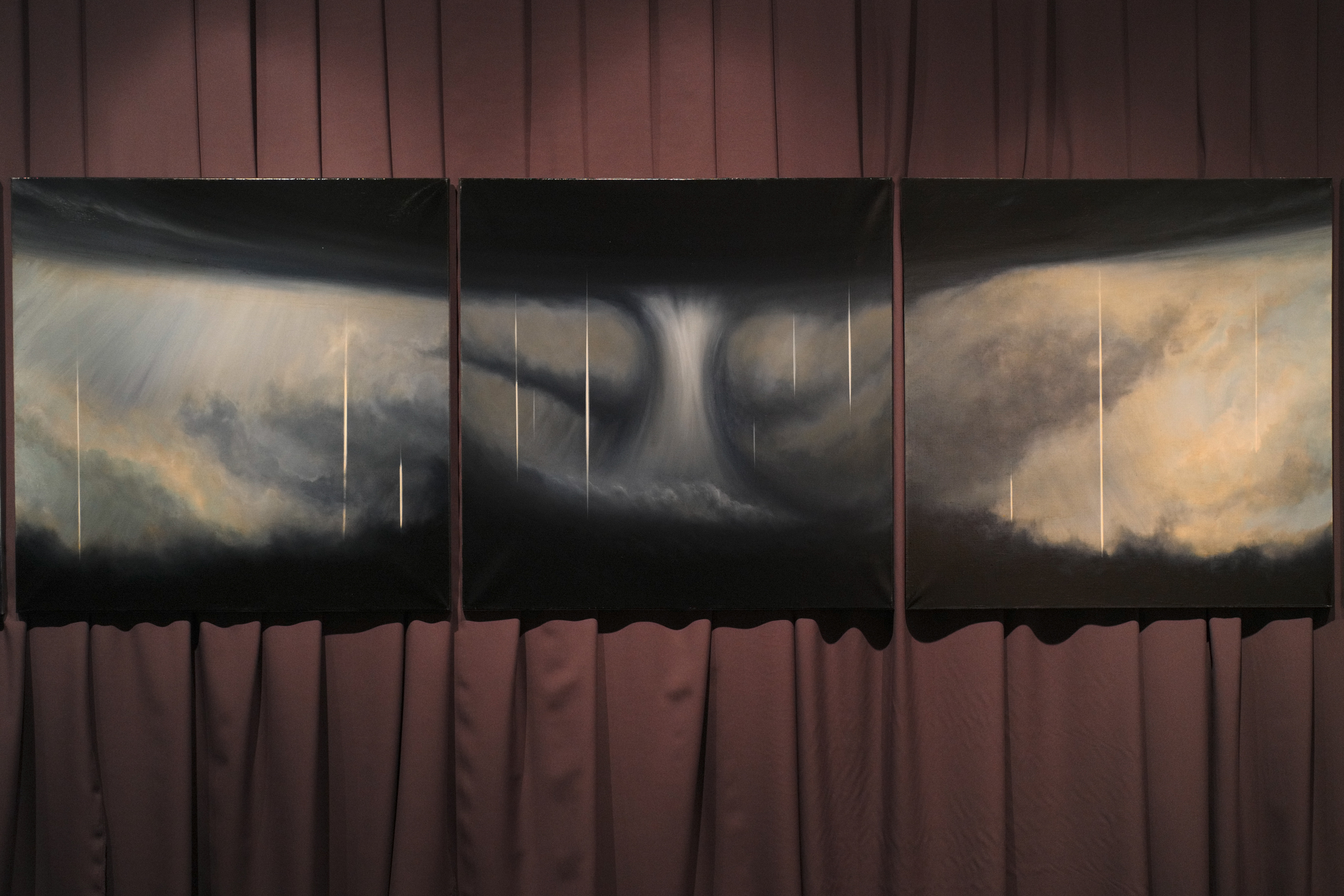
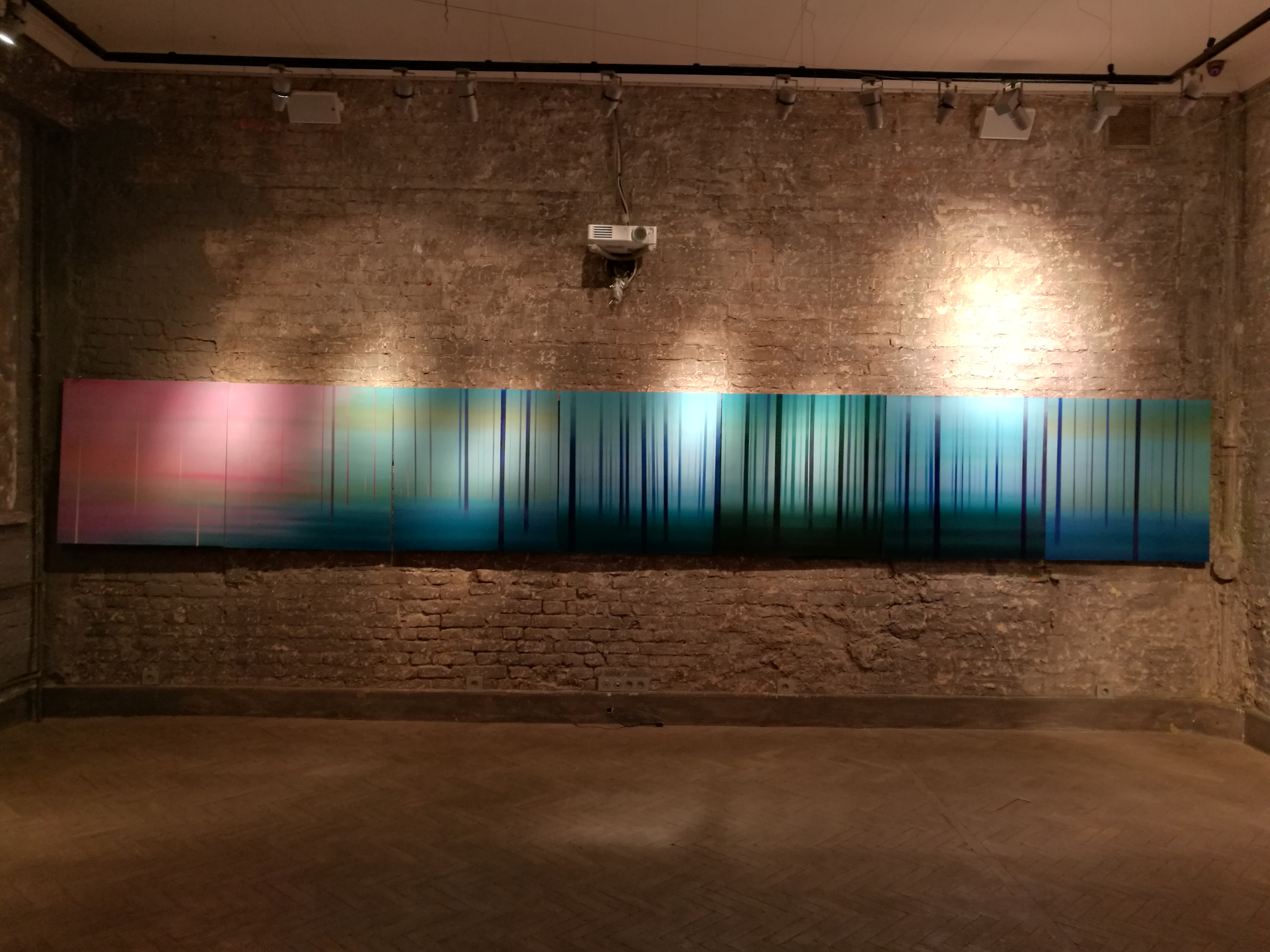
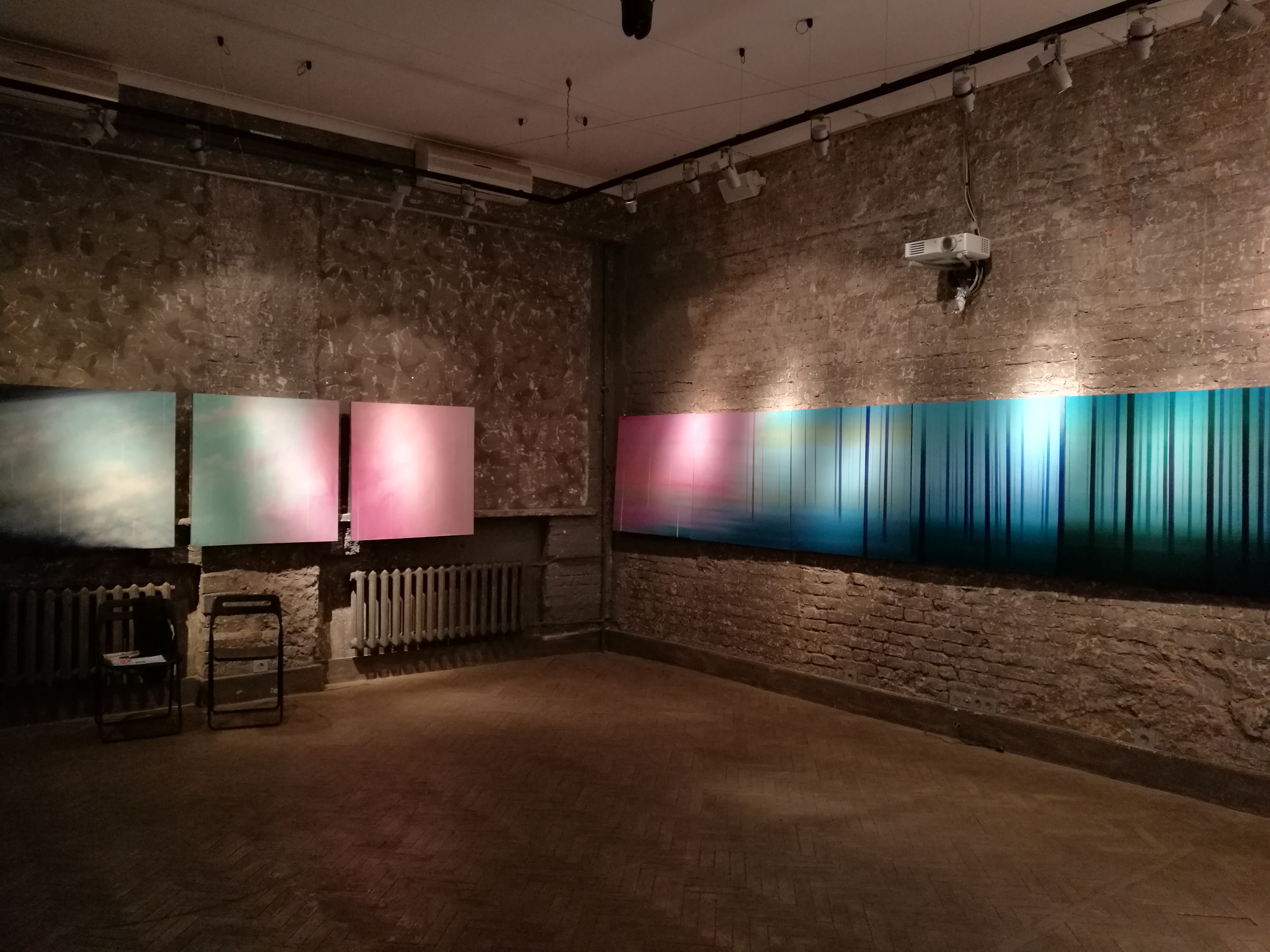
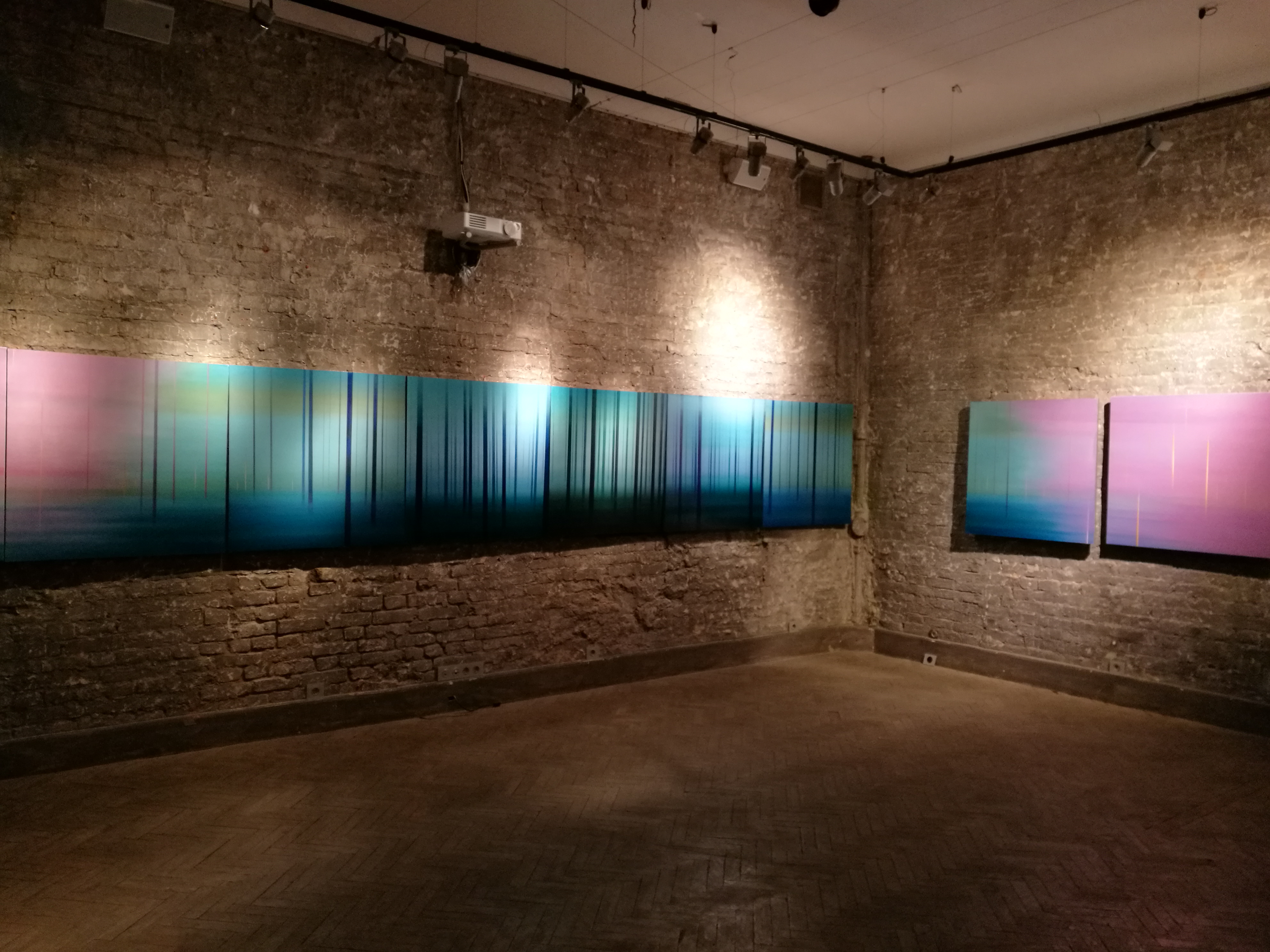
Работая над проектом «Последовательности состояний», я черпал вдохновение в двух фундаментальных трудах: книге Мартина Гарднера «От мозаик Пенроуза к надежным шифрам» и манифесте Барнетта Ньюмана «Плазменный образ».
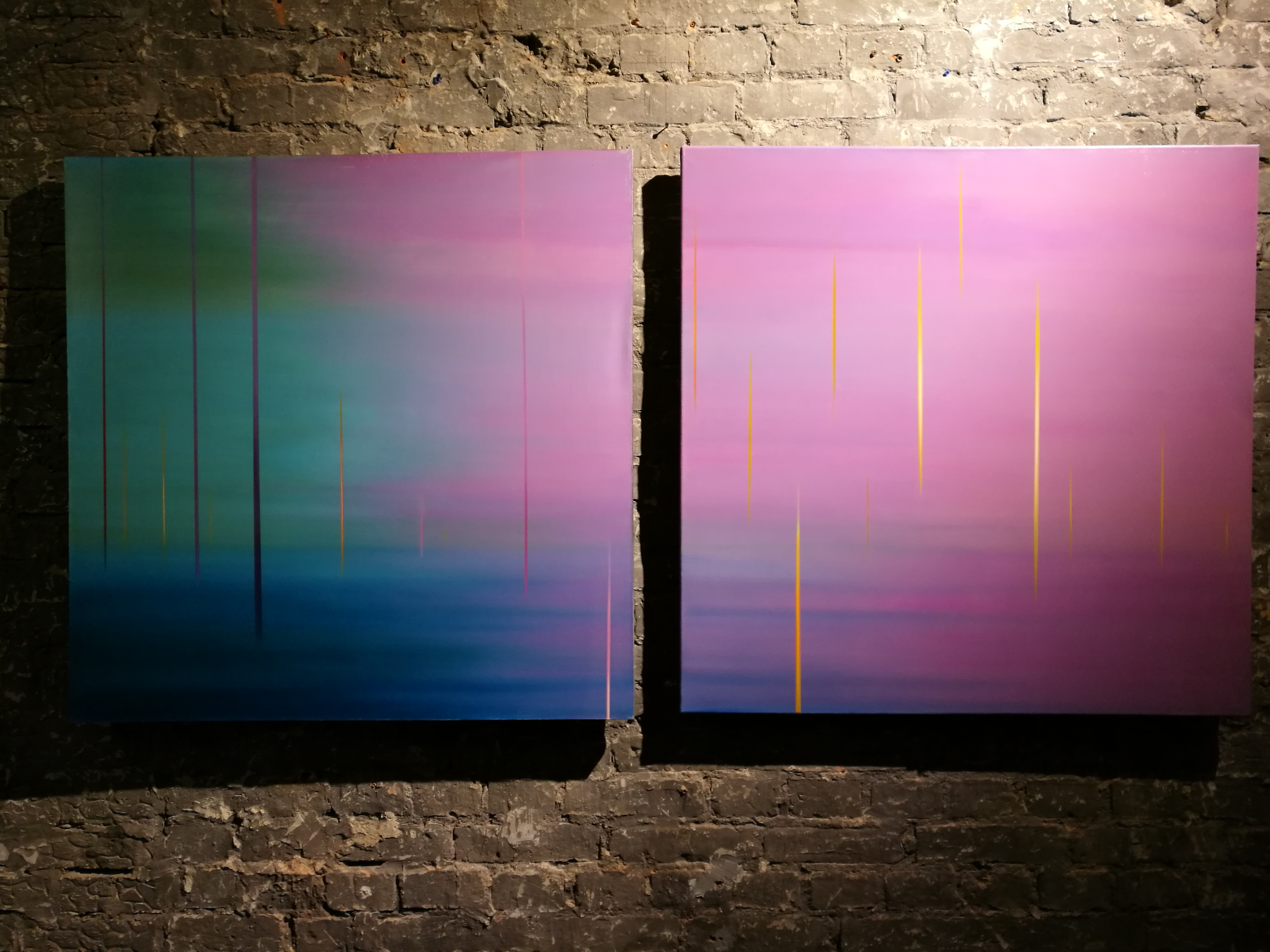
Меня всегда захватывала проблема создания универсального художественного элемента, который мог бы развиваться бесконечно, взаимодействуя с различными пространствами. В математике таким элементом является, например, фрактал. В моем проекте роль «фрактальной среды» выполняет квадрат, лишенный фиксированных пропорций. Два изображения, созданные из таких элементов, лишь крайне отдаленно напоминают привычный нам мир (пространства «леса» и «атмосферы»).
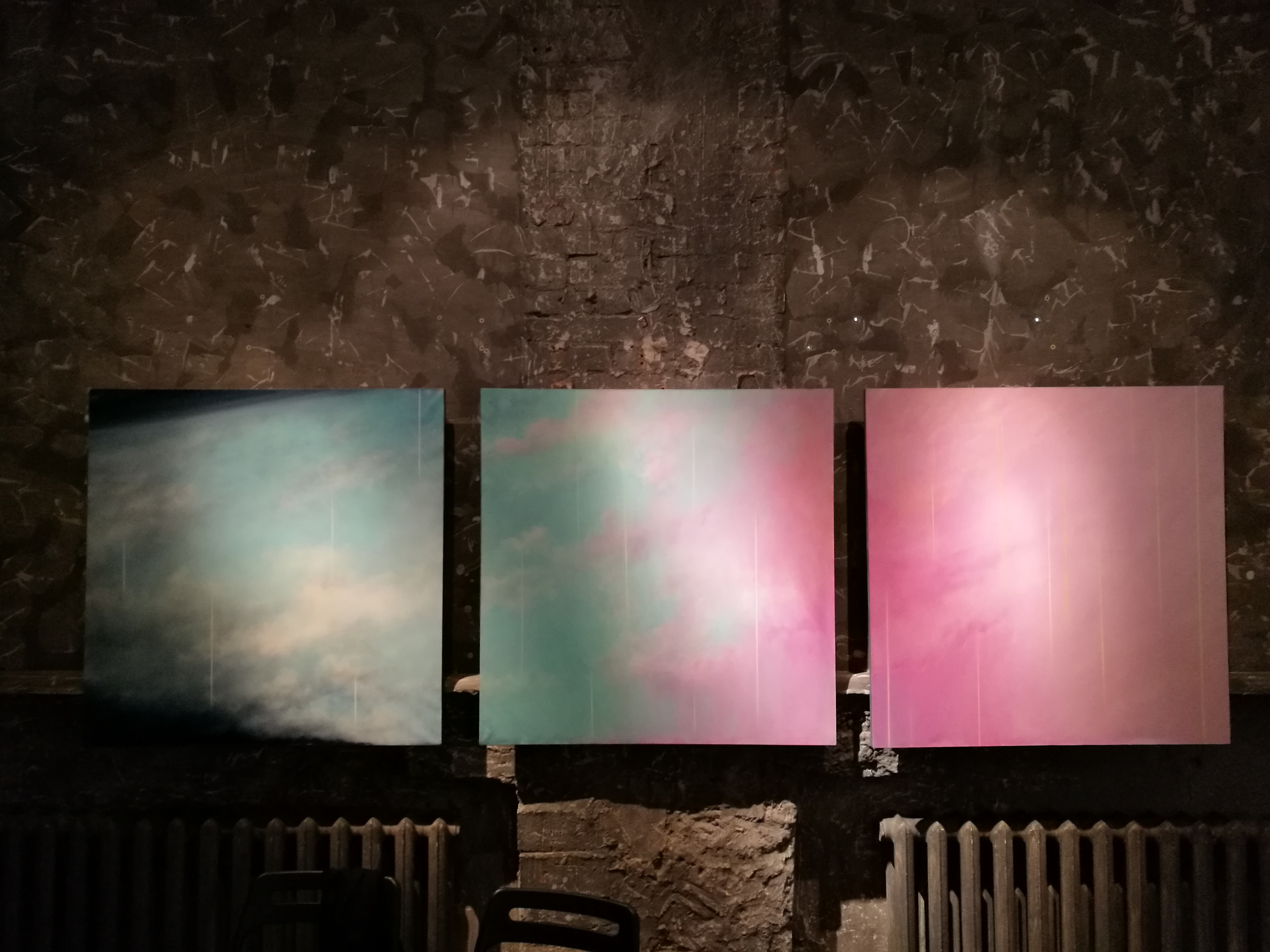
Атмосфера – это сочетание химических элементов. По аналогии с этим, «атмосфера» картины создается благодаря взаимодействию минералов, связанных смолами, маслами и лаками. В этом проекте я поставил перед собой изобразительную задачу: соединить два пространства в одной работе настолько плавно, чтобы зритель не смог уловить момент перехода. Подобный эффект встречается, например, в эмбиент-музыке, которую часто называют «атмосферной».
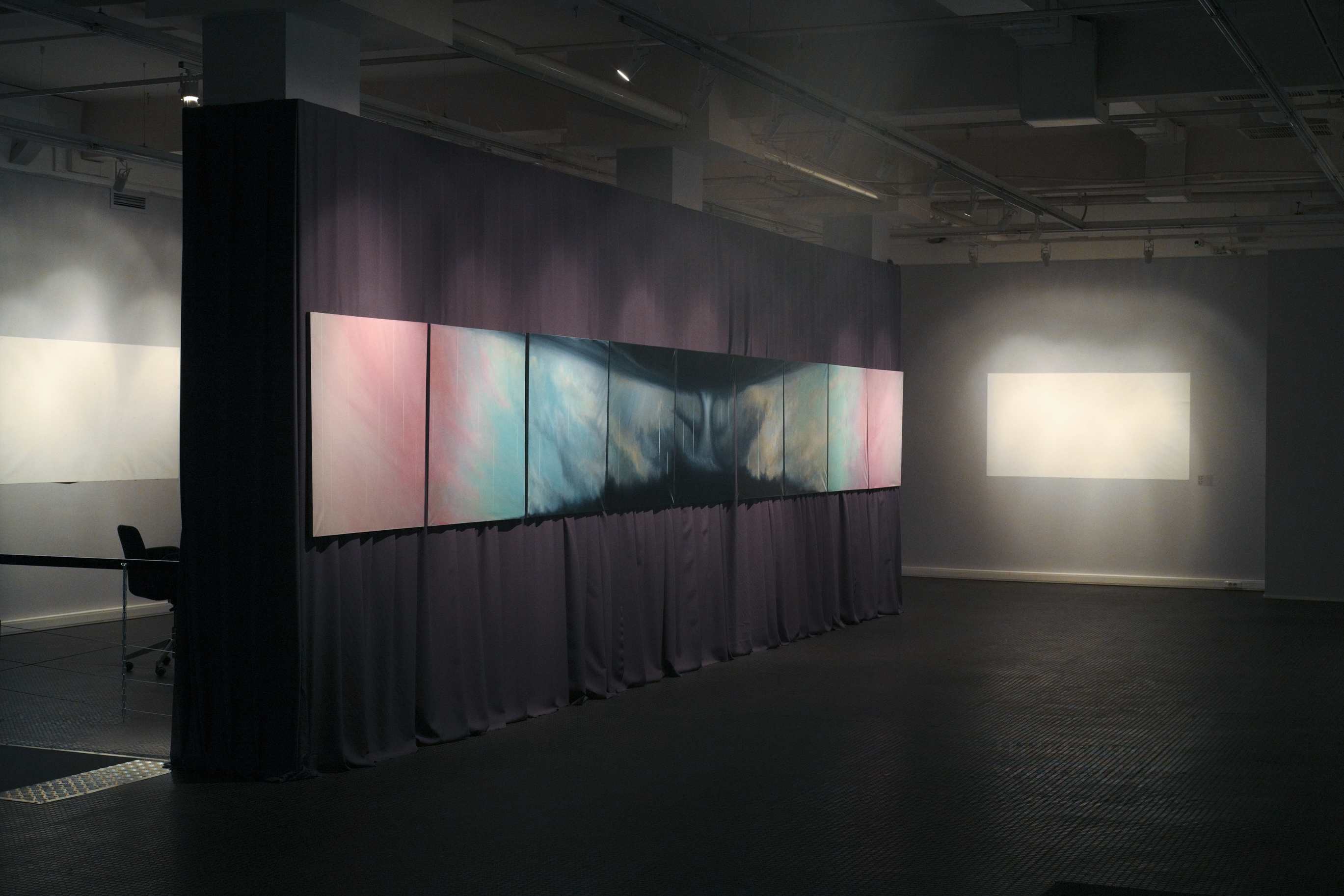
Последовательность состояний произведения возникает благодаря динамике цвета в его фрагментах. Этот подход ближе к китайскому свитку, чем к североевропейскому натюрморту: он заставляет нас подходить к работе всё ближе и ближе. Именно так она раскрывается, демонстрируя еще одно свое качество – микрокосм деталей. Работа со свитками длиной более 10 метров побуждает нас искать «великое» в масштабных формах, которые невозможно охватить единым взглядом. В моей инсталляции каждый отдельный фрагмент представляет собой «кадр» определенного состояния. «Последовательности состояний» могут развиваться в различных физических направлениях, высвобождая скрытый потенциал степеней свободы произведения, оставаясь при этом погруженными в собственную несвободу. Этот процесс роста бесконечного произведения может быть остановлен лишь тогда, когда я получу ответы на большинство вопросов, поднятых мною в отношении живописи, методологии и мотивации.
Воздействие работы обусловлено не формой, а неуловимым магнетизмом, окружающим ее пространство. В творчестве Ньюмана такой магнетизм выражался в серии «плазменных» полотен. Эта идея увлекла меня. Я работал над композицией пространства, используя технику последовательного упрощения, максимально абстрагируясь от фигуративного искусства.
While working on The Sequences of Conditions, I was inspired by two fundamental research works: Martin Gardner’s From Penrose Tiles to Trapdoor Ciphers and Barnett Newman’s manifesto, The Plasmic Image.
I have always been fascinated by the challenge of creating a universal artistic element capable of endless development and interaction with diverse spaces. In mathematics, the fractal serves as such an element. In my project, the “fractal medium” is a square without fixed proportions. Two images constructed from these elements bear only a faint resemblance to the familiar world (specifically, “forest” and “atmosphere” spaces).
Atmosphere is a combination of chemical elements. By analogy, the atmosphere of a painting is created through the interaction of minerals bonded by resins, oils, and varnishes. In this project, my figurative objective was to blend two spaces within a single work so seamlessly that the viewer cannot perceive the transition—much like the effect found in ambient music, often described as “atmospheric.”
The sequence of conditions within the work emerges from the color dynamics of its fragments. This approach is closer to a Chinese scroll than a Northern European still life; it compels the viewer to move closer and closer to the piece. In doing so, the work reveals itself, demonstrating a new quality: a microcosm of detail. Working with scrolls exceeding 10 meters in length motivates us to seek the “sublime” in large-scale works that cannot be fully captured in a single glance. In my installation, each individual fragment represents a “frame” of a specific condition. The Sequences of Conditions can expand in various physical directions, unleashing a hidden potential for freedom while remaining immersed in its own inherent constraints. This growth process of an infinite work can only be halted once I find answers to the questions I have raised regarding painting, methodology, and motivation.
The impact of the work is not attributable to its form, but rather to the elusive magnetism surrounding its space. In Newman’s work, this magnetism was expressed through his series of “plasmic” paintings. Enthralled by this idea, I focused on the composition of space using a technique of progressive simplification, abstracting as far as possible from figurative art.
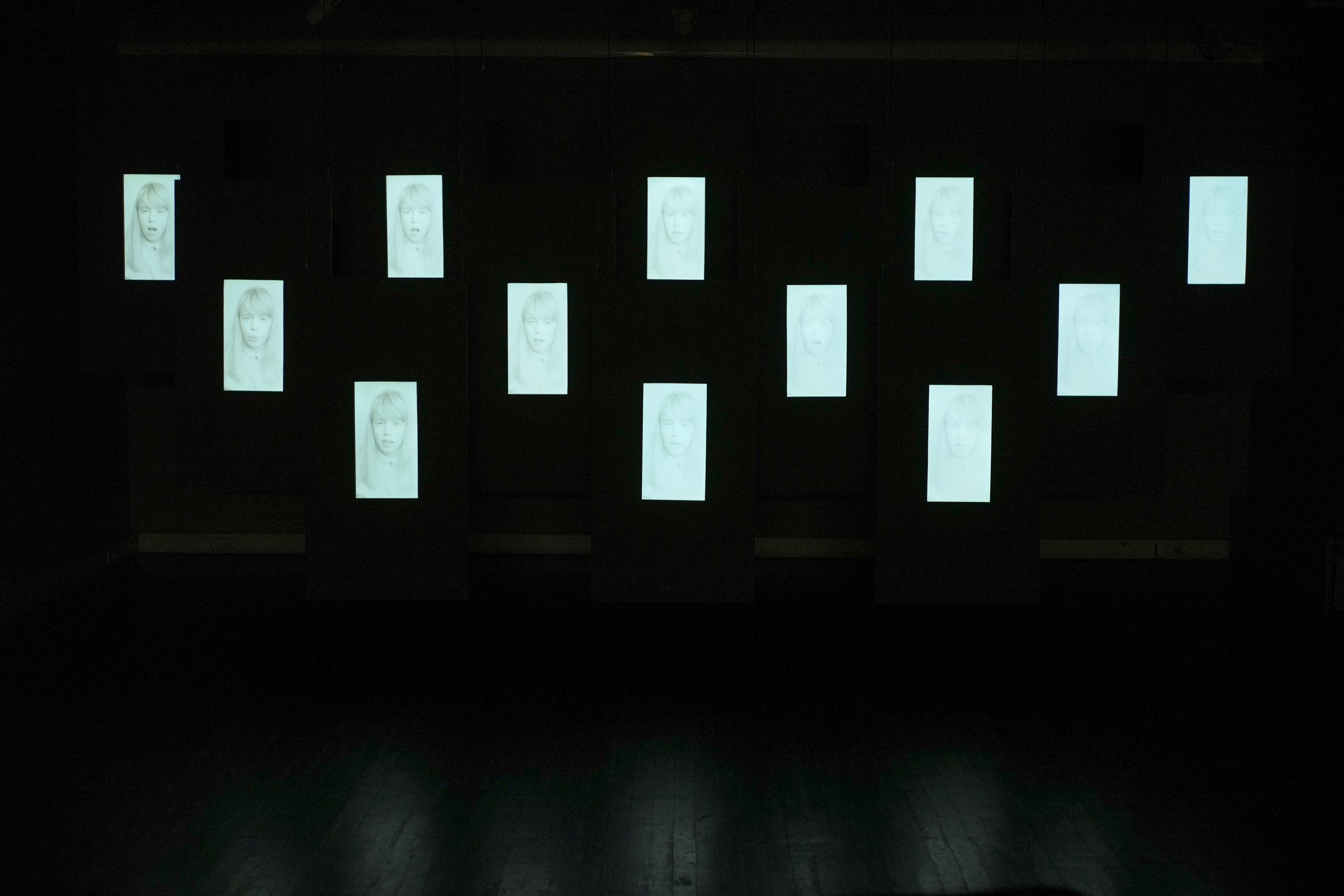
Аудиовизуальная инсталляция состоит из 12 ЖК-экранов, на которых один и тот же персонаж пропевает гласные звуки (которых в русском языке шесть). Каждая сцена и каждый звук транслируются на отдельном экране. Видео на экранах намеренно не синхронизировано, а звук искусственно расширен с помощью ревербератора, что придает ему объемное и слегка потустороннее звучание.
В 1950-х годах Игорь Стравинский начал использовать серийную технику композиции — специфический метод письма, при котором основой звуковысотной структуры служит серия (ряд) неповторяющихся звуков. В музыкальную практику этот метод ввели Арнольд Шёнберг и Антон Веберн. Произведение Стравинского Threni («Плач пророка Иеремии», 1958) стало его первым полностью серийным сочинением, в котором композитор окончательно отказался от тональности. Работая над проектом «Хор», я придерживался принципов серийности и намеренно выбрал гласные звуки родного языка композитора, которые можно распевать и объединять в полифоническую структуру.
The audio-video installation consists of 12 LCD screens, where a single character sings the six natural vowel sounds of the Russian language. Each scene and sound is displayed on a separate screen. The videos are intentionally unsynchronized, while the sound is expanded using a reverb effect, creating a volumetric and slightly otherworldly acoustic atmosphere.
In the 1950s, Igor Stravinsky began employing serial compositional techniques. This method involves a specific conceptual approach to writing music where a series (or row) of non-recurrent sounds serves as the primary pitch material. Originally introduced by Arnold Schoenberg and Anton Webern, this technique was fully embraced by Stravinsky in his 1958 work Threni: id est Lamentationes Jeremiae Prophetae, marking his complete rejection of traditional tonality. In creating Chorus, I adhered to these serial principles, intentionally selecting the vowel sounds of the composer’s native tongue to be sung and woven into a complex polyphonic structure.

My photo -“Hearthrug” in SpallArt
The private art collection SpallArt initially evolved from the enthusiasm for the diversity of possibilities that photography uses to obstruct, to deny and to challenge our perception.
The art collector Andra Spallart acquired first contemporary photographic works in the mid 1980s – after its move to Vienna in 1995, the constantly growing collection got a clear orientation and emphasis: contemporary photography from Austria – certainly with reference to the European context.
http://www.sammlung-spallart.at/en/
http://www.sammlung-spallart.at/en/kuenstler/381/maxim-ksuta/
The project is about communication and relationships.
“With the world on a string”
Dear friends, I ask you to send me the segment of the thread of any length and color.
Thank you.
Location – in a personal message.
Групповой проект «Интертекст» исследует вопрос взаимопроникновения текста и изображения. Экспозиция объединяет как классиков московского концептуализма (Дмитрия Пригова, Юрия Альберта, Андрея Филиппова), так и современных европейских и российских художников, работающих в рамках заданной проблематики.
Некоторых участников, таких как Леонид Тишков, Никита Алексеев, Виктор Умнов и Баби Бадалов, можно в равной степени считать литераторами, поскольку их визуальные образы дополняют их же текстовые произведения. Современный текст в форме цифровой или фигурной поэзии часто создается с помощью компьютерных технологий. Генерируя изображение через различные цифровые коды, медиапоэты и видеохудожники — Наталия Федорова, Анна Толкачева и Чарльз Сэндисон — частично делегируют свою роль машине.
Часть выставки, представленная работами Тани Муро, Виктора Панова, Максима Ксуты, Евгения Добровинского и Ильи Гришаева, посвящена символическому образу как графическому элементу, автоматическому письму и каллиграфическим практикам. Средством художественной выразительности здесь становятся не только знаки, но и пробелы между ними, а также намеренное сокрытие или недосказанность.
Такие художники, как Семен Мотолянец, Георгий Острецов и Валерий Чтак, используют текст в виде слоганов, тегов или символов, связанных с популярной культурой, политикой и социальным взаимодействием. Текстовые лозунги подчеркивают саму природу социальной коммуникации, основанной на единой знаковой системе.
Каждый текст, представленный на выставке, является не отдельным высказыванием, а лишь фрагментом всеобщей вербально-текстовой структуры. Работы художников не всегда требуют буквального прочтения; зачастую они служат лишь напоминанием или ссылкой на другие тексты за пределами выставочного пространства. Экспозиция не предполагает немедленного и последовательного чтения; она скорее служит отправной точкой для множества нарративов. Интертекстуальность здесь становится не просто вектором исследования, а самой художественной практикой.
The group project “Intertext” explores the interpenetration of text and image. The exhibition brings together both Moscow Conceptualists (Dmitry Prigov, Yuri Albert, Andrey Filippov) and contemporary European and Russian artists working within this thematic framework.
Some artists, such as Leonid Tishkov, Nikita Alexeev, Victor Umnov, and Babi Badalov, can equally be considered writers, as their visual imagery complements their textual creations. Contemporary text in the form of digital or visual poetry is often created using computer technology. By generating images through various digital codes, media poets and video artists such as Natalia Fedorova, Anna Tolkacheva, and Charles Sandison partially delegate their creative role to the machine.
A section of the exhibition, featuring works by Tania Mouraud, Victor Panov, Maxim Ksuta, Evgeniy Dobrovinskiy, and Ilya Grishaev, is dedicated to the symbolic image as a graphic element, automatic writing, and calligraphic practice. Not only the signs themselves, but also the gaps between them—intentional concealment or understatement—become a means of artistic expression.
Artists such as Semen Motolyanets, Georgy Ostretsov, and Valery Chtak use texts as slogans, tags, or symbols associated with popular culture, politics, and social interaction. These textual slogans highlight the very nature of social communication, which is based on shared sign systems.
Each text featured in the exhibition is not an isolated statement, but rather a fragment of a universal verbal-textual structure. The texts presented by the artists do not always require literal reading; they often serve as reminders or links to other texts outside the exhibition space. The exposition does not imply a linear or immediate reading; instead, it serves as a starting point for numerous narratives. Intertextuality thus becomes not just a research vector, but the practice itself.