An essay composed as if by Walter Benjamin
“Fragments of Memory and the Ruins of Time”
An essay composed as if by Walter Benjamin
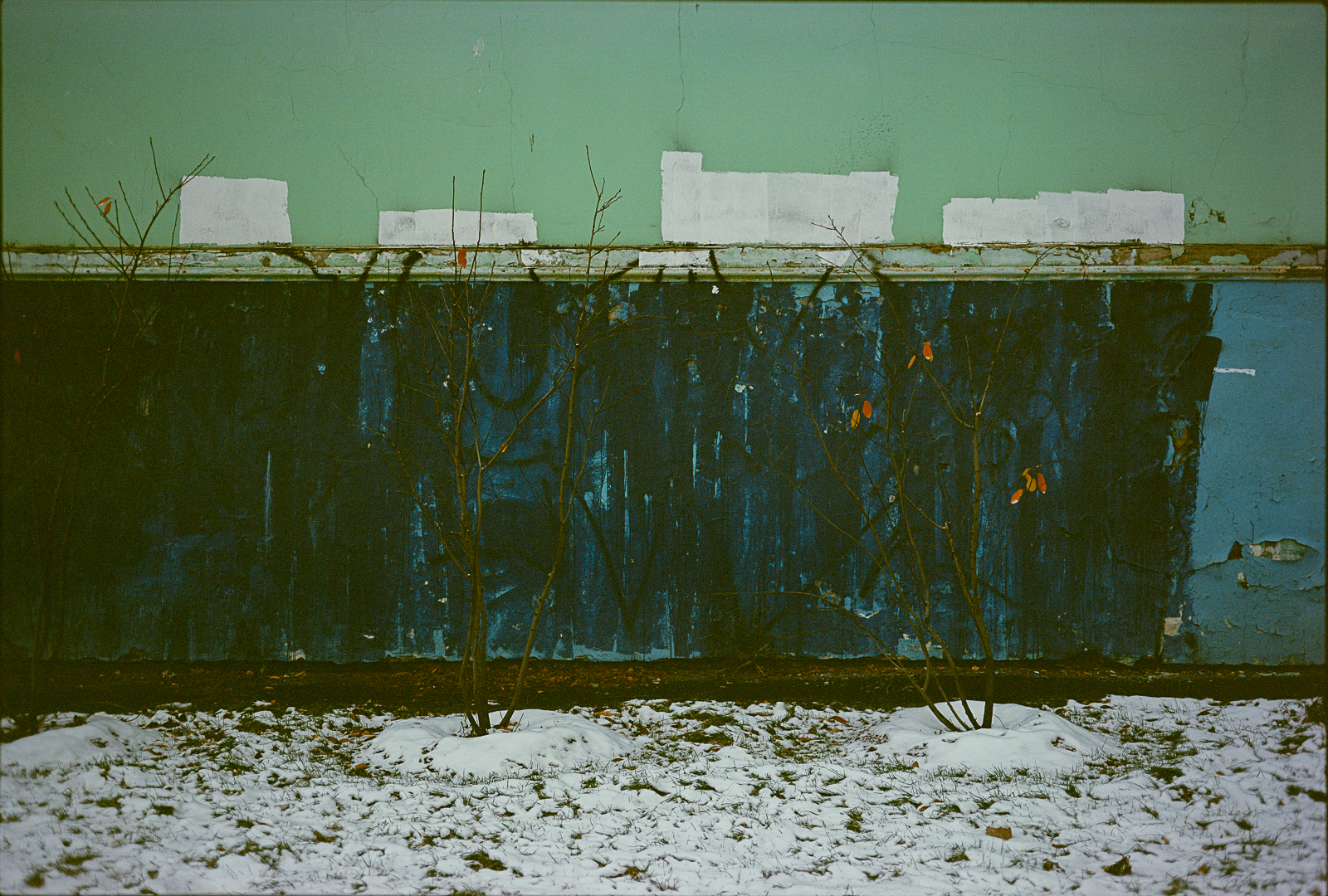
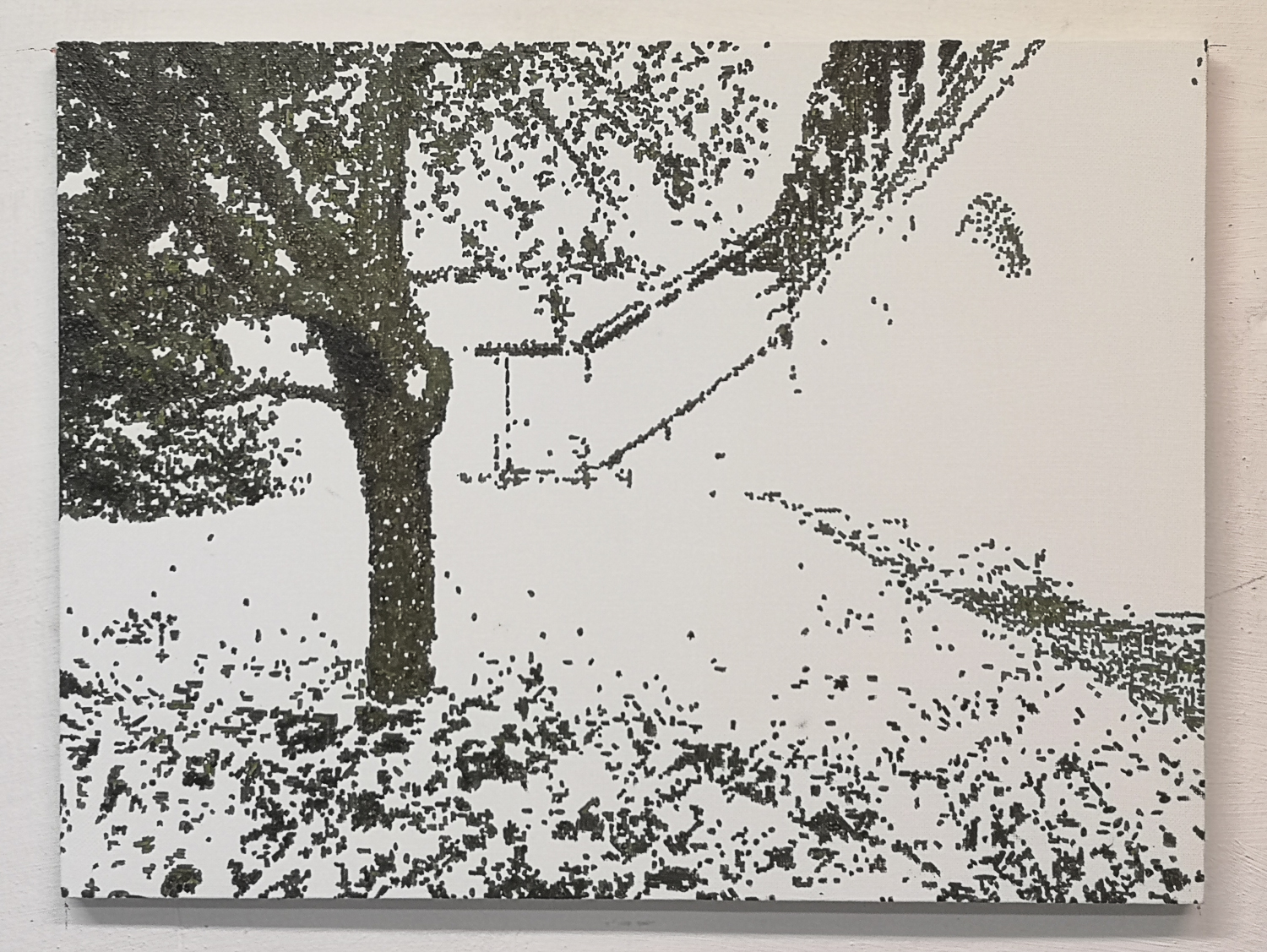
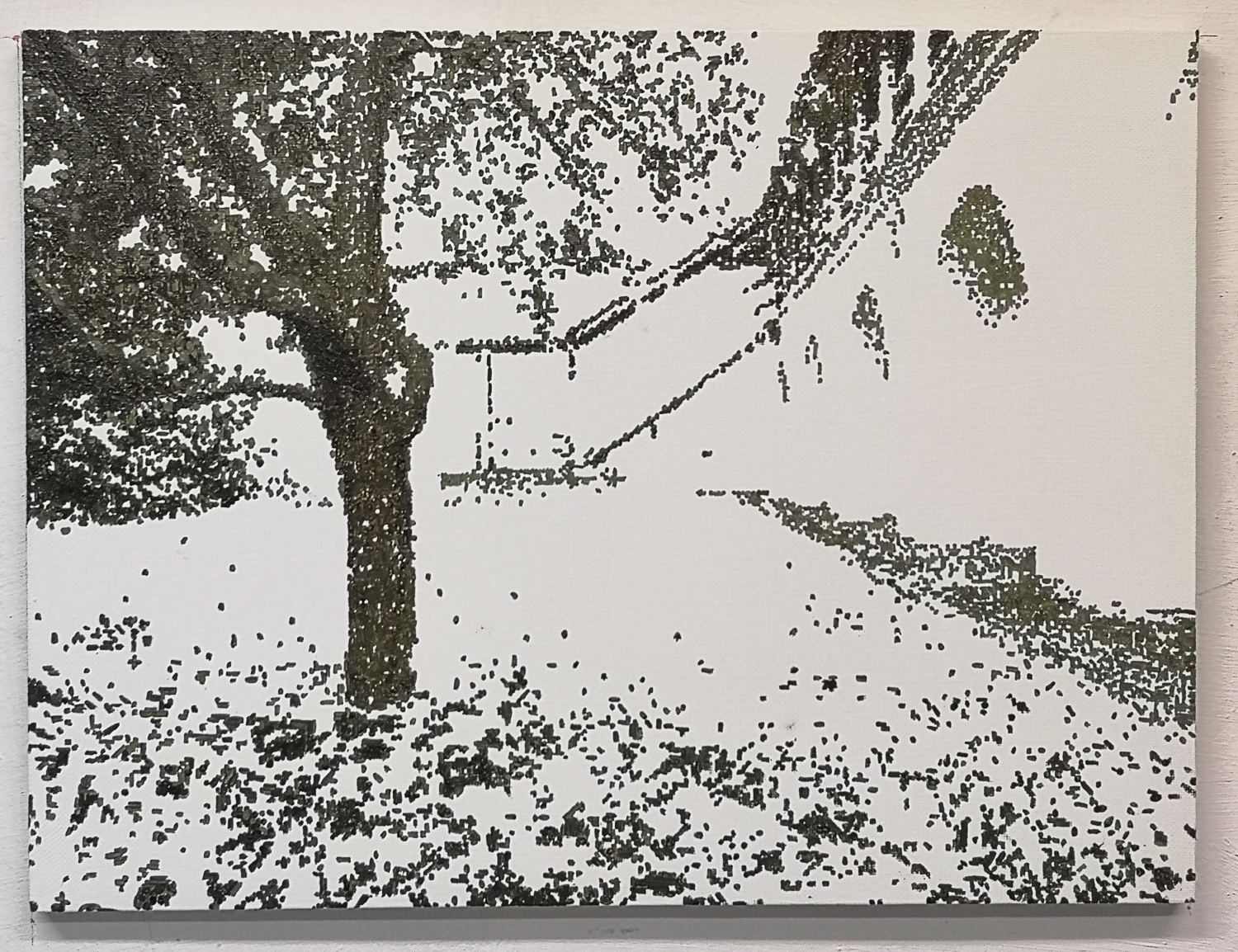
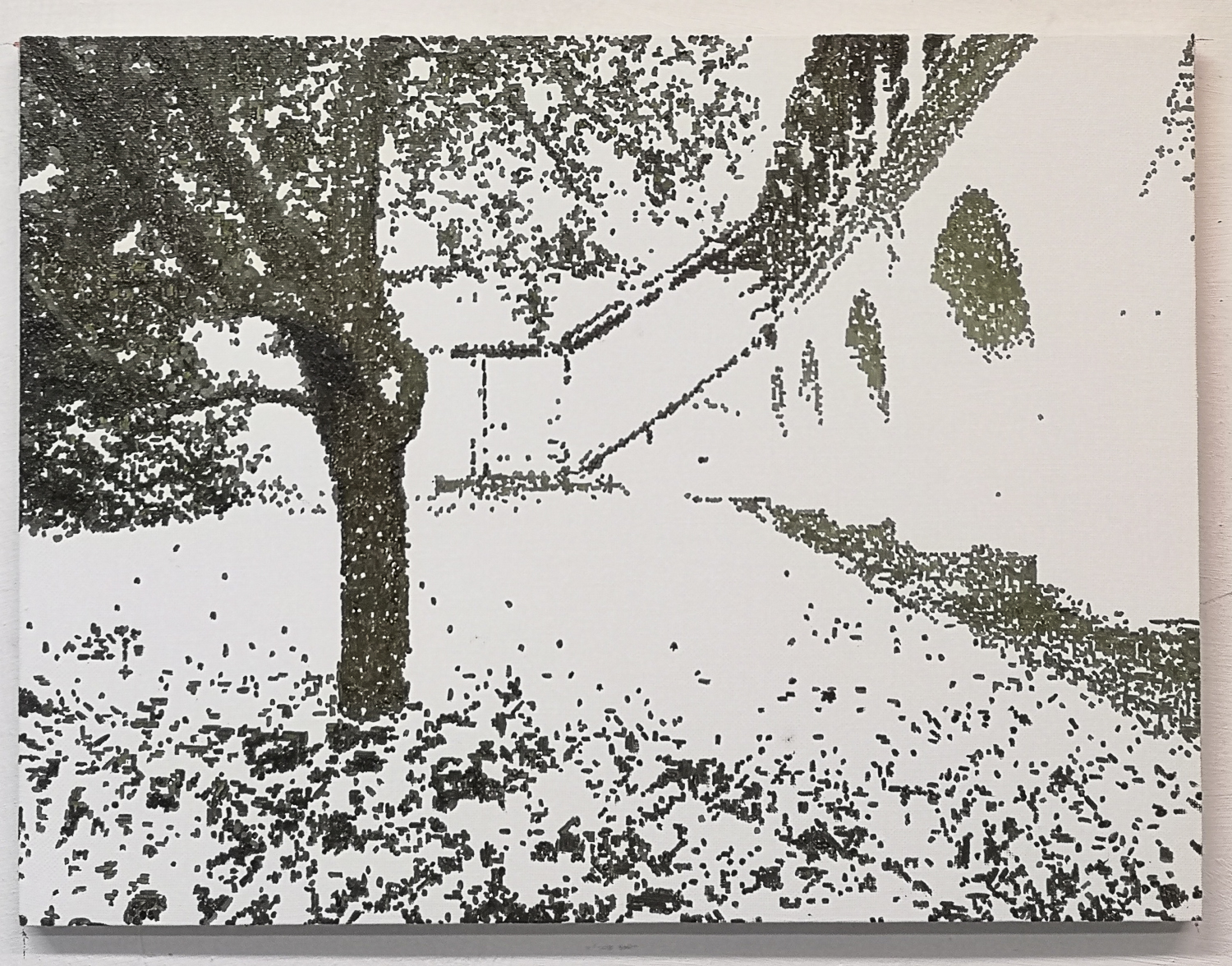
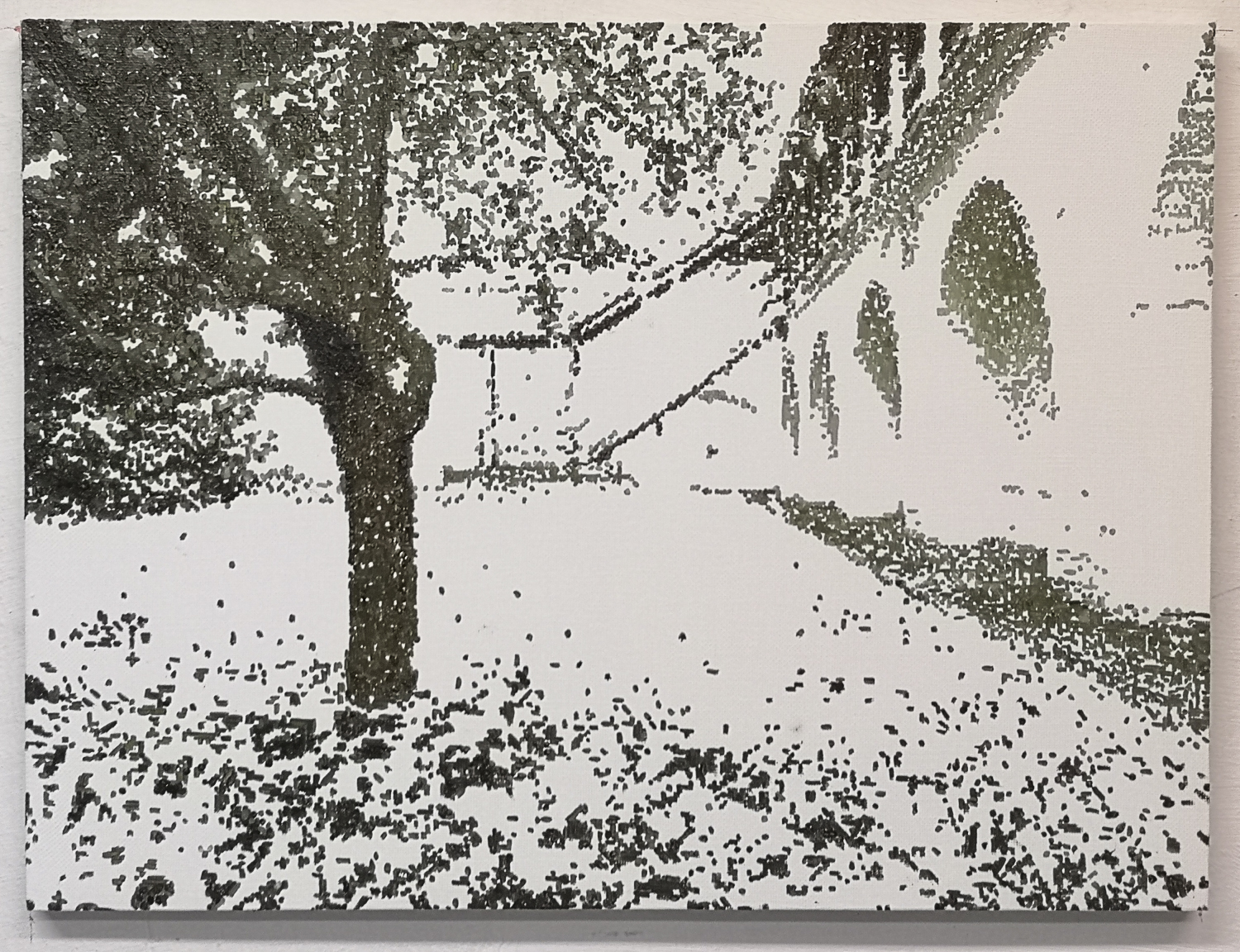
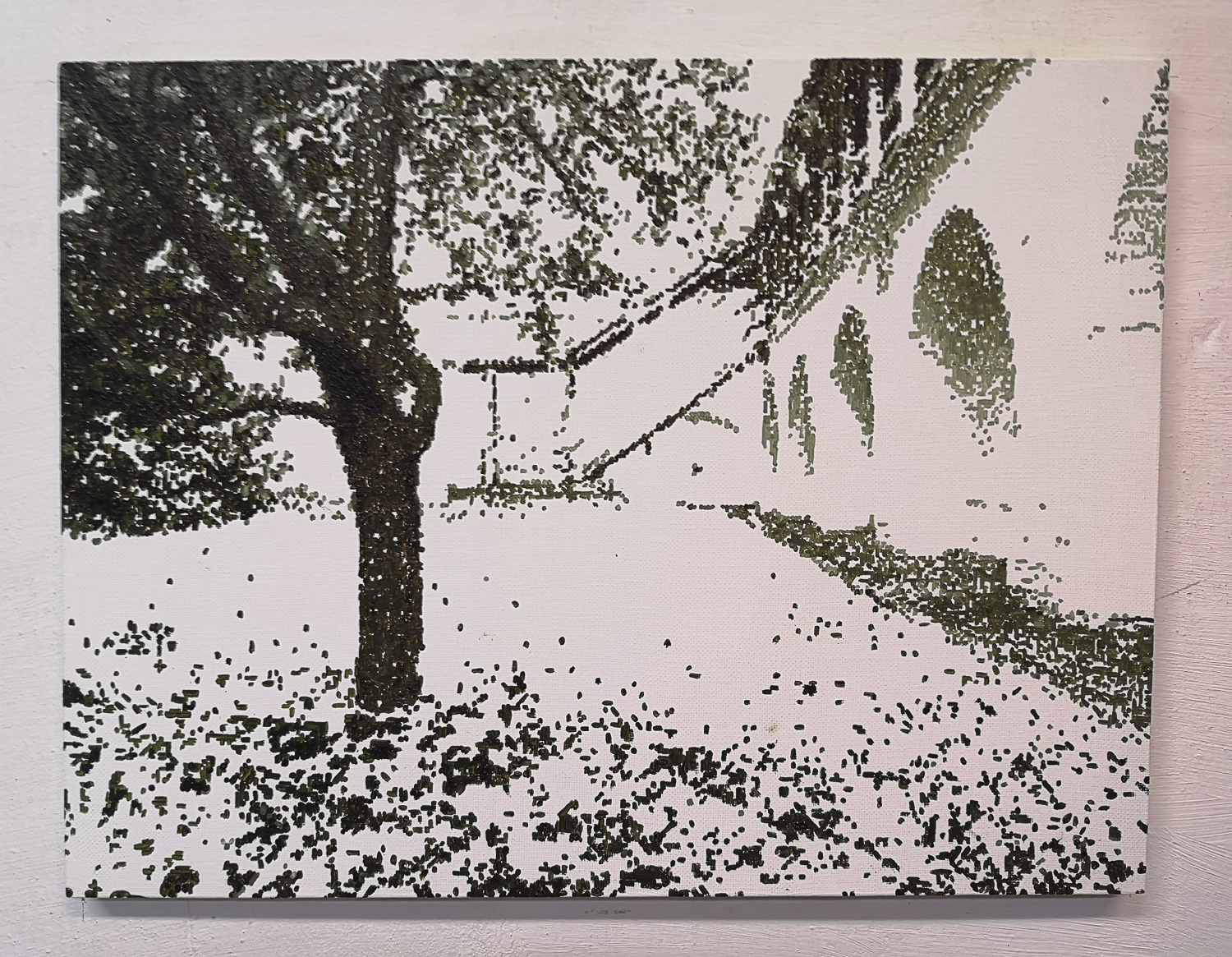
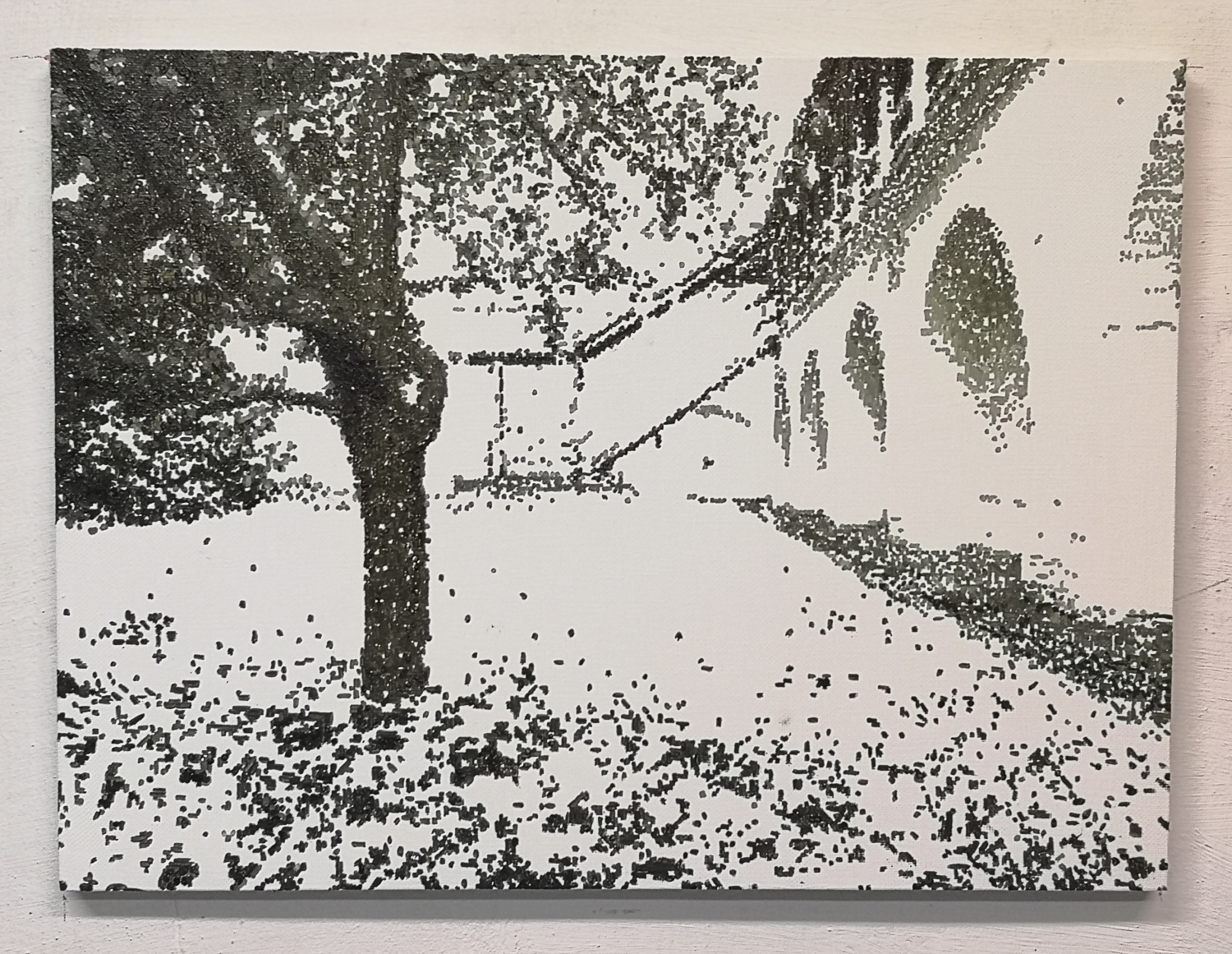
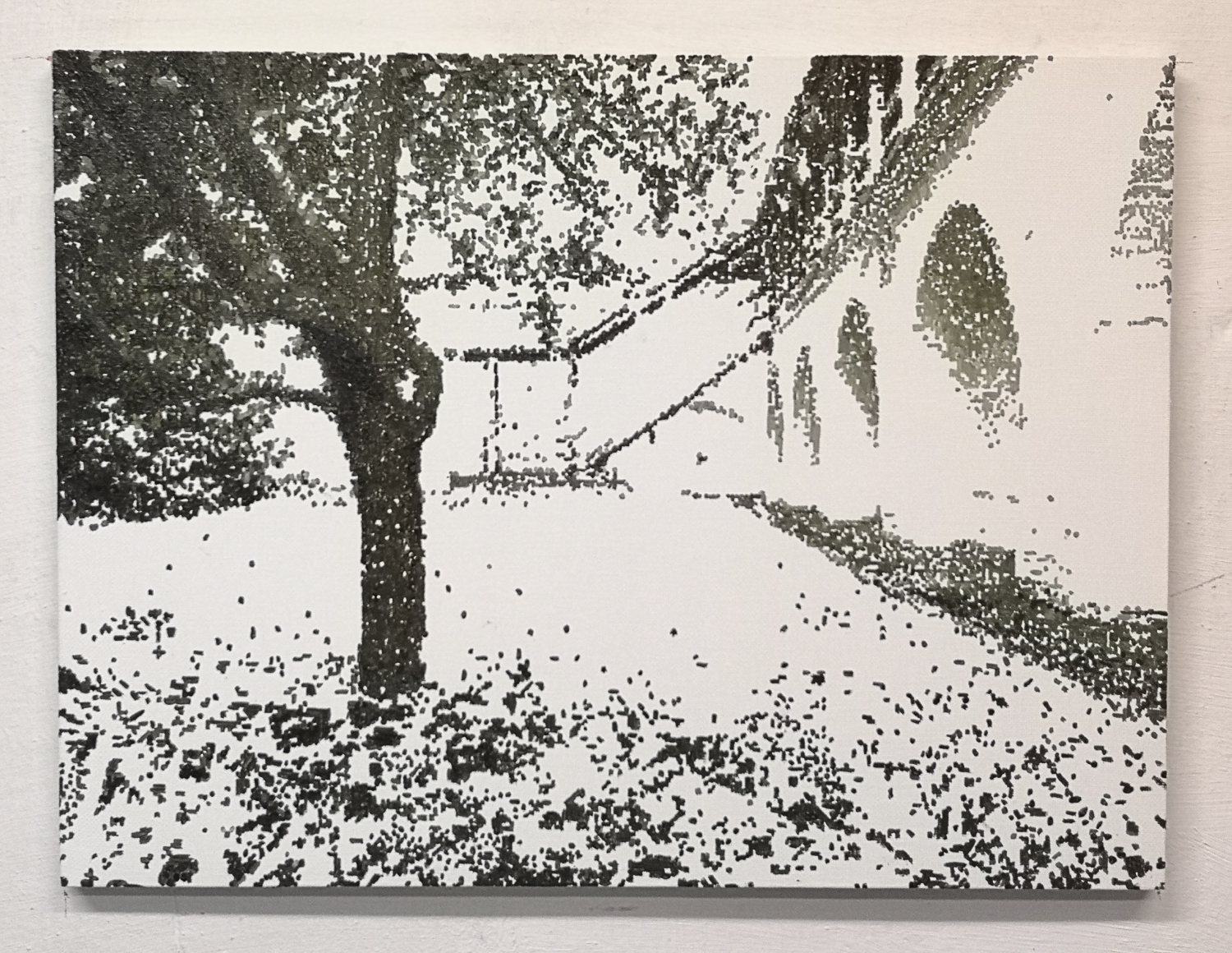
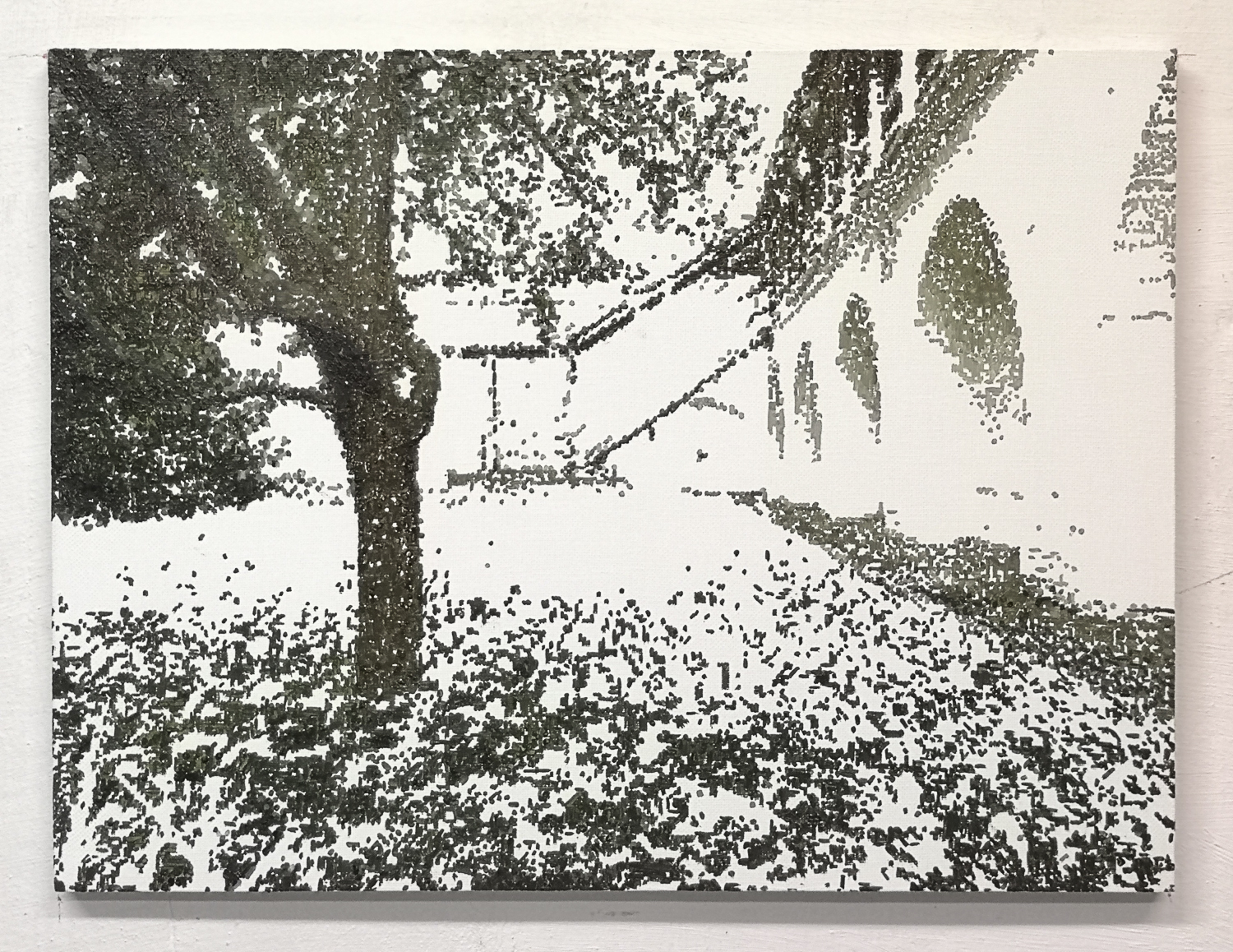
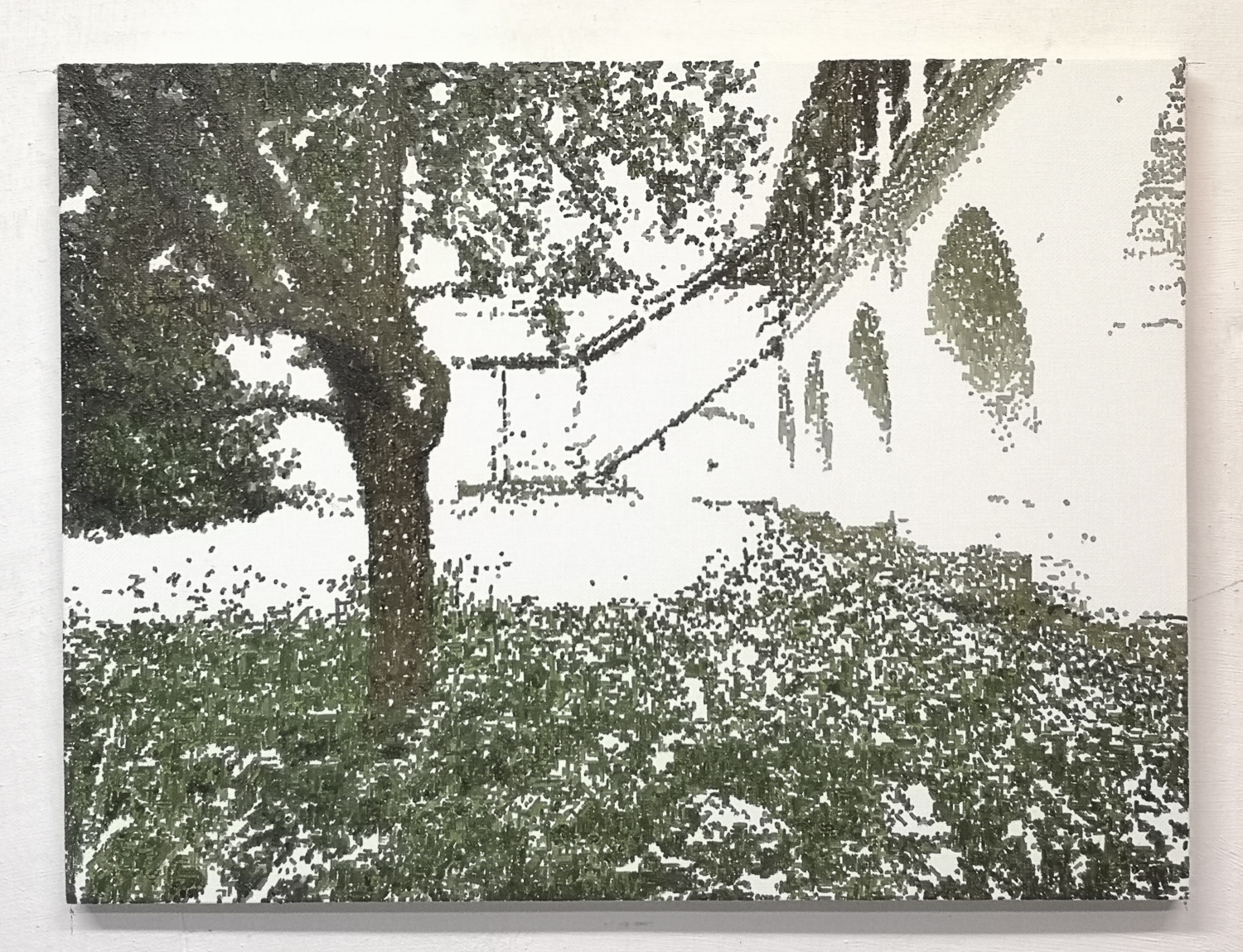
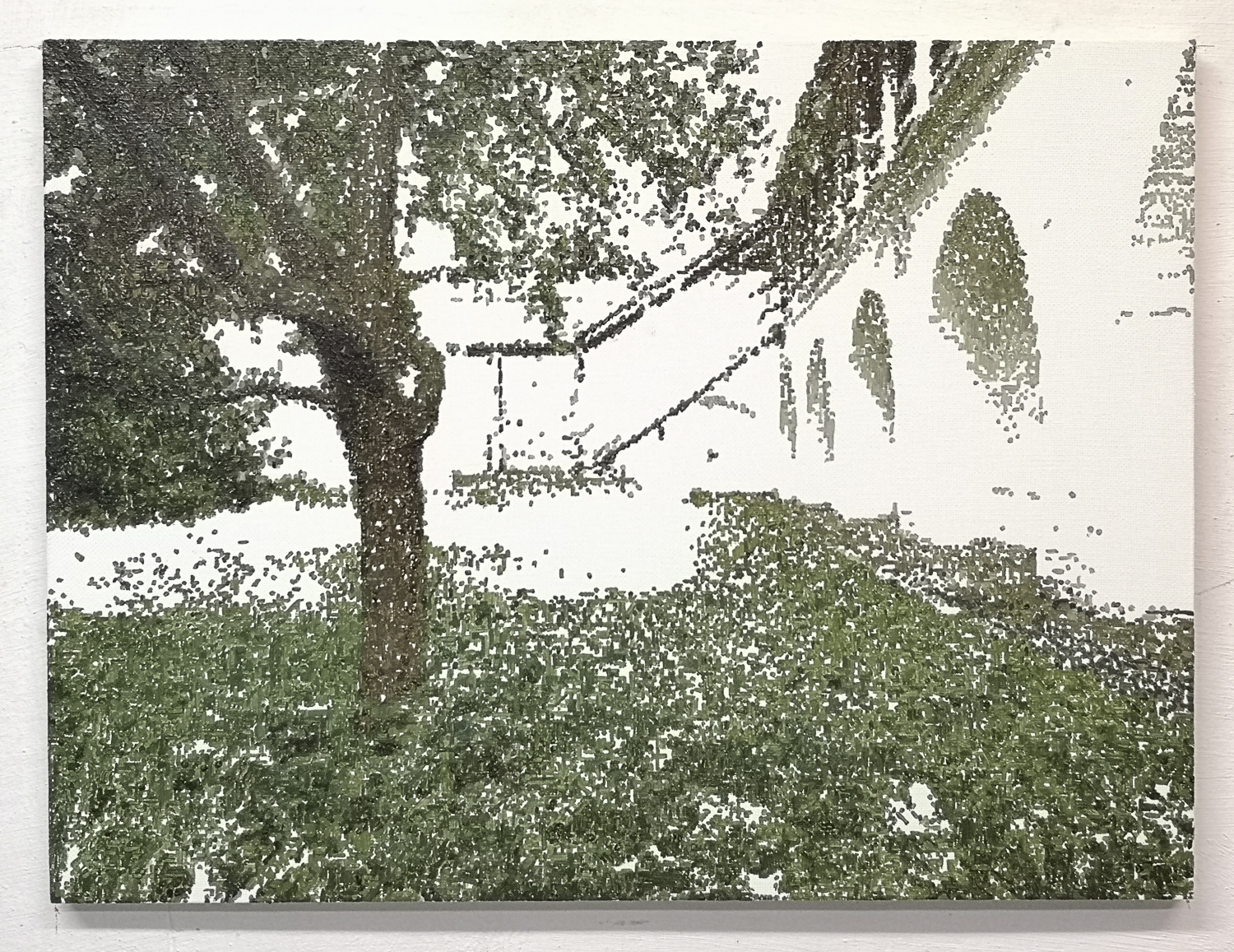
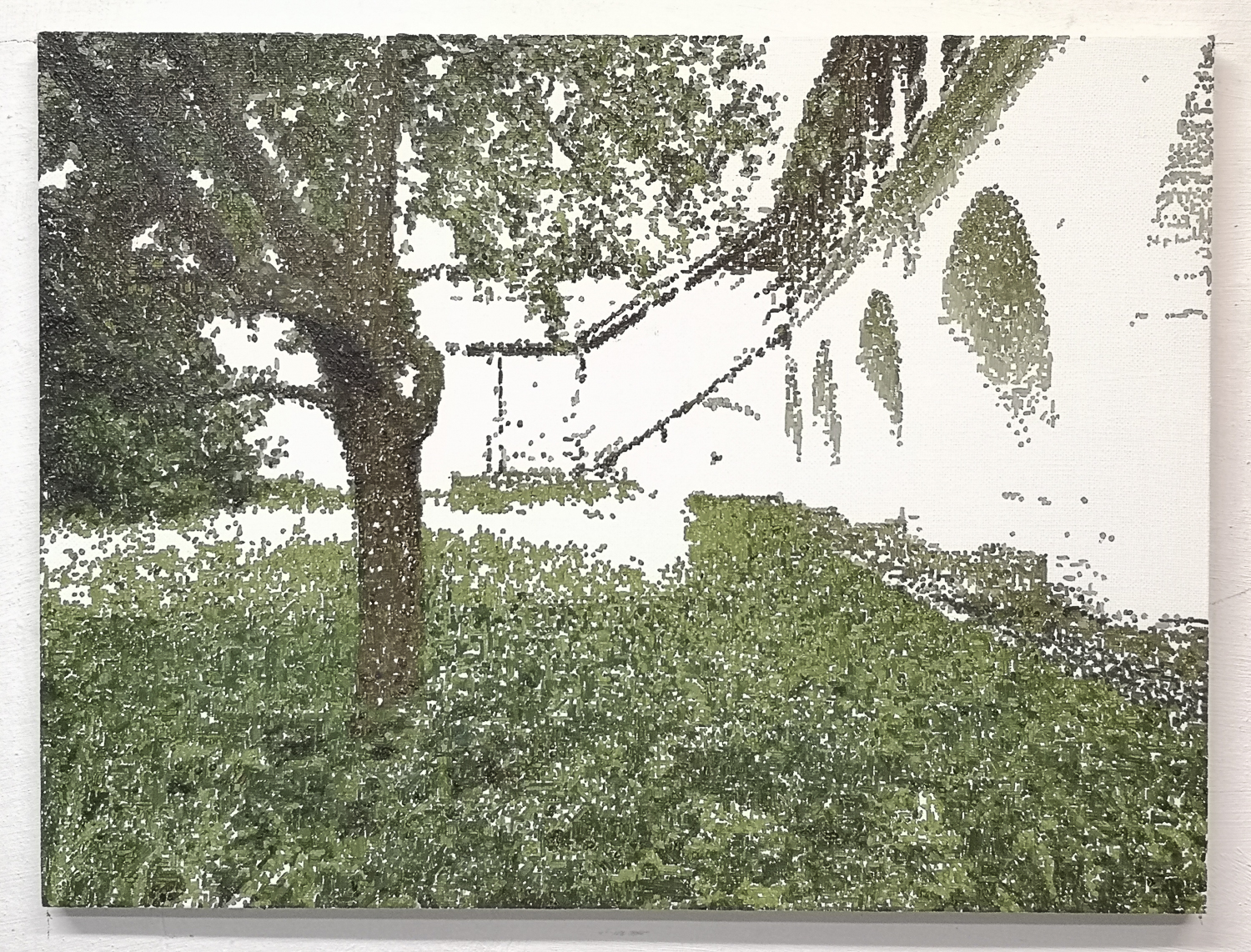
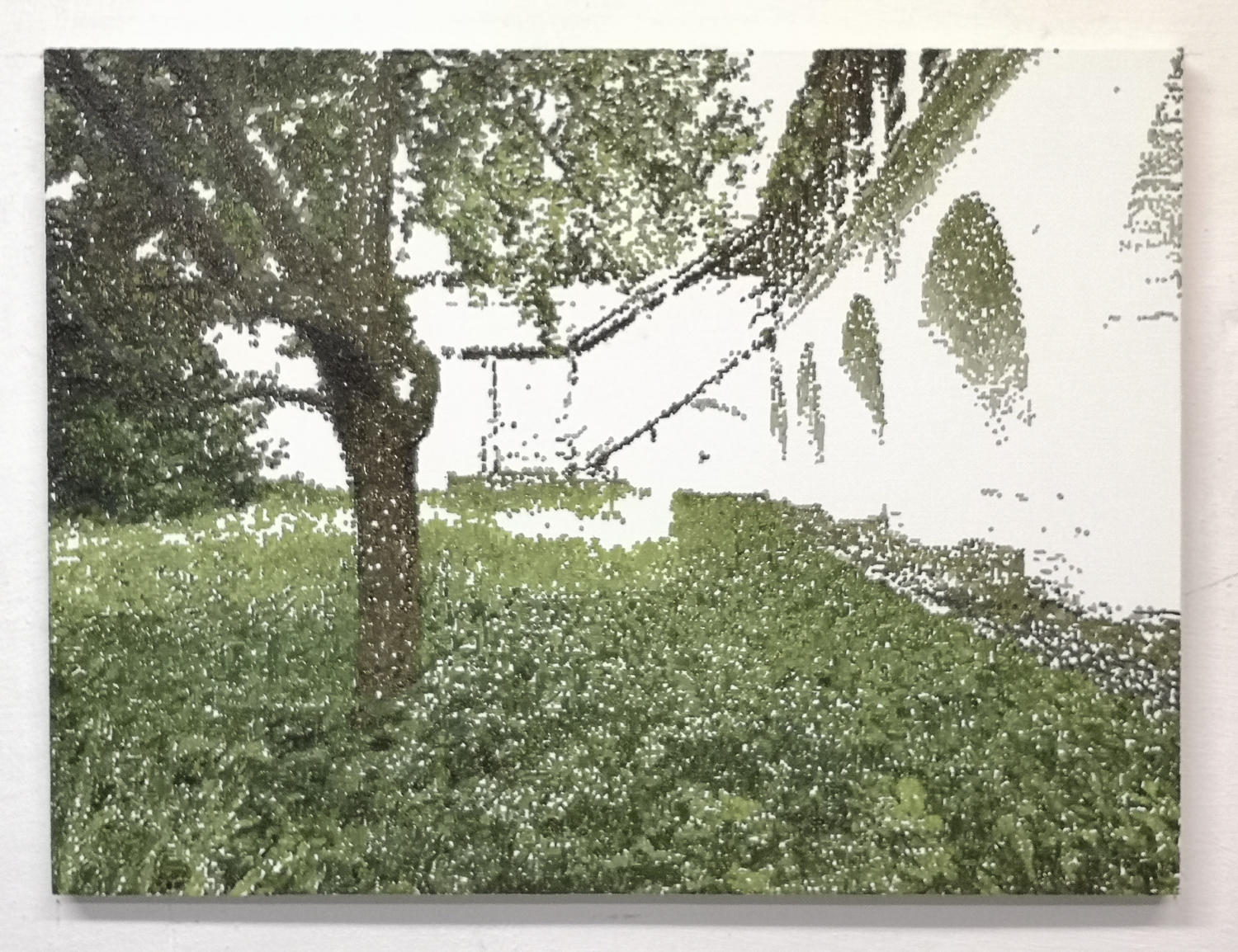
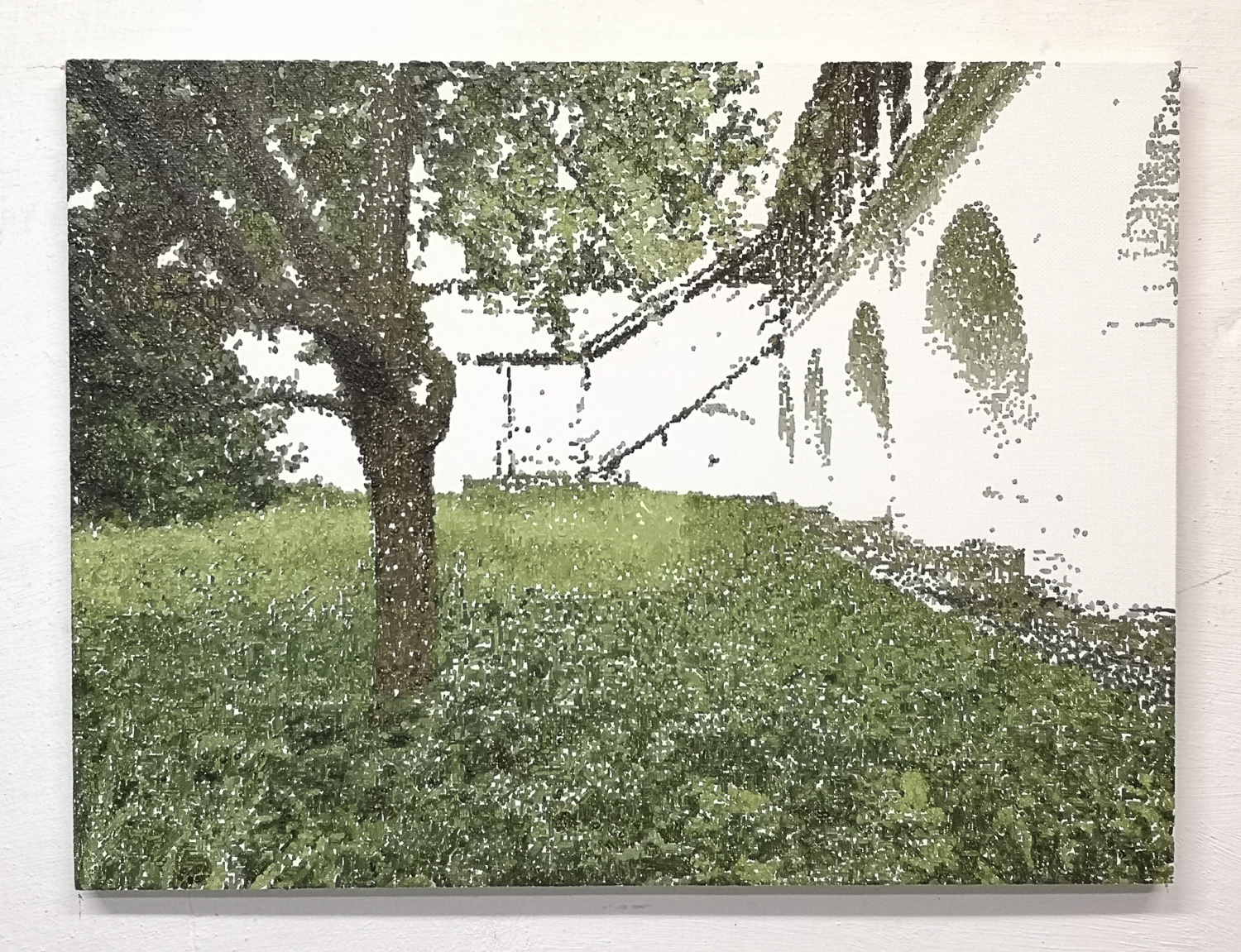
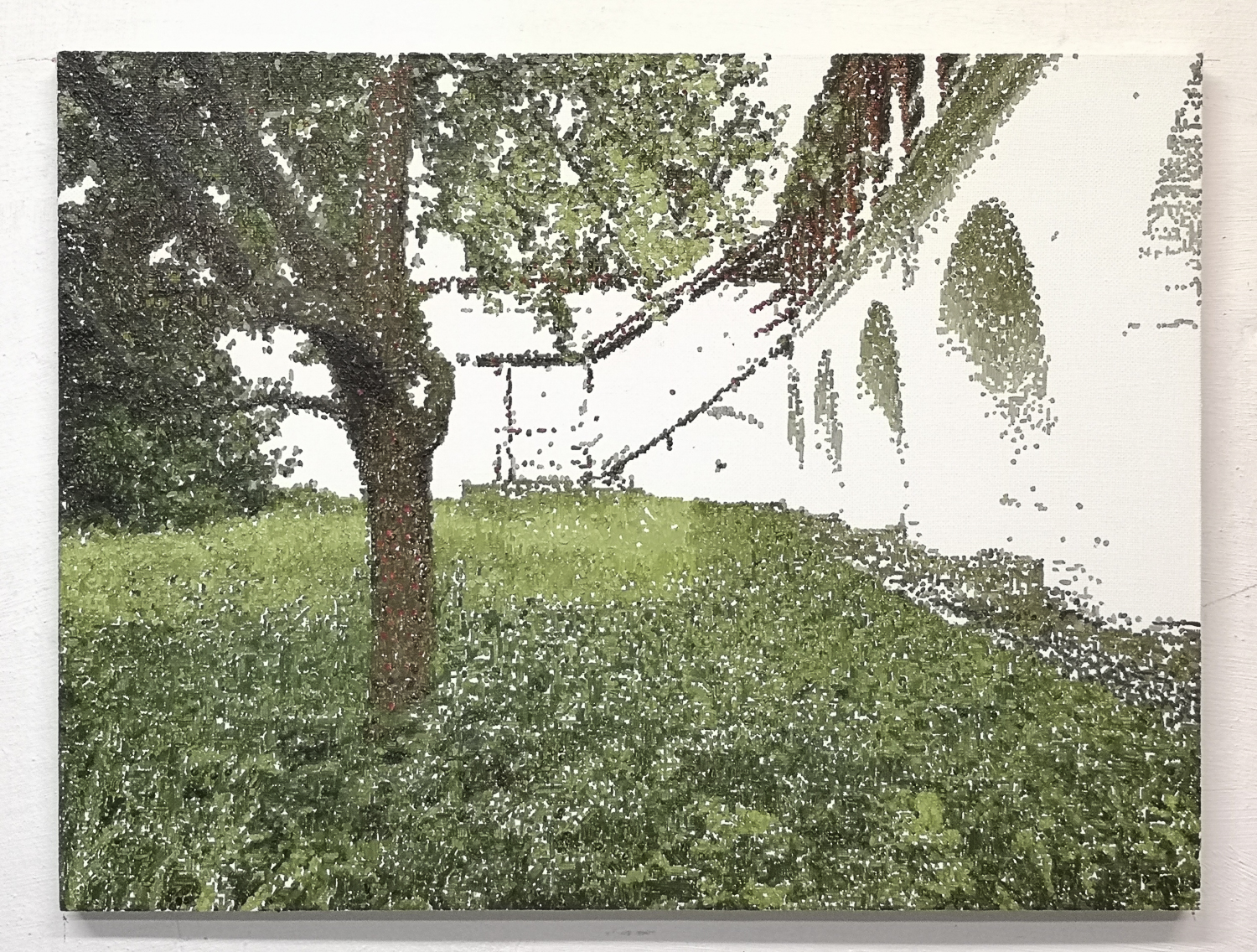
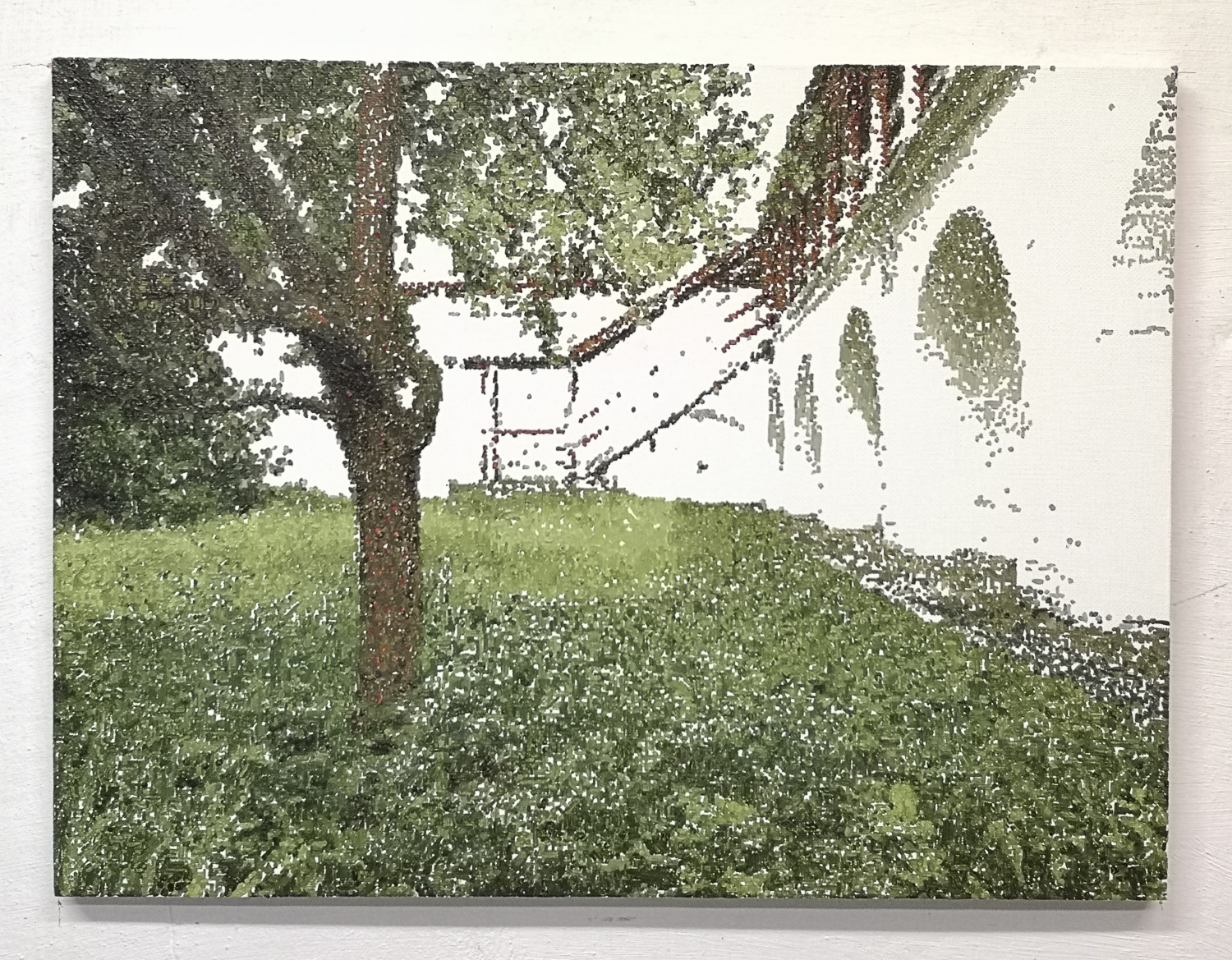
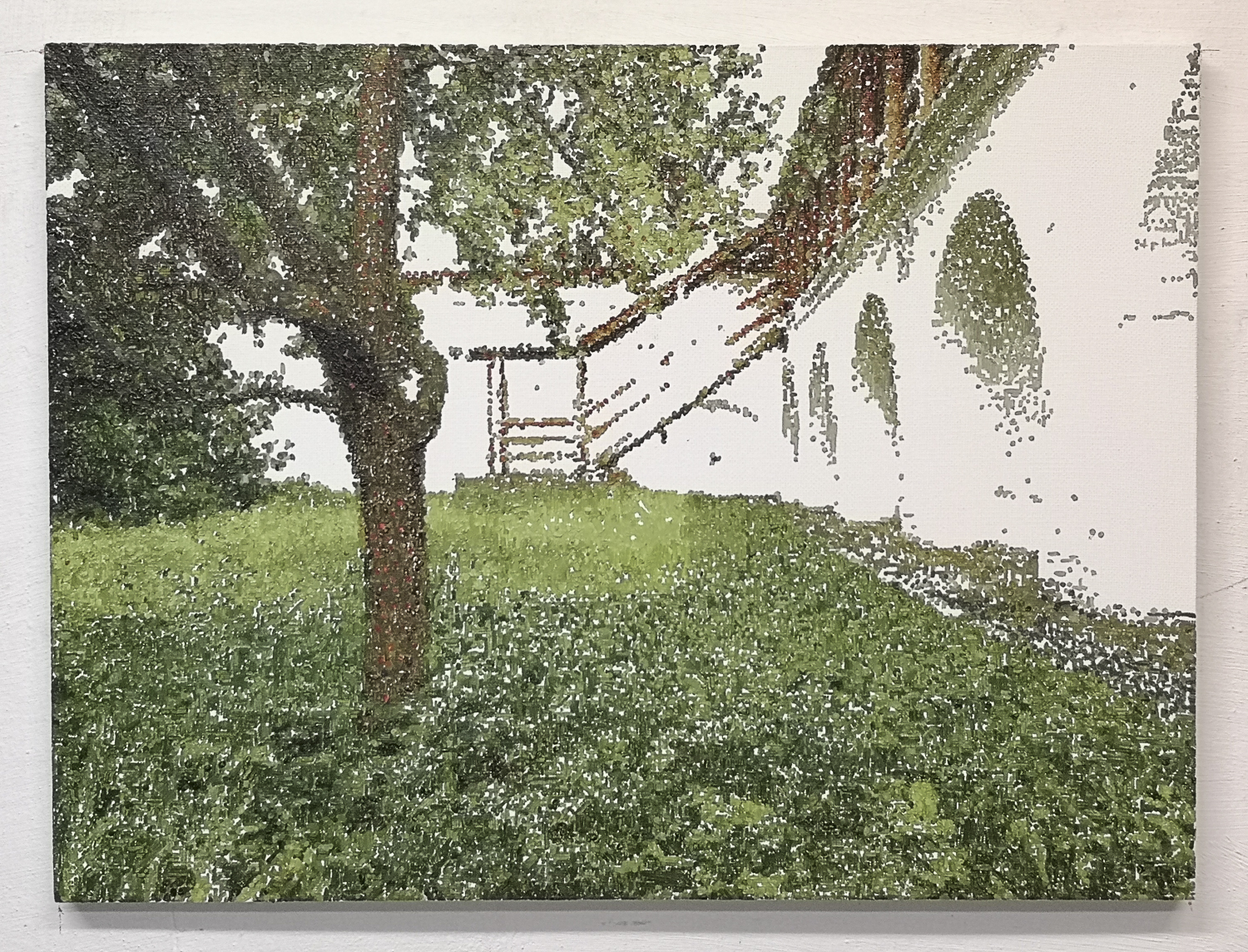
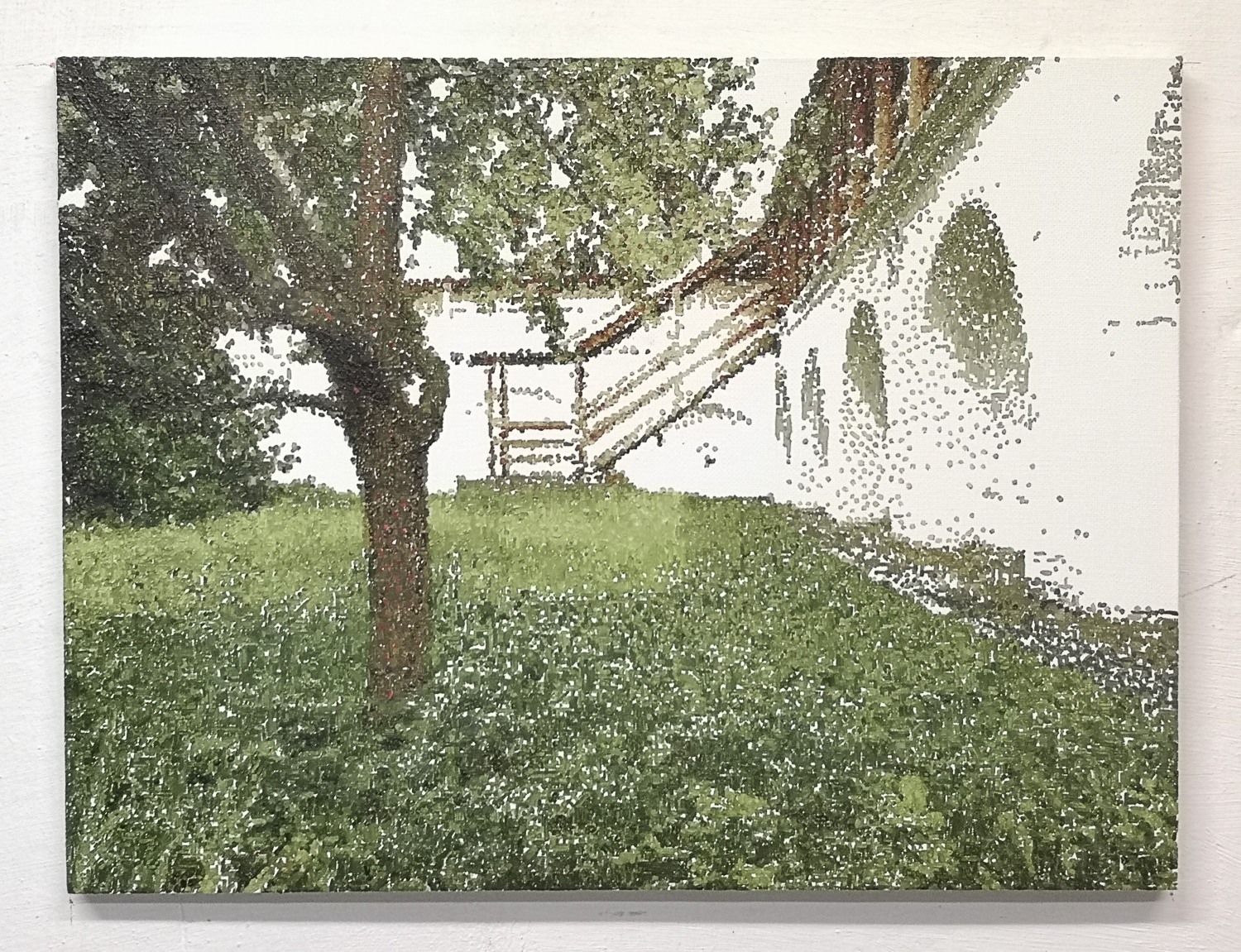
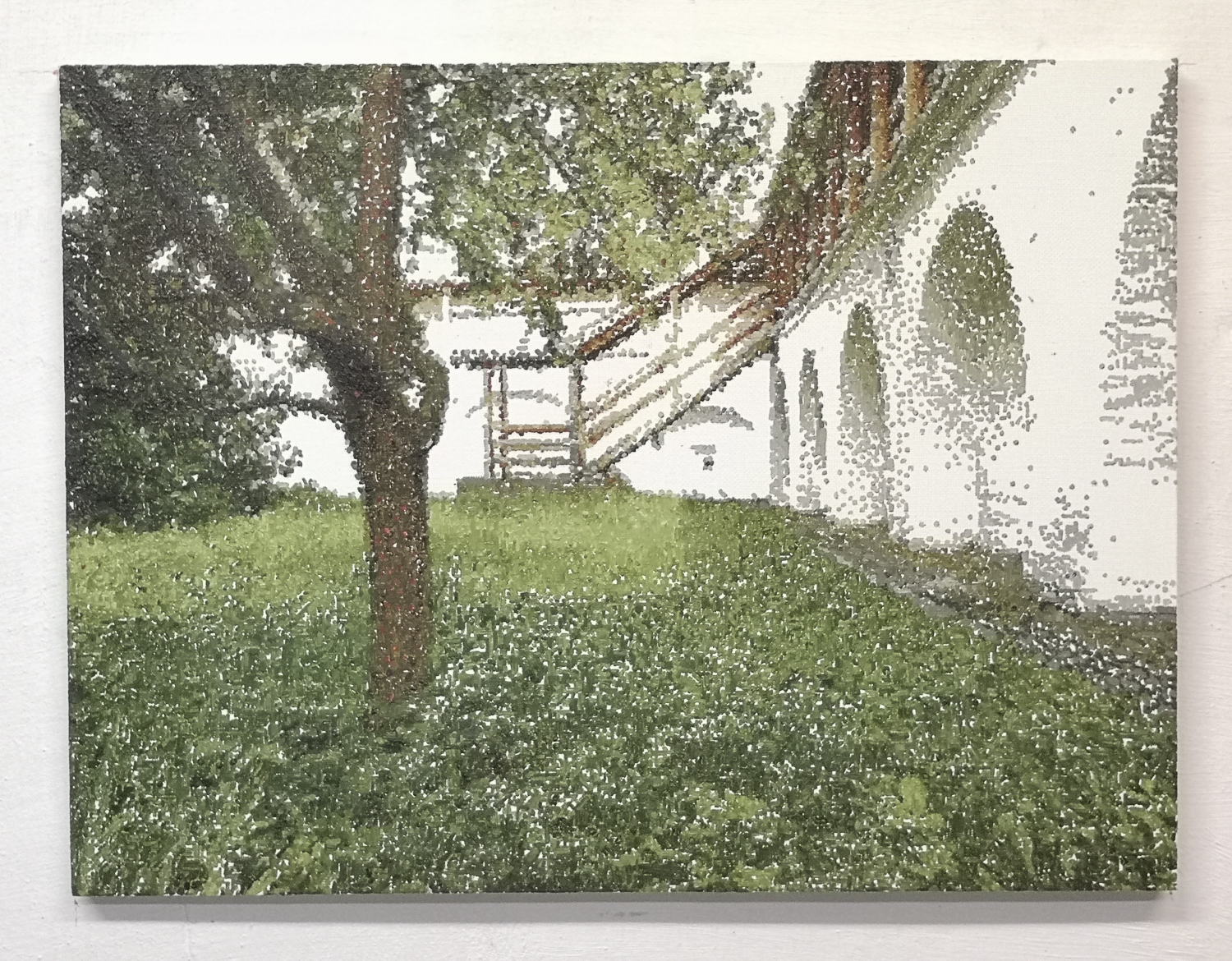
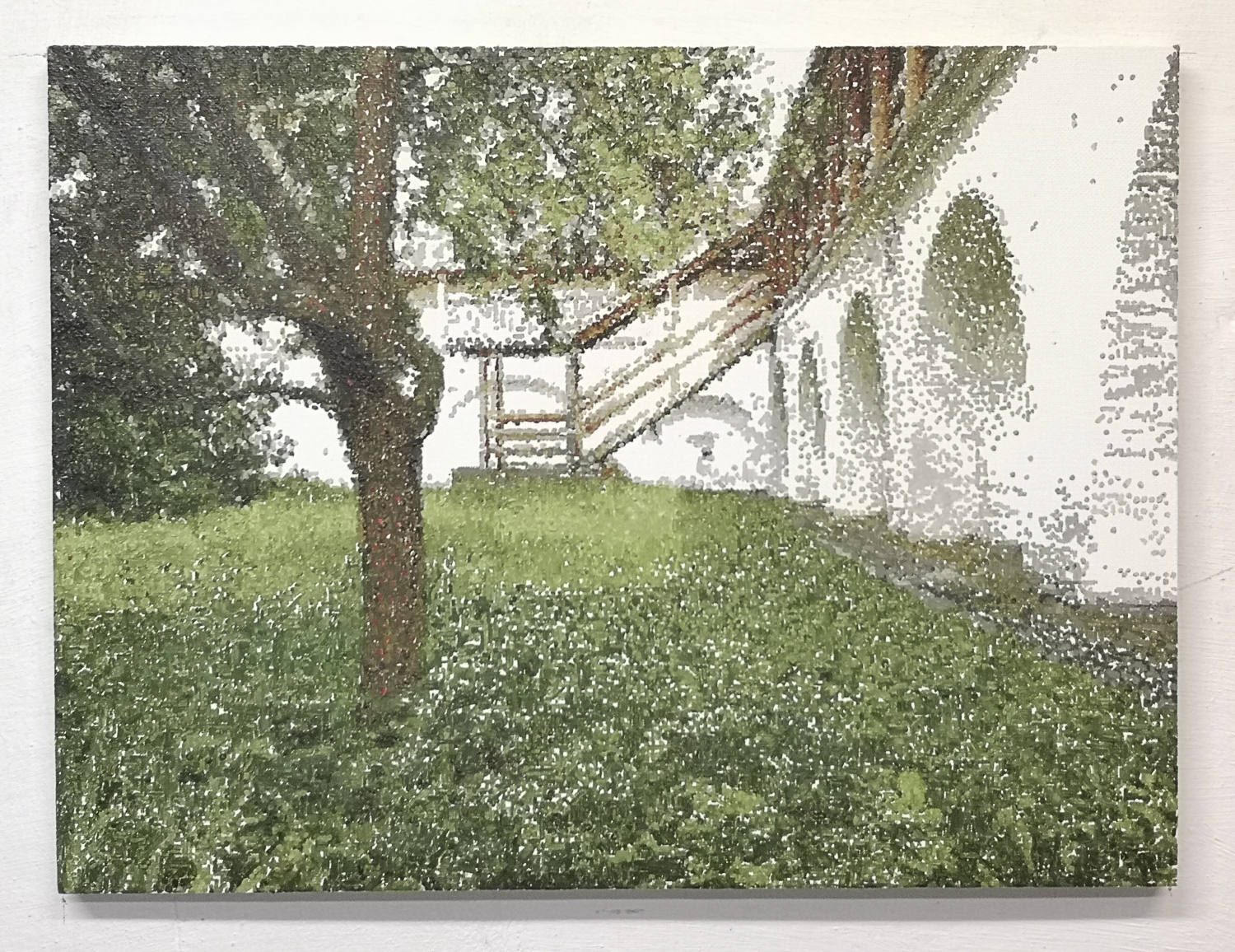
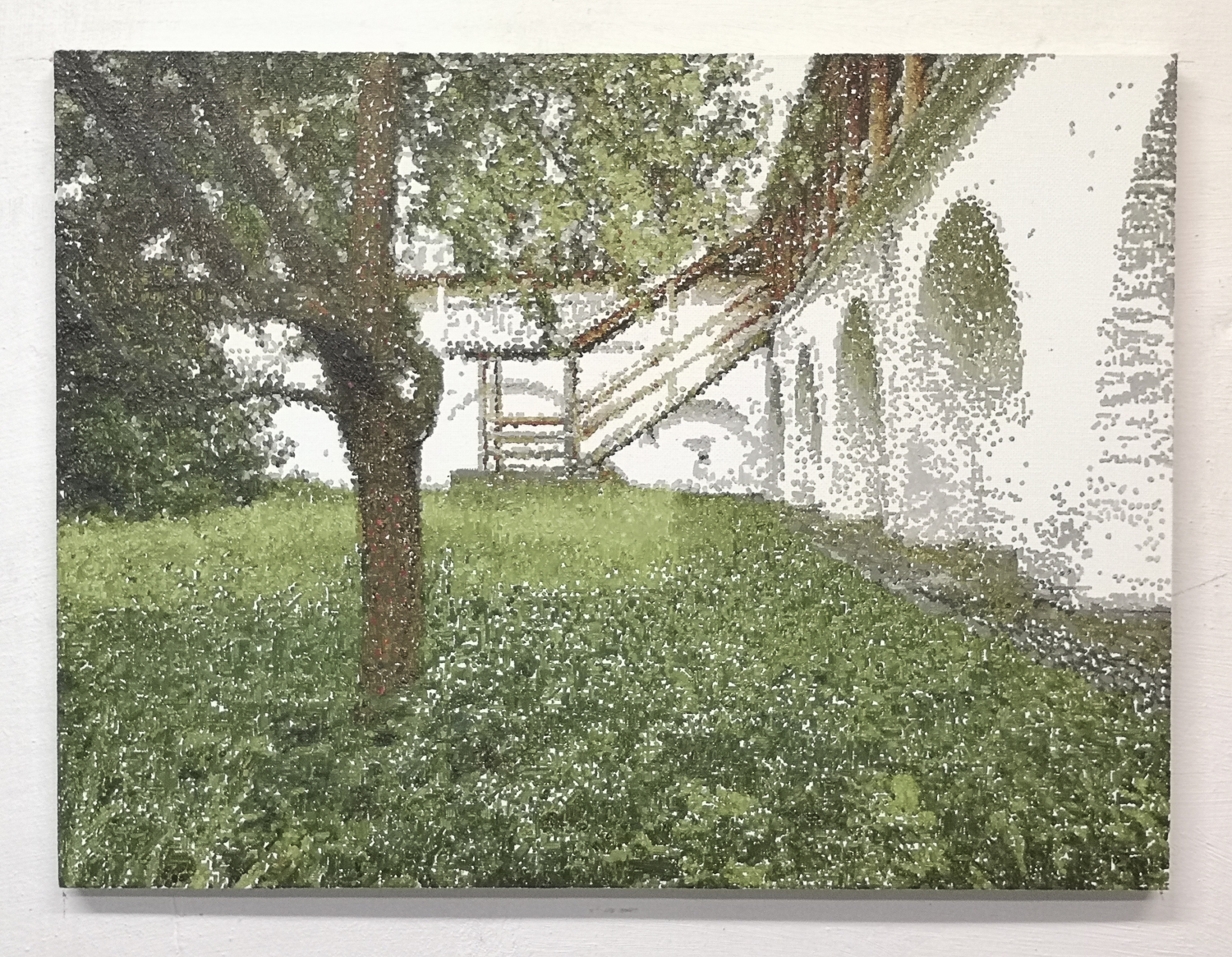
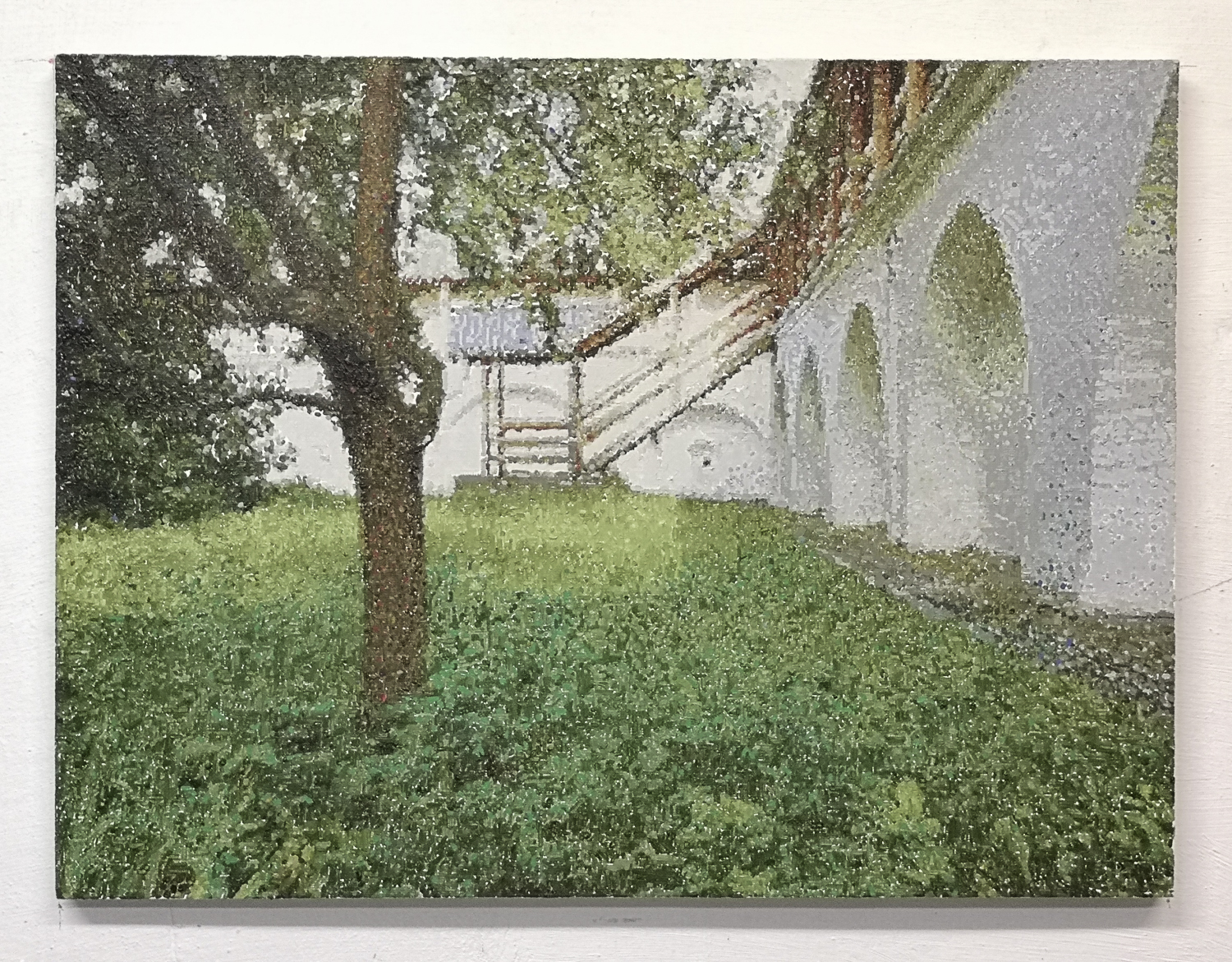
This photograph, in its deceptive simplicity, speaks of something greater than just an image of a wall, trees, and snow. It is a testimony to time—time that simultaneously disintegrates and restores itself. Here, we see an imprint of being, frozen in a moment yet unable to conceal the traces of its own history.
The wall is a text that we read. Its colors, cracked surface, and white patches—all are fragments of what once was whole. Now, it exists as a ruin, as evidence of loss that nevertheless remains imbued with meaning. It is the lost aura of a place that the photograph seeks to capture, transforming it into something new, into an artifact.
The trees—bare, fragile, yet persistently reaching upward—become symbols of resistance. They stand in opposition to the lifeless cold of the snow and the artificiality of the wall. They are nature, refusing to retreat despite all constraints. These branches, with their few remaining orange leaves, serve as a reminder that even amid decay and disconnection, life endures.
The snow below is a temporary veil. It conceals the ground, but not entirely. It is a reminder of the cyclical nature of time—that everything changes but always returns. The snow will turn to water, the water will seep into the earth, and everything will begin anew.
But what does the photograph do with this image? It halts motion, transforming fragments into textures, into symbols. Hidden within this act of freezing time is a unique tension. As viewers, we sense that what we face is more than mere documentary evidence. It is an image that carries within it a dialectic: between past and present, between nature and artificiality, between the passage of time and the persistence of memory.
Photography is a form of “mediated experience,” as I have discussed before. It detaches us from the direct perception of a place, replacing it with a “copy.” Yet in this detachment lies the potential for reflection. Before us is not merely a wall, nor simply trees or snow. What lies before us is their meaning. We see this as testimony to a historical process that is interrupted but not complete.
Finally, this work poses a question: What is aura in an age when everything can be reproduced? Perhaps its aura lies in the uniqueness of this very moment, this particular combination of forms and textures. We view it not as a part of a larger context but as a completed whole. And in this way, photography—despite its reproductive nature—becomes art.
This photograph is an archive, but not in the traditional sense. It is not a repository of facts. It is a repository of emotions, history, and struggle. It reminds us of time we have lost, yet which continues to exist in remnants and fragments. Perhaps its greatest power lies in compelling us to reflect on our own position in time—on how we relate to this world of fragments and ruins.
Fujica 6×9
#PosthumousGaze






















 Maxim Ksuta