Fresco of Vasilisa

+ series – New Barabarians
+ series – New Barabarians


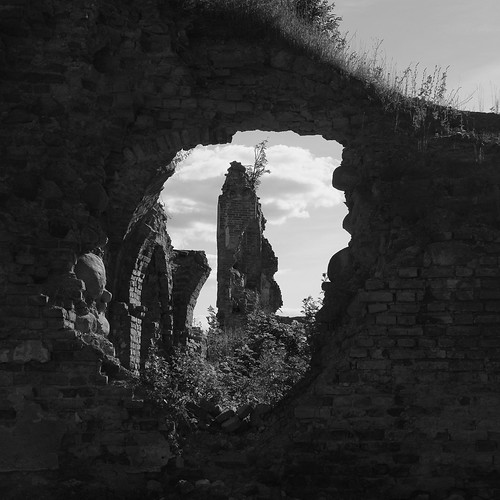
Руины Гольшанского замка.
Гольшанский замок (белор. Гальшанскі замак) — руины резиденции магнатского рода Сапег в деревне Гольшаны, Гродненская область, Беларусь. Он был построен в начале XVII века на месте более старой усадьбы княжеского рода Гольшанских.
Известный также как Чёрный замок (хотя построен из красного кирпича), в своё время он соперничал с Мирским замком за звание самого изысканного частного замка Великого княжества Литовского. Название «Чёрный замок» на самом деле первоначально относилось к вымышленному зданию из романа Владимира Короткевича, который лишь частично основывался на Гольшанском замке.
В 1704 году замок был сильно разрушен шведскими войсками во время Северной войны. Из-за тяжёлого финансового положения семьи Сапег после гражданской войны (Домашней войны) он так и не был восстановлен. После эмиграции Сапег во Францию замок перешёл к русскому помещику Горбанёву. В 1880 году он приказал разобрать башни замка и заработал на продаже кирпича.
В настоящее время замок продолжает постепенно разрушаться. Каждое лето у его стен проводится ежегодный рыцарский турнир.
The ruins of Halshany Castle.
Halshany Castle (Belarusian: Гальшанскі замак) is the ruined residence of the Sapieha magnate family in the village of Halshany, Hrodna Region, Belarus. It was built in the early 17th century on the site of an older seat of the Holszanski princely family.
Also known as the Black Castle (despite being constructed of red brick), it once rivaled Mir Castle as the most elegant private château in the Grand Duchy of Lithuania. In fact, the name “Black Castle” originally referred to a fictional building in a novel by Uladzimir Karatkievich, which was only loosely based on Halshany Castle.
The castle was badly damaged by Swedish troops during the Great Northern War in 1704. Due to the severe financial difficulties faced by the Sapieha family after the Lithuanian Civil War, it was never restored. After the Sapiehas emigrated to France, the castle passed to the Russian landowner Gorbanyov. In 1880, he ordered the towers to be demolished and made money by selling the bricks.
Today, the castle continues to crumble. Every summer, an annual knight tournament is held near its walls.
t HD audio-video-installation, Triumph gallery, Moscow 2013
Program: [Context of the visual]
Curators: [Vitaly Patsyukov], [Aliya Berdigaliyeva]
Coordinator: [Maria Punina]
Participants: [Leonid Tishkov], [Vladimir Tarasov], [Anna Ermolayeva], [Marina Chernikova], [Vladislav Efimov], [Vladimir Martynov], [Aristarkh Chernyshev], Dziga Vertov, Fernand Léger, Dudley Murphy, [Mikhail Tsekhanovsky], [Boris Yurtsev], [AES+F group], [Maxim Ksuta], [Nelya and Roman Korzhov], [Alexander Zaytsev], [Vladimir Logutov], [Social Adaptation group]
Organizers: NCCA Volga Branch, Samara Regional Public Charity Fund “Contemporary Art Centre”, ART-CENTRE Gallery SAMARA-CENTRE Ltd.
With the support of: RUSS OUTDOOR, VICTORYA Gallery, Moscow State Cinema Museum, XL Gallery, Triumph Gallery, Samara Regional Art Museum
Opening: May, 11, 7 pm
Place: Samara Art Centre (90, Michurina, Samara, Russia)
Coontacts: samara-center.ru/artcenter, +7 (846) 212-03-80, +7 (927) 604-33-05
This exhibition project, built on rare 1930s film footage and works by prominent contemporary artists, poses questions about the relationship of humans with man-made reality and the possibilities of self-identification through technology and production. Today, the humans’ attitude towards technology is consumerist. Perhaps it is because of the lack of direct contact with machines of production that the postindustrial man loses his positive attitude not only towards the mass-produced objects but also his own life which, much like machines and technology, is not under his control any longer.
Old Version … … … …
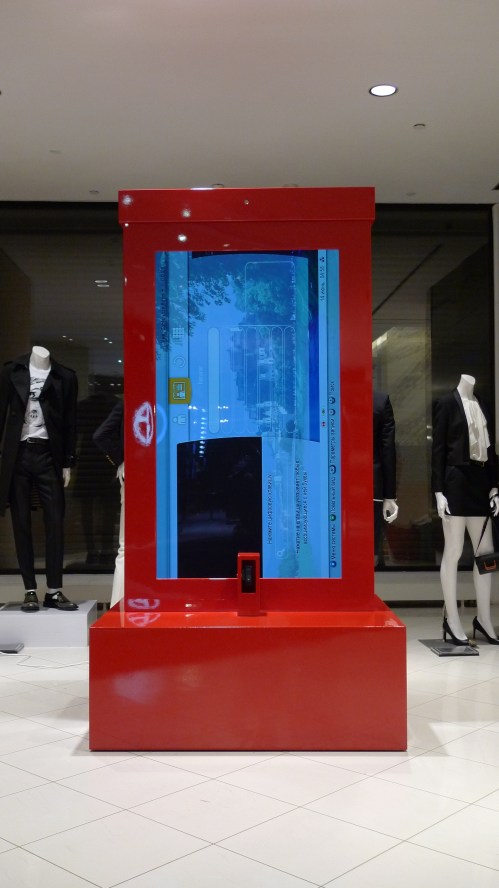
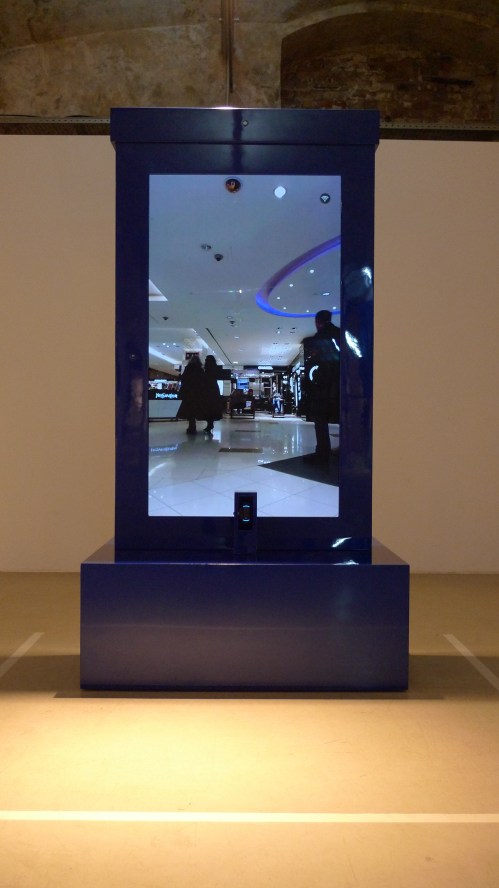
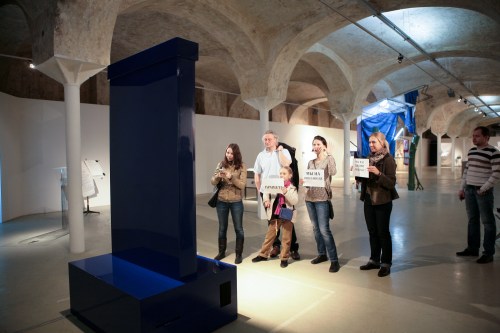
В своём проекте я рассматриваю коммуникацию как часть пространства-времени. Я убеждён, что пространство и время представляют собой единый конструкт, который мы называем «материей». С древних времён человечество стремится воплотить понятие времени. Мексиканские и египетские пирамиды — ярчайшие тому примеры: грандиозные, невероятно точные и обречённые на долгую жизнь в истории человечества.
Мои «Телепорты» — это объекты современного искусства, хотя я много думал и о практической стороне проекта.
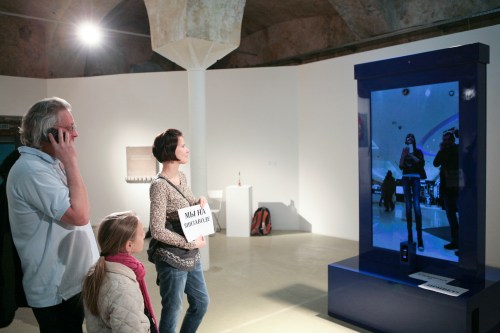
Интерактивные космические мосты оснащены большими экранами на жидких кристаллах, которые транслируют прямые дневные эфиры из других мировых столиц — Лондона, Рима, Берлина, Парижа и других. Каждый город обладает своим уникальным ритмом и рисунком жизни. Главная функция этих объектов — социальная коммуникация. Встроенные высококачественные HD-панорамные видеокамеры позволяют прохожим приветствовать жителей других городов, махать им рукой, подмигивать или просто делиться моментом живого общения в реальном времени.
«Телепорты» — это инструменты коммуникации, но в отличие от iPad они являются публичными, а не индивидуальными. Это окна в «иную реальность» с её собственным течением жизни. Перенося человека через пространство, они расширяют сознание в правильном направлении — в сторону объединения и консолидации всего человечества, осознания его как единого целого и одновременно каждого отдельного человека как части этого целого.
Я уверен, что «Телепорты» заинтересуют горожан и со временем станут настоящей достопримечательностью.
Максим Ксута
In my project, communication becomes part of the space-time continuum. I am convinced that space and time form a single construct we call “matter.” Since ancient times, humanity has sought to embody the concept of time. The Mexican and Egyptian pyramids are magnificent examples of this aspiration — immense, incredibly precise, and destined to live for centuries within human history.
My “Teleports” are works of contemporary art, although I have given serious thought to their practical application as well.
These interactive space bridges are equipped with large Liquid Crystal Displays that broadcast live daytime streams from other world capitals — London, Rome, Berlin, Paris, and others — each with its own unique rhythm and pattern of life. The primary function of these objects is social communication. Built-in high-quality HD panoramic video cameras allow passers-by to greet citizens of distant cities, wave to them, wink, or simply share a moment of connection in real time.
“Teleports” are tools for communication, but unlike an iPad, they are public rather than individual. They serve as windows into a “different reality” with its own flow of life. By carrying the viewer through space, they expand human consciousness in a positive direction — toward the consolidation and unification of humanity as a whole, while simultaneously strengthening the awareness of each individual person as part of that greater unity.
I believe that “Teleports” will not only interest citizens but will also become a genuine attraction for them.
Maxim Ksuta
Info … … … …
Мы строим “Телепорт”, Максим Ксута Михаил Киселев, Галерея Печерски, Винзавод
Teleport from maxmaxovich on Vimeo.
Teleports in process
Maxim Ksuta & Mikhail Kiselev – Pechersky Gallery – Vinzavod
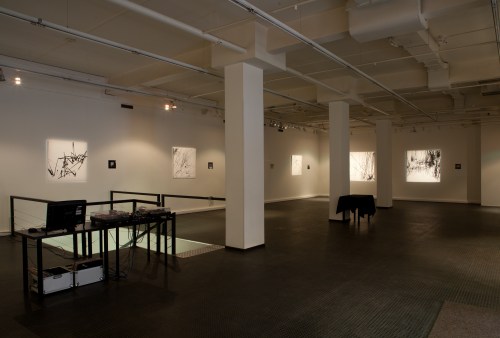
На протяжении последних лет Максим Ксута выстраивает совершенно особые отношения с фотографией: он последовательно снимает или ослабляет жёсткую связь фотографического изображения с видимой реальностью. Камера в его руках перестаёт быть инструментом «обнажения» или «выявления» реальности, перестаёт служить средством фиксации её в максимально концентрированном виде. Напротив, она словно преодолевает собственную технологическую природу. Сам Ксута уже не нажимает на кнопку затвора — он словно рисует кистью или угольным карандашом.
Сознательно формируя не кадр, а лист с геометрическими абстракциями, его работы начинают подчиняться законам рисовального листа, а не фотографического отпечатка, как это было в предыдущей серии с электрическими проводами, рассекающими московское небо динамичными диагоналями.
Тема новейшего проекта Ксуты выглядит ещё более изобретательной, поскольку отправной точкой визуальных экспериментов становится другое произведение искусства — творчество великого американского абстракциониста Сая Туомбли.
Ксута не наслаждается пропорциями, балансом пустот и цветовых «нервных» зон, не занимается расшифровкой кодов Туомбли, отсылающих ко всей мировой культуре и истории. Он пристально и напряжённо всматривается. Его взгляд вычленяет, изолирует сложное движение карандашных линий. При этом очевидно, что Ксута искренне заворожен свободой жеста Туомбли — той непосредственностью, с которой художник перечёркивает, набрасывает и раскрашивает, словно ребёнок, впервые получивший перед чистым листом цветные мелки.
Ксуту занимает вопрос о природе этой свободы, о её идеальном прототипе. И он находит удивительные формальные соответствия между «письменами» Туомбли и теми палками, ветками, стеблями травы, что попадаются под ноги во время прогулки. Он создаёт своеобразный негатив картин Туомбли — чисто монохромную структуру, последовательно очищая Туомбли, проверяя жизнеспособность его пластики среди реальных природных объектов.
Таким образом, Ксута словно свидетельствует о естественном, самом органичном происхождении искусства Туомбли, делая динамику его форм буквальной и ощутимой. Это уже не условное движение цветовых потоков и линий в границах холста, а настоящая прогулка, во время которой художественные формы обнаруживаются у тебя под ногами, и неловким движением можно нарушить хрупкую гармонию.
Не случайно сам художник обращается к образу зачарованного леса — волшебного, почти сказочного пространства, где всё привычное вдруг чудесным образом обнаруживается заново. Прогулка по такому лесу превращается в аллегорию жизненного пути (или пути художника) — полностью в духе Новалиса.
Попутно Максим Ксута продолжает решать собственную задачу, которая занимает его в последнее время: он нащупывает едва уловимую зону, где абстрактное и конкретное сосуществуют. Конкретный объект часто воплощается в самой абстрактной форме, теряет узнаваемые очертания, но сохраняет свою сущность: ветка остаётся веткой, заросли полыни — зарослями полыни. Зритель зачаровывается игрой формы, мерцанием ощутимого и видимого — тому легко поддаться при взгляде на фотографии Ксуты.
Он следует логике «новой объективности», напоминая о немецкой «Neue Sachlichkeit». При этом, как и многие молодые европейские художники (в основном выходцы из Восточной Европы, одного поколения с Вильгельмом Сасналем), он видит в этом возможность тихого освобождения. Вдруг понимаешь, что диапазон вариаций может быть сколь угодно широким, и с ремесленным упорством (в самом лучшем смысле древней techne) продолжает двигаться по этому волшебному пространству, время от времени втягивая в свою орбиту великих художников XX века.
Екатерина Иноземцева
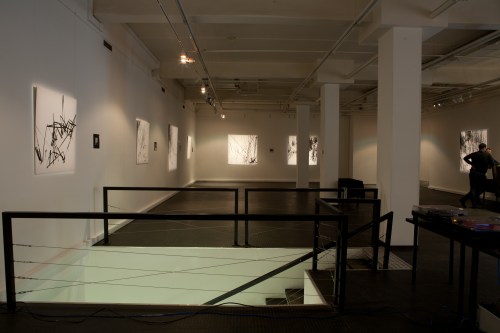
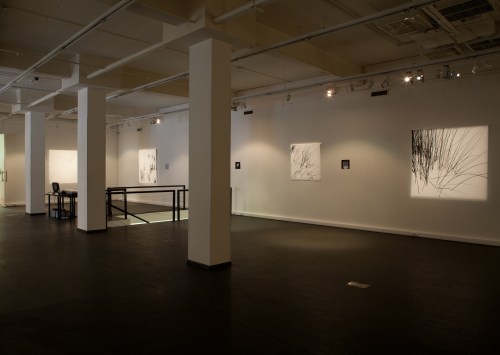
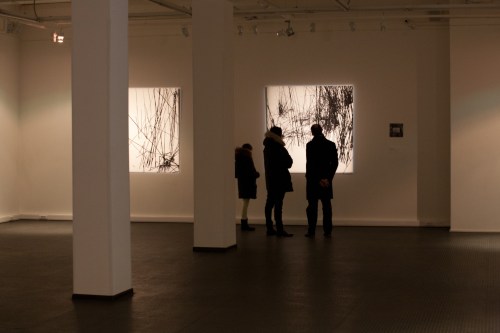
Over the course of recent years, Maxim Ksuta has been developing an entirely unique relationship to photography: he has consistently removed or weakened the firm bond between the photographic image and visible reality, the camera in his hands becoming not a means for “baring” or “revealing” reality or a means for freezing it in as concentrated form as possible – Ksuta’s camera, instead, almost appears to be overcoming the camera’s technological nature, and Ksuta himself, rather than pressing on the shutter button, appears to be painting with a brush or a charcoal pencil. He consciously forms not a shot but a sheet with geometric abstractions; his works begin to work to the laws of the drawing sheet, rather than the photographic print, as was the case in his previous series with electric cables cutting through the Moscow sky in dynamic diagonals.
The theme for Ksuta’s latest project appears to be far more inventive, because the starting point for the visual experiments turns out to be another work of art, specifically the work of the great American abstractionist Cy Twombly. Ksuta doesn’t relish the proportions, the balance of vacuums and the coloured “nervous” zones; he doesn’t occupy himself with deciphering Twombly’s codes, which reference the whole of world culture and history; he intently and intensively scrutinizes. His eye singles out, isolates the intricate movement of the pencil lines; at the same time it is clear that Ksuta is sincerely enraptured by the freedom of movement of Twombly, who crosses out, sketches and colours with the ingenuousness of a child who has been sat before a sheet of paper and given coloured crayons for the first time. Ksuta is posed a question about the nature of this freedom, of its ideal prototype, if you will, and finds astonishing formal correspondences in Twombly’s “writings” and the sticks, branches, blades of grass that fall under your feet during a walk. He creates a distinctive negative for Twombly’s paintings, a purely monochrome structure, consistently purifying Twombly, testing the viability of his plasticity among real natural objects. It is as if Ksuta is bearing witness to the natural, most organic provenance of Twombly’s art, making the dynamic of his objects literal, perceptible – this is not some conditional drive of colour flows, lines within the borders of a canvas, but a real walk, a stroll, during which the artistic forms are discovered beneath one’s feet, and with a clumsy movement one can disturb the fragile harmony. The appeals of the artist himself to the image of an enchanted forest, a magical, almost
fairytale space, where everything that is familiar is suddenly miraculously revealed is no accident in this regard, and a walk through this forest is transformed into an allegory of life’s path (or the path of an artist) that is entirely in the spirit of Novalis. Along the way, Maxim Ksuta ontinues to resolve his own task, a task that has occupied him in recent times: He is feeling out a barely perceptible zone where the abstract and the concrete coexist. The concrete object is often embodied in the most abstract of forms, it loses its recognizable outlines, but it retains its essence: a branch remains a branch, wormwood thickets remain wormwood, and the viewer is enchanted by the game of form, the glimmering of the perceptible and the visible that, when viewing Ksuta’s photographs, it is so easy to give in to. He follows the logic of a “new objectivity,” recalling in memory the German “Neue Sachlichkeit”; at the same time as many young European artists (for the most part coming from Eastern Europe, of the general of Wilhelm Sasnal), he sees in this an opportunity for quiet deliverance, he suddenly understands that the diapason of variations can be as broad as you like, and with an artisanal persistence (in the very finest sense of the ancient techne’) continues to move
through this magical space, sometimes drawing into his orbit the great artists of the 20th century.
Ekaterina Inosemtseva
Cy – catalog


