My video 16072010 in “LUCIDA SPACE” Exhibition
by maxksuta
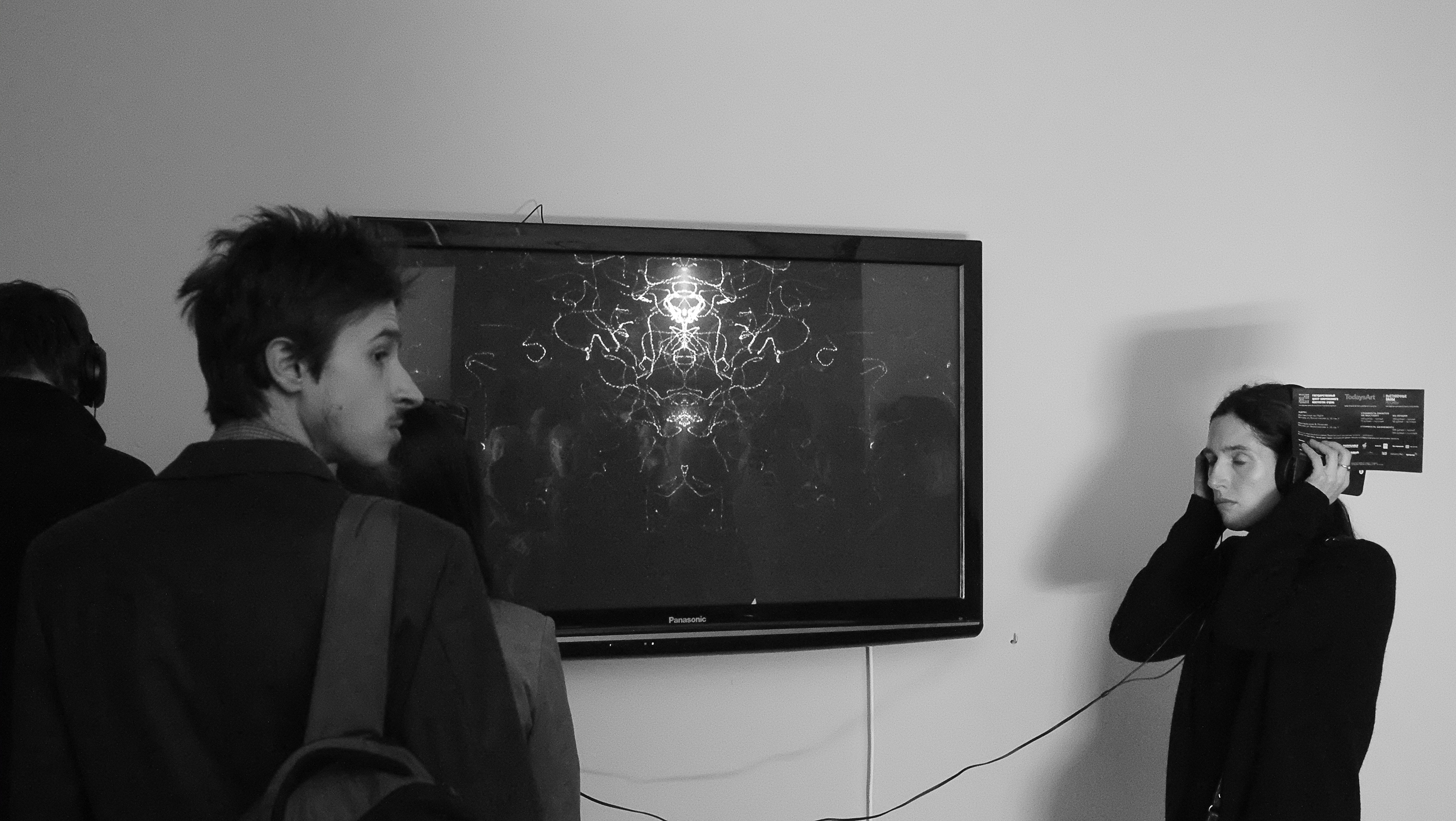

“16072010” – full HD video-installation
Национальный центр современного искусства (НЦСИ), Международный фестиваль TodaysArt и сеть московских городских галерей представляют проект LUCIDA Space — выставку, посвящённую феномену света в современной культуре.
Такой масштабный проект, полностью посвящённый свету, проводится в Москве впервые. «Мастера света» со всего мира представят свои работы на выставке LUCIDA Space. Участвующие художники обращаются к свету как к ключевому элементу своего художественного поиска, превращая его в уникальный творческий инструмент. В пространстве НЦСИ будут собраны арт-объекты, воплощающие самые разные световые техники и передающие неуловимую магию света. Каждый художник ведёт свой собственный диалог со светом — через звук и цвет, видео и цифровые технологии, кинематографические приёмы, живопись, фотографию и инсталляции.
Московская публика получит редкую возможность увидеть произведения известных художников из России, Австрии, Германии, Нидерландов и США, которые используют свет как основной творческий инструмент. Артисты активно работают с искусственным, технологическим светом, демонстрируя принципиальные изменения, происходящие в современной цивилизации. Образы искусственного света взаимодействуют с естественным освещением, открывая новые грани нашей жизни и культуры.
Проект проходит на четырёх площадках:
- Национальный центр современного искусства (31 января — 16 марта)
- Галерея «На Каширке» (14 февраля — 9 марта)
- Галерея «Беляево» (27 февраля — 23 марта)
- Галерея «Пересветов переулок» (6 — 30 марта)
Площадки сети московских городских галерей представят тематические выставки. В зале «На Каширке» будет показан феномен света в медиаформатах — кино, фотографии и концептуальных объектах. Выставка в «Пересветовом переулке» исследует эволюцию интерпретации света в искусстве — от живописи до новых медиа. Галерея «Беляево» построит свою экспозицию вокруг идеи Казимира Малевича о смене парадигм естественного света на технологический, когда искусственный свет начинает доминировать над природным.
Проект сопровождается образовательной программой: в НЦСИ пройдут лекции известных специалистов по визуальному искусству о формах использования света в медиа, моде, архитектуре и городском пространстве.
В рамках параллельной программы НЦСИ организует показы фильмов, связанных со световыми экспериментами, включая «One¹¹ with 103» Джона Кейджа и «Instructions for a Light and Sound Machine» режиссёра Петера Черкасского.
Из предисловия к каталогу выставки:
Свет в январе
Свет — это особая субстанция, оказывающая мощное воздействие на человека, на всех, кто его созерцает. Можно даже говорить о свете как о трансцендентной субстанции. Действительно, наше эстетическое восприятие придаёт огромное значение свету и его роли в искусстве.
Одно из самых сильных впечатлений моего детства — новогодняя ёлка, украшенная настоящими восковыми свечами. Я понимаю, что в памяти сохранился этот образ ещё и благодаря маленькому огоньку горящих свечей, но запомнился мне именно чудесный свет, а не огонь.
Это впечатление стало прелюдией к пунктирной линии других личных переживаний, уже связанных с искусством: Куинджи (ещё со школьных экскурсий в Третьяковскую галерею), Фальк, импрессионисты, Рембрандт, Жорж Руо, Одилон Редон, византийские мозаики, эксперименты Скрябина, Ласло Мохой-Надь, исследования Георгия Гидони и многое другое.
Обращаясь к истории искусства, эту смешанную коллекцию легко дополнить и систематизировать. Однако для настоящей выставки важнее поместить её в контекст современного искусства. Различные подходы к свету как определяющему фактору художественной стратегии можно найти в работах таких мастеров, как Дэн Флавин, Франсуа Морель, Кристиан Болтански, Дани Караван, Коити Танака, Кит Сонниер, Джеймс Таррелл и других. Для описания этого явления критики придумали специальную терминологию: light painting, light sculpture, luminous kinetic pictures, lumino-ambienta, laser painting, light graffiti, Light Art, которая пока ещё не получила широкого распространения в профессиональном русском лексиконе.
Интерес современного искусства к световым эффектам во многом был вдохновлён технологиями, архитектурой и урбанистикой XX века, и сейчас есть риск, что световое искусство будет ими поглощено — мы уже наблюдаем это в Нью-Йорке, Лондоне, Токио, Шанхае и теперь в Москве, где проходит данная выставка. Жажда ярких зрелищ и шоу, общая коммерциализация культуры не идут на пользу искусству. В то же время не могу не упомянуть, что мой девятилетний сын учится создавать световое граффити в детской художественной студии при Национальном центре современного искусства, который организовал эту выставку «Lucida Space». Искусство живо и будет жить сложной, интересной жизнью. Именно об этом и рассказывает выставка.
Леонид Бажанов Художественный руководитель НЦСИ
Организаторы: Национальный центр современного искусства (НЦСИ), Международный фестиваль TodaysArt Соорганизатор: Сеть московских городских галерей Партнёры: Институт Гёте, Посольство Королевства Нидерландов в России Спонсор: Mondriaan Fund При поддержке: New Art Foundation
Кураторы: Виталий Пацюков (НЦСИ), Olof van Winden (TodaysArt)
Художники: Татьяна Баданина, Эрик Булатов, Джон Кейдж, Марина Черникова, Anouk De Clercq, Mariska de Groot, Франциско Инфанте, Роман Инкелес, Илья Кабаков, Сергей Катран, Andreas Kaufmann, Анна Колейчук, Вячеслав Колейчук, Татьяна и Сергей Костриковы, Олег Кошелец, Максим Ксута, Александр Лысов, molitor&kuzmin (Владимир Кузьмин и Урсула Молитор), Matthijs Munnik, Антон Ольшванг, Александр Панкин, Александр Петтай, Владимир Потапов, Школа фотографии и мультимедиа им. Родченко (Москва), Михаил Рошняк, Сергей Шутов, Владимир Смоляр, Владимир Тарасов, Peter Tcherkassky, Gabey Tjon a Tham, Леонид Тишков, Алла Урбан, Янис Ксенакис, Мария Якунина, Сергей Загний
The National Centre for Contemporary Arts (NCCA), the International Festival TodaysArt and the Moscow City Galleries Network present LUCIDA Space — an exhibition dedicated to the phenomenon of light in contemporary culture.
This is the first large-scale project in Moscow entirely dedicated to light. “Masters of light” from around the world will present their works at LUCIDA Space. The participating artists turn to light as the central element of their artistic practice, transforming it into a unique creative tool. The exhibition spaces at NCCA will bring together art objects embodying a wide variety of light techniques, fully conveying the elusive magic of light. Each artist conducts their own dialogue with light — through sound and colour, video and digital technologies, cinematic methods, painting, photography, and installations.
Moscow audiences will have a rare opportunity to see works by renowned artists from Russia, Austria, Germany, the Netherlands and the USA who use light as their primary creative medium. The artists actively employ artificial and technological light, demonstrating the fundamental changes taking place in our civilization. Images of artificial light interact with natural light, revealing new aspects of our life and culture.
The project is hosted across four venues:
- National Centre for Contemporary Arts (31 January – 16 March)
- State Art Gallery “Na Kashirke” (14 February – 9 March)
- State Exhibition Hall “Gallery Belyaevo” (27 February – 23 March)
- State Exhibition Hall “Peresvetov Pereulok” (6 – 30 March)
The venues of the Moscow City Galleries Network will host thematic exhibitions. The “Na Kashirke” Hall will explore the phenomenon of light in media formats — film, photography and conceptual objects. The exhibition at “Peresvetov Pereulok” will examine the evolution of the interpretation of light in art, from painting to new media. The “Belyaevo” Gallery will build its exhibition around Kazimir Malevich’s idea of the shift from natural light paradigms to technological ones, in which artificial light begins to dominate natural light.
The project includes an extensive education programme: during the exhibition, NCCA will host lectures by leading experts in visual art on the use of light in media, fashion, architecture and urban space.
As part of the parallel programme, NCCA will screen films featuring light experiments, including John Cage’s One¹¹ with 103 and Peter Tscherkassky’s Instructions for a Light and Sound Machine.
From the foreword to the exhibition catalogue:
Light in January
Light is a very special substance that has a powerful impact on human beings and all who contemplate it. One can even speak of light as a transcendental substance. Indeed, our aesthetic perception attaches enormous importance to light and its role in art.
One of the strongest impressions of my childhood is a Christmas tree decorated with real wax candles. I realise that my memory retained this image also because of the small flame of the burning candles, yet what stayed with me was the wonderful light rather than the fire itself.
That impression became the prelude to a dotted line of other personal experiences already connected with art: Kuindzhi (from school excursions to the Tretyakov Gallery), Falk, the Impressionists, Rembrandt, Georges Rouault, Odilon Redon, Byzantine mosaics, Scriabin’s experiments, László Moholy-Nagy, Georgy Gidoni’s research, and much more.
Turning to the history of art, this mixed collection can easily be supplemented and systematised. However, for the present exhibition it is more important to place it in the context of contemporary art. Different approaches to light as a determining factor in artistic strategy can be found in the works of such masters as Dan Flavin, François Morel, Christian Boltanski, Dani Karavan, Koichi Tanaka, Keith Sonnier, James Turrell and others. Critics have invented special terminology to describe this phenomenon: light painting, light sculpture, luminous kinetic pictures, lumino-ambienta, laser painting, light graffiti, Light Art — terms that have not yet become widespread in professional Russian vocabulary.
Contemporary art’s interest in light effects has been largely inspired by 20th-century technologies, architecture and urban studies, and now risks being swallowed by them — a process we are already witnessing in New York, London, Tokyo, Shanghai and now in Moscow, where this exhibition is taking place. The thirst for bright spectacles and shows, and the general commercialisation of culture, do not benefit art. At the same time, I cannot help mentioning that my nine-year-old son is learning to create light graffiti at the children’s art studio of the National Centre for Contemporary Arts, the organiser of the “Lucida Space” exhibition. Art is alive and will continue to live a complex and interesting life. This is what the exhibition is all about.
Leonid Bazhanov Artistic Director, NCCA
Organizers: National Centre for Contemporary Arts (NCCA), International Festival TodaysArt Co-organizer: Moscow City Galleries Network Partners: Goethe Institute, Embassy of the Kingdom of the Netherlands in Russia Sponsor: Mondriaan Fund With the support of: New Art Foundation
Curators: Vitaly Patsyukov (NCCA), Olof van Winden (TodaysArt)
Artists: Tatyana Badanina, Eric Bulatov, John Cage, Marina Chernikova, Anouk De Clercq, Mariska de Groot, Francisco Infante, Roman Inkeles, Ilya Kabakov, Sergey Katran, Andreas Kaufmann, Anna Koleychuk, Vyacheslav Koleychuk, Tatyana and Sergey Kostrikov, Oleg Koshelets, Maxim Ksuta, Alexander Lysov, molitor&kuzmin (Vladimir Kuzmin and Ursula Molitor), Matthijs Munnik, Anton Olshvang, Alexander Pankin, Alexander Pettai, Vladimir Potapov, The Rodchenko School of Photography and Multimedia (Moscow), Mikhail Roshnyak, Sergey Shutov, Vladimir Smolyar, Vladimir Tarasov, Peter Tcherkassky, Gabey Tjon a Tham, Leonid Tishkov, Alla Urban, Iannis Xenakis, Maria Yakunina, Sergey Zagny
Exhibition photo album
Via … … … …

